Tag Archive for: Lithium Battery Manufacturers

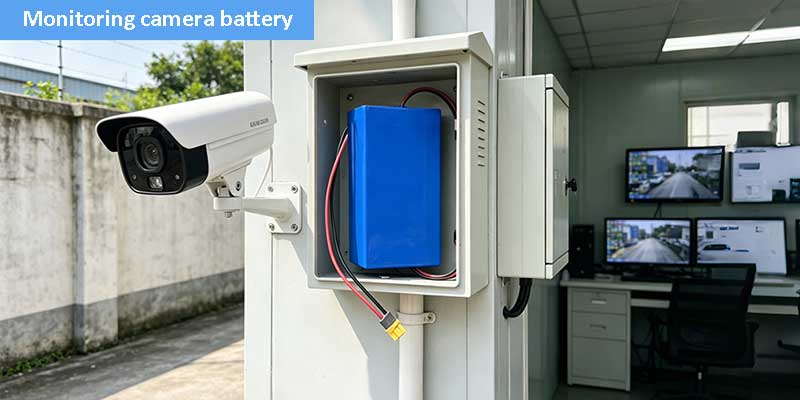
LiFePO4 battery for security camera

By Alden  |  Battery Engineer — Manufacturing & Quality Control, Himax Electronics


A surveillance camera that loses power at the wrong moment isn’t just an inconvenience — it’s a failure. Choosing the right batteries for security systems is the first step to prevent that. So in this post, I walk through a real battery pack we engineered specifically for 24/7 monitoring devices: what we built, why we made every decision we did, and most importantly, what makes a LiFePO4 battery the right backbone for serious security applications.


The Power Problem No One Talks About

Typically, when security system integrators evaluate their installations, they spend hours choosing lenses, night vision specs, and storage capacity. However, power rarely gets the same attention — until something fails.

The reality is that batteries for security systems carry a disproportionate responsibility. After all, a camera is only as reliable as the energy source behind it. Whether it’s grid outages, brownouts, or solar input fluctuations — the battery is, ultimately, the last line of defense between a live feed and a black screen.

This project started with exactly that concern. A customer building professional monitoring equipment needed a compact, dependable battery pack that could handle continuous discharge loads, survive temperature variation, accept solar charge input, and pass market certification requirements. They came to us at Himax Electronics, and what we built together tells a good story about what serious battery engineering actually looks like. That’s how we design all our batteries for security systems — with no compromise on reliability.

LiFePO4 12.8V 24Ah battery pack order specification sheet showing 4S4P configuration, BMS parameters, and product requirements for security surveillance systems — Himax Electronics

Full Specification Breakdown

Let’s start with the numbers. To be precise, here’s what this battery pack is built around:


Parameter Value
Chemistry LiFePO4 (Lithium Iron Phosphate)
Configuration 4S4P (4 series × 4 parallel)
Cell Model 32700 / 3.2V / 6000mAh per cell
Nominal Voltage 12.8V
Capacity 24Ah
Energy ≈ 307.2Wh
Max Continuous Discharge 10A
Charge Current ≤ 1C (solar input compatible)
Connector XT60 Female
Wire Length 200mm
Dimensions 42.5 × 265.0 × 136.0 mm
Enclosure Blue PVC heat shrink
Shipping SOC 50%


To put it in perspective, 307.2Wh in a package that fits inside a compact monitoring enclosure. That’s the core engineering challenge: squeezing serious energy density into a geometry-constrained form factor without compromising safety or serviceability.

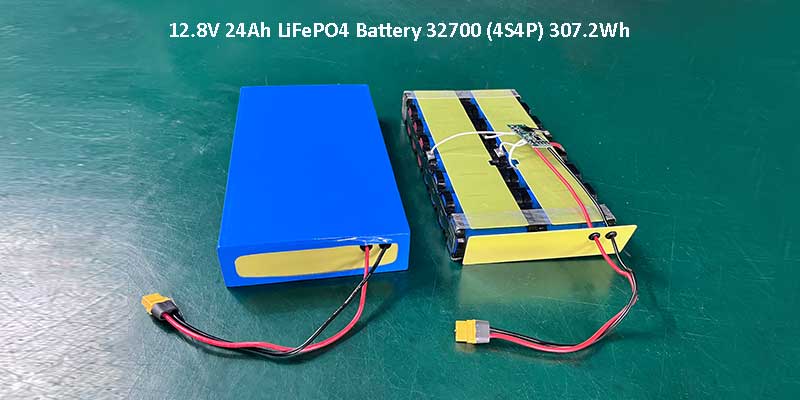
Assembled 12.8V 24Ah LiFePO4 battery pack in blue PVC enclosure with XT60 connector, alongside internal structure showing BMS board and 32700 cell assembly for CCTV backup power

Why 32700 LiFePO4 Cells Are the Ideal Batteries for Security Systems

Every battery pack decision starts with the cell. That’s because, for security applications, I consistently reach for LiFePO4 chemistry — and, more specifically, the 32700 form factor when high capacity is needed in a cylindrical format.

For example, the 32700 cell — 32mm diameter, 70mm length — offers one of the best capacity-to-size ratios in the cylindrical cell world. At 3.2V and 6,000mAh per cell, it brings substantial energy into each slot of the battery bracket — consequently, without the heat accumulation concerns you get with denser NMC chemistries.

Understanding the 4S4P Configuration

This pack uses 16 cells total, arranged in a 4S4P topology.
Specifically, the “4S” configuration means four cells in series — which multiplies voltage: 4 × 3.2V = 12.8V nominal.
Meanwhile, the 4P arrangement multiplies capacity: 4 × 6,000mAh = 24,000mAh (24Ah).
As a result, it’s an elegant arithmetic that turns sixteen modest cylinders into a powerful, unified energy source.

Why this matters for security use: Series gives you the voltage headroom to run standard 12V monitoring equipment directly. Parallel gives you the runtime — at a typical 3–5A draw from a surveillance controller, this pack delivers 5–8 hours of backup capacity without breaking a sweat.


LiFePO4 vs. The Alternatives: An Honest Comparison

When customers ask me what battery chemistry to use for their security system battery, I always walk through the trade-offs honestly.


Criteria LiFePO4 Lead-Acid NMC Li-ion
Cycle Life 2000+ cycles 300–500 500–1000
Thermal Safety Excellent Moderate Moderate
Weight Light Heavy Lightest
Voltage Stability Very flat curve Drooping Good
Suitable for always-on Yes Limited Yes (with care)


Unsurprisingly, for an always-on, low-maintenance deployment — which is exactly how most security systems operate — LiFePO4 wins convincingly. In fact, It’s flat discharge curve means the devices it powers see stable voltage throughout the cycle — rather than a gradual sag that can destabilize camera electronics.

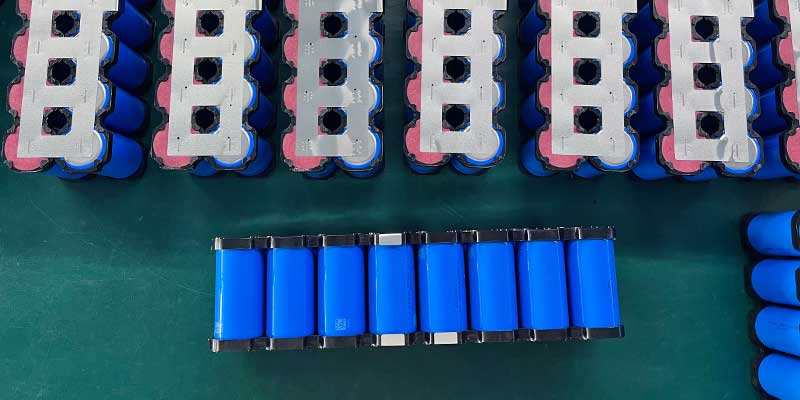
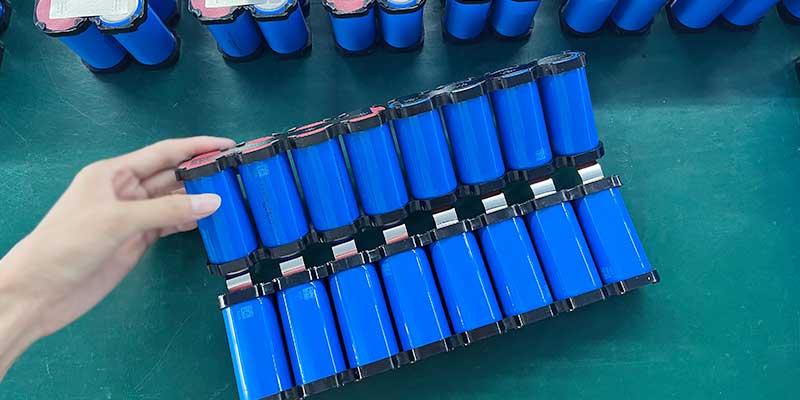
32700 LiFePO4 cells arranged in 4S4P configuration on cell holder brackets during OEM battery pack assembly process at Himax Electronics factory

The BMS: Designing for “Set It and Forget It” Reliability

Analogously, a battery without a good BMS is like a security camera without tamper protection. The battery management system is what keeps this pack safe during the years of unattended operation that a typical security installation demands.

Here’s how we configured the BMS for this project:


Protection Feature Parameter
Overcharge cutoff 14.6V ± 0.05V
Over-discharge cutoff 10V ± 0.05V
Max continuous discharge 10A
Short circuit protection Yes
Overcurrent protection Yes
Cell balancing Yes (passive balancing)
Operating temperature −10°C ~ +50°C


First, to ensure reliable solar charging, the charge parameters were specifically aligned with solar input compatibility. After all, solar chargers can be erratic: clouds pass, panels overheat, charge controllers vary. Therefore, consequently, the BMS had to absorb that variability without ever letting the cells see dangerous voltages. Moreover, the 14.6V ceiling is exactly right for 4S LiFePO4 — it gives enough headroom for full charge without risking cell degradation.

Cell balancing deserves special mention. Over time, even well-matched cells drift apart slightly in capacity. Without balancing, the weakest cell in a series string limits the entire pack — and, as a result, can become over-discharged while the others still hold charge. Critically, the passive balancing circuit in this BMS bleeds off excess energy from stronger cells during charging — keeping the string aligned and significantly extending the useful life of the entire pack.

“A battery that doesn’t fail silently is a battery worth trusting. Every protection layer in this BMS exists so that a technician doesn’t have to visit a camera pole at 3am.”


Manufacturing Process: What Happens Before the Blue Wrap Goes On

I oversee production on packs like this personally, and I want to share what actually goes into building a reliable battery — because it’s more rigorous than most people assume.

1. Cell Inspection and Sorting

Before a single cell goes into a bracket, every one is tested for open-circuit voltage and internal resistance. In practice, cells that don’t meet our matching tolerance get pulled. Putting mismatched cells in parallel creates internal circulating currents that degrade the pack over time. This step is non-negotiable.

2. Bracket Assembly and Nickel Strip Welding

First, the 16 cells are loaded into a plastic cell holder that both organizes the pack geometry and provides electrical isolation between rows. Nickel strips are spot-welded to connect cells in the correct series-parallel topology. Weld quality is checked for consistency — a bad weld means high contact resistance, heat, and eventual failure.

3. BMS Integration

Next, the BMS board is connected to the cell groups via the balance leads and the main power terminals. After wiring, we perform a full functional test: charge the pack, discharge under load, verify all protection thresholds trigger correctly, and confirm the balance circuit is active.

4. Aging Test and Capacity Verification

Then every pack goes through an aging cycle before shipment. We charge to full, rest, then discharge to rated cutoff while logging capacity. Thus, any pack that comes in below 95% of rated capacity doesn’t leave the floor.

5. Blue PVC Encapsulation and Labeling

The finished cell assembly is wrapped in blue PVC heat shrink, providing electrical insulation, mechanical cohesion, and a clean, professional appearance. Certification labels are then applied according to the customer’s requirements, with production dates coordinated across cell markings and compliance stickers to ensure full traceability.

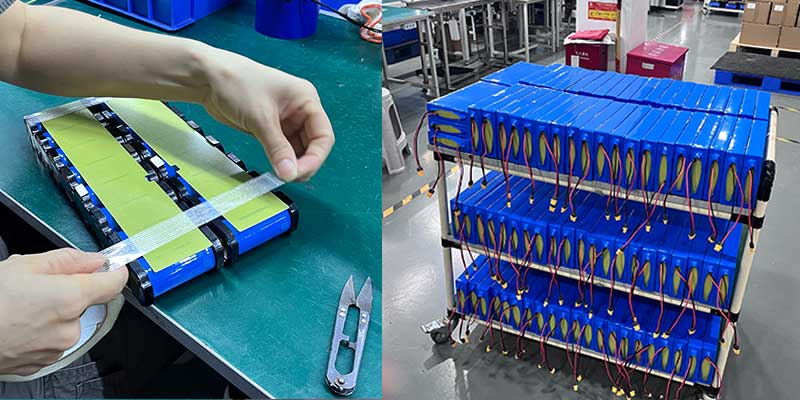
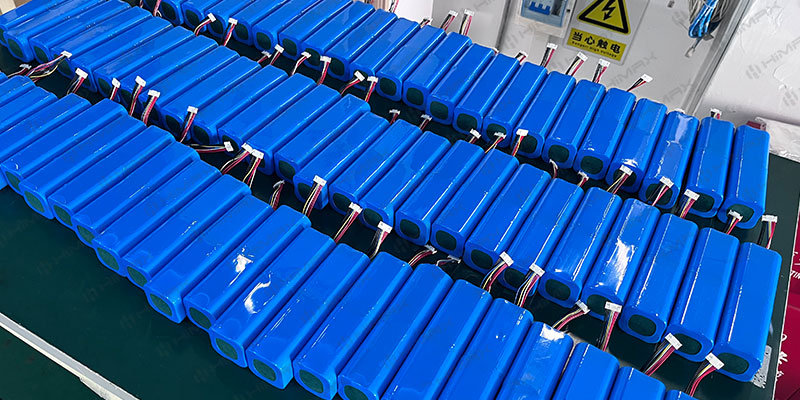
Multiple 12.8V LiFePO4 battery pack assemblies in production at Himax Electronics, showing 32700 cylindrical cells with nickel strip welding for security and monitoring device OEM orders

Beyond Surveillance: LiFePO4 in the Broader IoT Ecosystem

Security cameras don’t operate in isolation. Modern monitoring infrastructure includes smart sensors, access control systems, connected gateways, and remote IoT nodes — all of which share the same power reliability requirements.

Similarly, the same LiFePO4 engineering principles that make this pack ideal for CCTV backup apply across the full spectrum of connected device applications. If you’re working on IoT device power, explore our IoT battery solutions to see how these principles translate across applications.


5 Things to Evaluate When Choosing Batteries for Security Systems

Based on the projects we’ve completed in this space, here’s what I’d tell anyone evaluating a backup battery for CCTV or monitoring systems:


  1.  Voltage stability under load.  Drooping voltage affects camera electronics. LiFePO4’s flat discharge curve keeps equipment operating within spec throughout the cycle.
  2.  Cycle life relative to your replacement cost.  Lead-acid may look cheaper upfront. But if it needs replacing every 2 years versus every 8–10 years for LiFePO4, total cost of ownership tells a different story.
  3.  BMS protection depth.  At minimum: overcharge, over-discharge, overcurrent, short circuit, and temperature protection. Cell balancing extends pack longevity significantly.
  4. Fourth, mechanical fit for your enclosure. Custom battery packs can be dimensioned to fit existing product housings exactly. In fact, a 1mm mismatch in an injection-molded enclosure can trigger a full factory retool. Therefore, getting this right early in the design process is essential.
  5.  Certification alignment for your target market.  Different regions require different marks. Build this into your battery spec from day one — retrofitting certification compliance is expensive and slow.


Final Thoughts: Engineering Trust Into Every Cell

There’s something I find genuinely meaningful about building batteries for security systems. Whether it’s a single camera or a large surveillance network, these batteries must never become the weakest link. In reality, the end user — the person whose property this camera watches over — will never think about the battery. Nor should they have to. Instead, they should simply know the system works.

That invisibility is the goal. After all, a battery that draws no attention is a battery doing its job. And achieving that kind of quiet reliability requires careful cell selection, a well-configured BMS, rigorous manufacturing process, and honest quality control that doesn’t ship a pack we wouldn’t stake our reputation on.

If you’re designing a security product and need a battery that can carry that same commitment, I’d be glad to talk through it.


Ready to Power Your Security System Right?

Whether you need a standard 12.8V 24Ah LiFePO4 pack or a fully custom battery engineered to your exact specification, our team at Himax Electronics is ready to help. In fact, we’ve built thousands of packs for OEM monitoring and surveillance applications — so let’s build yours.


→  Security System Battery Solutions

→  12.8V 24Ah LiFePO4 Product Page

→  IoT Battery Solutions

→  Contact Us for a Custom OEM Quote

custom lithium battery for solar generator kits application

If you’ve ever had a critical system go dark mid-shift — a forklift stranded in an aisle, a sensor array dropping offline during a production run — you already know the cost of getting battery sizing wrong. In industrial environments, that cost isn’t just inconvenience. It’s downtime, and downtime has a dollar figure attached to every minute.

Getting battery capacity and runtime right the first time requires more than reading a spec sheet. It requires understanding how your load actually behaves, how your environment affects chemistry performance, and how to build in the margins that keep operations running when conditions aren’t ideal.

Understanding the Core Metrics: Capacity vs. Runtime

Battery capacity and battery runtime are related but distinct concepts, and conflating them is one of the most common sources of sizing errors in industrial projects.

Capacity (measured in ampere-hours, or Ah) describes how much charge a battery can store. A 100 Ah battery can theoretically deliver 100 amps for one hour, or 10 amps for ten hours — at least in theory.

Runtime is how long that battery will actually power your specific load under your specific conditions. Runtime depends on capacity, yes, but also on discharge rate, temperature, battery age, depth of discharge limits, and the efficiency of your power conversion hardware.

The gap between the two is where industrial projects run into trouble.
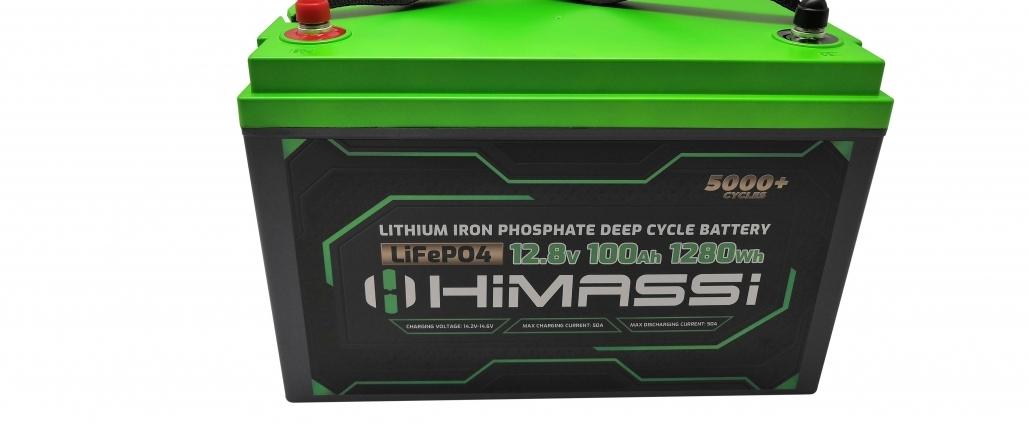
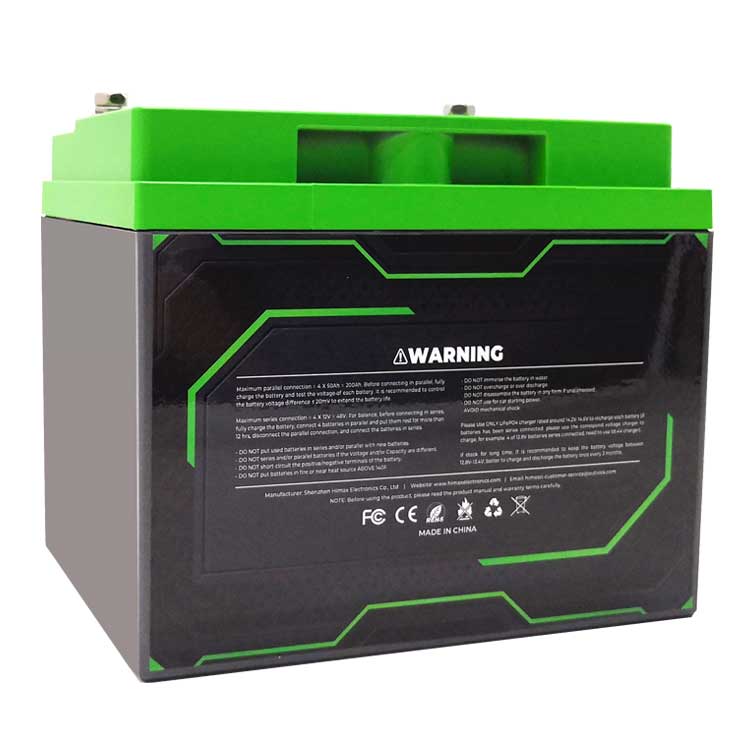
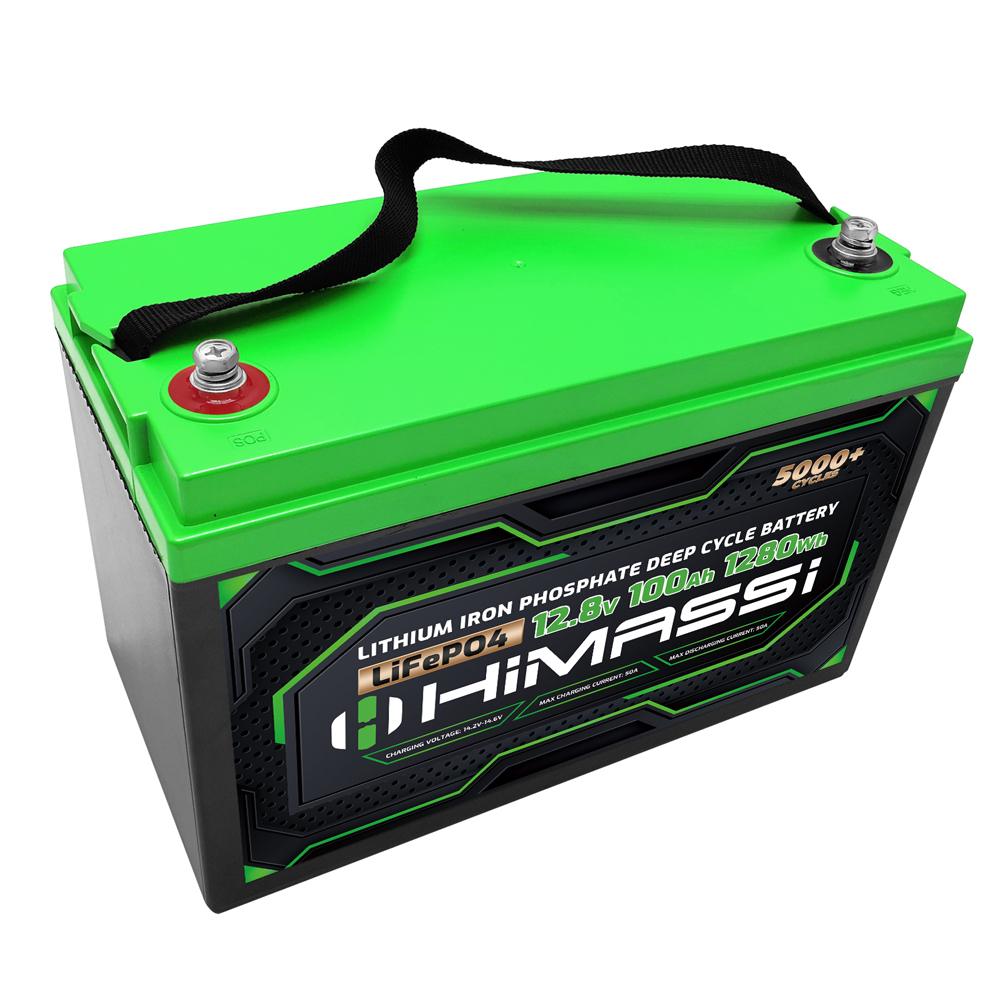
LiFeo4 12V 100AL Battery

Step 1 — Determine Your Load Profile

Before any math happens, you need an accurate picture of what the battery is actually powering. Industrial loads are rarely simple or constant.

Start by listing every electrical load in the system:

  • Continuous loads: Motors running at steady state, HVAC units, lighting circuits, control panels
  • Intermittent loads: Solenoids, actuators, conveyors that cycle on and off
  • Surge or inrush loads: Motor startups, compressors, pumps — equipment that draws 3–7× its rated current for a fraction of a second at startup

For each load, note its rated wattage or amperage and its estimated duty cycle — the percentage of time it’s actually drawing power during operation.

Example load profile for an industrial UPS application:

Load Watts Duty Cycle Average Draw
PLC and controls 150 W 100% 150 W
Communication equipment 80 W 100% 80 W
Indicator lighting 40 W 60% 24 W
Emergency ventilation 500 W 20% 100 W
Total average load 354 W

This average load figure is what you’ll carry into your runtime calculation. If you’re working in amps rather than watts, divide by your system voltage (typically 12V, 24V, 48V, or 120V DC for industrial systems).

Step 2 — Convert to Amp-Hours

The fundamental runtime formula is straightforward:

Runtime (hours) = Battery Capacity (Ah) ÷ Load Current (A)

Working from the example above at a 48V system:

  • Average load = 354 W
  • Load current = 354 W ÷ 48 V = 375 A
  • With a 200 Ah battery bank: Runtime = 200 ÷ 7.375 = ~27 hours

That’s the theoretical number. Now comes the part most sizing guides skip.

Step 3 — Apply Real-World Correction Factors

Raw Ah math assumes ideal conditions. Industrial environments are not ideal. You need to derate your calculated runtime — or, equivalently, upsize your battery bank — to account for several factors.

The Peukert Effect

Battery capacity isn’t fixed. It shrinks as discharge rate increases. This relationship, described by Peukert’s Law, is especially significant for lead-acid chemistries.

A 200 Ah lead-acid battery discharged at its 20-hour rate (C/20, or 10 A) may deliver its full 200 Ah. Discharge the same battery at 100 A and you might only get 140–160 Ah before voltage collapses. Lithium chemistries are far less affected — one of the practical reasons lithium-iron phosphate (LiFePO4) has gained traction in industrial applications.

As a rule of thumb for lead-acid at moderate discharge rates: apply a Peukert derating of 10–20% if your discharge rate is faster than C/10.

Temperature

Battery capacity drops significantly in cold environments. Lead-acid batteries lose roughly 1% of capacity for every degree Celsius below 25°C (77°F). At 0°C, you may have 75–80% of rated capacity. At –20°C, you could be down to 50% or less.

Lithium chemistries handle cold better but have their own thresholds and charge restrictions at low temperatures.

Cold temperature correction factor:

Temperature Lead-Acid Derating
25°C (77°F) 100% (baseline)
10°C (50°F) ~85%
0°C (32°F) ~75%
–10°C (14°F) ~65%
–20°C (–4°F) ~50%

If your equipment operates outdoors in northern climates or in refrigerated warehouses, this factor alone can cut your runtime in half.

Depth of Discharge (DoD) Limits

Running a battery to zero is a fast path to premature failure. Different chemistries tolerate different discharge depths:

  • Flooded lead-acid: Limit to 50% DoD for reasonable cycle life
  • AGM/VRLA: 50–60% DoD recommended
  • Lithium (LiFePO4): 80–90% DoD with minimal cycle life impact

If you’re using lead-acid and limiting to 50% DoD, your usable capacity is half the nameplate rating. A 200 Ah battery only gives you 100 Ah to work with.

Aging and State of Health

A new battery performs at or near its rated capacity. After 500 cycles, a lead-acid battery may be at 80% capacity. After 1,000 cycles, you might be looking at 60% or less. Industrial battery banks should be sized for end-of-life performance, not new-battery performance, unless replacement is factored into the maintenance schedule at predictable intervals.

A 20% aging buffer is a common industry starting point.

System Efficiency Losses

Inverters, charge controllers, and cabling all introduce losses. A 95%-efficient inverter wastes 5% of every watt-hour passing through it. Don’t forget to account for these when calculating how much capacity your loads actually consume from the battery.

Step 4 — Build Your Sizing Formula

Bringing the correction factors together:

Required Capacity (Ah) = [Load (W) × Runtime (h)] ÷ [Voltage × DoD × Temperature Factor × Efficiency × Aging Factor]

Using the earlier example, targeting 8 hours of runtime on a 48V system with AGM batteries in a 10°C environment:

  • Load = 354 W
  • Runtime target = 8 hours
  • Voltage = 48 V
  • DoD limit = 0.55
  • Temperature factor = 0.85
  • System efficiency = 0.93
  • Aging buffer = 0.80

Required Ah = (354 × 8) ÷ (48 × 0.55 × 0.85 × 0.93 × 0.80)

Required Ah = 2,832 ÷ (48 × 0.3489)

Required Ah = 2,832 ÷ 16.75 = ~169 Ah

So you’d specify a 200 Ah battery bank (the next standard size up), not the 100 Ah bank that the raw theoretical math might have suggested.

Step 5 — Choose the Right Battery Chemistry

Sizing and chemistry selection are inseparable. The same runtime requirement carries very different cost, weight, footprint, and maintenance implications depending on what you put in the cabinet.

Lead-Acid (Flooded or AGM) Still the workhorse of industrial backup power. Lower upfront cost, mature technology, wide temperature tolerance for charging (with proper management). Downsides: heavy, limited DoD, sensitive to discharge rate, requires periodic replacement. Best fit for stationary applications where weight and footprint aren’t constrained.

Lithium Iron Phosphate (LiFePO4) Higher upfront cost, but superior cycle life (2,000–5,000+ cycles vs. 300–800 for lead-acid), deeper usable DoD, flat discharge curve, lighter weight. Increasingly cost-competitive over a 10-year ownership horizon. Best fit for mobile industrial equipment, high-cycle applications, or where space and weight matter.

Nickel-Based (NiMH, NiCd) NiCd in particular has a long history in industrial and aviation applications due to its tolerance for extreme temperatures and deep cycling. Environmental regulations around cadmium have limited its use in new installations, but it remains relevant in certain regulated environments.

Common Sizing Mistakes in Industrial Projects

Sizing to average load, ignoring peaks. Inrush currents from motor startups can trip battery management systems or collapse voltage to sensitive electronics. Size your battery bank and BMS for peak demand, not just average.

Ignoring cable losses. In a 48V system, even modest cable resistance matters. A 0.5V drop across cabling at 50 A represents a meaningful efficiency loss that compounds with distance.

Using manufacturer capacity at ideal conditions. Nameplate ratings are tested at 25°C, C/20 discharge rate, and 100% DoD in many cases. Your field conditions will not match those.

Forgetting self-discharge in standby applications. A battery bank sitting in standby for months without a maintenance charge will self-discharge. Lead-acid loses 3–5% per month at room temperature. Factor this into UPS and emergency backup designs.

Skipping load measurement and estimating instead. Current clamps and data loggers are inexpensive relative to the cost of a misspecified battery bank. Measure before you size.

Monitoring and Verification in the Field

Sizing is a starting point, not a guarantee. Actual runtime should be verified during commissioning with a controlled load test, and battery health should be monitored on an ongoing basis through:

  • Voltage under load— A battery showing voltage collapse at moderate loads is nearing end of life
  • Internal resistance measurement— Rising internal resistance is a reliable early indicator of degradation
  • Capacity testing— Periodic full discharge/recharge cycles to verify usable capacity against the baseline

Battery management systems (BMS) in modern lithium installations handle much of this automatically and can feed data into SCADA or asset management platforms for fleet-level visibility.
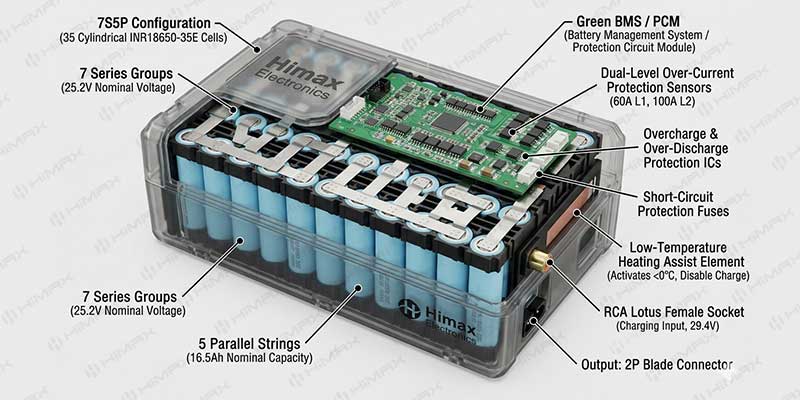
BMS protection circuit module inside a 7S5P lithium battery for electric golf caddy cart trolley, showing overcharge, over-discharge, and short-circuit protection components

Putting It All Together

Battery sizing for industrial applications is part science, part engineering judgment. The formulas are straightforward once you have accurate load data, but the correction factors — temperature, aging, discharge rate, depth of discharge limits, efficiency losses — are where the real engineering happens.

The difference between a system that runs reliably for years and one that fails during the worst possible moment often comes down to whether someone took the time to work through these factors honestly, rather than relying on a quick back-of-envelope calculation and hoping for the best.

Build in the margins. Test before deployment. Monitor in service. That’s the short version of what every experienced industrial battery engineer will tell you.


Custom 14.4V 6.4Ah Robot battery pack with Samsung 18650 cells

In the rapidly evolving world of custom energy storage, a significant change is taking place. While most users are familiar with “all-in-one” battery packs, a new manufacturing trend is emerging among high-end industrial clients and Electric Vehicle (EV) startups. This trend involves providing high-precision battery modules that do not include a built-in Battery Management System (BMS).


Traditionally, lithium-ion batteries are sold as integrated units. For consumer electronics or standard electric bikes, this “plug-and-play” convenience is ideal. However, as we move into 2026, sophisticated professional clients are choosing a different path. They are requesting “bare” battery modules—professionally welded and structurally reinforced—while choosing to integrate their own proprietary BMS. This separation of the chemical storage (the cells) from the digital intelligence (the BMS) is a strategic move designed to unlock maximum performance and system compatibility.

advertising backpack battery

Understanding the Limits of “All-in-One” Systems

To understand why clients are moving away from integrated units, we must first look at the limitations of standard battery packs. Most off-the-shelf batteries are designed for “General Purpose” use. To ensure safety across many different environments, manufacturers often set very conservative limits on these packs.


Voltage and Capacity Ceilings: Standard integrated packs often have physical and electrical limits. For many manufacturers, a battery with a built-in protection board is typically restricted. These limits exist because the heat generated by the BMS electronics and the physical space inside a standard plastic shell make it difficult to scale up safely.


The “Black Box” Problem: For an advanced engineer, a standard BMS is a “black box.” Its internal logic, such as when it cuts off power or how it balances the cells, is “hard-coded” by the factory. If you are building a complex robot or a medical backup system, this lack of transparency can become a major obstacle to optimizing your machine’s performance.

The Power of Customization: Client-Led Integration

For specialized applications—ranging from agricultural robots to high-performance golf cart fleets—the client’s engineering team often understands the power needs of their machine better than the battery manufacturer does. By using their own BMS, they gain several critical advantages:


Advanced “Active” Balancing

Most standard batteries use “passive” balancing, which simply burns off excess energy as heat to keep cells equal. In contrast, high-end custom BMS units often use Active Balancing. This technology redistributes energy between cells during both charging and discharging. For large battery packs, this is a game-changer, as it significantly extends the total lifespan of the lithium-ion cells.


Real-Time Data and Predictive Maintenance

High-end industrial users need more than just a battery that “works.” They need a battery that “talks” to them. By using their own BMS, they can track:


Cell-level Internal Resistance: Monitoring how cells age over time.


High-Frequency Sampling: Detecting tiny electrical shifts to predict a failure before it happens.


Advanced Communication: Seamlessly syncing the battery data with the main computer using professional protocols like CANopen or Modbus.


By purchasing a BMS-less pack, these clients can connect their own highly calibrated sensors directly to the battery, ensuring the energy data is perfectly integrated into their own software ecosystem.


Breaking the Barrier

One of the most practical reasons for removing the internal BMS is scalability. When the BMS is moved outside the main battery module, the physical and electrical “bottlenecks” disappear.


High-Voltage Architecture: Without a “gatekeeper” inside the pack, engineers can easily connect modules in series to create 48V, 72V, 96V, or even 400V–800V systems. This allows the battery to match the peak efficiency of modern high-power motors.


Massive Capacity: Parallel configurations can exceed the standard limit, reaching hundreds of kilowatt-hours (kWh). By placing the BMS in a separate, temperature-controlled compartment, the heat generated by the electronics does not affect the delicate chemistry of the cells, improving both safety and efficiency.


Precision Manufacturing: Why the Build Quality Matters

Removing the BMS does not make the battery “simpler” to build. In fact, it requires higher precision from the manufacturing partner. Without a BMS to hide minor inconsistencies, the physical build must be perfect.


Zero-Resistance Welding: Because the client will connect their own sensitive wires to the battery, every weld must be flawless. We use CNC-controlled and laser welding to ensure that the junctions between cells have nearly zero resistance. This provides a “clean signal,” allowing the custom BMS to read voltages with extreme accuracy.


Industrial-Grade Structure: In a standard pack, the BMS circuit board often acts as a physical spacer. In our BMS-less modules, we replace this with custom-milled materials like G10 or FR4 (epoxy glass). These materials ensure the battery can survive the high vibrations of a golf cart or a factory floor without the connections breaking or wearing down.

How to choose a Robot battery for solar charging systems in robotics

A Collaborative Partnership

The “BMS-less” approach is built on a clear Responsibility Matrix. Our job is to ensure the mechanical and chemical stability of the battery cells and their connections. The client’s job is to manage the digital safety monitoring through their proprietary BMS.


To make this integration as easy as possible, we often provide “Pre-Wiring” services. We install a professional sensing wire harness during assembly. This allows the client to simply “plug in” their custom BMS into our standardized connectors. This reduces the risk of human error during the final assembly and ensures the BMS receives a noise-free, accurate signal from every single cell group.


Conclusion: Energy Storage as a Competitive Advantage

As industrial technology becomes more specialized, the demand for high-capacity, high-voltage battery modules is growing. Separating the battery pack from the BMS is not just a trend—it is a logical evolution for companies that view energy storage as a core part of their technology, rather than just a simple component.


By providing professionally assembled, BMS-less lithium-ion modules, we empower our clients to break through the traditional limits. This allows them to create products that are more powerful, more efficient, and more reliable than anything else in the market.

Energy storage lifepo4 battery

In the rapidly evolving landscape of custom energy storage, the transition from a conceptual schematic to a physical battery pack is fraught with technical challenges. Among these, dimensional tolerance is often the “silent killer” of high-end projects.

This article explores the critical relationship between mechanical constraint systems and electrochemical safety, illustrating why professional-grade custom jigs are not merely accessories, but fundamental requirements for high-precision assembly.

The Case Study: When 1mm Defines Success or Failure

A client recently approached us with a requirement for a specialized lithium battery pack designed to fit into a pre-existing, precision-milled aluminum enclosure. The internal clearance was marginal, leaving virtually zero room for “pack swelling” or assembly misalignment.

  • The Initial Challenge: In the prototype phase, assembly was conducted using standard alignment methods without a project-specific dedicated jig.
  • The Symptom: While electrical characteristics (voltage, impedance, capacity) were flawless, cumulative tolerance errors in nickel-strip welding resulted in a pack that was 2mm widerthan the CAD specification.
  • The Result: The pack could not be inserted into the battery shell without risking mechanical stress on the cells—a major safety hazard.

Root Cause Analysis: Cumulative Tolerance in Manual Assembly

In battery pack assembly, error is cumulative. Without a rigid constraint system, micro-movements aggregate, resulting in a product that fails the “Go/No-Go” gauge test.

The breakdown of tolerance drift typically looks like this:

  1. Cell Variance: Each cell has a diameter tolerance (e.g., ). Aligning 10 cells in a row can theoretically create a 0mm variance.
  2. Adhesive/Insulation: Inconsistent application of barley paper or structural adhesive can add another 5mm.
  3. Welding Displacement: Without a jig, the pressure of the spot-welding needle can cause cells to shift ( to  ) before the weld nugget solidifies.

lifepo4-48v-battery

The Solution: Engineering a Custom Constraint System

Recognizing that manual alignment was insufficient for the client’s specific shell requirements, our engineering team pivoted to a Jig-Based Manufacturing Process.

  1. Precision CNC-Milled Fixtures

We designed a custom assembly jig using high-stability, non-conductive materials (such as POM or Epoxy board).

  • Zero-Tolerance Cavities: Each cell is seated into a CNC-milled pocket that compensates for the maximum allowable cell diameter while enforcing a strict outer boundary.
  • Vertical Compression: The jig applies uniform lateral and vertical pressure, ensuring cells are perfectly planar before the first weld is made.
  1. Specialized Nickel Strip Alignment

Instead of free-handing the nickel tabs, the new jig featured “guide slots” for the nickel strips. This ensures:

  • Current Path Consistency: Every weld point is exactly where the simulation predicted.
  • Structural Compactness: No “overhang” of nickel or solder, keeping the pack’s footprint within the 1mm tolerance threshold.

The Critical Role of Casing Integrity

Modern battery enclosures often utilize ultrasonic welding or high-precision interference fits. Once a shell is sealed, there is no “fixing” an internal error. Forcing a battery pack into a tight shell creates significant risks:

  • Mechanical Stress: Constant pressure on cell walls can lead to internal micro-shorts over time.
  • Thermal Expansion: Batteries naturally expand slightly during charge/discharge cycles. If the initial assembly does not account for this with precise tolerances, expansion can crack the casing or damage the Battery Management System (BMS).

Engineering Insights: Communication is Key to Precision

The most significant takeaway from this case is that Dimensional Specification is just as critical as Amp-Hour Capacity. For clients with high-precision requirements, we recommend the following protocol during the Request for Quote (RFQ) phase:

  • Define “Critical-to-Quality” (CTQ) Dimensions: Don’t just provide the internal dimensions of your box. Define the Maximum Envelope Dimensions (MED) of the battery pack. Our engineers will then work backward to calculate the necessary jig offsets.
  • Discuss Fixturing Early: If your project has a clearance of less than 2mmbetween the pack and the shell, a custom jig is mandatory. We discuss the cost-benefit analysis of jig fabrication upfront to ensure high yield rates.
  • Tolerance Stack-up Analysis: We provide clients with a report that includes cell manufacturer tolerances, shrink-wrap thickness, nickel strip positioning variance, and jig precision.

Technical Summary: Why Choose Jig-Stabilized Manufacturing?

Benefit Description
Repeatability Whether producing 10 units or 10,000, dimensions remain identical.
Safety Eliminates mechanical friction between the pack and the enclosure.
Serviceability Ensures the pack can be extracted for maintenance without damaging the shell.
Optimized Density Reduces wasted space (“slop”), often allowing more capacity in the same volume.

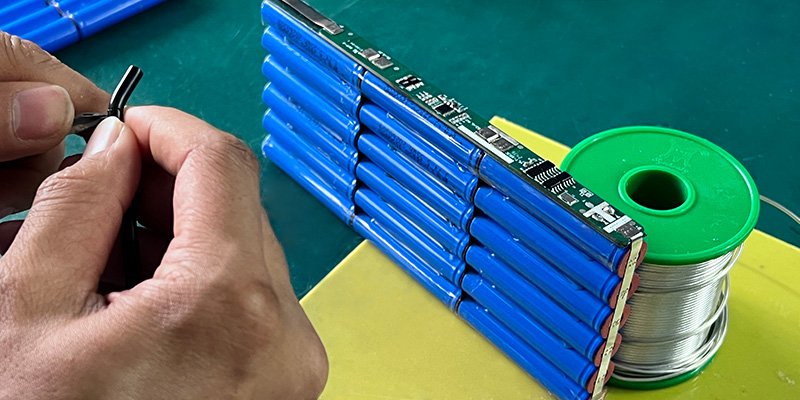
Precise positioning and welding of battery packs

Conclusion

At our facility, we believe that “close enough” is not an engineering term. The failure of a pack to fit into its housing is not just a logistical delay—it is a failure of process control. By investing in custom jigs and rigorous fixture protocols, we ensure that our lithium solutions are as precise as the devices they power.

Are you working on a project with strict dimensional constraints? Contact our engineering team today to discuss your CAD requirements and how our custom fixturing process can guarantee a perfect fit.


solar-lifepo4-battery

In the rapidly evolving world of Lithium-ion power solutions, “compliance” is often the bridge between a successful product launch and a costly logistical nightmare. For many international buyers, navigating the alphabet soup of certifications—IEC, UL, CE, UN38.3—feels like a routine checkbox exercise. However, a recent case study from our engineering department highlights a critical lesson: Compliance is a holistic ecosystem, not a standalone component.


When a battery fails a lab test, the instinct is to blame the cells. But as we recently discovered during an SGS certification process for a long-term client, the “invisible” culprit is often the charger.


The Case Study: The Gap Between IEC 62133 and CE (EMC)


Recently, a client approached us to provide high-performance battery packs and matching chargers for an industrial application. The initial brief was clear: the units needed to pass IEC 62133 testing via SGS—the gold standard for battery safety.


We optimized the battery protection circuit (PCM) and cell selection to meet these safety rigorous standards. However, midway through the process, the client’s regulatory requirements shifted to include CE marking, which necessitates compliance with the Electromagnetic Compatibility (EMC) Directive.


The result? The system failed the EMC test. While the margin of failure was incredibly slim—a minor deviation in radiated emissions—the consequences were significant:


Project Delays: The testing timeline was pushed back by weeks.


Additional Costs: Re-testing fees and lab overheads added unexpected strain to the budget.


Engineering Re-work: We had to backtrack to shield the charger’s internal circuitry to dampen the interference.


This scenario could have been avoided if the full scope of the “End-Product” certification was defined at the quotation stage.

lifepo4-48v-battery

Understanding the Difference: Safety vs. Compatibility

To prevent these delays, it is vital to understand what these tests actually measure and why they cannot be treated as interchangeable.


  1. IEC 62133: The Safety Guardrail

IEC 62133 focuses almost exclusively on Physical and Chemical Safety. The lab subjects the battery to “torture tests”—crush, vibration, thermal abuse, and overcharging—to ensure the battery doesn’t catch fire or explode. It is about the integrity of the lithium chemistry and the protection board.


  1. CE & EMC: The “Good Neighbor” Policy

The CE mark, specifically the EMC portion (EN 61000 series), isn’t looking at whether the battery is “safe” in a fire-safety sense. Instead, it measures Electromagnetic Interference (EMI). It asks: Does this device emit “noise” that will interfere with other electronics (like a nearby radio or medical equipment)?


Chargers are notorious for failing EMC tests. Because they use switching power supplies (SMPS) to convert AC to DC, they generate high-frequency electrical noise. If the charger isn’t specifically designed with high-quality filters and shielding, it will fail the CE test—even if the battery itself is perfect.


The Domino Effect: Why “Small Deviations” Matter in Lab Testing

In our recent case, the deviation was “very small.” In a real-world scenario, that tiny amount of noise wouldn’t affect the product’s performance. However, accredited labs like SGS, Intertek, or TÜV operate on a binary Pass/Fail system.


A 1dB deviation over the limit is as much a “Fail” as a 50dB deviation. Once a failure is recorded, the lab requires:


A formal “Failure Analysis Report.”


Modified samples (Hardware changes).


A complete re-test of the failed parameters.


This “Domino Effect” eats away at your “Time-to-Market” (TTM), which is often the most valuable asset in the tech industry.


The “System-Level” Approach: Why Early Disclosure is Key

At our factory, we don’t just manufacture batteries; we engineer power systems. When you provide us with the exact list of certifications required for your target market at the start, we can adjust the following details before the first sample ever leaves our floor:


Charger Component Selection: We can opt for premium capacitors and inductors that naturally suppress EMI.


Shielding: We can add copper foil or specialized coatings to the internal housing of the charger or the battery casing.


PCB Layout: Our engineers can optimize the trace routing on the protection board to minimize “antenna effects” that broadcast noise.


Pre-Testing: We can perform in-house “pre-compliance” scans to ensure the 99% success rate when the units hit the official SGS lab.


A Checklist for Global Battery Procurement

To ensure your next project moves from “Prototype” to “Market” without friction, we recommend following this technical checklist when requesting a quote:


List Every Target Market: Are you selling in the EU (CE), USA (UL/FCC), Japan (PSE), or Australia (RCM)? Each has different EMC and safety thresholds.


Define the Test Standard Early: Don’t just say “I need a certificate.” Specify if you need IEC 62133 (Safety), EN 55032 (EMC for Multimedia), or EN 60601 (Medical).


Specify the “System” Testing: Will the battery be tested inside your device, or as a standalone component with its charger? Lab results vary wildly depending on how the system is grounded.


Allow for “Engineering Margin”: Low-cost, “budget” chargers rarely leave any margin for EMC testing. If you need certification, be prepared to invest in a “Certified Grade” charger.


Conclusion: Partnership Over Procurement


The relationship between a buyer and a battery factory should not be a simple transaction; it should be a technical partnership. The recent EMC failure we experienced served as a powerful reminder that transparency in certification requirements is the best way to save money.


By informing us of your full regulatory roadmap—including the “small” details like CE/EMC requirements—you empower our engineering team to provide a solution that is “Ready for Lab” on day one. This proactive communication prevents wasted testing fees, protects your timeline, and ensures that your brand is associated with quality and compliance.


Are you planning a project that requires SGS or UL certification? Don’t leave your compliance to chance. Contact our technical sales team today. We provide professional guidance on cell selection, PCM engineering, and charger compatibility to ensure your product passes the first time, every time.


HIMAX ELECTRONICS — Powering Innovation with Precision.


bms for lithium ion battery packs

In modern lithium-ion battery systems, communication is no longer optional. Whether it’s a small portable device or a large-scale energy storage system, the Battery Management System (BMS) is expected to provide real-time data and interact reliably with external equipment.

However, many issues in integration projects do not come from the battery itself, but from misunderstandings around communication methods—how the signals are wired, what protocol is used, and whether the system on the other side can interpret the data correctly.

This article provides a practical overview of the most common BMS communication options, focusing on their characteristics, wiring methods, and typical protocols.

UART: A Simple and Practical Starting Point

UART is often the first choice for basic communication needs. It is widely used because of its simplicity and low implementation cost.

A typical UART interface consists of TX (transmit), RX (receive), and GND. In some cases, a VCC line is also included to power external modules. Since UART is a point-to-point communication method, it works best in short-distance applications.

Most UART-based BMS systems rely on custom protocols defined by the manufacturer. This means integration requires documentation, but it also allows flexibility in data structure.

In practice, UART is commonly used for:

Debugging and configuration tools

PC monitoring software

Bluetooth modules (UART-to-BLE conversion)


SMBus: The Standard for Smart Batteries

SMBus is widely recognized in applications where batteries need to be interchangeable and standardized, such as laptops and medical devices.

It is based on the I²C physical layer and uses two main lines: SDA (data) and SCL (clock), along with ground. Compared to UART, SMBus provides a defined set of commands and data formats, making it easier for host systems to interpret battery information without custom development.

Typical data includes:

State of Charge (SOC)

Voltage and current

Temperature

Cycle count


Because of this standardization, SMBus is often the preferred choice when compatibility between different systems is required.

I²C: Efficient for Short-Distance Communication

I²C is commonly used inside battery systems rather than as an external interface. It is designed for short-distance communication and supports multiple devices on the same bus.

Like SMBus, it uses SDA and SCL lines, but the protocol itself is more flexible and often customized depending on the application.

In most cases, I²C is used for:


Communication between BMS ICs

Sensor integration

Internal system control


Due to its limited range and sensitivity to noise, it is rarely used for long-distance external communication.


CAN Bus: Reliability in Demanding Environments

For applications where reliability is critical, CAN bus is often the default choice. It is widely used in electric vehicles, industrial equipment, and energy storage systems.

CAN uses a differential pair (CAN_H and CAN_L), which provides strong resistance to electromagnetic interference. This makes it suitable for harsh environments and long cable runs.

On top of the physical layer, higher-level protocols are often used, such as:


CAN 2.0

CANopen

J1939


These protocols define how data is structured and exchanged, enabling multi-device communication within a network.

RS485: Long-Distance and Flexible Communication

RS485 is another robust option, particularly for systems that require communication over longer distances.

It uses differential signaling (A and B lines), similar to CAN, and can support multiple devices on the same bus. RS485 does not define a protocol by itself, which gives developers flexibility—but also requires agreement on data structure.

The most common protocol used with RS485 is Modbus (RTU or ASCII), especially in industrial and energy storage applications.

RS485 is typically chosen for:


Battery racks and container systems

Industrial automation

Distributed monitoring systems


Bluetooth: User-Friendly Wireless Access

Bluetooth is increasingly used in applications where end users need direct access to battery data through mobile devices.

In most designs, Bluetooth modules act as a bridge, converting UART data into wireless communication using BLE (Bluetooth Low Energy).

This approach allows users to:


Monitor battery status via smartphone apps

Configure parameters without physical connections

Access data in real time


While convenient, Bluetooth is generally not used for critical control functions due to its limited range and potential interference.

RS232: Legacy but Still Relevant

Although less common in new designs, RS232 is still found in some industrial and legacy systems.

It uses TX, RX, and GND lines, similar to UART, but operates at different voltage levels. RS232 is mainly used for compatibility with existing equipment rather than new deployments.

Understanding the Difference: Interface vs. Protocol

One common source of confusion is the difference between communication interfaces and protocols.


Interface (Physical Layer):
Defines how signals are transmitted
Examples: UART, CAN, RS485, I²C

Protocol (Data Layer):
Defines how data is structured and interpreted
Examples: Modbus, CANopen, SMBus, custom protocols


In real-world systems, both layers must match for successful communication.

For example:

RS485 + Modbus → Standard industrial solution

CAN + CANopen → Automated control systems

UART + Custom Protocol → Cost-sensitive designs


Choosing the Right Communication Method

Selecting the appropriate communication method depends largely on the application:


For simple and cost-sensitive designs, UART is usually sufficient

For standardized battery packs, SMBus is a strong option

For industrial or vehicle applications, CAN or RS485 offers better reliability

For user interaction, Bluetooth provides convenience


There is no single “best” solution—only the one that fits the system requirements.
bms architecture

Final Thoughts

In battery system design, communication is just as important as electrical performance. A well-chosen interface and protocol can simplify integration, improve reliability, and reduce long-term maintenance issues.

On the other hand, mismatched communication expectations can quickly turn into delays and unnecessary complexity.

Taking the time to define both the physical interface and the communication protocol early in the project often makes the difference between a smooth deployment and a difficult one.


26650 9.6V 3Ah battery

In the battery industry, transparency is often a double-edged sword. On the surface, two battery packs might look identical on a datasheet: 11.1V, 3000mAh, Li-ion. However, one quote comes in at $9, while another is $13.


If the capacity and voltage are the same, why the massive price gap? The answer usually lies in what’s happening inside the shrink wrap.


The Anatomy of a Price Difference: A Real-World Example

We recently consulted for a client requiring an 11.1V 3000mAh pack for a high-drain application needing a 10A continuous discharge.


The “Low-Cost” Quote: Used standard Chinese-brand cells designed for low-drain electronics.


Our Solution: We utilized Samsung 30Q (5C high-rate) cells paired with a custom-engineered PCM (Protection Circuit Module) capable of handling sustained high currents without overheating.


The “cheaper” battery wasn’t just a bargain—it was a technical failure waiting to happen. Using a low-rate cell for a 10A application leads to voltage sag, excessive heat, and a drastically shortened cycle life.

  Factors That Actually Drive Battery Costs

  1. Cell Origin and Discharge Rate (C-Rating)

Not all 3000mAh cells are created equal. A “Tier 1” cell (like Samsung, LG, or Panasonic/Sanyo) offers consistency and safety that budget cells cannot match. More importantly, high-discharge cells (5C, 10C, or higher) require more sophisticated internal chemistry and materials, which naturally increases the cost compared to standard cells used in low-power devices like flashlights.


  1. The PCM/BMS: The Brain of the Battery

A cheap protection board might only offer basic overcharge protection. A professional-grade, custom PCM ensures the battery can handle specific peak currents, manages thermal dissipation, and prevents the pack from shutting down prematurely under load. Cutting costs here is the leading cause of “dead on arrival” products in the field.


  1. True Testing vs. Paper Specs

Low-cost suppliers often quote “theoretical” capacities. A professional factory tests every batch under real-world load conditions to ensure that if we promise 10A, the battery delivers 10A safely until the end of the discharge cycle.


Why “Cheap” Is Often More Expensive

Choosing a supplier based solely on the lowest quote often leads to a “hidden” tax:


Wasted R&D Time: Testing a low-quality sample only to have it fail during your pilot phase.


Reputational Damage: If a battery fails in your customer’s hands, the cost of a recall or a bad review far outweighs the several dollars saved per unit.


Shipping & Lab Costs: Repeatedly shipping samples for re-testing is a drain on both your budget and your project timeline.


Our Advice: Be Specific to Stay Competitive

To get the most accurate and competitive quote, we recommend being as transparent as possible with your supplier from Day 1:

Define your Continuous and Peak Discharge Current.


Specify if you have a brand preference for cells (or if you are open to high-quality domestic alternatives).


Outline your operating environment (Temperature, vibration, etc.).


At HIMAX, we don’t just sell batteries; we provide power insurance. By confirming your exact specifications upfront, we ensure that the first sample you test is the only sample you’ll need to approve.

Lithium-ion batteries have become ubiquitous in modern electronics due to their high energy density and long cycle life. However, their unique chemical characteristics make proper charging crucial for both safety and longevity. Among all charging methods, the CC/CV (Constant Current / Constant Voltage) method is universally recommended.


1. Chemical Characteristics of Lithium Batteries

Lithium batteries store energy by lithium ions intercalating/de-intercalating between the anode and cathode. Key characteristics:


Nonlinear voltage-SOC relationship: At the beginning and end of discharge, voltage changes quickly, while in the middle it’s relatively flat.


Sensitive to overvoltage: Exceeding 4.2V/cell (for typical LiCoO₂ batteries) can cause electrolyte decomposition, gas generation, or even thermal runaway.


Sensitive to overcurrent: High current accelerates electrode degradation and may even trigger internal short circuits.


Hence, charging must control both current and voltage.

custom lithium battery

2. CC/CV Charging Process


CC/CV charging splits the process into two stages:


① Constant Current (CC) Stage

Initial stage: battery voltage is low.

Charger provides a fixed current (e.g., 1C).

Battery voltage gradually rises to the target voltage (usually 4.2V/cell).

Purpose: Quickly charge the battery to ~70–80% capacity while keeping current safe to prevent overheating.


② Constant Voltage (CV) Stage

When battery voltage reaches 4.2V/cell (or rated voltage),

Charger maintains constant voltage, and the current gradually decreases.

Charging ends when current drops to a small value (e.g., 0.02C).

Purpose: Safely top off the battery and prevent overcharging.


3. Why You Can’t Use Only CC or CV

Charging Method Drawback
Constant Current only When battery voltage is near full, current doesn’t decrease → overcharge → electrolyte decomposition, gas, swelling, lifespan loss, or even fire.
Constant Voltage only When battery voltage is low, current is too high → overheating → battery damage, slow and unstable charging.

Therefore, CC/CV is the standard and safe charging method for lithium batteries: fast in CC stage, safe in CV stage.


4. Additional Notes

Charging current is usually 0.5C–1C; too high can damage the battery.


Charging at high or low temperatures affects efficiency and safety.


Using a smart BMS (Battery Management System) prevents overcharge or over-discharge.


CC/CV charging perfectly matches lithium battery chemistry: constant current charges fast, constant voltage finishes safely, ensuring safety, efficiency, and long life. It is the only recommended charging method for lithium batteries.


In conclusion, the CC/CV charging method is not arbitrary—it aligns perfectly with the chemistry of lithium-ion batteries. By charging with constant current initially and switching to constant voltage for finishing, it ensures that batteries are charged quickly, safely, and with minimal wear, making it the only recommended method for lithium-ion battery charging.


lifepo4-battery-cccv


48v-lithium-golf-cart-battery

In today’s battery technology landscape, lithium-ion batteries (NMC/NCA) and lithium iron phosphate (LiFePO4 or LFP) batteries are the two dominant chemistries. Together, they power the global transition to clean energy—supporting applications ranging from electric vehicles and consumer electronics to home energy storage and telecom backup systems.

Although both belong to the lithium family, their chemical structures lead to very different performance characteristics. Understanding these differences is essential for engineers, system integrators, and buyers who want to choose the most suitable battery solution for their application.

This article provides a clear, practical comparison to help you make an informed decision.

1. Chemical Fundamentals: Where the Differences Begin

The most fundamental difference between lithium-ion and LiFePO4 batteries lies in the cathode material, which directly determines energy density, safety, lifespan, and cost.

Lithium-ion Batteries (NMC / NCA)

Lithium-ion batteries use lithium nickel manganese cobalt oxide (NMC) or lithium nickel cobalt aluminum oxide (NCA) as the cathode material.
Thanks to their high operating voltage and layered crystal structure, these batteries can store more energy in a smaller and lighter package.
22.2v 28ah lithium battery pack

LiFePO4 Batteries (LFP)

LiFePO4 batteries use lithium iron phosphate as the cathode.
Their stable olivine crystal structure provides excellent thermal stability and strong resistance to degradation, which is the foundation of their long cycle life and high safety level.

2. Five Key Performance Dimensions Compared

Below is a simplified comparison across five critical performance areas that matter most in real-world applications.

1) Energy Density

Lithium-ion: High (200–300 Wh/kg)

LiFePO4: Medium (140–180 Wh/kg)

Selection insight:
If your product requires lightweight design or long runtime—such as electric vehicles, drones, or portable electronics—lithium-ion batteries are usually the better choice.
If size and weight are less critical, LiFePO4 is often preferred for its other advantages.

2) Safety

Lithium-ion: Medium

LiFePO4: High

LiFePO4 batteries have excellent thermal stability and are much less prone to thermal runaway, even under conditions such as overcharging, short circuit, or mechanical damage.
For applications where safety is the top priority, LiFePO4 is widely regarded as an inherently safer chemistry.

3) Cycle Life

Lithium-ion: 500–1,000 cycles

LiFePO4: 2,000–5,000 cycles (or more)

Selection insight:
For applications sensitive to total lifetime cost—such as energy storage systems, commercial vehicles, or backup power—LiFePO4’s long cycle life provides a clear advantage.

4) Cost

Lithium-ion: Higher (contains cobalt and nickel)

LiFePO4: Lower (iron and phosphate are abundant)

Raw material cost and price volatility make lithium-ion batteries more expensive.
LiFePO4 batteries benefit from lower and more stable material costs, which is a key reason for their rapid adoption in large-scale commercial and energy storage projects.

5) Low-Temperature Performance

Lithium-ion: Better

About 70% capacity retention at –20°C

LiFePO4: Weaker

About 50–60% capacity retention at –20°C

Selection insight:
For cold climates or outdoor applications, lithium-ion batteries perform better.
LiFePO4 systems can still be used in cold environments, but they often require heating elements or advanced thermal management.

3. Strengths and Challenges in Detail

Advantages and Challenges of Lithium-ion Batteries

Key advantages:

High energy density enables longer driving range or smaller battery packs

Supports fast charging and high power output

Ideal for performance-focused applications

Main challenges:

More sensitive to overcharging and high temperatures

Requires a precise and reliable battery management system (BMS)

Shorter cycle life compared to LiFePO4

Higher and less stable raw material costs

Advantages and Limitations of LiFePO4 Batteries

Key advantages:

Outstanding safety and thermal stability

Very long cycle life, reducing cost per kWh over time

No cobalt or nickel, making it more environmentally friendly

Stable performance over many years of use

Main limitations:

Lower energy density

Larger and heavier packs for the same capacity

Reduced performance in low-temperature environments

4. Application Scenarios: Which Battery Should You Choose?

Choose Lithium-ion If Your Priority Is:

Maximum energy density

Long-range electric vehicles

Drones and aviation-related systems

High-end consumer electronics

High power output

Power tools

Performance hybrid or electric vehicles

Cold climate operation

Outdoor or automotive applications in low temperatures

Choose LiFePO4 If Your Priority Is:

Safety and long-term reliability

Energy storage systems (ESS)

Solar storage

Telecom base station backup power

Lower total cost of ownership

Commercial EVs

Electric buses and logistics vehicles

Shared mobility fleets

Fixed installations with high safety requirements

Home energy storage

Security and monitoring equipment

Marine and UPS backup systems
lithium-ion-battery-charger

5. Future Trends: Competition or Coexistence?

The market is not moving toward a “winner-takes-all” solution. Instead, it is evolving toward application-based optimization.

Technology Evolution

Lithium-ion batteries are shifting toward high-nickel, low-cobalt formulations to increase energy density while reducing cost.

LiFeO4 batteries are improving pack-level efficiency through innovations such as CTP (Cell-to-Pack) and blade battery designs, which significantly increase volumetric energy density.

Mixed Battery Strategies

Some automakers now adopt dual chemistry strategies:

Entry-level models use LiFePO4 for cost and safety

Premium models use lithium-ion for performance and range

System-Level Optimization

Regardless of chemistry, system design is critical.
Battery performance and safety heavily depend on:

Battery management system (BMS)

Thermal management design

Manufacturing quality and consistency

In many cases, a well-designed LiFePO4 system can outperform a poorly designed lithium-ion system—and vice versa.

Conclusion: There Is No Perfect Battery, Only the Right One

The choice between lithium-ion and LiFePO4 batteries is ultimately a strategic trade-off between energy density and safety/longevity.

If every gram and every kilometer matters, lithium-ion is often the right answer.

If long term stability, safety, and life cycle cost are more important, LiFePO4 is the smarter choice.

There is no universal “best battery”—only the most suitable solution for a specific application.

When selecting a battery, always return to the core question:
Do you need maximum performance today, or stable and reliable operation for the next ten years?
The answer will guide you to the right technology.


3.7V-18650-battery-cell

In the world of cylindrical lithium-ion batteries, 18650 and 26650 are two of the most well-known and widely used formats. They have been on the market for many years and are still essential in many industries today.

The numbers in their names act like an “ID card”:

The first two digits indicate the diameter (in millimeters)

The next two digits indicate the length (in millimeters)

The final “0” means the battery is cylindrical

For example:

18650 = 18 mm diameter, 65 mm length

26650 = 26 mm diameter, 65 mm length

Although they share the same length, the 8 mm difference in diameter leads to clear differences in capacity, performance, cost, and application. Understanding these differences is a key step in designing efficient and reliable battery-powered products.
26650 lifepo4 battery and Li Ion Customized Battery Manufacturing

1. Key Differences: More Than Just Size

The table below highlights the main differences between 18650 and 26650 lithium-ion batteries.

Physical Size

18650:

Diameter: 18 mm

Length: 65 mm

26650:

Diameter: 26 mm

Length: 65 mm

Both batteries have the same height, but the larger diameter of the 26650 gives it more internal volume and higher weight, which directly affects capacity.

Typical Capacity

18650:

Common range: 1,800 mAh – 3,500 mAh

26650:

Common range: 4,500 mAh – 5,000 mAh

Under the same battery chemistry, a 26650 cell usually offers more than 50% higher capacity than an 18650 cell, simply because it is larger.

Energy Density

18650: Higher energy density

26650: Lower energy density (compared to 18650)

The 18650 format has been produced on a massive scale for many years. Its manufacturing process is extremely mature and highly standardized, which allows it to achieve better energy density per unit volume.

Discharge Performance

18650:

Very wide range

From standard cells (around 3C) to high-power cells (10C or higher)

26650:

Usually moderate discharge rates

Most models focus on 1C–3C continuous discharge

The 18650 market offers more high-rate power cells, making it suitable for applications that require strong current output.
The 26650 focuses more on a balance between capacity and stable continuous discharge.

Cost and Market Availability

18650:

Lower cost

Extremely widely available

Many brands and suppliers

26650:

Higher cost per cell

Fewer manufacturers and options

The 18650 is an industry-standard cell. Large-scale production creates strong cost advantages.
In comparison, the 26650 supply chain is smaller, which affects both price and availability.

Typical Applications

18650 batteries are commonly used in:

Laptops

Power tools

High-end flashlights

Drones

Electric bicycles and scooters

26650 batteries are commonly used in:

Solar street lights

Energy storage systems

UPS systems

Telecom backup power

Large lighting equipment

In simple terms:

18650 = flexibility and performance

26650 = capacity and durability

2. Shared Advantages: Why They Remain Popular

Despite their differences, both 18650 and 26650 batteries share the core advantages of high-quality cylindrical lithium-ion cells:

High energy density compared with NiMH or lead-acid batteries

Long cycle life, often more than 500 cycles to 80% capacity

No memory effect, allowing flexible charging

Stable nominal voltage (typically 3.6V–3.7V)

Easy pack assembly, as cylindrical cells are easy to connect in series and parallel using holders or brackets

These advantages make them reliable building blocks for battery packs of many sizes and voltage levels.

3. Inherent Limitations: What System Design Must Address

Both formats also share some limitations that designers must consider:

Fixed shape
Cylindrical cells cannot fully use irregular internal space, unlike pouch batteries

Protection required
A protection circuit or battery management system (BMS) is essential to prevent overcharge, over-discharge, over current and short circuits.

Safety design challenges
In extreme thermal runaway cases, cylindrical metal shells may vent gas. Proper pack-level thermal design and safety spacing are important.

These issues do not prevent their use, but they must be addressed through good system-level design.

4. How to Choose: A Practical Decision Guide

Choosing between 18650 and 26650 is mainly about matching the battery to your core requirements.

Step 1: Space and Energy Requirements

If your product has limited space and needs high energy density, 18650 is usually the better choice.

If space allows a larger diameter and you want higher capacity per cell to reduce the number of parallel cells, 26650 is a strong option.

Step 2: Discharge Needs and Cost

For applications that require high current or high power, such as power tools or fast-moving drones, high-rate 18650 cells are recommended.

For applications that focus on medium-rate continuous discharge and long runtime, such as energy storage or lighting, 26650 cells often provide better value.

For cost-sensitive, high-volume projects, the mature 18650 supply chain usually offers more competitive pricing.

Application-Based Summary

Choose 18650 when designing:

Portable consumer electronics

Lightweight electric mobility products

Power tools or devices with high power demand

Choose 26650 when designing:

Energy storage systems

Long-runtime lighting solutions

Products with enough space and strict capacity requirements per cell
high-quality-18650-battery-holder-materials

Conclusion

18650 and 26650 batteries are not competitors, but complementary solutions.

The 18650 dominates portable and high-performance applications thanks to its excellent standardization, energy density, and cost advantages.

The 26650 holds a strong position in energy storage and long-runtime applications due to its higher single-cell capacity and durability.

When making a decision, move beyond the simple question of “which is better.”
Return to the basics of product design:

What are your space limits, energy needs, discharge requirements, and cost targets?

Once these questions are answered, the right battery format will become clear.