1.LITHIUM BATTERY SYSTEMS ENGINEERED FOR RIDE-ON VEHICLES
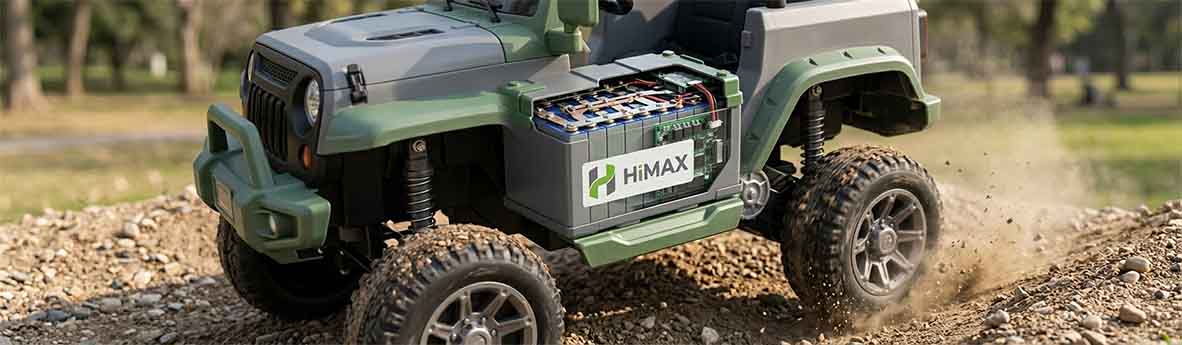
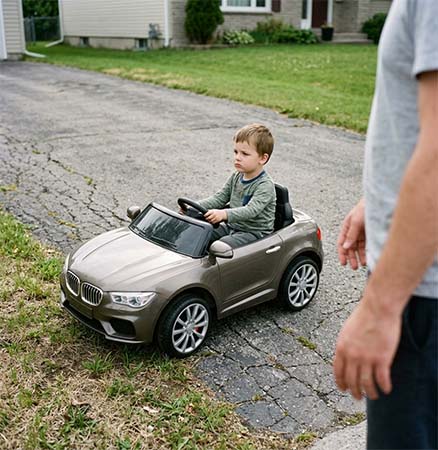
If we look at how children actually use ride-on cars, the load profile is far from stable—frequent starts, sudden stops, and occasional climbing or rough surfaces all place dynamic stress on the battery system.
Himax designs lithium batteries with these real conditions in mind:
- High burst current capability → supports acceleration and slope climbing without delay
- Stable voltage platforms (12V / 24V) → avoids speed fluctuation during use
- Lightweight battery structure → improves vehicle balance and energy efficiency
- Mechanical stability → resists vibration from outdoor terrain
Instead of optimizing only for capacity, the system is engineered around how power is actually consumed during operation.
→ Contact us to match your battery system with real-world usage conditions
2.Child-Safe Lithium Battery Architecture and Compliance
When a product is designed for children, safety expectations shift from “meeting standards” to “avoiding edge-case risks.” In ride-on vehicles, the battery sits in a semi-enclosed structure, which makes thermal and electrical control especially important.
Himax battery systems incorporate:
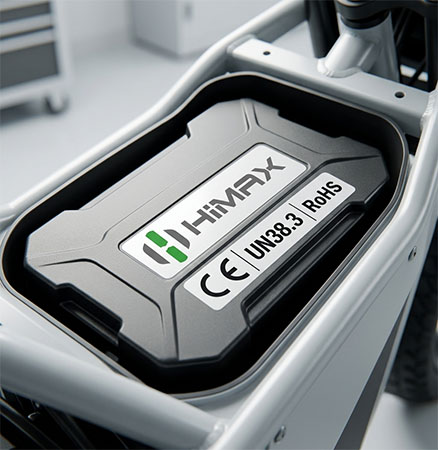
- Compliance with CE, UN38.3, IEC 62133, RoHS
- Multi-layer BMS protection against abnormal electrical behavior
- LiFePO4 chemistry options for enhanced thermal stability
- Controlled production ensuring cell consistency and predictable performance
These measures are not isolated features—they work together to reduce the probability of failure under long-term use.
→ Request documentation for your compliance process
3.Consistent Power Output for Real Driving Experience
A recurring issue reported by end users is that ride-on cars tend to feel powerful at the beginning but weaken noticeably over time. This is typically linked to how the battery discharges under load.
Himax lithium battery solutions address this through:
- Flat discharge characteristics → maintain consistent driving speed
- Extended usable capacity → more effective runtime, not just nominal capacity
- Low internal resistance design → improves power transfer efficiency
- Cycle stability → performance remains predictable over repeated use
From a user perspective, what matters is not peak performance, but whether the vehicle behaves consistently every time it is used.
→ Ask for discharge curve data for your system
4.Flexible OEM & ODM Lithium Battery Customization
Ride-on vehicles differ significantly in internal layout, motor configuration, and feature sets. This makes standardized battery packs difficult to integrate efficiently.
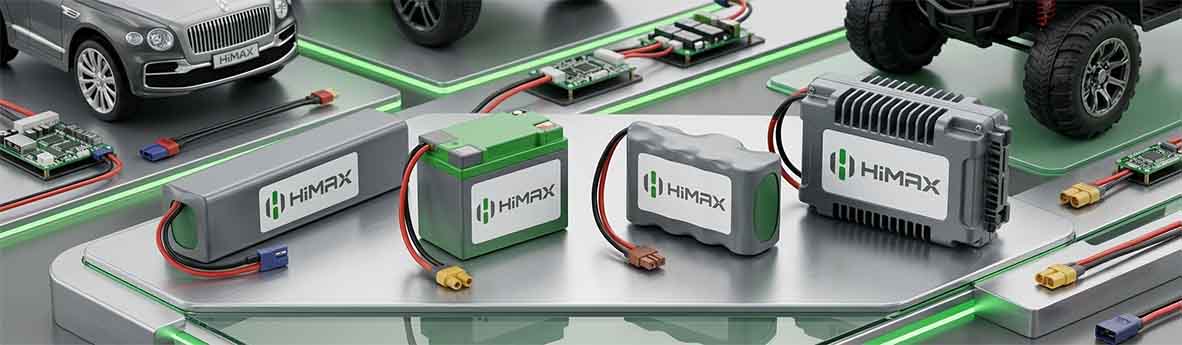
Himax provides customization across key dimensions:
- Voltage systems: 6.4V/12.8V / 24V/36V/48V lithium platforms
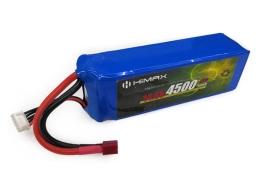
- Capacity design based on target runtime (typically 4.5Ah–20Ah+)
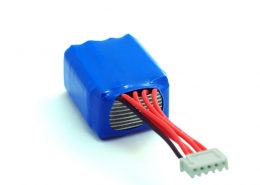
- Structural adaptation for compact installation spaces
- Connector and wiring integration
- BMS tuning aligned with controllers and chargers
This approach allows the battery to function as part of the system design, rather than an external constraint.
→ Share your design parameters for a tailored solution
5.Scalable Manufacturing with Consistent Quality
In practice, battery inconsistency is one of the main causes of product returns in the toy category. This is particularly evident during peak sales seasons.
Himax manufacturing focuses on reducing variability:
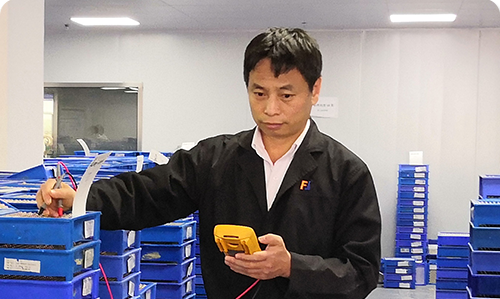
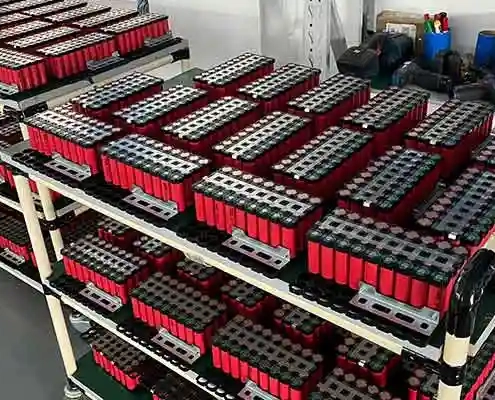
- Automated cell matching and grading
- Process-level quality monitoring
- Batch traceability across production cycles
- Stable output for large-volume orders
Consistency at scale is what allows brands to maintain performance across thousands of units, not just prototypes.
→ Explore our manufacturing capabilities
6.Global Logistics for Lithium Battery Supply

Shipping lithium batteries internationally is often underestimated in complexity. Regulatory compliance, packaging, and documentation all directly affect delivery timelines.
Himax supports global logistics through:
- UN38.3-compliant packaging systems
- Multi-mode transport coordination
- Documentation support for customs clearance
- Bulk shipment planning for OEM clients
This ensures batteries arrive not only safely, but also without unnecessary delays in distribution.
→ Discuss logistics planning for your market
7.Frequently Asked Questions
Q1: Why are lithium batteries increasingly used in ride-on cars?
Because they offer higher energy efficiency, longer lifespan, and more stable output compared to traditional solutions.
Q2: What voltage is typically used?
Most systems operate on 6.4V/12V, while larger or dual-motor models may use 36V/48V.
Q3: Is lithium battery safety reliable for children’s products?
Yes, when designed with proper BMS and certified standards, safety is highly controlled.
Q4: What affects runtime the most?
Battery capacity, motor load, terrain, and usage behavior all influence runtime.
Q5: Can lithium batteries reduce after-sales issues?
In many cases, yes—especially when replacing systems with poor cycle durability.