Emergency Exit Backup Battery: A Complete Guide to LiFePO4 Replacement Batteries for Exit Signs
If your exit sign or emergency light won’t hold a charge, blinks during a self-test, or fails its required 90-minute discharge test, the fix is almost always the same: the internal emergency exit backup battery has reached the end of its life. Facility managers, electrical contractors, and OEMs who search for “exit sign battery replacement,” “emergency lighting battery,” or “9.6V LiFePO4 battery pack” are usually trying to solve the same problem — find a safe, code-compliant, drop-in replacement fast.
This guide explains what makes a good emergency exit backup battery, how LiFePO4 compares with older chemistries, and walks through a real 9.6V 1500mAh replacement project we recently completed for a customer in the US.
Why Emergency Exit Signs Depend on a Reliable Backup Battery
Under NFPA 101 and UL 924, every emergency exit sign and egress light must be able to run on battery power for a minimum of 90 minutes after a power outage. The backup battery inside the fixture is what keeps the exit path visible when the building loses AC power — during a fire, a storm outage, or any grid failure. A weak or dead backup battery is one of the most common reasons an exit sign fails its monthly push-to-test or annual 90-minute test, and it is also one of the most common code violations found during fire inspections.
Because the battery is doing safety-critical work, replacement batteries need to match the original in voltage, capacity, connector type, and discharge current — not just “roughly fit.”
NiCd vs NiMH vs LiFePO4: Choosing the Right Emergency Lighting Battery Chemistry
| Chemistry | Typical Cycle Life | Self-Discharge | Temperature Tolerance | Maintenance |
| Ni-Cd | 500–800 cycles | High | Good in cold | Prone to memory effect |
| Ni-MH | 500–1000 cycles | Moderate–high | Moderate | Capacity fade over time |
| LiFePO4 (LFP) | 2000+ cycles | Very low | -20°C to 60°C discharge | Stable voltage, low maintenance |
LiFePO4 has become the preferred emergency exit backup battery chemistry for new installations and retrofits because it offers roughly 2–4x the cycle life of Ni-Cd or Ni-MH, a flatter discharge curve (steadier voltage under load), no memory effect, and a safer thermal profile that holds up well in UL 924 abuse testing such as overcharge, short-circuit, and heating tests.
Key Specifications to Check Before Ordering a Replacement Battery
Before requesting a quote for an emergency exit backup battery, gather these details from the old battery or the fixture’s spec label:
- Nominal voltage (common values: 3.6V, 6V, 9.6V, 12.8V)
- Capacity (mAh/Ah) and energy (Wh)
- Cell configuration (e.g., 3S1P — three 18650 cells in series)
- Connector type (Molex, JST, MX4.2, bare leads, etc.)
- Wire length and gauge
- Physical dimensions and weight — must fit the existing battery compartment
- continuous / peak discharge current — must match the fixture’s lamp head load
- Charge voltage and max. charge current — for compatibility with the fixture’s built-in charger circuit
A supplier who can customize connector, wire length, and PCM (protection circuit) parameters around your existing fixture — rather than forcing you to redesign your wiring harness — will save significant time on a replacement project.
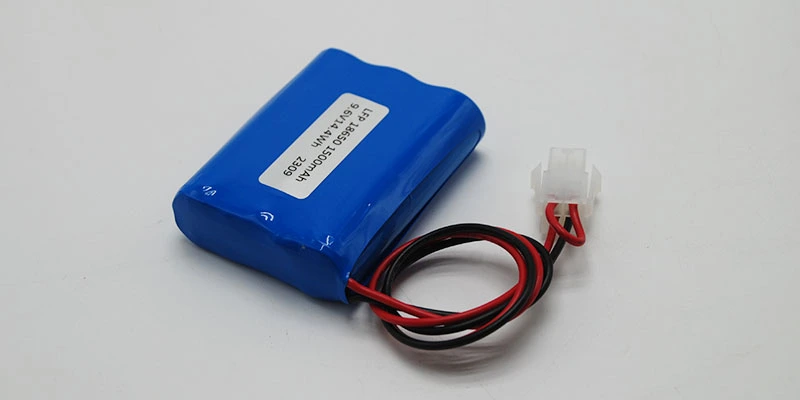
Real Case Study: Replacing a 9.6V 1500mAh Emergency Exit Backup Battery
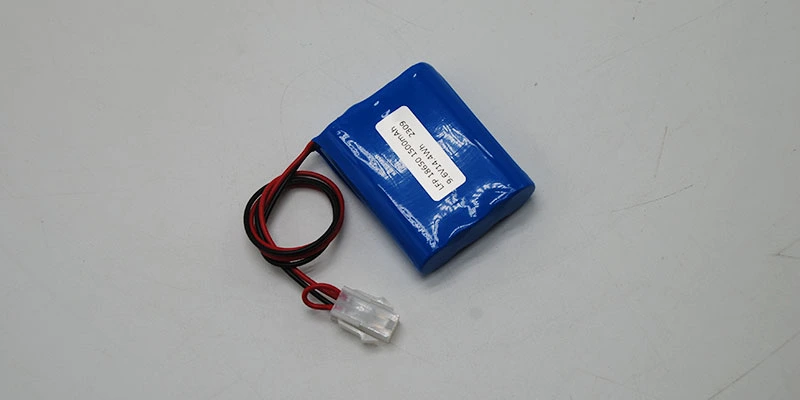
Earlier this year, a boatbuilding and marine equipment company in the northeastern United States contacted Himax Electronics after struggling to source a replacement battery for their emergency exit signage. Their original 9.6V 1500mAh 3S1P 18650 LiFePO4 battery pack — used to keep exit signage lit during power loss — was discontinued and unavailable through their usual channels.
Here is how the project came together:
- Requirement confirmation. The customer needed 5 units to replace failing batteries in existing fixtures. Our sales engineer confirmed voltage, capacity, and configuration, and asked whether the batteries were for testing or full replacement, since that affects how tight the dimensional and connector matching needs to be.
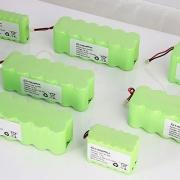
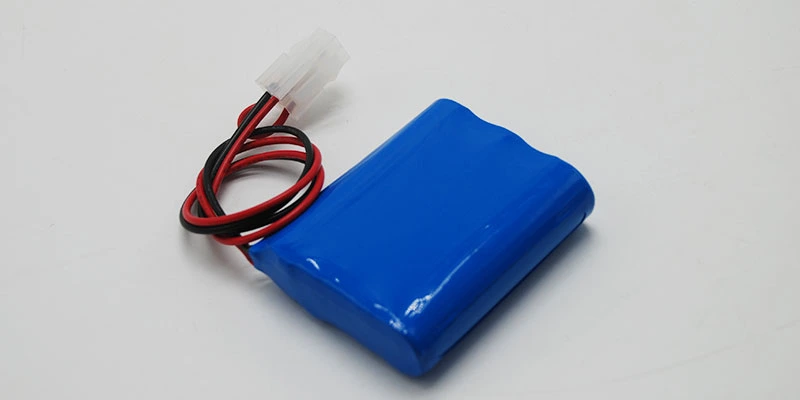
- Specification matching. We proposed our standard 9.6V 1500mAh 3S1P 18650 LiFePO4 battery pack, built around three 3.2V 1.8Ah LiFePO4 18650 cells:
| Item | Rating |
| Battery Type | LiFePO4 (LFP) |
| Configuration | 3S1P |
| Nominal Voltage | 9.6V |
| Nominal Capacity | 1500mAh |
| Energy | 14.4Wh |
| Charge Voltage | 10.8V |
| Discharge Cut-off Voltage | 7.5V |
| Max. Continuous Discharge Current | 1.5A |
| Peak Discharge Current | 3A |
| Max. Charge Current | 0.75–1.5A (customizable) |
| Connector | MX4.2 5557/5559-4PIN (Molex compatible) |
| Dimensions | Approx. 56 × 20 × 71 mm |
| Weight | Approx. 143g |
| Cycle Life | 2000 times @ 80% SOC |
| Reference Standards | GB/T18287-2013, UL1642, CE61960 |
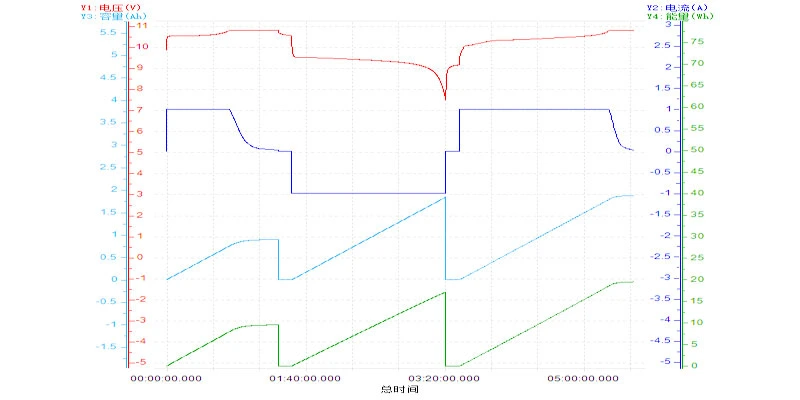
- Customization for exact fit. Because the battery powers emergency exit signage, connector type, wire length, and dimensions had to match the customer’s existing wiring harness precisely, so our engineering team confirmed these details before production to guarantee a true drop-in fit.
- Quality verification before shipment. Every pack goes through voltage, internal resistance, and protection-circuit function checks. Before shipment, we also share photos and full test data with the customer for sign-off — a step that matters even more for safety-related emergency lighting products.
- Production and delivery. With specifications confirmed and payment received, production lead time was approximately 15–20 days, followed by DHL shipment with a typical 7–9 day transit time.
This project is a fairly typical example of what B2B buyers — electrical contractors, exit sign OEMs, marine equipment suppliers, and facilities teams — need when their original emergency exit backup battery goes end-of-life: exact voltage/capacity/connector matching, safety testing data, and a manufacturer who can customize rather than force a redesign.
Safety and Certification: What to Look for in a Manufacturer
An emergency exit backup battery is a safety component, so certification and testing matter as much as price. When evaluating a LiFePO4 battery supplier, look for:
- Compliance with GB/T18287-2013, UL1642, and CE61960 (or equivalent standards for your market)
- Documented cell safety performance — overcharge, over-discharge, short-circuit, and heating (thermal abuse) testing with no fire or explosion
- A PCM/BMS protection circuit with overcharge, over-discharge, over-current, and short-circuit protection
- Mechanical performance testing — crush, drop, and vibration testing
- A written specification sheet and test report you can hand to your fire-safety inspector or engineering team
Beyond Exit Signs: Custom LiFePO4 Packs for Other Backup Applications
The same 18650 LiFePO4 platform used for emergency exit backup batteries is also widely used in solar street lighting, safety monitoring equipment, marine electronics, and other explosion-proof or standby-power devices. If your application needs a different voltage, capacity, or connector, our team can configure the cell count, PCM parameters, wire length, and connector to match your existing equipment.
Get a Custom Quote for Your Emergency Exit Backup Battery
Himax Electronics designs and manufactures custom LiFePO4 battery packs for emergency lighting, exit signs, and other backup-power applications, with over 20 years of experience in lithium battery pack manufacturing. If you have an existing battery to match — or a new fixture design that needs a backup power source — send us the voltage, capacity, connector, and dimensions (or a photo of the old battery/label), and our engineering team will confirm compatibility and provide a tailored quotation.
Contact Himax Electronics for a custom emergency exit backup battery quote today.