1.Matching Battery Output to Vacuum Pump Behavior (Core Load Logic)
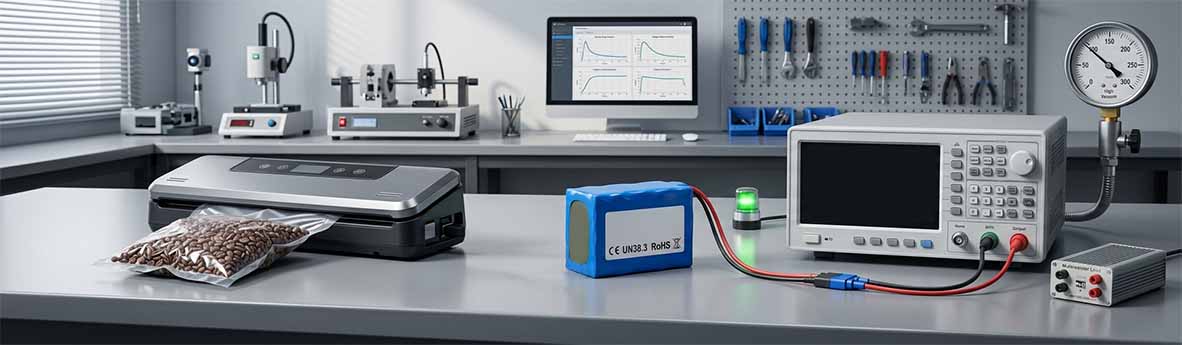
Vacuum pumps operate with instantaneous startup current + rapidly decreasing load once pressure builds, creating a non-linear demand curve.
Engineering alignment includes:
- Startup surge support → insufficient current leads to weak initial suction
- Voltage plateau stability → determines whether target vacuum pressure is reached
- Dynamic load response → adapts from high-load start to low-load holding phase
- Energy recovery between cycles → supports continuous batch sealing
Failure mechanism:
→ If voltage drops early → vacuum level never reaches threshold → residual air remains
→ Request pump curve-based battery tuning
2.Safety Implications in Food Preservation Scenarios
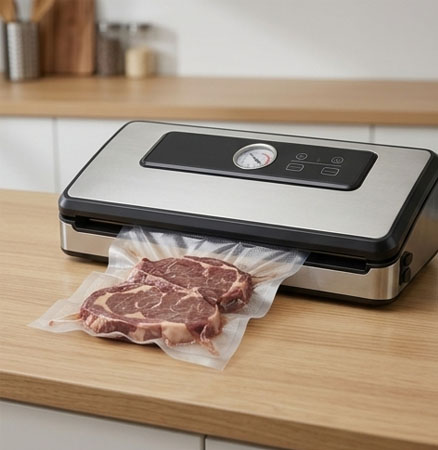
Unlike general electronics, failure in vacuum sealers does not only affect device function—it directly impacts food preservation quality and safety duration.
Battery-related risks include:
- Incomplete vacuum → oxygen remains → accelerated food spoilage
- Unstable power to heating strip → weak seal → air leakage
- Thermal accumulation → casing deformation or user discomfort
HIMAX battery systems are designed with:
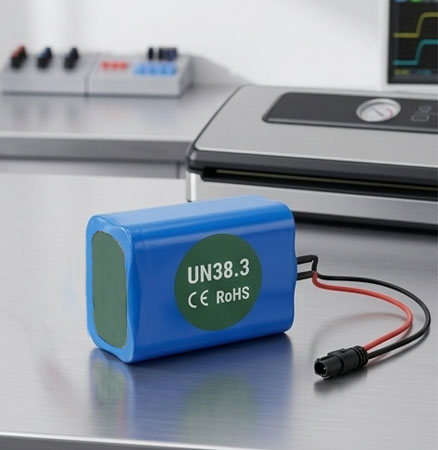
- Certified compliance: CE / UN38.3 / IEC62133 / RoHS
- Multi-layer BMS with thermal cutoff logic
- Stable chemistry cells to reduce failure variability
→ Request safety validation data for food appliance integration
3.Repeatability Under Batch Sealing Conditions
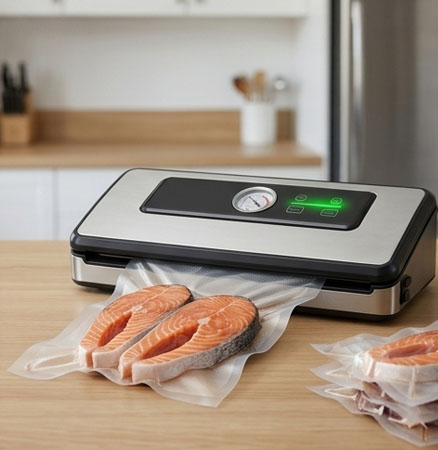
Real-world usage shows vacuum sealers are often used in rapid consecutive cycles, especially in meal prep scenarios.
Engineering priorities shift from peak performance to repeatability:
- Stable suction across multiple bags
- Controlled temperature rise during repeated heating cycles
- Consistent sealing results regardless of battery level
Failure mechanism:
→ Heat buildup + voltage drop → sealing strip temperature insufficient → seal failure
→ Ask for multi-cycle performance validation
4.Battery Strategy for Compact Dual-Load Systems
Vacuum sealers are unique in that they combine motor load (pump) + resistive load (heating strip).
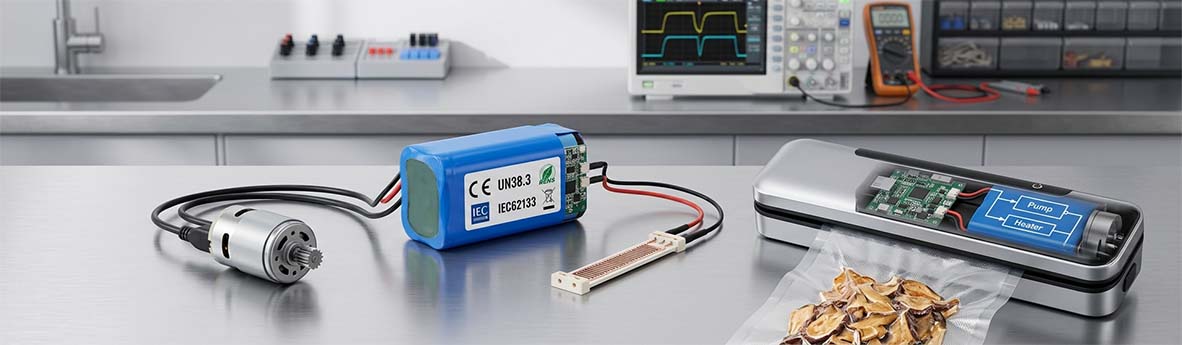
Battery integration must consider:
- Voltage compatibility with both subsystems
- Current distribution between pump and heater
- Structural constraints in handheld devices
Typical configurations:
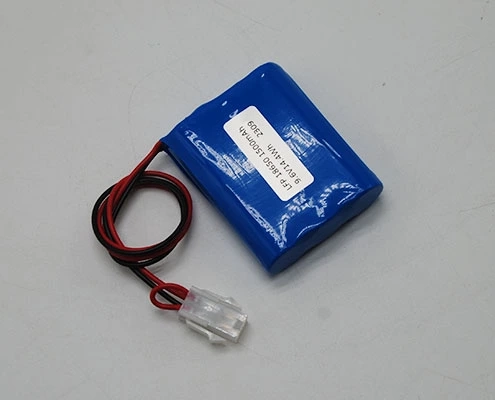
- 1S–2S Li-ion systems
- 1500–3000mAh capacity range
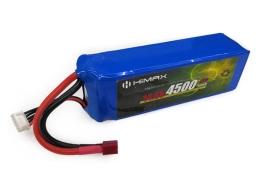
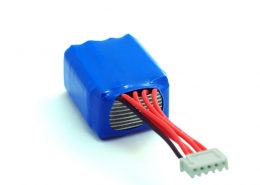
- Cylindrical or Li-Po depending on space constraints
→ Share your dual-load architecture for precise design
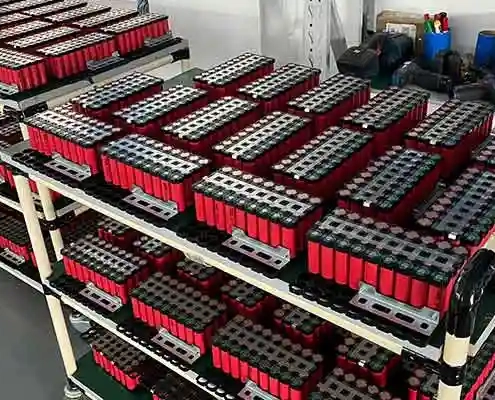
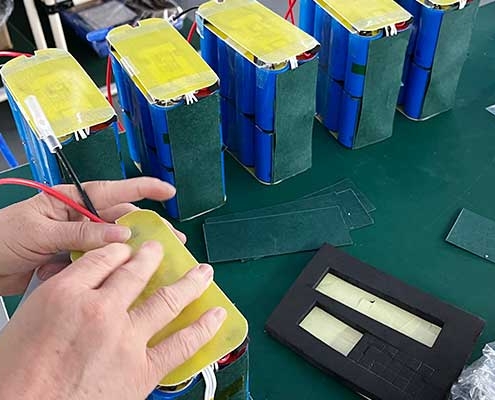
5.Manufacturing Control for Pulse-Load Consistency
nlike steady-load devices, vacuum sealers stress batteries through repeated pulse discharge cycles, making consistency a key manufacturing challenge.
Production control includes:
- Low internal resistance cell selection
- Matching for pulse discharge consistency
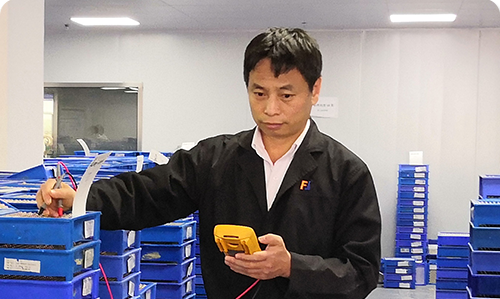
- Functional testing under simulated vacuum cycles
- Thermal behavior verification
→ Explore pulse-load validation testing
6.Logistics for Consumer Appliance Deployment
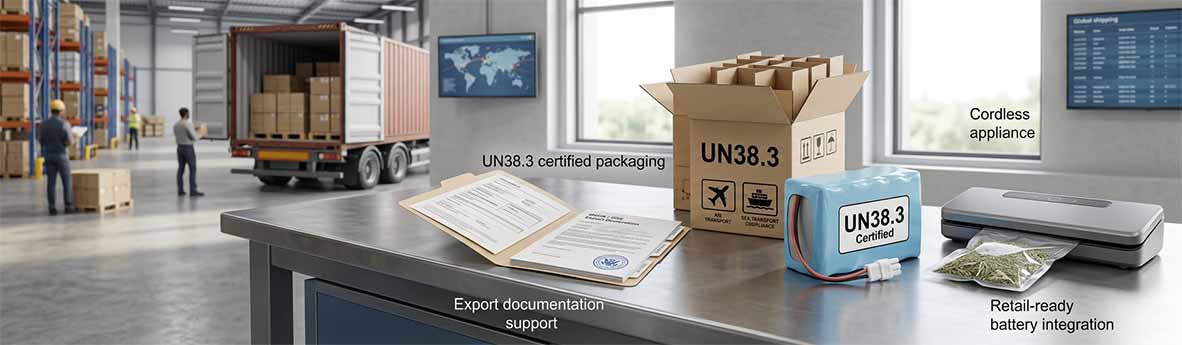
Battery-powered kitchen appliances must meet global shipping and regulatory requirements.
- UN38.3 certified packaging
- Air/sea transport compliance
- Export documentation support
- Retail-ready battery integration
→ Optimize your global deployment strategy
7.Frequently Asked Questions
Q1: Why does suction become weaker after several uses?
- Battery voltage drops under load → pump efficiency decreases
- Internal resistance increases with temperature → reduced current output
- Result → vacuum level insufficient for proper sealing
Q2: Why do some seals fail even when the machine is working?
- Heating strip requires stable voltage
- Voltage fluctuation → insufficient heat generation
- Result → incomplete sealing → air leakage
Q3: How many sealing cycles can a battery support per charge?
- Typically 20–50 cycles
- Depends on pump power, seal duration, and battery capacity
- Higher discharge efficiency → more usable cycles
Q4: Can battery design affect food preservation quality?
- Yes → directly impacts vacuum level and seal integrity
- Poor battery performance → shorter food storage time