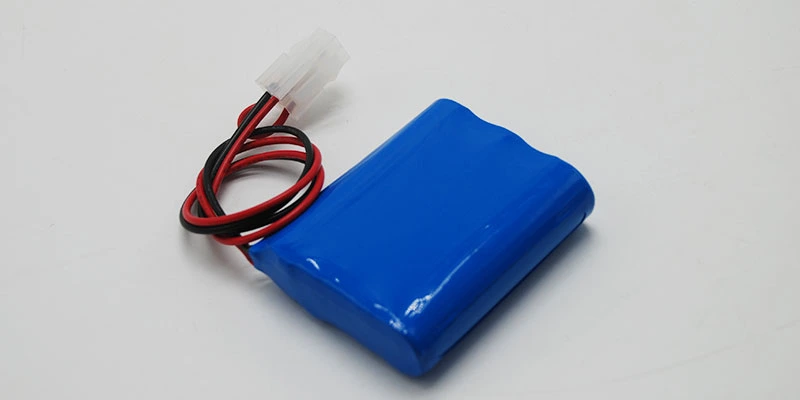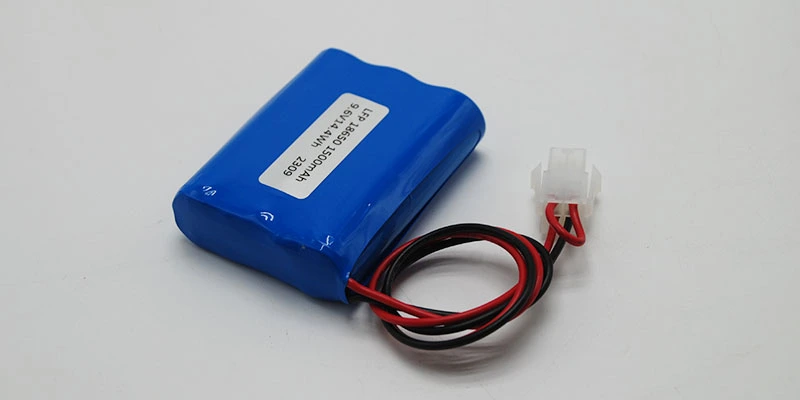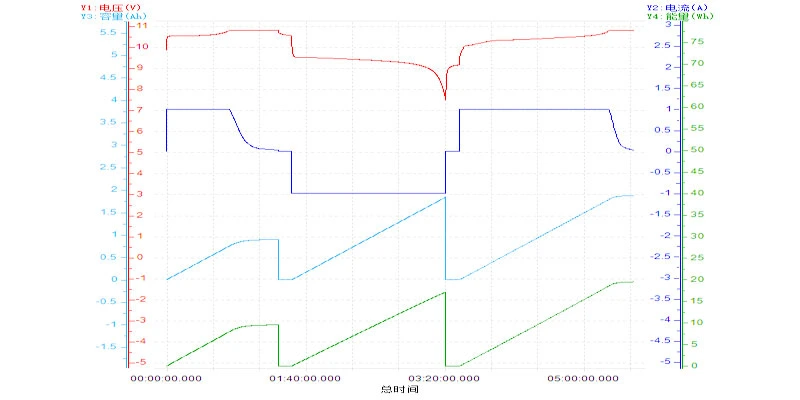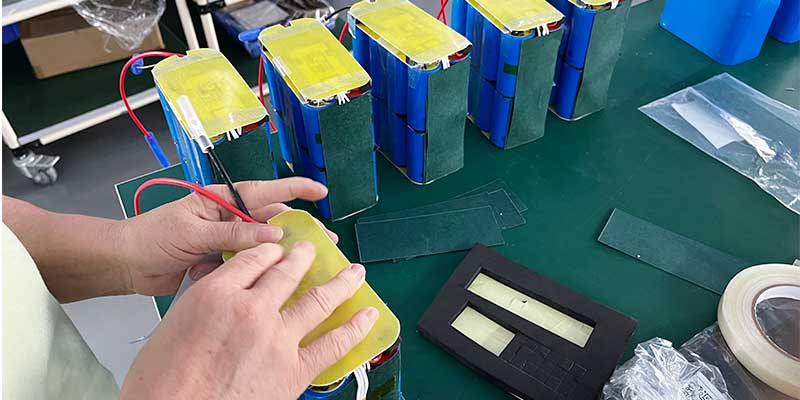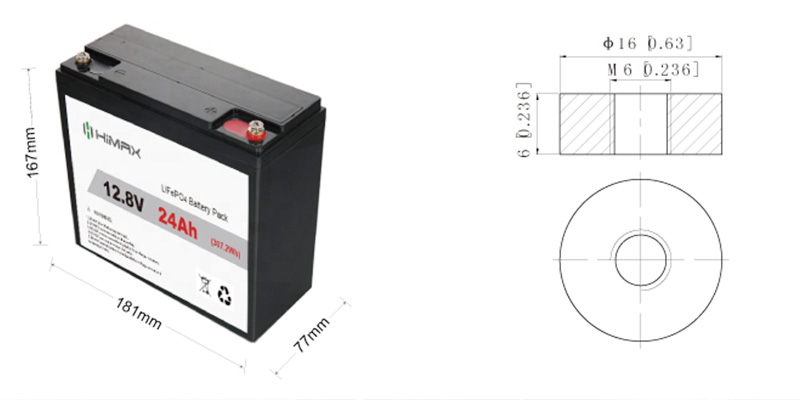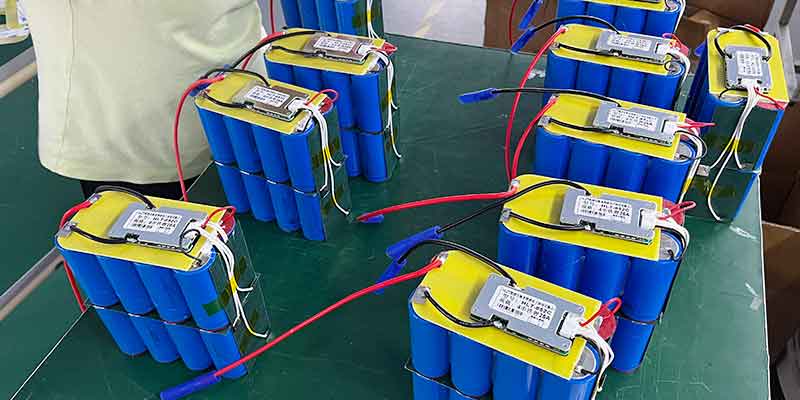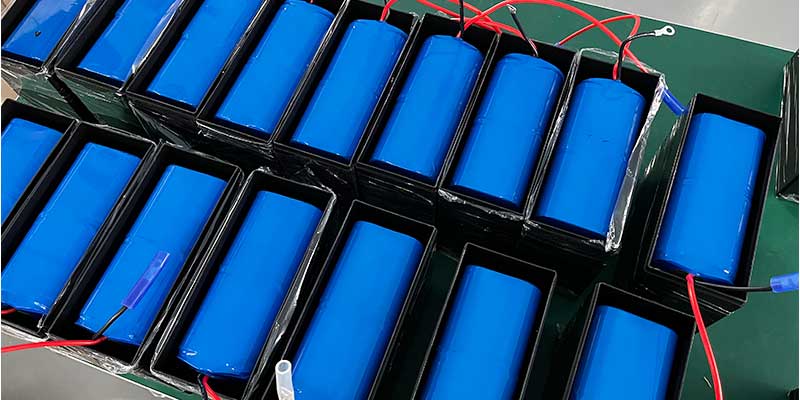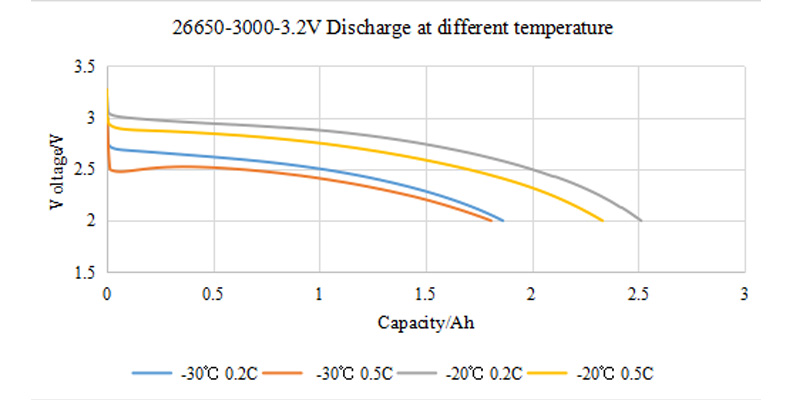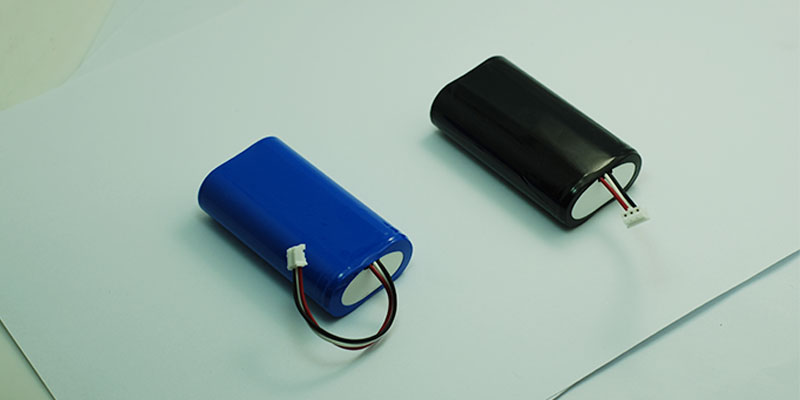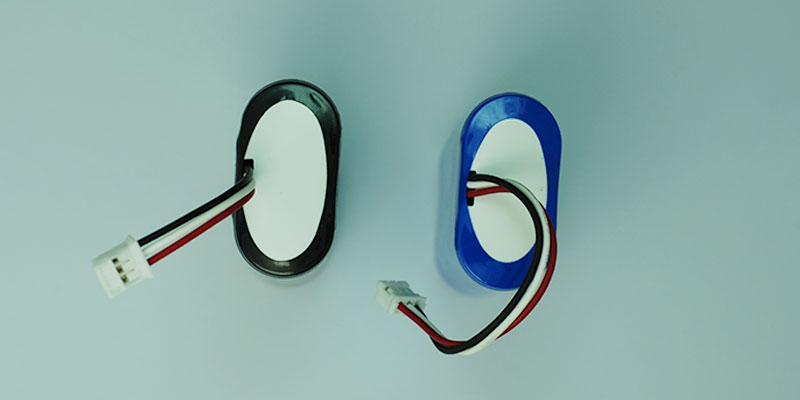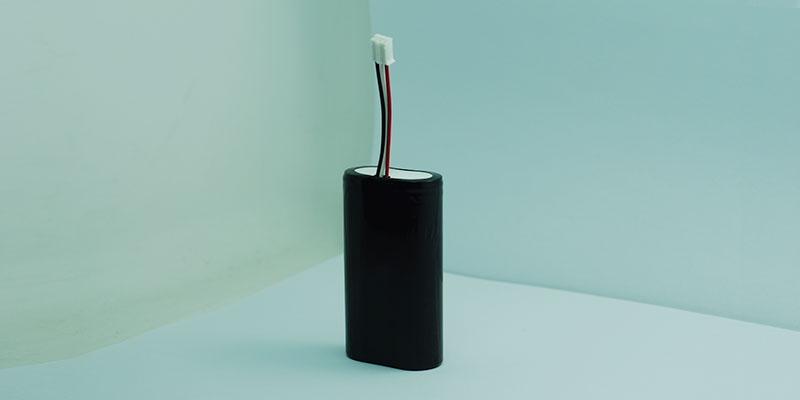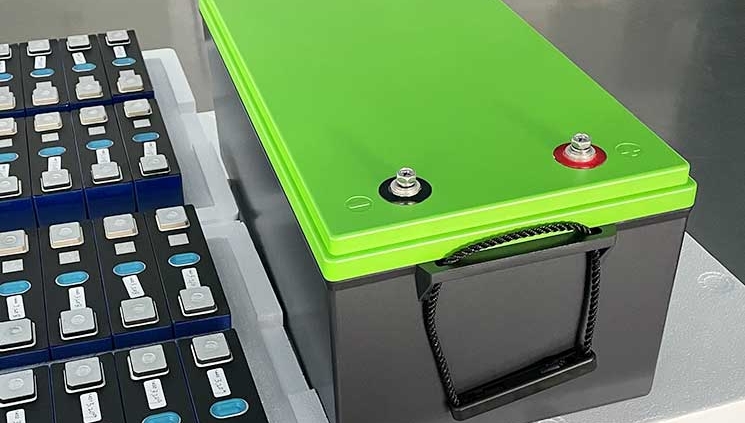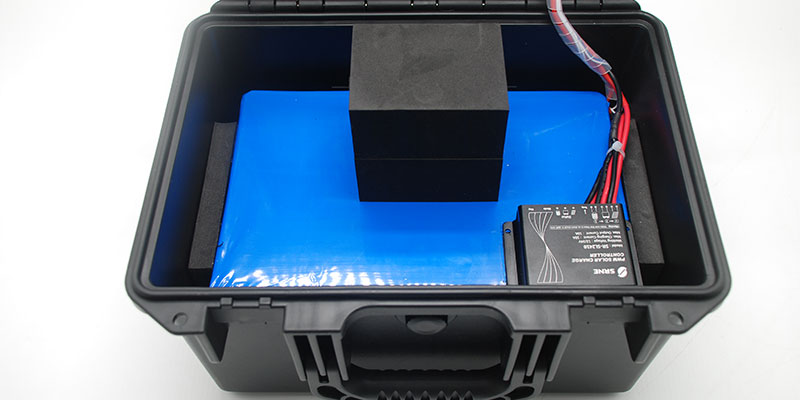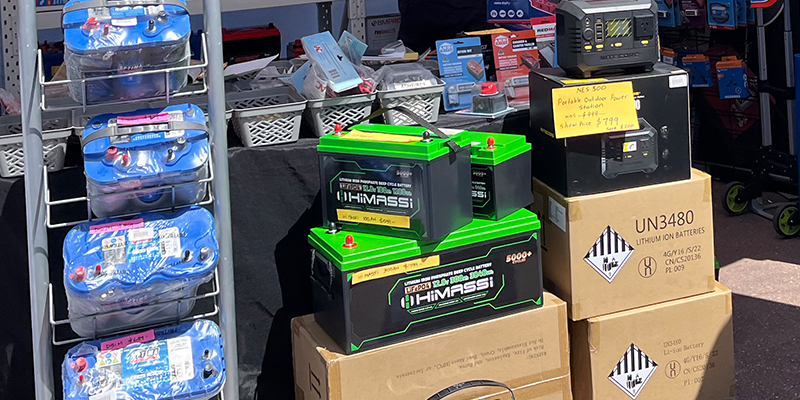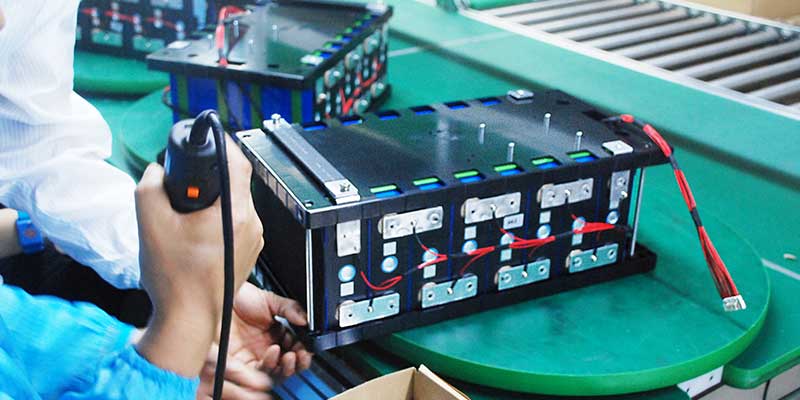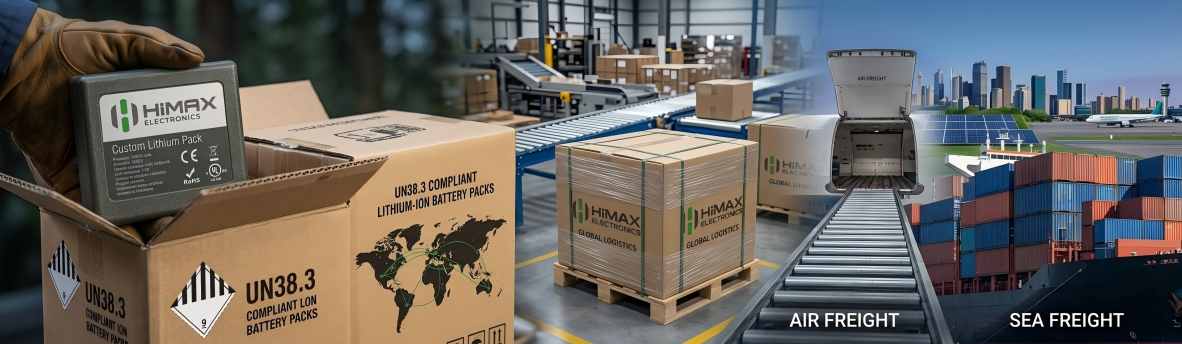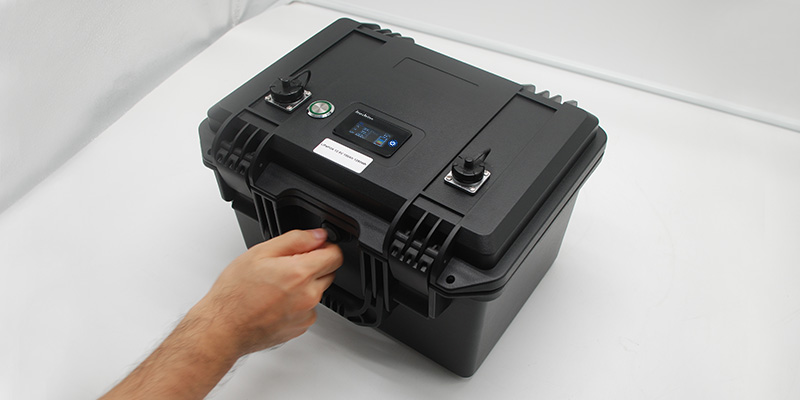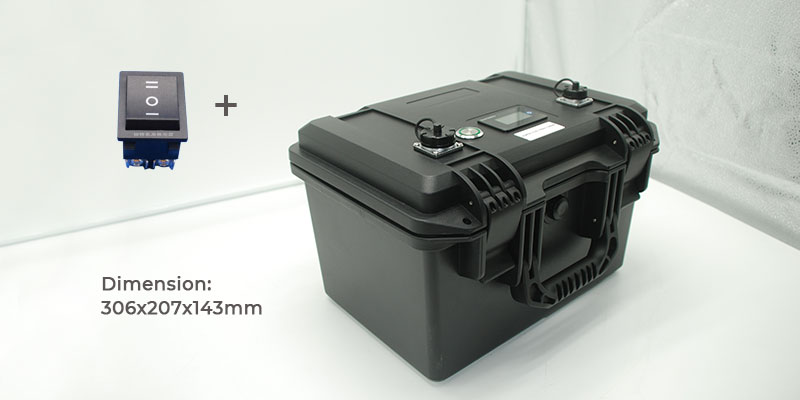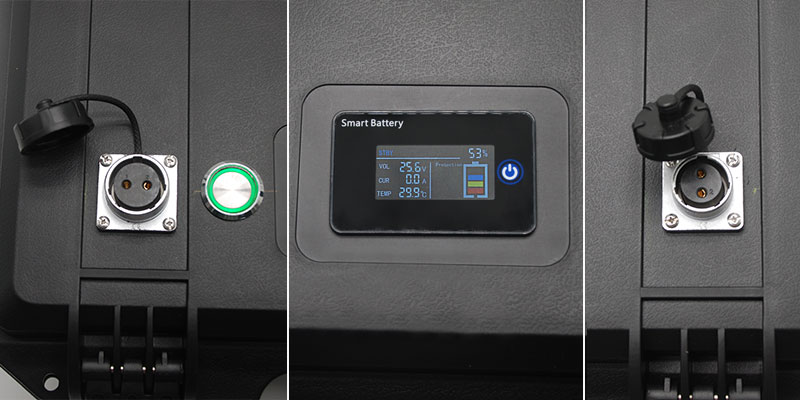
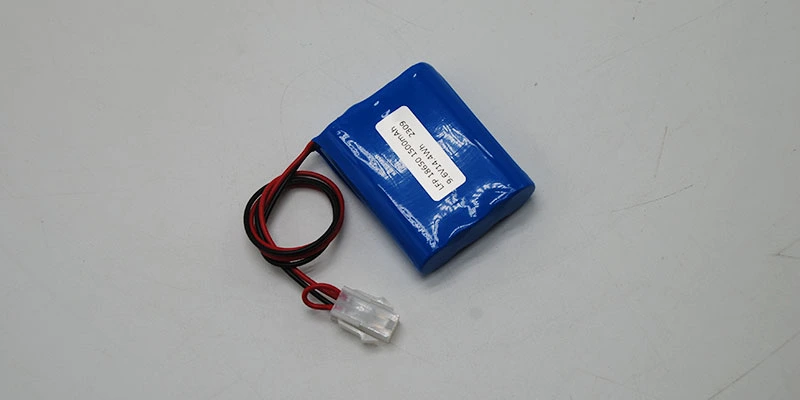
battery powered concrete screed LiFePO4 battery 25.6V 1.8Ah compact battery pack design

I’m Joan, a Battery Engineer at Himax Electronics, specializing in custom battery pack development for demanding OEM applications. Over the past decade, I’ve worked closely with manufacturers who rely on battery powered concrete screed systems—tools that don’t just need power, but need reliable power under extreme conditions.

If you’re a B2B buyer or equipment manufacturer, you already know the reality: traditional power solutions struggle with vibration, weight, and lifecycle limitations. That’s where a well-engineered LiFePO4 battery pack (25.6V 1.8Ah) changes the game.

In this article, I’ll walk you through how we designed a battery solution that can withstand continuous heavy vibration, reduce equipment weight by up to 70%, and extend lifecycle by 5–10×—without overpromising, just solid engineering.

Why Battery Powered Concrete Screed Systems Demand Better Energy Solutions

Concrete screeds are not gentle tools. They operate in one of the harshest environments in construction:

  • Constant high-frequency vibration
  • Dust, moisture, and temperature variation
  • Long continuous working hours
  • Heavy mechanical stress

Traditional power solutions—whether fuel-based or outdated battery systems—often fail in one or more of these areas.

The Core Problems I See

From my work with OEM clients, the biggest challenges include:

  • Power instability under vibration
  • Excessive equipment weight
  • Short battery lifespan and frequent replacements
  • Inconsistent supply quality

A poorly designed battery for a battery powered concrete screed doesn’t just reduce performance—it increases downtime and operational costs.

battery powered concrete screed operating on construction site with stable LiFePO4 battery power

Why LiFePO4 Battery Technology Is the Right Choice

Let’s talk chemistry. Choosing the right battery chemistry is the foundation of everything.

For this application, we selected LiFePO4 (Lithium Iron Phosphate), and specifically designed a 25.6V 1.8Ah (8S1P) battery pack.

Key Advantages of LiFePO4

Compared to traditional lithium-ion or lead-acid batteries:

  • Higher thermal stability
  • Longer cycle life (up to 2000 cycles)
  • Better safety performance
  • Stable voltage output under load

This is why I consistently recommend LiFepo4 battery 25.6V 1.8Ah for construction equipment applications.

Real Engineering Data

From the specification:

  • Nominal Voltage:6V
  • Capacity:8Ah
  • Energy:08Wh
  • Max Continuous Discharge:3A
  • Cycle Life:≥2000 cycles
  • Operating Temperature:-20°C to 60°C

This isn’t theoretical performance—this is validated under controlled testing conditions .

Designed for Vibration: Stability Under Extreme Conditions

If there’s one thing that defines a battery powered concrete screed, it’s vibration.

The Engineering Challenge

Most battery packs fail not because of chemistry, but because of:

  • Internal connection fatigue
  • Structural weakness
  • Poor cell fixation

How We Solved It

In this custom pack, we implemented:

  • Reinforced internal structure
  • Optimized cell arrangement (8S1P)
  • Shock-resistant housing design
  • Low internal impedance (≤200mΩ at pack level)

Verified Performance

The battery passed vibration testing:

  • Frequency range: 10–55 Hz
  • Duration: multi-axis testing
  • Result: No leakage, no fire, no explosion

What This Means for You

For manufacturers:

  • Reliable operation in real-world construction environments
  • Reduced failure rates
  • Lower maintenance costs

This is what makes a battery powered concrete screed truly dependable.

Lightweight Design: Up to 70% Weight Reduction

Let’s talk about something every operator cares about—weight.

Traditional systems, especially lead-acid solutions, are heavy. And in construction, weight directly impacts:

  • Operator fatigue
  • Ease of transport
  • Efficiency on-site

Our Solution

The LiFepo4 battery 25.6V 1.8Ah pack weighs approximately:

  • 44 kg

Compared to traditional alternatives, this can reduce system weight by up to 70%.

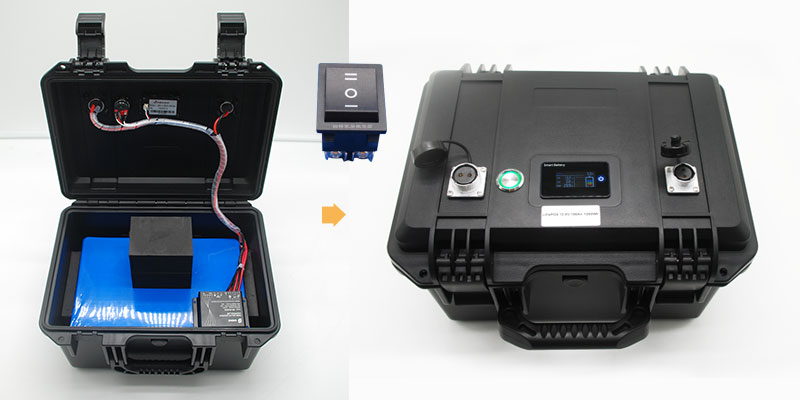
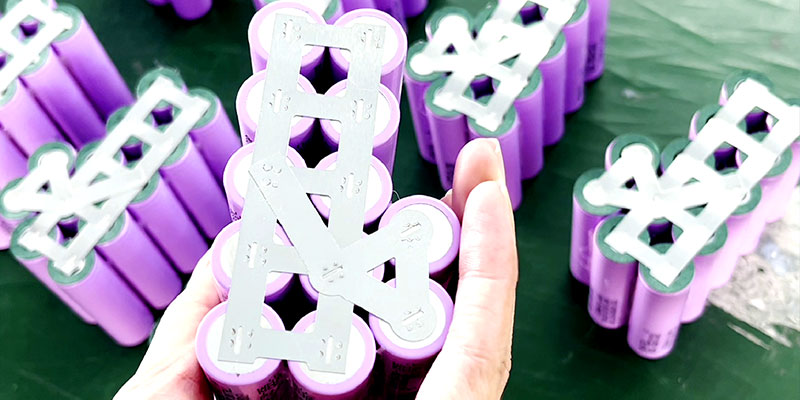
LiFePO4 battery 25.6V 1.8Ah internal structure designed for vibration resistance in screed equipment

Why It Matters

For your equipment:

  • Easier handling
  • Improved ergonomics
  • Increased productivity

For your business:

  • Better product positioning
  • Competitive differentiation

And yes—your customers will notice the difference immediately.

Long Lifecycle: 5–10× Longer Than Traditional Solutions

Now let’s talk about lifecycle—because this is where the real ROI happens.

The Reality of Battery Replacement

Frequent battery replacement leads to:

  • Higher operational costs
  • Increased downtime
  • Customer dissatisfaction

What We Achieved

With LiFePO4 chemistry:

  • ≥2000 charge/discharge cycles
  • Capacity retention ≥80% after full lifecycle

Compared to traditional batteries:

  • 5–10× longer lifespan

Why This Matters for B2B Buyers

For procurement teams:

  • Lower total cost of ownership
  • Reduced inventory pressure
  • Improved supply chain stability

This is why I often say: choosing the right battery is not a cost—it’s an investment.

Safety: Built Into the Design, Not Added Later

Safety is not a feature—it’s a requirement.

Built-In Protection

The battery pack includes:

  • Overcharge protection (3.75V per cell detection)
  • Over-discharge protection (2.2V threshold)
  • Over-current protection (up to 27A detection)
  • Short-circuit protection

Mechanical Safety

  • Crush test: no fire, no explosion
  • Drop test: stable after 1m drop
  • Thermal test: stable up to high temperatures

All verified under standard testing protocols .

What This Means

For your product:

  • Reduced liability
  • Compliance with industry standards
  • Increased customer trust

A safe battery powered concrete screed is not optional—it’s expected.

Custom Battery Pack Development: My Approach

At Himax Electronics, customization is not just about specs—it’s about solving real problems.

My Process

When I work with OEM clients, I follow a structured approach:

1. Application Analysis
· Load profile
· Operating environment
· Mechanical constraints

2. Cell Selection
· Chemistry (LiFePO4)
· Capacity (1.8Ah)
· Configuration (8S1P)

3. Pack Design
· Structural reinforcement
· Thermal considerations
· Electrical protection

4. Validation Testing
· Electrical performance
· Mechanical durability
· Safety compliance

The Result

A fully optimized LiFepo4 battery 25.6V 1.8Ah tailored for your application.

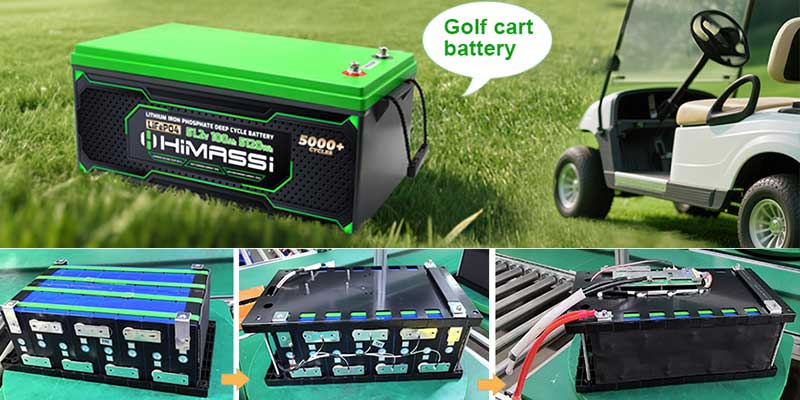
lightweight battery powered concrete screed solution with long cycle life LiFePO4 battery technology

Supply Chain Stability: What B2B Buyers Actually Need

Let’s be practical. Performance is important—but supply stability is critical.

Common Concerns

  • Inconsistent quality
  • Delivery delays
  • Lack of technical support

Our Approach

  • Standardized manufacturing processes
  • Strict quality control
  • Reliable delivery timelines
  • Direct engineering support

Business Impact

For your company:

  • Predictable production schedules
  • Reduced risk
  • Long-term partnership reliability

This is how we support scalable growth for battery powered concrete screed manufacturers.

Application Value: Real Impact on Equipment Performance

Let’s summarize what this battery solution delivers:

Performance Benefits

  • Stable output under vibration
  • Lightweight design
  • Long lifecycle
  • High safety standards

Business Benefits

  • Lower total cost
  • Improved product reliability
  • Stronger market competitiveness

This is not just a battery—it’s a performance upgrade for your entire system.

Conclusion: The Right Battery Powers Better Equipment

In demanding applications like construction, the difference between average and exceptional performance often comes down to one component—the battery.

A well-designed battery powered concrete screed system powered by a LiFepo4 battery 25.6V 1.8Ah delivers:

  • Stability under extreme conditions
  • Significant weight reduction
  • Long-term reliability
  • Enhanced safety

From my experience, the right battery doesn’t just power your equipment—it strengthens your entire product strategy.

Call to Action

If you’re looking to upgrade your battery powered concrete screed with a reliable, lightweight, and long-lasting power solution, let’s talk.

Contact us today to develop a custom battery pack tailored to your application needs.


Author: Joan Battery Engineer – Custom Pack Development
Published: April 13th, 2026

best-lifepo4-solar-battery

In the rapidly evolving landscape of custom energy storage, the transition from a conceptual schematic to a physical battery pack is fraught with technical challenges. Among these, dimensional tolerance is often the “silent killer” of high-end projects.

This article explores the critical relationship between mechanical constraint systems and electrochemical safety, illustrating why professional-grade custom jigs are not merely accessories, but fundamental requirements for high-precision assembly.

The Case Study: When 1mm Defines Success or Failure

A client recently approached us with a requirement for a specialized lithium battery pack designed to fit into a pre-existing, precision-milled aluminum enclosure. The internal clearance was marginal, leaving virtually zero room for “pack swelling” or assembly misalignment.

  • The Initial Challenge: In the prototype phase, assembly was conducted using standard alignment methods without a project-specific dedicated jig.
  • The Symptom: While electrical characteristics (voltage, impedance, capacity) were flawless, cumulative tolerance errors in nickel-strip welding resulted in a pack that was 2mm widerthan the CAD specification.
  • The Result: The pack could not be inserted into the battery shell without risking mechanical stress on the cells—a major safety hazard.

Root Cause Analysis: Cumulative Tolerance in Manual Assembly

In battery pack assembly, error is cumulative. Without a rigid constraint system, micro-movements aggregate, resulting in a product that fails the “Go/No-Go” gauge test.

The breakdown of tolerance drift typically looks like this:

  1. Cell Variance: Each cell has a diameter tolerance (e.g., ). Aligning 10 cells in a row can theoretically create a 0mm variance.
  2. Adhesive/Insulation: Inconsistent application of barley paper or structural adhesive can add another 5mm.
  3. Welding Displacement: Without a jig, the pressure of the spot-welding needle can cause cells to shift ( to  ) before the weld nugget solidifies.

lifepo4-48v-battery

The Solution: Engineering a Custom Constraint System

Recognizing that manual alignment was insufficient for the client’s specific shell requirements, our engineering team pivoted to a Jig-Based Manufacturing Process.

  1. Precision CNC-Milled Fixtures

We designed a custom assembly jig using high-stability, non-conductive materials (such as POM or Epoxy board).

  • Zero-Tolerance Cavities: Each cell is seated into a CNC-milled pocket that compensates for the maximum allowable cell diameter while enforcing a strict outer boundary.
  • Vertical Compression: The jig applies uniform lateral and vertical pressure, ensuring cells are perfectly planar before the first weld is made.
  1. Specialized Nickel Strip Alignment

Instead of free-handing the nickel tabs, the new jig featured “guide slots” for the nickel strips. This ensures:

  • Current Path Consistency: Every weld point is exactly where the simulation predicted.
  • Structural Compactness: No “overhang” of nickel or solder, keeping the pack’s footprint within the 1mm tolerance threshold.

The Critical Role of Casing Integrity

Modern battery enclosures often utilize ultrasonic welding or high-precision interference fits. Once a shell is sealed, there is no “fixing” an internal error. Forcing a battery pack into a tight shell creates significant risks:

  • Mechanical Stress: Constant pressure on cell walls can lead to internal micro-shorts over time.
  • Thermal Expansion: Batteries naturally expand slightly during charge/discharge cycles. If the initial assembly does not account for this with precise tolerances, expansion can crack the casing or damage the Battery Management System (BMS).

Engineering Insights: Communication is Key to Precision

The most significant takeaway from this case is that Dimensional Specification is just as critical as Amp-Hour Capacity. For clients with high-precision requirements, we recommend the following protocol during the Request for Quote (RFQ) phase:

  • Define “Critical-to-Quality” (CTQ) Dimensions: Don’t just provide the internal dimensions of your box. Define the Maximum Envelope Dimensions (MED) of the battery pack. Our engineers will then work backward to calculate the necessary jig offsets.
  • Discuss Fixturing Early: If your project has a clearance of less than 2mmbetween the pack and the shell, a custom jig is mandatory. We discuss the cost-benefit analysis of jig fabrication upfront to ensure high yield rates.
  • Tolerance Stack-up Analysis: We provide clients with a report that includes cell manufacturer tolerances, shrink-wrap thickness, nickel strip positioning variance, and jig precision.

Technical Summary: Why Choose Jig-Stabilized Manufacturing?

Benefit Description
Repeatability Whether producing 10 units or 10,000, dimensions remain identical.
Safety Eliminates mechanical friction between the pack and the enclosure.
Serviceability Ensures the pack can be extracted for maintenance without damaging the shell.
Optimized Density Reduces wasted space (“slop”), often allowing more capacity in the same volume.

Precise positioning and welding of battery packs

Conclusion

At our facility, we believe that “close enough” is not an engineering term. The failure of a pack to fit into its housing is not just a logistical delay—it is a failure of process control. By investing in custom jigs and rigorous fixture protocols, we ensure that our lithium solutions are as precise as the devices they power.

Are you working on a project with strict dimensional constraints? Contact our engineering team today to discuss your CAD requirements and how our custom fixturing process can guarantee a perfect fit.


solar-lifepo4-battery

In the rapidly evolving world of Lithium-ion power solutions, “compliance” is often the bridge between a successful product launch and a costly logistical nightmare. For many international buyers, navigating the alphabet soup of certifications—IEC, UL, CE, UN38.3—feels like a routine checkbox exercise. However, a recent case study from our engineering department highlights a critical lesson: Compliance is a holistic ecosystem, not a standalone component.


When a battery fails a lab test, the instinct is to blame the cells. But as we recently discovered during an SGS certification process for a long-term client, the “invisible” culprit is often the charger.


The Case Study: The Gap Between IEC 62133 and CE (EMC)


Recently, a client approached us to provide high-performance battery packs and matching chargers for an industrial application. The initial brief was clear: the units needed to pass IEC 62133 testing via SGS—the gold standard for battery safety.


We optimized the battery protection circuit (PCM) and cell selection to meet these safety rigorous standards. However, midway through the process, the client’s regulatory requirements shifted to include CE marking, which necessitates compliance with the Electromagnetic Compatibility (EMC) Directive.


The result? The system failed the EMC test. While the margin of failure was incredibly slim—a minor deviation in radiated emissions—the consequences were significant:


Project Delays: The testing timeline was pushed back by weeks.


Additional Costs: Re-testing fees and lab overheads added unexpected strain to the budget.


Engineering Re-work: We had to backtrack to shield the charger’s internal circuitry to dampen the interference.


This scenario could have been avoided if the full scope of the “End-Product” certification was defined at the quotation stage.

lifepo4-48v-battery

Understanding the Difference: Safety vs. Compatibility

To prevent these delays, it is vital to understand what these tests actually measure and why they cannot be treated as interchangeable.


  1. IEC 62133: The Safety Guardrail

IEC 62133 focuses almost exclusively on Physical and Chemical Safety. The lab subjects the battery to “torture tests”—crush, vibration, thermal abuse, and overcharging—to ensure the battery doesn’t catch fire or explode. It is about the integrity of the lithium chemistry and the protection board.


  1. CE & EMC: The “Good Neighbor” Policy

The CE mark, specifically the EMC portion (EN 61000 series), isn’t looking at whether the battery is “safe” in a fire-safety sense. Instead, it measures Electromagnetic Interference (EMI). It asks: Does this device emit “noise” that will interfere with other electronics (like a nearby radio or medical equipment)?


Chargers are notorious for failing EMC tests. Because they use switching power supplies (SMPS) to convert AC to DC, they generate high-frequency electrical noise. If the charger isn’t specifically designed with high-quality filters and shielding, it will fail the CE test—even if the battery itself is perfect.


The Domino Effect: Why “Small Deviations” Matter in Lab Testing

In our recent case, the deviation was “very small.” In a real-world scenario, that tiny amount of noise wouldn’t affect the product’s performance. However, accredited labs like SGS, Intertek, or TÜV operate on a binary Pass/Fail system.


A 1dB deviation over the limit is as much a “Fail” as a 50dB deviation. Once a failure is recorded, the lab requires:


A formal “Failure Analysis Report.”


Modified samples (Hardware changes).


A complete re-test of the failed parameters.


This “Domino Effect” eats away at your “Time-to-Market” (TTM), which is often the most valuable asset in the tech industry.


The “System-Level” Approach: Why Early Disclosure is Key

At our factory, we don’t just manufacture batteries; we engineer power systems. When you provide us with the exact list of certifications required for your target market at the start, we can adjust the following details before the first sample ever leaves our floor:


Charger Component Selection: We can opt for premium capacitors and inductors that naturally suppress EMI.


Shielding: We can add copper foil or specialized coatings to the internal housing of the charger or the battery casing.


PCB Layout: Our engineers can optimize the trace routing on the protection board to minimize “antenna effects” that broadcast noise.


Pre-Testing: We can perform in-house “pre-compliance” scans to ensure the 99% success rate when the units hit the official SGS lab.


A Checklist for Global Battery Procurement

To ensure your next project moves from “Prototype” to “Market” without friction, we recommend following this technical checklist when requesting a quote:


List Every Target Market: Are you selling in the EU (CE), USA (UL/FCC), Japan (PSE), or Australia (RCM)? Each has different EMC and safety thresholds.


Define the Test Standard Early: Don’t just say “I need a certificate.” Specify if you need IEC 62133 (Safety), EN 55032 (EMC for Multimedia), or EN 60601 (Medical).


Specify the “System” Testing: Will the battery be tested inside your device, or as a standalone component with its charger? Lab results vary wildly depending on how the system is grounded.


Allow for “Engineering Margin”: Low-cost, “budget” chargers rarely leave any margin for EMC testing. If you need certification, be prepared to invest in a “Certified Grade” charger.


Conclusion: Partnership Over Procurement


The relationship between a buyer and a battery factory should not be a simple transaction; it should be a technical partnership. The recent EMC failure we experienced served as a powerful reminder that transparency in certification requirements is the best way to save money.


By informing us of your full regulatory roadmap—including the “small” details like CE/EMC requirements—you empower our engineering team to provide a solution that is “Ready for Lab” on day one. This proactive communication prevents wasted testing fees, protects your timeline, and ensures that your brand is associated with quality and compliance.


Are you planning a project that requires SGS or UL certification? Don’t leave your compliance to chance. Contact our technical sales team today. We provide professional guidance on cell selection, PCM engineering, and charger compatibility to ensure your product passes the first time, every time.


HIMAX ELECTRONICS — Powering Innovation with Precision.


12V emergency light battery high-temperature test

What Is an Emergency Light Battery?

An emergency light battery is a backup power source designed to keep emergency lighting systems operational during power failures or fire incidents.

In high-risk environments, these batteries must:

  • Withstand extreme temperatures
  • Deliver stable output under load
  • Avoid premature shutdown from protection systems

👉 In real fire scenarios, this means the difference between functional evacuation lighting and total system failure.

12V 12Ah Lifepo4 Battery: Temperature Curve at 100°C

Quick Summary for Buyers

  • ✔ Operates in 100°C fire conditions
  • ✔ Sustains 10A discharge for 35 minutes
  • ✔ No BMS shutdownduring test
  • ✔ Designed for emergency lighting battery backup systems

👉 If your project involves fire-risk environments, this is a proven fire-resistant battery solution.

LiFePO4 emergency light battery 12.8V 12Ah in 100°C thermal chamber high temperature battery test

Why Emergency Light Battery Systems Fail in Real Fire Conditions

Most emergency light battery systems are designed around standard limits:

  • Operating range: 60–75°C
  • BMS triggers shutdown at high temperature
  • Result: lighting failure during critical moments

However, real-world fire conditions are different:

  • Temperatures can exceed 100°C within minutes
  • Ceiling-installed safety lightsface higher heat exposure
  • Flasher light LEDsystems depend on uninterrupted power

👉 Buyer Insight:
A battery that meets standard specs is not necessarily a battery that survives a fire.

Himax Approach: Engineering a High Temperature Battery for Real Scenarios

At Himax Electronics, we design high temperature battery systems based on real customer risks—not theoretical limits.

When a European client raised concerns about failure above 75°C, we conducted a 100°C real-condition validation test.

Tested based on actual fire-risk scenarios, not just lab assumptions.

Test Setup: Simulating Fire Conditions for Emergency Lighting Battery Backup

Tested Product:

Test Conditions:

  • Thermal chamber: 100°C (212°F)
  • Load: 10A continuous discharge
  • Duration: 35 minutes
  • Monitoring:
  • Battery core (ch1)
  • Top casing (ch3)
  • Side casing (ch4)
  • Real-time BMS tracking

Standard vs Himax: Emergency Light Battery Performance Comparison

Typical Emergency Light Battery:

  • ❌ BMS shutdown at high temperature
  • ❌ Output interruption
  • ❌ Emergency lighting system failure

Himax Emergency Lighting Battery:

  • ✔ Continuous operation at 100°C
  • ✔ No BMS cutoff
  • ✔ Stable discharge maintained

Test Data Summary

Test Stage Core Temp (ch1) Top Case (ch3) Side Case (ch4)
Initial 29.8°C 29.3°C 28.8°C
Mid-Test 33.3°C 63.5°C 26.6°C
End (35 min) 62.1°C 94.8°C 27.3°C

12V high-temperature battery high-temperature test

Key Takeaway

  • Even under 100°C ambient conditions, the battery core remained at 1°C
  • External casing absorbed most of the heat (top reached 94.8°C)
  • The battery maintained stable operation throughout the 35-minute discharge

👉 Conclusion:
The thermal design effectively protects the core, ensuring the emergency light battery continues operating in extreme fire conditions without shutdown.

Why This Data Matters for Fire-Resistant Battery Design

Even though the environment reached 100°C, the battery core only reached 62.1°C.

This means:

  • Internal chemistry remains stable
  • Risk of thermal failure is minimized
  • The battery continues powering emergency lighting systemswithout interruption

👉 This is the key requirement for a fire-resistant emergency light battery.

Post-Test Results: Proven Reliability Under Extreme Conditions

After 35 minutes at 100°C:

  • Slight swelling observed on side casing
  • No functional failure
  • Full discharge completed
  • BMS remained active without shutdown

👉 Himax design philosophy:

Maintain operation first, while keeping safety within controlled limits.

mergency lighting battery backup system connected to temperature logger during 10A discharge test

Engineering Behind the High Temperature Battery Performance

1. High-Temperature BMS Optimization

  • Calibrated to avoid premature shutdown
  • Maintains protection without sacrificing operation

2. LiFePO4 Cell Selection

3. Thermal Structure Design

  • External heat absorbed by casing
  • Internal core temperature controlled

4. Application-Driven Engineering

  • Designed specifically for emergency lighting battery backup use cases

Application Scenarios

This emergency light battery is ideal for:

  • Emergency lighting systems
  • Industrial and commercial safety lights
  • Fire alarm backup power
  • Flasher light LED evacuation systems
  • Building compliance lighting systems

👉 In all cases, continuous operation during fire exposure is critical.

Performance at Normal Temperature

At room temperature:

  • Supports 10A discharge for ~1.2 hours
  • Provides stable output for standard emergency cycles

👉 Balancing daily efficiency and extreme-condition reliability.

Built for B2B Buyers: Data Transparency & Validation

We provide complete validation support:

  • Temperature logs
  • Discharge data
  • Visual inspection records

This enables:

  • Faster procurement decisions
  • Internal engineering validation
  • Reduced sourcing risk

Custom Emergency Light Battery Solutions

Different projects require different safety margins.

Explore:

We customize:

  • BMS thresholds
  • Battery structure
  • Thermal resistance
  • System integration

Compliance & Standards

Our battery systems can be engineered to comply with:

  • UL standards
  • IEC standards

(Certification available based on project requirements)

12 volt 12ah batteries slight swelling after 100°C fire condition test for safety lights application

Final Takeaway: A Fire-Resistant Emergency Light Battery You Can Trust

In emergency situations, performance is not optional.

This emergency light battery delivers:

  • Proven operation at 100°C
  • 35 minutes continuous outputunder load
  • Stable performance without BMS interruption

👉 Built not just to meet standards—but to perform when systems are under real fire stress.

Data Summary Snapshot

Test Conditions

  • Temperature: 100°C
  • Load: 10A
  • Duration: 35 minutes

Key Results

  • No BMS cutoff
  • Stable discharge maintained
  • Core temperature controlled (62.1°C max)
  • Minor swelling, full functionality retained

Request Samples or Technical Data

Looking for a reliable emergency lighting battery backup solution for EU or US markets?

👉 Request:

Contact Himax Electronics today to start your project.

Author: Joan, Battery Engineer – Custom Pack Development
Published: March 31th, 2026

48v-lithium-golf-cart-battery

In today’s battery technology landscape, lithium-ion batteries (NMC/NCA) and lithium iron phosphate (LiFePO4 or LFP) batteries are the two dominant chemistries. Together, they power the global transition to clean energy—supporting applications ranging from electric vehicles and consumer electronics to home energy storage and telecom backup systems.

Although both belong to the lithium family, their chemical structures lead to very different performance characteristics. Understanding these differences is essential for engineers, system integrators, and buyers who want to choose the most suitable battery solution for their application.

This article provides a clear, practical comparison to help you make an informed decision.

1. Chemical Fundamentals: Where the Differences Begin

The most fundamental difference between lithium-ion and LiFePO4 batteries lies in the cathode material, which directly determines energy density, safety, lifespan, and cost.

Lithium-ion Batteries (NMC / NCA)

Lithium-ion batteries use lithium nickel manganese cobalt oxide (NMC) or lithium nickel cobalt aluminum oxide (NCA) as the cathode material.
Thanks to their high operating voltage and layered crystal structure, these batteries can store more energy in a smaller and lighter package.
22.2v 28ah lithium battery pack

LiFePO4 Batteries (LFP)

LiFePO4 batteries use lithium iron phosphate as the cathode.
Their stable olivine crystal structure provides excellent thermal stability and strong resistance to degradation, which is the foundation of their long cycle life and high safety level.

2. Five Key Performance Dimensions Compared

Below is a simplified comparison across five critical performance areas that matter most in real-world applications.

1) Energy Density

Lithium-ion: High (200–300 Wh/kg)

LiFePO4: Medium (140–180 Wh/kg)

Selection insight:
If your product requires lightweight design or long runtime—such as electric vehicles, drones, or portable electronics—lithium-ion batteries are usually the better choice.
If size and weight are less critical, LiFePO4 is often preferred for its other advantages.

2) Safety

Lithium-ion: Medium

LiFePO4: High

LiFePO4 batteries have excellent thermal stability and are much less prone to thermal runaway, even under conditions such as overcharging, short circuit, or mechanical damage.
For applications where safety is the top priority, LiFePO4 is widely regarded as an inherently safer chemistry.

3) Cycle Life

Lithium-ion: 500–1,000 cycles

LiFePO4: 2,000–5,000 cycles (or more)

Selection insight:
For applications sensitive to total lifetime cost—such as energy storage systems, commercial vehicles, or backup power—LiFePO4’s long cycle life provides a clear advantage.

4) Cost

Lithium-ion: Higher (contains cobalt and nickel)

LiFePO4: Lower (iron and phosphate are abundant)

Raw material cost and price volatility make lithium-ion batteries more expensive.
LiFePO4 batteries benefit from lower and more stable material costs, which is a key reason for their rapid adoption in large-scale commercial and energy storage projects.

5) Low-Temperature Performance

Lithium-ion: Better

About 70% capacity retention at –20°C

LiFePO4: Weaker

About 50–60% capacity retention at –20°C

Selection insight:
For cold climates or outdoor applications, lithium-ion batteries perform better.
LiFePO4 systems can still be used in cold environments, but they often require heating elements or advanced thermal management.

3. Strengths and Challenges in Detail

Advantages and Challenges of Lithium-ion Batteries

Key advantages:

High energy density enables longer driving range or smaller battery packs

Supports fast charging and high power output

Ideal for performance-focused applications

Main challenges:

More sensitive to overcharging and high temperatures

Requires a precise and reliable battery management system (BMS)

Shorter cycle life compared to LiFePO4

Higher and less stable raw material costs

Advantages and Limitations of LiFePO4 Batteries

Key advantages:

Outstanding safety and thermal stability

Very long cycle life, reducing cost per kWh over time

No cobalt or nickel, making it more environmentally friendly

Stable performance over many years of use

Main limitations:

Lower energy density

Larger and heavier packs for the same capacity

Reduced performance in low-temperature environments

4. Application Scenarios: Which Battery Should You Choose?

Choose Lithium-ion If Your Priority Is:

Maximum energy density

Long-range electric vehicles

Drones and aviation-related systems

High-end consumer electronics

High power output

Power tools

Performance hybrid or electric vehicles

Cold climate operation

Outdoor or automotive applications in low temperatures

Choose LiFePO4 If Your Priority Is:

Safety and long-term reliability

Energy storage systems (ESS)

Solar storage

Telecom base station backup power

Lower total cost of ownership

Commercial EVs

Electric buses and logistics vehicles

Shared mobility fleets

Fixed installations with high safety requirements

Home energy storage

Security and monitoring equipment

Marine and UPS backup systems
lithium-ion-battery-charger

5. Future Trends: Competition or Coexistence?

The market is not moving toward a “winner-takes-all” solution. Instead, it is evolving toward application-based optimization.

Technology Evolution

Lithium-ion batteries are shifting toward high-nickel, low-cobalt formulations to increase energy density while reducing cost.

LiFeO4 batteries are improving pack-level efficiency through innovations such as CTP (Cell-to-Pack) and blade battery designs, which significantly increase volumetric energy density.

Mixed Battery Strategies

Some automakers now adopt dual chemistry strategies:

Entry-level models use LiFePO4 for cost and safety

Premium models use lithium-ion for performance and range

System-Level Optimization

Regardless of chemistry, system design is critical.
Battery performance and safety heavily depend on:

Battery management system (BMS)

Thermal management design

Manufacturing quality and consistency

In many cases, a well-designed LiFePO4 system can outperform a poorly designed lithium-ion system—and vice versa.

Conclusion: There Is No Perfect Battery, Only the Right One

The choice between lithium-ion and LiFePO4 batteries is ultimately a strategic trade-off between energy density and safety/longevity.

If every gram and every kilometer matters, lithium-ion is often the right answer.

If long term stability, safety, and life cycle cost are more important, LiFePO4 is the smarter choice.

There is no universal “best battery”—only the most suitable solution for a specific application.

When selecting a battery, always return to the core question:
Do you need maximum performance today, or stable and reliable operation for the next ten years?
The answer will guide you to the right technology.


b2b-battery-solutions

When people talk about batteries, the conversation often starts with numbers — energy density, cycle life, cost per watt-hour. In practice, however, battery selection is rarely that simple.

Different battery chemistries behave very differently once they are placed into real products, operating in real environments, with real users. What looks good on a datasheet does not always translate into long-term reliability or the lowest total cost of ownership.

In this article, we compare four commonly used rechargeable battery technologies — Lithium-ion (NCM/NCA), Lithium Iron Phosphate (LiFePO₄), Nickel-Metal Hydride (NiMH), and Lead-acid — from a practical, application-driven perspective.


1. Overall Performance Comparison


Item Lithium-ion (NCM/NCA) LiFePO₄ (LFP) NiMH Lead-acid
Energy Density High Medium Low Very low
Size / Weight Smallest & lightest Larger than NCM Large Largest & heaviest
Cycle Life 800–1500 cycles 2000–6000 cycles 500–1000 cycles 300–500 cycles
Safety Medium (BMS-dependent) High High Medium
Discharge Rate High (3C–10C) Medium–High (1C–5C) Medium Low
Cost per Wh Medium–High Medium Relatively high Lowest
Maintenance Low Low Low High
Environmental Impact Good Very good Average Poor (lead content)

2. Understanding the Differences Beyond Specifications

At a high level, all rechargeable batteries work on the same principle: energy is stored and released through reversible chemical reactions. The difference lies in the materials used and how stable those reactions are under stress — heat, high current, deep discharge, or long-term cycling.

From an engineering standpoint, the most important questions are usually:

How long will the battery last in this application?

How tolerant is it to misuse or abnormal conditions?

How much protection and system-level control does it require?

What will it really cost over several years of operation?

With that in mind, let’s look at each chemistry in more detail.


Lithium-ion Batteries (NCM / NCA)


Lithium-ion batteries using NCM or NCA cathodes are widely known for one reason: they pack a lot of energy into a small space. This is why they dominate consumer electronics, drones, and many mobile robotic systems.


In typical designs, these cells operate at around 3.6–3.7 V nominal voltage, with energy densities reaching 180–260 Wh/kg, far higher than most other rechargeable batteries.


Where Lithium-ion Performs Well


If your product has strict size or weight limits, lithium-ion is often the first and sometimes the only realistic option. High discharge capability also makes it suitable for applications that demand short bursts of high power.


With a properly designed BMS, lithium-ion batteries can charge quickly, deliver stable performance, and achieve good overall efficiency.


Practical Limitations


The trade-off is safety and complexity. NCM/NCA cells are less forgiving than other chemistries. Overcharging, overheating, or cell imbalance can quickly become a serious issue if protection is inadequate.


From experience, lithium-ion systems rely heavily on:


Accurate voltage and temperature monitoring

Cell balancing

Well-defined operating limits


This adds cost and design effort. In addition, cycle life is usually shorter than LiFePO₄, especially in high-load or high-temperature environments.


Typical Use Cases


Consumer electronics

Drones and UAVs

Compact robotic platforms

High-performance portable equipment

custom-lithium-ion-batteries

Lithium Iron Phosphate Batteries (LiFePO4)


LiFePO₄ batteries have earned their reputation mainly because of stability and safety, not because they win on headline energy density numbers.


With a nominal voltage of around 3.2 V per cell and energy density typically in the 120–160 Wh/kg range, they are physically larger than NCM-based lithium-ion batteries for the same capacity.


Why Many Engineers Prefer LiFePO₄


What LiFePO₄ offers in return is predictability. The chemistry is extremely stable, even under abusive conditions. Thermal runaway is far less likely, and the battery tends to fail gracefully rather than catastrophically.


Cycle life is another major advantage. In many real-world applications, 2000–6000 cycles is achievable, which makes LiFePO₄ particularly attractive for systems expected to run for many years.


Voltage output is also very stable during discharge, which simplifies system design in industrial and energy storage applications.


Known Trade-offs


The main downside is size and weight. If space is limited, LiFePO₄ may not be suitable. Low-temperature performance is also weaker compared to some other chemistries, and cold environments may require additional thermal considerations.


Typical Use Cases


Energy storage systems

Electric vehicles focused on safety and longevity

Industrial equipment

AGVs and forklifts

Telecom backup power

48v golf cart battery upgrade

Nickel-Metal Hydride Batteries (NiMH)

NiMH batteries sit somewhere between lithium-based batteries and lead-acid in terms of performance. They are not cutting-edge, but they are proven and reliable.


Operating at around 1.2 V per cell, NiMH batteries have relatively low energy density, typically 60–120 Wh/kg, which limits their use in modern compact designs.


Strengths in Real Applications

NiMH batteries are known for being robust and safe. They tolerate overcharging better than lithium-ion and perform reasonably well across a wide temperature range.


In applications where simplicity matters and advanced battery management is not desirable, NiMH can still be a practical choice.


Practical Drawbacks

Higher self-discharge means NiMH batteries are not ideal for long standby periods. In addition, their cost per watt-hour is often higher than lithium-based alternatives, which reduces their appeal in new designs.


Typical Use Cases


Medical devices

Measurement and instrumentation equipment

Older hybrid vehicles

Retrofit or replacement battery packs

Lead-acid Batteries


Lead-acid batteries are the most mature rechargeable battery technology still in use today. Despite their age, they remain common in applications where cost and simplicity outweigh performance considerations.

 

With energy density typically below 50 Wh/kg, lead-acid batteries are heavy and bulky, but they are also inexpensive and easy to manage.


Why Lead-acid Is Still Used


The technology is well understood, charging methods are simple, and the supply chain is fully established worldwide. For backup systems that are rarely cycled, lead-acid batteries can still make economic sense.


Limitations That Matter


Deep discharge significantly shortens lifespan, and cycle life is generally limited to 300–500 cycles. Environmental concerns related to lead handling and disposal are also becoming more restrictive in many regions.


Typical Use Cases


UPS systems

Engine starting batteries

Emergency power supplies

Cost-sensitive backup systems


Choosing the Right Battery in Practice


In real projects, battery selection is rarely about finding the “best” chemistry. It is about finding the most appropriate one.


When size and weight are critical, lithium-ion (NCM/NCA) is often the only viable option.

When safety, longevity, and predictable behavior matter most, LiFePO4 is usually preferred.

When simplicity and robustness are required, NiMH can still be a reasonable solution.

When upfront cost is the primary concern, lead-acid remains relevant.


solar-lifepo4-battery

Today, battery technology is developing very fast. Many LiFePO4 battery packs are becoming more and more complex. However, we want to ask an important question:

Does real safety come from complex systems, or from simple and smart design?

Our answer is simple design.

We recently launched a new 12.8V 20Ah LiFePO4 battery pack. Inside, it uses only four large 40135 cells (3.2V 20Ah each) connected in series. This is not a compromise. It is a careful and responsible design choice.

We believe: fewer cells mean higher safety, longer life, and better reliability.

Part 1: Safety Comes from “Less Is More”

The Hidden Risk of Parallel Cells

Many traditional battery packs use many small cells. To get enough capacity, they first connect cells in parallel, then connect groups in series.

This design has hidden risks:

Cell inconsistency
No two cells are exactly the same. Over time, small differences cause internal current between parallel cells. This wastes energy and makes aging faster.

Thermal runaway risk
If one cell overheats, nearby parallel cells may heat up together. The failure can spread very fast, like falling dominoes.

BMS blind spots
The BMS usually checks only the whole group voltage, not each single cell. Early problems are hard to find.

Our Solution: Large Cells, Series Only

We do not use parallel cells.

Our battery uses four large 20Ah cells connected only in series. This brings clear benefits:

No internal current
In a series circuit, all cells carry the same current. There is no internal circulation problem.

Better fault isolation
Each cell is independent. If one cell has an issue, the risk does not spread quickly.

More accurate BMS monitoring
The BMS checks each cell’s voltage and temperature, so small problems can be found early.

In short, we turn a complex system into a clear and safe team, where every cell is visible and controlled.
48v-lithium-batterie

Part 2: More Benefits of Large Cells

1. Better Use of Space

Many small cells need extra space for holders, connectors, and cooling paths. These parts do not store energy.

Large 40135 cells have a high space efficiency. The battery structure is simpler, so more space is used for energy.

Result:

More energy in the same case

Or a smaller and lighter battery for the same energy

2. Better Consistency, Longer Life

A battery pack is limited by its weakest cell.

Large cells have more stable production quality. Also, it is much easier to match 4 cells than 16 or more small cells.

With good consistency, no parallel stress, and precise BMS balancing, all cells age at the same speed.
This helps the battery reach over 3000 charge cycles and a long calendar life.

3. Higher Reliability, Lower Cost Over Time

Fewer cells = fewer failure points
Less welding, fewer connections, higher reliability.

Simpler BMS work
No complex parallel balancing, better system stability.

Lower total cost
Even if the initial cost is higher, the long life and low maintenance reduce the total cost over time.

Part 3: Wide Range of Applications

Thanks to its safety, long life, and stability, this 12.8V 20Ah LiFePO4 battery is a perfect replacement for lead-acid batteries.

1. Outdoor and Home Energy

Portable power stations

RV and marine auxiliary power

Home backup power and solar storage

2. Light Electric Vehicles

E-bikes and e-scooters

Electric wheelchairs and mobility scooters

Golf carts and low-speed vehicles

3. Garden and Cleaning Tools

Electric lawn mowers

Cleaning robots and floor machines

4. Commercial and Industrial Use

AGV and mobile robots

Testing instruments and security systems

Emergency lighting and communication backup.

boat-battery-size

Conclusion: Simple Design for a Safer Future

Making systems more complex is easy. Making them simpler and safer needs real engineering thinking.

By using only four large cells, we focus on what truly matters:
safety, reliability, and long-term performance.

A good battery should work quietly and safely in the background—not become a risk.

If you are looking for a safe, long-life, and reliable energy solution, we are happy to discuss with you.


48v-lithium-batterie

The fire resistance and flame retardancy design of lithium battery is an important aspect of ensuring battery safety during use and storage. The electrolyte and other chemicals inside lithium batteries are prone to ignition, especially under conditions such as overcharging, short-circuiting, or impact.


Causes of Fire or Explosion:


Overcharging: When a battery is overcharged, the temperature inside the battery increases rapidly, potentially triggering electrolyte decomposition, which releases flammable gases.


Short Circuit: In the case of a short circuit, the excessive internal current leads to localized overheating, which could cause the electrolyte to decompose or catch fire.


Mechanical Damage: If the battery casing is damaged, causing internal structural failure, electrolyte leakage or thermal runaway could result in a fire.


High Temperature Environments: Prolonged exposure to high temperatures accelerates electrolyte decomposition, increasing the risk of combustion.


To prevent fires and battery explosions, many lithium battery manufacturers and researchers have adopted the following fire-resistant and flame-resistance measures:


1. Improvement of Electrolyte Flame Resistance

Some high-performance lithium batteries use flame-resistance electrolytes or replace liquid electrolytes with solid-state electrolytes. One of the main advantages of solid-state batteries is their low flammability, effectively reducing the risk of fire.


Here are some common types of flammable electrolytes, which mainly refer to electrolyte components that could trigger fires or explosions under uncontrolled conditions:


Organic Solvent-based Electrolytes:

-Dimethyl Carbonate (DMC)

-Ethylene Carbonate (EC)

-Diethyl Carbonate (DEC)

-Propylene Carbonate (PC)

Lithium Fluoride Salts in Electrolytes

Phosphate-based Electrolytes

Chlorine-containing Solvents in Electrolytes

Unstable Electrolyte Formulations


Types of Solid-state Electrolytes

There are several types of solid-state electrolytes, including:


Ceramic-based Electrolytes:

Lithium Lanthanum Zirconate (LLZO)

Lithium Phosphorus Oxynitride (LiPON)

Garnet-type Electrolytes


Polymer-based Electrolytes:

Polyethylene Oxide (PEO)

Polyvinylidene Fluoride (PVDF)


Sulfide-based Electrolytes:

Li2S-P2S5 (Lithium Sulfide-Phosphorus Sulfide)


2. Battery Case and Protective Materials


Flame-resistance Casings: Many lithium batteries use flame-resistance casing materials (such as plastics and aluminum alloys) to enhance the fire resistance of the battery. These casings help to suppress flame spread in case of overheating or short circuits.


For example, following are the plastics materials that has fire resistance:

  1. Polycarbonate (PC)
  2. Polypropylene (PP)
  3. Polyvinyl Chloride (PVC)
  4. Flame-resistanceNylon (PA)
  5. Polyester (PET)
  6. Epoxy Resin (EP)
  7. Polytetrafluoroethylene (PTFE)
  8. Flame-resistanceABS(Acrylonitrile Butadiene Styrene)
  9. Polystyrene (PS)
  10. Polyetheretherketone (PEEK)


Fire-resistant Insulation Materials: Some batteries also use insulation materials inside the battery to prevent the fire from spreading when the battery is exposed to heat.

LiFeo4 12V 150AL Battery

3. Thermal Management System


Thermal Management BMS (Battery Management System): Some batteries’ BMS are equipped with thermal management systems that monitor battery temperature in real-time and disconnect the battery in case of overheating to prevent thermal runaway.

Heat Dissipation Design: By designing the battery pack with proper arrangements and ventilation, the risk of battery overheating is reduced.

For example, heat sinks or enhanced ventilation systems are added to ensure heat dissipation.


4. Use of Flame-resistance Additives


Flame resistances (such as phosphate-based compounds or nitrogen-containing compounds) are added to the electrolyte or solid-state electrolyte to improve fire resistance. These flame resistances form a protective layer inside the battery, isolating oxygen and reducing the chance of fire.


5. Thermal Protection Devices


PTC (Positive Temperature Coefficient) Thermal Protectors: These thermal protectors automatically increase resistance when the battery temperature becomes too high, limiting current flow and preventing overheating or short-circuit-induced fires.


Fuses: In the event of overcurrent, fuses automatically disconnect the circuit, cutting off the current to prevent fire.


NTC (Negative Temperature Coefficient) Thermistors : Widely used as thermal protection devices in electronic systems, including batteries, to prevent overheating and ensure the safe operation of devices. NTC thermistors are key components in many Battery Management Systems (BMS) and other thermal protection applications due to their unique characteristics.

6. Thermal Runaway Design


Thermal runaway refers to the rapid increase in temperature caused by internal or external factors (such as overcharging or short circuits), which ultimately leads to a fire. To prevent thermal runaway, some lithium batteries are designed with multiple protective measures, such as internal isolation and built-in heat dissipation channels, ensuring rapid heat dissipation in the event of thermal runaway, preventing the spread of fire.


These fire-resistant and flame-resistance designs effectively improve the safety of lithium batteries during use. However, even with these fire protection measures, proper usage and maintenance are still key to ensuring battery safety. For example, do not expose batteries to high temperatures, avoid overcharging or deep discharging, and prevent mechanical shock to the battery.

bms soc drift

Does this sound familiar? Your Bluetooth app shows 50% battery remaining—yet the device suddenly powers down.

At Himax Electronics, we know exactly how frustrating this feels. You’re using your device with confidence, trusting the battery reading, and then—without warning—it slows down or shuts off. It can be alarming, and it certainly disrupts your day. But the good news is: in most cases, the battery itself is perfectly fine. What’s actually happening is something we call SOC drift—a natural “memory deviation” inside the BMS over time.

Below, we explain why this happens and how a simple weekly full-charge routine can restore accuracy.

bluetooth battery soc

Why Does SOC Become Inaccurate?

SOC (State of Charge) is recorded and calculated by your battery’s BMS. A helpful way to think about it is like a high-end mechanical watch. Over time, tiny environmental influences—like magnetic fields—can slowly affect its accuracy. It’s still a great watch, but it needs to be reset occasionally. Your battery’s SOC estimation works the same way.

bms soc drift

Inside LiFePO4 and NMC battery packs, the BMS constantly manages many parameters. SOC is only one of them, but it’s especially sensitive to long-term variations. The BMS uses voltage, current, temperature, Coulomb counting (ampere-hour integration), and sometimes Kalman filtering to estimate SOC. Under ideal conditions, this is accurate within about ±3%.

However, real-world conditions aren’t ideal. Daily use brings voltage swings, temperature changes, partial charges, and variable loads. These tiny variations build up over days or weeks, causing the displayed SOC to drift from the true value. That’s why your app can still show 40–60% even when the battery is actually close to empty.


The Simple Fix: Calibrate at Full Charge (Continuous charging until 100%).

Fortunately, recalibrating SOC is easy—you just need one full, uninterrupted charge cycle. Here’s the recommended method:

1.Fully discharge the battery.

2.Disconnect all loads and chargers so the pack is out of active use.

3.Let the battery rest for 2–4 hours to stabilize at its true open-circuit voltage (OCV).

4.Recharge using the correct LiFePO4/NMC CC–CV charger.

5.Charge straight to 100% in one continuous session.

6.After reaching 100%, continue charging for 1–2 additional hours to establish a precise full-charge baseline.


This process resets both the “empty” and “full” energy markers inside the BMS, clearing accumulated drift.

lifepo4 battery calibration

How Often Should You Calibrate?

Our engineering team’s testing shows that, with current BMS technology, SOC accuracy remains stable for about one week after calibration. Because Bluetooth-enabled batteries display SOC directly to users, weekly full charging is currently the most reliable way to maintain accurate readings.

→ We recommend performing one full, uninterrupted charge every week.

It’s simple, practical, and ensures you always know exactly how much power you have.


Why Accurate SOC Matters

Accurate SOC isn’t just a number on a screen—it directly affects your safety, your battery life, and your experience.

1. Protect Your Battery

Preventing deep discharge keeps the cells healthy and preserves long-term capacity.

2. Save Money and Avoid Damage

LiFePO4 batteries can last over a decade when used correctly. But frequent over-discharge accelerates aging, increases internal resistance, and in severe cases can cause swelling or internal short risks.

3. Avoid “Battery Anxiety”

Few things feel worse than expecting plenty of battery, only to be stranded with none. Whether you’re out on the water with a full catch or running critical equipment, accurate SOC prevents unpleasant surprises.


Looking Forward

Himax electronics truly understand how inconvenient SOC drift can be, and we’re not ignoring it. Our engineering team is actively developing more advanced SOC algorithms to reduce drift in future BMS designs.

Your feedback drives our improvements—thank you for your patience and trust. If you ever have questions, or if your battery still seems inaccurate after calibration, please reach out to us at sales@himaxelectronics.com or leave a message. We’re here to help, always.

24V 100Ah agm replacement battery

HIMAX’S 24V 100Ah LIFEPO4 MARINE BATTERY IS REDEFINING RELIABILITY AND PERFORMANCE FOR MODERN ANGLERS

For the dedicated angler, a day on the water is a pursuit of passion, often marred by the persistent, low-frequency hum of a generator or the nagging anxiety of a dying trolling motor battery. The heart of any modern fishing vessel is its electrical system, powering everything from the silent electric trolling motor to the sophisticated fish finders and livewell pumps that are essential for a successful catch. For years, this heart has been powered by heavy, limited lead-acid batteries, a technology with roots in the 19th century. This era is now decisively over. HImax, a leading innovator in advanced energy storage, is spearheading this transformation with its robust 24V 100Ah LiFePO4 (Lithium Iron Phosphate) marine battery, a product engineered specifically to meet the harsh demands of the marine environment and the high expectations of today’s fishermen.

The critical question for boat owners is no longer merely about upgrading, but about how a specific battery technology can fundamentally enhance their entire fishing experience. It is about why the structural and chemical choices made in a battery’s design—such as the decision to use a rigid, protective outer casing as detailed in HImax’s own technical comparisons—are non-negotiable for safety and performance at sea. The shift to LiFePO4 is a paradigm change, moving from a component that is a constant concern to one that is a pillar of reliability.

Why the Outer Casing is a Critical Safety Feature in a Marine Environment

When analyzing battery options, the distinction between a cell with a rigid outer casing and one without is paramount. HImax’s 24V 100Ah battery utilizes a high-grade, ruggedized casing, a design choice that directly addresses the unforgiving nature of the marine world.

In the confined, often wet, and dynamically shifting space of a boat’s bilge or battery compartment, a battery is susceptible to physical impact, vibration, and accidental short-circuiting from shifting tools or loose wiring. A flexible pouch cell, while space-efficient, is vulnerable to puncture and deformation. The rigid metal casing of the HImax LiFePO4 battery provides essential Mechanical Robustness, acting as a shield against these hazards. It protects the sensitive internal jellyroll from impacts that could cause an internal short circuit—a primary failure mode that can lead to thermal runaway.

Furthermore, this casing serves as a crucial Containment Vessel. In the highly improbable event of an internal cell failure, the robust casing helps to contain the effects, preventing a single point of failure from escalating. For an angler miles from shore, often alone on the water, this intrinsic safety-by-design is not a luxury; it is a fundamental requirement. The HImax casing ensures the battery is a self-contained, secure unit, much like the watertight compartments in a hull itself.

How Superior Cycle Life and Depth of Discharge Translate to Uninterrupted Fishing

The chemistry of Lithium Iron Phosphate is the cornerstone of this battery’s legendary longevity. While a high-quality lead-acid or AGM battery might offer 500-800 cycles before its capacity degrades to 80%, the Himassi 24V 100Ah LiFePO4 battery is rated for 3,500 to 5,000 cycles. This translates not to years, but to decades of reliable service for the average weekend angler, effectively making it a one-time investment for the lifespan of the boat.

More critically for a day on the water is the Depth of Discharge (DOD). Lead-acid batteries suffer from rapid degradation if discharged beyond 50% of their capacity. This means a 100Ah lead-acid battery only offers a practical 50Ah of usable energy. The HImax LiFePO4 battery, however, can be safely discharged to 100% of its capacity (and routinely to 80-90% for even longer life) without harm. This effectively doubles or even triples the usable runtime compared to a lead-acid battery of the same nominal rating.

For a fisherman, this means a full day of trolling against the current, running multiple livewell pumps, and powering high-definition sonar and radar units without the slightest concern about depleting the battery to a damaging level. It provides the peace of mind to venture further and stay out longer, knowing the power reserve is both substantial and accessible.

Why Weight Savings and Power Stability are Game-Changers for Vessel Performance

The impact of weight on a boat’s performance is a fundamental principle of naval architecture. A typical 24V 100Ah lead-acid battery bank can weigh over 120 pounds (55 kg). The equivalent HImax LiFePO4 system weighs approximately 50-55 pounds (23-25 kg). This reduction of nearly 70 pounds is transformative.

This dramatic weight saving has a cascading positive effect:

Improved Fuel Efficiency: The main engine uses significantly less fuel to get the boat on plane and to maintain cruising speed.

Enhanced Handling and Stability: A lighter boat is more responsive, planes more easily, and sits higher in the water, improving stability and ride quality.

Increased Payload Capacity: The saved weight can be reallocated to fuel, gear, or an extra passenger.

Beyond weight, the power delivery is superior. Lead-acid batteries experience voltage “sag” as they discharge; as the battery depletes, the voltage drops, causing a trolling motor to lose thrust and electronics to behave erratically. The HImax LiFePO4 battery maintains a consistently high voltage throughout almost its entire discharge cycle. This means a trolling motor delivers full, unwavering power from the first cast until the return to the dock, and all onboard electronics operate with flawless stability.

Himax - Custom lithium battery pack24V 100Ah

How Integration and Intelligent Management Ensure Worry-Free Operation

The “how” of integrating this power source is engineered for simplicity and intelligence. The HImax battery is not just a collection of cells in a case; it is a complete power system. It features an integrated Battery Management System (BMS) that acts as an uninterruptible guardian. This sophisticated system provides:

Cell Balancing: It ensures all individual cells within the 24V pack charge and discharge uniformly, maximizing performance and lifespan.

Multi-Layer Protection: The BMS actively guards against over-charging, over-discharging, over-current, short circuits, and high/low-temperature operation.

Communication Capabilities: Many models offer Bluetooth connectivity, allowing anglers to monitor the battery’s state of charge, health, and power consumption in real-time directly on a smartphone or chartplotter.

This plug-and-play design, with marine-grade terminals, allows for a straightforward installation as a direct replacement for outdated systems or as the core of a new build. Its versatility makes it the single solution for a wide array of marine applications, from providing relentless power to a 24V trolling motor to serving as a robust “house” battery for all onboard electronics and critical systems like bilge pumps.

In the world of recreational fishing, where success and safety are inextricably linked to dependable technology, the standard for power solutions must be uncompromising. The transition to lithium is more than an upgrade; it is a fundamental shift in capability and confidence. By meticulously engineering its 24V 100Ah marine battery around the core principles of safety through a robust outer casing, unparalleled longevity via LiFePO4 chemistry, and practical superiority through lightweight design and stable power output, HImax has established a new benchmark for marine energy. For the modern angler, this battery is more than a component—it is the silent, reliable, and powerful partner that turns a simple boat into a truly capable fishing platform, enabling longer days, more catches, and absolute confidence on the water.