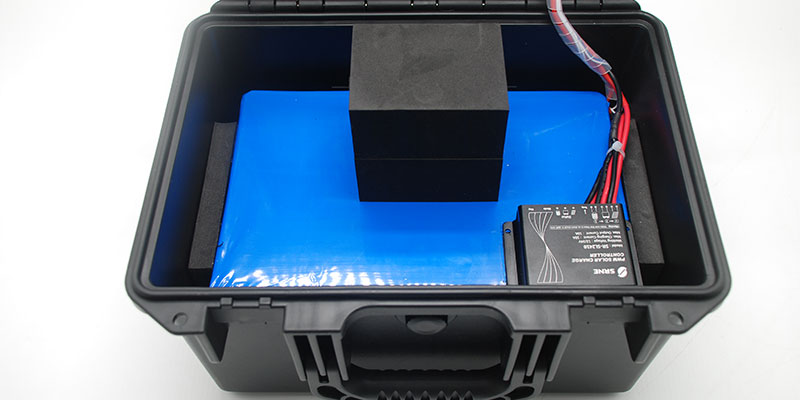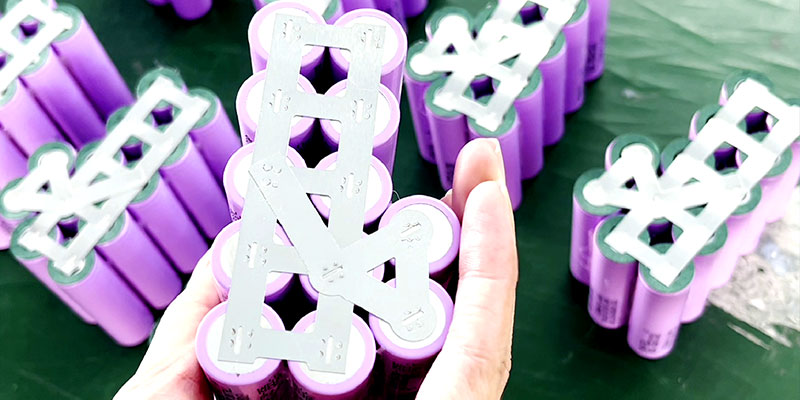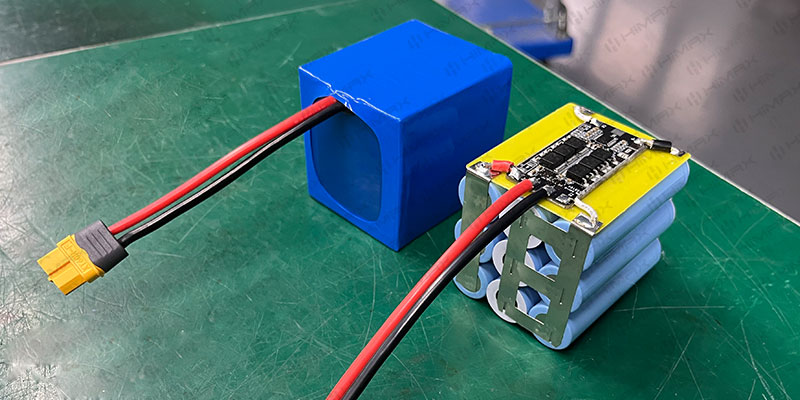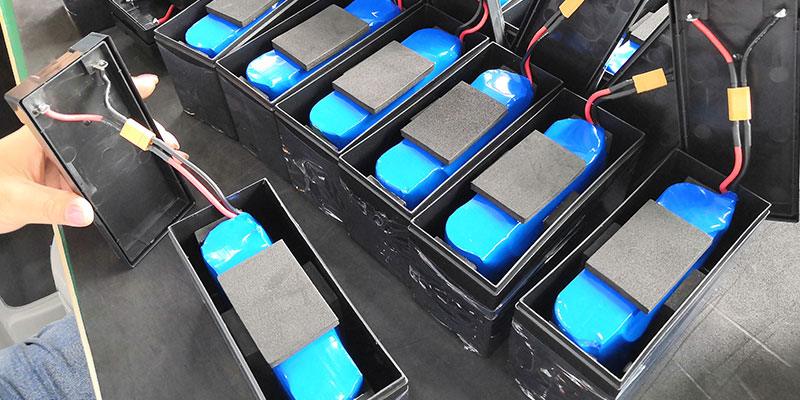
18650 3S battery pack dimensions 58x63x68mm with XT60 connector – Himax electronics

Ask most engineers what the single most misunderstood specification on a battery datasheet is, and C-rate comes up more often than it should. It’s one of those concepts that looks deceptively simple — a number, a letter — until you’re staring at a capacity curve that doesn’t match your field data and tracing the discrepancy back to the rate at which you’ve been pulling current.

This article covers C-rate from first principles: what it means physically, how it interacts with cell chemistry and internal resistance, why capacity appears to shrink at higher discharge rates, and what sustained high-rate operation does to cycle life over time. Whether you’re sizing a battery pack, specifying a BMS, or troubleshooting unexpected degradation in a deployed system, understanding C-rate is non-negotiable.

What C-Rate Actually Means

C-rate is a normalized measure of the current applied to a battery relative to its capacity. It answers one question: at this current, how many hours will it take to fully charge or discharge the battery?

The definition is straightforward:

C-rate = Current (A) ÷ Capacity (Ah)

Or equivalently, the current in amperes at a given C-rate is:

I = C-rate × Capacity (Ah)

A 100 Ah battery discharged at 1C draws 100A and, in an ideal world, would fully discharge in exactly one hour. At 0.5C, it draws 50A and takes two hours. At 2C, it draws 200A and takes 30 minutes — or would, if capacity were constant across rates. It isn’t, and that’s where the engineering gets interesting.

Common C-rate designations you’ll encounter:

  • C/10 or 0.1C— gentle, slow discharge; datasheet “standard” capacity is often measured here
  • C/5 or 0.2C— standard rate for many commercial cells
  • 1C— one-hour discharge; the most common reference point for rated capacity
  • 2C–5C— moderate-to-high rate; relevant for power tools, performance EVs, fast charge scenarios
  • 10C–30C+— very high rate; relevant for start/stop automotive, grid frequency response, certain aerospace applications

One important clarification: C-rate applies to both charge and discharge. A cell charged at 1C theoretically reaches full charge in one hour; discharged at 1C, it theoretically empties in one hour. Real-world times deviate because actual capacity is rate-dependent, and charge protocols (CC-CV for most lithium chemistries) don’t maintain constant current throughout the full charge cycle.

The Physics Behind Rate-Dependent Capacity

If a battery contained 100 Ah of charge, it should deliver 100 Ah regardless of how fast you pull it — energy in equals energy out, conservation holds. So why does a cell that delivers 100 Ah at C/5 might only deliver 85–90 Ah at 2C, and perhaps 70 Ah at 5C?

The answer lies in the electrochemistry and what happens to voltage as current increases.

Overpotential and Internal Resistance

When current flows through a cell, voltage deviates from the open-circuit equilibrium voltage (OCV) due to several loss mechanisms:

Ohmic resistance (iR drop): The electrolyte, separator, current collectors, and contact interfaces all have real electrical resistance. Voltage drops instantaneously by I × R when current is applied. At high currents, this drop is large enough to push terminal voltage toward the cutoff threshold early.

Charge transfer overpotential: Lithium ions moving across the electrode-electrolyte interface must overcome an activation energy barrier. At higher current densities, the overpotential required to sustain that reaction rate grows, consuming additional voltage budget.

Diffusion overpotential (concentration polarization): Lithium ions must diffuse through solid electrode particles and through the electrolyte to reach reaction sites. At high discharge rates, local lithium concentrations near particle surfaces deplete faster than diffusion can replenish them, creating a concentration gradient. This gradient manifests as a voltage penalty — effectively, the cell “runs out” of accessible lithium at the surface before the bulk of the electrode material is depleted.

All three mechanisms eat into the cell’s available voltage window. Since discharge is terminated when terminal voltage hits a cutoff (typically 2.5–3.0V for NMC/NCA, ~2.5V for LFP), a cell under high current reaches that cutoff sooner — not because it has truly exhausted its lithium inventory, but because the combined voltage losses have pushed the terminal reading below threshold while significant charge remains inaccessible in the bulk electrode material.

That “stranded” capacity isn’t destroyed. If you let the cell rest and then resume discharge at a lower rate, the overpotentials relax, voltage recovers, and you can extract more capacity. This voltage recovery on rest is a reliable signature that rate-dependent capacity loss — not permanent degradation — is what you’re measuring.

The Peukert Effect

This phenomenon was formally described by Wilhelm Peukert in 1897 in the context of lead-acid batteries, but the underlying physics applies to lithium-ion cells as well (though the effect is less pronounced in modern lithium chemistries than in lead-acid).

Peukert’s equation expresses the relationship between discharge current and the actual capacity delivered:

Qactual = Q₀ × (C-rate)^(1-n)

Where n is the Peukert exponent (typically 1.01–1.05 for quality lithium-ion cells, versus 1.1–1.3 for lead-acid). Lower values of n mean the chemistry is more rate-insensitive — LFP and NMC with well-optimized particle morphologies tend toward lower Peukert exponents than older or lower-quality cells.

For most lithium battery system design work, Peukert’s equation is less commonly applied than simply referencing the manufacturer’s capacity-vs-rate derating curves. But understanding the exponent helps calibrate how aggressive a chemistry’s rate sensitivity is and whether a given cell’s performance matches its class.

How Different Cathode Chemistries Respond to Rate

Not all lithium-ion chemistries are equally rate-sensitive. The cathode material’s ionic conductivity, particle morphology, and the diffusion coefficient of lithium within the electrode structure all influence how capacity holds up under increasing rates.

LFP (LiFePO4): LFP’s olivine structure has relatively low intrinsic ionic and electronic conductivity compared to layered oxide cathodes. Early LFP cells had poor rate capability as a result. Modern LFP cells address this through nano-scale particle sizing and carbon coating, which dramatically shortens diffusion paths and improves surface conductivity. Well-optimized LFP cells now perform respectably at 3–5C, though they still generally yield more capacity fade with rate than NMC at equivalent quality levels.

NMC (Nickel Manganese Cobalt Oxide): NMC’s layered structure offers better lithium diffusivity than the olivine structure of LFP. Higher cobalt content (lower-Ni formulations) improves electronic conductivity and rate capability; higher-Ni NMC 811 cells can show more rate sensitivity as the structural stability decreases. Overall, mid-range NMC formulations tend to have good rate capability — many retain 90%+ capacity at 2C and 80%+ at 5C in optimized designs.

NCA (Nickel Cobalt Aluminum Oxide): NCA cells are generally well-suited for high-rate applications. The high-nickel content provides good capacity, and the aluminum stabilization allows higher charge-discharge rates without accelerating structural degradation as severely as unstabilized high-Ni NMC. Tesla’s use of NCA for high-performance EV applications is partly justified by this rate capability.

Graphite anode behavior also matters: At high charge rates, lithium plating on the graphite anode — rather than intercalation — becomes a risk. Lithium plating is particularly problematic because plated lithium is highly reactive, can form dendrites, and causes permanent capacity loss. Fast charging in lithium-ion cells is primarily constrained by the anode’s ability to accept lithium, not the cathode’s ability to release it. This is why thermal management during fast charging is so critical: low temperatures reduce graphite conductivity and lithium diffusivity, making plating more likely even at moderate charge rates.

LiFePO4_vs._lead-acid_batteries

C-Rate and Cycle Life: The Long-Term Relationship

Rate-dependent capacity loss on any given discharge cycle is recoverable. The more important — and less reversible — question is what sustained high-rate operation does to a cell’s cycle life over hundreds or thousands of charge-discharge cycles.

The short answer: higher C-rates accelerate degradation through multiple mechanisms, and the relationship is nonlinear.

Mechanical Stress from Volume Change

Lithium intercalation and de-intercalation cause the active electrode particles to expand and contract. For graphite anodes, volume change is roughly 10%; for silicon-containing anodes, it’s dramatically higher (up to 300% for pure silicon). Cathode materials also expand and contract, typically 2–7% depending on chemistry.

At higher C-rates, this volume change occurs faster and less uniformly. Concentration gradients within large particles mean some regions of the particle are fully lithiated while others are nearly empty, creating internal mechanical stresses. Over cycles, this causes particle cracking — opening new surfaces that react with electrolyte to form additional SEI (solid electrolyte interphase) layer, consuming active lithium permanently.

SEI Growth and Lithium Inventory Loss

The SEI is an inert passivation layer that forms on the anode surface during the first charge cycles. A stable, thin SEI is actually desirable — it protects the graphite from ongoing electrolyte decomposition. The problem is that the SEI isn’t truly static; it continues to grow slowly throughout the cell’s life, and conditions that accelerate electrolyte decomposition accelerate SEI growth.

High-rate discharge generates localized heat within the cell — particularly at electrode surfaces and current collector contacts. This heat, even when bulk cell temperature appears controlled, accelerates the chemical reactions that build the SEI and degrade the cathode-electrolyte interface. Every mole of lithium consumed into SEI growth is lithium permanently removed from the cell’s capacity.

Lithium Plating During Fast Charging

As noted above, fast charging is where lithium plating risk is highest. When the charging current exceeds the graphite anode’s ability to accommodate incoming lithium via intercalation, lithium deposits on the surface as metallic lithium. Some of this plated lithium is later re-intercalated when current drops; some reacts with electrolyte and is lost permanently; some forms isolated metallic “dead lithium” that contributes nothing to future capacity.

Over many cycles, repeated plating events compound into meaningful capacity loss — and in the worst cases, dendrites penetrating the separator cause internal short circuits. This failure mode is the primary reason why fast-charge protocols are designed with temperature-dependent current limits and typically taper current as the cell approaches full charge.

Quantifying the Effect: A Practical Benchmark

Published cycle life data for a representative NMC 811 cell might look like this:

Discharge C-rate Cycles to 80% Capacity
0.5C 1,200–1,800
1C 800–1,200
2C 500–800
3C 300–500

These numbers vary considerably by cell design, operating temperature, depth of discharge, and charge protocol — they’re illustrative of the trend, not universal specifications. The key observation is that moving from 1C to 2C can cut cycle life by 30–50%, and that effect is roughly multiplicative with temperature and depth-of-discharge.

For LFP, the cycle life numbers at equivalent rates are generally higher, and the relative degradation with rate is often less severe. For NCA at the high end, rate sensitivity depends heavily on the specific cell design.

Temperature’s Interaction with C-Rate

C-rate does not operate in isolation — temperature is the other major variable in the degradation equation, and the two interact in ways that matter for system design.

Low temperatures increase internal resistance, which means the same C-rate causes greater voltage depression and earlier cutoff. More importantly, low temperatures reduce the rate of lithium diffusion in the graphite anode, making lithium plating during charging more likely even at rates that would be safe at room temperature. A cell specified for 1C fast charging at 25°C may need to be derated to 0.3C at 0°C to avoid plating. Any serious battery management system implements temperature-dependent charge current limits for exactly this reason.

High temperatures reduce internal resistance, which can actually improve rate capability in the short term — cells deliver closer to rated capacity at elevated temperatures. But high temperature accelerates all the chemical degradation mechanisms described above: SEI growth, cathode dissolution, electrolyte decomposition. The classic tradeoff is that cells “perform better but age faster” at elevated temperatures.

The sweet spot for most lithium-ion chemistries in terms of balancing rate performance against aging rate is roughly 20–35°C. The practical implication for pack design is that thermal management systems need to handle both ends: warming cold cells before high-rate charging, and cooling hot cells during sustained high-rate discharge.

C-Rate in System Design: What Engineers Actually Need to Watch

Datasheet Capacity Is Not Necessarily Your Usable Capacity

Most cell datasheets specify capacity at C/5 or 0.2C. If your application discharges at 1C or higher, you need the manufacturer’s rate derating curves — not just the headline capacity number — to calculate actual usable energy. Designing a pack around 1C performance when the datasheet was characterized at C/5 is a common source of field disappointment.

Continuous vs. Pulse Rating

Many cells have a continuous discharge rating (sustained C-rate over the full discharge) and a pulse rating (short-duration high current, typically 10–30 seconds). Pulse capability can be 5–10× higher than continuous capability because the thermal and electrochemical stress is brief enough that the cell recovers between pulses. Applications like start/stop automotive, grid frequency response, and power tools often rely primarily on pulse capability rather than continuous rate.

C-Rate and Pack Sizing for Longevity

If longevity is a primary specification — grid storage targeting 10–15 year life, for example — pack sizing should be driven partly by the target C-rate at operating conditions, not just energy capacity. Oversizing a pack so that a given power requirement corresponds to a lower C-rate (0.25C instead of 0.5C, for instance) can extend cycle life substantially, sometimes more cost-effectively than using a higher-grade cell.

This is one reason why stationary storage systems are frequently designed around 2–4 hour discharge rates (0.25C–0.5C) rather than 1C: the cycle life benefit at lower rates, compounded over a 10+ year operating life, justifies the additional cell investment.

BMS Implications

A well-implemented BMS uses C-rate awareness across several functions:

  • State of charge estimation:Coulomb counting errors accumulate differently at different rates; the BMS needs to account for rate-dependent capacity when calculating remaining capacity.
  • Charge current limiting:Temperature-dependent and SOC-dependent current limits prevent lithium plating and reduce high-SOC fast-charge stress.
  • Thermal throttling:When cell temperature rises during high-rate operation, current should be reduced before temperature reaches levels that accelerate degradation significantly.
  • Discharge cutoff voltage:Cutoff voltage may need to be dynamically adjusted at high discharge rates to account for iR drop masking the true remaining capacity — otherwise the cell may appear depleted before it actually is.

Common Misconceptions Worth Correcting

“The rated capacity is what I’ll get in use.” Only if you’re discharging at the rate used for rating, typically C/5. Adjust for your actual operating rate.

“Fast charging always damages lithium batteries.” At appropriate temperatures, with proper BMS-controlled current profiles, modern cells handle higher charge rates without dramatic life reduction. The risk is primarily lithium plating, which is a temperature and current management problem — not an inherent property of fast charging itself.

“A cell with higher C-rate rating is always better.” High rate capability often comes with engineering tradeoffs: thinner electrodes, reduced energy density, or different particle morphology that affects other performance metrics. A cell optimized for 10C peak discharge may have lower energy density than one optimized for 0.5C sustained discharge. Match the cell to the application.

“Voltage sag under load is always degradation.” Voltage depression at high discharge rates is often just reversible overpotential, not capacity loss. If voltage recovers on rest and rated capacity is restored at a lower rate, the cell isn’t degraded — it’s simply being asked to deliver more current than is optimal for its design.

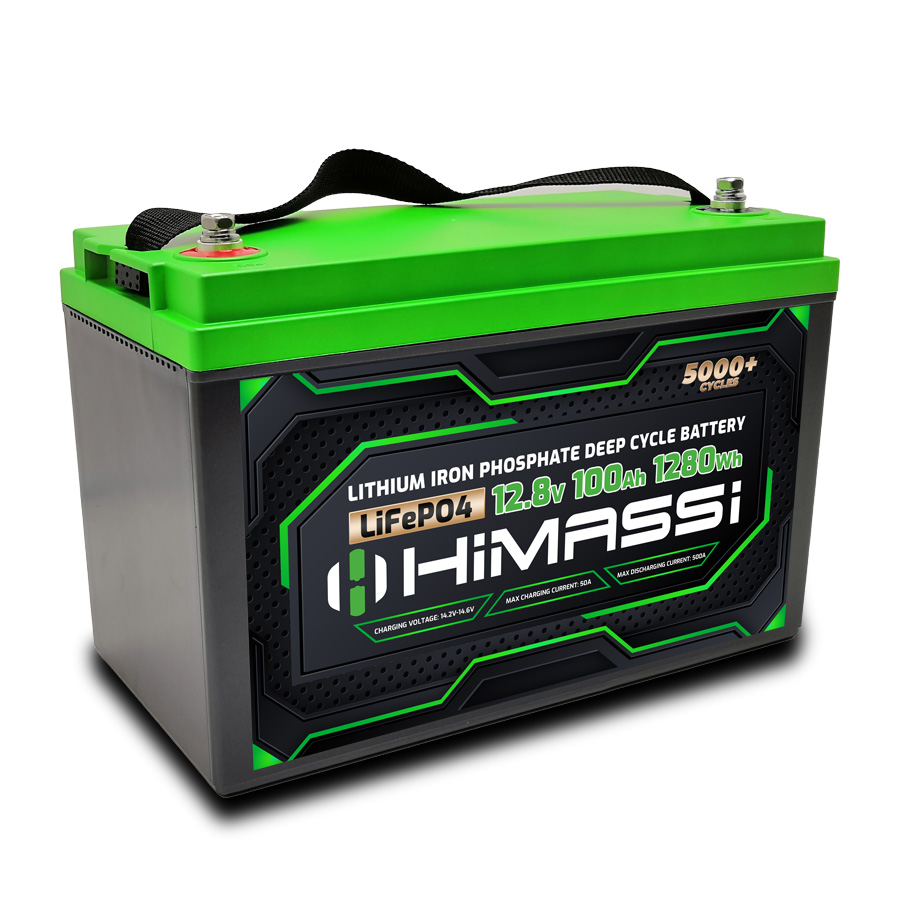
12.8v-lifepo4-battery

Summary: What C-Rate Means for Your Application

C-rate is one of those foundational specifications that connects electrochemistry to system performance and lifetime in a single, quantifiable way. The key relationships to hold onto:

Higher C-rates reduce deliverable capacity on a given cycle due to voltage losses from ohmic resistance, charge transfer overpotential, and diffusion limitations. This effect is reversible on rest at lower rates.

Sustained high-rate operation accelerates permanent capacity fade through mechanical stress on electrode particles, accelerated SEI growth, and (during charging) lithium plating risk. This degradation is cumulative and not reversible.

Temperature and C-rate interact: low temperatures make high-rate charging dangerous even at rates that are safe at room temperature. High temperatures ease rate performance short-term but accelerate long-term degradation.

System design — pack sizing, BMS current limits, thermal management — can substantially change the effective C-rate your cells operate at, and therefore the tradeoff between power capability and service life.

Getting C-rate right in the design phase is far less expensive than diagnosing unexpected degradation in deployed systems.

Need help characterizing C-rate performance for a specific cell or designing a pack around a target service life? Our engineering team has hands-on experience sizing and testing lithium packs across LFP, NMC, and NCA chemistries. Get in touch to discuss your application.

Tags: C-rate, lithium battery, battery capacity, discharge rate, charge rate, cycle life, battery degradation, LFP, NMC, NCA, BMS, battery engineering, energy storage, lithium-ion

Meta description: A technical guide to C-rate in lithium batteries — covering how charge and discharge rate affects deliverable capacity, cycle life, and system design decisions for LFP, NMC, and NCA chemistries.

solar-lifepo4-battery

In the rapidly evolving world of Lithium-ion power solutions, “compliance” is often the bridge between a successful product launch and a costly logistical nightmare. For many international buyers, navigating the alphabet soup of certifications—IEC, UL, CE, UN38.3—feels like a routine checkbox exercise. However, a recent case study from our engineering department highlights a critical lesson: Compliance is a holistic ecosystem, not a standalone component.


When a battery fails a lab test, the instinct is to blame the cells. But as we recently discovered during an SGS certification process for a long-term client, the “invisible” culprit is often the charger.


The Case Study: The Gap Between IEC 62133 and CE (EMC)


Recently, a client approached us to provide high-performance battery packs and matching chargers for an industrial application. The initial brief was clear: the units needed to pass IEC 62133 testing via SGS—the gold standard for battery safety.


We optimized the battery protection circuit (PCM) and cell selection to meet these safety rigorous standards. However, midway through the process, the client’s regulatory requirements shifted to include CE marking, which necessitates compliance with the Electromagnetic Compatibility (EMC) Directive.


The result? The system failed the EMC test. While the margin of failure was incredibly slim—a minor deviation in radiated emissions—the consequences were significant:


Project Delays: The testing timeline was pushed back by weeks.


Additional Costs: Re-testing fees and lab overheads added unexpected strain to the budget.


Engineering Re-work: We had to backtrack to shield the charger’s internal circuitry to dampen the interference.


This scenario could have been avoided if the full scope of the “End-Product” certification was defined at the quotation stage.

lifepo4-48v-battery

Understanding the Difference: Safety vs. Compatibility

To prevent these delays, it is vital to understand what these tests actually measure and why they cannot be treated as interchangeable.


  1. IEC 62133: The Safety Guardrail

IEC 62133 focuses almost exclusively on Physical and Chemical Safety. The lab subjects the battery to “torture tests”—crush, vibration, thermal abuse, and overcharging—to ensure the battery doesn’t catch fire or explode. It is about the integrity of the lithium chemistry and the protection board.


  1. CE & EMC: The “Good Neighbor” Policy

The CE mark, specifically the EMC portion (EN 61000 series), isn’t looking at whether the battery is “safe” in a fire-safety sense. Instead, it measures Electromagnetic Interference (EMI). It asks: Does this device emit “noise” that will interfere with other electronics (like a nearby radio or medical equipment)?


Chargers are notorious for failing EMC tests. Because they use switching power supplies (SMPS) to convert AC to DC, they generate high-frequency electrical noise. If the charger isn’t specifically designed with high-quality filters and shielding, it will fail the CE test—even if the battery itself is perfect.


The Domino Effect: Why “Small Deviations” Matter in Lab Testing

In our recent case, the deviation was “very small.” In a real-world scenario, that tiny amount of noise wouldn’t affect the product’s performance. However, accredited labs like SGS, Intertek, or TÜV operate on a binary Pass/Fail system.


A 1dB deviation over the limit is as much a “Fail” as a 50dB deviation. Once a failure is recorded, the lab requires:


A formal “Failure Analysis Report.”


Modified samples (Hardware changes).


A complete re-test of the failed parameters.


This “Domino Effect” eats away at your “Time-to-Market” (TTM), which is often the most valuable asset in the tech industry.


The “System-Level” Approach: Why Early Disclosure is Key

At our factory, we don’t just manufacture batteries; we engineer power systems. When you provide us with the exact list of certifications required for your target market at the start, we can adjust the following details before the first sample ever leaves our floor:


Charger Component Selection: We can opt for premium capacitors and inductors that naturally suppress EMI.


Shielding: We can add copper foil or specialized coatings to the internal housing of the charger or the battery casing.


PCB Layout: Our engineers can optimize the trace routing on the protection board to minimize “antenna effects” that broadcast noise.


Pre-Testing: We can perform in-house “pre-compliance” scans to ensure the 99% success rate when the units hit the official SGS lab.


A Checklist for Global Battery Procurement

To ensure your next project moves from “Prototype” to “Market” without friction, we recommend following this technical checklist when requesting a quote:


List Every Target Market: Are you selling in the EU (CE), USA (UL/FCC), Japan (PSE), or Australia (RCM)? Each has different EMC and safety thresholds.


Define the Test Standard Early: Don’t just say “I need a certificate.” Specify if you need IEC 62133 (Safety), EN 55032 (EMC for Multimedia), or EN 60601 (Medical).


Specify the “System” Testing: Will the battery be tested inside your device, or as a standalone component with its charger? Lab results vary wildly depending on how the system is grounded.


Allow for “Engineering Margin”: Low-cost, “budget” chargers rarely leave any margin for EMC testing. If you need certification, be prepared to invest in a “Certified Grade” charger.


Conclusion: Partnership Over Procurement


The relationship between a buyer and a battery factory should not be a simple transaction; it should be a technical partnership. The recent EMC failure we experienced served as a powerful reminder that transparency in certification requirements is the best way to save money.


By informing us of your full regulatory roadmap—including the “small” details like CE/EMC requirements—you empower our engineering team to provide a solution that is “Ready for Lab” on day one. This proactive communication prevents wasted testing fees, protects your timeline, and ensures that your brand is associated with quality and compliance.


Are you planning a project that requires SGS or UL certification? Don’t leave your compliance to chance. Contact our technical sales team today. We provide professional guidance on cell selection, PCM engineering, and charger compatibility to ensure your product passes the first time, every time.


HIMAX ELECTRONICS — Powering Innovation with Precision.


lithium-ion-batteries

In lithium-ion battery systems, much of the attention is often given to the cells themselves—capacity, cycle life, and brand. However, in real-world applications, a significant number of battery failures are not caused by the cells, but by the protection board, also known as the Battery Management System (BMS).

Understanding how a faulty BMS presents itself can save time in troubleshooting, reduce unnecessary replacements, and improve communication between suppliers and end users.
smart-bms


The Role of the Protection Board

A protection board is responsible for monitoring and controlling key parameters such as voltage, current, and temperature. It ensures that the battery operates within safe limits by preventing overcharge, over-discharge, overcurrent, and short circuits.

When this system fails, the battery may behave unpredictably—even if the cells themselves are still in good condition.

Common Symptoms of a Faulty Protection Board

1. No Output or No Charging Response

One of the most noticeable signs is a battery that appears completely unresponsive:

The output voltage reads zero or near zero

The battery does not supply power to the load

Charging has no effect

In many cases, this is caused by damaged MOSFETs or a protection circuit that has entered a locked state after a fault event.


2. Sudden Drop in State of Charge (SOC)

Another typical symptom is abnormal battery readings:


  • The SOC suddenly drops from a normal level (e.g., 70–80%) to 0%
  • The display shows no gradual decline—just an instant change
  • The battery may recover after charging, but behaves inconsistently


This usually points to issues in the voltage sensing circuit or communication errors within the BMS.

3. Protection Functions Not Working Properly

A malfunctioning BMS may fail to perform its core safety functions:

  • The battery continues charging beyond its maximum voltage
  • The battery keeps discharging below its safe cutoff

This is a critical issue, as it directly impacts safety and can lead to permanent cell damage or worse.

4. Temperature Protection Irregularities

Temperature-related issues may also appear:

  • Charging or discharging is blocked even at normal temperatures
  • No protection is triggered when the battery overheats

These problems are often linked to faulty NTC sensors or broken temperature sensing circuits.

5. Intermittent Operation

In some cases, the battery works—but not reliably:

  • Power cuts off randomly during use
  • The battery resumes operation after movement or reconnection

This type of behavior is commonly associated with poor soldering, loose connections, or partial damage to the protection board.


6. Abnormal Heating

If the protection board itself becomes unusually warm, even under light load, it may indicate:

  • Increased internal resistance in MOSFETs
  • Leakage current or partial short circuits

This is often an early warning sign of component degradation.

7. Communication Failure (Smart BMS)

For batteries equipped with smart BMS systems:

  • Software cannot detect the battery
  • Voltage or current readings are incorrect or missing
  • Communication via UART, SMBus, or CAN fails

These issues typically originate from MCU or communication chip failures.
custom 14.8v lithium battery pack

A Practical Way to Differentiate BMS vs. Cell Issues

In field diagnostics, a simple approach can quickly narrow down the root cause:

  • Measure the total pack voltage at the terminals
  • Check individual cell voltages (if accessible)
  • Observe charging and discharging behavior

If the cells show normal voltage but the pack output is zero, the protection board is very likely the source of the problem.

Final Thoughts

A faulty protection board can make a healthy battery appear completely unusable. For manufacturers, integrators, and end users alike, recognizing these symptoms early can prevent unnecessary costs and delays.

In many cases, replacing or repairing the BMS is far more efficient than replacing the entire battery pack.


bms for lithium ion battery packs

In modern lithium-ion battery systems, communication is no longer optional. Whether it’s a small portable device or a large-scale energy storage system, the Battery Management System (BMS) is expected to provide real-time data and interact reliably with external equipment.

However, many issues in integration projects do not come from the battery itself, but from misunderstandings around communication methods—how the signals are wired, what protocol is used, and whether the system on the other side can interpret the data correctly.

This article provides a practical overview of the most common BMS communication options, focusing on their characteristics, wiring methods, and typical protocols.

UART: A Simple and Practical Starting Point

UART is often the first choice for basic communication needs. It is widely used because of its simplicity and low implementation cost.

A typical UART interface consists of TX (transmit), RX (receive), and GND. In some cases, a VCC line is also included to power external modules. Since UART is a point-to-point communication method, it works best in short-distance applications.

Most UART-based BMS systems rely on custom protocols defined by the manufacturer. This means integration requires documentation, but it also allows flexibility in data structure.

In practice, UART is commonly used for:

Debugging and configuration tools

PC monitoring software

Bluetooth modules (UART-to-BLE conversion)


SMBus: The Standard for Smart Batteries

SMBus is widely recognized in applications where batteries need to be interchangeable and standardized, such as laptops and medical devices.

It is based on the I²C physical layer and uses two main lines: SDA (data) and SCL (clock), along with ground. Compared to UART, SMBus provides a defined set of commands and data formats, making it easier for host systems to interpret battery information without custom development.

Typical data includes:

State of Charge (SOC)

Voltage and current

Temperature

Cycle count


Because of this standardization, SMBus is often the preferred choice when compatibility between different systems is required.

I²C: Efficient for Short-Distance Communication

I²C is commonly used inside battery systems rather than as an external interface. It is designed for short-distance communication and supports multiple devices on the same bus.

Like SMBus, it uses SDA and SCL lines, but the protocol itself is more flexible and often customized depending on the application.

In most cases, I²C is used for:


Communication between BMS ICs

Sensor integration

Internal system control


Due to its limited range and sensitivity to noise, it is rarely used for long-distance external communication.


CAN Bus: Reliability in Demanding Environments

For applications where reliability is critical, CAN bus is often the default choice. It is widely used in electric vehicles, industrial equipment, and energy storage systems.

CAN uses a differential pair (CAN_H and CAN_L), which provides strong resistance to electromagnetic interference. This makes it suitable for harsh environments and long cable runs.

On top of the physical layer, higher-level protocols are often used, such as:


CAN 2.0

CANopen

J1939


These protocols define how data is structured and exchanged, enabling multi-device communication within a network.

RS485: Long-Distance and Flexible Communication

RS485 is another robust option, particularly for systems that require communication over longer distances.

It uses differential signaling (A and B lines), similar to CAN, and can support multiple devices on the same bus. RS485 does not define a protocol by itself, which gives developers flexibility—but also requires agreement on data structure.

The most common protocol used with RS485 is Modbus (RTU or ASCII), especially in industrial and energy storage applications.

RS485 is typically chosen for:


Battery racks and container systems

Industrial automation

Distributed monitoring systems


Bluetooth: User-Friendly Wireless Access

Bluetooth is increasingly used in applications where end users need direct access to battery data through mobile devices.

In most designs, Bluetooth modules act as a bridge, converting UART data into wireless communication using BLE (Bluetooth Low Energy).

This approach allows users to:


Monitor battery status via smartphone apps

Configure parameters without physical connections

Access data in real time


While convenient, Bluetooth is generally not used for critical control functions due to its limited range and potential interference.

RS232: Legacy but Still Relevant

Although less common in new designs, RS232 is still found in some industrial and legacy systems.

It uses TX, RX, and GND lines, similar to UART, but operates at different voltage levels. RS232 is mainly used for compatibility with existing equipment rather than new deployments.

Understanding the Difference: Interface vs. Protocol

One common source of confusion is the difference between communication interfaces and protocols.


Interface (Physical Layer):
Defines how signals are transmitted
Examples: UART, CAN, RS485, I²C

Protocol (Data Layer):
Defines how data is structured and interpreted
Examples: Modbus, CANopen, SMBus, custom protocols


In real-world systems, both layers must match for successful communication.

For example:

RS485 + Modbus → Standard industrial solution

CAN + CANopen → Automated control systems

UART + Custom Protocol → Cost-sensitive designs


Choosing the Right Communication Method

Selecting the appropriate communication method depends largely on the application:


For simple and cost-sensitive designs, UART is usually sufficient

For standardized battery packs, SMBus is a strong option

For industrial or vehicle applications, CAN or RS485 offers better reliability

For user interaction, Bluetooth provides convenience


There is no single “best” solution—only the one that fits the system requirements.
bms architecture

Final Thoughts

In battery system design, communication is just as important as electrical performance. A well-chosen interface and protocol can simplify integration, improve reliability, and reduce long-term maintenance issues.

On the other hand, mismatched communication expectations can quickly turn into delays and unnecessary complexity.

Taking the time to define both the physical interface and the communication protocol early in the project often makes the difference between a smooth deployment and a difficult one.


best-lifepo4-solar-battery

In the rapidly evolving world of Lithium-ion power solutions, “compliance” is often the bridge between a successful product launch and a costly logistical nightmare. For many international buyers, navigating the alphabet soup of certifications—IEC, UL, CE, UN38.3—feels like a routine checkbox exercise. However, a recent case study from our engineering department highlights a critical lesson: Compliance is a holistic ecosystem, not a standalone component.


When a battery fails a lab test, the instinct is to blame the cells. But as we recently discovered during an SGS certification process for a long-term client, the “invisible” culprit is often the charger.


The Case Study: The Gap Between IEC 62133 and CE (EMC)


Recently, a client approached us to provide high-performance battery packs and matching chargers for an industrial application. The initial brief was clear: the units needed to pass IEC 62133 testing via SGS—the gold standard for battery safety.


We optimized the battery protection circuit (PCM) and cell selection to meet these safety rigorous standards. However, midway through the process, the client’s regulatory requirements shifted to include CE marking, which necessitates compliance with the Electromagnetic Compatibility (EMC) Directive.


The result? The system failed the EMC test. While the margin of failure was incredibly slim—a minor deviation in radiated emissions—the consequences were significant:


Project Delays: The testing timeline was pushed back by weeks.


Additional Costs: Re-testing fees and lab overheads added unexpected strain to the budget.


Engineering Re-work: We had to backtrack to shield the charger’s internal circuitry to dampen the interference.


This scenario could have been avoided if the full scope of the “End-Product” certification was defined at the quotation stage.


Understanding the Difference: Safety vs. Compatibility

To prevent these delays, it is vital to understand what these tests actually measure and why they cannot be treated as interchangeable.

  1. IEC 62133: The Safety Guardrail

IEC 62133 focuses almost exclusively on Physical and Chemical Safety. The lab subjects the battery to “torture tests”—crush, vibration, thermal abuse, and overcharging—to ensure the battery doesn’t catch fire or explode. It is about the integrity of the lithium chemistry and the protection board.


  1. CE & EMC: The “Good Neighbor” Policy

The CE mark, specifically the EMC portion (EN 61000 series), isn’t looking at whether the battery is “safe” in a fire-safety sense. Instead, it measures Electromagnetic Interference (EMI). It asks: Does this device emit “noise” that will interfere with other electronics (like a nearby radio or medical equipment)?


Chargers are notorious for failing EMC tests. Because they use switching power supplies (SMPS) to convert AC to DC, they generate high-frequency electrical noise. If the charger isn’t specifically designed with high-quality filters and shielding, it will fail the CE test—even if the battery itself is perfect.

The Domino Effect: Why “Small Deviations” Matter in Lab Testing

In our recent case, the deviation was “very small.” In a real-world scenario, that tiny amount of noise wouldn’t affect the product’s performance. However, accredited labs like SGS, Intertek, or TÜV operate on a binary Pass/Fail system.


A 1dB deviation over the limit is as much a “Fail” as a 50dB deviation. Once a failure is recorded, the lab requires:


A formal “Failure Analysis Report.”


Modified samples (Hardware changes).


A complete re-test of the failed parameters.


This “Domino Effect” eats away at your “Time-to-Market” (TTM), which is often the most valuable asset in the tech industry.


The “System-Level” Approach: Why Early Disclosure is Key

At our factory, we don’t just manufacture batteries; we engineer power systems. When you provide us with the exact list of certifications required for your target market at the start, we can adjust the following details before the first sample ever leaves our floor:


Charger Component Selection: We can opt for premium capacitors and inductors that naturally suppress EMI.


Shielding: We can add copper foil or specialized coatings to the internal housing of the charger or the battery casing.


PCB Layout: Our engineers can optimize the trace routing on the protection board to minimize “antenna effects” that broadcast noise.


Pre-Testing: We can perform in-house “pre-compliance” scans to ensure the 99% success rate when the units hit the official SGS lab.


A Checklist for Global Battery Procurement

To ensure your next project moves from “Prototype” to “Market” without friction, we recommend following this technical checklist when requesting a quote:


List Every Target Market: Are you selling in the EU (CE), USA (UL/FCC), Japan (PSE), or Australia (RCM)? Each has different EMC and safety thresholds.


Define the Test Standard Early: Don’t just say “I need a certificate.” Specify if you need IEC 62133 (Safety), EN 55032 (EMC for Multimedia), or EN 60601 (Medical).


Specify the “System” Testing: Will the battery be tested inside your device, or as a standalone component with its charger? Lab results vary wildly depending on how the system is grounded.


Allow for “Engineering Margin”: Low-cost, “budget” chargers rarely leave any margin for EMC testing. If you need certification, be prepared to invest in a “Certified Grade” charger.

Conclusion: Partnership Over Procurement


The relationship between a buyer and a battery factory should not be a simple transaction; it should be a technical partnership. The recent EMC failure we experienced served as a powerful reminder that transparency in certification requirements is the best way to save money.


By informing us of your full regulatory roadmap—including the “small” details like CE/EMC requirements—you empower our engineering team to provide a solution that is “Ready for Lab” on day one. This proactive communication prevents wasted testing fees, protects your timeline, and ensures that your brand is associated with quality and compliance.


Are you planning a project that requires SGS or UL certification? Don’t leave your compliance to chance. Contact our technical sales team today. We provide professional guidance on cell selection, PCM engineering, and charger compatibility to ensure your product passes the first time, every time.


HIMAX ELECTRONICS — Powering Innovation with Precision.

bms architecture

Below is a clear, BMS-focused explanation of how many data cables (signal wires) each communication protocol requires, plus what’s usually added in real battery systems.


1. RS232


Data cables required

2–3 signal wires

Signal Purpose
TX Transmit data
RX Receive data
GND Signal ground (required)

Typical wiring

  • Minimum:TX + RX + GND → 3 wires
  • Sometimes additional handshake lines (RTS/CTS), but rarely used in BMS


In lithium BMS

  • Usually 3 wires total
  • Common for PC ↔ BMS configuration
  • Often exposed as a 4-pin or 5-pin connector, but only 3 are active

battery-intelligent-bms

2. RS485

Data cables required

2 signal wires (+ optional ground)

Signal Purpose
A (D+) Differential data
B (D−) Differential data
GND Reference ground (optional but recommended)

Typical wiring

  • Minimum:A + B → 2 wires
  • Recommended:A + B + GND → 3 wires


In lithium BMS

  • Most industrial BMS use 2-wire half-duplex RS485
  • Shielded twisted pair is strongly recommended
  • Ground improves stability in noisy environments


3. I²C

Data cables required

2 signal wires (+ power & ground)

Signal Purpose
SDA Data line
SCL Clock line
GND Ground
VCC Power (often shared)

Typical wiring

  • Data only:SDA + SCL → 2 wires
  • Actual connection:SDA + SCL + GND (+ VCC) → 3–4 wires


In lithium BMS

  • Used inside the battery pack
  • Very short distance (PCB or short harness)
  • Always shares ground and power internally


4. SMBus

Data cables required

2 signal wires (+ power & ground)
(Same physical wiring as I²C)

Signal Purpose
SDA Data
SCL Clock
GND Ground
VCC Power

Typical wiring

  • Data only:SDA + SCL → 2 wires
  • Actual system:SDA + SCL + GND (+ VCC) → 3–4 wires


In lithium BMS

  • Common in smart battery packs
  • Connects battery to host system (PC, laptop, medical device)
  • Often standardized 4-wire connector

5. Quick Comparison Table

Protocol Data Lines Only Typical Total Wires in BMS
RS232 2 (TX, RX) 3 (TX, RX, GND)
RS485 2 (A, B) 2–3 (A, B, GND)
I²C 2 (SDA, SCL) 3–4 (SDA, SCL, GND, VCC)
SMBus 2 (SDA, SCL) 3–4 (SDA, SCL, GND, VCC)


6. Practical BMS Notes (Very Important)


Ground is critical
Even if a protocol says “2 wires”, most real BMS systems are more stable with a shared ground.


RS485 ≠ RS232 wiring
Connecting RS232 directly to RS485 will damage communication (and sometimes hardware).


Cable type matters

RS485 → twisted pair, shielded

I²C / SMBus → short, clean, low-noise

RS232 → short cables only


Connector pin count ≠ data wire count
A “6-pin communication port” often uses only 2–3 signal lines.


48v-lithium-golf-cart-battery

In today’s battery technology landscape, lithium-ion batteries (NMC/NCA) and lithium iron phosphate (LiFePO4 or LFP) batteries are the two dominant chemistries. Together, they power the global transition to clean energy—supporting applications ranging from electric vehicles and consumer electronics to home energy storage and telecom backup systems.

Although both belong to the lithium family, their chemical structures lead to very different performance characteristics. Understanding these differences is essential for engineers, system integrators, and buyers who want to choose the most suitable battery solution for their application.

This article provides a clear, practical comparison to help you make an informed decision.

1. Chemical Fundamentals: Where the Differences Begin

The most fundamental difference between lithium-ion and LiFePO4 batteries lies in the cathode material, which directly determines energy density, safety, lifespan, and cost.

Lithium-ion Batteries (NMC / NCA)

Lithium-ion batteries use lithium nickel manganese cobalt oxide (NMC) or lithium nickel cobalt aluminum oxide (NCA) as the cathode material.
Thanks to their high operating voltage and layered crystal structure, these batteries can store more energy in a smaller and lighter package.
22.2v 28ah lithium battery pack

LiFePO4 Batteries (LFP)

LiFePO4 batteries use lithium iron phosphate as the cathode.
Their stable olivine crystal structure provides excellent thermal stability and strong resistance to degradation, which is the foundation of their long cycle life and high safety level.

2. Five Key Performance Dimensions Compared

Below is a simplified comparison across five critical performance areas that matter most in real-world applications.

1) Energy Density

Lithium-ion: High (200–300 Wh/kg)

LiFePO4: Medium (140–180 Wh/kg)

Selection insight:
If your product requires lightweight design or long runtime—such as electric vehicles, drones, or portable electronics—lithium-ion batteries are usually the better choice.
If size and weight are less critical, LiFePO4 is often preferred for its other advantages.

2) Safety

Lithium-ion: Medium

LiFePO4: High

LiFePO4 batteries have excellent thermal stability and are much less prone to thermal runaway, even under conditions such as overcharging, short circuit, or mechanical damage.
For applications where safety is the top priority, LiFePO4 is widely regarded as an inherently safer chemistry.

3) Cycle Life

Lithium-ion: 500–1,000 cycles

LiFePO4: 2,000–5,000 cycles (or more)

Selection insight:
For applications sensitive to total lifetime cost—such as energy storage systems, commercial vehicles, or backup power—LiFePO4’s long cycle life provides a clear advantage.

4) Cost

Lithium-ion: Higher (contains cobalt and nickel)

LiFePO4: Lower (iron and phosphate are abundant)

Raw material cost and price volatility make lithium-ion batteries more expensive.
LiFePO4 batteries benefit from lower and more stable material costs, which is a key reason for their rapid adoption in large-scale commercial and energy storage projects.

5) Low-Temperature Performance

Lithium-ion: Better

About 70% capacity retention at –20°C

LiFePO4: Weaker

About 50–60% capacity retention at –20°C

Selection insight:
For cold climates or outdoor applications, lithium-ion batteries perform better.
LiFePO4 systems can still be used in cold environments, but they often require heating elements or advanced thermal management.

3. Strengths and Challenges in Detail

Advantages and Challenges of Lithium-ion Batteries

Key advantages:

High energy density enables longer driving range or smaller battery packs

Supports fast charging and high power output

Ideal for performance-focused applications

Main challenges:

More sensitive to overcharging and high temperatures

Requires a precise and reliable battery management system (BMS)

Shorter cycle life compared to LiFePO4

Higher and less stable raw material costs

Advantages and Limitations of LiFePO4 Batteries

Key advantages:

Outstanding safety and thermal stability

Very long cycle life, reducing cost per kWh over time

No cobalt or nickel, making it more environmentally friendly

Stable performance over many years of use

Main limitations:

Lower energy density

Larger and heavier packs for the same capacity

Reduced performance in low-temperature environments

4. Application Scenarios: Which Battery Should You Choose?

Choose Lithium-ion If Your Priority Is:

Maximum energy density

Long-range electric vehicles

Drones and aviation-related systems

High-end consumer electronics

High power output

Power tools

Performance hybrid or electric vehicles

Cold climate operation

Outdoor or automotive applications in low temperatures

Choose LiFePO4 If Your Priority Is:

Safety and long-term reliability

Energy storage systems (ESS)

Solar storage

Telecom base station backup power

Lower total cost of ownership

Commercial EVs

Electric buses and logistics vehicles

Shared mobility fleets

Fixed installations with high safety requirements

Home energy storage

Security and monitoring equipment

Marine and UPS backup systems
lithium-ion-battery-charger

5. Future Trends: Competition or Coexistence?

The market is not moving toward a “winner-takes-all” solution. Instead, it is evolving toward application-based optimization.

Technology Evolution

Lithium-ion batteries are shifting toward high-nickel, low-cobalt formulations to increase energy density while reducing cost.

LiFeO4 batteries are improving pack-level efficiency through innovations such as CTP (Cell-to-Pack) and blade battery designs, which significantly increase volumetric energy density.

Mixed Battery Strategies

Some automakers now adopt dual chemistry strategies:

Entry-level models use LiFePO4 for cost and safety

Premium models use lithium-ion for performance and range

System-Level Optimization

Regardless of chemistry, system design is critical.
Battery performance and safety heavily depend on:

Battery management system (BMS)

Thermal management design

Manufacturing quality and consistency

In many cases, a well-designed LiFePO4 system can outperform a poorly designed lithium-ion system—and vice versa.

Conclusion: There Is No Perfect Battery, Only the Right One

The choice between lithium-ion and LiFePO4 batteries is ultimately a strategic trade-off between energy density and safety/longevity.

If every gram and every kilometer matters, lithium-ion is often the right answer.

If long term stability, safety, and life cycle cost are more important, LiFePO4 is the smarter choice.

There is no universal “best battery”—only the most suitable solution for a specific application.

When selecting a battery, always return to the core question:
Do you need maximum performance today, or stable and reliable operation for the next ten years?
The answer will guide you to the right technology.


If you open a lithium battery protection board and take a closer look, two components immediately stand out: the protection IC and one or more MOSFETs.


They are always there, whether it is a simple single-cell protection board or a high-current battery pack used in industrial equipment.


People often ask which one is more important, or what exactly each of them does.


In reality, they serve very different purposes, and confusing their roles is one of the most common misunderstandings in lithium battery design.


A protection board only works properly when the IC and the MOSFETs work together, each doing what it is designed to do.


What the Protection IC Actually Does


At its core, the protection IC is not a power component. It does not drive motors, supply loads, or carry large currents. Its job is much simpler — and at the same time, much more critical.


The protection IC is responsible for monitoring and decision-making.


In most lithium battery protection designs, the IC continuously monitors:


  • Cell voltage or pack voltage
  • Charging overvoltage
  • Discharging undervoltage
  • Charge and discharge current (through a sense resistor)
  • Short-circuit conditions


In some designs, temperature via an external NTC


These values are compared against fixed thresholds that are built into the IC. Once any parameter goes beyond its allowed range, the IC decides that the battery is no longer operating safely.


That decision happens very quickly, often within microseconds or milliseconds.


What is important to understand is that the IC does not stop the current by itself.

It only outputs a control signal.


Why the IC Is Often Called the “Brain”


Calling the protection IC the “brain” of the protection board is not just a metaphor — it is a practical description of how the system behaves.


The IC determines:


  • When charging should stop
  • When discharging should stop
  • Whether an overcurrent event is temporary or a real fault
  • How fast the protection should react

If the IC’s thresholds are poorly chosen, the battery may:


Trigger protection too early and appear unreliable. Or worse, fail to protect the cells at all


In real projects, many field issues traced back to batteries are not caused by the cells themselves, but by incorrect IC selection or incorrect parameter matching.


What MOSFETs Do on a Protection Board


While the IC makes decisions, the MOSFETs are the components that physically control the current path.


A MOSFET on a protection board works as an electronic switch. When it is turned on, current flows normally between the battery and the external circuit. When it is turned off, that current path is interrupted.


When the protection IC detects an abnormal condition, it sends a signal to the MOSFET gate. The MOSFET then switches off and isolates the battery from the charger or the load.


This is the moment where protection actually happens.


Without MOSFETs, the IC would have no way to enforce its decisions.


Why There Are Usually Two MOSFETs


One detail that often raises questions is why protection boards typically use two MOSFETs connected back-to-back, rather than a single one.


The reason is simple but important.


A single MOSFET contains a body diode, which allows current to flow in one direction even when the MOSFET is turned off. This means a single MOSFET cannot fully block current in both charge and discharge directions.


By using two MOSFETs in a back-to-back configuration, the protection board can:


  • Block charging current
  • Block discharging current
  • Prevent leakage through the body diode


This arrangement allows the IC to independently control charging and discharging behavior, which is essential for proper lithium battery protection.


MOSFETs and Current Handling in Real Designs


From a system perspective, MOSFETs are usually the most stressed components on a protection board.


They must handle:


  • Continuous operating current
  • Peak current during acceleration or motor startup
  • Short-circuit current before protection kicks in


Key MOSFET parameters such as Rds(on), current rating, and thermal performance directly affect:


  • Heat generation
  • Efficiency
  • Long-term reliability


In high-current battery packs, MOSFET selection and PCB layout matter just as much as the IC itself.

It is not uncommon to see perfectly good protection logic paired with undersized MOSFETs, leading to overheating or premature failure.


In practice, many “protection board failures” are actually MOSFET thermal failures, not IC failures.

bms architecture

How the IC and MOSFETs Work Together


To understand the interaction between the IC and MOSFETs, it helps to look at a simple real-world scenario.


Imagine a battery pack being discharged until the voltage drops too low.


The cell voltage gradually decreases during discharge


The protection IC continuously monitors this voltage


Once the undervoltage threshold is reached, the IC determines that further discharge would damage the cell


The IC sends a control signal to the MOSFET gate


The MOSFETs turn off


The battery is disconnected from the load


The entire sequence happens automatically and very quickly.

The IC decides when protection is needed, and the MOSFETs determine whether the current can actually be stopped.


A Common Misconception


One of the most common misunderstandings is assuming that MOSFETs “provide” the protection by themselves.


In reality:


The IC defines the protection logic


The MOSFETs provide the switching capability


If the IC logic is wrong, even the best MOSFETs cannot protect the battery properly.

If the MOSFETs are poorly selected, even a well-designed IC cannot safely interrupt high current.


Battery safety is never the result of a single component. It is the result of how these components work together.

custom lithium battery

What This Means for Battery Pack Design


From a practical engineering point of view:


The protection IC determines accuracy, reliability, and functional behavior


The MOSFETs determine current capability, heat generation, and durability


In low-current applications, this distinction may not seem critical.

In high-current or long-life systems, it becomes one of the most important design considerations.


Understanding this relationship helps explain why two battery packs with similar cells can behave very differently in the field.

b2b-battery-solutions

When people talk about batteries, the conversation often starts with numbers — energy density, cycle life, cost per watt-hour. In practice, however, battery selection is rarely that simple.

Different battery chemistries behave very differently once they are placed into real products, operating in real environments, with real users. What looks good on a datasheet does not always translate into long-term reliability or the lowest total cost of ownership.

In this article, we compare four commonly used rechargeable battery technologies — Lithium-ion (NCM/NCA), Lithium Iron Phosphate (LiFePO₄), Nickel-Metal Hydride (NiMH), and Lead-acid — from a practical, application-driven perspective.


1. Overall Performance Comparison


Item Lithium-ion (NCM/NCA) LiFePO₄ (LFP) NiMH Lead-acid
Energy Density High Medium Low Very low
Size / Weight Smallest & lightest Larger than NCM Large Largest & heaviest
Cycle Life 800–1500 cycles 2000–6000 cycles 500–1000 cycles 300–500 cycles
Safety Medium (BMS-dependent) High High Medium
Discharge Rate High (3C–10C) Medium–High (1C–5C) Medium Low
Cost per Wh Medium–High Medium Relatively high Lowest
Maintenance Low Low Low High
Environmental Impact Good Very good Average Poor (lead content)

2. Understanding the Differences Beyond Specifications

At a high level, all rechargeable batteries work on the same principle: energy is stored and released through reversible chemical reactions. The difference lies in the materials used and how stable those reactions are under stress — heat, high current, deep discharge, or long-term cycling.

From an engineering standpoint, the most important questions are usually:

How long will the battery last in this application?

How tolerant is it to misuse or abnormal conditions?

How much protection and system-level control does it require?

What will it really cost over several years of operation?

With that in mind, let’s look at each chemistry in more detail.


Lithium-ion Batteries (NCM / NCA)


Lithium-ion batteries using NCM or NCA cathodes are widely known for one reason: they pack a lot of energy into a small space. This is why they dominate consumer electronics, drones, and many mobile robotic systems.


In typical designs, these cells operate at around 3.6–3.7 V nominal voltage, with energy densities reaching 180–260 Wh/kg, far higher than most other rechargeable batteries.


Where Lithium-ion Performs Well


If your product has strict size or weight limits, lithium-ion is often the first and sometimes the only realistic option. High discharge capability also makes it suitable for applications that demand short bursts of high power.


With a properly designed BMS, lithium-ion batteries can charge quickly, deliver stable performance, and achieve good overall efficiency.


Practical Limitations


The trade-off is safety and complexity. NCM/NCA cells are less forgiving than other chemistries. Overcharging, overheating, or cell imbalance can quickly become a serious issue if protection is inadequate.


From experience, lithium-ion systems rely heavily on:


Accurate voltage and temperature monitoring

Cell balancing

Well-defined operating limits


This adds cost and design effort. In addition, cycle life is usually shorter than LiFePO₄, especially in high-load or high-temperature environments.


Typical Use Cases


Consumer electronics

Drones and UAVs

Compact robotic platforms

High-performance portable equipment

custom-lithium-ion-batteries

Lithium Iron Phosphate Batteries (LiFePO4)


LiFePO₄ batteries have earned their reputation mainly because of stability and safety, not because they win on headline energy density numbers.


With a nominal voltage of around 3.2 V per cell and energy density typically in the 120–160 Wh/kg range, they are physically larger than NCM-based lithium-ion batteries for the same capacity.


Why Many Engineers Prefer LiFePO₄


What LiFePO₄ offers in return is predictability. The chemistry is extremely stable, even under abusive conditions. Thermal runaway is far less likely, and the battery tends to fail gracefully rather than catastrophically.


Cycle life is another major advantage. In many real-world applications, 2000–6000 cycles is achievable, which makes LiFePO₄ particularly attractive for systems expected to run for many years.


Voltage output is also very stable during discharge, which simplifies system design in industrial and energy storage applications.


Known Trade-offs


The main downside is size and weight. If space is limited, LiFePO₄ may not be suitable. Low-temperature performance is also weaker compared to some other chemistries, and cold environments may require additional thermal considerations.


Typical Use Cases


Energy storage systems

Electric vehicles focused on safety and longevity

Industrial equipment

AGVs and forklifts

Telecom backup power

48v golf cart battery upgrade

Nickel-Metal Hydride Batteries (NiMH)

NiMH batteries sit somewhere between lithium-based batteries and lead-acid in terms of performance. They are not cutting-edge, but they are proven and reliable.


Operating at around 1.2 V per cell, NiMH batteries have relatively low energy density, typically 60–120 Wh/kg, which limits their use in modern compact designs.


Strengths in Real Applications

NiMH batteries are known for being robust and safe. They tolerate overcharging better than lithium-ion and perform reasonably well across a wide temperature range.


In applications where simplicity matters and advanced battery management is not desirable, NiMH can still be a practical choice.


Practical Drawbacks

Higher self-discharge means NiMH batteries are not ideal for long standby periods. In addition, their cost per watt-hour is often higher than lithium-based alternatives, which reduces their appeal in new designs.


Typical Use Cases


Medical devices

Measurement and instrumentation equipment

Older hybrid vehicles

Retrofit or replacement battery packs

Lead-acid Batteries


Lead-acid batteries are the most mature rechargeable battery technology still in use today. Despite their age, they remain common in applications where cost and simplicity outweigh performance considerations.


With energy density typically below 50 Wh/kg, lead-acid batteries are heavy and bulky, but they are also inexpensive and easy to manage.


Why Lead-acid Is Still Used


The technology is well understood, charging methods are simple, and the supply chain is fully established worldwide. For backup systems that are rarely cycled, lead-acid batteries can still make economic sense.


Limitations That Matter


Deep discharge significantly shortens lifespan, and cycle life is generally limited to 300–500 cycles. Environmental concerns related to lead handling and disposal are also becoming more restrictive in many regions.


Typical Use Cases


UPS systems

Engine starting batteries

Emergency power supplies

Cost-sensitive backup systems


Choosing the Right Battery in Practice


In real projects, battery selection is rarely about finding the “best” chemistry. It is about finding the most appropriate one.


When size and weight are critical, lithium-ion (NCM/NCA) is often the only viable option.

When safety, longevity, and predictable behavior matter most, LiFePO4 is usually preferred.

When simplicity and robustness are required, NiMH can still be a reasonable solution.

When upfront cost is the primary concern, lead-acid remains relevant.


lithium battery design process

As a leading battery provider, Himax Electronics understands that selecting the right battery involves more than just voltage and capacity considerations. One critical piece of information we request from our customers is the maximum continuous discharge current of their applications. This parameter is vital for matching the appropriate battery technology to your specific needs.

This article explores why this specification is so important for ensuring optimal performance, safety, and longevity of both your devices and our batteries.

Understanding Maximum Continuous Discharge Current

The maximum continuous discharge current refers to the steady electrical current that a battery can safely deliver over an extended period without suffering damage or creating safety hazards. This is different from peak or pulse current, which represents short bursts of power. Knowing your device’s continuous current requirement helps us recommend whether you need standard lithium-ion, high-rate LiPo, nickel-metal hydride, or lithium iron phosphate batteries.

48v lifepo4 battery with charger

The Critical Role of Discharge Current in Battery Selection

1. Performance Optimization

Different battery technologies offer varying discharge capabilities:

Standard Lithium-ion: Typically supports moderate discharge rates, often around 1-2C (where C refers to the battery’s capacity). Suitable for everyday electronics.

High-Rate LiPo Batteries: Specifically designed for high-drain applications, with some capable of 25C continuous discharge and 50C burst rates. Ideal for drones, high-performance RC vehicles, and power tools.

Phosphorus Iron Lithium (LiFePO4): Known for excellent high-rate capability, with some emergency start batteries supporting up to 100C discharge for short durations.

Nickel-Metal Hydride (NiMH): Modern NiMH batteries can offer 3-5C continuous discharge rates, suitable for various power-intensive applications.

Matching your current requirements to the appropriate battery technology ensures your device operates at peak performance without power starvation.

2. Safety Considerations

Exceeding a battery’s safe discharge parameters can lead to overheating, damage, or safety hazards. When a battery is forced to deliver current beyond its design specifications:

Internal temperature rises excessively, potentially causing thermal runaway

Permanent capacity loss occurs due to electrode damage

In extreme cases, battery swelling, leakage, or fire may result

We prioritize safety through appropriate battery matching rather than relying solely on protection circuits, which the battery industry acknowledges “may not always work” in every scenario.

3. Battery Lifetime and Durability

Using batteries within their specified discharge parameters significantly extends their service life. High-rate discharge, especially when beyond the battery’s rating, accelerates degradation through:

Increased internal heat generation, causing premature aging

Accelerated capacity fade over fewer cycles

Physical stress on internal components


For instance, high-rate LiPo batteries maintained according to specifications can retain 95% of their capacity after 100 cycles. Proper current matching ensures you get the maximum lifespan from your battery investment.

4. Avoiding Incompatibility Issues

Providing accurate current requirements helps prevent these common problems:

Voltage Sag: High current draws cause temporary voltage drops, potentially triggering low-voltage cutoff in devices even when batteries are sufficiently charged

Runtime Disappointment: Actual capacity delivered at high discharge rates may be significantly lower than rated capacity

Device Malfunction: Power starvation can cause unexpected resets or performance throttling

himassi-48v-100ah-battery

How Himax Electronics Uses This Information

At Himax Electronics, we analyze your maximum continuous discharge current requirement to:

Recommend the most suitable battery technology from our diverse portfolio

Design battery packs with appropriate current-handling capabilities

Suggest optimal operating parameters for maximum performance and longevity

Prevent potential safety issues associated with mismatched components

Practical Guidance for Customers

To determine your device’s maximum continuous discharge current:

Consult your device manufacturer’s specifications

Use a clamp meter to measure actual current draw during operation

When in doubt, overestimate rather than underestimate your requirements

Consider both continuous and peak current needs

For applications with variable loads, provide us with detailed usage patterns so we can recommend the most appropriate solution.

Conclusion

Providing accurate maximum continuous discharge current information is not just a technical formality—it’s a critical step in ensuring the success of your power-dependent products. At Himax Electronics, we use this information to deliver safe, reliable, and optimized battery solutions that enhance your device’s performance and user satisfaction.

Contact Himax Electronics today to discuss your specific battery requirements and discover how our technical expertise can power your innovations safely and efficiently.