Autonomous Surface Vehicle Battery: How to Choose a 14.8V Li-ion Power Pack for Your ASV/USV
Every autonomous surface vehicle (ASV) design involves a trade‑off among endurance, payload, and available space. The battery pack sits right at the center of that trade‑off. Engineers often search for “ASV battery,” “USV power system,” “14.8V Li-ion battery pack,” or “high-capacity marine battery.” They are almost always trying to solve the same problem: fitting enough usable energy into a hull that also carries sensors, thrusters, comms, and navigation electronics.
This guide covers what actually drives battery selection for autonomous surface vehicles and unmanned surface vehicles (USVs), and walks through a real 14.8V high-capacity Li-ion battery project — including how we helped a customer compare a 35Ah and a 25Ah configuration to optimize weight and space inside their prototype ASV.
Why Battery Selection Is Mission-Critical for ASVs and USVs
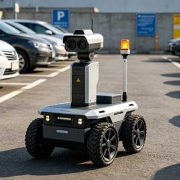
Autonomous surface vehicles — also called autonomous surface vessels, USVs, or uncrewed surface vessels — are used for hydrographic survey, water quality monitoring, environmental research, security patrol, offshore inspection, and defense ISR missions. In almost every one of these applications, mission duration is set by battery energy, not by the vehicle’s mechanical design. A pack that is too small cuts a survey short. Conversely, a pack that is too heavy or too large eats into payload capacity, buoyancy margin, or hull space needed for sensors and electronics.
Because of this, ASV and USV developers typically specify batteries around three competing goals: maximum usable energy (Wh), minimum weight and footprint, and enough continuous/peak discharge current to support thrusters and sensor loads simultaneously — while still meeting marine safety and transport requirements.
Key Specifications to Define Before Sourcing an ASV Battery Pack
When requesting a quote for an autonomous surface vehicle battery, the following specifications determine whether a pack will actually work in your vehicle:
- Nominal voltage — common ASV/USV bus voltages are 12V, 14.8V (4S), 24V, and 48V
- Capacity (Ah) and energy (Wh) — the real driver of mission endurance
- Cell configuration (e.g., 4S14P, 4S10P) and cell chemistry/energy density
- Overall dimensions (L × W × H) and weight — critical for hull space and buoyancy
- Maximum continuous and peak discharge current — must cover thrusters, sensors, and comms simultaneously
- Charge voltage, charge current, and charge method (CC/CV)
- BMS/PCM protection — overcharge, over-discharge, over-current, and short-circuit protection
- Cycle life and expected number of deployments before replacement
For many ASV programs, the first proposed battery is not the final one — dimensions and weight often need to be optimized once the pack is tested inside the actual hull. A manufacturer that can quickly offer alternative capacities, cell types, or configurations around the same footprint makes this iteration much faster.
Real Case Study: Sizing a 14.8V Li-ion Battery Pack for a Prototype ASV
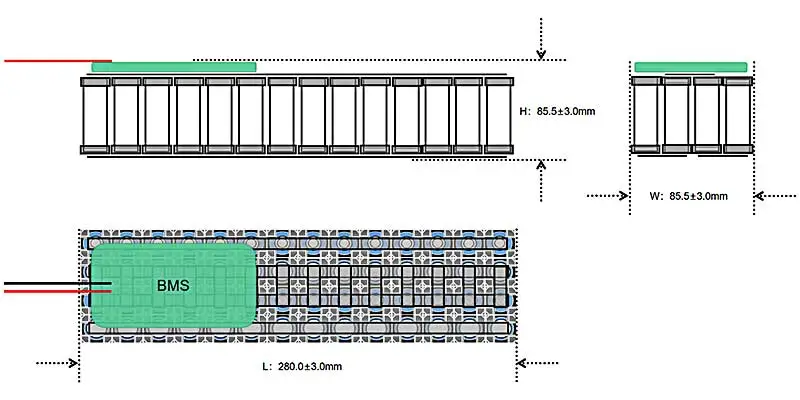
A robotics engineer developing an autonomous surface vehicle prototype contacted Himax Electronics about our 14.8V 35Ah (518Wh) Li-ion battery pack, listed as a 4S14P configuration built from 2500mAh 18650 cells. His team needed three things before they could confirm the fit: total weight, overall dimensions, and whether a smaller, lighter pack with similar energy (around 500Wh) was available.
After reviewing the vehicle’s available space and weight budget, the team asked whether a roughly 25Ah (4S) configuration could work for their prototype instead, and requested full specifications, datasheet, maximum continuous discharge current, pricing, and lead time for comparison.
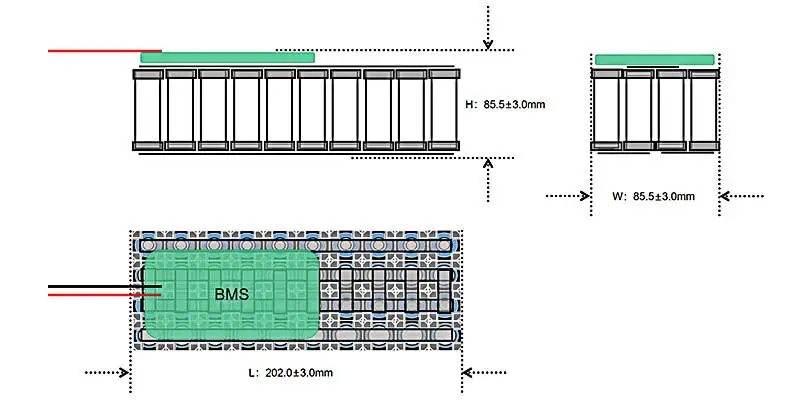
Our technical account manager proposed two preliminary 14.8V Li-ion solutions, both built on the same INR18650 2500mAh 3.7V cell platform so they could be evaluated side by side:
| Item | Option A — 4S14P 35.0Ah | Option B — 4S10P 25.0Ah |
| Cell | INR18650 2500mAh 3.7V | INR18650 2500mAh 3.7V |
| Configuration | 4S14P | 4S10P |
| Nominal Voltage | 14.8V | 14.8V |
| Rated Capacity | 35.0Ah | 25.0Ah |
| Energy | 518.0Wh | 370.0Wh |
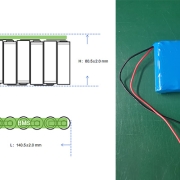
| Dimensions (L×W×H) | 280.0±3.0 × 85.5±3.0 × 85.5±3.0 mm | 202.0±3.0 × 85.5±3.0 × 85.5±3.0 mm |
| Charge Voltage | 16.8V | 16.8V |
| Charge Current | 7.0A – 17.5A | 5.0A – 12.5A |
| Charge Method | CC/CV | CC/CV |
| Discharge Cut-off Voltage | 10.0V | 10.0V |
| Max. Continuous Discharge Current | 105.0A | 75.0A |
| Approx. Weight | 3.0kg | 2.5kg |
Both packs use the same cell platform and share dimensions in two axes. Therefore, the customer could directly compare energy, weight, and discharge capability against their available hull space. Additionally, they could do so without redesigning the mounting cavity between options. We also noted, however, that if reducing size and weight further was the priority, we could evaluate higher energy‑density cell options. For instance, we could recommend an alternative pack tailored specifically to their footprint.
To finalize the recommendation, we asked the customer for the required maximum continuous and peak discharge current for their thrusters and payload, any hard dimensional or installation constraints, and their estimated production quantity once the prototype testing succeeded — information that lets us optimize cell selection, wiring, and BMS parameters for the production version rather than just the prototype.
Optimizing Energy Density Without Redesigning the Hull
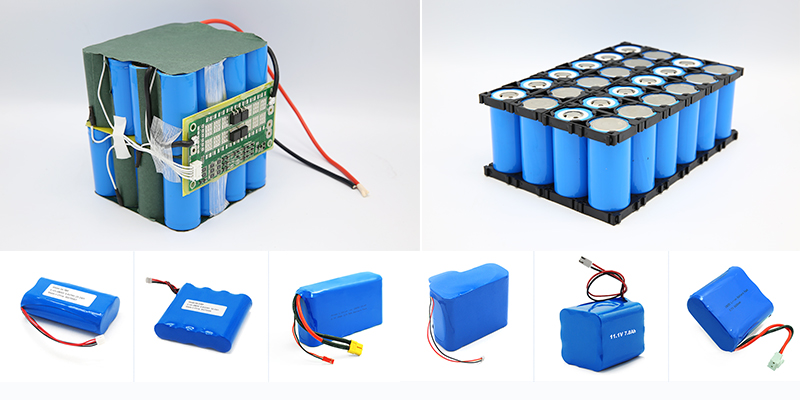
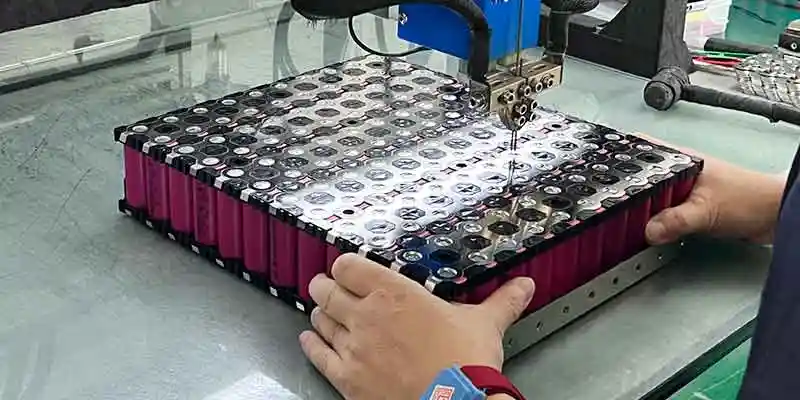
When space and weight are the limiting factor — which is true for most small and mid-size ASVs and USVs — there are generally three ways to shrink an equivalent-energy battery pack: use higher energy-density 18650 or 21700 cells, adjust the series/parallel configuration to change the pack’s footprint, or move to a different cell format altogether (such as pouch cells) where the application allows it. A custom battery manufacturer that offers all three options can usually find a configuration close to 500Wh that fits significantly tighter dimensional or weight targets than an off-the-shelf pack.
Safety, Certification, and Marine-Grade Reliability
ASV and USV battery packs operate in a demanding environment — vibration, temperature swings, and long unattended deployments — so certification and protection circuitry matter as much as capacity. When evaluating a Li-ion battery supplier for marine robotics, look for the following:
-
UN38.3 transport testing and CE/UL‑referenced safety compliance.
-
A BMS with overcharge, over‑discharge, over‑current, and short‑circuit protection, matched to your thruster and payload current draw.
-
Documented cycle life and discharge performance data (datasheet + test report).
-
Mechanical robustness (vibration and drop performance suited to marine deployment).
-
Engineering support for iterating pack dimensions, connectors, and configuration during prototyping.
Beyond ASVs: The Same Platform Powers Other Autonomous Systems
The 14.8V (4S) Li-ion 18650 platform used for autonomous surface vehicles is also common in unmanned underwater vehicles (UUVs), mobile robots, portable power systems, and other high-current autonomous equipment. If your platform needs a different voltage, capacity, or footprint, our engineering team can configure cell count, discharge current, and mechanical dimensions around your existing design.
Get a Custom Quote for Your ASV or USV Battery Pack
Himax Electronics designs and manufactures custom Li-ion and LiFePO4 battery packs for autonomous surface vehicles, unmanned surface vehicles, and other marine robotics applications, with over 20 years of experience in lithium battery pack manufacturing. Send us your target voltage, energy/capacity, available space, and required discharge current, and our engineering team will propose one or more configurations — the same way we did for this 35Ah vs. 25Ah comparison — so you can optimize weight and space before committing to production.
Contact Himax Electronics for a custom autonomous surface vehicle battery quote today.