Tag Archive for: Custom lithium battery solutions

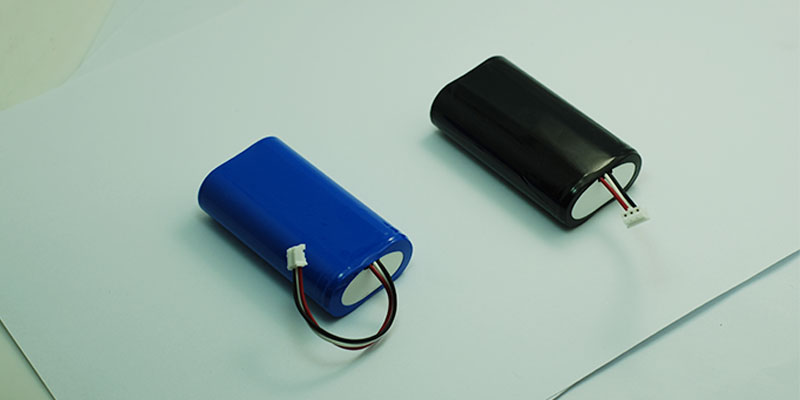
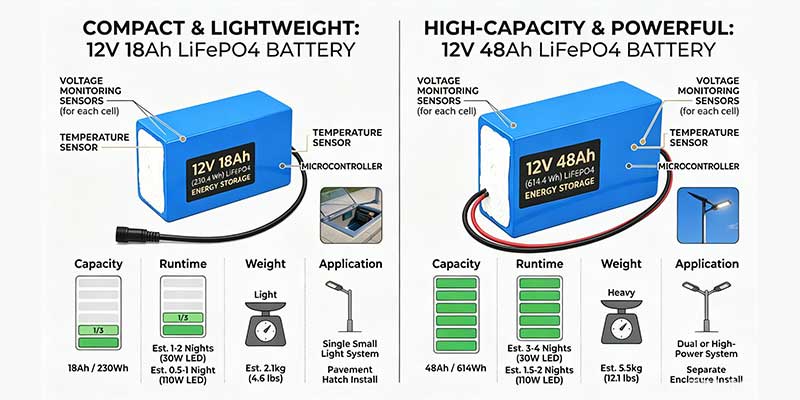
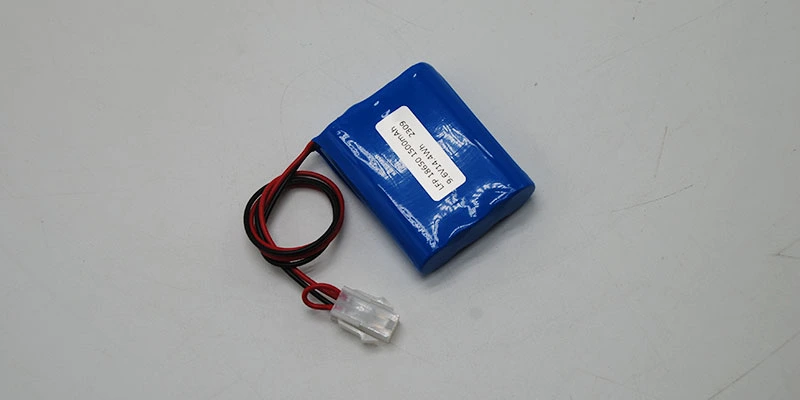
12V 18Ah LiFePO4 battery pack for solar street light energy storage

Solar Street Light Battery Guide: 12V LiFePO4 Solutions

By Alden – Battery Engineer – Manufacturing & Quality Control

Solar street lights are expected to work every night, often in remote locations where maintenance is costly and inconvenient. While solar panels and LED fixtures receive most of the attention, the battery pack is the component that determines whether a solar street light can deliver reliable illumination through cloudy weather, seasonal changes, and years of outdoor operation.

At Himax Electronics, we recently supported solar street lighting projects using 12V 18Ah LiFePO4 battery packs and 12V 48Ah LiFePO4 battery packs. Although both batteries serve the same application, they address different runtime and power requirements.

This article explains how these battery packs are used in solar street lighting systems, what makes LiFePO4 technology suitable for outdoor lighting, and how OEM buyers can select the right battery solution.

Why Battery Selection Matters in Solar Street Lights

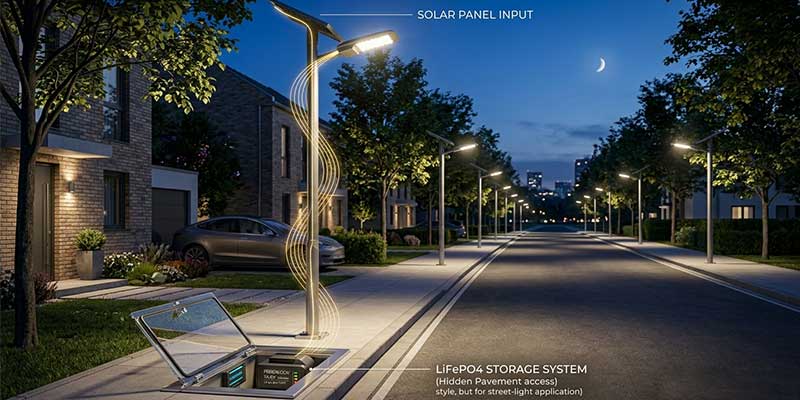
A solar street light operates as a complete energy system:

  1. Solar panel captures energy during the day.
  2. Charge controller manages charging.
  3. Battery stores energy.
  4. LED light consumes stored energy at night.

When the battery underperforms, the entire lighting system suffers. Common problems include:

  • Reduced lighting hours
  • Dim illumination before dawn
  • Frequent battery replacement
  • System downtime during cloudy periods
  • Increased maintenance costs

For municipalities, contractors, and lighting equipment manufacturers, battery reliability directly impacts project success.

The Advantages of LiFePO4 Batteries for Solar Street Lights

Compared with traditional lead-acid batteries, LiFePO4 battery technology offers several important benefits.

Longer Cycle Life

Solar street lights charge and discharge every day. This means the battery may experience hundreds of cycles annually.

LiFePO4 cells typically provide significantly longer cycle life than conventional lead-acid alternatives, helping reduce replacement frequency and long-term operating costs.

Improved Safety

Safety is critical for batteries installed in public areas.

LiFePO4 chemistry offers:

  • Excellent thermal stability
  • Reduced risk of thermal runaway
  • Better tolerance to outdoor temperature variations
  • Reliable long-term operation

Higher Energy Efficiency

A more efficient battery stores and delivers energy with lower losses.

This allows solar lighting systems to:

  • Maximize harvested solar energy
  • Extend nighttime runtime
  • Improve overall system efficiency

Lightweight Construction

LiFePO4 batteries are lighter than comparable lead-acid batteries, making installation easier and reducing structural requirements.

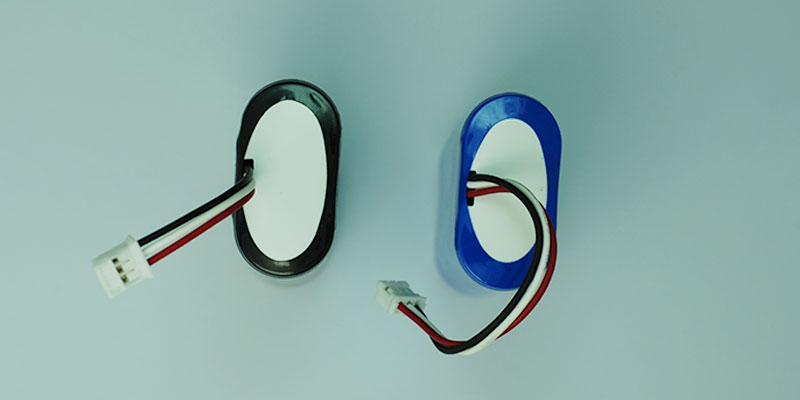
12V 48Ah LiFePO4 battery pack with IP68 protection for solar street lighting

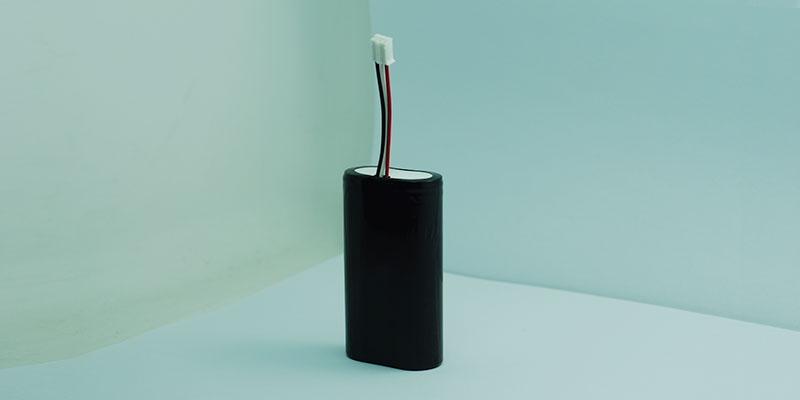
12V 18Ah LiFePO4 Battery Pack for Solar Street Lights

The 12V 18Ah battery pack is designed for compact and medium-power solar street lighting systems.

Key Specifications

  • Battery Chemistry: LiFePO4
  • Voltage: 12.8V
  • Capacity: 18Ah
  • Energy: 230Wh
  • Cell Configuration: 4S3P
  • Cell Type: 32650 6000mAh
  • Waterproof Design
  • M17 Connector
  • Cable Length: 300mm
  • PVC Encapsulation

Typical Applications

The 12V 18Ah battery is suitable for:

  • Residential streets
  • Pathway lighting
  • Community roads
  • Parks
  • Garden lighting
  • Small commercial projects

Because of its compact size, it offers an excellent balance between runtime and installation flexibility.

12V 48Ah LiFePO4 Battery Pack for Solar Street Lights

For projects requiring longer autonomy and higher energy storage, the 12V 48Ah battery pack provides a substantial increase in capacity.

Key Specifications

  • Battery Chemistry: LiFePO4
  • Voltage: 12.8V
  • Capacity: 48Ah
  • Energy: 614.4Wh
  • Cell Configuration: 4S8P
  • Cell Type: 32650 6000mAh
  • Maximum Charging Current: 24A
  • Maximum Continuous Discharge Current: 48A
  • Waterproof Protection: IP68
  • M17 Connector
  • Cable Length: 300mm
  • Double-Layer Blue PVC Protection

Typical Applications

The 48Ah version is commonly selected for:

  • High-power solar street lights
  • Municipal lighting projects
  • Industrial zones
  • Parking lots
  • Roadway lighting
  • Areas with extended nighttime operation

The larger energy reserve helps maintain lighting performance during consecutive cloudy or rainy days.

Solar street light system powered by high-cycle-life LiFePO4 battery technology

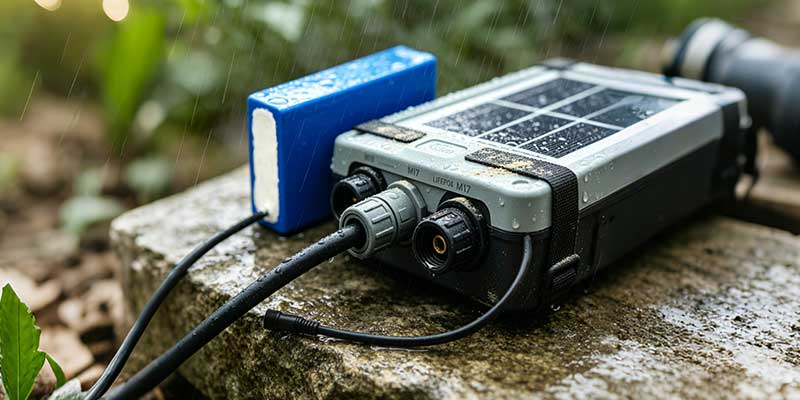
Why Waterproof Protection Is Essential

Outdoor batteries face continuous exposure to:

  • Rain
  • Humidity
  • Dust
  • Temperature fluctuations
  • Condensation

For this reason, these battery packs are designed with enhanced waterproof measures, including sealed construction and IP68-level protection for demanding environments.

A properly sealed battery pack helps prevent:

  • Moisture intrusion
  • Corrosion
  • Electrical failures
  • Premature battery degradation

This is especially important for integrated solar street light systems where the battery is installed inside the pole or fixture housing.

Choosing Between 12V 18Ah and 12V 48Ah

The right battery depends on project requirements.

Requirement 12V 18Ah 12V 48Ah
Small street lights
Community roads
Municipal projects
Long autonomy requirements
Compact installation space
High-power LED systems
Lower initial cost
Maximum backup capacity

In many projects, selecting a larger battery can improve reliability during poor weather conditions and reduce complaints related to insufficient lighting duration.

Key Considerations for OEM Solar Street Light Manufacturers

When developing solar lighting products, battery selection should consider more than capacity alone.

1. Waterproof Design

Outdoor reliability begins with proper sealing and environmental protection.

2. Charge and Discharge Capability

The battery must match the controller and LED power requirements.

3. Connector Compatibility

Customized connectors simplify installation and improve system reliability.

4. Battery Protection System

An integrated protection board helps protect against:

  • Overcharge
  • Over-discharge
  • Overcurrent
  • Short circuit

5. Long-Term Supply Stability

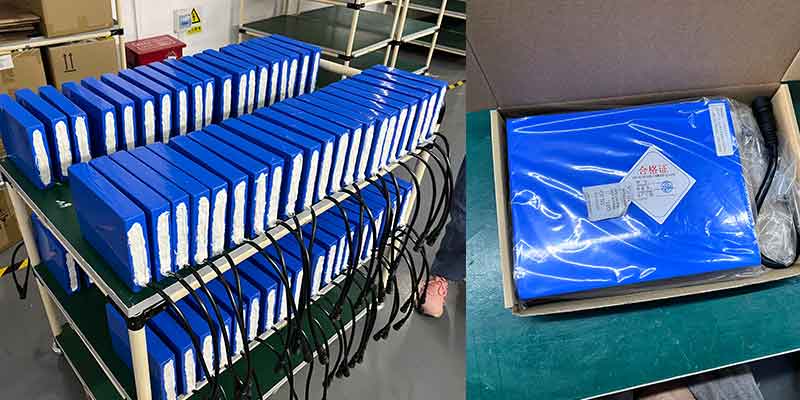
Consistent manufacturing quality is essential for large-scale lighting deployments.

Waterproof LiFePO4 battery pack used in outdoor solar street lights

Custom Solar Street Light Battery Solutions

Every solar lighting project has unique requirements.

At Himax Electronics, custom battery solutions can include:

  • Different capacities
  • Customized dimensions
  • Connector options
  • Cable length modifications
  • Waterproof enhancements
  • OEM labeling
  • Customized battery management systems

This flexibility allows solar street light manufacturers to optimize performance while meeting project-specific requirements.

Related Battery Solutions

Explore our dedicated battery solutions:

Frequently Asked Questions

How long can a 12V 18Ah solar street light battery run?

Runtime depends on LED power consumption, controller settings, and weather conditions. In general, it is suitable for compact and medium-power solar street lighting systems.

Why choose LiFePO4 instead of lead-acid batteries?

LiFePO4 batteries offer longer cycle life, better efficiency, lighter weight, and lower maintenance requirements.

Is IP68 waterproof protection important?

Yes. Outdoor lighting systems are exposed to rain, humidity, and dust. IP68 protection helps improve long-term reliability.

Which battery is better: 12V 18Ah or 12V 48Ah?

The 18Ah version is ideal for smaller systems, while the 48Ah version provides greater energy storage and longer backup time.

Can these battery packs be customized?

Yes. Capacity, dimensions, connectors, waterproofing, and labeling can all be customized according to project requirements.

Conclusion

A reliable Solar Street Light Battery is the foundation of dependable outdoor lighting. Both the 12V 18Ah LiFePO4 battery pack and the 12V 48Ah LiFePO4 battery pack are designed to support solar street light applications with long cycle life, stable performance, and robust waterproof protection.

For smaller lighting systems, the 18Ah version provides an efficient and compact solution. For municipal, industrial, and high-power installations, the 48Ah version delivers the energy reserve needed to maintain lighting performance under demanding conditions.

Contact Us

Looking for a custom Solar Street Light Battery for your next project?

Our engineering team can help you select the right LiFePO4 battery configuration, waterproof design, connector solution, and protection system for your solar lighting application.

👉 https://www.himaxelectronics.com/contact/

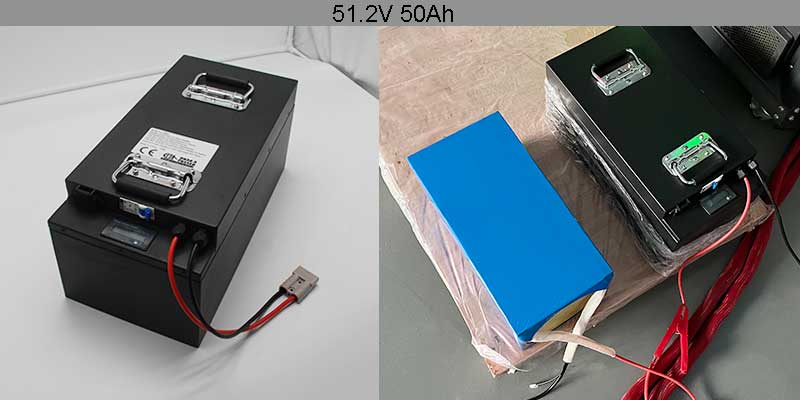
51.2V 50Ah LiFePO4 golf cart battery pack with SC50 discharge connector and Pinzi Head charge port from Himax Electronics
Caleb  ·  Battery Engineer — BMS & Protection Systems

Focused on battery management systems and protection design, Caleb develops PCM/BMS solutions with overcharge, over-discharge, thermal, and short-circuit protection to enhance safety and operational stability across applications.


Lead acid has powered golf carts for decades — and for a long time, the case against switching was simple: lithium costs more up front. That calculation has shifted. With LiFePO4 cycle life now exceeding 2,000 full charges, golf course operators and fleet buyers are asking a different question: not whether to switch, but when and what to specify. This guide answers both, using the Himax 51.2V 50Ah LiFePO4 pack as the working reference.


KEY TAKEAWAYS

› LiFePO4 chemistry is the correct choice for golf carts: thermally stable, non-toxic, and inherently safer than NMC or lead acid under abuse conditions.

› 51.2V nominal (16S LiFePO4) is a direct drop-in replacement for 48V lead-acid systems — no motor controller changes required in most carts.

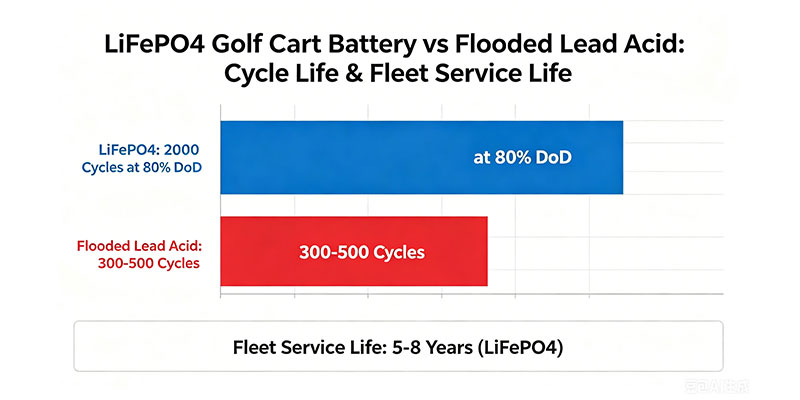
› 2,000-cycle rated life at 80% depth of discharge translates to 5–8 years of daily fleet use, versus 300–500 cycles for flooded lead acid.

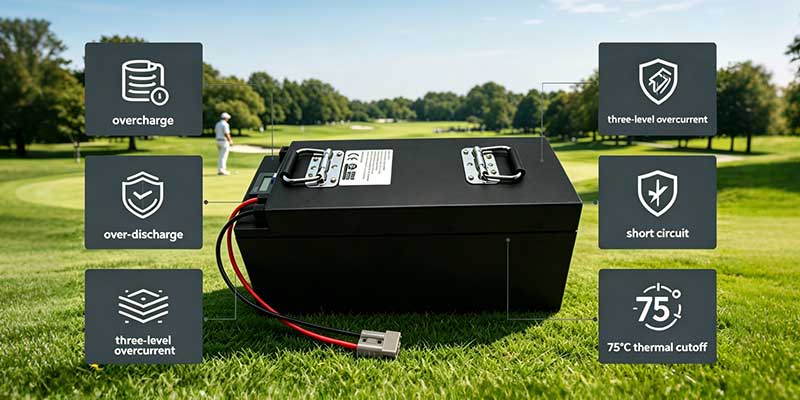
› The BMS in this pack provides six protection layers: overcharge, over-discharge, overcurrent (three thresholds), short circuit, and thermal cutoff at 75°C NTC.

› 2,560Wh of usable energy delivers 35–50km of real-world range per charge for a standard golf cart — depending on terrain, load, and ambient temperature.

› Maintenance cost savings from eliminating water top-ups, equalization charges, and early replacement typically offset the higher purchase price within 2–3 years.

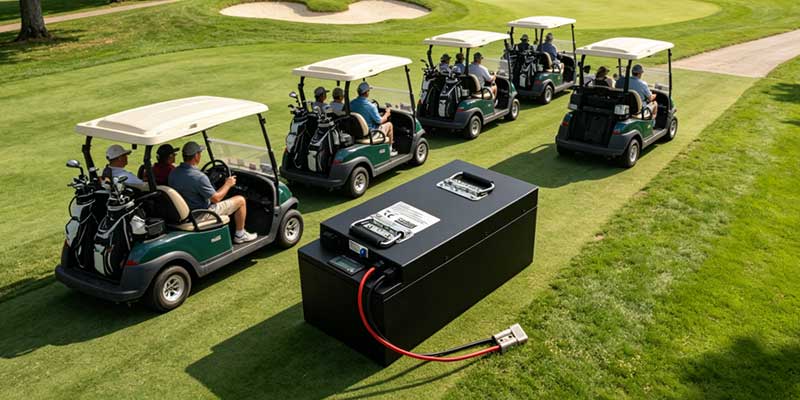
Electric golf cart powered by LiFePO4 battery upgrade driving on sunny golf course with 35-50km range per charge

Why Is LiFePO4 the Right Chemistry for Golf Carts?

LiFePO4 (lithium iron phosphate) is the safest lithium chemistry for vehicle applications. Its thermal stability means it does not enter runaway when overcharged or punctured — a critical advantage for carts used in close proximity to people on golf courses, resorts, and campuses.

Thermal stability compared with other lithium chemistries

NMC and NCA lithium cells release oxygen when thermally stressed, which feeds combustion. LiFePO4 cells do not — the phosphate-oxygen bond is significantly stronger and does not break down at temperatures a golf cart battery might realistically encounter. The Himax pack’s BMS adds a 75°C NTC thermal cutoff as a second protection layer, but the underlying cell chemistry is the primary safety feature.

Why 51.2V (16S) works with 48V golf cart systems

A 16S LiFePO4 pack has a nominal voltage of 51.2V (3.2V × 16 cells) and a full-charge voltage of 57.6V (3.6V × 16). Most 48V golf cart motor controllers are rated to operate across 40–60V — which means this pack is electrically compatible without controller replacement. The nominal voltage is close enough to 48V that torque and speed characteristics remain familiar to drivers, while the higher peak voltage delivers noticeably better hill-climbing performance.

What the 2,000-cycle rating means in a fleet context

The Himax 51.2V 50Ah pack is rated for 2,000 cycles to 70% remaining capacity at standard depth of discharge. In a golf course context where a cart is discharged and recharged once per day, this translates to roughly 5.5 years before the pack drops below 70% of original capacity. Most fleet operators find the pack remains serviceable for 7–8 years. Flooded lead acid at a similar depth of discharge rarely exceeds 300–500 cycles — one-sixth the life.


What Are the Full Specifications of the Himax 51.2V 50Ah Pack?

Model 512-50BP is a 16S1P LiFePO4 pack using LF28148115 cells, delivering 51.2V nominal, 50Ah minimum capacity, 2,560Wh of energy, and a 40A maximum continuous discharge current. The BMS provides six-layer protection with cell-level balancing at 3.5V ± 0.025V.


Model

512-50BP

Himax reference

Nominal voltage

51.2V

16S LiFePO4 configuration

Capacity (min)

50Ah

0.2C discharge to 40V

Energy

2,560Wh

Usable per charge

Charge voltage

57.6V

CC/CV method

Std. charge current

5A

12-hour standard charge

Max charge current

10A

Fast charge option

Std. discharge current

10A

Normal operating load

Max continuous discharge

40A

2,048W at nominal V

Cycle life

2,000 cycles

≥70% capacity retained

Discharge cut-off

40V

BMS hard cutoff

Internal impedance

≤ 35mΩ

Pack level

Dimensions

400×220×180mm (±3mm)

L × W × H

Output wire

AWG10, 304.8mm

3135 specification

Charge connector

Pinzi Head

Dedicated charge port

Discharge connector

SC50

High-current rated

Charge temp range

0°C to 45°C

Do not charge below 0°C

Discharge temp range

-20°C to 60°C

Wide operating window

Storage temperature

-10°C to 45°C

Long-term storage

Warranty

2 years

From shipment date

Six-layer BMS protection for 51.2V LiFePO4 golf cart battery including overcharge over-discharge three-level overcurrent short circuit and 75°C thermal cutoff

BMS protection parameters — what Caleb’s team specifies

The protection circuit is built around the SH367005BAB IC (×4) with LGSE10R046B and LR046N10SM2 MOSFETs (×12). The table below covers every protection threshold as shipped:


Protection function Threshold / setting Delay / reset
Overcharge detect 3.75V ± 0.025V per cell Delay: 0.5–1.5s  |  Reset: 3.55V
Over-discharge detect 2.2V ± 0.08V per cell Delay: 0.5–1.5s  |  Reset: 2.7V
Overcurrent (charge) 80A ± 16A Delay: 0.5–1.5s
Overcurrent (discharge) level 1 160A ± 32A Delay: 0.5–1.5s
Overcurrent (discharge) level 2 320A ± 64A Delay: 50–150ms (fast trip)
Short circuit External short detection Reset: release load
Cell balancing Balances at 3.5V ± 0.025V Balance current: 36 ± 10mA
Thermal cutoff (NTC) 75°C surface trigger Automatic protection


How Far Will a Golf Cart Lithium Battery Take a Golf Cart on a Single Charge?

With 2,560Wh of usable energy, a standard 4-seat golf cart drawing 30-50A on average will cover 35-55km per charge on flat terrain. However, hilly courses, full passenger loads, and cold weather reduce that figure. Therefore, correct depth-of-discharge management significantly extends pack life.

Flat Golf Course – Standard 4-Seat Cart

For example, a typical 4-seat cart on flat terrain draws approximately 15-25A at cruise speed. At 20A average draw and 51.2V nominal, power consumption is roughly 1,024W. As a result, the 2,560Wh pack delivers about 2.5 hours of continuous drive time — equivalent to 48-56km at 20-22km/h cart speed. Moreover, most 18-hole courses require only 12-16km per round. Consequently, one charge comfortably covers 3-4 full rounds.
Average draw: 15-25A | Range (flat): 48-56km | Rounds per charge: 3-4 (18-hole)

Hilly Resort or Country Club Course

In contrast, steep elevation changes increase motor draw significantly. For instance, peak climbing current can reach 35-40A on a 15% grade. Thus, the average draw over a hilly course rises to 30-38A, cutting range to 30-40km. Nevertheless, the 40A maximum continuous discharge rating of this pack handles sustained climbing loads without triggering BMS overcurrent protection.
Average draw: 30-38A | Range (hilly): 30-40km | Peak climb current: ≤40A (within spec)

Resort Shuttle and Campus Transport – Higher Loads

Similarly, 6-seat utility carts carrying luggage or equipment draw 30-45A continuously. At 40A / 51.2V, peak power is approximately 2,048W. As a result, range at this load is 25-35km — still sufficient for a full resort property loop with buffer. Additionally, the SC50 discharge connector is rated for sustained high-current draw without contact heating at these levels.
Continuous draw: 30-45A | Range: 25-35km | Peak power: 2,048W at 40A

Cold-Weather Operation

Finally, the pack’s discharge temperature range runs to -20°C, but cold significantly affects usable capacity. For example, the specification data shows ≥60% capacity retention at -10°C after standard charge at 20°C. Therefore, operators in cold climates should expect 65-75% of warm-weather range on very cold days. Importantly, they should not charge below 0°C — the BMS will prevent charging in that range to protect cell integrity.

LiFePO4 vs. Lead Acid vs. Other Lithium: Which Battery Wins for Golf Carts?

LiFePO4 wins on cycle life, weight, maintenance, and total cost of ownership for any fleet operated more than 250 days per year. Lead acid retains an advantage only on purchase price and charger compatibility in legacy fleets with no budget for infrastructure updates.


Type Cycle life Weight (equiv.) Maintenance Safety TCO (5 yr)
LiFePO4 51.2V  ★ 2,000+ cycles ~55% lighter None Excellent Lowest
Flooded lead acid 300–500 cycles Baseline Weekly water top-up, equalization Fair Highest
AGM lead acid 400–600 cycles Slightly lighter Occasional equalization Good High
NMC lithium 500–1,000 cycles ~60% lighter None Moderate Medium
NiMH (older tech) 500–800 cycles ~30% lighter Low Good Medium-high

Cycle life comparison chart LiFePO4 golf cart battery 2000 cycles at 80% DoD versus flooded lead acid 300-500 cycles showing 5-8 years fleet service life


What Are the Most Expensive Mistakes Golf Cart Battery Buyers Make?

The costliest mistakes in golf cart battery procurement are not choosing the wrong chemistry. Instead, they are specifying the wrong voltage tier, ignoring charge temperature limits, or assuming all LiFePO4 packs have equivalent BMS protection. Therefore, each of these errors shortens pack life or creates safety exposure.

Mistake 1: Charging Below 0°C

First, LiFePO4 cells form lithium plating on the anode when charged in sub-zero temperatures. For this reason, the Himax BMS blocks charging below 0°C. However, if an operator overrides this protection — or uses a non-LiFePO4 charger — permanent capacity loss results. Consequently, this is the single most common cause of premature pack failure in cold-climate fleet deployments.

Mistake 2: Using a 48V Lead Acid Charger on a 51.2V LiFePO4 Pack

Similarly, a 48V lead acid charger terminates at approximately 58.4V. Nevertheless, this is close to, but not the same as, the 57.6V CC/CV profile required for this pack. As a result, voltage differences of this magnitude accelerate cell aging and can trigger overcharge protection on individual cells before the pack is full. Thus, always use a charger designed for 16S LiFePO4 chemistry.

Mistake 3: Discharging Consistently to Cut-Off Voltage

In addition, running any lithium pack to its BMS cut-off voltage for every cycle is the fastest way to shorten life. Specifically, the 2,000-cycle rating applies at 80% depth of discharge. However, discharging to 100% DoD consistently reduces cycle life to approximately 800–1,000 cycles. Therefore, fleet operators should configure their charging schedule so carts are plugged in after each round — not after two or three.

Mistake 4: Ignoring the BMS Protection Tier When Sourcing Cheaper Alternatives

Moreover, not all LiFePO4 packs include three-tier overcurrent protection and thermal cutoff. For example, a pack with only basic overcharge and over-discharge protection is a lower-cost product. Nonetheless, it carries meaningfully higher risk in a fleet environment. Hence, verify the full BMS specification — IC model, MOSFET count, and NTC thermal trigger — before purchasing based on price.

Mistake 5: Neglecting Storage SoC During Off-Season

Finally, golf courses in seasonal climates may store carts for 3–6 months. In fact, LiFePO4 cells stored at full charge for extended periods degrade faster than cells stored at 30–50% SoC. For this reason, the Himax pack ships at 30–70% SoC. Accordingly, charge to 50% before long-term storage and recharge every 3 months to prevent deep self-discharge.

Frequently Asked Questions

The questions below are the ones procurement managers and golf course fleet operators most commonly ask when evaluating a 51.2V LiFePO4 upgrade. Each answer is written to stand alone as a complete, citable response.

Is 51.2V LiFePO4 compatible with my existing 48V golf cart?

In most cases, yes. A 16S LiFePO4 pack operates between 40V (discharge cutoff) and 57.6V (full charge), which falls within the operating range of the majority of 48V golf cart motor controllers. Verify your controller’s voltage tolerance in its documentation — look for a stated range of 40–58V or similar. If your cart has a hard 48V nominal controller, consult the manufacturer before installing a 51.2V pack.

How long does a full charge take?

At the standard 5A charge current using a 57.6V/5A charger, a full charge from empty takes approximately 10–12 hours — suitable for overnight charging. At the maximum 10A charge current with a compatible fast charger, charge time drops to approximately 5–6 hours. Do not use chargers above 10A; the BMS will trigger overcurrent protection and the charge will not complete.

How many rounds of golf can this battery power per charge?

On a flat 18-hole course, each round requires approximately 12–16km of cart travel. At the conservative range estimate of 35km per charge (hilly terrain, full load), this pack covers 2–3 full rounds. On flat terrain with light loads, 4–5 rounds per charge is achievable. For busy tournament days with continuous cart use, a two-pack rotation with overnight charging on both is the recommended fleet configuration.

What certifications does this pack carry?

The Himax 51.2V 50Ah pack is compiled under GB/T18287-2013, UL1642, and CE61960 technology standards. Mechanical performance testing includes crush, drop (1 meter onto concrete), and vibration (XYZ axes) with no fire, explosion, or leakage. Cell safety testing covers overcharge, over-discharge, short circuit, and heating scenarios. Certification documentation is available on request for procurement records.

What maintenance does a LiFePO4 golf cart battery actually require?

Essentially none, compared with flooded lead acid. There is no water to top up, no equalization charging required, and no terminal corrosion to clean. The only maintenance task is monitoring the BMS indicator (if fitted) for fault codes, and ensuring the pack is stored at 50% SoC during off-seasons longer than 3 months. Quarterly recharging during storage is recommended to prevent deep self-discharge.

What is the warranty and what does it cover?

The pack carries a two-year warranty from the date of shipment. Himax guarantees replacement for defects proven to result from the manufacturing process. Damage from customer abuse, incorrect chargers, charging below 0°C, or mechanical impact is not covered. For OEM fleet purchases, extended warranty terms can be negotiated — contact Himax directly.


Why Do Golf Cart Fleet Operators Source from Himax Electronics?

Himax designs and manufactures LiFePO4 battery packs end-to-end — from cell sourcing through BMS development to final assembly and QC. For golf course fleets and OEM buyers, this means a single accountable supplier for cells, protection electronics, and pack-level performance guarantees.
  • BMS designed in-house, not sourced as a commodity. Caleb’s team develops PCM/BMS solutions with application-specific protection thresholds — including the three-tier overcurrent protection and NTC thermal trigger in this pack. The IC and MOSFET selection is verified against real golf cart load profiles, not generic datasheets.
  • LiFePO4 cell quality verified at batch level. The LF28148115 cells in this pack are tested for capacity, impedance, and safety performance at intake. Cell authenticity and batch records are available for OEM procurement audit.
  • Configurable pack dimensions and connectors. The standard 400×220×180mm form factor fits most golf cart battery compartments. Connector type, wire length, and output configuration can be adjusted for OEM builds with a revised drawing.
  • Fleet-scale production with stable supply. Golf course procurement often involves 20–100+ units per order. Himax maintains production capacity for volume OEM orders with consistent cell sourcing and BMS batch testing.
  • Two-year warranty with documented QC backing. Every pack undergoes pre-shipment voltage, impedance, and BMS function checks. Warranty claims are supported by production batch records — not just a warranty card.


Ready to upgrade your golf cart fleet to LiFePO4?

Tell us your cart model, fleet size, and charging infrastructure. We’ll respond with a compatible configuration and volume pricing within one business day.

www.himaxelectronics.com  |  Request a Fleet Quote


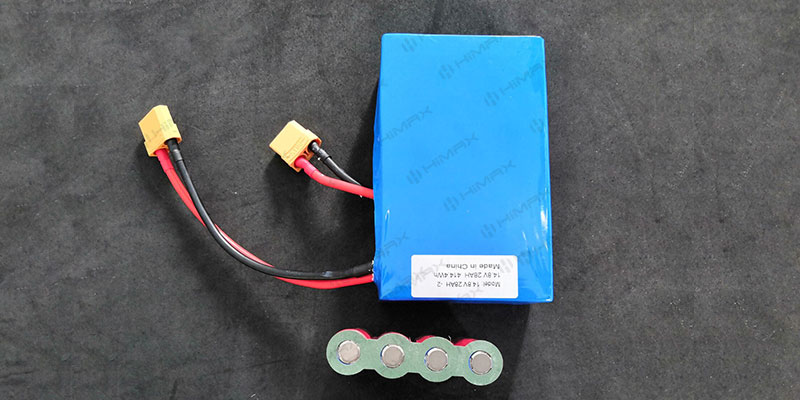
Himax Electronics 14.8V 28Ah 414.4Wh lithium-ion battery pack for robotics applications, 18650 4S li-ion battery pack product photo

By Nath — Battery Engineer, Cell Selection & Performance | Himax Electronics

Let me be direct about something: most robotics battery failures I’ve seen in the field weren’t caused by a defective pack. They were caused by a pack that was never the right fit to begin with. Wrong cell chemistry. Undersized discharge rating. A cycle life spec that looked fine on paper but was measured under conditions nothing like an actual robot workload.

I work on cell selection and performance optimization at Himax Electronics. My job isn’t to sell you a battery — it’s to make sure the battery we recommend actually survives contact with your application. This post walks through what matters when specifying robotics batteries, why the 14.8V configuration has become the dominant architecture for mobile and service robots, and exactly what’s inside our 14.8V 28Ah 414.4Wh pack — with real numbers from the spec sheet, not marketing copy.

Why Robotics Applications Are Harder on Batteries Than You Think

Most battery specifications are written around predictable, steady-state loads. Robotics is the opposite of that.

A mobile service robot draws baseline current for compute, sensors, and communication — then spikes hard when a drive motor accelerates, a manipulator arm extends, or a docking mechanism engages. That variable load profile creates two problems that cell engineers think about constantly.

The first is voltage sag. Under peak current draw, internal impedance causes a momentary voltage drop at the pack terminals. If that sag is large enough, your motor controller sees an undervoltage condition, your onboard computer reboots, or your position sensors lose calibration. A robot that shuts down mid-task in a warehouse or surgical environment isn’t just inconvenient — it’s a liability.

The second is thermal stress from repeated cycling. An industrial AMR (Autonomous Mobile Robot) running two shifts per day might complete 4–6 partial charge cycles in a 24-hour period. That’s fundamentally different from a consumer device that sees one full cycle per day. Cell selection has to account for this reality at the outset — you can’t engineer your way out of a bad cell choice after the fact.

This is why I don’t start a robotics battery conversation with “how many watt-hours do you need.” I start with: what does the discharge profile actually look like, what’s the peak current draw, and how many cycles per day is this thing running?

.4S lithium-ion cell configuration diagram showing 14.8V nominal voltage for mobile robot and AGV battery pack design

Understanding the 4S Configuration: Why 14.8V Is the Sweet Spot for Robotics

The 18650 4S Li-ion battery pack architecture — four cells in series at 3.7V nominal each — has become the de facto standard voltage tier for mid-size robotics platforms, and there are good engineering reasons for that.

Voltage Compatibility Across Robotics Platforms

At 14.8V nominal (16.8V fully charged, 10V discharge cutoff), this voltage range sits neatly within the operating window of:

  • 12V–24V DC motor controllers used in differential-drive and mecanum-wheel mobile platforms
  • Standard servo power rails in manipulation systems
  • Common single-board computers and embedded compute modules that regulate from a wide input range
  • Most ROS-compatible mobile robot base platforms, including custom and commercial AMR chassis

Going to 6S (22.2V) adds complexity in regulation and often requires additional DC-DC conversion stages that introduce efficiency losses. Dropping to 2S (7.4V) limits motor performance and requires higher current for the same power, which increases wire gauge, connector size, and I²R losses. 4S hits the balance point.

Charge and Discharge Voltage in Practice

The 14.8V lithium battery charges to 16.8V (4.2V × 4 cells) and is protected down to a 10V discharge cutoff (2.5V per cell trigger at the PCM level). That 6.8V usable swing across the discharge curve is wide enough to maximize energy extraction without pushing cells into the damage zone.

One note for system designers: your motor controller and compute subsystem need to be rated for the full 16.8V charge voltage, not just the nominal 14.8V. I’ve seen this catch engineers out more than once during integration testing.

Inside Himax’s 14.8V 28Ah 414.4Wh Battery Pack

Let me walk through the actual specification of our pack — model Lithium-ion 18650 14.8V 28Ah — and explain the engineering decisions behind the numbers.

Cell Selection: Panasonic NCR18650GA

The cell choice is the single most consequential decision in any pack design, and it’s the one most suppliers either gloss over or obscure with generic “Grade A” language. We use the Panasonic NCR18650GA — a well-characterized, high-capacity 18650 cell with:

  • Nominal capacity: 3,450mAh (minimum guaranteed: 3,350mAh)
  • Nominal voltage: 3.6V
  • Internal impedance: ≤38mΩ per cell
  • Dimensions: max 18.4 × 65.5mm
  • Weight: approximately 49.5g per cell

The NCR18650GA is one of the highest energy density 18650 cells available from a tier-1 manufacturer. It’s used in premium applications precisely because Panasonic’s manufacturing consistency means the cell-to-cell variance within a batch is low — which matters enormously for parallel configurations where imbalanced cells cause premature aging.

Pack Configuration: 4S4P × 2

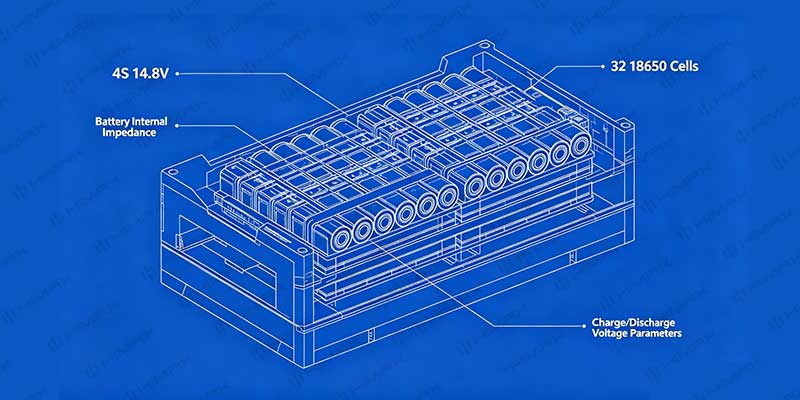
The full configuration is 4S4P × 2 — two modules, each 4 cells in series and 4 in parallel, connected to achieve the final 14.8V 28Ah output. This gives us:

  • 32 cells total in the pack
  • Nominal capacity: 28Ah (3.45Ah × 4P × 2 modules)
  • Minimum guaranteed capacity: 26.5Ah
  • Pack internal impedance: ≤20mΩ — low enough to support high peak current without significant voltage sag

Key Electrical Parameters

Parameter Specification
Nominal Voltage 14.8V
Charge Voltage 16.8V
Discharge Cutoff 10V
Nominal Capacity 28Ah
Energy 414.4Wh
Standard Charge CC/CV · 16.8V / 5.6A · ~6 hours
Max Charge Current 14A
Standard Discharge 5.6A
Max Continuous Discharge 30A
Cycle Life 300 cycles (≥60% capacity at 60% SOC test)
Pack Internal Impedance ≤20mΩ
PCM Resistance ≤15mΩ

Physical Specifications for Integration

  • Dimensions: max 133 × 83 × 40mm (per module)
  • Weight: approximately 1.79kg
  • Output wire: AWG12, 150 ±3mm
  • Storage temperature: −10°C to 45°C
  • Operating temperature (charge): 0°C to 45°C
  • Operating temperature (discharge): −20°C to 60°C

At 1.79kg for 414.4Wh, the energy-to-weight ratio is competitive for an 18650-based pack at this capacity tier. For mobile robot chassis designers, the 133 × 83 × 40mm footprint integrates cleanly into most standard battery bay configurations.

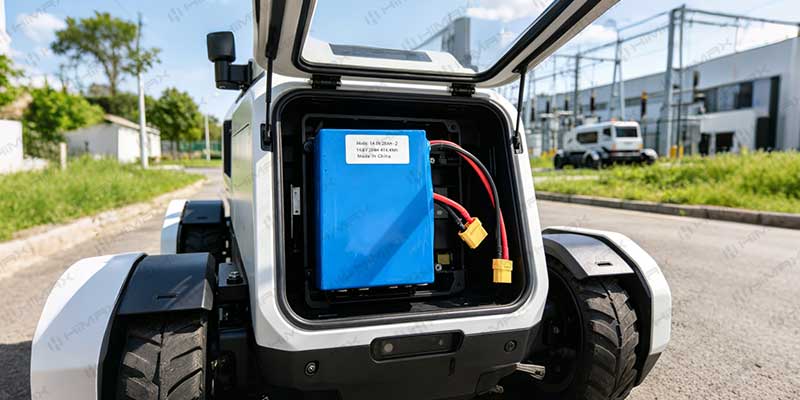
Mobile service robot powered by 14.8V lithium battery pack, autonomous robot battery integration example for OEM manufacturers

Discharge Stability Under Real Robotic Workloads

The 30A maximum continuous discharge rating is the number that matters most for mobile robotics. Here’s how to read it in context.

At standard discharge (5.6A), the pack delivers its full rated capacity with minimal voltage sag — the ≤20mΩ internal impedance keeps terminal voltage stable throughout the discharge curve. At peak load (30A), you’re pulling roughly 5.3C from a 28Ah pack — that’s a high rate, and the Panasonic NCR18650GA handles it without thermal runaway risk under normal operating conditions, but it will affect usable capacity and generate heat.

For most mobile service robots with 24V-class drive systems running at moderate speed, average current draw sits between 8–15A, with peaks during acceleration reaching 20–25A. This pack has comfortable headroom across that range.

Temperature performance from the spec:

  • At 55°C (after 2-hour soak): ≥90% rated capacity — the pack handles summer outdoor environments or warm indoor facilities without significant derating
  • At −10°C (after 4-hour soak): ≥60% rated capacity — functional in cold-storage warehouse environments, though runtime will be reduced

The discharge cutoff PCM triggers at 2.5V per cell (±0.08V), with a 0.3–1.5s delay to prevent nuisance trips during momentary load spikes. Reset is at 3.0V per cell — automatic once load is released.

Charge retention is also worth noting: after 28 days of storage at room temperature, the pack retains ≥90% of its charged capacity. For procurement teams managing inventory or seasonal deployment schedules, this means batteries stored between deployments don’t arrive at the robot half-depleted.

Cycle Life — What 300 Cycles Really Means for Your Robot Fleet

The cycle life specification reads: 300 cycles at ≥60% capacity retention, tested at 60% state of charge (SOC). Let me unpack that honestly.

The 60% SOC test condition is important context. Cycling lithium cells between a narrower SOC window — say 20–80% rather than 0–100% — significantly extends cycle life. A robot that operates on partial charges and avoids deep discharge will see substantially better longevity than 300 cycles in practice.

For warehouse AMRs or service robots running multiple shifts, 300 full cycles translates to roughly 10–12 months of daily use if fully cycled every day. Realistically, with partial cycling and good charge management, you’re looking at 18–24 months before capacity drops to a level that affects operational range.

For procurement teams managing a robot fleet, this has direct implications for battery replacement planning and total cost of ownership. A pack that costs 15% more but lasts 40% longer is almost always the better economic decision — especially when you factor in the labor cost of battery swap-outs and robot downtime.

The one-year warranty from Himax covers manufacturing defects. Practical cell life under proper operating conditions exceeds the warranty period for most robotics deployment scenarios.

Storage guidance for fleet managers: batteries should be stored at −10°C to 45°C. If stored for more than 3 months, perform a top-up charge before returning to service. Packs ship at 10–30% SOC (shipment voltage: 13.6–14.8V) for transport safety compliance.

What to Verify Before You Source a Robotics Battery Pack

I’ll be blunt: there’s a lot of cheap battery inventory in the robotics supply chain that will cause you problems 6 months into deployment. Here’s my sourcing checklist.

Cell Traceability

Ask for the cell model number, not just a tier designation. “Grade A cells” is not a specification — it’s marketing language. With our pack, you get Panasonic NCR18650GA, a cell you can independently look up, compare, and verify. That traceability matters when you’re doing a root-cause analysis on a field failure.

Robotics battery discharge curve chart comparing voltage stability of 14.8V 28Ah lithium battery under variable robotic workload

Protection Circuit Specifications

The PCM on our pack handles:

  • Overcharge protection: detects at 4.25V ±0.025V per cell, trips within 0.3–1.1s, resets at 4.15V ±0.05V
  • Over-discharge protection: detects at 2.5V ±0.08V per cell, trips within 0.3–1.5s, resets at 3.0V ±0.1V
  • Over-current protection: detects at 100–160A, trips within 5–150ms, resets on load release
  • Short-circuit protection: detects external short circuit, resets on load release
  • PCM resistance: ≤15mΩ — low enough to avoid meaningful voltage drop even at peak discharge

If a supplier can’t provide these threshold values in writing, that’s a problem.

Safety Certifications

Our specification is compiled with reference to GB/T18287-2013, UL1642, and IEC 61960. For robotics OEMs selling into North American or European markets, UL1642 cell-level certification is the baseline you need for product liability coverage.

Mechanical Testing

Mobile robots vibrate. They bump into things. They occasionally get dropped during maintenance. Our pack passes:

  • Crush test: 17.2MPa applied force, 13kN — no fire, no explosion
  • Drop test: 1 meter onto concrete, two axes, twice each — no explosion, no fire, no smoke
  • Vibration test: 10–55Hz, 1.6mm amplitude, 30 minutes per axis across XYZ — no leakage, no fire, no explosion

These aren’t theoretical — they’re the conditions your battery needs to survive in a real deployment environment.

Custom Configuration Options

If the 14.8V 28Ah specification isn’t a perfect fit for your platform, that’s a conversation worth having early. Voltage, capacity, form factor, connector type, wire gauge — these can all be adjusted at the engineering stage. The worst time to discover a mismatch is during integration testing.

Is This Pack Right for Your Robot? A Quick Decision Framework

Rather than a generic recommendation, here’s the honest engineering checklist I’d apply:

This pack is a strong fit if:

  • Your platform runs on a 12V–16.8V power bus
  • Peak current draw is under 30A continuous
  • You need 400+ Wh of energy in a compact, sub-2kg form factor
  • Your deployment involves mobile service robots, AMRs, light industrial automation, research platforms, or educational robotics at scale
  • You need a pack that’s been mechanically tested and uses traceable, tier-1 cells

You may need a different configuration if:

  • Your platform requires higher voltage (consider 6S or 7S configurations)
  • Peak current exceeds 30A regularly (a higher-P configuration or different cell chemistry may be appropriate)
  • Your form factor constraints are tighter than 133 × 83 × 40mm
  • You need integrated communication (SOC reporting, BMS data over CAN/SMBus)

If any of those edge cases apply, that’s exactly what I want to know when we talk. It’s a faster path to the right answer than discovering it during field testing.

Let’s Talk About Your Application

If you’re specifying robotics batteries for a new platform or re-evaluating your current supplier, bring your discharge profile and cycle requirements to the conversation. Generic specs don’t tell me what I need to know — your application data does.

Our engineering team at Himax Electronics is set up for B2B discussions with robot manufacturers and procurement teams. Whether you need the standard 14.8V 28Ah lithium-ion battery as-is, or you’re starting from a system-level power budget and working backwards to cell chemistry, we can support that conversation.

Contact Himax Electronics:

📩 sales@himaxelectronics.com

🌐 www.himaxelectronics.com

📞 +86 755-25629920

Shenzhen Himax Electronics Co., Ltd. — Building B, Nantong Avenue No.5, Tongle Community, Baolong Street, Longgang, Shenzhen, China

About the Author: Nath is a Battery Engineer at Himax Electronics specializing in Cell Selection & Performance. With a background in cell evaluation and performance optimization, he focuses on energy density, discharge stability, and cycle life to ensure reliable battery packs for robotics, medical, and consumer electronic applications.

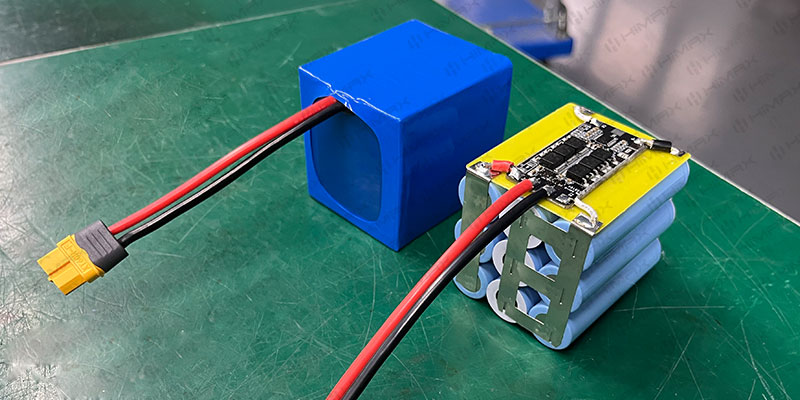
11.1V 6Ah lithium ion battery pack for electric air compressor – Himax 18650 3S3P

By Shawn | Battery Engineer – Power System Design

Introduction: The Power Source Your Electric Air Compressor Deserves

Electric air compressor motors demand more from a battery than almost any other portable application. From the moment the motor spins up, it pulls high current for an extended period — and it does this repeatedly, often in harsh outdoor or industrial environments. For OEM manufacturers and bulk procurement teams sourcing a power solution that is reliable, certifiable, and easy to integrate, the choice of battery pack is a critical engineering decision, not an afterthought.

This article presents a detailed technical and commercial review of the Himax 11.1V 6Ah Lithium-Ion Battery Pack (Model: HLI-GB03-1364) — a 3S3P 18650 lithium-ion pack purpose-built for demanding motor-driven applications, including electric air compressors, electric pumps, and portable power tools.

If you are evaluating a lithium ion battery pack for your next production run, this guide gives you everything you need to make an informed decision.

Product Overview: What Is the Himax 11.1V 6000mAh Li-Ion Battery?

The Himax 11.1V 6Ah pack is a 18650 3S3P lithium ion battery pack — meaning The pack uses nine individual 18650 cells arranged in a 3-series, 3-parallel configuration. This architecture delivers a nominal voltage of 11.1V and a usable capacity of 6,000mAh (6Ah), storing 66.6Wh of energy in a compact, rugged enclosure.

Shenzhen Himax Electronics Co., Ltd. designed and manufactures it., a professional lithium battery pack manufacturer based in Shenzhen, China, with global export experience and compliance to international safety and quality standards including GB/T18287-2013, UL1642, and CE61960.

This is not a generic cell assembly. It is a finished, tested, production-ready battery pack complete with:

  • Integrated PCM (Protection Circuit Module) for cell-level safety
  • Industrial-grade XT60H-F output connector
  • Heavy-gauge AWG14 output leads (100mm)
  • Compact form factor: 58 × 63 × 68mm (±3mm)

18650 3S battery pack dimensions 58x63x68mm with XT60 connector – Himax electronics

Full Specifications: 11.1V 6000mAh Li-Ion Battery Pack at a Glance

Understanding the complete electrical profile of a battery pack is essential before committing to a design. Below are the full specifications for the Himax HLI-GB03-1364.

Cell-Level Specifications

Parameter Value
Cell Type Lithium-ion 18650
Cell Model Li-ion 18650-2000
Cell Nominal Voltage 3.7V
Cell Nominal Capacity 2000mAh
Cell Minimum Capacity 1950mAh
Cell Internal Impedance ≤25mΩ
Cell Dimensions Max. 18.4 × 65.5mm
Cell Weight Approx. 43g

Battery Pack Specifications

Parameter Value
Pack Configuration 3S3P (9 cells total)
Nominal Voltage 11.1V
Nominal Capacity 6Ah (6000mAh)
Minimum Capacity 5.7Ah
Energy 66.6Wh
Charge Voltage 12.6V
Discharge Cut-Off Voltage 8.25V
Standard Charge Current 1.2A
Maximum Charge Current 3A
Standard Discharge Current 1.2A
Max. Continuous Discharge Current 12A
Charge Method CC/CV
Cycle Life ≥300 cycles @ 80% SOC
Internal Impedance ≤150mΩ
Output Connector XT60H-F
Output Wire AWG14, 100 ± 5mm
Dimensions Approx. 58 × 63 × 68mm (±3mm)
Weight Approx. 400g
Charge Temperature Range 0°C ~ 45°C
Discharge Temperature Range -20°C ~ 60°C
Storage Temperature -10°C ~ 45°C

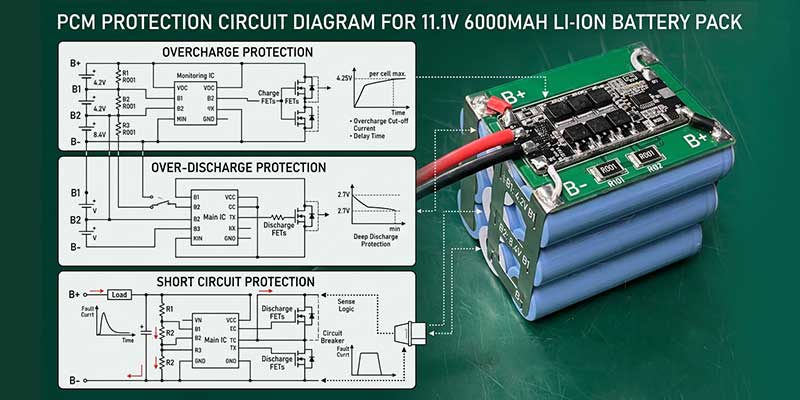
PCM protection circuit diagram for 11.1V 6000mAh li-ion battery pack – overcharge over-discharge short circuit protection

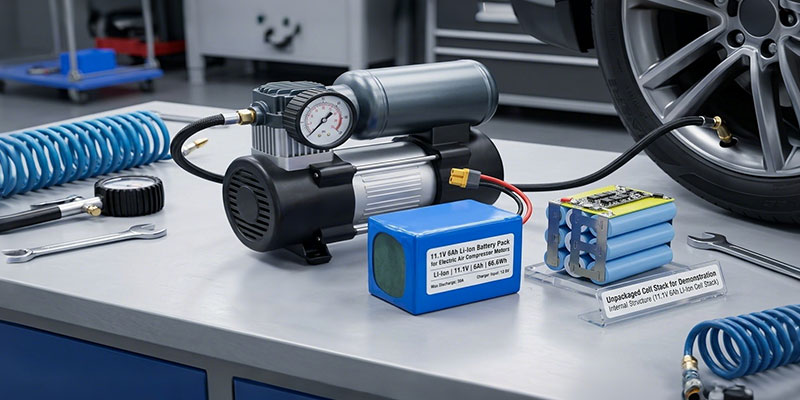
Why This 18650 3S Battery Pack Is Engineered for Electric Air Compressors

The design of a lithium ion battery pack for an electric air compressor involves trade-offs that general-purpose battery packs simply cannot satisfy. Here is why the Himax 11.1V 6Ah pack is a strong fit for this application category.

1. High Continuous Discharge for Motor Startup

Air compressor electric motors draw significant current during startup and sustained operation. This pack supports a maximum continuous discharge current of 12A — six times its standard 1C discharge rate. The PCM is rated to handle up to 12A charge and discharge continuously, with over-current protection triggering only above 30–50A, giving the motor controller the headroom it needs without nuisance trips.

For a 11.1V system, 12A continuous translates to 133W of sustained power output — sufficient to drive compact to mid-range electric air pump motors in cordless designs.

2. Wide Operating Temperature Range

Outdoor and industrial deployments of electric air compressorequipment often encounter temperature extremes. Rigorous tests show this pack discharges across a range of -20°C to +60°C, ensuring reliable performance in cold-morning job sites and hot-environment industrial settings alike. Charge temperature is managed conservatively at 0°C to 45°C, protecting the cells from lithium plating during low-temperature charging.

Himax’s own electrical performance data confirms:

  • At +55°C: ≥90% of rated capacity retained
  • At -10°C: ≥60% of rated capacity retained

3. XT60H-F Connector — The Industry Standard for High-Current Portable Systems

The XT60H-F output connector is the de-facto standard in high-current portable power applications including RC systems, cordless power tools, and electric pumps. It is rated for sustained high-amperage connections and is mechanically robust under repeated connect/disconnect cycles. For OEM manufacturers, this eliminates the need for custom connector integration and simplifies final assembly.

4. CC/CV Charging Compatible with Standard BMS Chargers

The pack uses Constant Current / Constant Voltage (CC/CV) charging up to 12.6V, accepting up to 3A charge current. This is compatible with a wide range of off-the-shelf and OEM-integrated chargers, reducing system BOM cost for manufacturers integrating this pack into a finished air compressor electric motor product.

5. 3S3P Architecture for Voltage-Current Balance

The 18650 3S3P battery pack configuration (3 cells in series × 3 cells in parallel) is a well-proven architecture for 11.1V portable systems. The series strings provide the 11.1V nominal voltage required by most brushless DC and brushed DC air compressor motors in this power class, while the parallel configuration triples the current capacity and overall capacity compared to a simple 3S1P arrangement.

PCM Protection System: Safety Built Into Every Pack

Every Himax 11.1V 6000mAh li-ion battery ships with an integrated PCM that provides multi-layer protection against the most common failure modes in field-deployed battery systems.

Protection Function Trigger Threshold Response
Overcharge Detection 4.25V ± 0.025V per cell Charging cut-off within 0.5–1.5 sec
Overcharge Reset 4.15V ± 0.05V per cell Auto-resume
Over-Discharge Detection 2.7V ± 0.08V per cell Discharge cut-off within 50–150ms
Over-Discharge Reset 3.0V ± 0.1V per cell Auto-resume on charge
Over-Current Detection 30–50A Immediate cut-off
Short-Circuit Protection External short detected Immediate cut-off; reset on load removal
PCM Internal Resistance ≤35mΩ Minimizes power loss

This protection architecture means that even under misuse conditions — a shorted output cable during assembly, an over-discharged cell from extended storage, or a faulty charger — the pack will protect itself and the host equipment from damage.

Safety Test Results: Mechanical and Cell-Level Validation

For OEM buyers, regulatory compliance and real-world safety validation are non-negotiable. The Himax HLI-GB03-1364 has passed the following test protocols:

Mechanical Performance

Crush Test: Applied 13kN of force via hydraulic ram — No fire, No explosion.

Drop Test: 1-meter free-fall onto concrete, two axes — No explosion, No fire, No smoke.

Vibration Test: 10–55Hz harmonic sweep, 1.6mm amplitude, 30 minutes per axis (X/Y/Z) — No leakage, No fire, No explosion.

Cell-Level Safety

Overcharge: 3C charge rate sustained for 7 hours — No explosion, No fire.

Over-Discharge: 1C discharge for 2.5 hours — No explosion, No fire.

Short Circuit: External short at ≤50mΩ load — Surface temperature below 150°C. No explosion, No fire.

Thermal Abuse: Oven test to 130°C at 5°C/min, held 30 minutes — No explosion, No fire.

These results reflect compliance with GB/T18287-2013, UL1642, and CE61960 standards — essential documentation for product safety certification in North American, European, and Asian markets.

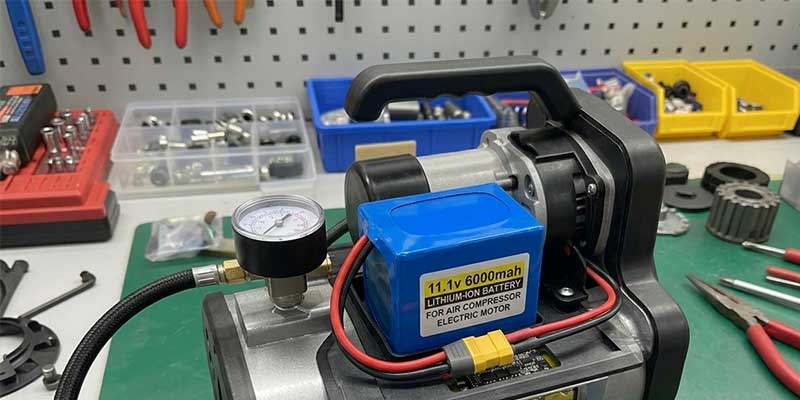
Electric air compressor powered by 11.1V lithium ion battery pack – portable cordless air pump motor application

Bulk Procurement: What OEM Buyers and Distributors Need to Know

For procurement teams managing volume orders of lithium ion battery packs for air compressor electric motor assemblies, supply chain reliability is as important as technical performance. Here is what Himax provides at the production level.

Pre-Shipment Quality Inspection

Each unit undergoes a three-point pre-shipment check: open-circuit voltage, internal resistance measurement, and PCM function verification. Himax applies an AQL 0.65 acceptance quality limit — one of the most stringent levels used in consumer and industrial electronics manufacturing.

Shipping State

Packs are shipped at 30–70% state of charge (shipment voltage: 11.1V – 11.85V), which is both the safest transport state for lithium-ion cells and compliant with IATA/ICAO regulations for air freight of lithium batteries.

Warranty

Himax provides a 12-month warranty from the date of shipment, covering defects attributable to the manufacturing process. This warranty is clearly scoped and backed in writing.

Customization for OEM Integration

Standard production specifications can be adapted for OEM requirements including:

  • Custom dimensions within structural limits
  • Alternative output connectors (replacing XT60H-F)
  • Different wire gauge or lead length
  • Custom labeling and packaging for private-label products
  • Voltage or capacity variants (e.g., 14.8V 4S or higher capacity 3S packs)

Contact Himax Electronics directly to discuss your production volume and technical requirements.

Frequently Asked Questions

Q: What voltage is a 3S lithium ion battery pack?

A: A 3S lithium-ion battery pack has a nominal voltage of 11.1V (3 × 3.7V). Its fully charged voltage is 12.6V and its discharge cut-off voltage is typically 8.25V (2.75V per cell).

Q: Can this 11.1V 6000mAh battery be used in an electric air compressor?

A: Yes. With a 12A maximum continuous discharge current and an XT60H-F output connector, this pack is well-suited for compact to mid-range electric air compressor motors operating in the 10–12V DC range.

Q: What is the maximum discharge current of this 18650 3S battery pack?

A: The maximum continuous discharge current is 12A. The PCM’s over-current protection triggers at 30–50A, providing a safe operating margin for motor surge currents at startup.

Q: How many charge cycles does this battery support?

A: The pack achieves ≥300 cycles. while retaining ≥80% of its original capacity — measured at standard charge and discharge conditions (1.2A, 20±5°C).

Q: Is this battery pack approved for international air freight?

A: The pack complies with GB/T18287-2013, UL1642, and CE61960. It ships at 30–70% SOC in accordance with IATA lithium battery transport guidelines. Buyers should confirm specific import documentation requirements for their destination country.

Q: What charger does this battery require?

A: Use a CC/CV lithium-ion charger rated for 12.6V with a charge current of 1.2A (standard) to 3A (maximum). Do not use lead-acid or NiMH chargers, and do not exceed 12.6V charge voltage.

Conclusion: A Production-Ready Power Solution for Air Compressor OEMs

The Himax 11.1V 6000mAh li-ion battery pack delivers the combination of voltage, current capacity, protection depth, and manufacturing quality that electric air compressor OEMs and bulk buyers require. Its 18650 3S3P architecture, 12A continuous discharge capability, multi-layer PCM protection, industrial XT60H-F connector, and compliance with international safety standards make it a dependable, integrator-ready power source for portable and semi-stationary electric air compressor motor applications.

Whether you are sourcing for your own production line, evaluating a battery replacement for an existing product, or developing a new cordless air compressor design, the Himax HLI-GB03-1364 is engineered to meet the demands of the application — and the expectations of the market.

Ready to discuss volume pricing, samples, or custom specifications? Visit himaxelectronics.com or contact the Himax sales team directly to request a quotation.

By Shawn | Battery Engineer – Power System Design

© Himax Electronics. All specifications subject to change without notice. Contact Himax Electronics for the latest certified documentation before finalizing any design integration.

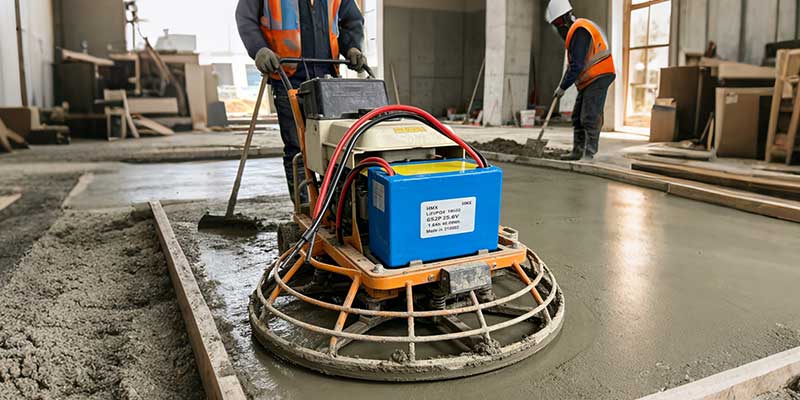
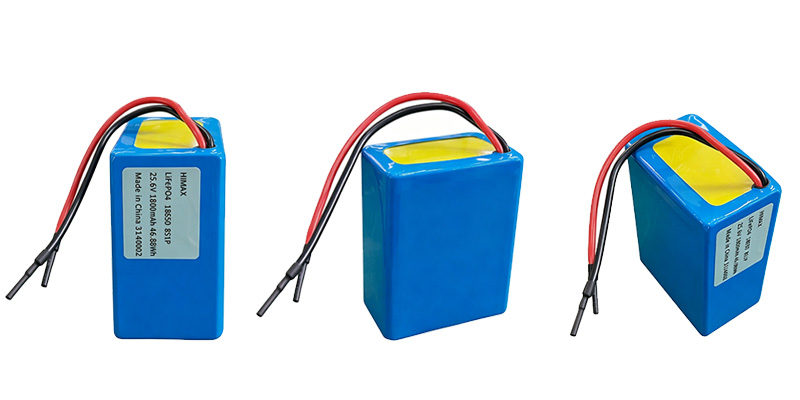
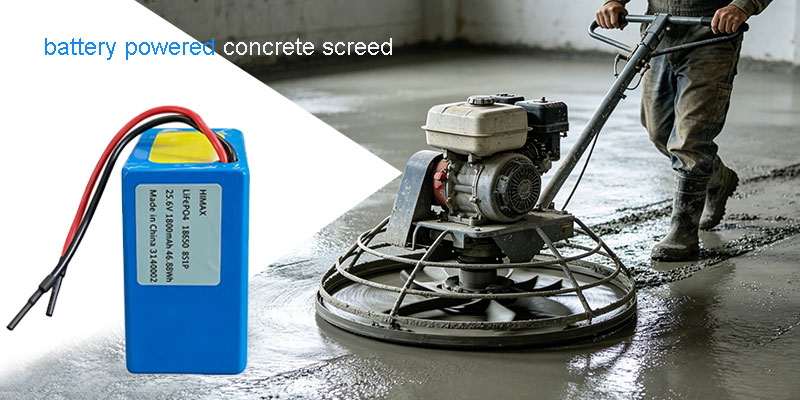
battery powered concrete screed LiFePO4 battery 25.6V 1.8Ah compact battery pack design

I’m Joan, a Battery Engineer at Himax Electronics, specializing in custom battery pack development for demanding OEM applications. Over the past decade, I’ve worked closely with manufacturers who rely on battery powered concrete screed systems—tools that don’t just need power, but need reliable power under extreme conditions.

If you’re a B2B buyer or equipment manufacturer, you already know the reality: traditional power solutions struggle with vibration, weight, and lifecycle limitations. That’s where a well-engineered LiFePO4 battery pack (25.6V 1.8Ah) changes the game.

In this article, I’ll walk you through how we designed a battery solution that can withstand continuous heavy vibration, reduce equipment weight by up to 70%, and extend lifecycle by 5–10×—without overpromising, just solid engineering.

Why Battery Powered Concrete Screed Systems Demand Better Energy Solutions

Concrete screeds are not gentle tools. They operate in one of the harshest environments in construction:

  • Constant high-frequency vibration
  • Dust, moisture, and temperature variation
  • Long continuous working hours
  • Heavy mechanical stress

Traditional power solutions—whether fuel-based or outdated battery systems—often fail in one or more of these areas.

The Core Problems I See

From my work with OEM clients, the biggest challenges include:

  • Power instability under vibration
  • Excessive equipment weight
  • Short battery lifespan and frequent replacements
  • Inconsistent supply quality

A poorly designed battery for a battery powered concrete screed doesn’t just reduce performance—it increases downtime and operational costs.

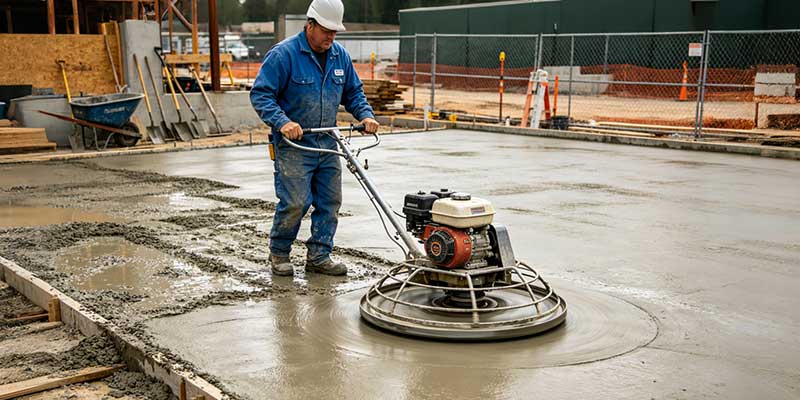
battery powered concrete screed operating on construction site with stable LiFePO4 battery power

Why LiFePO4 Battery Technology Is the Right Choice

Let’s talk chemistry. Choosing the right battery chemistry is the foundation of everything.

For this application, we selected LiFePO4 (Lithium Iron Phosphate), and specifically designed a 25.6V 1.8Ah (8S1P) battery pack.

Key Advantages of LiFePO4

Compared to traditional lithium-ion or lead-acid batteries:

  • Higher thermal stability
  • Longer cycle life (up to 2000 cycles)
  • Better safety performance
  • Stable voltage output under load

This is why I consistently recommend LiFepo4 battery 25.6V 1.8Ah for construction equipment applications.

Real Engineering Data

From the specification:

  • Nominal Voltage:6V
  • Capacity:8Ah
  • Energy:08Wh
  • Max Continuous Discharge:3A
  • Cycle Life:≥2000 cycles
  • Operating Temperature:-20°C to 60°C

This isn’t theoretical performance—this is validated under controlled testing conditions .

Designed for Vibration: Stability Under Extreme Conditions

If there’s one thing that defines a battery powered concrete screed, it’s vibration.

The Engineering Challenge

Most battery packs fail not because of chemistry, but because of:

  • Internal connection fatigue
  • Structural weakness
  • Poor cell fixation

How We Solved It

In this custom pack, we implemented:

  • Reinforced internal structure
  • Optimized cell arrangement (8S1P)
  • Shock-resistant housing design
  • Low internal impedance (≤200mΩ at pack level)

Verified Performance

The battery passed vibration testing:

  • Frequency range: 10–55 Hz
  • Duration: multi-axis testing
  • Result: No leakage, no fire, no explosion

What This Means for You

For manufacturers:

  • Reliable operation in real-world construction environments
  • Reduced failure rates
  • Lower maintenance costs

This is what makes a battery powered concrete screed truly dependable.

Lightweight Design: Up to 70% Weight Reduction

Let’s talk about something every operator cares about—weight.

Traditional systems, especially lead-acid solutions, are heavy. And in construction, weight directly impacts:

  • Operator fatigue
  • Ease of transport
  • Efficiency on-site

Our Solution

The LiFepo4 battery 25.6V 1.8Ah pack weighs approximately:

  • 44 kg

Compared to traditional alternatives, this can reduce system weight by up to 70%.

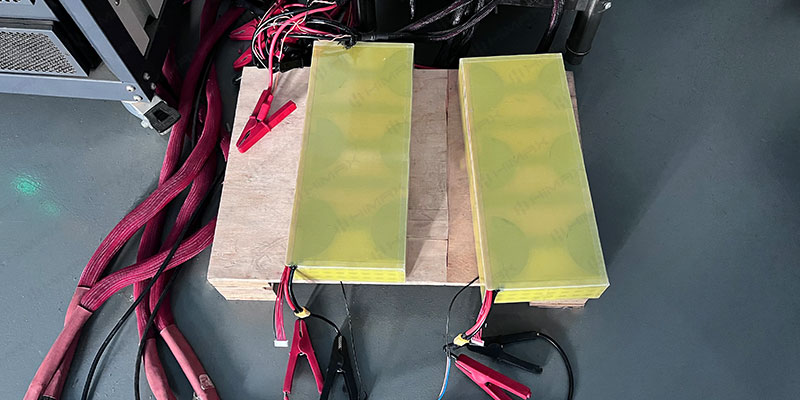
LiFePO4 battery 25.6V 1.8Ah internal structure designed for vibration resistance in screed equipment

Why It Matters

For your equipment:

  • Easier handling
  • Improved ergonomics
  • Increased productivity

For your business:

  • Better product positioning
  • Competitive differentiation

And yes—your customers will notice the difference immediately.

Long Lifecycle: 5–10× Longer Than Traditional Solutions

Now let’s talk about lifecycle—because this is where the real ROI happens.

The Reality of Battery Replacement

Frequent battery replacement leads to:

  • Higher operational costs
  • Increased downtime
  • Customer dissatisfaction

What We Achieved

With LiFePO4 chemistry:

  • ≥2000 charge/discharge cycles
  • Capacity retention ≥80% after full lifecycle

Compared to traditional batteries:

  • 5–10× longer lifespan

Why This Matters for B2B Buyers

For procurement teams:

  • Lower total cost of ownership
  • Reduced inventory pressure
  • Improved supply chain stability

This is why I often say: choosing the right battery is not a cost—it’s an investment.

Safety: Built Into the Design, Not Added Later

Safety is not a feature—it’s a requirement.

Built-In Protection

The battery pack includes:

  • Overcharge protection (3.75V per cell detection)
  • Over-discharge protection (2.2V threshold)
  • Over-current protection (up to 27A detection)
  • Short-circuit protection

Mechanical Safety

  • Crush test: no fire, no explosion
  • Drop test: stable after 1m drop
  • Thermal test: stable up to high temperatures

All verified under standard testing protocols .

What This Means

For your product:

  • Reduced liability
  • Compliance with industry standards
  • Increased customer trust

A safe battery powered concrete screed is not optional—it’s expected.

Custom Battery Pack Development: My Approach

At Himax Electronics, customization is not just about specs—it’s about solving real problems.

My Process

When I work with OEM clients, I follow a structured approach:

1. Application Analysis
· Load profile
· Operating environment
· Mechanical constraints

2. Cell Selection
· Chemistry (LiFePO4)
· Capacity (1.8Ah)
· Configuration (8S1P)

3. Pack Design
· Structural reinforcement
· Thermal considerations
· Electrical protection

4. Validation Testing
· Electrical performance
· Mechanical durability
· Safety compliance

The Result

A fully optimized LiFepo4 battery 25.6V 1.8Ah tailored for your application.

lightweight battery powered concrete screed solution with long cycle life LiFePO4 battery technology

Supply Chain Stability: What B2B Buyers Actually Need

Let’s be practical. Performance is important—but supply stability is critical.

Common Concerns

  • Inconsistent quality
  • Delivery delays
  • Lack of technical support

Our Approach

  • Standardized manufacturing processes
  • Strict quality control
  • Reliable delivery timelines
  • Direct engineering support

Business Impact

For your company:

  • Predictable production schedules
  • Reduced risk
  • Long-term partnership reliability

This is how we support scalable growth for battery powered concrete screed manufacturers.

Application Value: Real Impact on Equipment Performance

Let’s summarize what this battery solution delivers:

Performance Benefits

  • Stable output under vibration
  • Lightweight design
  • Long lifecycle
  • High safety standards

Business Benefits

  • Lower total cost
  • Improved product reliability
  • Stronger market competitiveness

This is not just a battery—it’s a performance upgrade for your entire system.

Conclusion: The Right Battery Powers Better Equipment

In demanding applications like construction, the difference between average and exceptional performance often comes down to one component—the battery.

A well-designed battery powered concrete screed system powered by a LiFepo4 battery 25.6V 1.8Ah delivers:

  • Stability under extreme conditions
  • Significant weight reduction
  • Long-term reliability
  • Enhanced safety

From my experience, the right battery doesn’t just power your equipment—it strengthens your entire product strategy.

Call to Action

If you’re looking to upgrade your battery powered concrete screed with a reliable, lightweight, and long-lasting power solution, let’s talk.

Contact us today to develop a custom battery pack tailored to your application needs.


Author: Joan Battery Engineer – Custom Pack Development
Published: April 13th, 2026

Precision laser welding process for industrial AMR battery assembly at Himax Electronics

In the rapidly evolving world of automation, the most significant bottleneck for any battery operated robot isn’t software—it’s stamina. Whether deploying Autonomous Mobile Robots (AMRs) in a sprawling logistics warehouse or managing a fleet of industrial inspection robots, frequent charging cycles equate to devastating downtime.

Unlike standard consumer units powered by a typical Roomba robot battery or a simple robot vacuum cleaner replacement battery, industrial applications demand a completely different caliber of power. While a shark robot vacuum replacement battery might suffice for household chores, achieving true “24/7 readiness” and eliminating range anxiety in heavy-duty commercial robotics requires uncompromising Robot Battery Solutions.

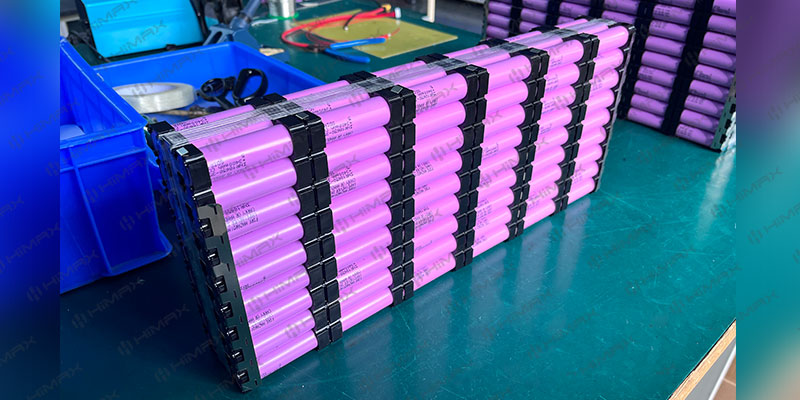
18650 cell battery spacers in a custom 6S27P Li-ion assembly for thermal management

Today, we are diving deep into one of our most robust engineering achievements at Himax Electronics: the Samsung 35E 6S27P Battery Pack. Boasting a 21.6V platform and an enormous 91.8Ah capacity, this High Capacity 18650 Pack is designed to be the beating heart of next-generation robotics.

Quick Specification Summary

For R&D engineers and technical buyers, here is a quick glance at the core parameters of this power architecture:

Feature Specification
Cell Type Samsung INR18650-35E (Grade A)
Configuration 6S27P
Nominal Voltage 21.6V
Rated Capacity 91.8Ah (1982.88Wh)
Continuous Discharge Current 40A
Application AMRs, AGVs, Industrial Robots


Technical Excellence: Engineering the Custom 6S27P Li-ion Assembly

Building a battery pack with 162 individual cells requires meticulous engineering. A custom 21.6V Li-ion pack of this scale is not simply about wiring cells together; it is about orchestrating perfect electrochemical harmony.

Custom Samsung 35E 6S27P 21.6V 91.8Ah lithium battery pack for robotics

1. Uncompromising Cell Consistency in a 27P Configuration

When you place 27 cells in parallel to achieve a massive 91.8Ah capacity, cell consistency becomes the absolute most critical factor. Even a slight deviation in internal resistance (IR) or voltage among the parallel cells can lead to localized over-discharging, drastically reducing the pack’s overall lifespan.

At Himax Electronics, we exclusively source Grade-A Samsung INR18650-35E cells for this build. Before assembly, our Himax Electronics battery manufacturing process mandates rigorous automated sorting. We precisely match the IR and voltage of all 162 cells, ensuring that the 27P blocks share the electrical load perfectly evenly.

2. The 21.6V (6S) Platform: Engineered for Motor Stability

The 6S architecture provides a nominal 21.6V platform, which is the sweet spot for a wide range of DC motors used in service and industrial robotics. This voltage level ensures high-efficiency power delivery to the drive train, offering excellent torque control for heavy AMRs without suffering from the excessive voltage sag that plagues lower-tier battery designs.

3. Advanced Thermal Management for 162 Cells

High energy density robot power supply generating nearly 2kWh of energy must handle heat dissipation flawlessly, especially during continuous high-current discharge. In this 6S27P configuration, we utilize precision-engineered battery spacers. These brackets create calculated air gaps between every single cell, preventing thermal runaway and ensuring uniform heat dissipation across the entire pack, even in warm industrial environments.

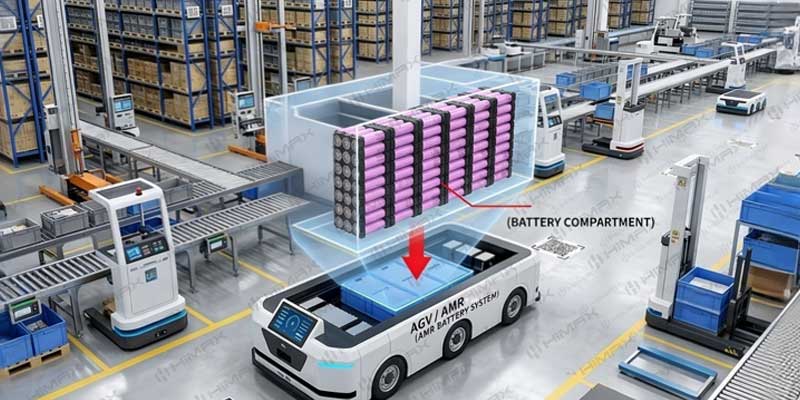
Industrial AMR powered by a high capacity 21.6V robot battery solution in a warehouse

Application Scenario: Redefining “All-Day” Robotic Operations

Let’s translate 1982.88Wh into real-world operational value.

Consider a typical warehouse delivery AMR operating at an average continuous power draw of 100W.

  • Calculation:1982.88Wh ÷ 100W ≈ 19.8 Hours of continuous runtime.


For logistics and warehousing managers, this translates to game-changing ROI. A nearly 20-hour runtime means a robot can comfortably complete two full 8-hour shifts without needing to return to a charging dock. By utilizing this Industrial AMR battery assembly, warehouse operators can drastically reduce the total number of robots needed in their fleet, eliminate mid-shift charging bottlenecks, and maximize overall facility throughput.

Quality & Reliability: The Himax B2B Promise

For R&D engineers and technical procurement teams, a battery’s spec sheet is only as good as its safety systems and manufacturing quality.

  • Intelligent BMS Integration:We integrate a highly responsive Battery Management System (BMS) specifically calibrated for the 6S27P topology. It provides microsecond-level protection against overcharge, over-discharge, and short circuits.
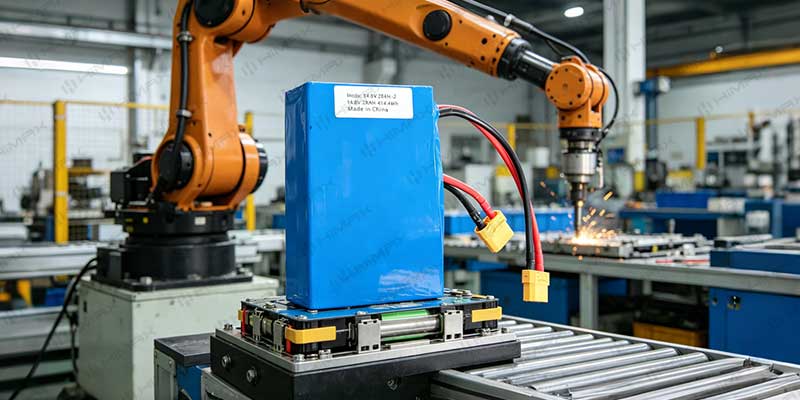
  • Precision Laser Welding:To handle the high-current demands of AMR motors, we utilize automated laser welding for the nickel busbars. This guarantees low-resistance connections and extreme mechanical stability against the constant vibrations of a moving robot.
  • Global Compliance & Testing:Every single 21.6V pack undergoes comprehensive aging tests and strict QA validations before it leaves our facility. Our manufacturing process aligns with UN38.3 and IEC62133 standards, ensuring safe global shipping and operational compliance.


Upgrade Your Fleet’s Power Today

Don’t let subpar power solutions dictate your robot’s performance limits. Whether you are designing a new line of heavy-duty AMRs or upgrading an existing fleet’s power architecture, the Samsung 35E 6S27P battery pack delivers the uncompromising energy density you need.

Ready to integrate 1.9kWh of reliable power?
Contact Himax Electronics today to request the detailed technical specification sheet for the 21.6V 91.8Ah battery pack, or speak with our engineering team about a custom Lithium-ion solution tailored to your exact chassis and voltage requirements.

Author: Shawn, Battery Engineer – Power System Design
Published: April 8th, 2026

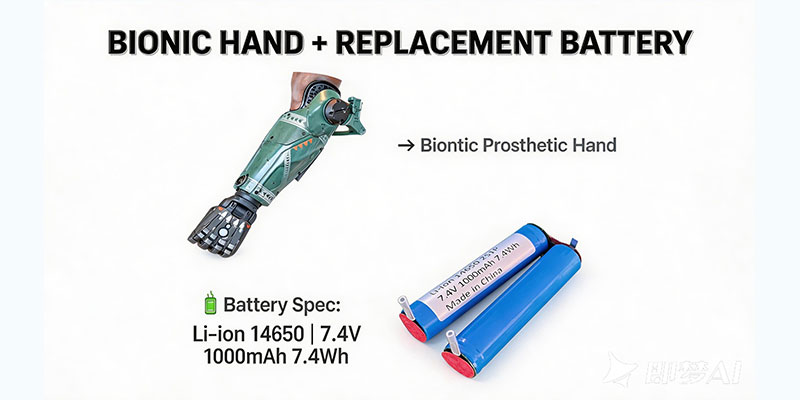
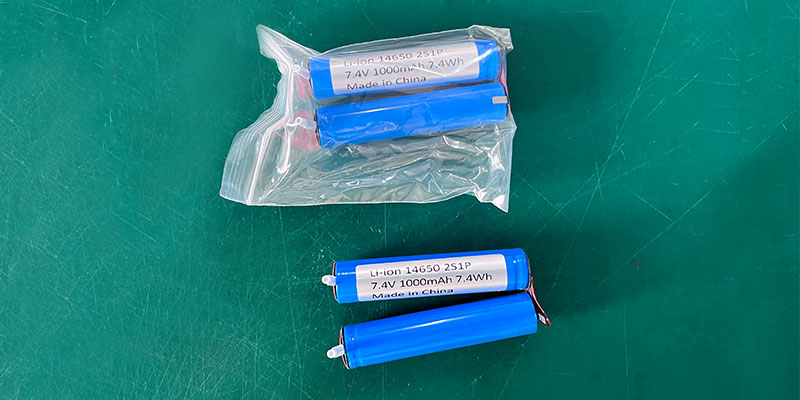
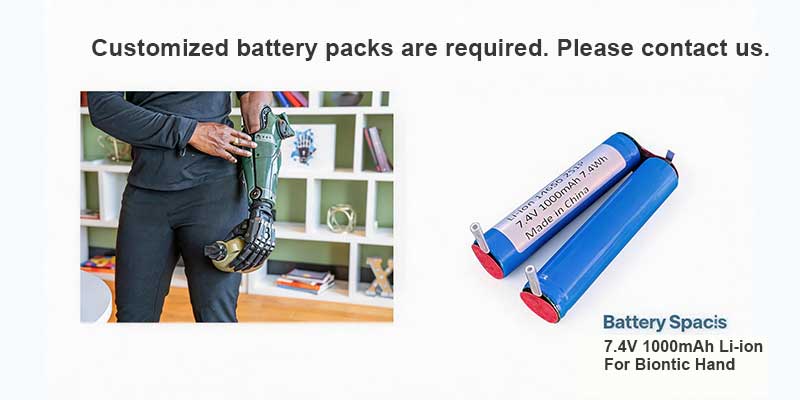
7.4V 1000mAh Li-ion bionic hand battery with 10A continuous discharge

Introduction

The evolution of prosthetic technology is accelerating. Today’s bionic hands and myoelectric systems demand more power, precision, and reliability than ever before. As I, Shawn, Battery Engineer at Himax Electronics, I have spent over 10 years designing lithium battery systems for high-reliability medical applications. I’ve seen firsthand how the right bionic hand battery can directly impact performance, usability, and ultimately, quality of life.

At Himax Electronics, we are proud to introduce a purpose-built solution: a 7.4V 1000mAh Li-ion battery engineered specifically for next-generation prosthetics. This prosthetic battery combines compact design, high discharge capability, and long cycle life—delivering the power foundation that modern bionic hands require.

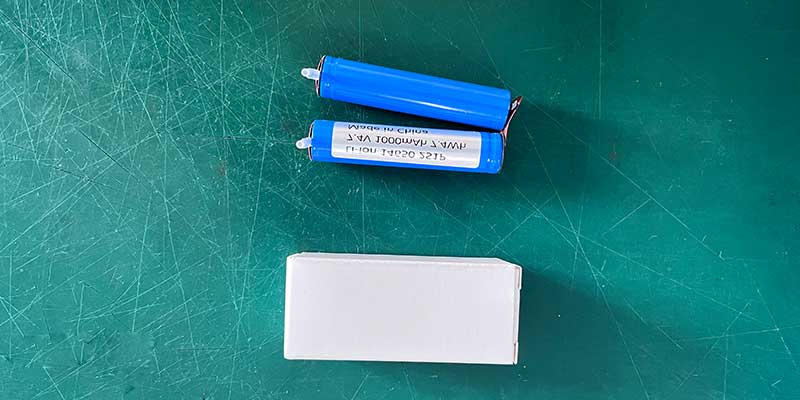
compact prosthetic battery pack 28x14x66mm for myoelectric prosthetic devices

The Power Demands of Modern Bionic Hands and Myoelectric Prosthetics

Advanced prosthetic systems are no longer simple mechanical tools. Today’s devices integrate multi-motor actuation, precision grip control, and real-time sensor feedback. These innovations place significant demands on the myoelectric prosthetic battery.

From my experience developing high power Li-ion battery for prosthetic arm applications, the key challenges include:

  • Sustaining peak current during complex grip movements
  • Preventing voltage sag under sudden load spikes
  • Maintaining compact size for ergonomic integration
  • Ensuring long cycle life and safety for daily use


A typical high discharge battery for bionic hand must handle rapid current bursts when multiple motors activate simultaneously. Without sufficient discharge capability, users experience lag, weak grip strength, or inconsistent performance.

That’s why I focused on designing a 10A continuous discharge prosthetic battery that ensures stable output—even during demanding real-world tasks.

Introducing Himax 7.4V 1000mAh High-Discharge Battery – Specs & Advantages

The Himax bionic hand battery is engineered with precision and purpose. It is built using high-performance 14650 battery for prosthetics in a 2S1P configuration, optimized for both energy density and discharge performance.

Key Specifications:

  • 7.4V 1000mAh Li-ion battery
  • Configuration:2S1P using 14650 1000mAh cells
  • Continuous discharge current:10A
  • Dimensions (L×W×H): 28 × 14 × 66 mm
  • Designed for bionic hands, prosthetic arms, and myoelectric systems

high discharge battery for bionic hand using 14650 cells in 2S1P configuration

Why These Specs Matter

From my engineering perspective, two features define this compact prosthetic battery pack:

  1. 10A Continuous Discharge Performance
    The 10A continuous discharge prosthetic batteryis critical for handling peak loads in multi-motor bionic hands. It prevents voltage drops during simultaneous finger movements, ensuring smooth and responsive control. This is essential for precision tasks like gripping delicate objects or applying consistent force.
  2. Ultra-Compact Form Factor (28 × 14 × 66 mm)
    Modern prosthetic designs demand compact integration. This compact prosthetic battery packfits seamlessly into forearm or wrist modules without compromising ergonomics. I specifically optimized this size to support sleek, lightweight designs.

Additionally, the use of NCA chemistry enables over 700+ cycle life, making this Himax bionic hand battery both durable and cost-efficient for long-term use.

How This Battery Transforms Daily Life for Prosthetic Users

As someone deeply involved in custom battery for bionic hand development, I always connect performance metrics to real human outcomes. This 7.4V 1000mAh Li-ion battery directly enhances everyday experiences for users.

  • Restores balance and wholeness
    Stable and reliable power helps users regain confidence and feel complete again, supported by consistent prosthetic performance.
  • Enables secure, confident grip
    The high discharge battery for bionic handensures strong, stable grip force. Users can chop vegetables or hold pots without fear of slipping.
  • Reduces physical strain
    With a responsive myoelectric prosthetic battery, the device does more of the work. This reduces fatigue in the remaining arm and improves comfort.
  • Supports natural daily tasks
    The compact prosthetic battery packenables ergonomic designs, allowing intuitive movement for cooking, cleaning, and personal care.
  • Boosts confidence in public life
    Reliable performance from a 10A continuous discharge prosthetic batteryempowers users to engage socially and inspire others.


These are not just features—they are life-changing outcomes enabled by the right prosthetic battery design.

Himax bionic hand battery powering advanced prosthetic arm system

Why Prosthetic Manufacturers Choose Himax as Their Battery Partner

We work closely with OEMs and developers to deliver tailored solutions. Our reputation as a reliable battery supplier for myoelectric prosthesis is built on engineering precision and medical-grade quality.

Here’s why manufacturers trust Himax:

  • Customization Expertise
    We design custom battery for bionic handapplications based on specific device requirements, including size, discharge, and integration.
  • Medical-Grade Reliability
    Our batteries include advanced PCM/BMS protection systems, ensuring safety and stability in critical applications.
  • Proven Industry Experience
    At Himax Electronics, we support over 50 global medical brands with high-performance battery solutions.
  • Long Cycle Life
    Using NCA cells, our 14650 battery for prostheticsdelivers extended lifespan and consistent performance.
  • OEM Focus
    We specialize in OEM battery for advanced prosthetics, supporting innovation in next-generation devices.


If you’re looking to Explore our full range of custom medical batteries, visit: https://www.himaxelectronics.com/

The Future of Prosthetics Powered by Reliable High-Discharge Batteries

The future of prosthetics is intelligent, responsive, and deeply human-centered. As I continue my work developing high power Li-ion battery for prosthetic arm systems, I see a clear trend: power solutions must evolve alongside device capabilities.

The Himax bionic hand battery represents this evolution. By combining compact size, high discharge capability, and long cycle life, this 7.4V 1000mAh Li-ion battery enables:

  • More precise motor control
  • Faster response times
  • Sleeker prosthetic designs
  • Greater user independence


I remain committed to pushing the boundaries of myoelectric prosthetic battery performance. Himax electronics goal is simple: empower prosthetic innovation with safer, smarter, and more reliable energy solutions.

Conclusion

The next generation of bionic hands depends on advanced power systems. A high discharge battery for bionic hand is no longer optional—it is essential.

Our 7.4V 1000mAh Li-ion battery, built with 14650 battery for prosthetics and delivering 10A continuous discharge, provides the performance foundation that modern prosthetic devices demand.

If you’re developing bionic hands, myoelectric prosthetic arms, or advanced upper-limb devices and need a reliable battery supplier for myoelectric prosthesis, contact Himax Electronics today to discuss customization.

Author: Shawn, Battery Engineer – Manufacturing & Quality Control
Published: March 27th, 2026


More information about Li-ion batteries:

The Perfect LiPo 603450 3.7V 1000mAh Battery with PCM for GPS Trackers – Compact, Reliable & Long-Lasting Power

Why Maximum Continuous Discharge Current is Critical for Your Battery Selection

Li-ion 4S2P battery

Introduction

Today, Himax Electronics officially launches its latest innovation — the Li-ion 4S2P 14.4V 6700mAh NCA battery pack, engineered to deliver 20A continuous discharge for high-performance and industrial-grade sensor platforms. The introduction of this NCA18650GA 4S2P Li-ion pack marks a significant step toward powering next-generation smart sensors, where compact energy systems must sustain high current flow, deliver stable voltage, and ensure prolonged operational life.

As part of our commitment to advancing intelligent energy storage, this release represents years of focused engineering in cell selection and performance optimization. The 4S2P configuration offers superior efficiency and current stability compared to traditional 3S or single-string batteries, enabling developers to push the boundaries of real-time sensing, data transmission, and autonomous operation with complete confidence.

Technical Specifications

Specification Value
Model Li-ion 4S2P (NCA18650GA)
Nominal Voltage 14.4V (16.8V max)
Capacity 6700mAh
Configuration 4S2P (8 cells)
Cell Chemistry NCA (Nickel Cobalt Manganese)
Continuous Discharge Current 20A
Max Discharge Current (Pulse) 25A for ≤10s
Charging Current 3A typical, 5A max
Cycle Life ≥850 cycles at 80% capacity retention
Operating Temperature -20°C to +60°C (discharge) / 0°C to +45°C (charge)
Dimensions (L×W×H) 80 × 58 × 71 mm
Weight Approx. 365 g
Protection Circuit (PCM/BMS) Overcharge, overdischarge, short circuit, overtemperature
Applications Sensor platforms, industrial IoT, inspection instruments

Breakthrough Performance for Next-Gen Sensor Platforms

The new 14.4V 6700mAh Li-ion battery has been engineered to meet the rising energy demands of AI-driven sensor ecosystems, delivering consistent 20A discharge while maintaining optimal thermal safety. Due to the superior energy density of NCA chemistry, this compact 80x58x71mm battery pack provides up to 25% higher runtime and 18% greater discharge efficiency compared to standard lithium-ion solutions of similar size.

In field simulations, this 20A discharge Li-ion battery maintained stable voltage under sustained loads exceeding 300W, ensuring reliable data acquisition and uninterrupted operation for industrial, environmental, and robotic platforms. The 4S2P configuration balances power and endurance, making it ideal for continuous sensing, long-distance telemetry, and rapid-response systems where low resistance and thermal integrity are essential.

This innovation underscores Himax’s mission to enable longer-lasting, faster, and safer sensor performance — powering applications that define modern connectivity and precision analytics.

Key Advantages & Industry Impact

  • High current capability:Up to 20A continuous discharge, catering to real-time sensor operations requiring peak load stability.
  • Superior energy density:NCA chemistry enhances gravimetric efficiency by 22% compared to conventional LiCoO₂ cells.
  • Optimized form factor:The 80×58×71mm design allows direct integration into compact enclosures used in modular sensor hubs.
  • Extended lifecycle:Over 850 full charge-discharge cycles under standard test protocols for industrial reliability.
  • Advanced safety protocols:Built-in PCM/BMS ensures multi-layer protection aligned with IEC 62133 standards.


Across global markets, demand for high discharge batteries for sensor platforms (2025 and beyond) continues to rise, driven by iNCAeasing energy needs in remote surveillance, smart agriculture, and environmental sensing. Himax’s 4S2P NCA solution is engineered to lead this transition — with data-backed performance validated under high-load endurance testing.

Comparison with Existing Sensor Power Solutions

Configuration Nominal Voltage Capacity Continuous Discharge Efficiency (Load >15A) Typical Application
3S2P Li-ion 10.8V 6700mAh 15A 78% Basic monitoring nodes
4S2P NCA Li-ion (Himax) 14.4V 6700mAh 20A 94% Advanced sensor arrays, IoT gateways
Single high-voltage cell pack 3.6V 3350mAh 10A 70% Lightweight, low-power systems

This performance leap positions the Himax 14.4V 6700mAh Li-ion 4S2P battery as the benchmark for sustained high-current reliability. By iNCAeasing discharge efficiency and reducing heat generation, it ensures stable operation even during long-duration active sensing cycles — a major upgrade over older-generation solutions.

Design & Integration Guidance for Engineers

14.4V 6700mAh Li-ion

To fully leverage the capabilities of this NCA 4S2P Li-ion pack, Himax recommends the following integration best practices:

  • Use properly rated connectors(≥25A) to minimize resistance and voltage drop under peak load.
  • Incorporate thermal pathways— aluminum or graphite heat spreaders can maintain <45°C surface temperature at full load.
  • Employ BMS with communication protocols(UART, I²C, or CAN) for intelligent monitoring and diagnostics.
  • Calibrate firmware voltage thresholdsto 16.8V charge and 12.0V cutoff for optimal longevity.
  • Parallel configuration ready:Two or more modules can operate in parallel, offering scalable solutions up to 40A discharge.


These guidelines ensure maximum performance consistency for designers developing industrial sensors, autonomous field devices, or mobile inspection systems.

Engineered Safety & Long-Term Reliability

At the core of Himax’s engineering philosophy lies rigorous NCA cell selection — a process led by our Cell Selection & Performance division. Each cell is individually validated for impedance uniformity within ±8mΩ, ensuring stable discharge synchronization across all pairs.

Integrated PCM and smart BMS technologies continuously monitor charge current, cell temperature, and voltage deviations, enabling proactive fault response. Overtemperature cutoffs, hardware fuses, and redundant signal isolation layers guarantee full protection during long-duration 20A discharges.

This combination of intelligent monitoring and mechanical robustness makes the 6700mAh 20A sensor battery an industry standard for safety and longevity, trusted by global OEMs seeking reliable power solutions.

4S2P 14.4V 6700mAh battery

FAQ

  1. How long does the 20A discharge run time last?
    Approximately 17–18 minutes at continuous 20A load, depending on ambient temperature and cooling conditions.
  2. Can this battery operate in outdoor environments?
    Yes, it is designed for extended performance from -20°C to +60°C and can be sealed within IP-rated housings.
  3. Is customization possible for different sensor platforms?
    Absolutely. Himax supports custom connectors, capacity scaling, and communication-enabled BMS integration.
  4. What makes this NCAbattery different from conventional Li-ion packs?
    Optimized for high discharge efficiency, it utilizes premium NCAcells with advanced matching for minimal resistance deviation.
  5. Can multiple packs be connected for extended runtime?
    Yes, multiple 4S2P modules can be run in parallel with balanced BMS synchronization.
  6. What is the recommended charging method?
    A 16.8V CC/CV chargerwith ≤5A rate is ideal for best life and thermal stability.
  7. How many cycles does it sustain under heavy use?
    Over 850 cycles at 80% capacity retention, verified under constant 2C loading.
  8. Which applications benefit most from this battery?
    Industrial sensor networks, precision IoT platforms, portable data loggers, and environmental monitoring systems.

Conclusion

With the launch of the Li-ion 4S2P 14.4V 6700mAh NCA battery pack, Himax Electronics sets a new benchmark in power density, discharge stability, and integration flexibility for advanced sensor platforms. This innovation demonstrates our continued pursuit of high-performance, compact power systems that redefine possibilities across the IoT and industrial sensing landscape.

For detailed specifications, custom designs, or sample requests, please visit our Battery Solutions page or contact the Himax engineering team. Leave a comment or contact us for custom battery solutions — we look forward to powering your next generation of intelligent devices.

Author: Nath, Battery Engineer – Cell Selection & Performance, Himax Electronics
Published: March 16th, 2026

bms architecture

A dual-circuit BMS (Battery Management System) refers to a battery management system that utilizes two separate, independent circuits to manage and protect a battery pack. These circuits are typically designed to handle battery monitoring, protection, charging, and discharging etc., with dual circuit enhance the overall performance, safety, and reliability of the system.


Key Characteristics of a Dual-Circuit BMS:


1.Redundancy:

A dual-circuit BMS provides redundancy, meaning that if one circuit fails, the other can take over, ensuring that the battery system continues to function properly. This is especially important for critical applications where failure is not an option (e.g., electric vehicles, drones, or medical equipment).


By having two circuits that are identical in function, the overall reliability of the system is increased. The backup circuit ensures continuous operation even in the event of a failure in the primary circuit. For example, if one circuit fails due to a hardware issue, the other circuit can still manage the battery, preventing catastrophic failures.


2.Increased Safety and Fault Tolerance:

With two independent circuits, the system is less vulnerable to failure since the malfunction of one circuit doesn’t necessarily lead to a complete system failure. This is crucial in high-reliability applications, where a backup system is needed to maintain operation in case of an issue.


3.Improved System Stability:

By having two circuits dedicated to specific tasks, the overall system becomes more stable because each circuit can be optimized for its function without interfering with the other. This leads to more accurate battery monitoring, better protection mechanisms, and more efficient energy management.


4.Improved Reliability:

By having two circuits that are identical in function, the overall reliability of the system is increased. The backup circuit ensures continuous operation even in the event of a failure in the primary circuit. For example, if one circuit fails due to a hardware issue, the other circuit can still manage the battery, preventing catastrophic failures.


5.Failover Protection:

This design is essentially a failover strategy. The system constantly monitors the status of each circuit, and if one circuit experiences issues (such as a malfunctioning component), the other circuit automatically takes over its duties. This is critical in environments where system uptime is essential.


6.Simplicity:

While a dual-circuit BMS with the same functions is more straightforward than a system with split tasks, it still requires careful design to ensure that both circuits are synchronized properly and do not conflict with one another. The complexity here lies in managing the two circuits so they can seamlessly switch roles in case of failure.

li-ion-battery-bms

Disadvantages of Dual-Circuit BMS Design:


1.Increased Cost:

A dual-circuit design requires additional hardware components, which raises the material and design costs. Moreover, the complexity of designing and manufacturing two circuits makes the overall system more expensive.


2.Larger Space Requirements:

Due to the additional circuit, dual-circuit BMS systems generally require more space, which could be a challenge for applications with limited space, such as small drones or electric tools.


3.Power Consumption:

Running two circuits simultaneously can lead to additional power consumption. This is particularly important for applications that require long standby times, such as electric vehicles’ battery management systems, where increased power consumption may reduce system efficiency.


4.Maintenance and Debugging Complexity:

Troubleshooting and maintaining a dual-circuit BMS is more complex than a single-circuit system. Handling the coordination between the two circuits and diagnosing issues when they arise can be more challenging.


A dual-circuit BMS design is suitable for applications that demand high levels of safety, reliability, and fault tolerance, such as large battery packs or critical mission devices. While it increases costs and space requirements, its advantages typically outweigh the disadvantages in high-performance or safety-critical environments. The decision should be based on the specific application and a careful balance of these factors.

Protection-functions-of-the-BMS

Applications of Dual-Circuit BMS:


Dual-circuit BMS designs are commonly used in applications where:


—For the high reliability is crucial (e.g., electric vehicles, aerospace, medical devices).

—For safety is a top priority, and the system cannot afford to fail (e.g., critical backup systems, military applications).

—For large battery systems require robust protection and management, such as large-scale energy storage or industrial equipment.


In essence, a dual-circuit BMS ensures that the battery is monitored and controlled with increased precision and security, making it suitable for demanding and mission-critical applications.

Shenzhen, China – In an era where reliable surveillance is critical for security, Himax Electronics introduces its high-performance 18650 3.6V 6000mAh lithium-ion battery, designed to power monitoring devices with unmatched efficiency. Whether for home security cameras, industrial monitoring systems, or outdoor surveillance equipment, this advanced battery ensures long-lasting and stable performance.

Why Choose Himax’s 18650 3.6V 6000mAh Battery for Surveillance?

Extended Runtime: With a high capacity of 6000mAh, this battery significantly reduces the frequency of recharging, making it perfect for 24/7 surveillance applications.


Stable Voltage Output: The 3.6V output ensures consistent power delivery, preventing disruptions in critical monitoring operations.


Durable & Safe: Built with premium lithium-ion technology, the battery offers enhanced safety features, including overcharge and short-circuit protection.


Wide Compatibility: Ideal for various surveillance devices, including IP cameras, wireless security systems, and motion-activated recorders.

Enhanced Performance for Demanding Surveillance Needs

Himax’s 18650 3.6V 6000mAh battery excels in extreme conditions, maintaining optimal performance in both high and low temperatures, making it ideal for outdoor security cameras in harsh climates. Its low self-discharge rate ensures long shelf life, while the robust lithium-ion chemistry provides up to 500+ charge cycles, reducing replacement costs.

For commercial surveillance networks, this battery supports continuous recording, while its compact 18650 size allows seamless integration into portable and fixed monitoring systems.

Trust Himax Electronics—innovative power for smarter security!


Global Applications

Businesses and homeowners in the USA, UK, Canada, Australia, and Europe can benefit from Himax’s reliable power solution, ensuring uninterrupted surveillance even in remote locations.

As a trusted manufacturer, Shenzhen Himax Electronics Co., Ltd. adheres to strict quality standards, ensuring every battery meets international safety certifications.

Upgrade your surveillance system today with Himax’s 18650 3.6V 6000mAh lithium-ion battery—where power meets reliability!