Tag Archive for: Lithium Battery Manufacturers

b2b-battery-solutions

In lithium battery systems equipped with RS485 communication BMS, users sometimes notice that the state of charge (SOC) reading is not accurate right after the battery is first assembled or partially charged. The most common question we hear at Shenzhen Himax Electronics Co., Ltd. is:

“Why do I need to fully charge the battery before the BMS can show the correct SOC?”

The answer lies in how the BMS measures and calibrates the SOC — and how the cells inside the battery behave during charging and balancing.

1. Understanding SOC (State of Charge)

The State of Charge (SOC) represents how much energy remains in a battery compared to its full capacity. It’s typically expressed as a percentage:


However, SOC is not directly measurable — it’s an estimated value calculated by the BMS based on voltage, current, and time (known as coulomb counting).

Because of this, the SOC accuracy depends on precise calibration between the battery’s actual capacity and the BMS’s internal calculation.

2. How the RS485 BMS Calculates SOC

A BMS with RS485 communication is designed to collect real-time data from the battery pack — such as:

Total voltage

Current flow (charge/discharge)

Cell voltages and temperatures

Remaining capacity (Ah)

It then communicates these values to the host system, inverter, or display screen.


But when the BMS is first installed or after deep discharge, its internal SOC counter may not match the real battery capacity. The only way for the BMS to “learn” the true full capacity is through a complete charge calibration cycle.

lifepo4-battery-soc

3. Why Full Charging Is Necessary for Accurate SOC

There are three key reasons why full charging allows the BMS to correct and stabilize the SOC reading:

(1) Cell Voltage Balancing

During charging, the BMS equalizes the voltage of each cell through its balancing circuit.
If the cells are not balanced, some may reach their maximum voltage earlier than others, causing the pack voltage to rise unevenly.
A full charge ensures that all cells reach their upper voltage limit (e.g., 4.20V per cell), which provides a clear reference point for the BMS to mark “100% SOC.”

(2) Calibration of Coulomb Counting

The BMS tracks how much current enters or leaves the battery to estimate capacity. Over time, this method accumulates small measurement errors.
A full charge helps the BMS reset or recalibrate the coulomb counter, aligning the calculated capacity with the actual stored energy.

(3) Accurate SOC Synchronization with RS485 Data

When using RS485 communication, the SOC data sent to other devices — such as an inverter, controller, or monitoring system — must match the real battery condition.
A full charge establishes a reliable reference point for 100% SOC, ensuring that the system displays consistent and accurate information across all devices.

4. What Happens If the Battery Is Not Fully Charged

If a lithium battery with an RS485 BMS is not fully charged:


The SOC may drift over time because the BMS cannot confirm its upper voltage reference.


The system may show incorrect SOC readings, such as 85% when the battery is already full or 0% when capacity remains.


In energy storage systems, the inverter may misinterpret SOC, leading to early cutoffs or incomplete charging cycles.


At Shenzhen Himax Electronics Co., Ltd., we’ve seen cases where customers believed their battery capacity was lower than expected — but after a full charge and balance cycle, the SOC corrected itself automatically.

5. How to Perform the Initial Calibration

To ensure accurate SOC readings for RS485 communication BMS packs, follow these steps:


Fully charge the battery until it reaches the rated voltage (e.g., 16.8V for a 4S pack, 29.4V for a 7S pack).


Keep charging for an additional 30–60 minutes to allow cell balancing to complete.


Once the pack is balanced and current drops near zero, the BMS sets that point as 100% SOC.


Afterward, perform a full discharge to the cut-off voltage to help the BMS calibrate the lower limit (0% SOC).


This process ensures the RS485 BMS communicates an accurate and reliable SOC to your monitoring equipment.

custom battery manufacturer

6. Final Thoughts


A full charge is not just about topping up energy — it’s about calibration and synchronization. For RS485 communication BMS systems, this step allows the controller to correctly recognize the real capacity of the battery and prevent misleading readings.

At Shenzhen Himax Electronics Co., Ltd., we design our smart lithium battery packs and RS485 BMS systems with advanced balancing and high-accuracy SOC algorithms to minimize drift and improve precision. Still, performing a full charge during the initial setup or after long storage remains an essential step to ensure the most accurate performance data.


Proper calibration guarantees that your system always knows the true energy status of the battery — delivering reliability, safety, and efficiency for every application.


Shenzhen Himax Electronics Co., Ltd., a global leader in customized lithium and NiMH battery solutions, has officially introduced its latest innovation — the 14.8V 18Ah lithium-ion battery pack designed specifically for solar street lighting applications. This new product showcases Himax’s commitment to advancing renewable energy technologies through reliable, efficient, and sustainable energy storage solutions.

As cities and municipalities worldwide continue to invest in smart and energy-efficient infrastructure, solar street lighting has become a cornerstone of modern urban development. The new 14.8V 18Ah lithium-ion battery pack from Himax offers a combination of high energy density, long cycle life, and superior environmental performance, making it an ideal choice for solar-powered lighting systems that require continuous and stable operation under varying environmental conditions.

Meeting the Demands of Modern Solar Lighting Systems

The growing demand for autonomous and maintenance-free solar lighting systems has driven innovation in battery technology. Traditional lead-acid batteries, once dominant in this field, are being rapidly replaced by lithium-ion batteries, which offer higher energy efficiency, lighter weight, and longer lifespan. Himax’s 14.8V 18Ah battery pack is engineered to meet these exact needs.

With a nominal voltage of 14.8V and a capacity of 18Ah, the battery delivers a total energy storage of 266Wh, ensuring long-lasting power supply throughout the night — even during cloudy or rainy days when solar charging is reduced. The pack’s advanced lithium-ion chemistry ensures low self-discharge, excellent thermal stability, and superior charge/discharge efficiency, which translates into enhanced lighting reliability and lower maintenance costs.

Furthermore, Himax integrates a smart Battery Management System (BMS) into every pack to ensure optimal performance and safety. The BMS provides protection against overcharge, over-discharge, short circuit, and overcurrent, while also balancing the cells to maintain consistent voltage levels across the pack. This design guarantees stable operation, long service life, and reduced risk of failure — even in harsh outdoor environments.

custom lithium battery

Designed for Real-World Applications

Solar street lights are often installed in remote or difficult-to-access locations, such as highways, rural roads, parks, and industrial zones. For these installations, reliability and durability are crucial. Himax’s 14.8V 18Ah battery pack is built with high-strength aluminum or ABS housings and IP65-rated waterproof protection, allowing it to withstand humidity, dust, and temperature fluctuations from -20°C to +60°C.

To further enhance flexibility, the battery pack can be customized according to the customer’s requirements. Himax’s engineering team offers tailored designs for size, shape, and connector type, ensuring seamless integration with various solar street light systems. Whether used for LED street lighting, smart city projects, or off-grid lighting solutions, the Himax 14.8V 18Ah Li-ion battery pack delivers dependable energy performance.

The battery’s lightweight design also reduces installation and maintenance costs. Compared to traditional lead-acid batteries, it weighs nearly 60% less, enabling easier transportation and mounting. This feature is especially valuable for solar street light installers who need to handle large quantities of batteries in remote or elevated areas.

Sustainability and Energy Efficiency

One of the core advantages of Himax’s lithium-ion technology lies in its environmental friendliness. Unlike lead-acid batteries, lithium-ion batteries contain no toxic heavy metals and have a much lower environmental impact during both production and disposal. Himax’s manufacturing processes follow RoHS and REACH environmental standards, and each battery pack undergoes rigorous quality testing before shipment.

In addition to being environmentally conscious, the 14.8V 18Ah battery pack is also highly energy-efficient. Its round-trip efficiency (the ratio of energy output to input) exceeds 95%, meaning more of the solar energy collected during the day is effectively stored and used at night. This leads to lower energy losses and a more sustainable lighting system overall.

Furthermore, Himax’s engineering team continuously works on improving energy density and cycle life. The current 14.8V 18Ah model offers a cycle life exceeding 2000 cycles at 80% depth of discharge, which translates to over 5 years of reliable service in typical outdoor lighting conditions. This longevity significantly reduces replacement frequency and total ownership cost, making it an economically viable choice for large-scale solar lighting projects.

Smart City and IoT Integration

The future of solar street lighting goes beyond illumination — it’s becoming a critical part of smart city ecosystems. Himax recognizes this trend and has designed the 14.8V 18Ah battery pack to be IoT-ready. With optional communication interfaces such as RS485 or CAN bus, the battery can transmit real-time data on voltage, temperature, and state of charge to a central monitoring platform.

This intelligent monitoring capability allows city managers and operators to remotely supervise battery performance, identify maintenance needs, and prevent system failures before they occur. Such functionality enhances efficiency, reduces operational costs, and ensures continuous operation of urban lighting systems.

street-light-battery

Global Market Applications and Customer Confidence

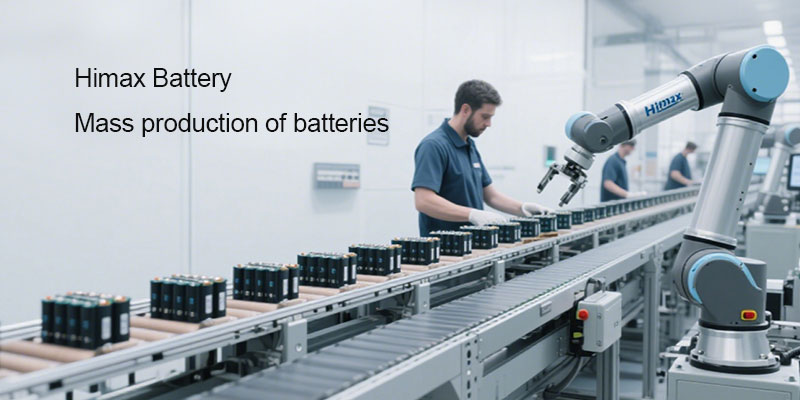
Since its founding, Shenzhen Himax Electronics Co., Ltd. has been serving clients across North America, Europe, and Australia, providing customized lithium and NiMH battery packs for a wide range of applications — from medical devices and industrial tools to energy storage and mobility products. With automated and semi-automated production lines capable of processing over 3 million cells per week, Himax ensures both quality consistency and rapid delivery.

The 14.8V 18Ah lithium-ion battery pack has already attracted interest from system integrators and solar light manufacturers in countries like Germany, Australia, Kenya, and the UAE, where off-grid solar lighting plays a critical role in infrastructure development. Customers value Himax’s engineering flexibility, strict quality control, and responsive technical support, which help accelerate project timelines and improve overall system reliability.

Commitment to Quality and Customer Partnership

Each Himax battery pack is tested under multiple environmental and electrical conditions before leaving the factory. The company maintains ISO9001-certified quality management systems and continuously invests in R&D and innovation to keep pace with evolving energy technologies.

Himax’s philosophy centers on long-term cooperation and mutual growth with its partners. The company’s sales and engineering teams work closely with customers to provide technical guidance, design optimization, and after-sales service throughout the entire project cycle. Whether customers need OEM/ODM customization, certification assistance, or logistical support, Himax delivers end-to-end energy solutions.

Looking Ahead: Powering a Brighter, Sustainable Future

With the introduction of the 14.8V 18Ah lithium-ion battery pack, Shenzhen Himax Electronics Co., Ltd. reaffirms its role as a driving force in the global shift toward clean and sustainable energy. As demand for efficient solar lighting systems continues to grow, Himax remains committed to innovation, quality, and reliability — providing the power that keeps the world illuminated.

Through its combination of technical expertise, manufacturing excellence, and customer-oriented service, Himax continues to help its global partners achieve greener, smarter, and more sustainable energy solutions — one battery at a time.


choosing li-ion battery

At HIMAX Electronics, we know that effective battery management is essential for ensuring the optimal performance and longevity of lithium-ion batteries. One critical aspect of this management is understanding the State of Charge (SOC), which plays a crucial role in maximizing efficiency and safety across various applications—from electric vehicles (EVs) to energy storage systems and robotics.

In this article, we’ll explain what SOC is, why it matters, and how it impacts the performance of lithium-ion batteries. Whether you’re an engineer, project manager, or consumer, understanding SOC can help you make informed decisions about battery usage, charging, and overall system management.

What is State of Charge (SOC)?


State of Charge (SOC) refers to the current charge level of a lithium-ion battery, expressed as a percentage of the battery’s total capacity. Essentially, SOC tells you how much energy is left in the battery compared to its full capacity:


100% SOC: Battery is fully charged, and it holds its maximum amount of energy.

0% SOC: Battery is fully discharged, and no usable energy remains.

Intermediate SOC values: For example, a 50% SOC indicates the battery is half-charged.


SOC is an essential metric because it helps users understand the remaining capacity of the battery, much like a fuel gauge in a car. This knowledge allows for efficient energy management and prevents overcharging or over-discharging, both of which can damage the battery and reduce its lifespan.

lifepo4-battery-soc

Why is SOC Important for Lithium-Ion Batteries?


SOC plays a crucial role in various aspects of battery performance:


Battery Protection and Safety

The lithium-ion battery chemistry is sensitive to both overcharging and over-discharging. If a battery is charged beyond its rated voltage or discharged too deeply, it could lead to capacity degradation, reduced lifespan, or even dangerous situations like thermal runaway. A precise SOC monitoring system, typically integrated in a Battery Management System (BMS), ensures that the battery operates within safe voltage and charge limits.


Performance Optimization

Lithium-ion batteries tend to perform best when they are not charged to their maximum or fully drained. By monitoring SOC, users can prevent deep discharge and avoid unnecessary charging cycles, which ultimately extends battery life. For example, keeping the SOC between 20% and 80% can help prolong the health of your battery.


Predicting Battery Runtime

In applications like electric vehicles (EVs), solar energy storage systems, or consumer electronics, knowing the SOC helps predict how much time or distance is remaining before recharging is necessary. In EVs, for instance, a fully charged battery means the car can drive its maximum range, while a lower SOC means less range remains before a recharge is needed.


Energy Efficiency

SOC monitoring allows for more efficient charging by ensuring that the battery is neither overcharged nor left too long without a charge. This leads to a better overall energy use and reduces unnecessary wear and tear on the cells, improving the long-term performance of the system.


How is SOC Measured?

Accurately measuring SOC is essential for battery management, and there are several methods used to do so:


Voltage-Based Estimation

SOC is often estimated using the voltage of the battery. Each lithium-ion battery has a predictable voltage range, and by measuring this voltage, the SOC can be approximated. However, this method can be less accurate because voltage is affected by factors such as temperature and the discharge rate.


Coulomb Counting

Coulomb counting is a more accurate method for measuring SOC. It involves tracking the charge and discharge current over time. By integrating the current flow, the BMS can calculate how much energy has been added or removed from the battery. This method is widely used in high-precision applications like electric vehicles.


Impedance Spectroscopy

A more advanced method, impedance spectroscopy, measures the internal resistance (impedance) of the battery to determine SOC. This approach considers various factors such as battery chemistry, temperature, and age, providing a more accurate estimate of SOC.


Hybrid Approaches

Modern Battery Management Systems (BMS) often combine voltage, current, and impedance measurements to give a more precise and reliable SOC reading. These hybrid approaches improve accuracy and account for factors like aging or temperature changes that can affect battery performance.


SOC and Battery Health

While SOC is essential for real-time monitoring, it’s also closely linked to battery health. Keeping the battery’s SOC within a safe range—typically between 20% and 80%—can significantly extend its useful life. Overcharging (charging beyond 100%) or over-discharging (below 0%) can degrade the battery’s capacity and shorten its lifespan.


HIMAX Electronics incorporates advanced SOC monitoring in our Battery Management Systems (BMS), ensuring that your batteries not only perform optimally but also last longer.

SOC in Different Applications

SOC is crucial across various industries where lithium-ion batteries are used:


Electric Vehicles (EVs)

SOC is the most important indicator of the remaining driving range. Accurate SOC readings ensure that drivers can plan trips and charge their vehicles with confidence.

Energy Storage Systems (ESS)

In solar or wind power storage systems, SOC tells you how much stored energy is available for use. It allows users to know when the system needs recharging and when energy is available for consumption.


Consumer Electronics

From smartphones to laptops, knowing the SOC helps users manage device power effectively, ensuring devices last longer and are ready for use when needed.


Robotics and Industrial Applications

SOC monitoring in robotics or power tools ensures consistent power delivery, preventing unexpected shutdowns due to battery depletion.

robot battery thermal management

Conclusion: SOC and Efficient Battery Management

A well-maintained State of Charge (SOC) system is crucial for the optimal performance, safety, and longevity of lithium-ion batteries. By accurately tracking SOC, you can ensure your batteries deliver reliable, efficient power while preventing damage and extending their lifespan.

At HIMAX Electronics, we provide advanced Battery Management Systems (BMS) that integrate precise SOC monitoring for a wide range of applications, from electric vehicles to energy storage solutions and robotics. Our BMS solutions offer real-time SOC estimation, helping you optimize your battery performance and make smarter energy decisions.


Need help with your battery system? HIMAX Electronics is here to provide customized solutions tailored to your needs. Contact us today to learn how our BMS systems can help you get the most out of your li-ion batteries.


marine battery 24v 50ah lifepo4

In recent years, the demand for reliable, efficient, and portable power sources in marine applications has grown significantly. From recreational boating and fishing to emergency rescue operations, the need for durable energy storage solutions that can withstand harsh marine environments is critical. HiMAXBATT Lithium Batteries, developed by Shenzhen Himax Electronics Co., Ltd., are at the forefront of this transformation, offering unparalleled performance, safety, and sustainability for portable marine power boxes.

The Challenges of Marine Power Systems

Marine environments pose unique challenges for power storage solutions. Traditional lead-acid batteries, while widely used, are often too heavy, bulky, and prone to performance degradation under extreme conditions. Saltwater exposure, temperature fluctuations, and constant vibration demand batteries that are not only energy-dense but also rugged and resistant to corrosion.

Lithium technology has emerged as a game-changer in this space, and HiMAXBATT Lithium Batteries are specifically engineered to meet these challenges head-on.

12v marine battery

Why HiMAXBATT Stands Out

High Energy Density and Lightweight Design

HiMAXBATT Lithium Batteries offer exceptional energy density, allowing users to store more power in a compact and lightweight form factor. This is particularly advantageous for portable marine power boxes, where space and weight are often constrained. For example, a 100Ah HiMAXBATT battery weighs approximately 60% less than its lead-acid counterpart, making it easier to transport and install on small vessels or portable power packs.


Enhanced Safety Features

Safety is paramount in marine applications. HiMAXBATT batteries incorporate advanced safety mechanisms, including:

Multi-Layer Protection: Protection against overcharge, over-discharge, short circuits, and excessive current.

Thermal Stability: Built-in temperature management systems to prevent overheating, even in high-temperature environments.


Long Cycle Life and Durability

Unlike traditional batteries, which may suffer from sulfation or capacity loss due to partial charging, HiMAXBATT Lithium Batteries boast a cycle life of over 2,000 charges. This longevity translates to reduced replacement costs and minimal maintenance, making them ideal for marine enthusiasts and professionals who rely on consistent power availability.


Eco-Friendly Solution

As the world shifts towards sustainable energy practices, HiMAXBATT Lithium Batteries align with global environmental goals. They are free from heavy metals like lead and cadmium, and their high efficiency reduces energy waste. Moreover, their long lifespan means fewer batteries end up in landfills.

lithium-ion-batteries


Applications in Portable Marine Power Boxes

Portable marine power boxes equipped with HiMAXBATT Lithium Batteries are versatile tools for a wide range of scenarios:

Recreational Boating: Powering navigation devices, fish finders, USB charging ports, and small appliances.

Fishing Trips: Providing energy for electric trolling motors, coolers, and lighting systems.

Emergency and Rescue Operations: Ensuring reliable power for communication devices, medical equipment, and emergency beacons.

Off-Grid Adventures: Serving as a silent and clean energy source for camping, island hopping, and other aquatic activities.


The Future of Marine Power

As technology continues to evolve, the integration of smart features such as Bluetooth monitoring, state-of-charge indicators, and compatibility with solar charging systems will further enhance the usability of HiMAXBATT-powered marine power boxes. Shenzhen Himax Electronics Co., Ltd. is committed to innovation, continuously improving its products to meet the evolving needs of the marine industry.


Conclusion

HiMAXBATT Lithium Batteries are redefining portable marine power solutions by combining cutting-edge technology with robust design. Their lightweight nature, safety features, longevity, and environmental benefits make them the ideal choice for anyone seeking reliable power in marine environments. As the marine industry continues to embrace lithium technology, HiMAXBATT is poised to lead the charge towards a more efficient and sustainable future.


Lipo

SHENZHEN, China – In the rapidly evolving landscape of fleet management, asset security, and personal vehicle safety, the Vehicle GPS Tracker has become an indispensable tool. These compact devices provide real-time location data, geofencing alerts, and critical diagnostic information. However, their reliability is fundamentally dictated by one core component: the battery. While the software and GPS modules often receive the spotlight, it is the silent, enduring power of advanced lithium batteries that truly enables 24/7 operational integrity. Companies like Shenzhen Himax Electronics Co., Ltd. are at the forefront of developing power solutions that specifically meet the unique and demanding requirements of this industry.

The Unique Power Demands of GPS Tracking Units

Vehicle GPS trackers are not like everyday consumer electronics; their operational profile presents distinct challenges that not all batteries are equipped to handle.

Long Operational Life & Low Self-Discharge: Many trackers, especially those used for asset tracking, can spend months, or even years, installed in a vehicle without regular charging cycles. A standard battery would self-discharge and fail long before its intended mission is complete. Advanced lithium batteries, such as the HiMAXBATT series, are engineered with extremely low self-discharge rates, ensuring they retain their charge for extended periods and are ready to transmit data when needed.


Extreme Temperature Tolerance: A vehicle’s environment is harsh. From the freezing cold of a winter in northern climates to the scorching heat inside a parked car under the summer sun, temperature fluctuations are extreme. Inferior batteries can suffer from rapid capacity loss, reduced lifespan, or even catastrophic failure in these conditions. Lithium technology offers a wide operational temperature range, ensuring consistent performance from -10°C to 60°C.


High Energy Density: The most effective trackers are small and discreet, leaving minimal space for a battery. This necessitates a power source with the highest possible energy density—the amount of energy stored in a given unit of volume. Lithium batteries provide a superior energy density compared to traditional alkaline or nickel-metal hydride alternatives, allowing manufacturers to create more compact and powerful devices without sacrificing battery life.


Reliability and Safety: A tracker’s primary purpose is to be a dependable sentinel. Its battery must be utterly reliable. This involves built-in protections against common issues like short circuits, overcurrent, and over-discharge. Furthermore, robust construction is vital to prevent leakage, which could damage the sensitive electronics of the tracker itself.

custom lipo battery packs

custom lipo battery packs

Shenzhen Himax Electronics: Powering Connectivity with HiMAXBATT

Recognizing these critical needs, Shenzhen Himax Electronics has dedicated its engineering expertise to producing lithium batteries that serve as the dependable foundation for GPS tracking devices. The HiMAXBATT line is designed to directly address the pain points of tracker manufacturers and end-users.

HiMAXBATT batteries for GPS applications prioritize longevity and stability. By utilizing high-quality raw materials and precise manufacturing processes, Himax ensures each cell delivers on its promised capacity and cycle life. This commitment to quality translates directly to reduced maintenance costs, fewer false alerts caused by power failure, and ultimately, more trustworthy data for businesses relying on these tracking systems.

For trackers with more frequent reporting intervals or those that incorporate additional features like Bluetooth, accelerometers, or continuous remote control blocking capabilities, Himax offers robust lithium polymer (Li-Po) solutions. These batteries provide the necessary rechargeable power and high discharge rates while maintaining the compact form factor essential for hidden installations.

The Future is Powered by Intelligence

The next frontier for vehicle tracking is not just about location, but about predictive intelligence. Future trackers will analyze driving patterns, predict maintenance needs, and integrate deeper with IoT ecosystems. This increased processing power will demand even more from their batteries.

Innovators in the battery space are already responding. The focus is on enhancing energy density even further and integrating smarter Battery Management Systems (BMS) at the cell level. This allows for more accurate state-of-charge monitoring and communication with the tracker itself, enabling end-users to receive precise alerts about the battery’s health long before it depletes.

Conclusion: The Unseen Engine of Security

In the world of GPS tracking, the most sophisticated software is rendered useless without a reliable power source. The battery is the unsung hero, the unseen engine that powers global connectivity and security. As the market continues to grow and technology advances, the partnership between GPS tracker manufacturers and specialized battery companies like Shenzhen Himax Electronics will become increasingly crucial. It is this synergy that will drive the innovation needed to create ever-more reliable, efficient, and intelligent tracking solutions for a connected world.

About Shenzhen Himax Electronics Co., Ltd.:
Shenzhen Himax Electronics Co., Ltd. is a specialized manufacturer and supplier of high-quality lithium batteries. Its HiMAXBATT product line serves a wide range of applications, including GPS tracking devices, IoT sensors, security systems, and consumer electronics. The company is committed to providing reliable, safe, and innovative power solutions supported by strong engineering and customer service.


18650-vs-21700-li-ion-cells

The comparison focuses on key battery characteristics: performance, reliability, energy density, cycle life, safety, and price.

Battery Cell Manufacturer Comparison

(18650 & 21700 Li-ion Cylindrical Cells)

Feature / Brand Samsung SDI LG Energy Solution Panasonic / Sanyo Chinese Brands (EVE, Lishen, BAK, etc.)
Cell Types 18650, 21700 18650, 21700 18650, 21700 18650, 21700, 26700, custom
Energy Density (Wh/kg) 250–270 240–260 260–280, highest 200–250 average
Cycle Life

(0.5C–1C)

800–1200 800–1000 1000–1500 500–800

(varies by brand)

Max Discharge Rate 5C–15C

(some power cells 30C burst)

3C–10C 3C–10C 2C–10C

(some high-power cells 15C)

Consistency ★★★★☆ (High)

(±1–2%)

★★★★☆ (High)

(±1–2%)

★★★★★

(Excellent)

(±1% or better)

★★☆☆☆

(varies greatly)

(±3–8%typical)

Charge Temperature Toerance 0°C to 45°C 0°C to 45°C 0°C to 50°C 0°C to 45°C
Discharge Temperature Tolerance –20°C to 60°C –20°C to 60°C –30°C to 60°C –10°C to 55°C typical
Self-Discharge <2%/month <2%/month <1.5%/month 2–5%/month (more variation)
Safety / QC ★★★★☆ (strong BMS and test history) ★★★★☆ ★★★★★

(Tesla supplier level QC)

★★☆☆☆ (some lack full QC)
Availability Global, broad range Global, broad range Limited for public, OEM focused Widely available (Alibaba, etc.)
Typical Use Cases Power tools, EV packs, e-bikes E-bikes, energy storage EVs (Tesla), industrial applications Flashlights, scooters, budget power banks

Himax - 14.8v-2500mAh 18650 battery pack

Performance Summary by Format

Brand Best 18650 Model Best 21700 Model
Samsung SDI INR18650-30Q (3000mAh, 15A) INR21700-50E (5000mAh, 9.8A)
LG Energy INR18650-MJ1 (3500mAh, 10A) INR21700-M50LT (5000mAh, 7.3A)
Panasonic NCR18650GA (3450mAh, 10A) NCR21700A (5000mAh, 10A)
Chinese Brands BAK N18650CK (2600mAh, 5C) EVE INR21700/50V (5000mAh, 10A)

Pros & Cons Overview

Brand Pros Cons
Samsung High energy density, reliable, widely used, good balance Can be costly, some fakes on market
LG Strong performance, efficient cells, trusted OEM Some heat sensitivity on older models
Panasonic Most stable and long-life, best QC (used by Tesla) Price premium, less accessible
Chinese Brands Cheap, good for mass deployment, wide range Less consistency, shorter lifespan, more fakes and spec inflation

Panasonic-18650-B

Notes:

Chinese manufacturers are improving rapidly (EVE, Lishen, REPT, CALB, etc.) and some high-end cells now rival Korean/Japanese brands.

Fakes are common, especially for Samsung/LG/Panasonic 18650 cells sold through unofficial channels.

Always verify with datasheets and request MSDS + test reports when sourcing.


Li_ion_vs_lifepo4

1. Li-ion (Lithium-ion)

Typically refers to cylindrical (e.g., 18650 li-ion) or prismatic cells using NMC or NCA chemistry.

✅ Advantages:

High energy density → longer run time for given size/weight.

Relatively long cycle life (500–1000+ cycles).

Low self-discharge (~1–2% per month).

Widely available and mature technology.

Stable form factor (especially cylindrical 18650/21700 cells).

❌ Disadvantages:

Thermal runaway risk if punctured or overcharged.

Needs precise BMS protection to ensure safety.

Capacity drops in high temperature or over time.

2. LiPo (Lithium Polymer)

A subset of Li-ion using a gel-like electrolyte, typically found in soft pouch cells.

✅ Advantages:

Very lightweight and thin, excellent for drones, RC, and custom-fit designs.

High discharge rates (C-rate) – great for burst power.

Flexible shapes/sizes available.

❌ Disadvantages:

Less mechanically stable – more prone to swelling and damage.

Shorter cycle life (300–500 cycles) compared to cylindrical Li-ion.

High risk of fire if punctured or improperly charged.

Requires very careful charging (must use a LiPo charger with balance).

3. LiFePO₄ (Lithium Iron Phosphate)

Known for high safety and longevity, commonly used in solar, UPS, and EV applications.

✅ Advantages:

Extremely long cycle life (2000–5000+ cycles).

Very safe – no thermal runaway or fire under normal conditions.

Wide temperature tolerance.

Flat voltage curve → consistent power output.

Environmentally friendlier than cobalt-based cells.

❌ Disadvantages:

Lower energy density (~90–120 Wh/kg) → larger and heavier for same capacity.

More expensive per Wh in some cases (though decreasing).

Lower voltage per cell (3.2 V nominal vs 3.7 V for Li-ion) → may require more cells in series.

LiFePO4_vs._lead-acid_batteries


Battery Technology Comparison Table

Feature Li-ion LiPO

(Lithium Polymer)

LiFePO₄

(Lithium Iron Phosphate)

Nominal Voltage 3.6–3.7 V 3.7 V 3.2 V
Specific Energy Density 180–250 Wh/kg 130–200 Wh/kg 90–140 Wh/kg
Volumetric

Energy Density

400–700 Wh/L 300–500 Wh/L 220–350 Wh/L
Cycle Life 500–1000+ 300–500 2000–5000+
Discharge Rate (C-rate) Moderate

(1C–5C typical,some up to 8C)

High

(up to 50C)

Moderate

(1C–3C, some up to 10C)

Weight/Size Efficiency compact, cylindrical thin, flexible bulky, heavy
Safety Moderate

(needs BMS)

Low

(swelling, fire risk if damaged)

Very High

(thermally stable)

Temperature Tolerance 0°C to 45°C 0°C to 40°C -20°C to 60°C
Form Factor Cylindrical / prismatic Flexible pouch Cylindrical / prismatic
Self-Discharge Rate ~2%/month ~5%/month ~3%/month
Best Use Cases Consumer

electronics, tools

Drones, RC, wearables Solar, EVs, UPS, storage

Energy Density Comparison (Chart)

Battery Type Wh/kg (Energy/Weight) Wh/L (Energy/Volume)
Li-ion 180–250 Wh/kg 400–700 Wh/L
LiPO 130–200 Wh/kg 300–500 Wh/L
LiFePO₄ 90–140 Wh/kg 220–350 Wh/L

Li-ion: Best balance of size and energy → great for compact applications

LiPo: Light and high-power burst, but less dense and less safe

LiFePO₄: Bulky, but ultra-long life and very safe

lipo_Battery_customization

Lithium Polymer (LiPo) batteries are widely used in consumer electronics, drones, RC vehicles, and portable devices due to their high energy density and lightweight properties. However, improper handling can lead to short circuits, which may cause overheating, fires, or even explosions. As a leading battery manufacturer, Shenzhen Himax Electronics Co., Ltd. emphasizes the importance of safe LiPo battery usage to prevent accidents. This article explores the causes of short circuits and provides practical guidelines to mitigate risks.

What Causes a LiPo Battery Short Circuit?

A short circuit occurs when the positive and negative terminals of a battery are directly connected with little to no resistance, causing excessive current flow. Key causes include:

Damaged Battery Wrapping – Physical damage to the outer insulation can expose internal electrodes, leading to accidental contact with conductive materials.


Improper Storage – Storing LiPo batteries near metal objects (e.g., keys, coins) increases the risk of terminal contact.


Faulty Wiring or Charging – Using damaged cables or incorrect chargers may create unintended electrical paths.

Punctures or Crushing – Mechanical stress can breach the battery’s internal layers, causing a direct short.

LiPO-Battery


How to Prevent LiPo Battery Short Circuits

1. Inspect Batteries Regularly

Before use, check for:

Swelling or leaks – A bloated LiPo battery indicates internal damage and should be disposed of properly.

Torn Wrapping – Replace damaged insulation immediately with high-quality heat-shrink tubing.

2. Store Batteries Safely

Use non-conductive storage bags or fireproof containers.


Keep terminals protected with insulating caps or tape.

Avoid extreme temperatures and humid environments.

3. Handle with Care During Charging

Always use a LiPo-compatible charger with balance charging functionality.

Never leave charging batteries unattended.

Place batteries on a non-flammable surface (e.g., ceramic tile).

4. Avoid Physical Damage

Do not puncture, bend, or crush LiPo batteries.

Transport batteries in cushioned cases to prevent impacts.

5. Proper Disposal

Discharge depleted LiPo batteries fully before recycling.

Follow local regulations for hazardous waste disposal.

Industry Standards and Himax’s Commitment

At Shenzhen Himax Electronics Co., Ltd., we adhere to international safety standards (UN38.3) to ensure our LiPo batteries meet rigorous testing for short-circuit prevention. Our products feature:

Multi-layered separators to reduce internal short risks.

Robust PVC wrapping for enhanced puncture resistance.

Built-in protection circuits (for select models) to mitigate overcurrent.

Conclusion

Short circuits in LiPo batteries are preventable with proper handling, storage, and charging practices. By following these guidelines, users can maximize both safety and battery performance. Shenzhen Himax Electronics Co., Ltd. remains dedicated to advancing LiPo battery technology while promoting responsible usage worldwide.

Stay safe, stay powered!


7.4V lithium 18650 battery

Reliable Li-ion Battery Solutions for Portable Food Appliances

As modern lifestyles increasingly demand convenience and mobility, portable electric food processing devices like electric lunch boxes, portable electric pots, travel steam irons, and electric heating cups have become household essentials. At the heart of these compact appliances lies a powerful and reliable energy source — the 7.4V lithium-ion batteries.

With over 12 years of expertise as a rechargeable battery manufacturer, HIMAX ELECTRONICS specializes in producing high-capacity lithium-ion batteries that are perfectly suited for the unique power needs of these devices. As a battery factory with a strong R&D and production foundation, we deliver cost-effective, factory-direct pricing and customizable battery solutions to meet diverse client requirements worldwide.

Why 7.4V Lithium-ion Batteries are Ideal for Portable Food Devices

1. Compact Size & Lightweight Design

Our 7.4V batteries are engineered with portability in mind — making them ideal for handheld or travel-friendly appliances. With reduced size and minimal weight, these batteries do not compromise the ergonomics or aesthetics of devices such as:

  • Electric heating lunch boxes
  • Portable water boilers
  • Mini travel steamers
  • Heated travel mugs

2. High Energy Density = Longer Working Time

With capacities ranging from 8Ah to 13Ah, our 7.4V lithium-ion batteries can power food appliances for extended hours without frequent recharging — a key advantage for travelers, office workers, or outdoor users.

3. Rechargeable and Environmentally Friendly

Unlike disposable batteries, lithium-ion packs are rechargeable for 500+ cycles, reducing electronic waste and offering a cost-effective long-term solution for OEMs and consumers.

4. Safety and Stability

Our batteries include customized BMS (Battery Management System) that ensures safety features such as:

  • Over-charge protection
  • Over-discharge protection
  • Short circuit protection
  • Thermal stability

This makes them safe to use in food-related appliances even in enclosed or high-temperature conditions.

5. Customization and OEM Capability

We provide OEM/ODM services tailored to client-specific product dimensions, connectors, discharge rates, and certifications (UN38.3, MSDS, CE, UL on request).

electric-lunch-box-battery

Product Comparison Table – 7.4V Lithium-ion Batteries

Model Nominal Voltage Capacity (Ah) Max Discharge Current Dimensions (mm) Weight (g) Typical Applications
7.4V 8Ah Battery 7.4V 8Ah 8A 70x40x30 ~350g Electric Lunch Box, Heating Cup
7.4V 10Ah Battery 7.4V 10Ah 10A 75x45x35 ~420g Portable Pot, Heated Mug, Steam Iron
7.4V 13Ah Battery 7.4V 13Ah 13A 80x50x40 ~490g Portable Blanket, High-Power Devices

HIMAX ELECTRONICS – Your Trusted Battery Manufacturer

As an ISO-certified battery manufacturer based in China, HIMAX ELECTRONICS has served global customers for more than a decade, especially in the portable home appliance and consumer electronics sectors. Our dedicated factory, complete with automated welding machines, aging equipment, and advanced test lines, ensures strict quality control and fast lead times.

We are proud to:

  • Be thelong-term battery supplier for a leading electric lunch box brand LunchEAZE.
  • Offer bulk production capabilityfor high-volume orders.
  • Deliver competitive pricesthanks to our direct factory model.
  • Provide full technical supportfrom design to delivery.

Application Highlights

✅ Electric Lunch Box:

Continuous heating for 2–4 hours

Compact fit inside inner housing

Safe operation with food-grade materials


✅ Portable Electric Pot:

High current output to boil small quantities quickly

Reliable performance even during outdoor use


✅ Electric Heating Cup:

Warm beverages on-the-go

BMS ensures safe internal heating


✅ Travel Steam Iron:

Instant heating capability

Lightweight, doesn’t add to luggage burden


✅ Portable Electric Blanket:

Extended warmth for 6–8 hours

Especially ideal for camping or long drives

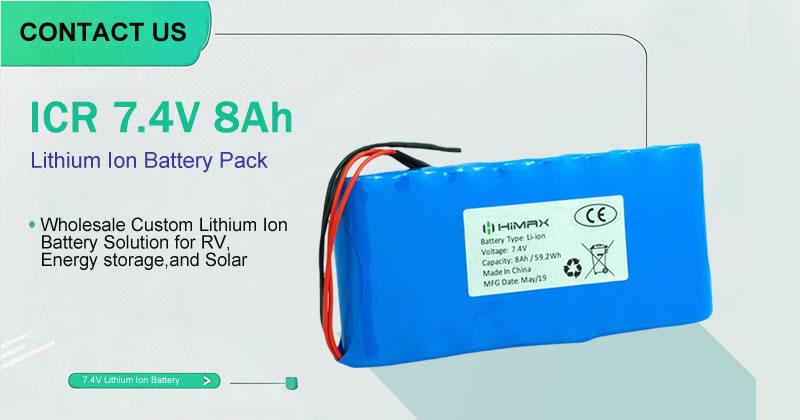
ICR 7.4V 8Ah Lithium Ion Battery Pack

Choose the Right Battery Partner – Choose HIMAX

Whether you’re a device brand, appliance manufacturer, or OEM project developer, HIMAX ELECTRONICS delivers reliable, affordable, and scalable battery solutions. With a wide range of custom 7.4V lithium-ion battery packs and a decade-long track record, we are the go-to partner for your food processing equipment power needs.

Ready to upgrade your product’s battery performance?

Contact HIMAX ELECTRONICS for datasheets, samples, and quotations.


3.7v-lithium-ion-battery

Why Our Factory-Made Lithium Batteries Are Ideal for Mobility Applications


As a professional battery manufacturer with over 12 years of experience, we specialize in producing high-quality rechargeable battery solutions. Our product line includes Li-ion batteries, LiFePO4 (Lithium Iron Phosphate) batteries, LiPo (Lithium Polymer) batteries, and NiMH batteries. With in-house production lines, automated welding equipment, and aging test systems, we ensure every battery pack we deliver is safe, reliable, and built to perform.


In this blog, we are proud to introduce our popular models—24V 7Ah, 8Ah, and 9Ah Li-ion batteries, along with our 25.6V 10Ah LiFePO4 battery—engineered for use in a wide range of electric mobility applications:


  • Personal electric vehicles(e-bikes, scooters, e-skateboards)
  • Portable medical devices
  • Electric wheelchairs and mobility scooters

boat-battery-size

Why Lithium-Based Batteries Are Ideal for Mobile Equipment


1.Rechargeability and Long Cycle Life

One of the most significant advantages of lithium-based batteries is their ability to be recharged hundreds to thousands of times. This makes them an eco-friendly and cost-effective solution for devices that are used daily.


  • Li-ion batteriestypically support 500-800 full charge cycles.
  • LiFePO4 batteriescan deliver over 2000 cycles, making them ideal for long-term use.


2.Compact Size and Flexible Design

  • Our 24V battery packs are compact, lightweight, and customizable to fit into limited spaces—a crucial advantage for wearable medical devicesor compact mobility scooters.


  • Our factory-made lithium batteries offer high energy density, resulting in smaller sizes for the same capacity.
  • Flexible design allows for cylindrical or prismatic cells, depending on your device layout.

3.High Capacity for Long Runtime

We offer a wide range of capacities from 7Ah to 10Ah, enabling longer use per charge:

Model Nominal Voltage Capacity Chemistry Cycle Life Application
24V 7Ah 24V 7Ah Li-ion 500-800 E-scooter, light wheelchair
24V 8Ah 24V 8Ah Li-ion 500-800 E-bike, foldable scooter
24V 9Ah 24V 9Ah Li-ion 500-800 Portable ventilators, powered carts
25.6V 10Ah 25.6V 10Ah LiFePO4 2000+ Wheelchairs, patient transport devices

H3: 4. Safety and Stability

Our Li-ion and LiFePO4 batteries are equipped with advanced Battery Management Systems (BMS) that provide protection against:


  • Overcharge
  • Over-discharge
  • Short-circuit
  • Over-temperature


Especially, LiFePO4 chemistry is known for thermal and chemical stability, offering peace of mind for use in medical-grade equipment.
H3: 5. Sustainable and Cost-Efficient

Unlike disposable battery solutions, our rechargeable batteries reduce long-term cost and environmental impact:


  • Rechargeable up to 2000 times
  • Less e-waste
  • Lower replacement frequency


Applications in Detail


  • Personal Electric Vehicles: Our 24V lithium batteries are widely used in compact e-mobility applications:
  • Electric scooters: Lightweight and compact design supports portability
  • E-bikes: Long range without increasing battery volume
  • Skateboards: Slim form factor with consistent high output
  • Wheelchair: Good quality and stable performance. Safety is initial.


With stable discharge voltage, these batteries help ensure uninterrupted operation in life-critical devices.


Electric Wheelchairs and Mobility Scooters

For seniors or those with mobility challenges, battery performance directly affects quality of life. Our LiFePO4 25.6V 10Ah battery:


Offers high safety and long lifespan

Enables long-distance rides

Reduces weight for ease of transport

Why Choose Us As Your Battery Manufacturer

We are more than just a battery supplier—we are a dedicated battery factory with in-house engineering and manufacturing teams. Working with us means:


  • Factory-direct pricing
  • Customizable solutions
  • Strict quality control
  • Fast lead times


Our Factory Capabilities Include:


  • Automated battery welding machinesfor consistency
  • Aging test equipmentfor pre-delivery performance validation
  • OEM/ODM support for custom voltage, shape, BMS, and connectors

10C_discharge_battery


Final Thoughts – A Reliable Partner for Your Battery Needs


Whether you are developing a next-generation mobility scooter or medical transport device, choosing the right battery is essential. With over 12 years of battery manufacturing experience, we provide safe, efficient, and high-performance 24V batteries that keep your innovations moving forward.


Contact us to request samples, datasheets, or a customized quote!