Tag Archive for: LiFePO4 Battery manufacturers

LiFePO4 Battery Pack 25.6V 18Ah

By  Joan  •  Battery Engineer, Custom Pack Development  •  Himax Electronics  •  July 2026

Topics: LiFePO4 Battery Pack  /  Solar Energy  /  Commissioning Tool  /  OEM Custom Battery  /  Outdoor Power


Executive Summary

Designing a LiFePO4 solar tracker battery for portable commissioning tools requires a different mindset than typical daily‑cycle applications. This post explains why a 25.6V 18Ah LiFePO4 battery pack with integrated BMS, center‑off reversing switch, and Bluetooth monitoring is the right solution for field technicians commissioning utility‑scale PV plants. We also cover what OEM engineers need to know before specifying a custom pack.

Key takeaway: When the application demands intermittent high‑current discharge in harsh outdoor conditions, chemistry choice, thermal stability, and physical integration outweigh cycle life or energy density alone.


Introduction: Why Commissioning Tools Need a Specialised Battery

Most battery applications I work on involve continuous operation – something that runs all day, charges at night, and repeats. Portable solar tracker commissioning tools, however, are quite different. Technicians use them in short, intense bursts during the installation phase of a PV plant. After that, they put the tools aside.

That distinction matters more than it might seem. A LiFePO4 battery for solar tracker commissioning does not need to manage daily cycles or long‑term calendar life as primary constraints. Instead, its real job focuses on four critical requirements:

  • Deliver reliable, high‑current output across a single demanding work session

  • Survive the physical reality of a construction site (drops, vibration, temperature swings)

  • Fit inside a briefcase‑format enclosure

  • Stay light enough that a field technician will actually carry it without complaint

If we get any of these wrong, the tool either fails when needed or stays in the truck.

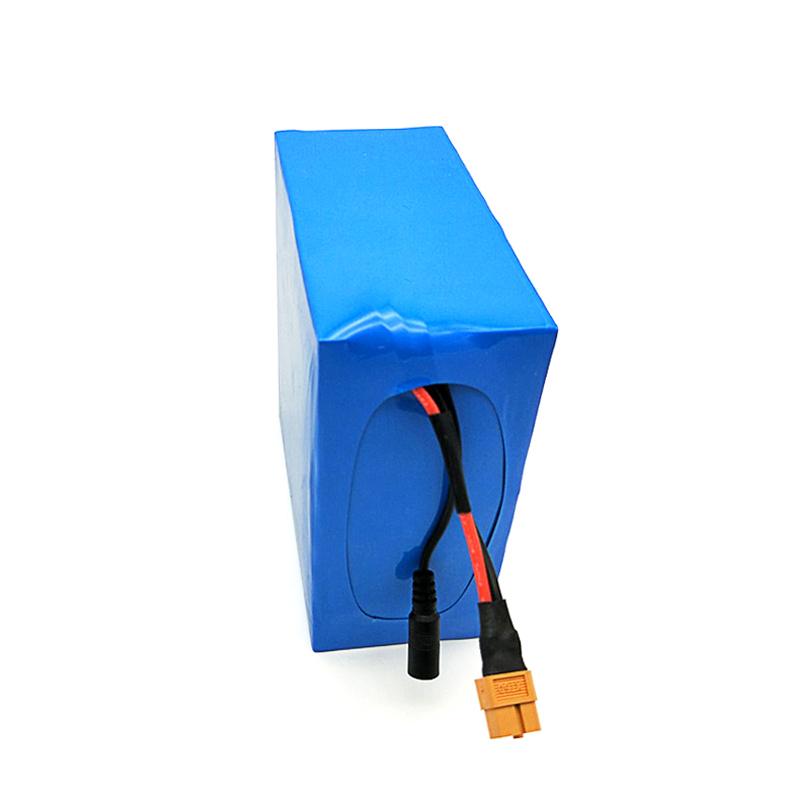
I recently worked through exactly this set of requirements for a solar tracker manufacturer. The result was a 25.6V 18Ah LiFePO4 solar tracker battery with integrated BMS, centre‑off reversing switch, Bluetooth BMS, and full CE certification. This post walks through the design rationale. We explain why we chose each element and what it means for engineers and procurement teams making similar decisions.
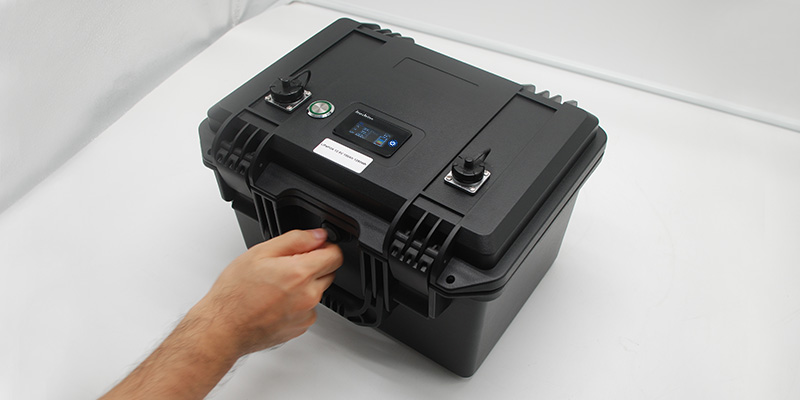
Himax 25.6V 18Ah LiFePO4 battery pack 460.8Wh for portable solar tracker commissioning briefcase tool


The Application: What a Solar Tracker Commissioning Tool Actually Does

During the construction phase of a utility‑scale or commercial PV plant, workers install tracker structures before placing the solar modules. Field technicians must manually drive each tracker’s motor – rotating the structure forward and backward – to align it correctly and verify mechanical operation before the modules go on.

The tool itself is a portable control box, typically in a briefcase or Pelican‑case format. It requires a battery that can power a 24VDC motor with a continuous current draw of at least 16A and short‑duration peaks up to 20A. The technician walks row by row across a large, exposed field, so the tool must endure that environment.

Design Driver Implication
Weight Directly limits how willing technicians are to carry the tool
Physical abuse Enclosure takes drops, vibration, and temperature swings as routine
No mid‑shift charging Battery must last a full commissioning session without a top‑up

Consequently, every design decision starts from these three facts.


Why 25.6V LiFePO4 Is the Right Chemistry and Voltage

Voltage Match

Solar tracker motors typically have a 24VDC nominal rating. LiFePO4 cells have a nominal voltage of 3.2V. Therefore, an 8‑cell series (8S) configuration gives a nominal pack voltage of 25.6V. This value lies close enough to 24V that tracker motor controllers accept it without a voltage conversion stage. Moreover, it stays well within the input tolerance of most 24VDC motor drivers.

The full‑charge voltage reaches 29.2V, and the low‑voltage cutoff sits around 20V. These values define the operating window, but the nominal 25.6V matches the motor rating cleanly.

An alternative 24V nominal lithium chemistry (e.g., NMC in 7S) would work electrically. Nevertheless, LiFePO4 offers specific advantages that make it the superior LiFePO4 solar tracker battery choice.

Why LiFePO4 Over Other Lithium Chemistries

LiFePO4’s advantages in this application cluster around three properties:

Thermal Stability on a Hot Construction Site

LiFePO4 is the most thermally stable of the mainstream lithium chemistries. The battery may sit in direct sun inside a dark enclosure where surface temperatures exceed 50°C. Unlike NMC or NCA, LiFePO4 does not present the same thermal runaway risk. This makes it far safer for uncontrolled‑temperature outdoor environments.

Flat Discharge Curve

LiFePO4 maintains a relatively stable voltage between roughly 80% and 20% state of charge. For a motor drive, this translates to consistent torque and speed through most of the discharge. As a result, the tracker moves predictably whether the battery is at 90% or 30% charge – which improves control precision.

Abuse Tolerance for Field Use

Commissioning tools get set down hard, stored in trucks, and occasionally connected backwards. LiFePO4 tolerates physical and electrical abuse better than higher‑energy‑density alternatives. Consequently, we can rely on it in a construction environment without frequent replacements.
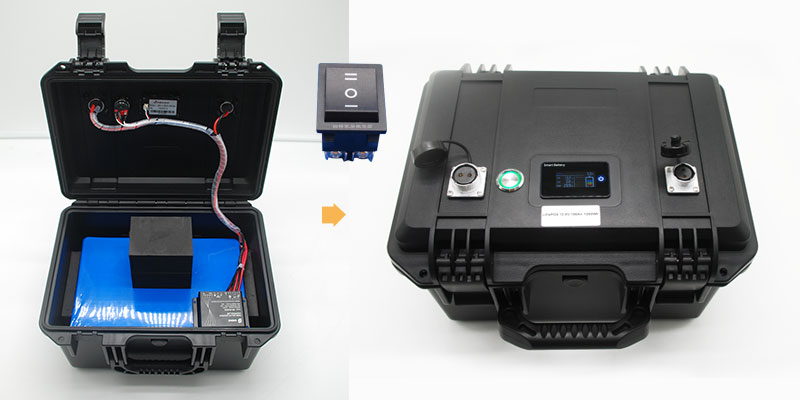
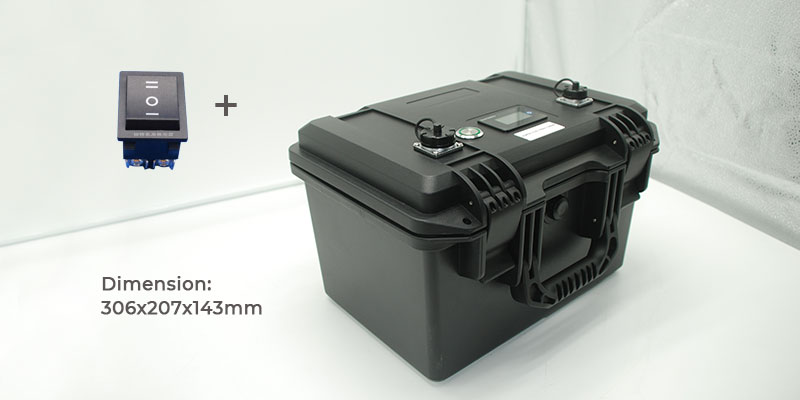
Center-off reversing switch I-0-II rated 25A DC integrated in solar tracker commissioning battery pack


Pack Configuration: 8S3P, 18Ah, 460.8Wh

The 8S3P Build

The 8S3P configuration – 8 cells in series, 3 in parallel – produces the 25.6V nominal voltage and 18Ah capacity. Three parallel cells share the current load. Thus, the pack can deliver the required 16A continuous discharge with each parallel group handling only ~5.3A. That is a moderate C‑rate, which keeps cell temperatures in check during sustained operation.

The 20A peak capability handles motor inrush current during start events. Typically, inrush runs 3–5× the running current for a fraction of a second. Our pack easily covers that spike.

Energy: 460.8Wh

Total energy is 460.8Wh. At a continuous draw of 16A at 25.6V (~410W), the pack provides just over one hour of continuous motor operation. In practice, however, the motor runs intermittently – drive forward, stop, inspect, drive back – so effective runtime in the field is considerably longer. For example, a well‑planned commissioning day for a mid‑sized PV array involves several hundred rotations. With 460.8Wh, we provide comfortable headroom for that workload.

Weight: ~4.5 kg

The pack weighs approximately 4.5 kg – on the heavier side for a field‑carried tool, but unavoidable given the energy content. This weight is roughly equivalent to three litres of water, integrated alongside control electronics in the briefcase. The tradeoff is straightforward: you need 460Wh to do the job, and 460Wh of LiFePO4 at this form factor weighs what it weighs. The more important question is whether the enclosure distributes that weight ergonomically. The briefcase format does exactly that.


Key Specification Summary

Parameter Specification
Battery Type LiFePO4
Nominal Voltage 25.6V
Capacity 18Ah
Energy 460.8Wh
Cell Configuration 8S3P
BMS Integrated (overcharge, over‑discharge, overcurrent, short‑circuit protection)
Max Continuous Discharge 16A
Peak Discharge Current 20A
Max Charge Current 9A
Charger 29V 4A (dedicated, with matching connector)
Dimensions 306 × 207 × 143mm
Weight ~4.5 kg
Reversing Switch Centre‑off I‑0‑II, 25A DC rated
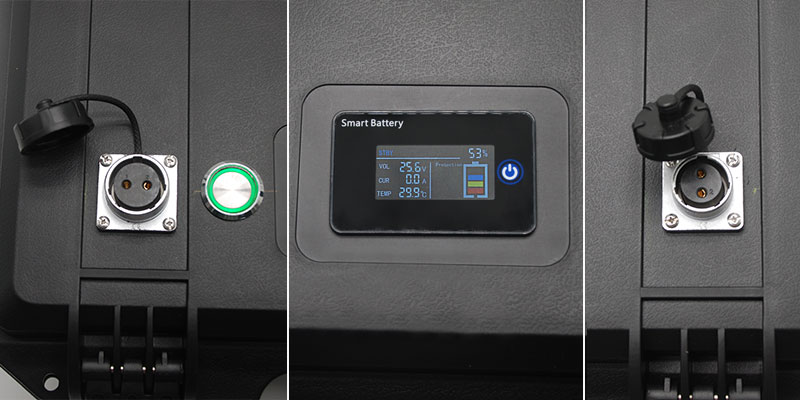
Monitoring Bluetooth BMS (SOC + key parameters)
Charging Connector Customisable
Certification CE certified with Declaration of Conformity
Warranty 1 year from shipment date

Bluetooth BMS app interface showing solar tracker commissioning battery state of charge and key parameters


The Centre‑Off Reversing Switch: Why It’s Part of the Battery Assembly

One design requirement for the commissioning tool is a centre‑off reversing switch in I‑0‑II configuration, integrated into the battery assembly itself. This is worth explaining because it’s unusual in battery pack designs.

A solar tracker motor must rotate both ways – forward to east, reverse to west. The simplest control is a physical reversing switch that swaps polarity. The centre position (I‑0‑II) is the “off” state that disconnects the motor entirely.

Integration Benefits

We integrate this switch into the battery assembly rather than treating it as a separate component in the control box. This approach:

  • Reduces the number of connection points (each connection is a potential failure point)

  • Keeps the current path short and appropriately rated

  • Simplifies the control box design for the tool manufacturer

Rating: 25A DC

The switch is rated for 25A DC continuous – margin above the 20A peak specification. DC switching is harder on contacts than AC, and a switch rated exactly at 20A would operate at its thermal limit every motor start. The 25A rating gives meaningful headroom that extends contact life.

CE Coverage Includes the Switch

The CE certification covers the complete unit: battery pack, BMS, enclosure, and reversing switch. This matters because CE marking applies to the finished product as used – not just individual components. A Declaration of Conformity that covers only the cells leaves the tool manufacturer responsible for certifying the switch integration themselves. By covering the complete assembly, we shift that burden to the battery supplier and simplify the tool manufacturer’s own CE documentation.


Bluetooth BMS: Real‑Time Battery Monitoring in the Field

We added the Bluetooth monitoring function to give field technicians visibility into battery status without needing to connect a cable or check a display on the enclosure.

What It Shows

The Bluetooth BMS broadcasts real‑time data to a smartphone/tablet app. Here is what the technician sees:

Data Point Why It Matters
State of charge (SOC) Technician knows exactly how much runtime remains – no guessing
Pack voltage Confirms the battery is within the expected operating window
Discharge current Verifies the motor is drawing expected current
Cell‑level voltages Useful for diagnosing imbalance (depending on BMS)
Temperature Early warning if the pack is running hot in direct sun

Why This Matters for a Commissioning Environment

In a construction environment, workers often don’t notice a low battery until the motor slows down or stops mid‑rotation. That leaves the tracker in an indeterminate position and creates extra work. A Bluetooth SOC reading on a phone screen eliminates that surprise. Technicians can check remaining charge before starting a new tracker row and plan recharging accordingly.

Furthermore, the connectivity has long‑term value for the tool manufacturer. Field data helps us understand actual usage patterns, peak load events, and thermal conditions. That information improves the next design iteration.


The Charger: 29V 4A, EU Plug

The dedicated charger is a 29V 4A unit – the correct charge voltage for an 8S LiFePO4 pack (3.65V × 8 = 29.2V, rounded to 29V). At 4A, a full charge from near‑empty takes ~4.5 hours, fitting comfortably into an overnight cycle.

We supply the charger with an EU plug at 50Hz. Cable length is 2×1m (AC input and DC output), and the DC connector matches the battery’s charging port directly – no adapter required.

Practical note for construction sites: Commissioning often happens at locations without reliable 230V outlets nearby. Therefore, teams should plan for portable generator access or a site power point close to the staging area. The charger does not support charging from a vehicle DC source or the tracker’s own DC bus – it requires 230V AC input.


Certification: What CE Covers and Why It’s Non‑Negotiable

For a battery‑powered tool sold into European markets, CE marking is a legal requirement, not optional. The certification for this assembly covers:

  • The battery pack: cell chemistry, BMS protection, electrical performance within limits

  • The enclosure: mechanical protection, IP rating (if specified), material safety

  • The reversing switch: contact rating, electrical safety at specified voltage and current

  • The complete assembly: as a finished product placed on the EU market

We supply the Declaration of Conformity (DoC) and supporting technical documentation with each order. For OEM customers integrating this pack into a branded commissioning tool, the DoC simplifies their own CE process. The battery assembly is typically the most documentation‑intensive component, and ours already carries its own declaration.


Physical Considerations: Fitting a 460Wh Pack Into a Briefcase Format

Dimensions and Enclosure

The module dimensions are 306 × 207 × 143mm – about the footprint of an A4 sheet and 14cm tall. In a briefcase‑format tool, this module typically occupies the lower half. We mount the control electronics (motor driver, switch panel, connectors) in the upper half or on a panel in the lid.

The briefcase format itself is an engineering choice for several reasons:

  • It distributes weight across both hands when carried by the handle.

  • It has a flat bottom for stable placement on uneven ground.

  • It provides protection for both battery and electronics that a bag or pouch wouldn’t.

Connector and Cable Customisation

We allow the OEM customer to specify the charging connector, output connector, and cable lengths. For a commissioning tool, the output cable to the motor needs to reach from a staging position to the motor junction box – typically 2–3 metres. That cable gauge must support 16A continuous without significant voltage drop. Therefore, we recommend at least AWG 14 (2.5mm²) for runs of 2–3 metres at 16A DC.
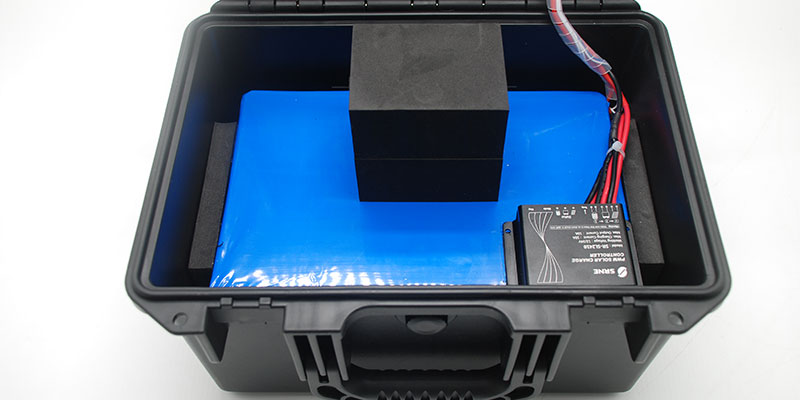
CE-certified Himax LiFePO4 8S3P 25.6V 18Ah battery pack for portable solar PV tracker installation tool


Scalable OEM Supply: From Sample to Production

For commissioning tool manufacturers evaluating this pack, the typical path starts with a sample order for field testing, followed by a first production order once validated.

Stage Lead Time
Sample 20–25 days after payment confirmation
Bulk production 25–30 days

Payment terms: TT in advance, delivery EXW Shenzhen.

Annual volume in the 50–200 unit range is a good fit for this configuration. At these volumes, we can accommodate customisation – enclosure colour, labelling, connector specs, cable length – without a significant MOQ premium. Larger volumes unlock additional unit price reductions.

If you have requirements different from the standard – different capacity, modified switch rating, different certification scope, or a specific IP rating – we encourage early conversation. Changes to BMS, switch, or certification affect lead time and cost, and we can scope those accurately before the first sample order.


Ready to Discuss Your LiFePO4 Solar Tracker Battery Needs?

The 25.6V 18Ah LiFePO4 solar tracker battery with integrated reversing switch and Bluetooth BMS described here is available for sample evaluation. If you’re designing a portable commissioning tool for solar trackers or a related application in PV installation, the fastest next step is a conversation about your specific load profile and physical requirements.

You can reach our custom pack development team through the Himax Electronics contact page. For an overview of our LiFePO4 and lithium‑ion battery range, the Himax energy storage and battery solutions page covers standard and custom configurations.

For portable medical and field instrument applications requiring similar design discipline – compact, reliable, certified – our work in the portable oxygen concentrator battery space provides useful context for what we’ve built for demanding portable use.

About the Author


Joan is a Battery Engineer in Custom Pack Development at Himax Electronics.

Specializing in custom battery pack development, he works closely with OEM clients to

optimize voltage, capacity, and form factor for scalable mass production. His work supports

strict quality control and long-term reliability across portable industrial and field applications.

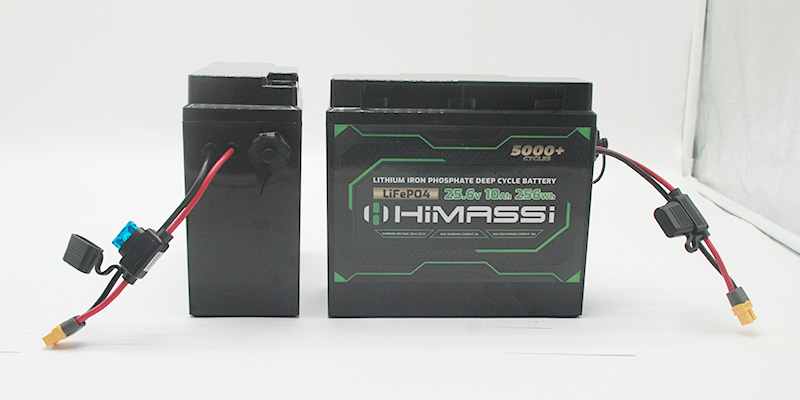
LiFePO4 25.6V 10Ah UPS battery backup in black ABS enclosure with external balancer connector

By  Alden  |  Battery Engineer – Manufacturing & Quality Control  |  Himax Electronics  |  July 2026 Read more

deep-cycle-12v-24v-48v-lifepo4-battery-pack

HIMAX ELECTRONICS, a leading manufacturer of customized lithium battery solutions, is pleased to introduce its advanced 48V 50Ah LiFePO4 Battery Pack designed specifically for the rapidly growing robotics industry. Engineered to provide reliable power, intelligent communication, and flexible customization, this battery solution is ideal for automated guided vehicles (AGVs), autonomous mobile robots (AMRs), service robots, cleaning robots, warehouse automation systems, and other industrial robotic equipment.

As robotics technology continues to expand across manufacturing, logistics, healthcare, and commercial sectors, the demand for safe, efficient, and long-lasting energy storage solutions has become increasingly important. Modern robots require batteries that not only deliver stable power but also provide intelligent monitoring, flexible integration, and dependable performance in a wide range of operating environments.

The HIMAX 48V 50Ah LiFePO4 Battery Pack has been developed to meet these requirements while offering extensive customization options that help robotics manufacturers build more competitive products.

Designed for Reliable Performance in Demanding Environments

Robotic systems often operate continuously for long periods in warehouses, factories, distribution centers, hospitals, and public facilities. These environments require battery systems that can withstand vibration, dust, accidental water exposure, and daily operational stress.

To ensure durability and reliability, the HIMAX battery is housed in a high-strength plastic enclosure that provides excellent mechanical protection while maintaining a lightweight structure. The battery is rated IP65, offering effective protection against dust ingress and low-pressure water jets from any direction.

This level of protection makes the battery suitable for both indoor and semi-outdoor robotic applications where environmental conditions can vary significantly.

The rugged housing design helps protect the internal battery cells, battery management system (BMS), and communication modules from external damage, contributing to a longer service life and reduced maintenance requirements.
li_ion_48v_100ah

Secure M8 Connectors for Stable Power Delivery

Reliable electrical connections are critical for robotic systems. Loose connectors can cause power interruptions, communication failures, and unexpected equipment downtime.

To address this challenge, the HIMAX 48V 50Ah Battery Pack is equipped with heavy-duty M8 threaded connectors. These industrial-grade connectors provide secure and stable electrical connections, even in applications subject to continuous vibration and movement.

The threaded design prevents accidental disconnection during operation and helps maintain consistent power delivery to motors, controllers, sensors, and other critical components.

This feature is particularly valuable for AGVs, AMRs, and mobile robotic platforms that operate continuously across large facilities.

Built-in LCD Display for Easy Battery Monitoring

Battery monitoring is an important part of robot fleet management. Operators need quick access to battery information in order to maximize operating efficiency and minimize downtime.

To simplify battery management, HIMAX has integrated an LCD display directly into the battery pack. The display provides real-time information, including:

  • Battery voltage
  • Remaining capacity
  • State of charge (SOC)
  • Operating status
  • System information

This user-friendly interface allows operators and maintenance personnel to quickly evaluate battery performance without requiring additional equipment.

The ability to access key battery data directly from the battery pack improves operational efficiency and supports preventive maintenance programs.

Intelligent Bluetooth Connectivity

As smart automation becomes increasingly common, battery systems must provide more than simple energy storage. Modern robotic systems require intelligent communication and remote monitoring capabilities.

The HIMAX battery incorporates Bluetooth technology, allowing users to connect the battery to smartphones, tablets, or other mobile devices through a dedicated application.

Using Bluetooth connectivity, users can remotely monitor battery status, review operating data, check system health, and configure specific battery parameters.

Remote monitoring helps operators identify potential issues before they become critical problems, reducing unexpected downtime and improving overall system reliability.

For robot manufacturers and fleet operators, this capability provides greater visibility into battery performance and simplifies daily maintenance activities.

Advanced Communication for Industrial Automation

Many robotic systems operate as part of larger automation networks. In these environments, battery information must be shared with central control systems to support intelligent energy management.

To meet industrial integration requirements, the HIMAX battery supports serial communication protocols such as RS485 and CAN Bus.

These communication interfaces allow seamless integration with robot controllers, fleet management systems, and industrial automation platforms.

Through real-time data communication, the battery can provide information such as:

  • State of charge (SOC)
  • Battery voltage
  • Current
  • Temperature
  • Battery health status
  • Fault alarms

This information helps robotic systems optimize power consumption, improve operating efficiency, and implement predictive maintenance strategies.

As Industry 4.0 and smart manufacturing continue to develop, intelligent battery communication is becoming an increasingly important feature for advanced robotic systems.

Extensive Customization Capabilities

One of the key advantages offered by HIMAX ELECTRONICS is its strong customization capability.

Different robotic applications often require different battery specifications. A battery solution suitable for a warehouse robot may not be ideal for a service robot, cleaning robot, or outdoor inspection robot.

To address these diverse requirements, HIMAX provides comprehensive customization services, including:

  • Customized battery capacity
  • Customized voltage configurations
  • Modified battery dimensions
  • Specialized enclosure designs
  • Customized discharge and charge parameters
  • Low-temperature operation solutions
  • High-temperature protection solutions
  • Custom BMS programming
  • Customized communication protocols
  • Special connector options

The experienced HIMAX engineering team works closely with customers throughout the development process to ensure the battery solution fully meets the technical requirements of each project.

This flexible approach helps customers accelerate product development while reducing engineering complexity and project risks.

Professional Branding Services

In today’s competitive robotics market, strong brand recognition is essential.

To help customers strengthen their product identity, HIMAX also offers professional branding services. Customer logos can be printed, engraved, or customized directly on the battery housing.

This allows the battery pack to become an integrated part of the customer’s product design rather than simply a hidden component.

Customized branding enhances product appearance, improves market recognition, and supports a consistent corporate image across the entire product portfolio.

Advantages of LiFePO4 Technology

The HIMAX 48V 50Ah Battery Pack utilizes Lithium Iron Phosphate (LiFePO4) chemistry, which is widely recognized as one of the safest and most reliable lithium battery technologies available today.

Compared with traditional lead-acid batteries, LiFePO4 batteries offer several important advantages:

  • Longer cycle life
  • Higher energy efficiency
  • Faster charging capability
  • Lower maintenance requirements
  • Reduced weight
  • Stable voltage output
  • Enhanced safety performance

These benefits make LiFePO4 technology particularly suitable for robotics applications where reliability, efficiency, and long operating life are critical.
48v-lithium-golf-cart-battery

Conclusion

The HIMAX ELECTRONICS 48V 50Ah LiFePO4 Battery Pack delivers a powerful combination of performance, intelligence, durability, and customization. Featuring an IP65-rated enclosure, secure M8 connectors, an integrated LCD display, Bluetooth connectivity, and industrial communication capabilities, it is designed to meet the evolving needs of modern robotic systems.

More importantly, HIMAX’s extensive customization services enable customers to create battery solutions that perfectly match their application requirements, helping them improve product performance and accelerate innovation.

As robotics and automation technologies continue to transform industries worldwide, HIMAX ELECTRONICS remains committed to providing reliable, intelligent, and customized energy solutions that power the future of automation.


solar battery

If you’ve ever pushed a power tool to its limits, drained an EV battery on a long highway run, or noticed your laptop dying faster after a year of heavy use — you’ve felt the effects of C-rate, whether you knew it or not.


C-rate is one of those concepts that sounds academic until you realize it quietly governs almost every lithium battery decision made in engineering, product design, and everyday use. Getting it wrong accelerates aging. Getting it right can add years to a battery’s life.

What C-Rate Actually Means

C-rate is a shorthand for describing how fast a battery is charged or discharged relative to its total capacity.

A 1C rate means the battery is fully discharged (or charged) in one hour. A 2C rate does it in 30 minutes. A 0.5C rate takes two hours. The math is straightforward: if you have a 100Ah battery drawing 200 amps, that’s a 2C discharge.

The “C” stands for capacity — not coulombs, not current in the abstract sense, but the battery’s own capacity used as the measuring stick. This makes C-rate a relative metric, which is exactly why it’s so useful. A 2C load means something different for a 10Ah cell than a 100Ah pack, but the stress placed on the chemistry is comparable.

In practical terms:

  • Consumer electronics typically operate between 5C and 1C
  • EV fast charging can push 1C to 3C
  • High-drain power tools and racing applications can hit 10C to 30C or higher
  • Grid storage systems often target 1C to 0.5Cto maximize longevity

The Chemistry Behind the Numbers

To understand why C-rate matters, you need a basic picture of what’s happening inside a lithium-ion cell during charge and discharge.

Lithium ions shuttle between the anode (typically graphite) and cathode (often lithium iron phosphate, NMC, or similar compounds) through a liquid electrolyte. The speed at which ions can move — intercalating into and out of electrode materials — is physically limited.

Push the rate too hard and several things go wrong simultaneously:

Lithium plating. At high charge rates, especially at low temperatures, lithium ions arrive at the graphite anode faster than they can be absorbed. Instead of intercalating cleanly, they plate onto the surface as metallic lithium. This is irreversible. Worse, it can form dendrites — thin metallic filaments that eventually pierce the separator and cause an internal short circuit.

Heat generation. Higher current means higher resistive losses (I²R losses, for those keeping track). Heat accelerates electrolyte decomposition, degrades the solid electrolyte interphase (SEI) layer, and speeds up virtually every aging mechanism in the cell.

Mechanical stress. Rapid ion movement causes the electrode materials to expand and contract quickly. Over hundreds of cycles, this mechanical fatigue cracks particles, increases internal resistance, and reduces accessible capacity.

None of these processes are binary. They happen on a continuum, which is why the relationship between C-rate and battery life isn’t a cliff — it’s a slope that gets steeper the harder you push.
custom 6.4V 4.8Ah lifepo4 battery pack

How C-Rate Affects Performance in Real Time

Battery performance isn’t just about long-term aging. C-rate has immediate, measurable effects on what a battery delivers in the moment.

Voltage Sag

Every real battery has internal resistance. As current increases, voltage drops — sometimes significantly. A lithium cell rated at 3.7V nominal might deliver 3.5V under a 1C load and drop to 3.1V under a 5C load. For applications with minimum voltage thresholds, this sag can cut usable capacity dramatically, even if the cell is technically “full.”

This is why a cordless drill might indicate low battery under heavy load and recover when you release the trigger. The charge was always there — the voltage was just sagging under demand.

Apparent Capacity Loss

At high discharge rates, less of the battery’s stored energy is accessible. The electrode reactions can’t keep up, ions don’t reach all active material sites, and the battery appears to hit its cutoff voltage sooner. A cell rated at 3Ah at 0.2C might only deliver 2.4Ah at 2C. That 20% loss is purely rate-dependent and fully recoverable at lower rates — but it matters enormously in system design.

Temperature Rise

A direct consequence of high C-rate operation. Heat affects electrolyte conductivity, separator integrity, and the kinetics of the intercalation reaction. Thermal runaway — the failure mode that makes lithium battery fires so intense — is far more likely when cells operate at elevated temperatures under high C-rate stress.

The Long Game: C-Rate and Cycle Life

This is where C-rate decisions have their most lasting consequences.

Cycle life — the number of charge-discharge cycles a battery delivers before capacity falls below a usable threshold (typically 80% of initial capacity) — is highly sensitive to the rates applied.

Manufacturers publish cycle life at specific C-rates for a reason. A cell rated for 2,000 cycles at 0.5C might deliver only 800 cycles at 2C. That’s not a flaw in the specification — it’s physics.

The degradation mechanisms are cumulative:

  • Each high-rate cycle deposits a bit more lithium plating
  • Each thermal excursion thickens the SEI layer, increasing internal resistance
  • Each mechanical stress cycle creates new microcracks in electrode particles
  • Higher resistance from these effects increases heat generation at any given rate, accelerating further degradation in a feedback loop

The practical implication: if longevity is the priority — for stationary storage, EV battery packs, or any application where replacement is expensive — keeping C-rates low during both charge and discharge is one of the highest-leverage decisions available.

Charge Rate vs. Discharge Rate: Are They Equally Damaging?

Often treated as symmetric, charge and discharge rates actually stress cells in somewhat different ways.

High charge rates are particularly problematic for the anode. This is where lithium plating occurs. This is why fast charging is generally harder on cells than fast discharging at equivalent C-rates — the plating risk doesn’t exist on discharge.

High discharge rates stress the cathode more heavily, drive larger voltage swings, and generate more heat through resistive losses. For chemistries like LFP (lithium iron phosphate) with naturally high internal resistance, discharge rate limits can be tighter than charge rate limits.

Most battery management systems (BMS) apply different limits to charge and discharge for exactly this reason.

C-Rate in Different Battery Chemistries

Not all lithium batteries respond to C-rate stress the same way. Chemistry matters.

LFP (LiFePO₄): Low energy density, exceptional thermal stability, long cycle life. Tolerates lower C-rates well; designed for longevity over peak performance. Common in grid storage and commercial EVs.

NMC (Nickel Manganese Cobalt): Higher energy density, moderate thermal stability. Widely used in consumer EVs and electronics. More sensitive to high C-rate aging than LFP.

NCA (Nickel Cobalt Aluminum): Very high energy density, used historically in high-performance EV applications. Good at high discharge rates but requires careful thermal management.

LTO (Lithium Titanate): Exceptional high-rate capability and cycle life. Can handle 10C+ continuously. Low energy density makes it impractical for most mobile applications, but it thrives in buses, industrial equipment, and fast-charge scenarios.

Matching the chemistry to the application’s C-rate profile is foundational to battery system design.

What Good C-Rate Management Looks Like in Practice

For engineers and product teams working with lithium batteries, a few principles consistently pay off:

Design to a fraction of the peak C-rate spec. A cell rated for 3C continuous can handle that rate — but not indefinitely. Designing to 1C or 1.5C while knowing 3C is available as headroom extends life substantially.

Use temperature as a proxy. If cells are running warm under normal operation, C-rate is likely a contributor. Thermal design and C-rate limits work together.

Charge slower whenever you can. Overnight charging at 0.5C does far less damage than rapid charging at 2C, especially when repeated thousands of times. Where charge time isn’t critical, slower is almost always better.

Watch the bottom of the state-of-charge curve. High C-rate stress compounds when cells are near empty. Raising the lower cutoff voltage (effectively not fully discharging) reduces both voltage sag and mechanical stress at a point in the cycle when cells are most vulnerable.

Let the BMS earn its keep. A well-configured battery management system applies C-rate limits dynamically based on temperature, state of charge, and cell age. This isn’t just protection — it’s active life extension.

Why This Matters More Than Ever

Battery technology is no longer confined to consumer gadgets. It’s the backbone of the energy transition — in EVs, residential storage, grid balancing, and industrial equipment. As lithium batteries scale up and the economics of replacement become more consequential, the decisions made around C-rate are no longer just engineering details. They’re financial and environmental ones.

A battery pack that lasts 15 years instead of 8 because it was charged and discharged conservatively doesn’t just save replacement costs. It reduces the mining, manufacturing, and disposal impacts embedded in that second pack.

Understanding C-rate, then, isn’t academic. It’s one of the clearest levers available for getting more out of the batteries we already have.

Whether you’re specifying a pack for an industrial application, managing a fleet of EVs, or just trying to make your laptop last through a third year of heavy use — C-rate is worth understanding. The physics don’t negotiate, but they do reward the people who work with them.


LiFeo4 12V 150AL Battery

At Shenzhen Himax Electronics Co., Ltd., we specialize in providing a wide range of high-quality batteries, including Li-ion, LiFePO4 (Lithium Iron Phosphate), Ni-MH (Nickel-Metal Hydride), and LiPo (Lithium Polymer) batteries. A common consideration for our clients, especially those involved in product integration or DIY projects, is whether to purchase batteries with an outer casing or without one. Understanding the differences between these two options is crucial for selecting the right battery solution for your specific application, ensuring optimal performance, safety, and cost-effectiveness.

  1. Structural Integrity and Physical Protection

The most apparent difference lies in the physical structure and the level of protection offered.

Batteries With an Outer Casing: These batteries, such as standard 18650 Li-ion cells or prismatic LiFePO4 batteries, come enclosed in a rigid metal (typically aluminum or steel) or hard plastic casing. This casing serves as the first line of defense against external physical stress. It provides:

Mechanical Robustness: The casing protects the internal electrodes and separator from impacts, punctures, and crushing forces that could occur during handling, installation, or operation.


Resistance to Deformation: It helps the battery maintain its shape and structural integrity, preventing internal short circuits that can arise from physical damage.


Containment: In the rare event of an internal failure, a robust casing can help contain the effects, enhancing overall safety.


Batteries Without an Outer Casing (or with a flexible casing): LiPo batteries are a prime example of this category. They typically feature a flexible, aluminum-plastic laminated pouch. This design offers a different set of characteristics:


Lightweight and Flexible: The pouch is significantly lighter than a metal can and can be shaped to fit into slim or irregularly shaped spaces, offering superior design flexibility.


Susceptibility to Damage: The trade-off for flexibility is a higher vulnerability to piercing, sharp edges, and excessive flexing. These batteries require careful handling and must be installed in a device that provides its own protective compartment to prevent physical damage.

48v-lithium-batterie

  1. Application and Integration

The choice between cased and uncased batteries is heavily influenced by the target application.

Batteries With an Outer Casing: These are ideal for applications where the battery is a standardized, replaceable component. Examples include:

Consumer electronics (e.g., power tools, laptops, electric scooters) that use cylindrical or prismatic cells.


Energy Storage Systems (ESS) and power banks, where multiple cased cells are assembled into a larger battery pack.


Applications requiring easy replacement and a high degree of mechanical stability.


Batteries Without an Outer Casing: LiPo pouch cells are predominantly used in applications where space, weight, and custom shapes are critical design constraints. Common uses include:

Drones and RC vehicles, where every gram matters.

Ultra-thin smartphones, tablets, and wearable devices.

Custom-built projects where the battery must conform to a specific, non-standard space. In these cases, the end-product’s housing must be designed to protect the battery.

  1. Thermal Management and Heat Dissipation

Thermal performance is a critical factor in battery safety and longevity.

Batteries With an Outer Casing: The metal casing of a cylindrical or prismatic cell acts as a heatsink, helping to distribute and dissipate heat generated during charge and discharge cycles. This can contribute to more stable thermal performance, especially in high-drain applications. However, in tightly packed configurations, thermal management systems are still essential to transfer heat away from the cells.


Batteries Without an Outer Casing: LiPo pouch cells have a larger surface-to-volume ratio compared to cylindrical cells. This can, in theory, allow for more efficient heat transfer to the surrounding environment if properly managed. However, because they lack a rigid metal shell, they are more sensitive to high temperatures. Effective thermal management must be integrated into the device itself, often requiring direct contact with a cooling plate or system.

  1. Cost and Customization Considerations

The economic and design flexibility aspects also differ.

Batteries With an Outer Casing: Standard cased cells like 18650s are mass-produced, leading to cost efficiencies. They are generally less expensive for a given capacity and are readily available. Customization is typically limited to standard sizes and specifications.


Batteries Without an Outer Casing: While pouch cells can be cost-effective, highly customized shapes and sizes may involve non-recurring engineering (NRE) costs for tooling and design. The primary advantage is the unparalleled freedom to create a battery that perfectly fits a unique product design, potentially reducing the overall size and weight of the final device.

48v golf cart battery upgrade

Conclusion

In summary, the decision to purchase a battery with or without an outer casing from Shenzhen Himax Electronics Co., Ltd. hinges on your specific requirements.

Choose batteries with a rigid outer casing (like standard Li-ion or LiFePO4 cells) when your priority is mechanical robustness, ease of assembly into a pack, replaceability, and cost-effectiveness for standardized applications.


Choose batteries with a flexible pouch (like LiPo cells) when your project demands ultra-light weight, a slim profile, or a custom, non-rectangular shape to maximize space utilization, and you have the capability to design a secure and protective housing within your end product.


Our technical team at Shenzhen Himax is always available to provide guidance and help you select the most appropriate and safe battery technology—be it Li-ion, LiFePO4, Ni-MH, or LiPo—for your unique application.


A Decade of Excellence in Battery Manufacturing

Founded in 2012, HIMAX Battery Pack Factory has grown into a trusted manufacturer of high-performance Li-ion batteries and NiMH batteries for global markets. With over a decade of experience, HIMAX has built a reputation for delivering safe, reliable, and customized battery pack solutions for various industries—including recreational vehicles (RV), marine equipment, off-grid energy systems, and robotics.

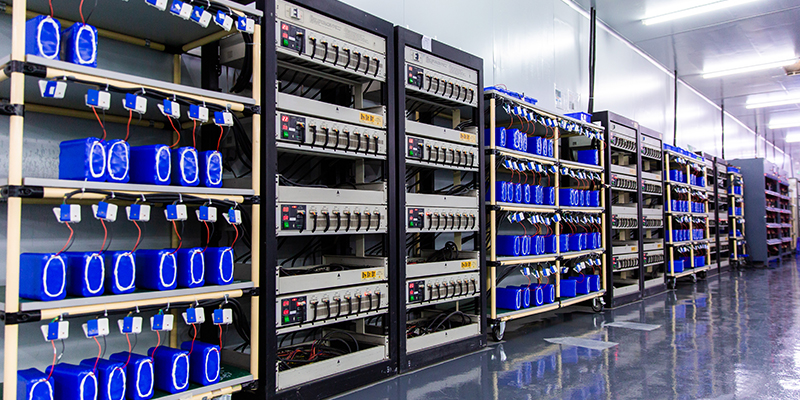
Unlike many trading companies, HIMAX owns and operates its in-house production facilities, which allows the company to maintain strict quality control and offer factory-direct pricing. This structure enables faster delivery, better customization flexibility, and higher product consistency.

Expanding the Range of 12V Lithium Batteries

HIMAX has recently expanded its portfolio of 12V Lithium Battery products, with a strong focus on 12.8V Lithium Batteries designed for RV house battery applications. These 12.8V LiFePO4 batteries are engineered for long cycle life, lightweight design, and stable performance even under harsh outdoor conditions.

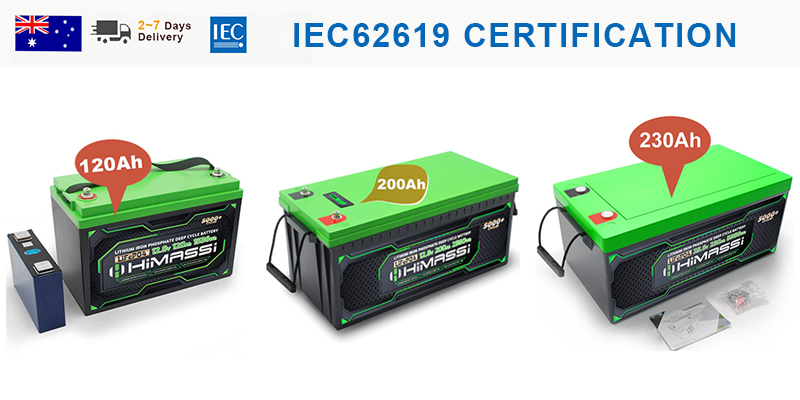
The company’s 12.8V 100Ah LiFePO4 Battery has quickly become a popular choice among RV enthusiasts looking for safe and sustainable power storage. In addition, HIMAX offers higher-capacity models such as 12.8V 120Ah, 12.8V 200Ah, and 12.8V 400Ah batteries—providing flexible energy solutions for various off-grid and mobile lifestyles.

IEC62619 Certification: Ensuring Global Safety Standards

What Is IEC62619 Certification?

IEC62619 is an international safety standard for rechargeable batteries used in industrial and stationary applications. To earn this certification, a battery must pass a series of rigorous safety, electrical, mechanical, and environmental tests at both the cell and battery pack level.

Requirements to Achieve IEC62619

Overcharge and over-discharge tests

External short-circuit protection

Thermal and mechanical impact tests

Temperature cycling and vibration tests

Complete quality management system (e.g. ISO9001)

Traceable production and inspection records

Design risk assessments and safety analysis reports


Advantages of IEC62619 Certified Batteries

Enhanced Safety — Minimizes risk of thermal runaway, fire, or explosion

Global Market Compliance — Widely accepted by regulatory authorities worldwide

Increased Brand Trust — Demonstrates commitment to product safety and quality

Simplified Export Process — Reduces future certification costs and customs clearance hurdles

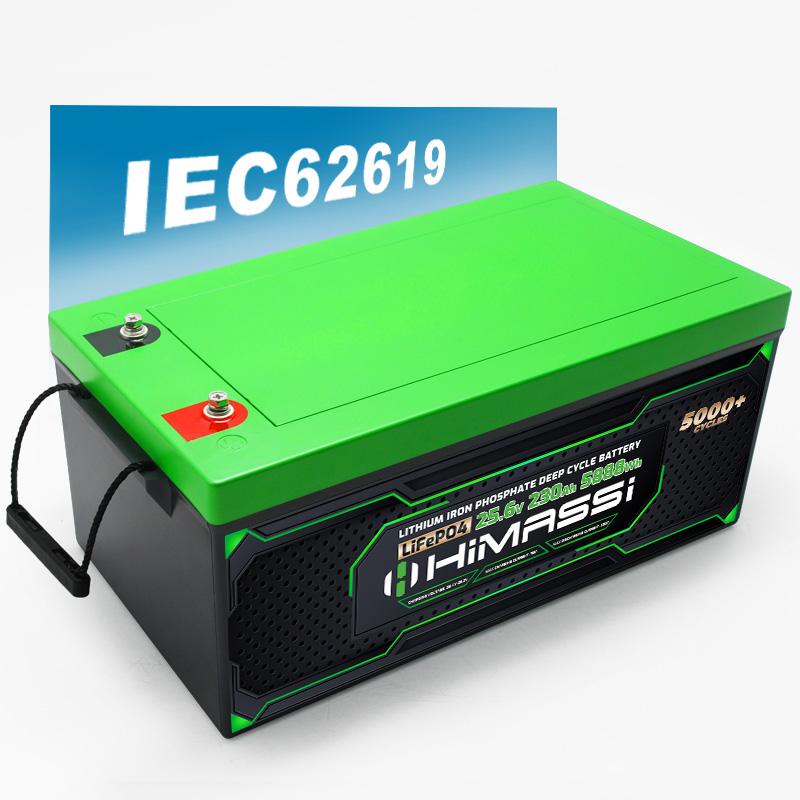
All HIMAX 12.8V house batteries are fully IEC62619 certified, giving OEMs and end-users confidence in their reliability and safety.

Technical Specifications of HIMAX LiFePO4 Batteries

Model Voltage Capacity Max Discharge Current Dimensions (mm) Weight
LFP 12.8V 120Ah 12.8V 120Ah 100A 329 × 172 × 214 11.6 kg
LFP 12.8V 200Ah 12.8V 200Ah 200A 522 × 240 × 218 23 kg
LFP 12.8V 400Ah 12.8V 400Ah 200A 520 × 269 × 220 39.5 kg
LFP 25.6V 230Ah 25.6V 230Ah 200A 520 × 269 × 220 40 kg
LFP 51.2V 100Ah 51.2V 100Ah 100A 520 × 269 × 220 39 kg

These models are optimized for solar-charging systems and are suitable for use as RV house batteries, backup power systems, and marine energy storage units.
Himax 12Volt 200Ah compact size

Why RV Owners Choose HIMAX

HIMAX batteries are specifically engineered to meet the growing demand for safe, efficient, and lightweight power solutions in the RV market. With high energy density, over 3000 life cycles, and built-in Battery Management Systems (BMS), these 12.8V house batteries offer an ideal balance of performance and safety.

The combination of factory-direct production, custom design capability, and IEC62619-certified safety makes HIMAX a reliable partner for RV manufacturers, system integrators, and distributors worldwide.

About HIMAX

HIMAX Battery Pack Factory specializes in designing and manufacturing custom Li-ion and NiMH battery packs. Established in 2012, the company serves customers in Europe, North America, and Asia-Pacific, focusing on innovation, safety, and sustainability. All products are tested to meet IEC62619, UN38.3, and CE standards.


golf-cart-battery-maintenance

Lithium Iron Phosphate (LiFePO4) batteries have become increasingly popular in various applications due to their high energy density, long cycle life, and enhanced safety features. As a leading provider of energy storage solutions, Shenzhen Himax Electronics Ltd. emphasizes the importance of understanding critical handling and maintenance practices to maximize the performance, longevity, and safety of these batteries. This article outlines key considerations for users and integrators of LiFePO4 battery technology.

  1. Correct Charging Practices

    One of the most important aspects of maintaining LiFePO4 batteries is using a dedicated charger designed specifically for this chemistry. Unlike other lithium-ion batteries, LiFePO4 cells require a precise charging voltage, typically between 14.4V and 14.6V for a 12V system. Overcharging can lead to reduced lifespan and potential safety risks, while undercharging may result in insufficient capacity. Always adhere to the manufacturer’s charging guidelines and avoid using chargers intended for lead-acid or other battery types.

  2. Temperature Management

    LiFePO4 batteries perform optimally within a specified temperature range, usually between 0°C and 45°C (32°F to 113°F) during charging and -20°C to 60°C (-4°F to 140°F) during discharge. Exposing batteries to extreme temperatures can cause irreversible damage, reduce efficiency, and compromise safety. Avoid charging in below-freezing conditions, as this can lead to lithium plating and internal short circuits. Implement thermal management systems in high-power applications to maintain temperature stability.

  3. Avoid Mechanical Stress and Damage

    While LiFePO4 batteries are robust, physical damage such as punctures, cracks, or deformations can lead to internal short circuits, leakage, or thermal events. Always install the battery in a secure location where it is protected from vibration, impact, and environmental hazards. Use appropriate mounting hardware and enclosures to ensure mechanical stability.

  4. Storage Recommendations

    If the battery is not in use for an extended period, store it in a cool, dry place with a state of charge (SoC) between 30% and 50%. Storing the battery at full charge or deep discharge for prolonged durations can accelerate degradation. Periodically check the voltage during storage and recharge if necessary to maintain the recommended SoC.

  5. System Integration and Compatibility

    Ensure that all connected devices, such as inverters, battery management systems (BMS), and monitoring tools, are compatible with LiFePO4 batteries. A high-quality BMS is essential for protecting the battery from overcharge, over-discharge, overcurrent, and short circuits. Regularly update firmware and calibrate systems to maintain accuracy in state-of-charge readings.

  6. Transportation and Regulatory Compliance

    When transporting LiFePO4 batteries, comply with international regulations such as UN38.3 certification and relevant transportation guidelines. Proper packaging and documentation are required to ensure safety and legal compliance.

  7. End-of-Life Handling

    LiFePO4 batteries are more environmentally friendly than many alternatives, but they still require proper recycling at the end of their life. Do not dispose of them in regular trash. Work with certified recycling facilities to handle spent batteries responsibly.
    10C_discharge_battery

By following these guidelines, users can significantly enhance the performance, safety, and service life of their LiFePO4 batteries. Shenzhen Himax Electronics Ltd. is committed to providing high-quality energy storage products and supporting customers with reliable technical expertise. For specific inquiries related to our products, please refer to the official product documentation or contact our support team.


When it comes to modern energy storage solutions, Lithium Iron Phosphate (LiFePO₄) batteries are gaining significant attention across various industries. Known for their safety, longevity, and environmental benefits, these batteries are becoming the go-to choice for applications ranging from electric vehicles (EVs) to renewable energy systems. But what makes these batteries so reliable and efficient? It all comes down to their unique structural characteristics. In this article, we’ll explore the essential features of LiFePO₄ batteries and how HIMAX Electronics is leading the way in providing high-performance lithium-ion batteries.

What is a Lithium Iron Phosphate Battery?

A Lithium Iron Phosphate (LiFePO₄) battery is a type of lithium-ion battery that uses iron phosphate (LiFePO₄) as the cathode material. This chemistry offers a number of advantages over traditional lithium-ion batteries that use cobalt, nickel, or manganese, making LiFePO₄ batteries an attractive option for both manufacturers and end-users.

Key Structural Features of LiFePO₄ Batteries


1.Cathode Material: Lithium Iron Phosphate (LiFePO₄)


The heart of any LiFePO₄ battery is its cathode material—lithium iron phosphate. This material is known for its remarkable thermal stability and resistance to decomposition, making it much safer than many other lithium-ion chemistries. The crystal structure of LiFePO₄ ensures that it remains stable at high temperatures and does not easily catch fire or explode, even under extreme conditions.


2.Anode Material: Graphite


The anode in a LiFePO₄ battery is typically made of graphite. This material provides a stable platform for lithium-ion storage and ensures high conductivity during charge and discharge cycles. The combination of graphite with the iron phosphate cathode offers an optimal balance between energy storage and power delivery.


3.Electrolyte: Lithium Salt Solution


The electrolyte in LiFePO₄ batteries is a lithium salt solution dissolved in an organic solvent. This solution is crucial for facilitating the movement of lithium ions between the anode and cathode during charging and discharging. The efficiency of the electrolyte impacts the battery’s overall energy performance and lifespan.


4.Structure of the Battery Cells


LiFePO₄ batteries are typically arranged in cylindrical or prismatic cells, depending on the application. These cells are built to maximize energy density while maintaining safety and stability. The cells are then assembled into modules, which can be further configured into battery packs for use in various applications.


5.Battery Management System (BMS)


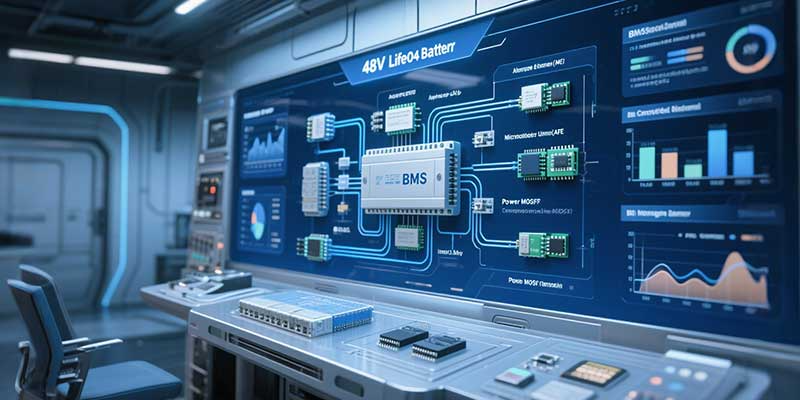
A key component of any lithium-ion battery is the Battery Management System (BMS). The BMS is responsible for ensuring the safe operation of the battery by monitoring key parameters such as voltage, temperature, and charge/discharge cycles. It also helps to optimize the battery’s performance, longevity, and safety, preventing overcharging, deep discharging, and overheating.

bms architecture


Advantages of the Structural Design of LiFePO₄ Batteries

The structural characteristics of LiFePO₄ batteries provide several advantages that set them apart from other types of lithium-ion batteries:


  • Enhanced Safety

    The use of lithium iron phosphate as the cathode material offers excellent thermal stability. Unlike cobalt-based batteries, LiFePO₄ batteries are much less prone to thermal runaway or combustion, making them one of the safest battery technologies on the market.

  • Longer Cycle Life

    Due to the stable crystal structure of LiFePO₄, these batteries can withstand more charge and discharge cycles compared to other lithium-ion chemistries. This translates to a longer lifespan, making LiFePO₄ batteries ideal for applications where longevity is crucial, such as in electric vehicles, renewable energy systems, and backup power supplies.

  • High Power Density

    While LiFePO₄ batteries may have a slightly lower energy density compared to other lithium-ion chemistries (such as NCM), their power density is excellent, meaning they can deliver rapid bursts of power when needed. This makes them particularly suitable for applications that require quick energy bursts, like robotics and power tools.

  • Environmental Friendliness

    The materials used in LiFePO₄ batteries, such as iron and phosphate, are more abundant and less toxic than other materials commonly found in lithium-ion batteries. This makes them a more sustainable option, with a smaller environmental footprint.

HIMAX Electronics: Leading the Way in Lithium-Ion Battery Technology

At HIMAX Electronics, we are at the forefront of developing and providing high-quality lithium-ion batteries, including the highly efficient LiFePO₄ batteries. With years of experience in the energy storage industry, we design and manufacture batteries that meet the demanding needs of industries like electric vehicles, robotics, renewable energy storage, and more.

Our LiFePO₄ batteries are built using the latest advancements in battery technology and undergo strict quality control processes to ensure superior performance, safety, and longevity. HIMAX Electronics also offers custom solutions tailored to meet the specific requirements of your projects, helping you achieve the most efficient and reliable energy storage systems.

Applications of LiFePO₄ Batteries

  • Due to their structural advantages, LiFePO₄ batteries are widely used in various applications:
  • Electric Vehicles (EVs): Offering safety, durability, and high power for electric cars and bikes.
  • Energy Storage Systems (ESS): Ideal for storing solar or wind energy for later use.
  • Robotics: Powering automated systems with reliable, long-lasting energy.
  • Backup Power Solutions: Providing uninterrupted power during outages for critical systems.
  • Uninterruptible Power Supplies (UPS): Ensuring that essential equipment continues to operate without interruption.

robot battery thermal management

Conclusion

The unique structural characteristics of Lithium Iron Phosphate (LiFePO₄) batteries—from their safe cathode material to their long-lasting power—make them an ideal choice for a wide range of energy storage applications. At HIMAX Electronics, we are proud to provide these cutting-edge batteries, helping our customers build reliable, sustainable, and efficient energy systems. Whether you’re in the automotive, robotics, or renewable energy sectors, LiFePO₄ batteries offer the performance you need for the future.

Contact HIMAX Electronics today to learn more about our advanced lithium-ion battery solutions and how they can power your next big project.


LiFePO4_vs._lead-acid_batteries

At HIMAX Electronics, we are committed to providing high-performance energy storage solutions. One of the standout products we offer is Lithium Iron Phosphate batteries. These batteries have gained significant attention in recent years due to their impressive safety features, long lifespan, and sustainability. Let’s take a closer look at the materials, advantages, and applications of these powerful batteries.

What is a Lithium Iron Phosphate Battery?

A Lithium Iron Phosphate (LiFePO₄) battery is a type of lithium-ion battery that uses iron phosphate as the cathode material. While other lithium-ion batteries might rely on cobalt or nickel, LiFePO₄ batteries use more abundant, less toxic materials, making them a great choice for those seeking an eco-friendly energy storage solution.

The basic components of a LiFePO₄ battery include:

Cathode: Lithium Iron Phosphate (LiFePO₄)

Anode: Typically graphite

Electrolyte: A lithium salt dissolved in an organic solvent

The use of iron phosphate not only enhances the battery’s performance but also gives it a much safer profile compared to other battery chemistries.


Why Choose Lithium Iron Phosphate Batteries?

1.Unmatched Safety
One of the biggest selling points of LiFePO₄ batteries is their safety. These batteries are much more stable than many other lithium-ion variants, with a lower risk of overheating, fire, or explosion. This makes them ideal for high-stakes applications, such as electric vehicles and critical backup power systems.

2.Longer Lifespan
When it comes to longevity, LiFePO₄ batteries stand out. With up to 3,000 charge cycles, they outlast many of the alternatives on the market, making them a wise long-term investment. Whether you’re using them in an electric vehicle or for energy storage, you can rely on these batteries to keep performing for years to come.

3.Environmental Benefits
LiFePO₄ batteries are a great choice for those who want to reduce their environmental footprint. Unlike other battery chemistries that use rare and ethically problematic materials like cobalt, LiFePO₄ uses abundant and non-toxic materials, which helps to minimize the ecological impact.

4.Impressive Power Efficiency
While LiFePO₄ batteries are not as energy-dense as other types, such as nickel-cobalt-manganese (NCM) batteries, they offer excellent power capabilities. This makes them well-suited for applications where rapid charging and consistent power output are essential.

HIMAX Electronics: Your Trusted Partner in Lithium-Ion Battery Solutions

At HIMAX Electronics, we pride ourselves on offering high-quality lithium-ion batteries, including the advanced LiFePO₄ batteries. Whether you’re in the robotics industry, involved in renewable energy, or in need of reliable power solutions for other applications, HIMAX has you covered.

Our LiFePO₄ batteries are manufactured with the latest technology and undergo rigorous testing to ensure that they meet the highest standards of safety, performance, and efficiency. By choosing HIMAX, you’re not just purchasing a product—you’re investing in a solution that offers peace of mind, backed by years of expertise in the energy storage industry.

LiFeo4 12V 150AL Battery

Where Can LiFePO₄ Batteries Be Used?

These batteries are incredibly versatile, making them suitable for a wide range of applications:

Electric Vehicles (EVs): Providing reliable and safe energy storage for electric cars, trucks, and bikes.

Robotics: Powering automated systems with high energy efficiency and long service life.

Renewable Energy: Storing solar or wind energy for later use, especially in off-grid systems.

Uninterruptible Power Supplies (UPS): Ensuring reliable backup power for critical infrastructure.

Energy Storage Systems (ESS): Helping to store and manage energy for both residential and industrial applications.

Final Thoughts

As the world continues to move towards cleaner energy solutions, Lithium Iron Phosphate (LiFePO₄) batteries offer a promising option for those looking for a safe, long-lasting, and environmentally friendly energy storage solution. At HIMAX Electronics, we are proud to be at the forefront of this technology, providing high-performance LiFePO₄ batteries that meet the needs of industries worldwide.

If you’re interested in learning more about our LiFePO₄ batteries or other lithium-ion solutions, don’t hesitate to reach out to us. We’re here to help power your next big project.


lifepo4 24V 40ah Battery Price

In today’s world of rapid urbanization and sustainable development, reliable and efficient energy solutions are more critical than ever. From public transport to smart cities, every innovation depends on dependable power systems that combine performance, longevity, and eco-friendliness. One emerging application is the use of lithium iron phosphate (LiFePO4) batteries in solar-powered station display systems. Among the companies leading this shift is Himax Electronics, which has introduced customized 24V 20Ah LiFePO4 battery packs designed specifically for solar station displays. These battery packs are reshaping the way public transportation communicates with commuters, proving to be a game-changer in the industry.

The Growing Need for Reliable Solar Energy Storage

Solar power has become one of the most viable renewable energy sources. However, its effectiveness depends heavily on storage solutions. For transit station displays—such as electronic signage showing bus arrivals, train schedules, and public service announcements—the need for uninterrupted energy is non-negotiable. Commuters rely on these systems for timely information, and municipalities depend on them to improve operational efficiency and user satisfaction.

Traditional lead-acid batteries have been widely used in such applications but are increasingly showing their limitations. Issues like short cycle life, poor depth-of-discharge capabilities, heavy weight, and environmental concerns have made them less suitable for modern public infrastructure. This is where LiFePO4 batteries stand out, offering a balance of performance, durability, and safety that addresses the shortcomings of older technologies.

Why 24V 20Ah LiFePO4 Is the Ideal Choice

The 24V 20Ah configuration has emerged as the sweet spot for powering solar station displays. Here’s why:

  1. Voltage Compatibility
    Most solar-powered station display systems operate within the 12V to 48V range. A 24V battery pack provides an efficient balance, reducing current requirements and minimizing energy losses during transmission.
  2. Capacity for Reliability
    With 20Ah capacity, the battery ensures the station display remains operational even during periods of low sunlight or cloudy weather. This translates to reliable service and uninterrupted commuter communication.
  3. Cycle Life Advantage
    LiFePO4 chemistry offers more than 2,000–3,000 cycles at 80% depth of discharge, compared to around 500 cycles for lead-acid batteries. This means fewer replacements, reduced maintenance costs, and better return on investment for operators.
  4. Safety as a Priority
    Unlike other lithium-ion chemistries, LiFePO4 is inherently stable. It is resistant to overheating, thermal runaway, and combustion. For public-facing applications like station displays, this level of safety is crucial.
  5. Lightweight and Compact Design
    LiFePO4 batteries are significantly lighter than lead-acid alternatives, making installation and maintenance easier while saving valuable space in station design.
  6. Eco-Friendly Characteristics
    With no heavy metals or toxic elements, LiFePO4 is far more environmentally friendly, aligning with global goals of reducing the carbon footprint and encouraging sustainable infrastructure development.

How Solar Station Displays Benefit

The combination of solar panels with 24V 20Ah LiFePO4 batteries creates a self-sufficient system that benefits both commuters and operators:

  1. Uninterrupted Display Performance
    Even on cloudy days or during long nights, the displays remain active thanks to the efficient storage of solar energy.
  2. Cost Savings
    The long lifespan of LiFePO4 batteries reduces replacement costs, while solar energy cuts electricity bills.
  3. Scalability
    These systems can be scaled for bus stops, train stations, or even rural information points where grid electricity is unreliable.
  4. Public Confidence
    When displays function consistently, commuters place more trust in public transportation systems, which encourages greater usage and contributes to reduced traffic congestion and emissions.

Real-World Applications

Cities worldwide are beginning to adopt solar-powered displays for their transport systems. From European bus shelters to Asian train platforms, the need for reliable off-grid power solutions is accelerating adoption of LiFePO4 batteries. For instance, a city installing 500 solar station displays could potentially save thousands of dollars annually on electricity and maintenance costs by switching from lead-acid to LiFePO4 solutions.

In developing regions, where access to stable electricity grids can be challenging, these systems are proving to be transformative. Communities can install solar-powered displays with 24V 20Ah LiFePO4 batteries to provide real-time information, weather updates, or emergency alerts.

The Role of Himax Electronics

Himax Electronics has been at the forefront of designing customized battery packs for global markets. Their 24V 20Ah LiFePO4 battery solutions are engineered to meet the unique demands of solar-powered station displays. With advanced pack assembly lines and strict quality control, Himax ensures each product delivers consistent performance under varying environmental conditions.

The company also provides flexibility in design, tailoring battery packs to fit specific voltage, capacity, and casing requirements. This adaptability makes Himax a trusted partner for municipal projects, transport authorities, and OEMs developing solar-powered display systems.

Looking Ahead: The Future of Solar Station Displays

As smart cities continue to evolve, the demand for reliable, eco-friendly power sources will only increase. LiFePO4 batteries, particularly in the 24V 20Ah range, are expected to remain at the forefront of this transition. They provide the perfect blend of performance, cost efficiency, and sustainability, ensuring that public transport systems can continue to serve growing populations without interruption.

Moreover, integration with IoT (Internet of Things) and AI-driven energy management will further enhance the efficiency of these systems. Smart battery monitoring can predict maintenance needs, optimize charging cycles, and extend overall lifespan, creating a future-proof solution for cities.

Conclusion

The adoption of 24V 20Ah LiFePO4 batteries for solar-powered station displays represents more than just a technological upgrade—it is a step toward smarter, greener cities. By combining renewable energy with reliable storage, transit systems can enhance commuter experiences, cut operational costs, and contribute to global sustainability goals.

With companies like Himax Electronics leading the charge in customized battery solutions, the future of solar-powered infrastructure looks bright. As cities expand and modernize, the question is no longer whether LiFePO4 batteries will be used, but how widely and quickly they will transform the way we power public information systems.