LiFePO4 Battery for Solar Tracker Commissioning Tools: What the Field Demands
By Joan • Battery Engineer, Custom Pack Development • Himax Electronics • July 2026
Topics: LiFePO4 Battery Pack / Solar Energy / Commissioning Tool / OEM Custom Battery / Outdoor Power
Executive Summary
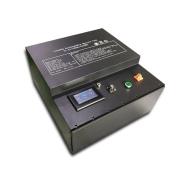
Designing a LiFePO4 solar tracker battery for portable commissioning tools requires a different mindset than typical daily‑cycle applications. This post explains why a 25.6V 18Ah LiFePO4 battery pack with integrated BMS, center‑off reversing switch, and Bluetooth monitoring is the right solution for field technicians commissioning utility‑scale PV plants. We also cover what OEM engineers need to know before specifying a custom pack.
Key takeaway: When the application demands intermittent high‑current discharge in harsh outdoor conditions, chemistry choice, thermal stability, and physical integration outweigh cycle life or energy density alone.
Introduction: Why Commissioning Tools Need a Specialised Battery
Most battery applications I work on involve continuous operation – something that runs all day, charges at night, and repeats. Portable solar tracker commissioning tools, however, are quite different. Technicians use them in short, intense bursts during the installation phase of a PV plant. After that, they put the tools aside.
That distinction matters more than it might seem. A LiFePO4 battery for solar tracker commissioning does not need to manage daily cycles or long‑term calendar life as primary constraints. Instead, its real job focuses on four critical requirements:
-
Deliver reliable, high‑current output across a single demanding work session
-
Survive the physical reality of a construction site (drops, vibration, temperature swings)
-
Fit inside a briefcase‑format enclosure
-
Stay light enough that a field technician will actually carry it without complaint
If we get any of these wrong, the tool either fails when needed or stays in the truck.
I recently worked through exactly this set of requirements for a solar tracker manufacturer. The result was a 25.6V 18Ah LiFePO4 solar tracker battery with integrated BMS, centre‑off reversing switch, Bluetooth BMS, and full CE certification. This post walks through the design rationale. We explain why we chose each element and what it means for engineers and procurement teams making similar decisions.
The Application: What a Solar Tracker Commissioning Tool Actually Does
During the construction phase of a utility‑scale or commercial PV plant, workers install tracker structures before placing the solar modules. Field technicians must manually drive each tracker’s motor – rotating the structure forward and backward – to align it correctly and verify mechanical operation before the modules go on.
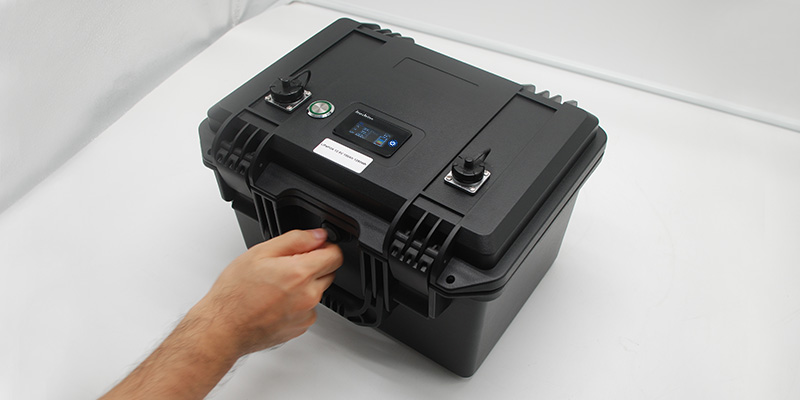
The tool itself is a portable control box, typically in a briefcase or Pelican‑case format. It requires a battery that can power a 24VDC motor with a continuous current draw of at least 16A and short‑duration peaks up to 20A. The technician walks row by row across a large, exposed field, so the tool must endure that environment.
| Design Driver | Implication |
|---|---|
| Weight | Directly limits how willing technicians are to carry the tool |
| Physical abuse | Enclosure takes drops, vibration, and temperature swings as routine |
| No mid‑shift charging | Battery must last a full commissioning session without a top‑up |
Consequently, every design decision starts from these three facts.
Why 25.6V LiFePO4 Is the Right Chemistry and Voltage
Voltage Match
Solar tracker motors typically have a 24VDC nominal rating. LiFePO4 cells have a nominal voltage of 3.2V. Therefore, an 8‑cell series (8S) configuration gives a nominal pack voltage of 25.6V. This value lies close enough to 24V that tracker motor controllers accept it without a voltage conversion stage. Moreover, it stays well within the input tolerance of most 24VDC motor drivers.
The full‑charge voltage reaches 29.2V, and the low‑voltage cutoff sits around 20V. These values define the operating window, but the nominal 25.6V matches the motor rating cleanly.
An alternative 24V nominal lithium chemistry (e.g., NMC in 7S) would work electrically. Nevertheless, LiFePO4 offers specific advantages that make it the superior LiFePO4 solar tracker battery choice.
Why LiFePO4 Over Other Lithium Chemistries
LiFePO4’s advantages in this application cluster around three properties:
Thermal Stability on a Hot Construction Site
LiFePO4 is the most thermally stable of the mainstream lithium chemistries. The battery may sit in direct sun inside a dark enclosure where surface temperatures exceed 50°C. Unlike NMC or NCA, LiFePO4 does not present the same thermal runaway risk. This makes it far safer for uncontrolled‑temperature outdoor environments.
Flat Discharge Curve
LiFePO4 maintains a relatively stable voltage between roughly 80% and 20% state of charge. For a motor drive, this translates to consistent torque and speed through most of the discharge. As a result, the tracker moves predictably whether the battery is at 90% or 30% charge – which improves control precision.
Abuse Tolerance for Field Use
Commissioning tools get set down hard, stored in trucks, and occasionally connected backwards. LiFePO4 tolerates physical and electrical abuse better than higher‑energy‑density alternatives. Consequently, we can rely on it in a construction environment without frequent replacements.
Pack Configuration: 8S3P, 18Ah, 460.8Wh
The 8S3P Build
The 8S3P configuration – 8 cells in series, 3 in parallel – produces the 25.6V nominal voltage and 18Ah capacity. Three parallel cells share the current load. Thus, the pack can deliver the required 16A continuous discharge with each parallel group handling only ~5.3A. That is a moderate C‑rate, which keeps cell temperatures in check during sustained operation.
The 20A peak capability handles motor inrush current during start events. Typically, inrush runs 3–5× the running current for a fraction of a second. Our pack easily covers that spike.
Energy: 460.8Wh
Total energy is 460.8Wh. At a continuous draw of 16A at 25.6V (~410W), the pack provides just over one hour of continuous motor operation. In practice, however, the motor runs intermittently – drive forward, stop, inspect, drive back – so effective runtime in the field is considerably longer. For example, a well‑planned commissioning day for a mid‑sized PV array involves several hundred rotations. With 460.8Wh, we provide comfortable headroom for that workload.
Weight: ~4.5 kg
The pack weighs approximately 4.5 kg – on the heavier side for a field‑carried tool, but unavoidable given the energy content. This weight is roughly equivalent to three litres of water, integrated alongside control electronics in the briefcase. The tradeoff is straightforward: you need 460Wh to do the job, and 460Wh of LiFePO4 at this form factor weighs what it weighs. The more important question is whether the enclosure distributes that weight ergonomically. The briefcase format does exactly that.
Key Specification Summary
| Parameter | Specification |
|---|---|
| Battery Type | LiFePO4 |
| Nominal Voltage | 25.6V |
| Capacity | 18Ah |
| Energy | 460.8Wh |
| Cell Configuration | 8S3P |
| BMS | Integrated (overcharge, over‑discharge, overcurrent, short‑circuit protection) |
| Max Continuous Discharge | 16A |
| Peak Discharge Current | 20A |
| Max Charge Current | 9A |
| Charger | 29V 4A (dedicated, with matching connector) |
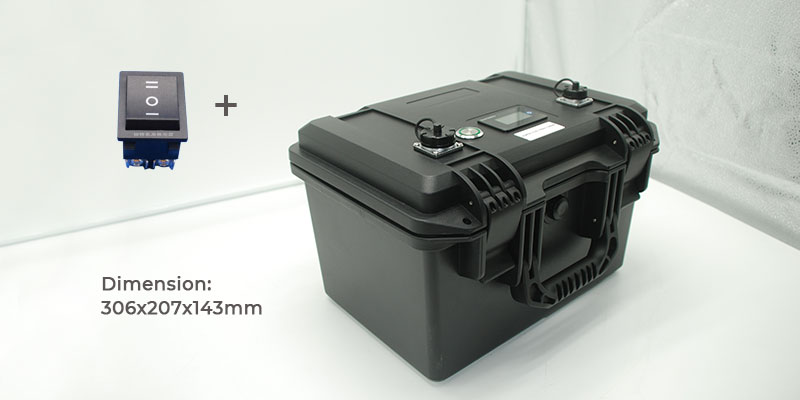
| Dimensions | 306 × 207 × 143mm |
| Weight | ~4.5 kg |
| Reversing Switch | Centre‑off I‑0‑II, 25A DC rated |
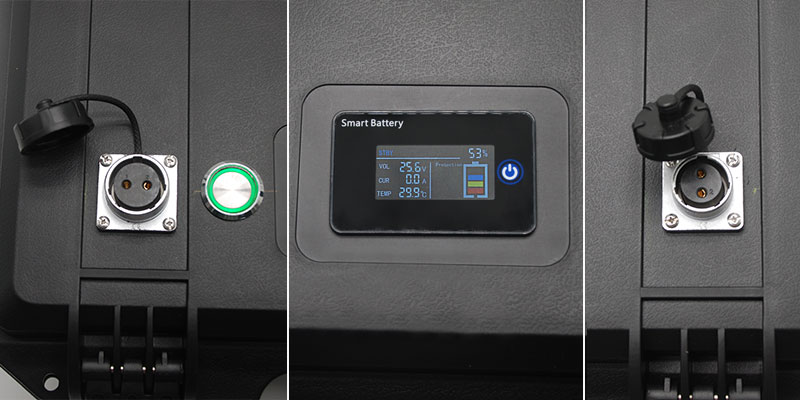
| Monitoring | Bluetooth BMS (SOC + key parameters) |
| Charging Connector | Customisable |
| Certification | CE certified with Declaration of Conformity |
| Warranty | 1 year from shipment date |
The Centre‑Off Reversing Switch: Why It’s Part of the Battery Assembly
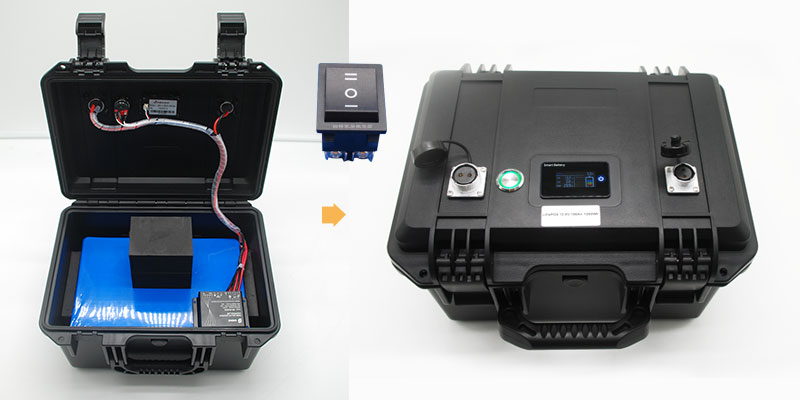
One design requirement for the commissioning tool is a centre‑off reversing switch in I‑0‑II configuration, integrated into the battery assembly itself. This is worth explaining because it’s unusual in battery pack designs.
A solar tracker motor must rotate both ways – forward to east, reverse to west. The simplest control is a physical reversing switch that swaps polarity. The centre position (I‑0‑II) is the “off” state that disconnects the motor entirely.
Integration Benefits
We integrate this switch into the battery assembly rather than treating it as a separate component in the control box. This approach:
-
Reduces the number of connection points (each connection is a potential failure point)
-
Keeps the current path short and appropriately rated
-
Simplifies the control box design for the tool manufacturer
Rating: 25A DC
The switch is rated for 25A DC continuous – margin above the 20A peak specification. DC switching is harder on contacts than AC, and a switch rated exactly at 20A would operate at its thermal limit every motor start. The 25A rating gives meaningful headroom that extends contact life.
CE Coverage Includes the Switch
The CE certification covers the complete unit: battery pack, BMS, enclosure, and reversing switch. This matters because CE marking applies to the finished product as used – not just individual components. A Declaration of Conformity that covers only the cells leaves the tool manufacturer responsible for certifying the switch integration themselves. By covering the complete assembly, we shift that burden to the battery supplier and simplify the tool manufacturer’s own CE documentation.
Bluetooth BMS: Real‑Time Battery Monitoring in the Field
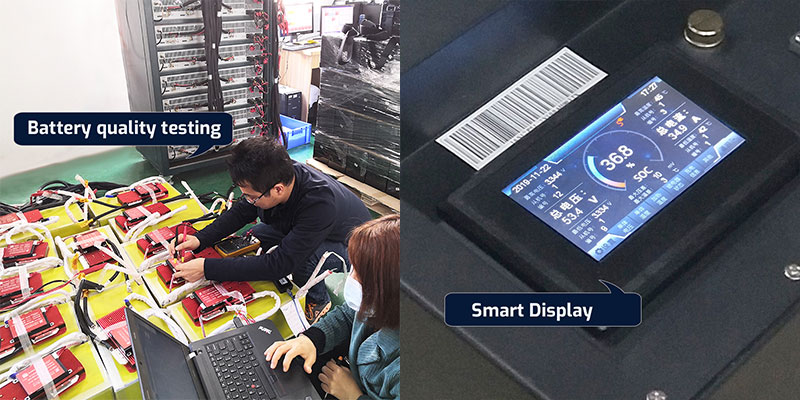
We added the Bluetooth monitoring function to give field technicians visibility into battery status without needing to connect a cable or check a display on the enclosure.
What It Shows
The Bluetooth BMS broadcasts real‑time data to a smartphone/tablet app. Here is what the technician sees:
| Data Point | Why It Matters |
|---|---|
| State of charge (SOC) | Technician knows exactly how much runtime remains – no guessing |
| Pack voltage | Confirms the battery is within the expected operating window |
| Discharge current | Verifies the motor is drawing expected current |
| Cell‑level voltages | Useful for diagnosing imbalance (depending on BMS) |
| Temperature | Early warning if the pack is running hot in direct sun |
Why This Matters for a Commissioning Environment
In a construction environment, workers often don’t notice a low battery until the motor slows down or stops mid‑rotation. That leaves the tracker in an indeterminate position and creates extra work. A Bluetooth SOC reading on a phone screen eliminates that surprise. Technicians can check remaining charge before starting a new tracker row and plan recharging accordingly.
Furthermore, the connectivity has long‑term value for the tool manufacturer. Field data helps us understand actual usage patterns, peak load events, and thermal conditions. That information improves the next design iteration.
The Charger: 29V 4A, EU Plug
The dedicated charger is a 29V 4A unit – the correct charge voltage for an 8S LiFePO4 pack (3.65V × 8 = 29.2V, rounded to 29V). At 4A, a full charge from near‑empty takes ~4.5 hours, fitting comfortably into an overnight cycle.
We supply the charger with an EU plug at 50Hz. Cable length is 2×1m (AC input and DC output), and the DC connector matches the battery’s charging port directly – no adapter required.
Practical note for construction sites: Commissioning often happens at locations without reliable 230V outlets nearby. Therefore, teams should plan for portable generator access or a site power point close to the staging area. The charger does not support charging from a vehicle DC source or the tracker’s own DC bus – it requires 230V AC input.
Certification: What CE Covers and Why It’s Non‑Negotiable
For a battery‑powered tool sold into European markets, CE marking is a legal requirement, not optional. The certification for this assembly covers:
-
The battery pack: cell chemistry, BMS protection, electrical performance within limits
-
The enclosure: mechanical protection, IP rating (if specified), material safety
-
The reversing switch: contact rating, electrical safety at specified voltage and current
-
The complete assembly: as a finished product placed on the EU market
We supply the Declaration of Conformity (DoC) and supporting technical documentation with each order. For OEM customers integrating this pack into a branded commissioning tool, the DoC simplifies their own CE process. The battery assembly is typically the most documentation‑intensive component, and ours already carries its own declaration.
Physical Considerations: Fitting a 460Wh Pack Into a Briefcase Format
Dimensions and Enclosure
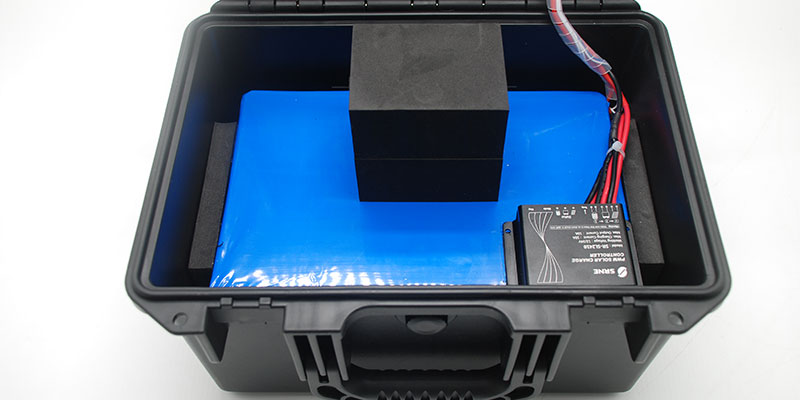
The module dimensions are 306 × 207 × 143mm – about the footprint of an A4 sheet and 14cm tall. In a briefcase‑format tool, this module typically occupies the lower half. We mount the control electronics (motor driver, switch panel, connectors) in the upper half or on a panel in the lid.
The briefcase format itself is an engineering choice for several reasons:
-
It distributes weight across both hands when carried by the handle.
-
It has a flat bottom for stable placement on uneven ground.
-
It provides protection for both battery and electronics that a bag or pouch wouldn’t.
Connector and Cable Customisation
We allow the OEM customer to specify the charging connector, output connector, and cable lengths. For a commissioning tool, the output cable to the motor needs to reach from a staging position to the motor junction box – typically 2–3 metres. That cable gauge must support 16A continuous without significant voltage drop. Therefore, we recommend at least AWG 14 (2.5mm²) for runs of 2–3 metres at 16A DC.
Scalable OEM Supply: From Sample to Production
For commissioning tool manufacturers evaluating this pack, the typical path starts with a sample order for field testing, followed by a first production order once validated.
| Stage | Lead Time |
|---|---|
| Sample | 20–25 days after payment confirmation |
| Bulk production | 25–30 days |
Payment terms: TT in advance, delivery EXW Shenzhen.
Annual volume in the 50–200 unit range is a good fit for this configuration. At these volumes, we can accommodate customisation – enclosure colour, labelling, connector specs, cable length – without a significant MOQ premium. Larger volumes unlock additional unit price reductions.
If you have requirements different from the standard – different capacity, modified switch rating, different certification scope, or a specific IP rating – we encourage early conversation. Changes to BMS, switch, or certification affect lead time and cost, and we can scope those accurately before the first sample order.
Ready to Discuss Your LiFePO4 Solar Tracker Battery Needs?
The 25.6V 18Ah LiFePO4 solar tracker battery with integrated reversing switch and Bluetooth BMS described here is available for sample evaluation. If you’re designing a portable commissioning tool for solar trackers or a related application in PV installation, the fastest next step is a conversation about your specific load profile and physical requirements.
You can reach our custom pack development team through the Himax Electronics contact page. For an overview of our LiFePO4 and lithium‑ion battery range, the Himax energy storage and battery solutions page covers standard and custom configurations.
For portable medical and field instrument applications requiring similar design discipline – compact, reliable, certified – our work in the portable oxygen concentrator battery space provides useful context for what we’ve built for demanding portable use.
| About the Author
Joan is a Battery Engineer in Custom Pack Development at Himax Electronics. Specializing in custom battery pack development, he works closely with OEM clients to optimize voltage, capacity, and form factor for scalable mass production. His work supports strict quality control and long-term reliability across portable industrial and field applications. |