Tag Archive for: LifePO4 Battery

Himax Electronics order specification sheet for 25.6V 10Ah LiFePO4 battery pack with RS485 communication, designed as lead-acid replacement for electric walker and rollator applications — North America market

By Shawn  |  Battery Engineer – Power System Design, Himax Electronics

Case Study  ·  LiFePO4 Power Systems  ·  Medical Mobility

LiFePO4 battery for electric walker is not just an upgrade — it’s a necessity. Let me be direct with you: lead-acid batteries do not belong in modern electric walkers. They never really did. Therefore, this case study walks through a 25.6V 10Ah LiFePO4 battery pack we recently engineered for an electric walker OEM — and explains, from a power systems engineer’s perspective, exactly why this chemistry and configuration was the only logical answer.


Why a LiFePO4 Battery for Electric Walker Beats Lead-Acid Every Time

An electric walker — or power rollator — carries a person who often depends on it for basic daily mobility. That’s a fundamentally different use case from a power tool or an e-bike. The battery doesn’t just deliver performance; it determines safety, portability, and trust. A device this important deserves a power source engineered with the same care as the frame it’s bolted to.

When this OEM came to us, they were running a lead-acid battery. Their engineers knew it was a weak link. The pack was too heavy, runtime was inconsistent, and the battery offered no way to tell the device — or the user — how much charge remained. They needed something smarter. We built them exactly that. In short, that’s exactly why a high-quality LiFePO4 battery for electric walker makes such a measurable difference.


Full Specification Breakdown

Here’s what we built, and why each parameter was chosen:


Parameter Value
Chemistry LiFePO4 (Lithium Iron Phosphate)
Configuration 8S2P (8 series × 2 parallel)
Cell Model 26700 / 5000mAh per cell
Nominal Voltage 25.6V
Fully Charged Voltage 29.2V
Capacity 10Ah
Max Discharge Current 10A (device operating power)
Max Charge Current 5A (solar / adapter compatible)
Communication RS485 with RJ45 waterproof connector
Charge Connector AMASS XT60-F (with dust cap)
Wire Spec 12AWG, UL1015
Charge wire length 150mm (±20mm)
Discharge wire length 75mm (±20mm)
Max Dimensions L181 × W76 × H165mm (±2mm)
Housing Black ABS — lead-acid form factor replacement
Waterproofing Yes
Certifications Reach, RoHS, MSDS, Air Transport Assessment
Target Market North America


The 8S2P topology is the key insight here. For example, eight cells in series gives us 25.6V — exactly the voltage profile the walker’s motor controller expects, matching or exceeding the legacy lead-acid pack voltage with far superior stability. Two cells in parallel doubles the capacity to 10Ah without increasing the footprint beyond the original housing envelope.

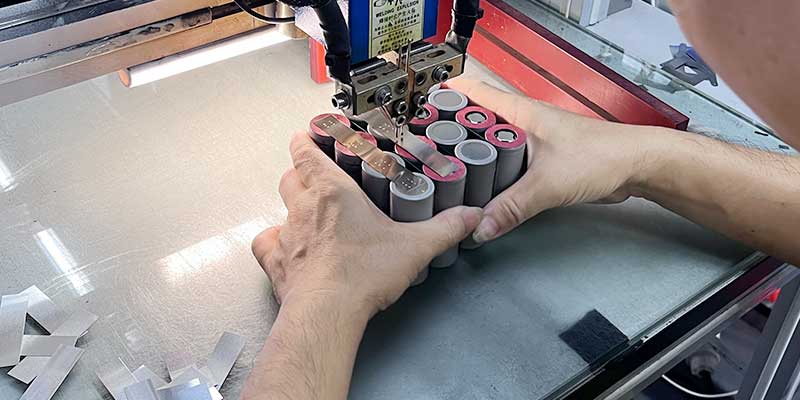
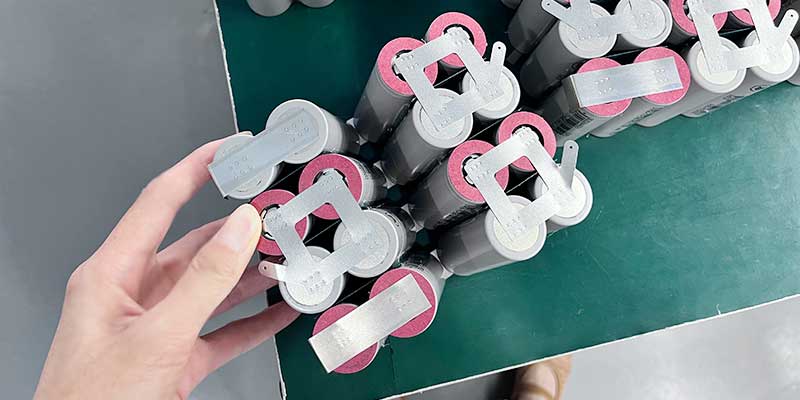
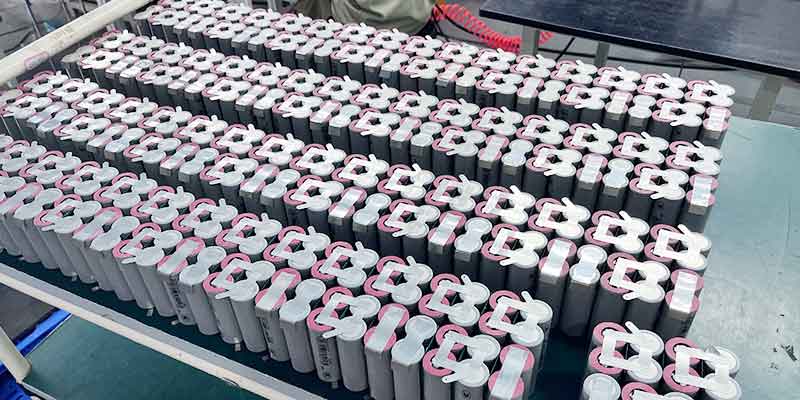
26700 LiFePO4 cells in 8S2P configuration with nickel strip welding and pink insulation rings during OEM battery pack assembly at Himax Electronics factory, for electric walker power systems

The Case Against Lead-Acid in Medical Mobility Devices

I’ve reviewed a lot of battery specs over my career. And when I see a lead-acid pack in a product that a person has to carry, lift, or push daily, I know immediately where the engineering debt is hiding.


Criteria LiFePO4 25.6V Sealed Lead-Acid NiMH
Weight Light (~1.5 kg) Heavy (4–6 kg) Moderate
Cycle Life 2000+ cycles 300–500 cycles 500–800 cycles
Voltage Sag Flat / stable Significant sag Moderate sag
RS485 Support Yes (smart comms) No No
Safe indoors Yes — no acid/gas Risk of acid/gas Yes
Lifespan 8–10 years 2–3 years 3–5 years


Obviously, the weight difference alone justifies switching to a LiFePO4 battery for electric walker. A sealed lead-acid battery at 25V and 10Ah weighs roughly 4–6 kg. Our LiFePO4 pack comes in around 1.5 kg. For a user who already has limited mobility, that’s not a minor improvement — it’s a life-quality difference.

Moreover, that’s before we get to cycle life. A lead-acid pack in daily-use conditions typically lasts 300–500 charge cycles. Our 26700 LiFePO4 cells deliver 2,000+ cycles — meaning the battery will likely outlast the walker itself.


RS485 Communication: The Smart Feature Your LiFePO4 Battery for Electric Walker Needs

Most battery engineers focus on voltage, capacity, and current. I do too — but on this project, the RS485 communication interface was what I found genuinely compelling. It’s the kind of feature that separates a commodity battery from a smart power system. Consequently, when you integrate RS485 into a LiFePO4 battery for electric walker, you turn a dumb power source into a smart mobility asset.

What RS485 enables in practice

Real-time state of charge display. The walker’s control panel can show the user exactly how much battery remains — not a guess, not a LED bar that drops suddenly, but accurate, real-time capacity data pulled directly from the BMS over RS485.

In terms of voltage, the system can monitor per-cell group voltage, detect imbalances early, and alert the device firmware before a problem becomes a failure. In a medical mobility context, that’s meaningful.

When it comes to capacity calibration, the RS485 protocol allows the device to adjust displayed capacity based on actual BMS readings rather than estimated state-of-charge curves — more accurate for the end user, fewer support calls for the OEM.

Design note: The customer specified that the RS485 display must show voltage and capacity accurately, adjusted to the smallest readable unit. We tuned the BMS communication parameters to match their display driver’s polling rate, ensuring the readout is smooth and responsive under normal operating loads.

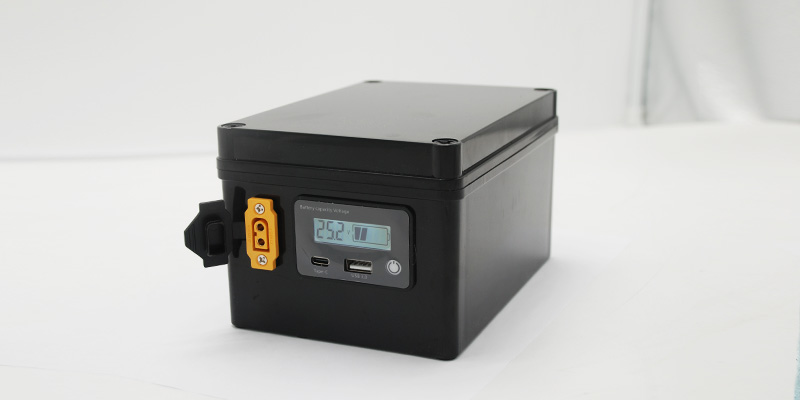
25.6V LiFePO4 electric walker battery pack showing XT60-F charge connector and RJ45 RS485 communication port for real-time voltage and capacity monitoring in mobility aid devices

BMS Configuration: Designed for Real-World Mobility Use

A walker battery lives a different life than an EV pack or a solar storage unit. It charges once a day (or once every few days). It discharges slowly and steadily — no aggressive peaks. It sits in a warm environment. Above all, it needs to be reliable without any user interaction whatsoever.

The BMS on this pack was configured with exactly that operating profile in mind:


Protection / Feature Specification
Overcharge cutoff 25.6V → 29.2V (8S fully charged)
Over-discharge cutoff ≥ 16V (BMS protection threshold)
Max continuous discharge 10A
Max charge current 5A (solar / adapter compatible)
Cell balancing Yes — passive balancing
Communication protocol RS485 (real-time voltage/capacity display)
Short circuit protection Yes
Operating temperature Specified per design


The 5A charge limit is deliberate — it protects the cells from aggressive solar or fast-charge inputs while remaining fully compatible with standard adapter chargers. The 10A discharge ceiling matches the walker’s maximum motor draw with comfortable headroom, so the BMS never trips under normal use.

A well-designed BMS for a medical device is one the user never thinks about. It just works — every time, all the time, for years.”


Cell Selection for a LiFePO4 Battery for Electric Walker: Why 26700 Works

The 26700 form factor (26mm diameter, 70mm length) sits between the compact 18650 and the high-capacity 32700. Specifically for this application, it’s the right balance: enough capacity per cell to build a 10Ah pack in just 2P (parallel) rather than needing 4P or more, which keeps the pack compact enough to fit the lead-acid footprint.

At 5,000mAh per cell, two in parallel gives us 10Ah — precisely matching the OEM’s runtime requirement. The 8S topology then stacks eight of these pairs in series, stepping voltage up from 3.2V per cell to 25.6V nominal — the exact voltage the walker controller expects.

LiFePO4 chemistry in the 26700 format also brings excellent thermal stability. Walkers used indoors and outdoors across North American climate ranges need a cell that handles both winter cold storage and summer ambient temperatures without meaningful capacity loss.


Housing & Mechanical Design: A True Lead-Acid Drop-In

One of the harder constraints on this project was the mechanical envelope. The OEM’s chassis was designed for a standard lead-acid battery. Any replacement had to fit the same bolt pattern, connector orientation, and external dimensions — otherwise the customer faced a costly retool of their housing design.

As a result, we engineered the pack to fit within L181 × W76 × H165mm(±2mm) — staying within the original lead-acid housing dimensions. The black ABS enclosure mimics the form factor exactly. The XT60-F charge port and RJ45 RS485 connector are mounted in the same orientation as the customer’s wiring harness, so installation is genuinely plug-and-play.

Waterproofing was included as standard on this build — appropriate for a device that might be used in light rain or cleaned with damp cloths in a healthcare setting.


Certification: Built for the North American Market

Selling a lithium battery pack in North America — particularly in a medical-adjacent application — means documentation isn’t optional. This pack was built to comply with:

  • Reach — materials compliance, confirming no restricted substances
  • RoHS — restriction of hazardous substances in electronics
  • MSDS — material safety data for transport and handling
  • Air Transport Assessment — enabling air freight where required

The customer also specified a 5A fuse requirement inside the battery — an additional protection layer that we incorporated into the BMS circuit design rather than adding it as an external component, keeping the form factor intact.

Completed 25.6V 10Ah LiFePO4 battery pack in black ABS housing — a direct lead-acid replacement for electric walkers, featuring RS485 smart BMS, Reach and RoHS certification for North American OEM customers

Manufacturing & Quality Process

My role isn’t just design — I’m also involved in the production process. Here’s what this pack’s build flow looked like:


  1.  Cell matching:  Every 26700 cell tested for open-circuit voltage and internal resistance. Cells are paired by matching IR values before entering the 2P parallel groups — unmatched cells cause cross-current and degrade faster.
  2.  Nickel strip welding:  Cells assembled in the 8S2P topology and spot-welded with nickel strips. Weld points inspected under load — high resistance welds are flagged and reworked before proceeding.
  3.  BMS integration & RS485 tuning:  BMS installed and communication parameters programmed to match the customer’s display driver spec. RS485 output verified against their firmware at the agreed polling rate.
  4.  Waterproofing & housing:  Pack sealed into the black ABS housing, connectors torqued and tested for IP rating. Wire routing fixed with cable anchors as specified in the customer’s wiring diagram.
  5.  Aging & capacity test:  Full charge-discharge cycle logged against rated capacity. Internal resistance measured post-cycle. Any pack below 98% of rated capacity is rejected from the shipment batch.
  6.  Labeling & documentation:  Production date printed on cells. Battery serial number label applied per the customer’s label artwork. Reach/RoHS label and QR code applied to battery and inner packaging. MSDS, OQA inspection report, and delivery note included per shipment requirements.


Why This Matters Beyond the Spec Sheet

I work on a lot of battery projects. Industrial, consumer, marine, medical. And I’ll be honest — the ones I find most meaningful are the ones that end up in the hands of people who actually need reliable power to stay mobile and independent.

An electric walker isn’t a luxury product. For many users, it’s a prerequisite for a functional day. Consider what the battery inside it must do: start every morning, last through a full day of use, charge reliably overnight, and repeat that for years — without the user ever thinking about it.

Designing a reliable LiFePO4 battery for electric walker isn’t just about cells — it’s about understanding the user’s daily reality.

That’s the standard we hold ourselves to at Himax. Not just meeting the spec. Engineering to the use case.

Nevertheless, if you’re developing or sourcing batteries for mobility aids… I’d genuinely encourage you to read the comparison table again. The engineering case for a LiFePO4 battery for electric walker is overwhelming. Ultimately, the only remaining question is who builds it right.


Ready to Upgrade Your Mobility Device Battery?

Whether you need a direct lead-acid replacement or a fully custom LiFePO4 pack with RS485 communication, our engineering team at Himax Electronics can take your spec from concept to certified production. Let’s talk about your power requirements.


→  Electric Vehicle & Mobility Battery Solutions

See our 25.6V 10Ah LiFePO4 battery for electric walker product page

→  Contact Himax for a Custom OEM Quote

LiFePO4 battery for security camera

By Alden  |  Battery Engineer — Manufacturing & Quality Control, Himax Electronics


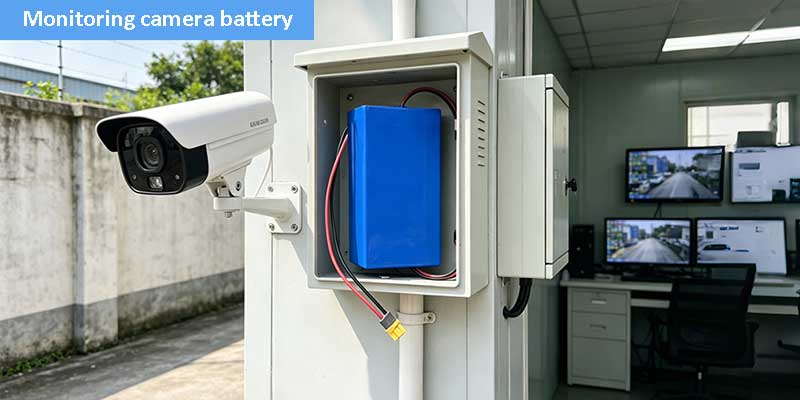
A surveillance camera that loses power at the wrong moment isn’t just an inconvenience — it’s a failure. Choosing the right batteries for security systems is the first step to prevent that. So in this post, I walk through a real battery pack we engineered specifically for 24/7 monitoring devices: what we built, why we made every decision we did, and most importantly, what makes a LiFePO4 battery the right backbone for serious security applications.


The Power Problem No One Talks About

Typically, when security system integrators evaluate their installations, they spend hours choosing lenses, night vision specs, and storage capacity. However, power rarely gets the same attention — until something fails.

The reality is that batteries for security systems carry a disproportionate responsibility. After all, a camera is only as reliable as the energy source behind it. Whether it’s grid outages, brownouts, or solar input fluctuations — the battery is, ultimately, the last line of defense between a live feed and a black screen.

This project started with exactly that concern. A customer building professional monitoring equipment needed a compact, dependable battery pack that could handle continuous discharge loads, survive temperature variation, accept solar charge input, and pass market certification requirements. They came to us at Himax Electronics, and what we built together tells a good story about what serious battery engineering actually looks like. That’s how we design all our batteries for security systems — with no compromise on reliability.

LiFePO4 12.8V 24Ah battery pack order specification sheet showing 4S4P configuration, BMS parameters, and product requirements for security surveillance systems — Himax Electronics

Full Specification Breakdown

Let’s start with the numbers. To be precise, here’s what this battery pack is built around:


Parameter Value
Chemistry LiFePO4 (Lithium Iron Phosphate)
Configuration 4S4P (4 series × 4 parallel)
Cell Model 32700 / 3.2V / 6000mAh per cell
Nominal Voltage 12.8V
Capacity 24Ah
Energy ≈ 307.2Wh
Max Continuous Discharge 10A
Charge Current ≤ 1C (solar input compatible)
Connector XT60 Female
Wire Length 200mm
Dimensions 42.5 × 265.0 × 136.0 mm
Enclosure Blue PVC heat shrink
Shipping SOC 50%


To put it in perspective, 307.2Wh in a package that fits inside a compact monitoring enclosure. That’s the core engineering challenge: squeezing serious energy density into a geometry-constrained form factor without compromising safety or serviceability.

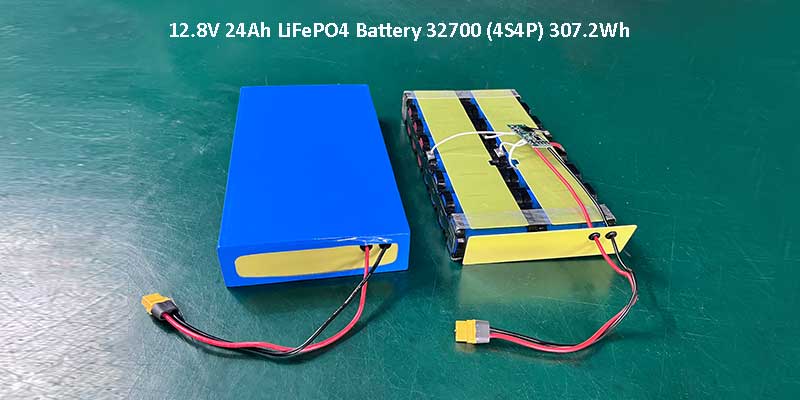
Assembled 12.8V 24Ah LiFePO4 battery pack in blue PVC enclosure with XT60 connector, alongside internal structure showing BMS board and 32700 cell assembly for CCTV backup power

Why 32700 LiFePO4 Cells Are the Ideal Batteries for Security Systems

Every battery pack decision starts with the cell. That’s because, for security applications, I consistently reach for LiFePO4 chemistry — and, more specifically, the 32700 form factor when high capacity is needed in a cylindrical format.

For example, the 32700 cell — 32mm diameter, 70mm length — offers one of the best capacity-to-size ratios in the cylindrical cell world. At 3.2V and 6,000mAh per cell, it brings substantial energy into each slot of the battery bracket — consequently, without the heat accumulation concerns you get with denser NMC chemistries.

Understanding the 4S4P Configuration

This pack uses 16 cells total, arranged in a 4S4P topology.
Specifically, the “4S” configuration means four cells in series — which multiplies voltage: 4 × 3.2V = 12.8V nominal.
Meanwhile, the 4P arrangement multiplies capacity: 4 × 6,000mAh = 24,000mAh (24Ah).
As a result, it’s an elegant arithmetic that turns sixteen modest cylinders into a powerful, unified energy source.

Why this matters for security use: Series gives you the voltage headroom to run standard 12V monitoring equipment directly. Parallel gives you the runtime — at a typical 3–5A draw from a surveillance controller, this pack delivers 5–8 hours of backup capacity without breaking a sweat.


LiFePO4 vs. The Alternatives: An Honest Comparison

When customers ask me what battery chemistry to use for their security system battery, I always walk through the trade-offs honestly.


Criteria LiFePO4 Lead-Acid NMC Li-ion
Cycle Life 2000+ cycles 300–500 500–1000
Thermal Safety Excellent Moderate Moderate
Weight Light Heavy Lightest
Voltage Stability Very flat curve Drooping Good
Suitable for always-on Yes Limited Yes (with care)


Unsurprisingly, for an always-on, low-maintenance deployment — which is exactly how most security systems operate — LiFePO4 wins convincingly. In fact, It’s flat discharge curve means the devices it powers see stable voltage throughout the cycle — rather than a gradual sag that can destabilize camera electronics.

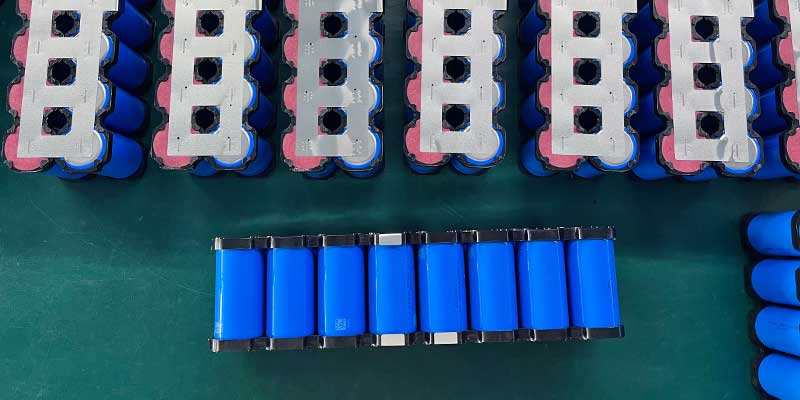
32700 LiFePO4 cells arranged in 4S4P configuration on cell holder brackets during OEM battery pack assembly process at Himax Electronics factory

The BMS: Designing for “Set It and Forget It” Reliability

Analogously, a battery without a good BMS is like a security camera without tamper protection. The battery management system is what keeps this pack safe during the years of unattended operation that a typical security installation demands.

Here’s how we configured the BMS for this project:


Protection Feature Parameter
Overcharge cutoff 14.6V ± 0.05V
Over-discharge cutoff 10V ± 0.05V
Max continuous discharge 10A
Short circuit protection Yes
Overcurrent protection Yes
Cell balancing Yes (passive balancing)
Operating temperature −10°C ~ +50°C


First, to ensure reliable solar charging, the charge parameters were specifically aligned with solar input compatibility. After all, solar chargers can be erratic: clouds pass, panels overheat, charge controllers vary. Therefore, consequently, the BMS had to absorb that variability without ever letting the cells see dangerous voltages. Moreover, the 14.6V ceiling is exactly right for 4S LiFePO4 — it gives enough headroom for full charge without risking cell degradation.

Cell balancing deserves special mention. Over time, even well-matched cells drift apart slightly in capacity. Without balancing, the weakest cell in a series string limits the entire pack — and, as a result, can become over-discharged while the others still hold charge. Critically, the passive balancing circuit in this BMS bleeds off excess energy from stronger cells during charging — keeping the string aligned and significantly extending the useful life of the entire pack.

“A battery that doesn’t fail silently is a battery worth trusting. Every protection layer in this BMS exists so that a technician doesn’t have to visit a camera pole at 3am.”


Manufacturing Process: What Happens Before the Blue Wrap Goes On

I oversee production on packs like this personally, and I want to share what actually goes into building a reliable battery — because it’s more rigorous than most people assume.

1. Cell Inspection and Sorting

Before a single cell goes into a bracket, every one is tested for open-circuit voltage and internal resistance. In practice, cells that don’t meet our matching tolerance get pulled. Putting mismatched cells in parallel creates internal circulating currents that degrade the pack over time. This step is non-negotiable.

2. Bracket Assembly and Nickel Strip Welding

First, the 16 cells are loaded into a plastic cell holder that both organizes the pack geometry and provides electrical isolation between rows. Nickel strips are spot-welded to connect cells in the correct series-parallel topology. Weld quality is checked for consistency — a bad weld means high contact resistance, heat, and eventual failure.

3. BMS Integration

Next, the BMS board is connected to the cell groups via the balance leads and the main power terminals. After wiring, we perform a full functional test: charge the pack, discharge under load, verify all protection thresholds trigger correctly, and confirm the balance circuit is active.

4. Aging Test and Capacity Verification

Then every pack goes through an aging cycle before shipment. We charge to full, rest, then discharge to rated cutoff while logging capacity. Thus, any pack that comes in below 95% of rated capacity doesn’t leave the floor.

5. Blue PVC Encapsulation and Labeling

The finished cell assembly is wrapped in blue PVC heat shrink, providing electrical insulation, mechanical cohesion, and a clean, professional appearance. Certification labels are then applied according to the customer’s requirements, with production dates coordinated across cell markings and compliance stickers to ensure full traceability.

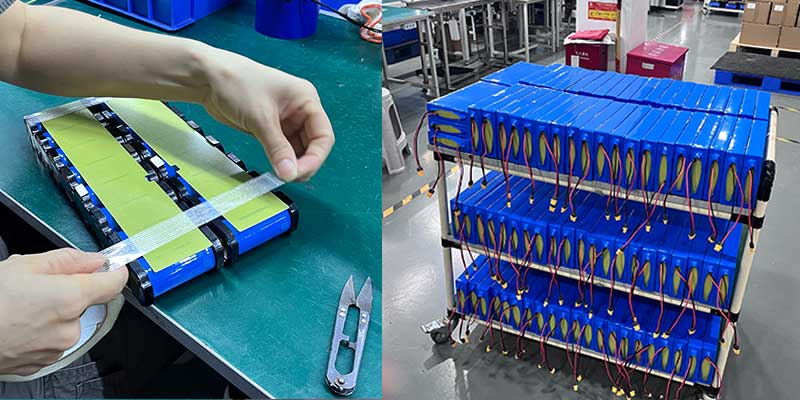
Multiple 12.8V LiFePO4 battery pack assemblies in production at Himax Electronics, showing 32700 cylindrical cells with nickel strip welding for security and monitoring device OEM orders

Beyond Surveillance: LiFePO4 in the Broader IoT Ecosystem

Security cameras don’t operate in isolation. Modern monitoring infrastructure includes smart sensors, access control systems, connected gateways, and remote IoT nodes — all of which share the same power reliability requirements.

Similarly, the same LiFePO4 engineering principles that make this pack ideal for CCTV backup apply across the full spectrum of connected device applications. If you’re working on IoT device power, explore our IoT battery solutions to see how these principles translate across applications.


5 Things to Evaluate When Choosing Batteries for Security Systems

Based on the projects we’ve completed in this space, here’s what I’d tell anyone evaluating a backup battery for CCTV or monitoring systems:


  1.  Voltage stability under load.  Drooping voltage affects camera electronics. LiFePO4’s flat discharge curve keeps equipment operating within spec throughout the cycle.
  2.  Cycle life relative to your replacement cost.  Lead-acid may look cheaper upfront. But if it needs replacing every 2 years versus every 8–10 years for LiFePO4, total cost of ownership tells a different story.
  3.  BMS protection depth.  At minimum: overcharge, over-discharge, overcurrent, short circuit, and temperature protection. Cell balancing extends pack longevity significantly.
  4. Fourth, mechanical fit for your enclosure. Custom battery packs can be dimensioned to fit existing product housings exactly. In fact, a 1mm mismatch in an injection-molded enclosure can trigger a full factory retool. Therefore, getting this right early in the design process is essential.
  5.  Certification alignment for your target market.  Different regions require different marks. Build this into your battery spec from day one — retrofitting certification compliance is expensive and slow.


Final Thoughts: Engineering Trust Into Every Cell

There’s something I find genuinely meaningful about building batteries for security systems. Whether it’s a single camera or a large surveillance network, these batteries must never become the weakest link. In reality, the end user — the person whose property this camera watches over — will never think about the battery. Nor should they have to. Instead, they should simply know the system works.

That invisibility is the goal. After all, a battery that draws no attention is a battery doing its job. And achieving that kind of quiet reliability requires careful cell selection, a well-configured BMS, rigorous manufacturing process, and honest quality control that doesn’t ship a pack we wouldn’t stake our reputation on.

If you’re designing a security product and need a battery that can carry that same commitment, I’d be glad to talk through it.


Ready to Power Your Security System Right?

Whether you need a standard 12.8V 24Ah LiFePO4 pack or a fully custom battery engineered to your exact specification, our team at Himax Electronics is ready to help. In fact, we’ve built thousands of packs for OEM monitoring and surveillance applications — so let’s build yours.


→  Security System Battery Solutions

→  12.8V 24Ah LiFePO4 Product Page

→  IoT Battery Solutions

→  Contact Us for a Custom OEM Quote

24V 100Ah agm replacement battery

HIMAX’S 24V 100Ah LIFEPO4 MARINE BATTERY IS REDEFINING RELIABILITY AND PERFORMANCE FOR MODERN ANGLERS

For the dedicated angler, a day on the water is a pursuit of passion, often marred by the persistent, low-frequency hum of a generator or the nagging anxiety of a dying trolling motor battery. The heart of any modern fishing vessel is its electrical system, powering everything from the silent electric trolling motor to the sophisticated fish finders and livewell pumps that are essential for a successful catch. For years, this heart has been powered by heavy, limited lead-acid batteries, a technology with roots in the 19th century. This era is now decisively over. HImax, a leading innovator in advanced energy storage, is spearheading this transformation with its robust 24V 100Ah LiFePO4 (Lithium Iron Phosphate) marine battery, a product engineered specifically to meet the harsh demands of the marine environment and the high expectations of today’s fishermen.

The critical question for boat owners is no longer merely about upgrading, but about how a specific battery technology can fundamentally enhance their entire fishing experience. It is about why the structural and chemical choices made in a battery’s design—such as the decision to use a rigid, protective outer casing as detailed in HImax’s own technical comparisons—are non-negotiable for safety and performance at sea. The shift to LiFePO4 is a paradigm change, moving from a component that is a constant concern to one that is a pillar of reliability.

Why the Outer Casing is a Critical Safety Feature in a Marine Environment

When analyzing battery options, the distinction between a cell with a rigid outer casing and one without is paramount. HImax’s 24V 100Ah battery utilizes a high-grade, ruggedized casing, a design choice that directly addresses the unforgiving nature of the marine world.

In the confined, often wet, and dynamically shifting space of a boat’s bilge or battery compartment, a battery is susceptible to physical impact, vibration, and accidental short-circuiting from shifting tools or loose wiring. A flexible pouch cell, while space-efficient, is vulnerable to puncture and deformation. The rigid metal casing of the HImax LiFePO4 battery provides essential Mechanical Robustness, acting as a shield against these hazards. It protects the sensitive internal jellyroll from impacts that could cause an internal short circuit—a primary failure mode that can lead to thermal runaway.

Furthermore, this casing serves as a crucial Containment Vessel. In the highly improbable event of an internal cell failure, the robust casing helps to contain the effects, preventing a single point of failure from escalating. For an angler miles from shore, often alone on the water, this intrinsic safety-by-design is not a luxury; it is a fundamental requirement. The HImax casing ensures the battery is a self-contained, secure unit, much like the watertight compartments in a hull itself.

How Superior Cycle Life and Depth of Discharge Translate to Uninterrupted Fishing

The chemistry of Lithium Iron Phosphate is the cornerstone of this battery’s legendary longevity. While a high-quality lead-acid or AGM battery might offer 500-800 cycles before its capacity degrades to 80%, the Himassi 24V 100Ah LiFePO4 battery is rated for 3,500 to 5,000 cycles. This translates not to years, but to decades of reliable service for the average weekend angler, effectively making it a one-time investment for the lifespan of the boat.

More critically for a day on the water is the Depth of Discharge (DOD). Lead-acid batteries suffer from rapid degradation if discharged beyond 50% of their capacity. This means a 100Ah lead-acid battery only offers a practical 50Ah of usable energy. The HImax LiFePO4 battery, however, can be safely discharged to 100% of its capacity (and routinely to 80-90% for even longer life) without harm. This effectively doubles or even triples the usable runtime compared to a lead-acid battery of the same nominal rating.

For a fisherman, this means a full day of trolling against the current, running multiple livewell pumps, and powering high-definition sonar and radar units without the slightest concern about depleting the battery to a damaging level. It provides the peace of mind to venture further and stay out longer, knowing the power reserve is both substantial and accessible.

Why Weight Savings and Power Stability are Game-Changers for Vessel Performance

The impact of weight on a boat’s performance is a fundamental principle of naval architecture. A typical 24V 100Ah lead-acid battery bank can weigh over 120 pounds (55 kg). The equivalent HImax LiFePO4 system weighs approximately 50-55 pounds (23-25 kg). This reduction of nearly 70 pounds is transformative.

This dramatic weight saving has a cascading positive effect:

Improved Fuel Efficiency: The main engine uses significantly less fuel to get the boat on plane and to maintain cruising speed.

Enhanced Handling and Stability: A lighter boat is more responsive, planes more easily, and sits higher in the water, improving stability and ride quality.

Increased Payload Capacity: The saved weight can be reallocated to fuel, gear, or an extra passenger.

Beyond weight, the power delivery is superior. Lead-acid batteries experience voltage “sag” as they discharge; as the battery depletes, the voltage drops, causing a trolling motor to lose thrust and electronics to behave erratically. The HImax LiFePO4 battery maintains a consistently high voltage throughout almost its entire discharge cycle. This means a trolling motor delivers full, unwavering power from the first cast until the return to the dock, and all onboard electronics operate with flawless stability.

Himax - Custom lithium battery pack24V 100Ah

How Integration and Intelligent Management Ensure Worry-Free Operation

The “how” of integrating this power source is engineered for simplicity and intelligence. The HImax battery is not just a collection of cells in a case; it is a complete power system. It features an integrated Battery Management System (BMS) that acts as an uninterruptible guardian. This sophisticated system provides:

Cell Balancing: It ensures all individual cells within the 24V pack charge and discharge uniformly, maximizing performance and lifespan.

Multi-Layer Protection: The BMS actively guards against over-charging, over-discharging, over-current, short circuits, and high/low-temperature operation.

Communication Capabilities: Many models offer Bluetooth connectivity, allowing anglers to monitor the battery’s state of charge, health, and power consumption in real-time directly on a smartphone or chartplotter.

This plug-and-play design, with marine-grade terminals, allows for a straightforward installation as a direct replacement for outdated systems or as the core of a new build. Its versatility makes it the single solution for a wide array of marine applications, from providing relentless power to a 24V trolling motor to serving as a robust “house” battery for all onboard electronics and critical systems like bilge pumps.

In the world of recreational fishing, where success and safety are inextricably linked to dependable technology, the standard for power solutions must be uncompromising. The transition to lithium is more than an upgrade; it is a fundamental shift in capability and confidence. By meticulously engineering its 24V 100Ah marine battery around the core principles of safety through a robust outer casing, unparalleled longevity via LiFePO4 chemistry, and practical superiority through lightweight design and stable power output, HImax has established a new benchmark for marine energy. For the modern angler, this battery is more than a component—it is the silent, reliable, and powerful partner that turns a simple boat into a truly capable fishing platform, enabling longer days, more catches, and absolute confidence on the water.


24V 100Ah agm replacement battery

Himax is a leading innovator in advanced battery technology, today underscores a definitive shift in the marine industry, as a growing number of yacht owners, boat builders, and marine engineers are standardizing on the 24V 100Ah LiFePO4 (Lithium Iron Phosphate) battery as the definitive solution for marine power. This move away from traditional lead-acid and AGM batteries is not merely a trend but a fundamental reevaluation of power management, safety, and efficiency on the water, driven by the superior chemical properties and performance metrics of the LiFePO4 chemistry.

The Inadequacy of Legacy Systems and the Lithium Promise

For decades, the marine world has been dominated by lead-acid and its advanced cousin, the Absorbent Glass Mat (AGM) battery. While reliable, these systems come with significant drawbacks: they are exceedingly heavy, suffer from very limited deep cycle life, require regular maintenance, and cannot be discharged beyond 50% without causing irreversible damage to their battery capacity and longevity. This effectively halves their usable energy, forcing boaters to install larger, heavier banks to meet their power needs. The search for a more robust, lightweight, and efficient power solution has culminated in the widespread adoption of lithium-based systems, with LiFePO4 emerging as the undisputed champion for marine applications due to its unparalleled safety and cycle life.

Deconstructing the 24V 100Ah LiFePO4 Powerhouse

The specification of “24V 100Ah LiFePO4” is becoming a common order in marine supply chains, and for good reason. This configuration strikes an ideal balance between power delivery and practical application.

Voltage Advantage (24V System): Compared to older 12V systems, a 24V lithium battery offers significant advantages for larger yachts. It allows for higher power delivery (in watts) at half the current (in amps) of an equivalent 12V system. This reduced current means smaller gauge wiring can be used, leading to weight savings, reduced voltage drop over long cable runs, and increased efficiency for powerful equipment like electric thrusters, winches, and air conditioning units. Furthermore, it integrates seamlessly with an increasing number of 24V inverter and charging systems.

Capacity and Usable Energy (100Ah): A 100Ah deep cycle battery made with LiFePO4 chemistry provides a game-changing advantage in usable energy. Unlike lead-acid, a LiFePO4 battery can be consistently discharged to 100% of its Depth of Discharge (DOD) without harm. This means the full 2.4 kWh (24V * 100Ah = 2400Wh) of energy is available. In practice, a 24V 100Ah LiFePO4 battery delivers usable energy equivalent to a 200Ah+ lead-acid bank, at a fraction of the weight and size.

Himax - 24V 300AH

Key Performance Drivers Behind the Adoption

The shift is driven by a combination of critical factors that directly address the pain points of marine enthusiasts.

Exceptional Cycle Life and Longevity: This is arguably the most compelling reason. While a quality AGM battery may offer 500-1000 cycles (to 50% DOD), a marine-grade lithium battery like a LiFePO4 can deliver over 4000 cycles to 80% DOD and beyond. This translates to over a decade of daily use, far outliving any lead-acid alternative and providing a superior lifespan that justifies the initial investment.

Unmatched Safety Profile: Safety at sea is paramount. The LiFePO4 chemistry is intrinsically safer than other lithium-ion types (like NMC or LCO). It has a much higher thermal stability, meaning it is highly resistant to thermal runaway, the dangerous chain reaction that can lead to fires. This inherent safety makes it the preferred choice for demanding marine environments where reliability is non-negotiable.

Lightweight and High Energy Density: The weight savings are dramatic. A typical 24V 100Ah LiFePO4 battery weighs around 25-30 kg, compared to 60-70 kg for a comparable lead-acid bank. This reduction in weight directly improves fuel efficiency, handling, and overall vessel performance.

Rapid Charging and Advanced Management: LiFePO4 batteries can accept a very high charge current, often charging up to 5 times faster than lead-acid. This means less time running generators and more time enjoying silent anchorage. Furthermore, every quality pack comes with an integrated Battery Management System (BMS). The BMS is the brain of the battery, providing critical functions like overcharge protection, over-discharge protection, short circuit protection, and cell balancing, ensuring each cell operates within its safe parameters and maximizing the pack’s life.

Maintenance-Free Operation and Zero Self-Discharge: Once installed, a LiFePO4 battery requires zero maintenance. There is no need to check water levels or ensure equalization charges. Additionally, they have an extremely low self-discharge rate, losing only 1-3% of charge per month, allowing boats to be left in storage for extended periods without the battery going dead.

Integration with Modern Marine Ecosystems

The 24V 100Ah LiFePO4 battery is not an island; it’s the heart of a modern marine power system. It interfaces perfectly with:

Marine Inverter Chargers: Providing stable AC power for household appliances.

DC-DC Chargers: Ensuring efficient charging from variable engine alternators.

Battery Monitor Systems: Giving users precise, real-time data on state of charge (SOC), power flow, and health.

Solar Charge Controllers: Making them an ideal solar battery for off-grid power systems, enabling true energy independence.

Market Trends and the Future of Marine Energy

The global push towards electrification and sustainability is accelerating this trend. The search terms “best marine battery 2024,” “lithium battery for boat,” and “LiFePO4 vs. AGM” are among the fastest-growing in the marine sector. As technology advances and manufacturing scales, the price of these batteries continues to become more accessible, further driving adoption. The future points toward integrated energy storage systems where a 24V 100Ah LiFePO4 acts as a modular building block, allowing yacht owners to create custom power banks tailored to their specific energy needs, all managed by sophisticated battery management systems.

In conclusion, the transition to the 24V 100Ah LiFePO4 battery is a definitive, technology-led evolution in the marine industry. It represents a confluence of safety, performance, longevity, and efficiency that traditional technologies cannot match. As a key supplier at the forefront of this energy transition, Himax continues to empower this new era of maritime exploration, providing yacht owners with the reliable, high-performance power needed for longer, safer, and more comfortable journeys on the water. The age of the heavy, limited lead-acid battery is passing, making way for the lightweight, long-lasting, and powerful lithium iron phosphate standard.

custom battery manufacturer

In the evolving landscape of battery technology, Himax Electronics Co., Ltd. has once again positioned itself as a trusted partner for industries requiring safe, reliable, and efficient energy solutions. Among its growing portfolio of lithium batteries, the 3.2V 600mAh 14500 lithium iron phosphate (LiFePO4) battery pack assembled in a 1S1P configuration stands out. Compact yet powerful, this solution is gaining recognition in the toy industry, particularly in remote-controlled cars and boats where performance and safety are equally critical. But why has this specific battery pack become such an important option for toy manufacturers worldwide?

Meeting the Demands of Modern Toy Vehicles

Toy vehicles have changed dramatically over the past two decades. What was once a simple battery-operated car running at modest speeds has now evolved into highly interactive, remote-controlled models capable of impressive acceleration, precise steering, and extended playtime. This progress requires a power source that is not only energy-dense but also stable, rechargeable, and durable.

The Himax 3.2V 600mAh 14500 cell assembled into a 1S1P pack has been engineered to meet exactly these needs. Its LiFePO4 chemistry offers several key advantages over conventional lithium-ion and nickel-metal hydride (NiMH) batteries. First, it delivers superior thermal and chemical stability, reducing the risk of overheating—a critical factor for toys used by children. Second, it offers long cycle life, ensuring that toy vehicles can be recharged hundreds of times without significant degradation. Finally, its compact cylindrical 14500 form factor allows it to fit into small compartments, making it suitable for a wide variety of toy designs.

Why LiFePO4 Is the Ideal Chemistry for Toys

One of the main reasons the Himax battery pack is trusted in the toy industry is its use of lithium iron phosphate (LiFePO4) chemistry. Compared to other lithium chemistries, LiFePO4 stands out for its exceptional safety profile. It is highly resistant to thermal runaway and maintains structural integrity even under demanding operating conditions.

For toy cars and boats that may be subject to rough handling, sudden current surges, or extended periods of use, safety cannot be compromised. Parents and manufacturers alike need the assurance that the power source will not pose a hazard. With LiFePO4, this assurance is built in. Additionally, the chemistry allows for faster charging, reduced self-discharge, and stable voltage output, all of which translate into a better user experience. Children enjoy longer playtimes, hobbyists get consistent performance, and manufacturers reduce after-sales complaints related to battery failures.
Custom_energy_storage_batteries

Technical Strength of the 14500 3.2V 600mAh 1S1P Pack

The 14500 3.2V 600mAh cell is similar in size to a standard AA battery, yet it carries the advanced capabilities of LiFePO4 technology. When configured as a 1S1P battery pack, it delivers steady voltage at 3.2V, providing enough energy to power small-scale motors, control systems, and lighting modules in toy vehicles.

Key features include:

  • Nominal Voltage:2V
  • Capacity:600mAh
  • Form Factor:14500 cylindrical cell
  • Configuration:1S1P (single cell, single parallel)
  • Cycle Life:>2000 cycles under standard conditions
  • Continuous Discharge Rate:Supports the demands of small DC motors
  • Safety:LiFePO4 chemistry with robust thermal stability

These specifications mean that a toy car or boat powered by this pack can enjoy stable performance, safe operation, and a long service life. For manufacturers, these advantages translate into fewer warranty issues and enhanced customer satisfaction.

Comparing With Alternative Battery Solutions

When evaluating batteries for toy vehicles, manufacturers often compare LiFePO4 with other common chemistries such as nickel-metal hydride (NiMH) or lithium cobalt oxide (LiCoO2). Each chemistry has its strengths, but LiFePO4 consistently provides the best balance of safety, performance, and longevity.

  • Versus NiMH:NiMH batteries are cost-effective and widely used, but they suffer from higher self-discharge rates and shorter cycle life. LiFePO4 offers longer-lasting performance and more stable voltage output.
  • Versus LiCoO2 Lithium-ion:While lithium cobalt oxide batteries may offer higher energy density, they carry higher safety risks, especially in scenarios where batteries could be punctured or exposed to high currents. LiFePO4 provides a safer alternative with sufficient capacity for toy vehicles.

Himax’s decision to focus on LiFePO4 for this application reflects its commitment to safety without compromising on performance.

Applications in Remote-Controlled Cars and Boats

The toy industry is a primary beneficiary of this battery pack’s performance. In remote-controlled cars, the 3.2V 600mAh pack delivers smooth acceleration and consistent power delivery. This ensures cars can race at high speeds and maintain stability over long play sessions. In boats, the battery’s stable output supports efficient motor operation even under water resistance, giving hobbyists more reliable control over their vessels.

Moreover, the small size of the 14500 cell allows for creative toy designs. Manufacturers can build sleek, lightweight vehicles without being constrained by bulky power sources. For hobbyists and children alike, this translates into a better overall experience: lighter toys, longer run times, and greater fun.

Himax’s Manufacturing Strength

Behind every product is the production capacity and expertise that make it possible. Himax Electronics Co., Ltd. operates automated and semi-automated production lines capable of processing millions of cells per week. With a workforce of around 50 professionals, the company specializes in both lithium and NiMH battery packs.

Quality control is a central part of Himax’s operations. Every 14500 3.2V 600mAh cell undergoes rigorous testing before assembly. From raw material inspection to final product testing, safety and performance are monitored at every stage. This ensures that customers receive not only a powerful battery but also one that complies with international safety and performance standards.
custom lithium battery

Looking Ahead: The Role of LiFePO4 in Toys and Beyond

As toy designs become more advanced, the demand for safer, longer-lasting batteries will only increase. Himax’s 14500 3.2V 600mAh LiFePO4 pack provides a glimpse into the future of energy solutions for consumer electronics. It represents a balance between safety, performance, and affordability—an equation that many toy manufacturers find hard to solve with other chemistries.

Beyond toys, this battery pack has potential applications in small electronics, portable lighting, and IoT devices. Its compact size, stable output, and long cycle life make it an attractive option wherever small-scale, reliable power is required.

Conclusion

In a market where reliability, safety, and performance are essential, Himax Electronics Co., Ltd. has demonstrated its ability to deliver solutions that meet the demands of modern toys and hobbyists. The 3.2V 600mAh 14500 LiFePO4 1S1P battery pack is more than just a power source—it is a testament to the company’s commitment to innovation, safety, and quality.

By offering a compact, safe, and reliable battery option, Himax is helping to power the future of remote-controlled cars, boats, and other toys. With every cycle, every charge, and every play session, this battery pack proves why Himax remains a trusted name in the global battery industry.


solar-lifepo4-battery

Shenzhen HiMAX Electronics Ltd., through its HiMASSi product line, highlights the pivotal role of Lithium Iron Phosphate chemistry in driving global adoption of reliable and sustainable energy storage solutions.

The global transition towards renewable energy is undeniable. Yet, the intermittent nature of sources like solar and wind power presents a significant challenge: how to store excess energy for use when the sun isn’t shining or the wind isn’t blowing. Enter energy storage systems (ESS), the critical linchpin in the green energy revolution. At the forefront of this essential technology is Lithium Iron Phosphate (LiFePO4 or LFP) battery chemistry, a solution championed by industry leaders like Shenzhen HiMAX Electronics Ltd. for its unparalleled combination of safety, durability, and performance.

For decades, energy storage was dominated by other battery chemistries. However, the search for a safer, more robust, and longer-lasting alternative for large-scale and residential storage has propelled LiFePO4 to the center stage. Unlike other lithium-ion variants, LiFePO4 batteries use iron and phosphate as key cathode materials—elements that are inherently more stable, abundant, and environmentally benign.

Energy storage lifepo4 battery

So, how exactly is LiFePO4 technology transforming the energy storage landscape?

  1. The Unmatched Safety Paradigm

    Safety is the non-negotiable cornerstone of any energy storage system, especially when deployed in homes or commercial buildings. The molecular structure of LiFePO4 batteries is inherently more stable than that of other lithium-ion batteries. They are highly resistant to thermal runaway, a chain reaction that can lead to overheating and potentially fires. This superior thermal and chemical stability drastically reduces operational risks, providing peace of mind for homeowners and businesses alike. This intrinsic safety makes HiMASSi LiFePO4 batteries an exceptionally reliable choice for a wide range of applications.

  2. Exceptional Cycle Life: The Long-Term Investment

    The economic viability of an ESS is directly tied to its lifespan. LiFePO4 batteries excel in this domain, typically offering thousands of charge-discharge cycles while maintaining a significant portion of their original capacity. A high-quality LiFePO4 battery, such as those in the HiMASSi range, can last for well over a decade, even with daily use. This exceptional cycle life translates to a lower levelized cost of storage (LCOS)—meaning a lower cost per kWh over the system’s entire lifetime—delivering superior long-term value and a quicker return on investment for end-users.

  3. High Performance and Stability

    LiFePO4 batteries provide stable power output and consistent performance throughout their discharge cycle. They maintain a relatively constant voltage, ensuring connected devices and systems operate efficiently until the battery is nearly depleted. Furthermore, they exhibit excellent performance across a wide range of temperatures and have a low self-discharge rate, ensuring stored energy is available when needed most.

  4. Environmental and Sustainability Benefits

    Sustainability is at the heart of the renewable energy movement. LiFePO4 chemistry aligns perfectly with this ethos. It is cobalt-free, eliminating the ethical and environmental concerns associated with cobalt mining. The use of iron and phosphate, which are common and readily available materials, also reduces the environmental footprint of production. Additionally, the long lifespan of these batteries means less frequent replacements and, consequently, less waste.

lifepo4-battery-4s-12.8v

Shenzhen HiMAX Electronics Ltd. and the HiMASSi Advantage

Shenzhen HiMax Electronics Ltd. is committed to leveraging these inherent advantages of LiFePO4 technology through its HiMASSi battery products. The company focuses on engineering advanced battery solutions that meet the rigorous demands of both residential and commercial energy storage. By integrating high-quality LiFePO4 cells with sophisticated Battery Management Systems (BMS), HiMASSi ensures optimal performance, safety, and intelligence. The BMS meticulously monitors and manages key parameters including voltage, current, and temperature, protecting the battery and extending its service life.

HiMASSi LiFePO4 batteries are designed for a diverse array of applications, from integrating with home solar systems to provide energy independence, to serving as backup power for critical infrastructure and supporting off-grid and microgrid projects.

As the world continues to embrace renewable energy, the role of safe, long-lasting, and efficient storage becomes increasingly critical. Lithium Iron Phosphate technology, as embodied by products like HiMASSi batteries from Shenzhen HiMax Electronics Ltd., is not just participating in this transition; it is actively powering it, providing the reliable foundation upon which a sustainable energy future will be built.

About Shenzhen HiMAX Electronics Ltd.:

Shenzhen HiMax Electronics Ltd. is a technology company dedicated to the research, development, and manufacturing of advanced energy storage solutions. Specializing in Lithium Iron Phosphate (LiFePO4) battery technology, its HiMASSi product line is engineered to deliver superior safety, longevity, and performance for a sustainable energy future.


solar-lifepo4-battery

Lithium iron phosphate batteries (LiFePO4 or LFP batteries) are a type of lithium-ion battery known for their long cycle life, thermal stability, and safety. Here are the key materials used in lithium iron phosphate batteries

1. Cathode (Positive Electrode)

Composition:

Chemical Formula: LiFePO₄

Structure: Olivine-type crystal structure

Elements: Lithium (Li), Iron (Fe), Phosphorus (P), Oxygen (O)

Key Properties:

Voltage: ~3.2V nominal

Energy density: 90–160 Wh/kg (lower than NMC/NCA but safer)

Thermal stability: Decomposition starts >270°C (very stable)

Cycle life: >2000–7000 cycles depending on C-rate and depth of discharge

Advantages:

Non-toxic (compared to cobalt-based cathodes)

Environmentally friendly

Excellent thermal and chemical stability

Long calendar and cycle life

Stable discharge voltage

Disadvantages:

Lower energy density

Lower conductivity (mitigated by carbon coating and conductive additives)

Enhancements in Modern LFP:

Carbon coating (e.g., with Super P or CNT) to improve electrical conductivity

Doping with Mg, Zr, or Nb to enhance ionic conductivity and rate performance

2. Anode (Negative Electrode)

Composition:

Layered carbon structure that intercalates lithium ions

Key Properties:

Voltage: ~0.1V vs Li⁺/Li

Capacity: ~350–370 mAh/g

Material Forms: Natural graphite, synthetic graphite, mesocarbon microbeads (MCMB)

Advantages:

Proven and stable performance

Good conductivity

Widely available and low cost

Challenges:

Risk of lithium plating if charged too fast at low temperature

Potential degradation via solid electrolyte interphase (SEI) formation

Alternative Anodes:

Hard carbon: Used in LFP batteries for fast charging

Silicon or Si/C composites: Higher capacity but less stable

LTO (Li₄Ti₅O₁₂): Used in niche applications for ultra-safety and long life

3. Electrolyte

Main Composition:

Lithium Salt: LiPF₆ (lithium hexafluorophosphate)

Solvents: Typically a mix of:

EC (Ethylene Carbonate)

DMC (Dimethyl Carbonate)

DEC (Diethyl Carbonate)

EMC (Ethyl Methyl Carbonate)

Function:

Transports Li⁺ ions between cathode and anode during charge/discharge

Additives:

Vinylene Carbonate (VC): Improves SEI stability

FEC (Fluoroethylene carbonate): Enhances low-temp performance

Considerations:

Flammable → LFP’s thermal stability offsets this risk

Limited voltage stability (~4.2V), but suitable for LFP’s ~3.6V peak

4. Separator

Material:

Microporous Polyolefin:

PE (Polyethylene)

PP (Polypropylene)

PP/PE/PP multilayer films

Function:

Prevents direct contact between anode and cathode

Allows Li⁺ ions to pass through

Acts as a shutdown mechanism at high temperatures (melts and blocks ion flow)

Features:

Pore size: 20–100 nm

Thickness: 16–30 microns typically

Thermal shutdown: ~135°C (PE), ~165°C (PP)

5. Current Collectors

Cathode Side: Aluminum foil

Anode Side: Copper foil

Function: Collects and transports electrons to and from the external circuit


Electrode Material Function
Cathode Aluminum foil (10–20μm) Conducts electrons from LFP
Anode Copper foil (8–15μm) Conducts electrons from graphite

Reasons:

Aluminum is light and corrosion-resistant

Copper has excellent electrical conductivity

6. Binder (for electrode structure)

Cathode: Polyvinylidene fluoride (PVDF)

Anode: PVDF or carboxymethyl cellulose (CMC) + styrene-butadiene rubber (SBR)

Function: Binds active material to the current collector

7. Conductive Additives (in electrodes)

Material: Carbon black, Super P, carbon nanotubes (CNT), or graphene

Function: Improves electrical conductivity of the electrode

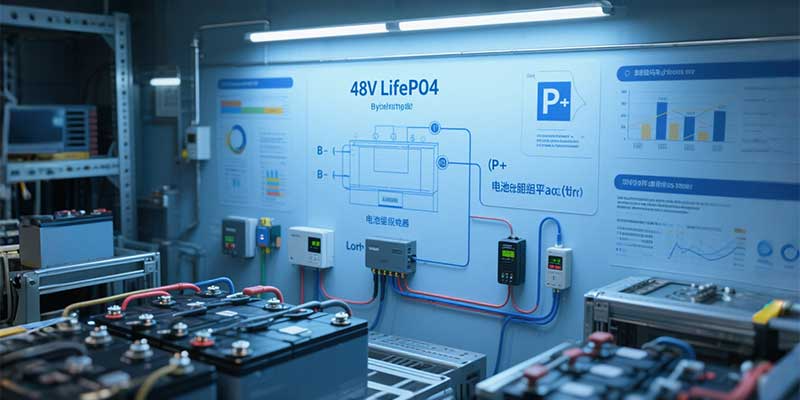
48v lifepo4 battery system


Summary Table

Component Material Example Function
Cathode Lithium Iron Phosphate

(LiFePO₄)

Stores lithium ions, provides voltage
Anode Graphite Stores lithium ions during charging
Electrolyte LiPF6 in EC/DMC/DEC Lithium ion transport medium
Separator PE/PP microporous film Prevents short-circuit, allows ion flow
Current Collector Aluminum (cathode),

Copper (anode)

Conducts electrons
Binder PVDF, CMC/SBR Holds electrode materials together
Additives Carbon black, CNT Enhances electrical conductivity


Use Cases of LFP Batteries

Application Reason for Choosing LFP
Electric Vehicles (EVs) Long life, high safety, cost-effective
Energy Storage Systems Excellent cycle life and thermal stability
E-bikes, Power Tools Safe and lightweight
Marine & RV Batteries Low maintenance, good performance in heat


As cities around the world strive to become smarter, greener, and more sustainable, the demand for reliable, clean energy solutions continues to rise. Urban planners and local governments are increasingly turning to renewable technologies to meet environmental targets while enhancing public services. At the heart of this transformation is energy storage — and Shenzhen Himax Electronics Co., Ltd. is leading the charge with its 12.8V 20Ah Lithium Iron Phosphate (LiFePO4) battery.

This advanced battery solution is specifically engineered for solar-powered bus shelters — structures that do more than simply offer a place to wait. With the integration of Himax’s robust and high-performance LiFePO4 battery, these shelters are now capable of delivering dependable LED lighting and free USB charging for commuters, even during overcast weather or nighttime hours. By enabling consistent and efficient power from renewable sources, Himax is helping cities modernize their infrastructure in an eco-conscious and cost-effective way.

The Growing Demand for Solar-Powered Transit Shelters

In recent years, solar-powered bus shelters have emerged as a vital component of modern urban landscapes. As municipalities aim to lower carbon emissions and promote energy efficiency, these structures provide an elegant solution: they offer shelter from the elements, improve street-level aesthetics, and harness the sun’s energy to power lighting and charging stations.

However, one of the biggest challenges in implementing solar bus shelters is ensuring reliable power storage and distribution — especially during periods of low sunlight or high usage. Without an effective energy storage system, the functionality of these shelters can be compromised, leading to dark waiting areas and unavailable charging ports. That’s where Himax’s 12.8V 20Ah LiFePO4 battery comes in, designed to ensure uninterrupted power supply in varying environmental conditions.

LiFePO4_vs._lead-acid_batteries

What Makes LiFePO4 the Ideal Battery Technology?

Lithium Iron Phosphate (LiFePO4) is widely regarded as one of the safest and most efficient lithium battery chemistries available today, making it especially suitable for public infrastructure applications. Compared to conventional lead-acid batteries or other lithium chemistries, LiFePO4 offers a superior balance of performance, safety, and longevity.

Himax’s 12.8V 20Ah battery exemplifies these benefits:

Extended Lifespan: With more than 2000–5000 charge and discharge cycles, the battery provides many years of reliable operation, dramatically outlasting traditional lead-acid batteries which often require replacement every 1–2 years.

High Energy Efficiency: The battery boasts a discharge efficiency exceeding 95%, ensuring minimal energy is wasted and maximum solar energy is converted into usable power.

Unmatched Safety: LiFePO4 chemistry is thermally and chemically stable, making it resistant to overheating, combustion, or explosion — a crucial feature for equipment installed in public spaces.

Compact and Lightweight: Up to 50% lighter than comparable lead-acid batteries, Himax’s battery reduces the complexity and labor costs of installation, while also freeing up valuable space inside enclosures.


Engineered for Smart, Self-Sufficient Bus Shelters

Himax’s 12.8V 20Ah LiFePO4 battery has been purpose-built to meet the demanding energy requirements of solar-powered bus shelters. With a practical balance between voltage, capacity, and size, the battery enables continuous power supply for a range of essential services.

Reliable Lighting: It can power 10W to 15W LED lighting systems for over 12 hours, ensuring that shelters remain well-lit from dusk until dawn, enhancing both visibility and public safety.

Convenient USB Charging: The battery supports multiple USB charging ports, allowing commuters to charge smartphones, tablets, and other devices while waiting — an increasingly expected amenity in modern urban environments.

Rapid Solar Recharge: Fully compatible with 100W to 200W solar panels, the battery charges quickly, even under partially cloudy conditions, ensuring readiness for consistent daily operation.

All-Weather Durability: Operating effectively in temperatures ranging from -20°C to 60°C, the battery is suitable for installation in diverse geographic regions, from frigid winters to scorching summers.


Benefits for Cities, Operators, and Commuters

The adoption of Himax’s LiFePO4 battery brings multiple tangible benefits to cities and transit operators — and an improved experience for daily commuters.

Reduced Energy Costs: By harnessing solar energy and minimizing grid dependency, municipalities can significantly cut electricity expenses over time.

Lower Maintenance and Replacement: The long cycle life and stable chemistry reduce the need for frequent battery replacements and maintenance work, resulting in lower operational costs and less downtime.

Enhanced Safety: Well-lit bus stops deter crime and make commuters feel safer, especially during early morning or late evening hours.

Improved Commuter Convenience: Free charging capabilities are not only a modern necessity but also help promote public transportation by adding value to the rider experience.

Environmental Impact: Switching to solar-powered infrastructure supports broader climate goals and demonstrates a commitment to sustainability and innovation.

Himax: Delivering More Than Just Batteries

What sets Himax apart is not just the quality of its products but its holistic approach to energy storage solutions. In addition to supplying high-performance LiFePO4 batteries, the company offers complete systems and services tailored for solar infrastructure.

Custom Battery Management Systems (BMS): Himax equips its batteries with intelligent BMS that monitor and protect against overcharging, over-discharging, short circuits, and temperature extremes — ensuring the longest possible lifespan and safest operation.

Remote Monitoring: Optional remote monitoring capabilities allow for real-time diagnostics and performance tracking, enabling proactive maintenance and reducing the risk of unexpected failures.

Flexible, Scalable Solutions: Himax’s systems are highly adaptable, supporting both small installations for neighborhood bus stops and larger deployments in high-traffic transit hubs.

10C_discharge_battery

Conclusion

As cities embrace the vision of cleaner, smarter, and more connected infrastructure, solar-powered bus shelters stand out as a practical and visible symbol of progress. Himax’s 12.8V 20Ah LiFePO4 battery plays a pivotal role in this evolution, enabling dependable lighting and mobile charging powered entirely by the sun.

With its superior safety, efficiency, and long lifespan, the battery delivers unmatched value for public infrastructure projects. But more than that, it contributes to a better urban experience — safer streets, more connected commuters, and greener cities.

By combining cutting-edge battery technology with full-system support, Himax is helping urban centers across the globe take a confident step into a more sustainable future — one bus stop at a time.


In the growing landscape of smart cities and sustainable transportation, Shenzhen Himax Electronics Co., Ltd. is playing a vital role by delivering cutting-edge lithium battery solutions. One of its latest highlights is the deployment of 12V 20Ah LiFePO4 (Lithium Iron Phosphate) batteries in solar-powered digital display systems at bus stations. These compact yet powerful batteries are proving to be a reliable energy source for transit signage, particularly in off-grid or semi-grid environments.

As public infrastructure embraces renewable energy and digital transformation, the intersection of solar technology and energy storage becomes critical. Display panels at bus stops provide real-time schedule updates, maps, lighting, and security alerts. When powered by solar energy, they require a battery system that is safe, durable, low-maintenance, and able to operate under fluctuating environmental conditions. Himax’s 12V 20Ah LiFePO4 battery is designed to meet these exact needs.

The Challenge of Powering Off-Grid Transit Displays

Solar-powered bus stop displays are an innovative solution in cities aiming to reduce their carbon footprint while improving public service accessibility. These display systems often operate in locations where grid access is limited, unreliable, or cost-prohibitive. This creates a demand for a sustainable, autonomous power system capable of delivering stable voltage for extended periods.

Traditional lead-acid batteries used in some installations face challenges like short cycle life, frequent maintenance, and poor performance in extreme weather. Similarly, other lithium chemistries may offer high energy density but are less stable in high-temperature or high-discharge environments.

This is where LiFePO4 chemistry excels. Known for its thermal and chemical stability, high safety profile, and long lifecycle, LiFePO4 is now widely accepted as the preferred battery technology for solar and storage applications.

Himax’s 12V 20Ah LiFePO4 Battery: Designed for Public Infrastructure

Shenzhen Himax Electronics Co., Ltd. has designed its 12V 20Ah LiFePO4 battery pack specifically with solar-powered equipment in mind. Here are the main features that make it ideal for bus stop digital signage:

1. High Safety and Stability

LiFePO4 batteries are inherently more stable than other lithium chemistries, reducing the risk of thermal runaway, combustion, or explosion. This is especially crucial in unattended public spaces where battery systems must function safely for years.

2. Long Cycle Life

The Himax 12V 20Ah battery can achieve over 2000–3000 charge/discharge cycles under standard conditions. For a solar-powered display that charges during the day and discharges at night, this equates to 5–8 years of reliable use.

3. Wide Operating Temperature

With an operating range of –20°C to 60°C, the battery can perform efficiently in various climate conditions, from hot urban centers to colder rural zones. This versatility is essential for deployments across geographically diverse bus networks.

4. Built-In Battery Management System (BMS)

Each Himax battery pack integrates an intelligent BMS that ensures protection against over-voltage, under-voltage, over-current, and short-circuits. It also balances cells to extend battery life and ensures the system runs reliably without manual intervention.

5. Compact and Lightweight

At just a fraction of the size and weight of traditional sealed lead-acid batteries, the 12V 20Ah LiFePO4 battery can be easily installed in tight enclosures beneath the display units or within the solar cabinet.

6. Eco-Friendly and Low Maintenance

With no memory effect and very low self-discharge (less than 3% per month), the battery remains operational even after long idle periods. It is also free from heavy metals and toxic chemicals, aligning with environmental sustainability goals.

boat-battery-size

Real-World Applications: Bus Stations Go Solar

In recent pilot projects across several smart city zones, Himax’s 12V 20Ah LiFePO4 batteries have been installed in solar-powered bus stops equipped with digital displays. These systems include LED schedules, ambient lighting, emergency buttons, and even CCTV functionality, all powered through solar panels and backed up by the Himax battery pack.

Operators report high reliability and zero maintenance complaints after over a year of use. The battery’s consistent performance—even during cloudy days or low sunlight periods—ensures uninterrupted service to passengers.

One local city official noted:
“We wanted an energy solution that wouldn’t require daily monitoring or replacements every year. Himax’s battery packs delivered exactly that—quiet reliability and performance without the headache.”

Supporting Broader Urban Sustainability

The deployment of LiFePO4 batteries in solar bus stops not only benefits public transportation but also supports larger sustainability goals. By removing dependency on the grid and diesel generators, city planners reduce emissions, lower operating costs, and create scalable solutions that can be implemented in both developed and underdeveloped areas.

Moreover, LiFePO4 batteries open the door for more features to be integrated into public infrastructure. With reliable energy storage, systems can run Wi-Fi routers, mobile charging stations, or real-time vehicle tracking displays, enhancing the commuter experience.

Himax: A Trusted Partner in Energy Storage

Shenzhen Himax Electronics Co., Ltd. is a leading provider of lithium battery pack solutions, specializing in custom LiFePO4 and NiMH battery assemblies. With over a decade of experience, automated and semi-automated production lines, and a weekly capacity of over 3 million cells, Himax supplies safe and reliable power to industries including solar, medical, industrial tools, and smart transportation.

For applications like bus stop solar systems, Himax offers a proven battery solution that balances safety, lifespan, and performance. Customers can also benefit from Himax’s engineering support and customization services to tailor the battery pack to their specific voltage, current, and enclosure needs.

The Future of Smart Transit Starts with Smart Power

As cities around the world seek energy-efficient and intelligent public infrastructure, the humble bus stop is becoming a symbol of what’s possible. Solar-powered display systems, backed by durable and high-performance LiFePO4 batteries, are paving the way forward. And companies like Shenzhen Himax Electronics Co., Ltd. are right at the heart of this transformation—powering the journey, one battery at a time.

Interested in integrating LiFePO4 batteries into your smart infrastructure project? Contact Shenzhen Himax Electronics Co., Ltd. today at https://www.himaxelectronics.com.


LiFePO4_vs._lead-acid_batteries

LiFePO4 batteries are renowned for their long cycle life, thermal stability, and overall reliability. That’s why they’re the battery of choice in solar energy systems, RVs, marine equipment, and industrial power storage. However, like all lithium batteries, proper storage practices are crucial—especially when storing for extended periods.

Among the most frequently asked questions we receive at HIMAX Electronics is:
“What is the best State of Charge (SOC) for storing Lithium Iron Phosphate (LiFePO4 )batteries long term without damaging their capacity?”

This article provides the clear answer and explains how to optimize battery longevity through proper SOC and storage techniques.

Why SOC Matters During Storage

Even when disconnected from a system, LiFePO4 batteries continue to undergo slow electrochemical reactions. Improper State of Charge (either too high or too low) can accelerate aging, reduce usable capacity, and in some cases, cause irreversible damage.

Key risks include:

  • Over-discharge:Leads to internal degradation and reduced voltage recovery.
  • Overcharge during storage:Increases stress on the cathode material and may accelerate capacity fade.

12.8v lifepo4 battery

Best SOC for Long-Term Storage of LiFePO4 Batteries

✅ Ideal Storage SOC: 40% to 60%

Storing your LiFePO4 battery at 40% to 60% State of Charge provides the safest balance between chemical stability and operational readiness. This range minimizes cell stress, reduces internal pressure, and extends calendar life.

At HIMAX Electronics, we recommend pre-charging all LiFePO4 battery packs to around 50% SOC before putting them into storage for more than 30 days.

Why Not 100% or 0% SOC?

? Avoid 100% SOC:

  • Storing batteries fully charged increases internal voltage stress.
  • Long-term exposure to high voltage can shorten lifespan and increase resistance.

? Avoid 0% SOC:

  • Risk of over-discharge or voltage drop below recovery threshold (usually ~2.5V/cell).
  • Self-discharge over time could render the battery unusable.

HIMAX Electronics Best Practices for Long-Term Storage

As a trusted LiFePO4 battery manufacturer, HIMAX Electronics follows these best practices to protect and preserve battery life during seasonal or shipment-related storage:

✔ 1. Pre-Storage Charge to 50%

All HIMAX packs are delivered with ~50% SOC unless otherwise requested, ready for safe storage upon arrival.

✔ 2. Smart BMS with Low Power Mode

Our advanced BMS designs minimize parasitic drain, preserving SOC stability during idle periods.

✔ 3. Label with Storage SOC & Date

Clear labeling ensures our customers know the last charge level and when a top-up may be needed.

✔ 4. Encourage 3–6 Month Checks

We recommend checking voltage every 3–6 months and topping up SOC if it drops below 30%.

Summary: Optimal Storage Conditions for LiFePO4 Batteries

Parameter Recommended Value
State of Charge (SOC) 40% to 60%
Storage Duration Up to 12 months (with periodic checks)
Ideal Temperature 10°C to 25°C (50°F to 77°F)
Recharge Threshold Recharge if voltage < 3.2V per cell

Final Thoughts

Taking proper care of your LiFePO4 batteries during storage is simple—but crucial. By maintaining an optimal State of Charge between 40% and 60%, you can preserve capacity, ensure safety, and maximize the usable life of your battery investment.

At HIMAX Electronics, we design our LiFePO4 packs for both high performance and long-term resilience. Whether you need energy storage for solar, telecom, marine, or industrial backup, our battery experts are here to help you choose the right solution—and store it the right way.

Contact HIMAX Electronics today for high-quality LiFePO4 battery packs with built-in protection and long-life assurance.