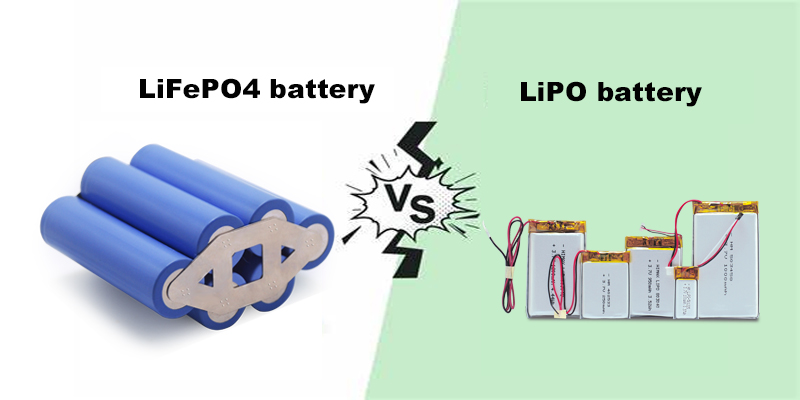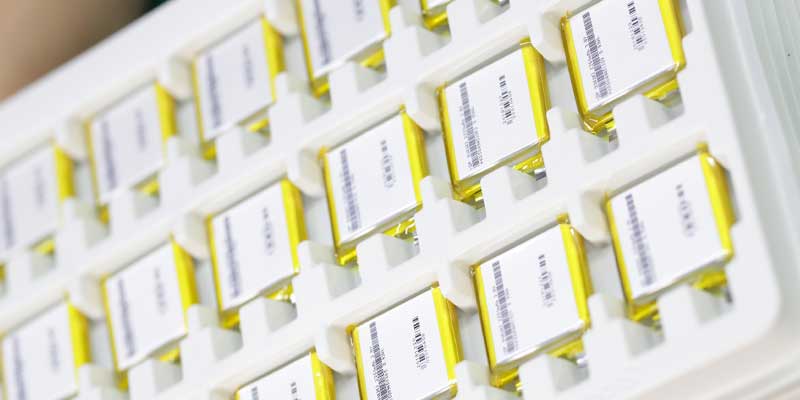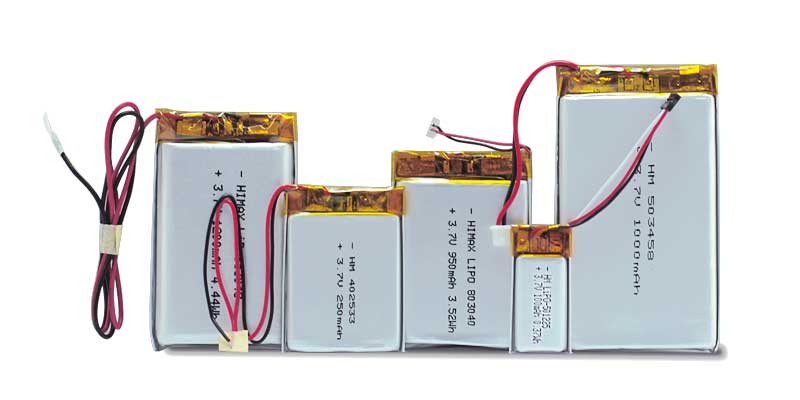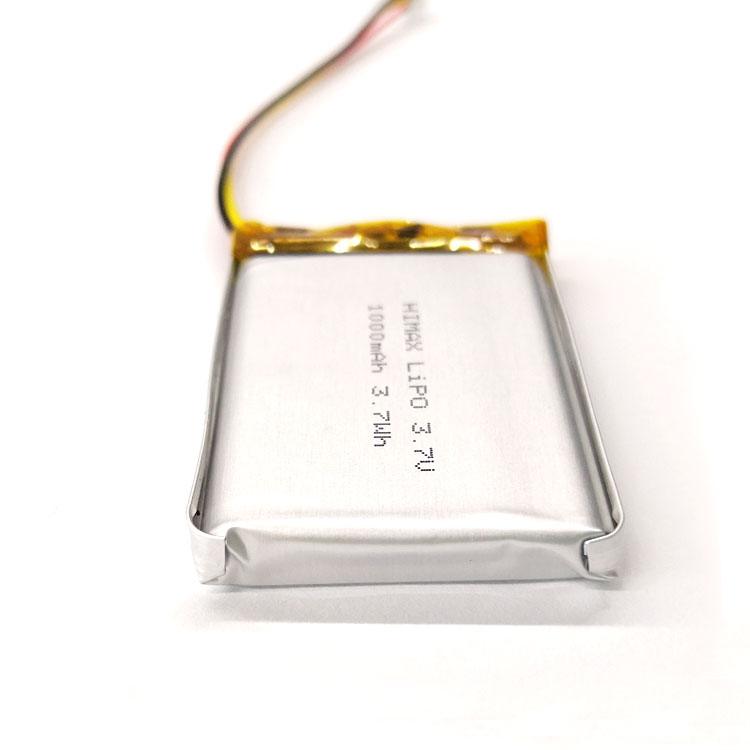
Tag Archive for: Li-Polymer Battery

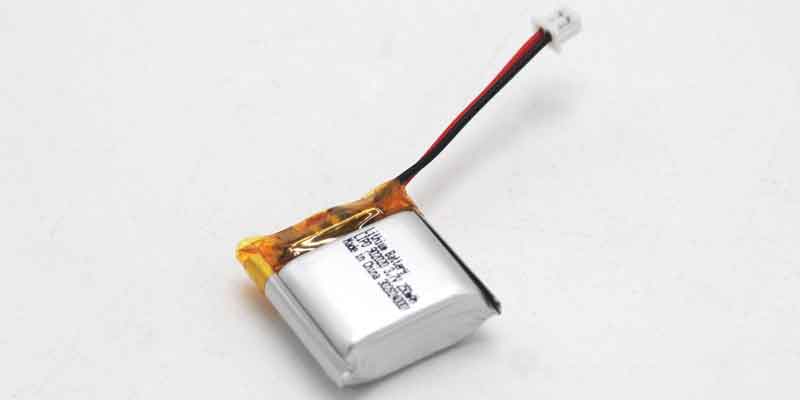
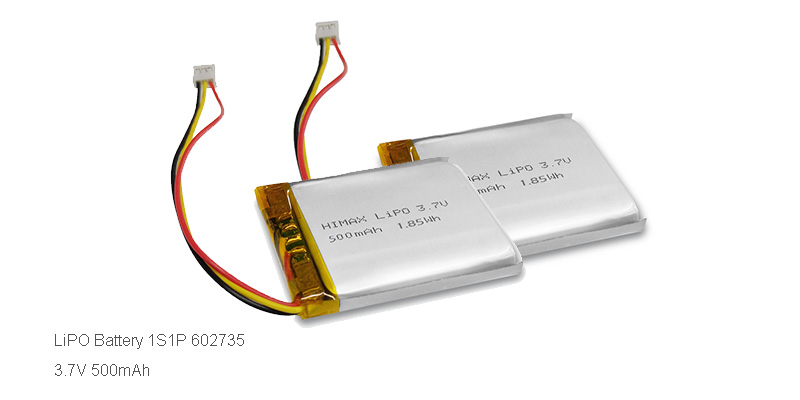
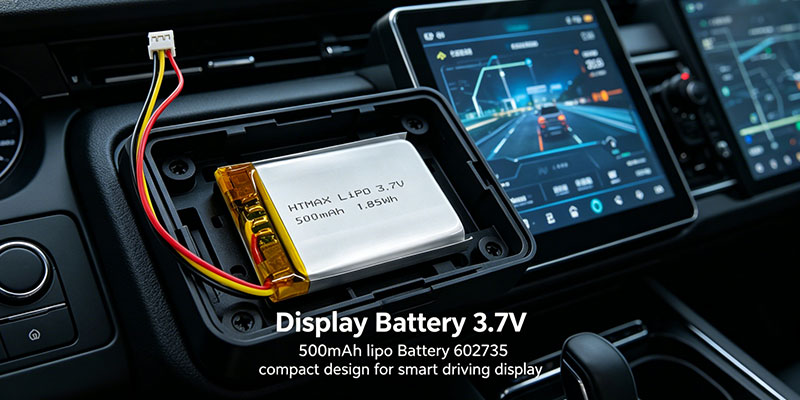
Display Battery 3.7V 500mAh lipo Battery 602735 compact design for smart driving display


As Nath, a Battery Engineer with over 10 years of experience at Himax Electronics, I’ve spent most of my career solving one specific challenge: how to design the right Display Battery for demanding applications like intelligent driving display systems.

If you are a smart driving display manufacturer or a B2B procurement professional, you already understand the pressure. You need a stable, scalable, and cost-effective battery supply, while ensuring your product remains compact, reliable, and safe. That’s not an easy balance—but it’s absolutely achievable with the right approach.

In this article, I’ll walk you through how a custom Display Battery solution, specifically based on a lipo Battery 3.7V 500mAh (1S1P 602735, NMC chemistry), can directly solve your key pain points—especially when it comes to compact size, long runtime, and safety.

Why Custom Display Battery Solutions Matter for Smart Driving Displays

Let me be direct: off-the-shelf batteries rarely meet the real-world demands of smart driving displays.

These systems are unique. They operate in constrained spaces, require stable power delivery, and must perform consistently over time. That’s why a custom Display Battery is not a luxury—it’s a necessity.

Key Challenges Faced by B2B Buyers

From my experience working with procurement teams, here are the most common issues:

  • Supply chain instability
  • Inconsistent battery quality
  • Mismatch between battery size and device structure
  • Poor discharge performance under peak loads
  • Safety concerns in enclosed environments


A well-designed Battery for the smart driving display addresses all of these issues systematically.

What Customization Really Means

When I talk about customization, I don’t just mean changing dimensions. I mean:

  • Matching capacity to actual power consumption
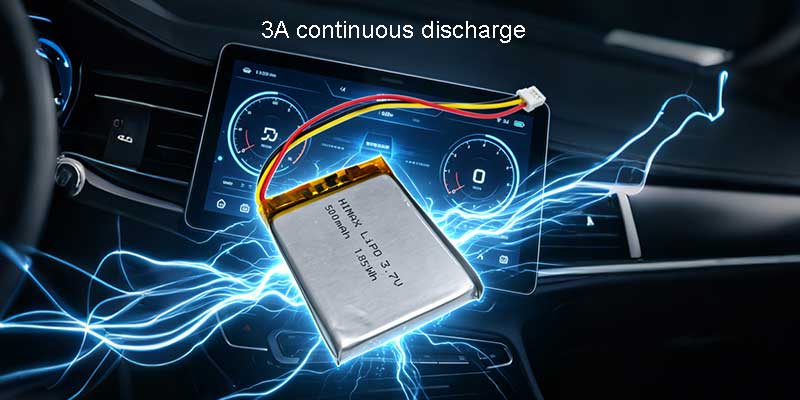
  • Optimizing discharge current (up to 3A continuous)
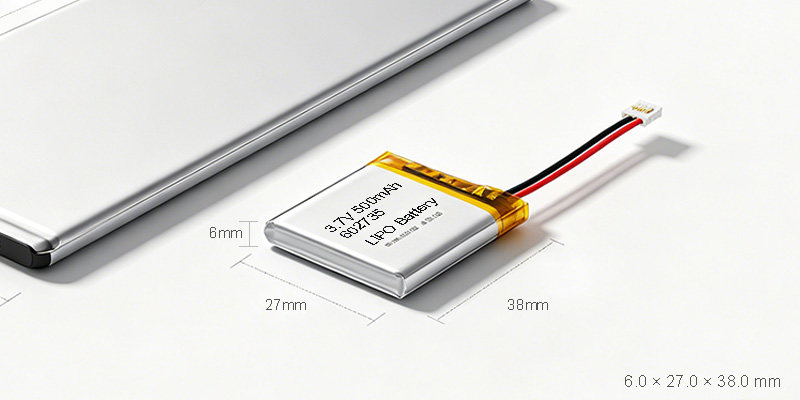
  • Ensuring mechanical compatibility (6.0 × 27.0 × 38.0 mm)
  • Integrating protection circuits for safety


This is where a Display Battery becomes a solution—not just a component.

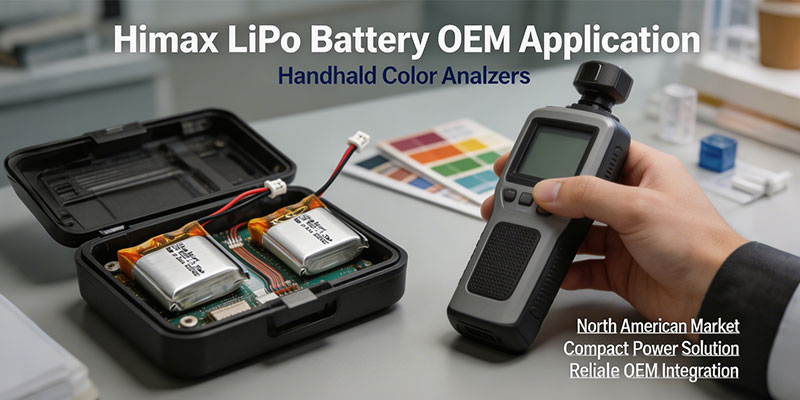
Battery for the smart driving display installed in intelligent driving screen module

Compact Size: Engineering for Space-Constrained Designs

Let’s talk about size. Every millimeter matters in smart display design.

The 602735 lipo Battery is engineered specifically for compact environments:

  • Thickness: 6.0 mm
  • Width: 27.0 mm
  • Length: 38.0 mm


Why Compact Matters

A smaller battery enables:

  • Slimmer product design
  • Better internal layout flexibility
  • More room for key components like processors and sensors


From a design perspective, this is critical.

My Engineering Approach

When optimizing a Display Battery, I focus on:

  • Energy density optimization(maximizing capacity within limited volume)
  • Thermal management compatibility
  • Mechanical stability under vibration


The NMC chemistry used in this lipo Battery provides an excellent balance between energy density and stability, making it ideal for compact smart display applications.

Practical Benefits for Buyers

For B-end procurement teams:

  • Easier integration into multiple product models
  • Reduced redesign costs
  • Faster time-to-market


This is exactly why a tailored Battery for the smart driving display creates long-term value.

Long Runtime: Meeting Real-World Usage Demands

Ultra thin Display Battery 602735 size comparison showing compact lipo Battery design

Now let’s move to one of the most critical performance metrics—runtime.

A 500mAh capacity may seem modest on paper, but when properly optimized, it delivers surprisingly strong endurance.

What Determines Runtime?

In a Display Battery, runtime depends on:

  • Device power consumption
  • Discharge efficiency
  • Voltage stability
  • Load variation


The Lipo battery 3.7V, 500mAh for intelligent driving display screen is designed to handle these factors effectively.

Performance Highlights

  • Nominal Voltage: 3.7V
  • Capacity:500mAh
  • Continuous Discharge: 3A


This means the battery can:

  • Support high-brightness displays
  • Handle peak processing loads
  • Maintain stable performance over time


Why It Matters for Your Business

Longer runtime leads to:

  • Better user experience
  • Reduced charging frequency
  • Lower maintenance costs


For B2B buyers, this translates into higher product reliability and fewer after-sales issues.

Safety First: A Non-Negotiable Requirement

Let’s be honest—battery safety is not optional, especially in smart driving environments.

A Display Battery must meet strict safety standards, particularly when integrated into enclosed systems.

Key Safety Features

The lipo Battery (NMC chemistry) includes:

  • Stable chemical structure
  • Built-in protection circuit compatibility
  • Controlled discharge behavior
  • Low internal resistance


My Safety Design Philosophy

When designing a Battery for the smart driving display, I always prioritize:

  • Overcharge protection
  • Over-discharge protection
  • Short circuit protection
  • Thermal stability


Risk Reduction for Buyers

A safe battery solution helps you:

  • Avoid product recalls
  • Reduce liability risks
  • Build brand trust


The Lipo battery 3.7V, 500mAh for intelligent driving display screen is engineered with these principles in mind.

lipo Battery Optimization for Smart Driving Displays

This is where things get interesting—and where engineering truly makes a difference.

Why Choose a lipo Battery?

A lipo Battery offers several advantages:

  • High energy density
  • Flexible form factor
  • Lightweight design
  • Stable discharge characteristics


Optimization Strategies

When I work on a Display Battery, I focus on:

  • Reducing internal resistancefor better efficiency
  • Improving cycle lifethrough material selection
  • Enhancing discharge curvesfor stable output


Real-World Impact

For smart driving displays:

  • Smooth screen performance
  • No sudden shutdowns
  • Consistent brightness levels


This is why a properly optimized Battery for the smart driving display outperforms generic solutions.

Supply Chain Stability: What B2B Buyers Really Care About

Let’s shift from engineering to business reality.

For procurement teams, performance is only half the story. The other half is supply chain reliability.

Common Supply Issues

  • Inconsistent batch quality
  • Long lead times
  • Lack of technical support
  • Poor communication


How We Address Them

At Himax Electronics, we focus on:

  • Standardized production processes
  • Strict quality control systems
  • Reliable delivery schedules
  • Technical collaboration with clients


Why It Matters

A stable Display Battery supply chain ensures:

  • Predictable production planning
  • Reduced risk of delays
  • Stronger business continuity


And let’s face it—that’s exactly what B-end buyers are looking for.

ipo battery 3.7V 500mAh for intelligent driving display screen stable discharge performance

Application Case: Smart Driving Display Integration

Let me give you a practical perspective.

Typical Application Scenario

In a smart driving display:

  • The system runs continuously
  • Space is extremely limited
  • Power demand fluctuates


Why This Battery Works

The Lipo battery 3.7V, 500mAh for intelligent driving display screen delivers:

  • Compact integration
  • Stable power output
  • Reliable performance under load


Results

  • Improved device reliability
  • Better user experience
  • Reduced service costs


This is the real value of a well-designed Display Battery.

How I Help Clients Choose the Right Display Battery

Over the years, I’ve developed a structured approach to battery selection.

Step-by-Step Process

1. Analyze application requirements

2. Evaluate power consumption profile

3. Match battery specifications

4. Optimize design and integration

5. Validate performance through testing


What You Get

  • A tailored Battery for the smart driving display
  • Optimized performance
  • Reduced risk


This process ensures that your Display Battery is not just functional—but truly optimized.

Conclusion: The Right Display Battery Makes the Difference

In the world of smart driving displays, the battery is more than a power source—it’s a critical performance driver.

By focusing on:

  • Compact size
  • Long runtime
  • Safety
  • Supply chain stability


A custom Display Battery solution can solve your biggest challenges.

The Lipo battery 3.7V, 500mAh for intelligent driving display screen is a perfect example of how engineering and practical design come together to create real value.

If you’re serious about improving your product performance and ensuring supply reliability, then it’s time to rethink your battery strategy.

Call to Action

If you’re a smart driving display manufacturer or B2B buyer looking for a high-quality, cost-effective Display Battery solution, I’m here to help.

Contact us today to customize your battery solution and secure a stable, reliable supply for your next project.


Author: Nath, Battery Engineer – Cell Selection & Performance
Published: April 14th, 2026

custom lipo battery packs

The popularity of drones has soared in recent years, with applications spanning from professional aerial photography to recreational flying for hobbyists and children. Among these categories, toy drones have gained significant traction for their affordability, accessibility, and fun. Behind their smooth take-offs, stable flights, and responsive controls lies a critical component: the battery. Himax, a global leader in lithium battery solutions, has recently highlighted the importance of its 3.7V 1500mAh LiPo (Lithium Polymer) battery, designed specifically for toy drones. This battery has emerged as a vital enabler of longer flights, safer operation, and a more enjoyable user experience.

This article explores how the 3.7V 1500mAh LiPo battery works, why it stands out in the toy drone industry, and what makes Himax’s solution a benchmark for manufacturers and consumers alike.

Why Power is the Core of Toy Drone Performance

Toy drones are lightweight, affordable, and designed for indoor or light outdoor use. However, their performance depends heavily on the power system. Without a reliable battery, even the best-designed toy drone cannot achieve stable flight. The requirements of toy drones are unique:

  1. Lightweight Power Source– Any excess weight reduces lift and flight time.
  2. Safe Operation– Since drones are used by children and beginners, safety features like overcharge protection are critical.
  3. Longer Flight Time– Short play sessions frustrate users. Extending flight from a few minutes to 15 minutes or more creates a significant improvement.

This is where the 3.7V 1500mAh LiPo battery comes into play. It balances size, capacity, and safety, providing an optimal power solution for drones under 250 grams.

How the 3.7V 1500mAh LiPo Battery Works

The battery’s engineering highlights why it has become a preferred choice for toy drones.

  1. Voltage and Cell Configuration

A single LiPo cell provides a nominal voltage of 3.7V.

This voltage aligns perfectly with the small brushless or brushed motors typically used in toy drones, delivering consistent power without stressing the system.

2.Capacity of 1500mAh

The 1500mAh capacity translates to longer flight sessions compared to smaller 800mAh or 1000mAh batteries.

Depending on drone design and weight, users can expect between 10–18 minutes of flight time, a considerable improvement in toy drone performance.

3.Discharge Rate

LiPo batteries are known for their ability to provide high burst currents.

The 3.7V 1500mAh pack supports sufficient discharge rates to handle quick accelerations, flips, and maneuvers without voltage drops.

4.Rechargeability

With proper care, the battery can withstand hundreds of charging cycles, reducing cost for parents and hobbyists.

5.Safety Features

Himax integrates overcharge, over-discharge, and short-circuit protections to safeguard both the drone and the user.
lithium battery for iot

Why LiPo Outperforms Other Battery Types

Toy drones once relied on NiMH or alkaline batteries. However, these older technologies come with significant limitations:

Lower Energy Density: Heavier batteries for the same capacity, reducing drone efficiency.

Slower Discharge: Poor performance in fast maneuvers.

Short Lifespan: Fewer charging cycles compared to LiPo.

By contrast, the 3.7V 1500mAh LiPo battery provides:

Higher energy density – More power in a compact size.

Lightweight construction – Essential for flight performance.

Stable discharge curve – Ensures consistent flight power.

Extended cycle life – Offering better long-term value.

Himax’s Edge in the Market

Not all LiPo batteries are created equal. Himax ensures its 3.7V 1500mAh pack meets strict international standards. Its advantages include:

Customization for Toy Manufacturers
Himax offers tailored solutions, adjusting battery size, connectors, and casings to fit specific drone models.

Quality Assurance
Each battery undergoes rigorous testing for capacity, cycle life, and safety to ensure consistent performance.

Global Supply Chain
With warehouses in Asia, Europe, and Australia, Himax ensures faster delivery and localized support.

Focus on Sustainability
Himax emphasizes eco-friendly production processes and designs batteries with recyclable materials wherever possible.

Applications Beyond Toy Drones

While optimized for toy drones, the 3.7V 1500mAh LiPo battery also powers other compact devices:

Mini RC cars and boats.

Handheld gaming gadgets.

Educational robots in STEM kits.

Portable LED lights or small appliances.

This versatility broadens its market potential, making it a valuable option for various consumer electronics.

Market Trends and Consumer Expectations

The toy drone market is expected to expand rapidly, especially with the rising popularity of STEM toys and the increased affordability of drone technology. Parents and hobbyists are demanding longer runtimes, faster charging, and safer batteries.

Consumer feedback on Himax’s 3.7V 1500mAh LiPo battery highlights:

Longer playtime before recharging.

Consistent power for stable flights.

Enhanced safety compared to low-quality alternatives.

This aligns with broader industry trends where consumers prioritize performance and reliability over the lowest price.

Challenges and Future Directions

Despite its benefits, LiPo technology requires careful handling. Overcharging or puncturing can cause safety risks. Himax addresses these concerns through built-in protection systems and improved casing designs.

Looking ahead, the company is exploring:

Higher capacities in compact formats.

Fast-charging solutions to reduce downtime.

Smart batteries with monitoring apps, allowing users to check charge levels on their phones.

These innovations will further enhance the role of LiPo batteries in the toy drone sector.

lithium battery design process

Conclusion

In summary, the 3.7V 1500mAh LiPo battery is a game-changer for toy drones, delivering the ideal balance of power, weight, and safety. It provides longer runtimes, stable discharge, and eco-friendly rechargeability, setting a new standard for recreational drone users. Beyond drones, its versatility ensures broad applicability in other lightweight electronics.

Himax, with its expertise in custom lithium and NiMH battery solutions, continues to lead this transformation. By combining cutting-edge technology, global supply networks, and a commitment to sustainability, Himax reaffirms its role as a trusted partner in powering the future of toys and consumer electronics.


lipo-battery-puffing

Lithium Polymer (LiPo) batteries represent a significant advancement in portable power, offering high energy density, lightweight construction, and flexible form factors. As a leading provider of advanced battery solutions, Shenzhen Himax Electronics Co., Ltd. is committed to empowering our clients with the knowledge to harness the full potential of our LiPo compounds safely and effectively. While these batteries power innovation across industries, from consumer electronics to UAVs, understanding their characteristics is paramount for ensuring longevity and safety. This guide outlines the essential practices for handling, charging, storing, and using LiPo batteries.

  1. Understanding the Fundamentals of Charging

The single most critical aspect of LiPo battery care is proper charging. Unlike older battery technologies, LiPo batteries require a specific charging protocol to avoid damage and hazardous situations.


Use a Dedicated LiPo Charger: Always employ a balanced charger specifically designed for Lithium Polymer batteries. These chargers monitor the voltage of each individual cell within the battery pack, ensuring they all charge at the same rate. This “balance charging” is crucial for maintaining the health of the pack and preventing overcharging of any single cell.


Never Leave Charging Unattended: It is a fundamental rule to never leave charging batteries unsupervised. Place the charger and battery on a non-flammable surface like a ceramic tile or inside a LiPo safety bag during the process. Stay alert to any signs of swelling, excessive heat, or smoke, and be prepared to act if necessary.


Set the Correct Parameters: Before initiating a charge, double-check that your charger is set to the correct battery type (LiPo), cell count (e.g., 3S, 4S), and current (Amperage). The standard charge rate is 1C (where 1C equals the battery’s capacity in Amp-hours). For example, a 5000mAh (5.0Ah) battery should be charged at no more than 5.0A. Charging at higher rates can significantly reduce battery life and increase risks.

custom lipo battery packs

custom lipo battery packs


  1. Handling and Usage Best Practices

How you use and handle the battery during operation directly impacts its performance cycle life.


Avoid Physical Damage: The internal structure of a LiPo battery is delicate. Puncturing, crushing, or bending the battery can cause an internal short circuit, leading to thermal runaway—a rapid and uncontrollable increase in temperature and pressure. Always inspect your battery for any signs of damage, such as dents or a swollen pouch, before use.


Monitor Voltage Levels: LiPo batteries must operate within a specific voltage range. Over-discharging (draining the voltage too low) is one of the most common causes of permanent failure. The minimum safe voltage per cell is typically 3.0V, with a practical cutoff around 3.4V-3.5V per cell to preserve longevity. Conversely, over-volting (exceeding 4.2V per cell) during use can be equally damaging.


Manage Operating Temperature: Avoid using LiPo batteries in extreme temperatures. Using a battery when it is below freezing (0°C / 32°F) can cause permanent metallic lithium plating inside the cell, increasing internal resistance and reducing capacity. High temperatures (above 60°C / 140°F) can accelerate degradation and pose a safety risk. Allow the battery to cool down to ambient temperature after use before recharging.

  1. Storage and Transportation Guidelines

Proper procedures when the battery is not in use are essential for long-term health.

Storage Voltage is Key: If you plan to store a LiPo battery for more than a few days, it should be placed at a storage voltage of approximately 3.7V to 3.8V per cell. Most modern chargers have a dedicated “Storage” mode that will automatically charge or discharge the battery to this optimal level. Storing a battery at full charge or a very low state of charge will quickly degrade its health and capacity.


Choose a Safe Environment: Store your batteries in a cool, dry place, away from flammable materials. A metal container or a specialized LiPo safety bag is ideal for storage. The ambient temperature should be stable and moderate.


Transport Considerations: When transporting batteries, especially by air, always protect the terminals from shorting by covering them with tape. Be aware of and comply with relevant transportation regulations regarding lithium batteries, which often have strict rules on watt-hour (Wh) ratings and packaging.

  1. End-of-Life and Disposal

Even with the best care, LiPo batteries eventually reach the end of their usable life, indicated by a significant loss of capacity or physical swelling.

Discharge Completely: Before disposal, it is recommended to discharge the battery completely. This can be done safely by using a dedicated battery discharger or by connecting a low-power resistor to drain the remaining energy.


Recycle Responsibly: Lithium Polymer batteries must never be disposed of in regular household trash. They contain materials that require special handling. Please take your spent batteries to a designated battery recycling facility to ensure they are processed in an environmentally responsible manner.


By adhering to these guidelines, you can ensure that you get the maximum performance, longevity, and, most importantly, safety from your LiPo batteries. At Shenzhen Himax Electronics, we are dedicated to providing high-quality, reliable lithium polymer compound batteries supported by the expertise to use them correctly. Empower your innovation with power you can trust.


Himax - 14.8V custom lithium battery pack

1. What is Charge Retention?

Charge retention refers to a battery’s ability to retain its stored electrical energy over time when not in use. This is inversely related to the self-discharge rate, which measures the rate at which a battery loses capacity on its own, without any load.

For LiPO batteries, charge retention is one of their strengths compared to older technologies like NiCd or NiMH.

2. Typical Self-Discharge Rates for LiPO Batteries

Condition Monthly

Self-Discharge Rate

Explanation
New, premium quality cells 1% – 3% High manufacturing quality, low internal resistance
Typical LiPO cells 3% – 5% Industry average
Aged or damaged cells 5% – 10%+ Increased impedance, side reactions inside cell
Stored in hot conditions Up to 15%+ Accelerated chemical reactions


Note: LiPO batteries have lower self-discharge than NiMH (≈30%/month) or lead-acid (≈5–10%/month).

custom lipo battery packs

custom lipo battery packs

3. Technical Factors Influencing Charge Retention

A. Electrochemical Stability

LiPO batteries use lithium-ion intercalation chemistry.

  • They typically use a lithium cobalt oxide (LCO) or nickel manganese cobalt (NMC) cathode with a carbon-based anode.
  • The tight molecular structure of these materials leads to low ionic leakage, reducing self-discharge.

B. Temperature

Heat accelerates electrolyte decomposition and SEI (solid electrolyte interphase) layer growth.


Cold slows down ion mobility, reducing discharge rate — but too cold can cause lithium plating when recharging.


Temperature Expected Self-Discharge Impact
0–15°C Minimal, ~1–2%/month
20–25°C Normal, ~2–4%/month
30–40°C Elevated, ~4–6%/month
>45°C Risk of degradation, >10%/month

C. State of Charge (SoC) During Storage


Storing LiPO batteries at:

  • 100% SoCaccelerates electrolyte oxidation and gas formation
  • 0% SoCcan cause over-discharge and permanent damage
  • Ideal: 40–60% SoCfor long-term storage (also called “storage mode”)

D. Manufacturing Quality

  • Well-balanced cells, high-quality separator materials, and uniform coatings lead to lower parasitic losses.
  • Example: Grade A 18650 LiPOpouch cells can show <2% self-discharge per month under optimal storage.


4. Real-World Charge Retention Over Time

Let’s assume a 5000mAh 3S 11.1V LiPO pack is stored at 50% SoC (~11.4V) at room temperature:

Time Stored Estimated Retained Charge Assumed Conditions
1 month ~4750–4900 mAh 2–5% loss
3 months ~4500–4750 mAh
6 months ~4100–4500 mAh
12 months ~3700–4200 mAh 20–30% loss in worst case

After 6 months or more, periodic checks and balance charging are recommended.


5.Risks of Poor Storage (Charge Retention Failure)


Problem Cause Consequence
Over-discharge Stored at 0% SoC Permanent capacity loss, safety risk
Cell swelling Stored at high SoC + heat Gas formation in electrolyte
Voltage imbalance Poor cell matching + time Reduced

performance and cycle life

Thermal runaway Overcharging or long-term full charge in heat Fire/explosion risk


6.How to Maximize Charge Retention

Parameter Recommendation
Storage SOC 40–60%
Storage Temp 15–25°C
Humidity <60% RH (dry storage is best)
Charger use Use “Storage Mode” if available
Inspection Check voltage every 1–2 months

Example Storage Voltage

For 3S (11.1V) battery: store at 11.1V–11.4V
For 4S (14.8V) battery: store at 14.8V–15.2V


7.Charge Retention vs. Other Battery Types

Battery Type Monthly Self-Discharge Rate Charge Retention Advantage
LiPO 2–5% ? Excellent
LiFePO₄ 1–3% ? Excellent
NiMH 20–30% ? Poor
Lead-Acid 5–10% ⚠️ Moderate
Alkaline ~0.3% (primary) ? Excellent (non-rechargeable)

Li_ion_vs_lifepo4

8. Internal Mechanisms of Self-Discharge in LiPO


  • SEI Layer Instability:Breakdown or growth of the protective layer on the anode.
  • Electrolyte Decomposition:Accelerated by temperature and SoC.
  • Parasitic Currents:Micro-leakage through separator or from cell defects.
  • Impedance Increase:As battery ages, internal resistance increases → higher leakage current.

9. Industrial Standards/Testing for Charge Retention

Standards for charge retention testing:

  • IEC 61960– Secondary lithium cells and batteries
  • UL 1642– Safety for lithium batteries
  • UN 38.3– Transportation testing
  • JEITAor GB/T 18287-2013 – Often used in Chinese battery manufacturing

Testing typically involves storing a fully charged cell at room temperature for 28 days, followed by capacity test to evaluate % charge retained.

Conclusion

LiPO batteries have excellent charge retention (~2–5% per month under good conditions).

Long-term storage without proper SoC or at high temps can result in serious damage and reduced lifespan.

Proper storage, routine maintenance, and storage at optimal voltage and temperature are critical for extending both charge retention and overall battery life.


LiPO-Battery

Interactive toy robots are revolutionizing play and education, offering dynamic movements, voice recognition, and AI-driven responses. However, their performance heavily relies on a high-quality power source—this is where Himax LiPO (Lithium Polymer) batteries shine. As a leading custom battery manufacturer, Himax specializes in designing lightweight, high-energy-density LiPO batteries tailored for robotics applications.

In this article, we’ll explore why Himax’s customizable LiPO batteries outperform standard power solutions in interactive robots, ensuring longer playtime, safer operation, and seamless integration.


1.Lightweight & Compact Design for Agile Movement

Toy robots require fast, precise movements, and bulky batteries can hinder performance.


Himax Advantage:


Our ultra-thin LiPO cells (as slim as 2.6mm) reduce weight without sacrificing capacity.


Custom shapes (curved, flexible) fit into compact robot designs.


Example: A 7.4V 1000mAh Himax LiPo weighs only 45g, enabling smoother servo motor operation compared to traditional NiMH batteries.


2.High Energy Density for Extended Playtime

Interactive robots demand long-lasting power for uninterrupted play or learning sessions.


Himax Advantage:


LiPO batteries offer 200-250Wh/kg energy density—up to 30% more runtime than NiCd/NiMH alternatives.


Custom capacities (e.g., 500mAh to 10,000mAh) match different robot sizes and functions.


Case Study: A voice-interactive robot using a 3.7V 3000mAh Himax LiPo runs 4+ hours on a single charge.

LiPO-Battery


3.Fast Charging & High Discharge Rates

Robots with high-torque motors or LED displays need batteries that deliver instant power bursts.


Himax Advantage:


Our high-discharge LiPo cells support 10C~30C bursts, ensuring smooth motor responses.


1-2 hour fast charging minimizes downtime (vs. 6+ hours for NiMH).


Application: A dancing robot with multi-axis movements performs flawlessly with a 20C discharge-rated Himax battery.


4.Customization for Seamless Integration

Every robot has unique power needs—Himax provides tailored solutions.


Custom Options:


Voltage & Capacity: From 3.7V (single-cell) to 22.2V (6S) configurations.


Connectors: JST, XT30, or proprietary plugs to match PCB designs.


Protection Circuits: Built-in BMS for overcharge/overcurrent protection.


Example: A STEM education robot uses a 7.4V 2000mAh Himax LiPo with a balance connector for safe classroom use.


5.Enhanced Safety for Child-Friendly Toys

Parents and manufacturers prioritize battery safety in interactive toys.


Himax Safety Features:


Puncture-resistant casing prevents leaks.


Thermal sensors shut down power if overheating occurs.


Certified compliance with CE, UN38.3, and RoHS.


Why It Matters: A Himax LiPO battery in a talking robot ensures zero fire risk, even after thousands of charge cycles.

3.7v-1000mah-lipo-battery

6.Cost-Effective for Mass Production

While LiPO batteries are premium products, Himax optimizes costs for toy manufacturers.


Bulk Order Benefits:


Discounts on 10,000+ unit orders.


OEM/ODM support to match robot branding.


ROI Example: A toy company switching to Himax LiPo batteries saw 20% fewer returns due to battery failures.


Conclusion: Powering the Next Generation of Smart Toys

Interactive toy robots are only as good as their power source—Himax LiPO batteries deliver the lightweight design, long runtime, fast charging, and safety needed for cutting-edge robotics. Whether you’re developing AI companions, educational bots, or RC toys, our custom LiPO solutions ensure peak performance and reliability.

3.7v-lithium-ion-battery

In today’s fast-paced world, GPS trackers have become indispensable for asset management, personal safety, and logistics. At the heart of these devices lies a critical component: the battery. As a leading innovator in battery technology, Shenzhen Himax Electronics Co., Ltd. (brand: Himassi) specializes in high-performance 18650 lithium-ion batteries and custom lithium polymer (LiPo) batteries, delivering reliable power solutions for GPS tracking applications.

This article explores how these advanced battery technologies enhance GPS tracker performance, longevity, and adaptability across industries.

1. Why Battery Choice Matters in GPS Trackers

GPS trackers require batteries that balance energy density, lifespan, and environmental resilience. Key challenges include:

Long runtime: Trackers often operate for months/years without maintenance.

Temperature tolerance: Devices face extreme heat/cold in logistics or outdoor use.

Size constraints: Compact designs demand high-capacity batteries in small form factors.

Himassi’s 18650 Li-ion and custom LiPo batteries address these needs with tailored solutions.

2. 18650 Lithium-Ion Batteries: The Standard for Reliability

The 18650 Li-ion cell (18mm diameter × 65mm length) is widely adopted in GPS trackers due to its proven stability and cost-effectiveness.

Key Advantages:

High energy density: Stores more power per unit volume, ideal for prolonged use.

Robust cycle life: 500+ charge cycles with minimal capacity degradation.

Wide temperature range: Operates from -20°C to 60°C, suitable for harsh environments.

Typical Applications:

Fleet management trackers

Wildlife/pet tracking collars


Industrial asset monitoring

Himassi 18650 Battery Parameters (Example):

Parameter Specification
Capacity 2000mAh–3500mAh
Voltage 3.7V (Nominal)
Cycle Life ≥500 cycles (80% capacity)
Operating Temperature -20°C to 60°C
Dimensions 18mm × 65mm

li-ion 18650 battery

3. Custom Lithium Polymer (LiPo) Batteries: Flexibility for Specialized Needs

For GPS trackers with unique size/shape requirements or ultra-thin profiles, custom LiPo batteries offer unmatched design flexibility.

Key Advantages:

Thin and lightweight: As slim as 1mm, fitting space-constrained devices.

Custom shapes/sizes: Pouch cells adapt to irregular PCB layouts.

Enhanced safety: Built-in protections (overcharge, short-circuit).

Typical Applications:

Wearable GPS tags (e.g., elderly/child safety)

Miniaturized covert trackers

High-end logistics monitors


Himassi Custom LiPo Battery Parameters (Example):

Parameter Specification
Capacity 100mAh–5000mAh
Voltage 3.7V (Nominal) or custom
Thickness 3mm–11mm (flexible options)
Cycle Life ≥300 cycles (80% capacity)
Operating Temperature -10°C to 50°C

4. Choosing the Right Battery for Your GPS Tracker

Selecting between 18650 Li-ion and custom LiPo depends on:

Runtime needs: 18650 for higher capacity; LiPo for compactness.

Design constraints: LiPo for irregular shapes.

Budget: 18650 is more economical for standardized designs.

Himassi collaborates with clients to optimize battery performance for specific GPS tracker use cases.

5. Future Trends: Smarter, Longer-Lasting GPS Tracker Batteries

Emerging innovations like low-power Bluetooth (BLE) integration and energy-harvesting technologies (solar/kinetic) are pushing GPS tracker battery life further. Himassi’s R&D team is actively developing:

Higher-density 18650 cells (4000mAh+).

Ultra-low-temperature LiPo batteries (-30°C operation).

Conclusion

The reliability of a GPS tracker hinges on its power source. Shenzhen Himax Electronics Co., Ltd. (brand: Himassi) provides cutting-edge 18650 lithium-ion batteries and custom LiPo batteries to meet diverse tracking demands—from rugged outdoor deployments to discreet wearables. By leveraging these advanced battery technologies, businesses and consumers can achieve uninterrupted, long-term GPS monitoring.


In today’s smart pet toys, such as electric flapping fish, automatic laser pointers, and rolling mouse toys, small lithium polymer (LiPo) batteries have become the standard power source, replacing traditional disposable batteries (e.g., AA/AAA). Why is this shift happening? This article explores the advantages of LiPo batteries in pet toys and how companies like Himax, a leading manufacturer of compact, high-performance LiPo batteries, are driving innovation in this space.

Himax - 3.7v-130mah-Lipo-Battery-10mm


Why Are LiPo Batteries the Best Choice for Pet Toys?

  1. Compact and Lightweight for Dynamic Movement

LiPo batteries use flexible pouch packaging, allowing ultra-thin and custom shapes (e.g., long strips, small blocks) to fit tight spaces.


Disposable batteries (AA/AAA) are bulky and heavy, reducing the toy’s agility (e.g., affecting a cat fish’s natural swaying motion).


Example: A 220mAh LiPo (3.7V) weighs just ~5g, while two AAA batteries (3V) weigh ~24g, significantly impacting toy performance.


  1. Rechargeable for Long-Term Cost Savings

LiPo batteries can be recharged 300–500 times, reducing replacement hassle and costs.


Disposable batteries require frequent changes, leading to higher long-term expenses.


Cost Comparison:

Battery Type Capacity Cycle Life Unit Cost Annual Cost (Daily Use)
LiPo 220mAh 3.7V 500 cycles $0.7–1.5 ~$1/year
AAA Alkaline 1.5V×2 Single-use $0.3–0.5 each $30+/year


  1. Stable Discharge for Consistent Performance

LiPo provides a steady voltage (3.7V–3.0V), ensuring smooth motor operation.


Alkaline batteries gradually drop voltage (1.5V→0.9V), causing weaker performance over time.

  1. Eco-Friendly, Reducing Battery Waste

LiPo is reusable, minimizing e-waste.


Alkaline batteries contain heavy metals (zinc, manganese), posing environmental risks.


How to Customize LiPo Batteries for Pet Toys?

  1. Key Specifications to Consider

Parameter Typical Value Selection Guide
Voltage 3.7V (1-cell) Ideal for low-power motors & USB charging
Capacity 100mAh–500mAh Based on runtime needs (e.g., 220mAh ≈ 1 hour)
Size Custom (e.g., 20×30×3mm) Must fit toy’s internal space
Charging Micro USB / Wireless / Contact Pads Depends on toy design


Discharge Rate (C-rating) 1C–3C 1C for standard toys; 3C for high-power motors

LiPO-Battery

  1. Safety & Protection Features

Protection Circuit (PCB): Prevents overcharge, over-discharge, and short circuits.


Durable Encasing: Chew-resistant materials for pet safety.


  1. Real-World Customization Examples

Flapping Fish Toy: 3.7V 220mAh, ultra-thin pouch, USB rechargeable.


Auto Laser Pointer: 3.7V 350mAh, supports wireless charging, 500+ cycles.


Future Trends: Smarter Batteries for Pet Toys

Low-Energy Bluetooth + LiPo: Enables app control & optimized power management.


Solar-Assisted Charging: Extends battery life for outdoor pet toys.


Swappable Battery Packs: User-replaceable standardized LiPo modules.

Conclusion

LiPo batteries dominate pet toys due to their lightweight design, rechargeability, and long lifespan. Companies like Himax are at the forefront of this trend, providing high-quality, customizable LiPo solutions for next-generation pet tech. As smart pet toys evolve, innovative battery designs will play an even bigger role in enhancing pet entertainment. If you’d like to upgrade the battery of your pet toys, welcome to check more details with us.


Lipo Battery

In today’s security-conscious world, reliable alarm systems are essential for protecting homes, businesses, and critical infrastructure. However, the effectiveness of these systems heavily depends on their power source. Himassi Custom Lithium Polymer (LiPo) Batteries, developed by Shenzhen Himax Electronics Co., Ltd., provide a high-performance, long-lasting, and adaptable power solution for modern alarm systems. This article explores why Himassi LiPo batteries stand out as the ideal choice for alarm applications.

1. Superior Energy Density for Extended Performance

Alarm systems require consistent power to ensure uninterrupted operation. Himassi Custom LiPo Batteries offer higher energy density compared to traditional battery technologies, meaning they can store more power in a compact form. This is crucial for alarm systems that need to operate for extended periods without frequent recharging or replacement.

Key Benefits:

Longer runtime for wireless and backup alarm systems

Compact design, enabling integration into space-constrained devices


Reduced maintenance due to fewer battery replacements


2. Enhanced Safety Features for Reliable Protection

Safety is a top priority for alarm systems, and the power source must not compromise security. Himassi LiPo Batteries are engineered with multiple safety mechanisms, including:

Overcharge & over-discharge protection

Short-circuit prevention

These features ensure that the battery remains stable even in extreme conditions, making it a dependable choice for 24/7 security systems.

3. Customizable Designs for Seamless Integration

Every alarm system has unique power requirements. Himassi offers customizable LiPo battery solutions tailored to specific voltage, capacity, and size needs. Whether for home security panels, industrial alarms, or IoT-enabled devices, these batteries can be optimized for:

Different shapes and sizes (thin, flexible, or rigid designs)


Various capacity ranges (from small backup cells to high-capacity packs)

Specialized connectors and protection circuits

This flexibility ensures seamless integration into existing and next-generation alarm systems.

4. Long Lifespan and Cost Efficiency

Frequent battery replacements increase operational costs and downtime. Himassi Custom LiPo Batteries boast an extended cycle life, capable of hundreds of charge-discharge cycles with minimal degradation. This translates to:

Lower total cost of ownership compared to standard batteries

Reduced environmental waste from fewer battery disposals

More reliable long-term performance for critical security applications

5. Fast Charging and Efficient Power Delivery

In emergency situations, a quick recharge can be vital. Himassi LiPo Batteries support rapid charging without compromising battery health, ensuring alarm systems regain full power in minimal time. Additionally, their stable discharge curve provides consistent voltage output, preventing false alarms caused by power fluctuations.

LiPO-Battery

Conclusion

When it comes to powering alarm systems, Himassi Custom LiPo Batteries by Shenzhen Himax Electronics Co., Ltd. deliver unmatched energy density, safety, customization, longevity, and efficiency. By choosing Himassi, manufacturers and integrators can enhance the reliability and performance of their security solutions while reducing maintenance costs.


custom lipo battery packs

Smart bicycle locks have become an essential feature in shared bike systems worldwide. With GPS tracking, Bluetooth connectivity, and remote unlocking capabilities, these locks rely heavily on stable and long-lasting power sources. Selecting the right rechargeable battery not only ensures reliability and user safety but also minimizes maintenance and battery replacement costs.


As a rechargeable battery factory manufacturer with over 12 years of experience, HIMAX ELECTRONICS specializes in designing custom Li-ion and LiPo battery packs for smart bike locks and other IoT applications. In this article, we explore which battery is better for smart bicycle locks and why our 18650 Li-ion and LiPo battery solutions are the most popular options in the market.


Why Smart Bicycle Locks Require Rechargeable Batteries

Smart locks integrated with GPS, GSM, and Bluetooth modules consume much more energy than traditional mechanical locks. Therefore, these systems require:

  • Rechargeable battery packs
  • High cycle life
  • Stable output voltage
  • Compact size
  • Safety certifications

Using primary (non-rechargeable) batteries leads to frequent replacements, higher labor costs, and service interruptions. That’s why lithium-based rechargeable batteries are now the industry standard.

Li-ion vs. LiPo: Which Is Better?

Lithium-Ion (Li-ion) Batteries

Li-ion batteries, especially the 18650 cylindrical cells, are one of the most widely used power sources for smart locks.

Advantages of Li-ion Batteries

  • High energy density
  • Long cycle life (500–1000+ cycles)
  • Stable voltage output
  • Robust and cost-effective

At HIMAX, our most commonly used configurations for smart locks include:

Battery Model Voltage (V) Capacity (mAh) Configuration Application
18650 1S1P 3.7V 3400mAh 1 cell Basic GPS lock
18650 1S6P 3.7V 21,000mAh 6 parallel Extended usage
18650 2S1P 7.4V 3400mAh 2 series Dual-cell GPS/GSM lock

These battery packs are highly customizable with PCM/BMS protection circuits, thermistors, and waterproof enclosures.


Lithium-Polymer (LiPo) Batteries

LiPo batteries are an excellent alternative when space and form factor are major constraints. Their soft packaging allows flexible shapes and sizes.

Advantages of LiPo Batteries

  • Ultra-thin and lightweight
  • Flexible dimensions
  • High discharge rate options
  • Customizable shapes
Battery Model Voltage (V) Capacity (mAh) Size (mm) Application
403040 LiPo 3.7V 800mAh 4.0×30×40 Compact smart lock
503450 LiPo 3.7V 1200mAh 5.0×34×50 Mid-size GPS lock
Custom LiPo pack 3.7–7.4V 1000–5000mAh Based on request Advanced GPS + IoT

While LiPo batteries have slightly lower cycle life compared to 18650 Li-ion batteries, their space efficiency makes them ideal for ultra-compact lock designs.

LiPO-Battery

Why Choose HIMAX as Your Battery Supplier?

As a battery factory manufacturer in Shenzhen, China, HIMAX has been focusing on custom battery pack design and production for over 12 years. Our engineering team has delivered battery solutions to global leaders in the shared mobility and IoT sectors.

What Sets Us Apart

Factory-direct supply for cost advantage

Customized battery solutions for smart locks

Certified cells: UN38.3, IEC62133, MSDS, CE, RoHS

Quick prototype & mass production support

Advanced production lines with automatic welding and aging equipment

We ensure each battery pack is equipped with reliable protection circuits for overcharge, over-discharge, short circuit, and over-current.

Recommendation – Best Battery for Smart Bicycle Locks

Application Level Recommended Battery Voltage Capacity Key Benefit
Basic GPS tracking 18650 1S1P 3.7V 3400mAh Compact, affordable
Mid-range GPS + GSM 18650 2S1P 7.4V 3400mAh Dual voltage output
Long-lasting usage 18650 1S6P 3.7V 21Ah Extended runtime
Ultra-compact lock LiPo 403040 3.7V 800mAh Small and light
Flexible shape Custom LiPo Pack 3.7–7.4V 1000–5000mAh Shape-based custom fit

NCR18650b 3400mAh and Li Ion Customized Battery Manufacturing

Conclusion

When selecting a battery for smart bicycle locks, Li-ion 18650 battery packs are the most reliable and cost-effective solution for standard applications. However, LiPo batteries are ideal for space-restricted designs. HIMAX ELECTRONICS, as a trusted battery factory manufacturer with 12 years of expertise, offers both options tailored to your specific project.


Need help designing a custom battery for your smart lock system?
Contact us to get professional support and fast prototyping from HIMAX!

LiPO-Battery

As a professional battery manufacturer with over 12 years of experience, HIMAX specializes in the design and production of high-quality rechargeable batteries, including Li-ion, LiFePO4, NiMH, and especially Lithium Polymer (LiPo) batteries. Our factory is equipped with advanced production lines, automatic welding machines, and aging test equipment to ensure every battery meets the highest standards. In this article, we focus on LiPo batteries and their applications in wearable lighting devices, such as LED wristbands for concerts, wearable flashlights, headlamps, and hunting lamps.


Why LiPo Batteries Are Ideal for Wearable Lighting Devices

Key Benefits of LiPo Batteries in Wearable Technology

1. Compact and Flexible Form Factor

LiPo batteries offer flexible design possibilities due to their slim and compact structure, making them ideal for space-constrained applications like wristbands or headlamps. Unlike cylindrical batteries, LiPo cells can be manufactured in various shapes and sizes to fit customized designs.

2. High Energy Density

These batteries provide a higher energy-to-weight ratio, which means more power can be packed into a lighter battery—critical for comfort and portability in wearable devices.

3. Rechargeable and Long Cycle Life

All our LiPo batteries are rechargeable and designed to offer 300+ charge cycles, ensuring long-lasting performance and minimizing electronic waste.

4. High Safety Standards

Our batteries are equipped with overcharge, over-discharge, and short-circuit protection, meeting international safety standards. For wearable devices, safety is paramount as the battery is in close contact with the user’s body.

5. Reliable Performance in Various Conditions

Our factory ensures every batch of batteries undergoes rigorous aging and stress testing, making them suitable for both indoor and outdoor lighting wearables.

4s_lipo_battery


Recommended LiPo Battery Models for Wearable Lighting Devices

We supply a range of LiPo battery models suitable for different wearable lighting applications. Below is a comparison of some of our best-selling models:


Model Voltage (V) Capacity (mAh) Dimensions (mm) Ideal Applications
503738 3.85 830 5.0 x 37 x 38 LED wristbands, slim wearable flashlights
633650 3.7 1200 6.3 x 36 x 50 Wearable flashlights, compact headlamps
603035 3.7 1200 6.0 x 30 x 35 LED armbands, wearable safety lights
854169 3.7 2600 8.5 x 41 x 69 High-capacity hunting lamps, headlamps
903450 3.85 2250 9.0 x 34 x 50 Outdoor wearables, long-runtime headlamps

Applications of LiPo Batteries in Wearable Lighting

Common Use Cases

LED Concert Wristbands: Require ultra-light, compact batteries for hours of illumination during live performances.

Wearable Flashlights: Designed for hand-free use, needing high-energy compact batteries.

Headlamps and Helmet Lights: Require long-runtime and stable output for outdoor activities.

Hunting Lights: Need robust, long-lasting, and powerful battery packs for field use.

Why Choose Us as Your Battery Partner

As a LiPo battery factory with in-house R&D and manufacturing, we ensure:

Direct factory pricing: Eliminate intermediaries, save costs and create higher profits for you

Custom battery pack design support: Professional customization service, customized batteries according to your project requirements

Fast lead time and global shipping: Mature production line + long-term cooperative freight forwarder, providing stable production delivery and transportation services

Strict quality control and certification: (RoHS, CE, UN38.3, MSDS)

custom lipo battery packs

custom lipo battery packs


Conclusion

Lithium Polymer batteries have proven to be the best power solution for wearable lighting devices due to their compact size, high capacity, and safety features. Our factory offers a complete range of LiPo battery models ideal for various wearable applications, supported by expert production capabilities and strict quality standards.

If you are looking for a reliable LiPo battery supplier for your wearable lighting products, feel free to contact us for samples or custom solutions.