Tag Archive for: Wholesale Batteries

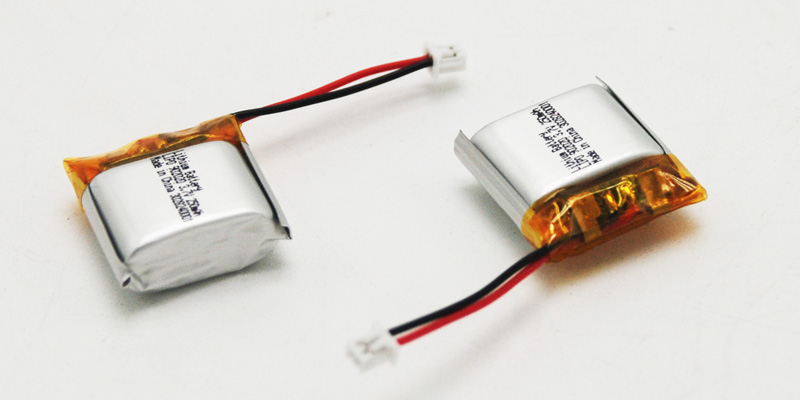
Himax 902020 LiPo battery 3.7V 250mAh with 1.5mm-2P connector for color measurement analyzer

By  Nath  •  Battery Engineer, Cell Selection & Performance  •  Himax Electronics  •  July 2026

Category: LiPo Battery  /  Handheld Instruments  /  Color Analysis  /  OEM Battery  /  North America


Color measurement instruments have a dimension tolerance problem most people outside the industry don’t think about: the battery. Not the sensor, not the firmware, not the optical path — the battery. I’ve evaluated hundreds of cell configurations over the course of my career, and the portable color analyzer category is one where the battery selection genuinely shows up in end-user reviews, calibration stability, and field return rates. Get it wrong, and your device “just works worse” in ways that are difficult to trace back to the source.

A color analyzer — specifically the handheld spectrophotometer or colorimeter type used in quality control workflows across printing, coatings, textiles, and plastics — is a precision instrument running on a very modest power budget. The sensor and LED driver need clean, stable voltage. The microcontroller can’t tolerate supply noise. And the device needs to be reliable across thousands of measurement cycles without the user thinking about the battery at all.

That’s the context in which I want to walk through the Himax 902020 LiPo, 3.7V 250mAh — why its characteristics make it a strong fit for this application category, what the spec sheet actually means in practice, and what OEM product teams in North America should be paying attention to when they make this cell selection.
 

PCM protection circuit diagram for Himax 902020 lithium polymer battery pack

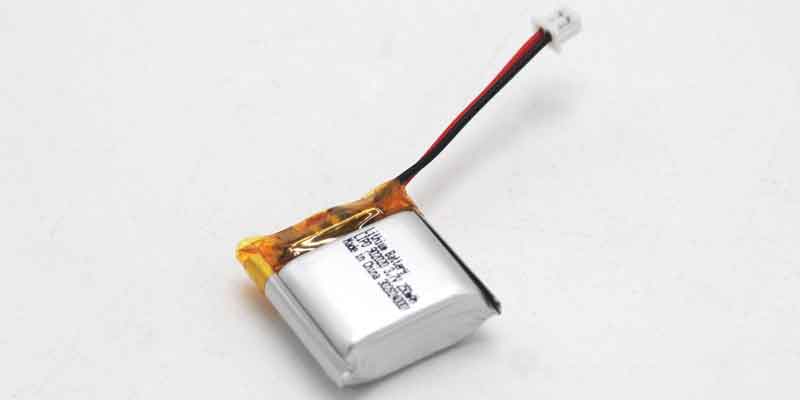
Himax 902020 LiPo battery — 3.7V 250mAh, 1S1P, with 1.5mm-2P connector and 28AWG output wire

Why Battery Selection Matters More Than You Think in Color Instruments

Let me start with the failure mode nobody documents. A color analyzer with a degraded battery doesn’t usually stop working — it starts giving subtly inconsistent readings. The LED driver pulses slightly differently when supply voltage sags. The microcontroller’s ADC reference drifts. The device still “passes” its internal self-check, but the delta-E numbers start to drift just enough that field QC teams start questioning whether their reference samples are the problem. I’ve seen this pattern in returned units.

The root cause is usually one of two things: a cell with poor voltage flatness under load, or a cell whose capacity has degraded faster than expected because it was cycled in an environment the chemistry wasn’t suited for. Both of these are addressable at the battery selection stage — and that’s why I think the 902020 is worth examining in detail for this application.

The 902020: What the Model Number Actually Tells You

Battery engineers use cell model numbers as shorthand for physical dimensions. The 902020 breaks down as: 9mm thick × 20mm wide × 20mm long. That’s a genuinely compact form factor — smaller than a postage stamp in footprint, less than a centimeter thick. For a handheld colorimeter where the device enclosure is engineered down to every cubic millimeter, this matters considerably.

The maximum pack dimensions are 9.0 × 20.0 × 21mm (the extra millimeter in length accounts for the PCM and tab geometry). Total weight comes in at approximately 5 grams — about the weight of a US nickel. In a 200–300 gram instrument, five grams for the battery is about as good as you’re going to get for this capacity class.

The output connector is a 1.5mm-2P Molex-compatible pitch, which is the standard connector for compact single-cell LiPo packs in handheld instruments. The wire is 1571 28AWG, 30±3mm — short enough to route cleanly inside a compact enclosure, rated for the current levels this cell operates at.
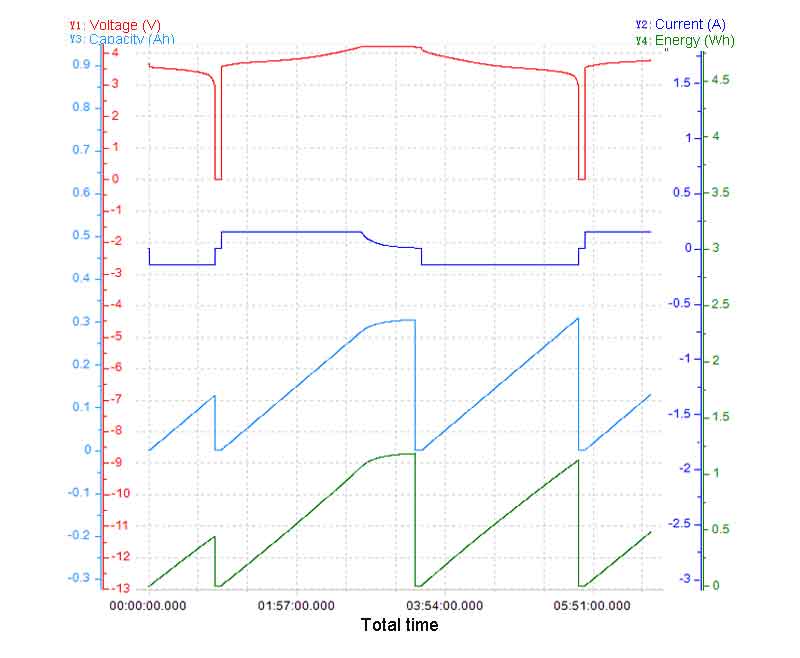
CC/CV charge and 0.2C discharge curve for Himax 902020 3.7V 250mAh LiPo battery

Electrical Performance: The Numbers That Matter for Color Analysis Applications

Let me go through the key electrical parameters and explain what each one means in the context of a color measurement device, because “3.7V 250mAh” doesn’t tell the whole story.

Nominal Capacity: 250mAh (Minimum 245mAh)

At 0.2C discharge (50mA) to a 3.0V cutoff, this cell delivers 250mAh nominal with a guaranteed floor of 245mAh. For a handheld colorimeter with a typical power draw of 50–80mA during active measurement and lower standby current, this translates to 3–5 hours of active use per charge — enough for a full shift in most QC environments without mid-day charging. The 0.2C rate is also the standard test condition, which is realistic for this application; color instruments aren’t drawing heavy current continuously.

Nominal Voltage: 3.7V | Charge: 4.2V | Cutoff: 3.0V

The 3.7V nominal is standard for single-cell lithium polymer. What matters more for precision instruments is the voltage flatness across the discharge curve. LiPo chemistry maintains a relatively stable plateau from roughly 4.1V down to 3.5V under moderate loads — which is exactly the operating window where the instrument’s voltage regulator operates most efficiently. The PCM’s over-discharge cutoff at 3.0±0.05V prevents deep discharge damage, which is the primary cause of premature capacity loss in cycled cells.

Max Continuous Discharge: 250mAh (1C)

The cell supports up to 250mA continuous discharge with a PCM rated for 0.5A. For a color analyzer, peak current occurs during LED firing sequences — typically brief pulses well within this threshold. The PCM’s over-current detection triggers at 1–3A with a 5–20ms delay, meaning it handles transient spikes without nuisance tripping during normal measurement cycles.

Cycle Life: 300 Cycles at ≥80% Capacity

After 300 standard charge/discharge cycles at 20±5°C, the cell retains at least 80% of its original capacity. For a color instrument used in a QC lab — say, charged every day, five days a week — 300 cycles represents roughly 60 weeks of daily use before capacity falls below the threshold. That’s a meaningful service interval. After that point, the cell still works; it just holds less charge, which the user notices as shorter battery life rather than any measurement quality degradation.

Internal Impedance: ≤150mΩ (Cell) / ≤230mΩ (Pack)

Low internal impedance means low voltage drop under load, which translates to more stable supply voltage for the instrument’s electronics. At ≤150mΩ at the cell level and ≤230mΩ at the pack level (the additional ~80mΩ is the PCM resistance, within the ≤70mΩ PCM spec), this is well-suited for electronics that are sensitive to supply variation.


Full Specification Summary


Parameter Value Note
Cell Model 902020 LiPo, 1S1P
Nominal Capacity 250mAh 0.2C, cutoff 3.0V
Minimum Capacity 245mAh Guaranteed floor
Nominal Voltage 3.7V
Energy 0.925Wh
Charge Voltage 4.2V CC/CV method
Std. Charge Current 50mA (0.2C) 6-hour charge
Max. Charge Current 125mA (0.5C)
Std. Discharge Current 50mA (0.2C)
Max. Cont. Discharge 250mA (1C)
Cell Internal Impedance ≤150mΩ 1kHz AC method
Pack Internal Impedance ≤230mΩ Incl. PCM
Cycle Life 300 cycles ≥80% capacity retention
Charge Temp. Range 10°C – 45°C
Discharge Temp. Range -10°C – 60°C
Storage Temperature 0°C – 45°C
Dimensions (Pack) Max 9.0 × 20 × 21mm T × W × L
Weight (Pack) ~5g
Output Connector 1.5mm-2P
Output Wire 1571 28AWG, 30±3mm
Standards GB/T18287-2013, UL1642, CE61580

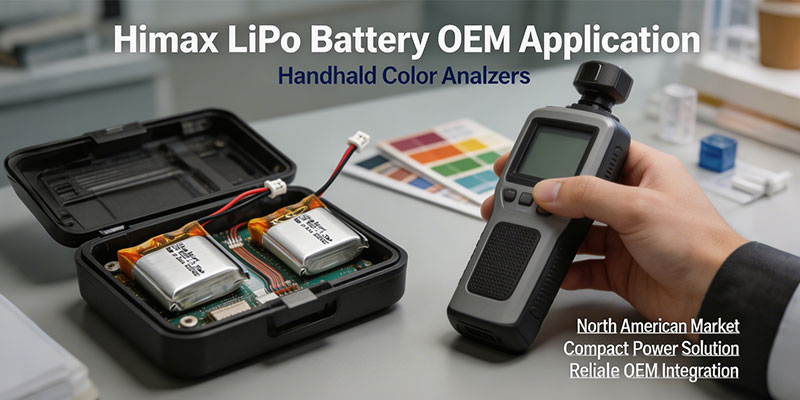
Himax LiPo battery OEM application in handheld color analyzers for North American market

The PCM: The Protection Layer That Keeps the Instrument Trustworthy

I want to spend a moment on the PCM (Protection Circuit Module) because it’s underappreciated in battery discussions, but it’s central to why this pack behaves reliably in a precision instrument over hundreds of cycles.

The PCM on the 902020 pack monitors and protects against four conditions:

  • Overcharge: Detects at 4.28±0.05V with a 1.0–1.6 second delay, resets at 4.08±0.05V. This tight voltage window prevents the cell from being driven past safe charge levels, which is the primary cause of lithium polymer capacity fade and, in extreme cases, safety events.
  • Over-discharge: Detects at 3.0±0.05V with a 115–173ms delay. The delay prevents nuisance trips on brief load transients during LED pulses, while still protecting the cell from sustained deep discharge.
  • Overcurrent: Detects between 1–3A with 5–20ms response. Resets automatically on load release. This protects against fault conditions in the instrument’s electronics without requiring user intervention.
  • Short circuit: Hardware detection of external short circuit, with automatic reset when the short is removed. Important for field reliability — a connector fault doesn’t destroy the cell.


The IC used is the G3J with 8205A MOSFET, a combination that’s well-established in consumer and medical-adjacent electronics for its reliability and consistent protection thresholds. PCM resistance is ≤70mΩ, meaning the protection circuitry contributes minimal additional voltage drop under load.

Temperature Range and What It Means for North American Deployment

The 902020 charges from 10°C to 45°C and discharges from -10°C to 60°C. For North American QC lab environments — which are typically climate-controlled — this range is more than adequate. The discharge floor at -10°C also covers outdoor measurement scenarios, such as coatings inspection on construction sites in northern US or Canadian winters.

The spec includes two temperature characteristic tests worth noting for instrument designers. At 60°C for 2 hours after standard charge, the cell retains ≥90% of capacity — relevant for instruments stored in a vehicle in summer sun. At -10°C for 4 hours after standard charge, retention is ≥60% — meaning the instrument still functions in cold environments, though runtime will be reduced. Users in northern climate deployments should factor this in.

For storage: 0°C to 45°C is the recommended range, with shipment voltage between 3.85V and 4.05V (approximately 70–90% state of charge). This is important for OEM assembly operations — batteries shipped at proper state of charge arrive in better condition and can be validated and assembled without a mandatory pre-conditioning charge cycle.

Safety Validation: What the Cell Has Been Tested Against

The cell meets GB/T18287-2013, UL1642, and CE61580 standards — the combination that covers most North American and North American-export market requirements. The safety test suite includes:

  • Overcharge test: 3× max charge rate at constant voltage for 7 hours — no explosion, no fire.
  • Over-discharge test: 1C discharge for 2.5 hours — no explosion, no fire.
  • Short circuit: External short via 50mΩ load until voltage drops below 0.1V — surface temperature stays below 150°C, no explosion, no fire.
  • Heating: 5±2°C/min ramp to 130°C, held 30 minutes — no explosion, no fire.
  • Crush: 2MPa hydraulic press at 13kN force — no explosion, no fire.
  • Drop: 1 meter onto concrete, two directions — no explosion, no fire, no smoke.
  • Vibration: 6mm amplitude, 10–55Hz swept at 1Hz/min, 30 min/axis across XYZ — no leakage, no fire, no explosion.


These aren’t just compliance checkboxes for North American OEM teams — they’re the tests that determine whether your product passes regulatory review on the first submission. Getting the battery right the first time saves more time than most teams estimate.

Charge and Storage Guidelines for OEM Integration Teams

During Assembly and Pre-Shipment

Batteries arrive at 70–90% state of charge (3.85–4.05V). Pre-shipment inspection includes voltage, resistance, and protection circuit function verification. Each unit carries an AQL of 0.65% — the industry-standard incoming quality level for components in consumer and light industrial electronics.

In the Finished Product

Use only a CC/CV charger rated for 4.2V, maximum 125mA. Standard charge is 50mA for 6 hours. Do not exceed the specified charge temperature range (10°C–45°C). Do not charge continuously for more than 8 hours. For instruments that will sit in storage or on a shelf for extended periods, top up the charge every 3 months — LiPo self-discharge at 0°C–45°C storage can lead to deep discharge if left indefinitely.

Design Note on Discharge Rate

The maximum rated continuous discharge is 250mA (1C). If your instrument’s firmware allows any high-current burst modes — for example, driving multiple LEDs simultaneously — validate that the peak draw stays within this limit. Running above the rated continuous current accelerates capacity fade and may trigger the PCM’s overcurrent protection unnecessarily.

Who Should Be Looking at This Cell Configuration

If you’re an OEM product team designing or sourcing power for any of the following, the 902020 3.7V 250mAh is worth evaluating:

  • Handheld spectrophotometers and colorimeters for QC in printing, coatings, textiles, plastics, or food
  • Benchtop portable instruments where the battery is a secondary power source with a small form factor constraint
  • Consumer or prosumer color measurement tools where size and weight are primary design drivers
  • Industrial inspection devices with similar power draw profiles (low average current, modest peak current, frequent charge cycles)


The cell is not the right fit for high-drain applications (sustained discharge above 1C), ultra-low-temperature operation below -10°C, or applications requiring more than 300 cycles before the first planned battery service interval. If any of those describe your use case, reach out and we’ll talk through the alternatives.

Getting Specs, Samples, and Custom Configurations

The full datasheet for the 902020 3.7V 250mAh is available for download directly from the product page: 902020 LiPo Specification Sheet (PDF). It includes the complete electrical and mechanical parameters, PCM schematic, safety test results, and handling instructions.

If you’re evaluating this cell for integration into a color measurement instrument or a similar handheld application, the most productive next step is a sample request with your target load profile. We work best when we know your average current draw, peak current events, charge rate constraints, operating temperature envelope, and any specific connector or wire length requirements.

You can reach our engineering team through the Himax contact page — we handle technical inquiries directly, not through a sales layer, so you’ll get a substantive response about your specific application.

To explore our full range of lithium polymer cells and custom pack configurations, the Himax LiPo battery product page has an organized overview by chemistry, form factor, and capacity range.

For teams working on exploration, field survey, or scientific instrumentation applications, our exploration equipment battery section covers battery configurations optimized for that operating environment.


A Closing Thought on Battery Selection Process

I find that battery selection in precision instruments gets treated as a last step in the product design process — something to sort out after the optics, the firmware, and the enclosure are locked. In my experience, that sequencing costs teams time and sometimes forces compromises in the instrument’s power management architecture.

The better approach is to bring the cell evaluation into the design phase early. The 902020’s 9.0 × 20 × 21mm envelope, 5-gram mass, and 0.925Wh energy define a set of constraints that should inform the PCB layout, the regulator selection, and the charge circuit design — not the other way around. If you want to talk through how this cell’s characteristics map to your specific instrument design, that’s exactly the kind of conversation I’m available for.


About the Author


Nath is a Battery Engineer at Himax Electronics, specializing in Cell Selection & Performance.

With deep experience in energy density optimization, discharge stability analysis, and cycle life

evaluation, he supports OEM teams in medical and consumer electronics with battery selection

and integration guidance from early design through mass production qualification.

Published by Himax Electronics  •  July 2026


In industrial equipment, vehicle-mounted systems, outdoor security installations, energy storage backup, and extreme-environment applications ranging from polar expeditions to high-heat industrial enclosures, a battery’s ability to perform across temperature extremes directly determines the reliability and service life of the entire system.

Standard Ni-MH batteries operate in a narrow window: 0°C to 50°C. Below that floor, capacity falls off sharply, high-current discharge becomes impossible, and equipment fails to start. Above the ceiling, charging efficiency drops, internal pressure rises, capacity degrades faster, and leakage becomes a risk.

To address the industry’s long-standing “freezes in the cold, fails in the heat” problem, the Himax Electronics R&D team overhauled the Ni-MH battery system across four dimensions — materials, electrolyte formulation, conductivity architecture, and sealing process. The result: our new-generation wide-temperature Ni-MH 50A 2200mAh and 43SC 2500mAh cells deliver stable charge and discharge across a full -40°C to 70°C range, pushing well beyond what the industry has previously achieved.

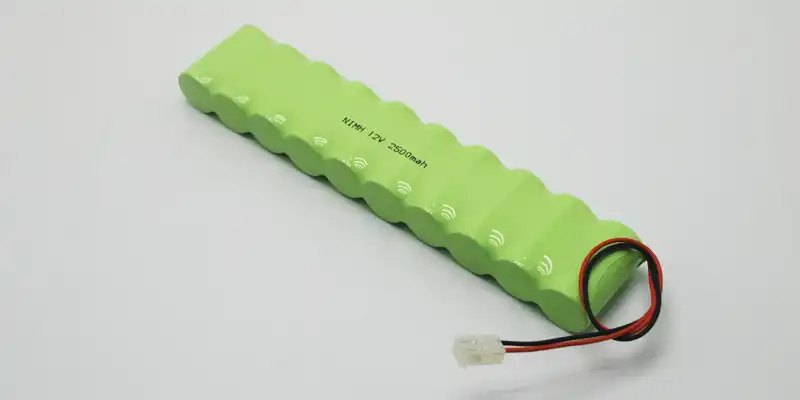
Himax wide-temperature Ni-MH SC2500mAh 12V rechargeable battery pack rated to -40°C


Himax 43SC 2500mAh Ni-MH wide-temperature battery pack (10S1P, 12V nominal) — rated from -40°C to 70°C

I. Why Wide-Temperature Technology Is Needed: The Industry’s Pain Points

Conventional Ni-MH cells on the market today carry a well-documented temperature weakness:

Low-Temperature Pain Points (Below 0°C)

Electrolyte activity drops, hydrogen desorption from the storage alloy is impeded, and internal resistance climbs steeply. At -10°C, capacity falls to roughly 60% of rated and can only be drawn at low current. At -30°C, normal discharge is essentially impossible. Outdoor equipment and high-altitude installations in cold climates regularly experience power cutoffs and startup failures.

High-Temperature Pain Points (Above 50°C)

Charging polarization increases significantly, internal pressure builds, and charge acceptance deteriorates. Sustained high-temperature operation accelerates aging of the electrode structure, sharply shortening cycle life. Swelling, leakage, and permanent capacity loss become real failure risks.

The Longevity Trade-Off

Batteries engineered for extreme temperature performance have historically paid for it with shorter service life — a compromise that has forced system designers to choose between temperature range and durability.

II. Himax’s Core Technical Breakthroughs: A Full-Range Adaptation System

Rather than tweaking individual parameters, Himax rebuilt the Ni-MH system from four foundational directions: negative electrode alloy, electrolyte system, conductivity architecture, and sealing process.

Modified Hydrogen-Storage Alloy (Negative Electrode)

We optimized the alloy composition to improve hydrogen desorption efficiency at low temperatures, reducing polarization resistance in extreme cold and restoring electrochemical activity. Simultaneously, we enhanced the alloy’s structural stability at high temperatures, suppressing the particle pulverization that causes capacity fade over time.

Wide-Temperature Electrolyte Formulation

We developed a solvent system with a lower freeze point and higher thermal ceiling than conventional KOH-based electrolytes. The formulation maintains adequate ionic conductivity at -40°C while preserving chemical stability at 70°C — expanding the usable electrochemical window across the full operating range.

High-Conductivity Composite Architecture

Electrode plates were made thinner to increase active surface area, and positive current tabs were widened. These changes reduce internal resistance across all temperatures, enabling high current delivery in extreme cold without voltage collapse and clean charge acceptance in extreme heat.

Deep-Groove High-Temperature Sealing

We adopted a deep-groove rolling crimp process that optimizes the sealing contact geometry and compression force. This prevents leakage and case deformation under sustained high-temperature charging — directly addressing the swelling and electrolyte migration that standard cells experience in enclosed hot environments.

Together, these four upgrades deliver stable operation from -40°C to 70°C with substantially improved IEC cycle life — clearing the industry’s conventional temperature limits by a significant margin.

III. Test Data: Multi-Dimensional Validation Across the Full Temperature Range

To validate performance under extreme conditions, Himax conducted a comprehensive series of standardized temperature-chamber charge/discharge tests simulating arctic cold, high-heat operation, diurnal temperature swings, and outdoor sun exposure. The results below are based on a 10S1P pack built from 43SC 2500mAh cells (12V nominal).


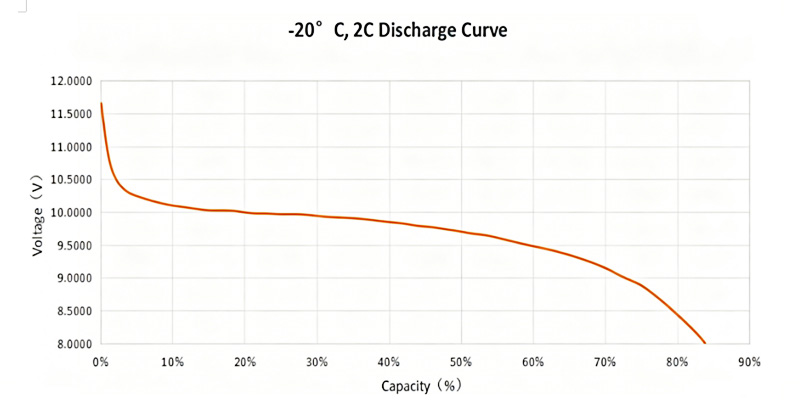
Test 1: Low-Temperature High-Rate Performance at -20°C, 2C Discharge

After stabilizing at -20°C in a temperature chamber, the pack was charged to full capacity and then discharged at 2C:

  • No sleep mode, no cutoff — normal startup and continuous charge/discharge achieved
  • Capacity retention exceeded 80% at full 2C current, sufficient to run equipment at full rated power in sub-zero conditions

This directly solves the field problem where equipment either fails to start or runs at reduced power in low-temperature environments.

High-rate discharge at -20°C and 2C showing voltage vs. capacity


Figure 1: -20°C, 2C discharge curve — Himax wide-temperature Ni-MH pack (10S1P, 43SC 2500mAh). Capacity retention >80%.

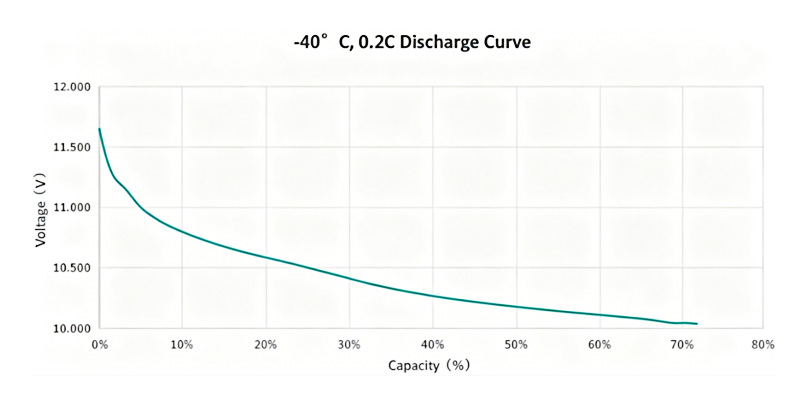
Test 2: Extreme Cold Performance at -40°C, 0.2C Discharge

After full stabilization at -40°C, the pack was subjected to standard charge/discharge testing:

  • No sleep mode, no cutoff — the battery started and operated normally
  • Capacity retention exceeded 70%, with stable continuous current output

This resolves the fundamental field failure of conventional Ni-MH in arctic conditions: “the charge is there but can’t be delivered, and the equipment won’t start.”

Discharge curve at -40°C and 0.2C for Himax wide-temperature Ni-MH cell


Figure 2: -40°C, 0.2C discharge curve — Himax wide-temperature Ni-MH pack. Capacity retention >70%, voltage remains stable through 70% of discharge.

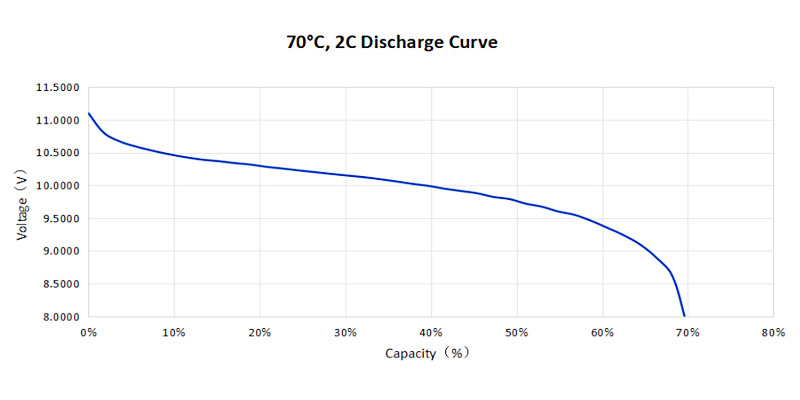
Test 3: High-Temperature Performance at 70°C, 2C Discharge

After stabilization at 70°C, the pack was charged and discharged at 2C:

  • Capacity retention approached 70% under high-rate discharge at extreme heat
  • Charge acceptance was stable: no overcharge events, no thermal runaway risk
  • No leakage, no abnormal internal pressure rise

This addresses the challenge of simultaneously handling both temperature extremes — the same pack that survives -40°C also handles 70°C without modification.

Discharge performance at 70°C and 2C for Himax Ni-MH battery


Figure 3: 70°C, 2C discharge curve — Himax wide-temperature Ni-MH pack. Capacity retention ~70%, no thermal events, no leakage.

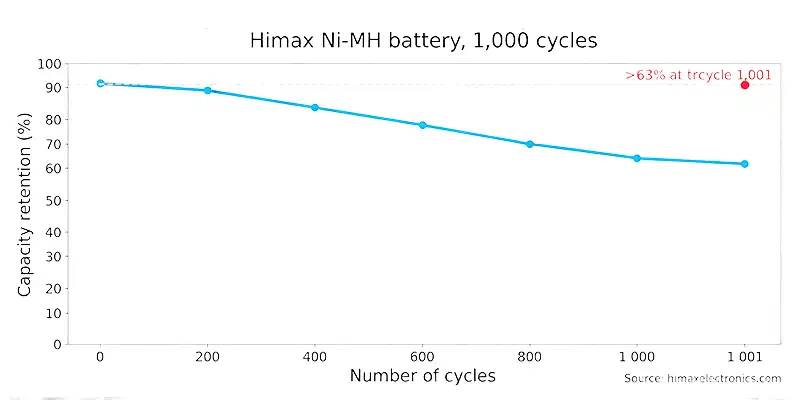
Test 4: IEC Cycle Life (IEC 61951-2:2017, Section 7.5.1.2)

Tested under the IEC standard protocol:

  • Stable charge acceptance throughout: no overcharge, no thermal runaway
  • No leakage, no abnormal internal pressure
  • Capacity at 1,000 cycles remained above 63%, with a gradual and controlled decline curve — substantially outperforming standard cells


Figure 4: IEC 61951-2 standard cycle life curve — Himax Ni-MH battery, 1,000 cycles. Capacity retention >63% at cycle 1,001.

Test 5: Thermal Shock Cycling Reliability

Across multiple high-low temperature alternating shock test cycles, the cells demonstrated consistent impedance, stable voltage plateau, and minimal internal resistance drift. At the pack level, cell-to-cell voltage uniformity and capacity consistency were well maintained — making this chemistry well suited to outdoor unattended equipment, vehicle backup systems, and industrial control applications where thermal swings are a daily reality.

IV. Key Product Advantages of the Wide-Temperature Ni-MH Series

  • Full-range temperature coverage: -40°C to 70°C — suitable for every climate zone and all-season outdoor operation
  • No cold-weather shutdown: operates normally in arctic conditions; eliminates the winter startup failures common in northern and high-altitude deployments
  • High-heat durability: handles vehicle underhood temperatures, outdoor sun exposure, and sealed industrial enclosures without performance loss
  • Superior safety profile: Ni-MH chemistry is non-flammable and incapable of thermal runaway; combined with Himax’s wide-temperature process, extreme-environment stability far exceeds lithium-based alternatives
  • Excellent cell-to-cell consistency: stable impedance across the full temperature range keeps pack-level voltage spread tight and extends system service life

V. Target Application Scenarios

The wide-temperature Ni-MH series is designed for demanding-environment equipment across a broad range of industries:

  • Vehicle-mounted backup power, T-BOX, and automotive security backup batteries
  • Outdoor IoT devices, wireless sensor nodes, and meteorological monitoring equipment
  • Industrial control systems and rail transit support equipment in cold-climate regions
  • Energy storage backup for high-temperature equipment enclosures and sealed industrial systems
  • Military equipment, special-purpose instruments, and field operation power supplies

VI. Technology That Solves the Extreme-Environment Power Problem

Commodity batteries compete on specs. Industrial batteries compete on environmental reliability.


Himax’s wide-temperature Ni-MH technology breaks through the limitations that have defined the industry for decades, extending the operating window from the conventional 0°C–50°C to a full -40°C to 70°C range — with lab-verified data to back every claim.

Looking ahead, we will continue advancing the Ni-MH platform and extending wide-temperature performance to additional cell formats, including: 43/44AAA 600mAh, 50A 2500mAh, 50AA 1800mAh and 2000mAh, 60D 8000mAh, and 90F 12000mAh. Each addition broadens the application range for OEM partners working across multiple product lines.

Our ongoing development roadmap targets continued improvement in low-temperature rate capability, high-temperature cycle stability, and full-pack consistency for industrial, automotive, security, and special-purpose power applications.


Request Samples, Datasheets, or a Custom Pack Quote

For sample requests, technical documentation, or custom PACK configurations, contact the Himax Electronics engineering team directly. We work with OEM clients from initial specification through mass production qualification.


Himax Electronics Co., Ltd.

Website:   www.himaxelectronics.com

Contact:   https://www.himaxelectronics.com/contact/

Products:  https://www.himaxelectronics.com/ni-mh-battery/

OEM/ODM:   https://www.himaxelectronics.com/oem-odm-battery/

Tol battery

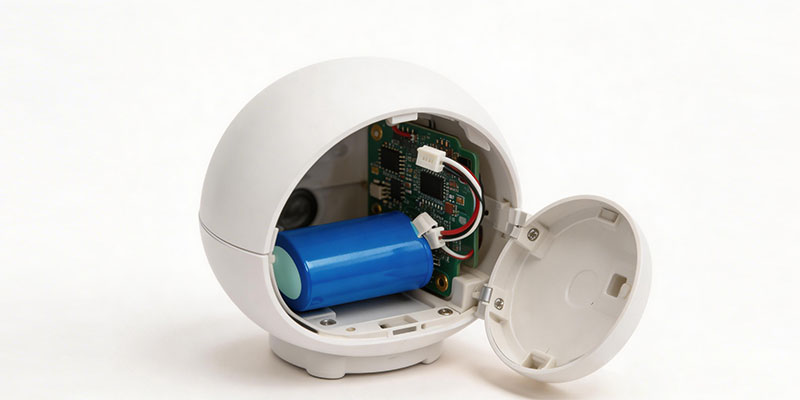
As we push further into 2026, the Internet of Things is no longer about simple, low-power sensors sending tiny data packets. Today’s IoT landscape is defined by sophisticated edge computing, high-bandwidth cellular transmissions, and complex sensor arrays. These devices demand more from their power sources than ever before. For over 12 years, I’ve specialized in designing custom Li-ion packs for these exact challenges. My name is Alden, and I’m a Battery Systems Engineer here at Himax Electronics. In my experience, one of the most common failure points I see in otherwise brilliant IoT projects is an under-specified power source. That’s why I’m excited to share my insights on a solution that is quickly becoming the new standard for reliability and performance: the high-discharge 3.7V 6000mAh Li-ion battery pack.

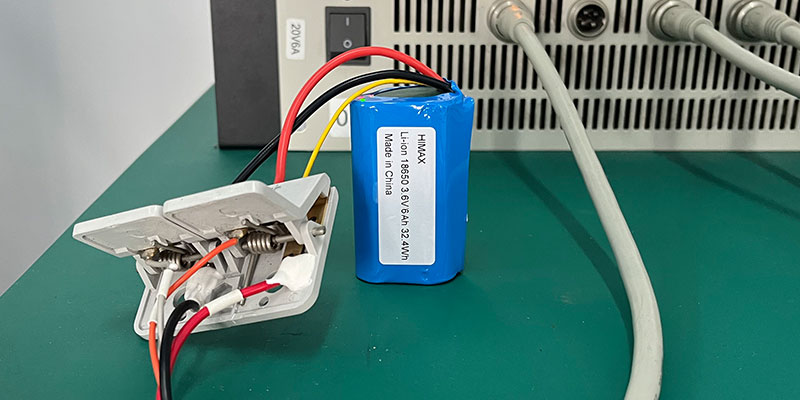
a compact 1S2P configuration with 18650 cells

Understanding Power Demands in Modern IoT Devices

The days of a simple, steady power draw are over for most serious IoT applications. A modern industrial IoT sensor or remote gateway has a highly dynamic power profile. It might idle at a few microamps for hours, then suddenly demand several amps for a few hundred milliseconds. This “bursty” behavior is the new normal.

A common mistake I see engineers make is designing for the average current draw, not the peak. This leads to catastrophic field failures. When a device needs to power up a 4G/5G modem, actuate a motor, or fire up multiple sensors simultaneously, the battery’s voltage can plummet if it can’t handle the sudden load. This “voltage sag” or “brownout” can cause the device’s microcontroller to reset, corrupting data and leading to a spiral of failed connection attempts that drains the battery completely. A robust IoT battery must be able to handle these peaks without faltering.

Why 3.7V 6000mAh with 18A Discharge Stands Out for IoT

At Himax, we’ve focused on creating a power solution that directly addresses these modern challenges. Our 3.7V IoT battery pack is built to provide both endurance and power, serving as a reliable power solution for edge IoT devices. Let’s break down what makes this configuration so effective.

Here’s what makes our Himax IoT battery, a 1S2P 18650 battery for IoT, a game-changer:  

  •  High Capacity (6000mAh): Built with two premium 3000mAh 18650 cells in a 1S2P configuration, this pack offers a substantial 6Ah of energy. This high capacity is essential for achieving a long operational life in remote or solar-powered IoT deployments, minimizing the need for costly and frequent replacements. It’s the foundation of a low total cost of ownership.
  • Massive Discharge Capability (18A): This is the crucial spec. A continuous discharge rating of 18A means the battery can effortlessly handle the intense power spikes from LoRaWAN, NB-IoT, or 5G transmissions. This prevents voltage sag, ensuring your device remains stable and operational during its most critical tasks. This is a true high discharge IoT battery.
  • Ultra-Compact Form Factor: Space is always at a premium inside an IoT enclosure. With dimensions of just 38 × 25 × 70 mm, this rectangular pack is incredibly dense. It allows you to design smaller, more discreet devices without sacrificing power, a key advantage for asset trackers and compact industrial sensors.
  • Industrial-Grade Reliability: We designed this 3.7V 6000mAh 18650 pack for the real world. Paired with a properly designed Battery Management System (BMS), it offers excellent thermal stability and a long cycle life, operating reliably in harsh environments typically ranging from -20°C to 60°C.


Real-World IoT Applications Where This Pack Excels

The combination of high capacity and high discharge in this Li-ion battery for IoT devices makes it incredibly versatile. Here are a few applications where I’ve seen this type of pack deliver exceptional results:

Smart Agriculture Sensors: A soil moisture and nutrient sensor array might take readings every hour, but once a day it needs to transmit a large data log over a cellular network. That transmission burst requires a high discharge IoT battery to ensure the data gets through, while the 6000mAh capacity allows it to last for an entire growing season. This is a perfect use case for a high capacity battery for remote monitoring.

Industrial Asset Tracking & Cold Chain: A tracker on a shipping container needs to survive for months while providing periodic GPS/cellular location updates. When moving through areas with poor signal, the modem boosts its power, drawing significant current. An 18A continuous discharge battery ensures the tracker doesn’t fail when it’s needed most.

Remote Environmental Monitoring: Consider a solar-powered gateway in a remote forest monitoring for fire risk. The system charges during the day and runs on its 3.7V 6Ah battery for IoT at night, powering sensors and a satellite modem. The battery’s ability to handle high peak currents is critical for reliable data transmission, no matter the conditions.

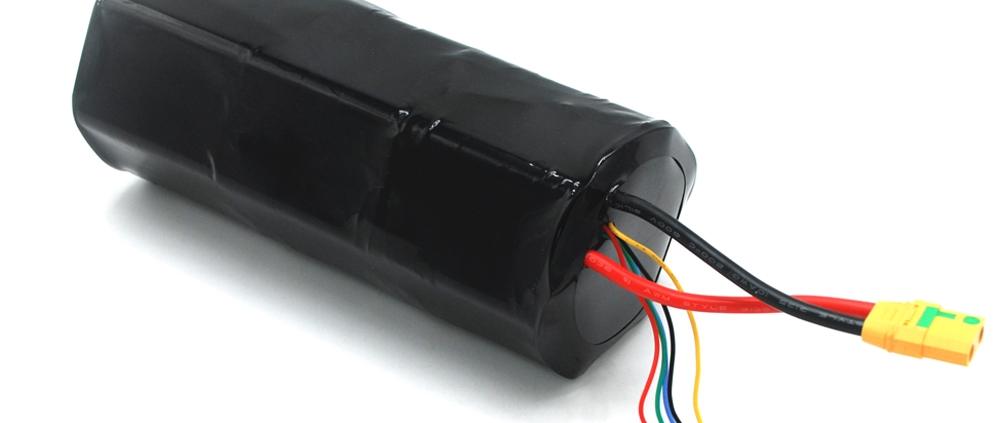
designed for high-discharge industrial IoT applications.

Engineering Tips: Integrating High-Discharge Packs Without Over-Engineering

From my experience as Alden, a Battery Systems Engineer, I believe a great battery is only half the solution. Proper integration is key. Here’s what to look for when incorporating a high-performance 3.7V IoT battery pack into your design:

  • Don’t Skimp on the BMS: The Battery Management System is the brain of your power system. For a high-discharge pack, ensure your BMS provides accurate cell balancing, over-current protection that aligns with the 18A peak, and under-voltage/over-voltage cutoffs to maximize cycle life.
  • Consider Your Connectors: A common point of failure is a connector that isn’t rated for the peak current. An 18A pulse will generate heat and voltage drop across a flimsy connector. Use connectors with an appropriate current rating to ensure all that power makes it to your device.
  • Thermal Management is Your Friend: While our 18650 cells are incredibly stable, all batteries generate heat under load. In a tight, sealed enclosure, ensure there’s a thermal pathway for this heat to dissipate. Even a small piece of thermally conductive material can make a huge difference in long-term reliability.
  • Himax 3.7V 6000mAh Li-ion IoT battery pack

Looking Ahead — The Role of Reliable Batteries in Scaling IoT Deployments

Looking ahead, as Alden at Himax Electronics, I see the reliability of each node becoming exponentially more important. The difference between a pilot project and a global deployment of a million devices often comes down to Total Cost of Ownership (TCO). A robust, reliable, and correctly specified IoT battery is the single most effective way to reduce TCO. It means fewer truck rolls for replacements, less downtime, and a more trustworthy brand reputation. Choosing a powerful and durable power source like a custom 3.7V battery pack for IoT OEM is not an expense; it’s an investment in the scalability and success of your entire platform.

At Himax Electronics, we’ve built our reputation on being a trusted partner for dozens of IoT brands. See our full IoT battery portfolio. If you’re building IoT sensors, gateways, or industrial edge devices and need a dependable 3.7V high-discharge battery partner, reach out to Himax Electronics today. Let’s discuss your project requirements and custom options.


Author: Alden, Battery Engineer – Manufacturing & Quality Control
Published: March 24th, 2026


More information about Li-ion batteries:

Why Lithium-Ion Batteries Must Be Charged Using the CC/CV Method

Why Maximum Continuous Discharge Current is Critical for Your Battery Selection


Your Trusted Li-ion, LiFePO4 and Ni-MH Rechargeable Battery Supplier for Robotics Applications

HIMAX ELECTRONICS, a China-based factory-direct battery manufacturer, has been providing high-quality HIMASSI rechargeable battery for over 12 years. With extensive experience in Li-ion, LiFePO4 (LFP), and Ni-MH battery technology, HIMAX serves global clients across Europe and North America, powering the next generation of robotics applications.

HIMASSI Rechargeable Battery for Robots: Designed for Performance, Safety, and Longevity

Our HIMASSI rechargeable battery products are engineered specifically for robotics applications, including educational robots, medical assistance robots, hospital cleaning machines, and surgical robotic arms. Below is a snapshot of our most popular models, highlighting their technical advantages and specific use cases:


1. Key Rechargeable Battery Models & Features

Application Battery Type Specification Key Benefits
Educational & Healthcare Robots Li-ion 21.6V / 2.9Ah Lightweight, compact, high energy density, fast recharge capability
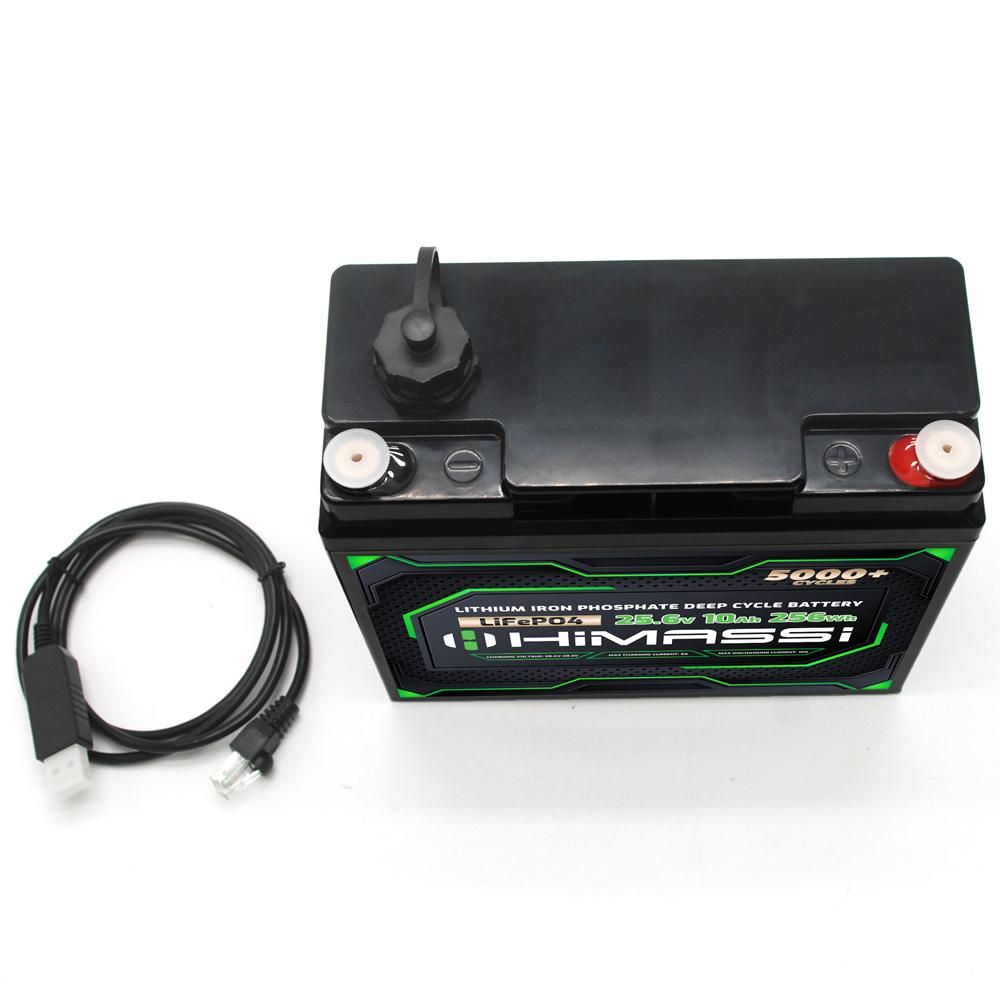
Gait Trainer Robots LiFePO4 25.6V / 10Ah Long cycle life, enhanced thermal stability, strong safety profile
Hospital Cleaning Robots LiFePO4 51.2V / 24Ah Strong safety profile, high power output, low maintenance
Surgical Robotic Arms Ni-MH 12V / 1500mAh Reliable low-temperature performance, high discharge current, cost-effective, eco-friendly

2. Batteries to Avoid for Robots:

Battery Type Reason Disadvantages
Lead-acid (VRLA, SLA, Gel, AGM) Not suitable for frequent charge/discharge cycles; performs better as backup power. Low energy density per weight; heavy and bulky.
NiCd (Nickel-Cadmium) Similar to NiMH but contains toxic cadmium; being phased out. No major advantages over NiMH; environmental concerns.
NiH₂ (Nickel-Hydrogen) Rarely used; extremely niche applications. High cost and complexity; not commercially viable for general robotics or electronics.


Why Choose HIMAX ELECTRONICS as Your Robotics Battery Partner?


Selecting the ideal battery for your mobile robot is crucial for optimizing its performance and longevity.


✅ Factory-Direct Supply with Full Quality Control

At HIMAX ELECTRONICS, we control every step of the manufacturing process from cell selection to pack assembly and quality testing. Our in-house production facility allows us to offer competitive prices, flexible customization, and strict quality standards that meet international certifications.


✅ Focused on Robotics Battery Applications

Our HIMASSI batteries are designed to meet the unique demands of robots, such as:

Stable performance under long operating hours

Rapid charging/discharging for efficiency

Lightweight, compact design to fit space-limited environments

Built-in BMS for overcharge/overdischarge protection

✅ Customization Options Available

We support OEM and ODM projects with tailor-made battery packs in terms of:

Voltage (e.g., 12V, 24V, 48V)

Capacity (e.g., 2.9Ah, 10Ah, 24Ah)

Size, shape, connectors

Communication protocols (UART, CAN, SMBus)

Market Insights: The Growing Role of Rechargeable Battery in Robotics


? The Shift Toward Lithium-Based Batteries

With robots becoming more intelligent and mobile, there is a clear industry shift from traditional lead-acid and Ni-Cd batteries to lithium-based batteries due to:

Higher energy density: enabling longer runtime in a smaller form factor

Faster charging times: reducing downtime in commercial and medical operations

Longer life cycle: lowering total cost of ownership

Safety improvements: especially in LFP chemistry


? Trends in Robotics Battery Demand

Region Market Growth Driver Battery Preference
Europe Medical and elder care robotics Li-ion / LFP
North America Commercial cleaning, warehouse automation LFP / Ni-MH
Asia-Pacific Smart education & service robots Li-ion

HIMASSI Battery: Supporting the Rise of Intelligent Robots


Our HIMASSI batteries help power the future of robotics by ensuring safety, reliability, and high efficiency. Whether it’s a robotic vacuum in a hospital corridor or a mobility assistant in a retirement home, HIMASSI batteries are helping businesses achieve smarter automation with confidence.

Contact Us for a Free Rechargeable Battery Consultation


Let HIMAX ELECTRONICS be your trusted partner for custom robotics battery solutions that power innovation and efficiency.

custom_battery_manufacturing

Batteries are an essential part of our daily lives and play a critical role in modern industries. From powering everyday devices like smartphones and laptops to supporting industrial machinery and renewable energy systems, batteries ensure seamless operation in many fields.

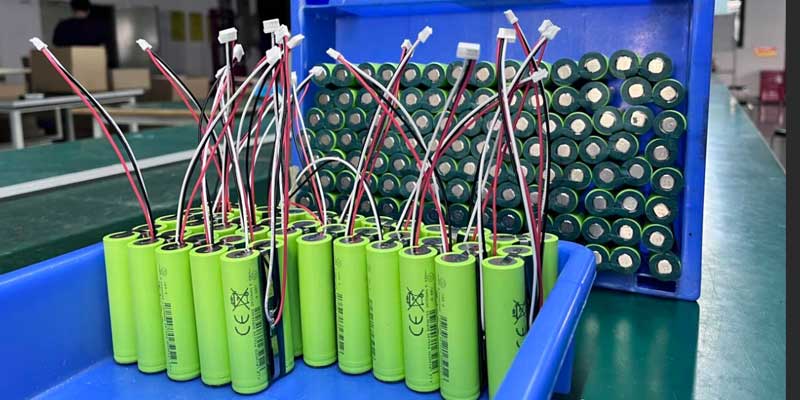
As demand for reliable energy solutions grows, businesses and industries require dependable partners for Wholesale Batteries and tailored manufacturing solutions. This is where HIMAX Electronics steps in as a trusted leader, offering premium-quality batteries and comprehensive services to meet diverse needs.

In this article, we will explore why HIMAX Electronics is the go-to partner for wholesale battery solutions and how it addresses key industry challenges.

bulk_battery_suppliers

Key Pain Points in the Battery Wholesale Industry

The battery wholesale industry faces several challenges that businesses must navigate. Common issues include:

  • Product Quality Inconsistencies

One of the most significant problems is inconsistent product quality. Low-quality batteries can lead to performance issues, safety risks, and short lifespans, ultimately impacting customer satisfaction.

  • Lack of Customization Options

Many battery suppliers offer limited or no customization, making it difficult for businesses to meet specific application requirements. This lack of flexibility is a barrier for companies with unique energy needs.

Supply Chain Delays and Poor After-Sales Service

Delayed deliveries and inadequate after-sales support can disrupt operations and damage trust. Companies often struggle to find suppliers who offer reliable logistics and responsive customer service.

Choosing the Right Supplier

When searching for a wholesale battery partner, businesses need to prioritize:

  1. High-quality products backed by certifications.
  2. Customization capabilities for various applications.
  3. On-time delivery and strong post-sale support.

Advantages of HIMAX’s Battery Wholesale Solutions

HIMAX Electronics stands out as a reliable provider of Wholesale Batteries, addressing industry pain points with exceptional solutions.

  • Diverse Range of Battery Types

HIMAX offers a wide selection of batteries to meet varying needs, including:

  1. Lithium-ion batteries for high energy density and portability.
  2. Lead-acid batteries for durability and cost-effectiveness.
  3. Specialized batteries for renewable energy systems, automotive applications, and industrial equipment.
  • Flexible Pricing and Order Policies

HIMAX provides transparent and competitive wholesale pricing. Businesses can place orders with flexible terms, ensuring affordability and convenience for companies of all sizes.

  • Strict Quality Control

To ensure consistent product quality, HIMAX enforces rigorous quality control measures at every stage of production. Each battery undergoes thorough testing to meet industry standards and provide reliable performance.

Comprehensive Services from HIMAX

  • Fast Delivery and Expert Support

HIMAX is committed to on-time delivery, reducing supply chain delays. Their knowledgeable customer support team is always available to address queries, assist with troubleshooting, and provide guidance.

  • Factory Manufacturing Excellence

As a factory-direct supplier, HIMAX boasts significant advantages:

  1. High-Efficiency Production

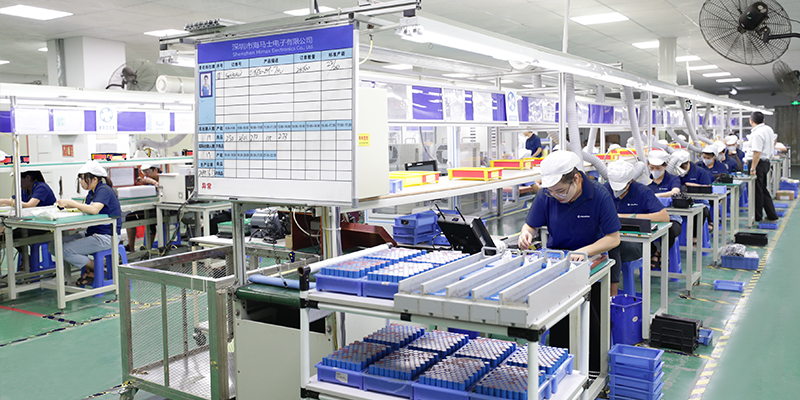
Their state-of-the-art facilities allow for scalable manufacturing without compromising quality.

  1. Customized Solutions

HIMAX specializes in creating tailored energy solutions for unique customer needs.

  1. Compliance with Certifications

All products comply with international standards such as ISO and UL, ensuring safety and reliability.

  • Commitment to Research and Innovation

HIMAX invests heavily in research and development, particularly in the field of new energy technologies. They lead advancements in:

  1. High-density battery designs for extended usage.
  2. Batteries with enhanced thermal management for high-temperature environments.

Success Stories with HIMAX

  • Case Study 1: Large-Scale Customization for an Enterprise

A leading enterprise partnered with HIMAX for the bulk supply of lithium-ion batteries tailored to their renewable energy projects. HIMAX delivered high-quality, custom-built batteries on schedule, enabling the company to complete its projects successfully.

  • Case Study 2: Supply Chain Optimization for a Small Business

A small equipment manufacturer faced delays with their previous battery supplier. Switching to HIMAX resolved their supply chain issues, ensuring timely deliveries and improved inventory management.

These examples highlight HIMAX’s ability to adapt to the needs of businesses across various industries.

wholesale_battery_suppliers

About HIMAX Electronics

HIMAX Electronics is a trusted name in the battery manufacturing and wholesale industry.

  • Company Overview

Founded with a mission to deliver high-quality energy solutions, HIMAX specializes in the production and distribution of premium batteries. With decades of experience, the company has built a global reputation for excellence and innovation.

  • Vision and Values

HIMAX is committed to empowering businesses with reliable and sustainable energy solutions. Their customer-first approach ensures that every client receives personalized service and support.

  • Global Reach and Certifications

HIMAX serves a diverse range of industries worldwide. Their products meet stringent international certification standards, including ISO and UL, making them a preferred partner for businesses seeking reliable energy solutions.

  • Industry Recognition

With numerous accolades and positive client testimonials, HIMAX continues to set the standard for quality and customer satisfaction.

Why Choose HIMAX Electronics?

HIMAX Electronics is more than just a battery supplier; they are a strategic partner for businesses seeking reliable, scalable, and cost-effective energy solutions. Their commitment to quality, innovation, and customer service makes them the ideal choice for Wholesale Batteries.

Whether you need customized batteries for a specific application or a trusted supplier for bulk orders, HIMAX has you covered.

Conclusion

HIMAX Electronics offers unmatched expertise, high-quality products, and comprehensive services to meet the needs of businesses across industries. With a strong focus on quality, innovation, and customer satisfaction, HIMAX is the ultimate partner for all your battery wholesale and manufacturing needs.

Contact HIMAX Electronics today to explore their solutions and discover how they can support your energy requirements.