Tag Archive for: Li-Ion Battery

Himax Electronics 25.2V 2000mAh 7S1P Li-ion battery pack with integrated BMS for portable medical device

By  Dawn  •  Battery Engineer, Safety & Compliance  •  Himax Electronics  •  July 2026

Topics: Medical Battery Pack  /  Li-ion Safety  /  BMS  /  IEC 62133  /  Custom Pack Development


Designing a medical device battery pack 25.2V requires more than just picking cells and wiring them together. When a medical device team reaches out about a custom battery, the first question they ask is usually about voltage or capacity. The second is usually about size. By the third conversation, the question that actually matters surfaces: “What does certification require, and how does that impact our timeline?”

However, that shift in concern is entirely predictable, and it’s the one I prepare for in every medical battery development engagement. Certification is not a step that happens after the battery is designed. It’s a constraint that shapes the design from the first component selection. Get it wrong early and you’re doing a redesign at the worst possible time — when the device team is already pressure-testing their regulatory submission schedule.

This post is about what it actually takes to design a 25.2V 2000mAh lithium-ion battery pack for a portable medical device correctly. I’ll cover the configuration rationale, the BMS requirements that are specific to medical applications, the certification landscape, the pass-through charging question that comes up in almost every portable medical device project, and the physical design constraints that make this category different from industrial or consumer battery work.

I’m writing this for engineers and product managers at medical device companies who are in the early-to-mid stage of a battery development conversation and want to understand what they’re getting into before committing to a supplier.


Why 25.2V? The Voltage Architecture of a 7S1P Li-ion Pack

A 25.2V nominal voltage in a lithium-ion pack means seven cells in series (7S). Each standard lithium-ion 18650 cell, for instance, has a nominal voltage of 3.6V, and 7 × 3.6V = 25.2V. The full-charge voltage is 4.2V per cell, giving a pack charge voltage of 29.4V. We typically set the discharge cutoff at 3.0V per cell, giving a pack cutoff of 21.0V. This is the operating window your device’s electronics need to accommodate.

The 1P in 7S1P means a single cell per parallel group — one cell at each of the seven series positions. This gives a pack capacity equal to the capacity of a single cell: 2000mAh (using 18650 cells with 2000mAh rated capacity). The total energy is 50.4Wh (25.2V × 2.0Ah), which falls within the 20–40Wh range that’s common for portable medical devices in the 24V system class.
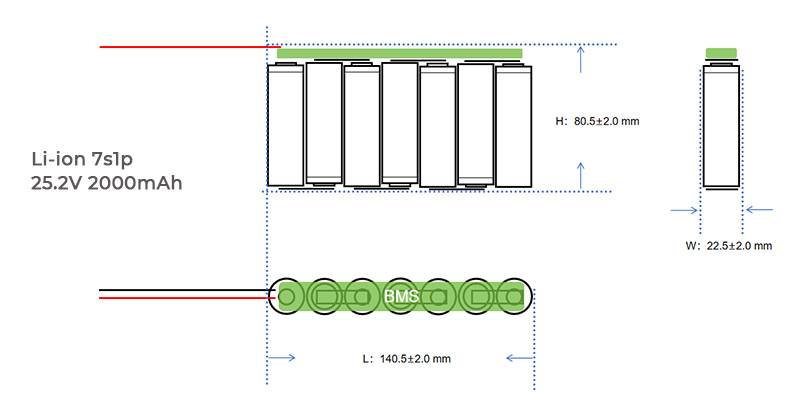
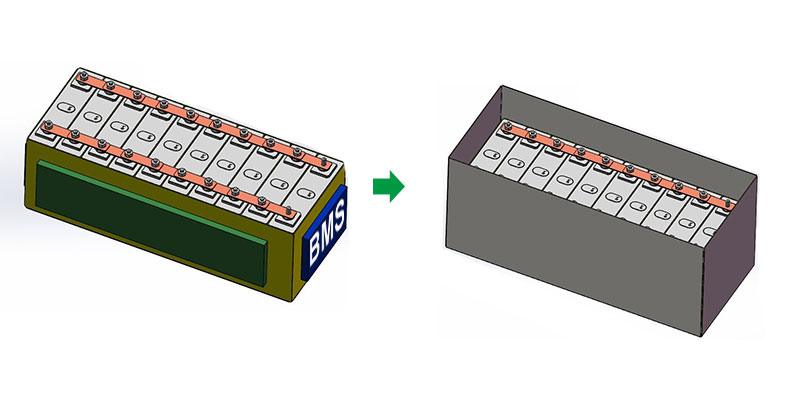
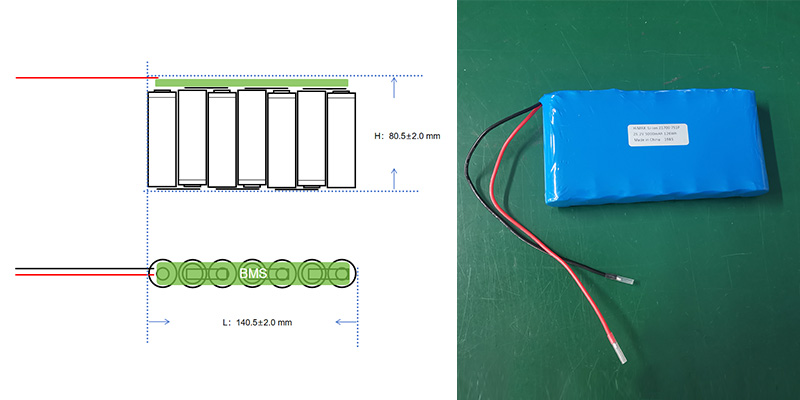
Layout diagram of Himax Electronics 25.2V 7S1P 18650 Li-ion medical battery pack showing BMS and dimensions 140.5x22.5x80.5mm

Why Not a Higher-Capacity Cell?

A natural follow-up question is why use a 2000mAh cell rather than a 3000mAh or 3400mAh cell, which are also available in 18650 format. The answer for medical applications comes down to two factors: validated performance data and certification traceability.

Higher-capacity 18650 cells are optimized for energy density, which sometimes comes at the cost of discharge rate capability and cycle life consistency. A 2000mAh cell in a medical application where the continuous discharge current is 2.0A (1C rate) is operating at a moderate, well-characterized load. The same cell at 2.0A discharge with a 3400mAh cell would be at 0.59C — which sounds better, but the cell selection should be driven by the actual load profile and certification history, not simply by maximizing capacity. In medical development, a well-documented cell with a clean safety and certification record is worth more than an extra 400mAh.

Pack Dimensions and Physical Constraints

The preliminary configuration for a 7S1P 18650 pack in this class produces a pack with approximate dimensions of 140.5 × 22.5 × 80.5mm (±2.0mm) and a weight of approximately 350g. The layout positions the seven cells side by side in a single row, with the BMS board running along the base of the cell array.


Figure 1: 7S1P 18650 pack layout — L: 140.5±2.0mm × W: 22.5±2.0mm × H: 80.5±2.0mm. BMS board positioned along the cell base.

However, a few things to note about these dimensions for device integration:

  • 5mm width is narrow enough to fit in a grip area or a handle cavity on most briefcase-format portable instruments.
  • 5mm length is close to the length of a standard AA battery holder × 7 — which gives an intuitive sense of the longitudinal footprint inside a device housing.
  • 5mm height is the dimension most often negotiated in custom pack development: if device housing height is constrained, the cell orientation or BMS placement can be adjusted to reduce this dimension, with a corresponding increase in length or width.
  • 350g weight is meaningful in a portable device context. If the total device target weight is under 2kg, the battery represents roughly 17–18% of the budget — which is typical and reasonable for this energy class.


Consequently, these dimensions are a preliminary starting point, not a constraint. Custom battery development for medical devices almost always involves iterating the physical design alongside the device housing design. The cell chemistry, voltage, and capacity are fixed by the 7S1P 18650 configuration; the physical arrangement of those cells and the BMS can be adapted to whatever 3D envelope the device team specifies.

The BMS: What “Integrated Smart BMS” Actually Means in a Medical Context

Every battery supplier will tell you their pack includes a BMS. In medical device applications, what the BMS does — and how it communicates with the device — matters considerably more than in consumer or industrial applications. Let me break down what a well-specified BMS looks like for this application.

Protection Functions

These are the baseline safety functions that any BMS in a medical battery must include:

  • Overcharge protection: disconnects the charge path if any cell reaches 4.25–4.28V, preventing lithium plating and thermal events during charging
  • Over-discharge protection: disconnects the discharge path if any cell drops below 2.5–3.0V, preventing irreversible capacity loss and cell damage
  • Overcurrent protection: limits discharge current to the rated maximum (2.0A continuous, 6.0A peak ≤1 second for this configuration) and disconnects on fault
  • Short-circuit protection: hardware-level cutoff in microseconds on external short circuit detection
  • Temperature protection: thermistor monitoring with charge inhibit below 0°C and above 45°C, discharge inhibit at temperature extremes. Critical in medical applications where the battery may be near a patient or in a heated enclosure
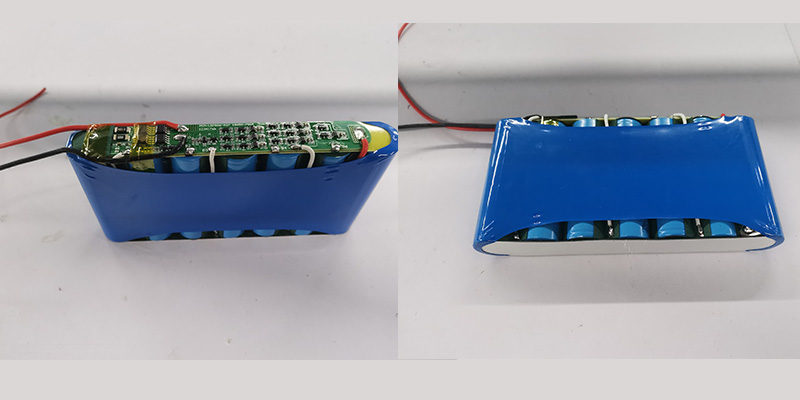
Smart BMS protection functions for medical device Li-ion battery: overcharge, over-discharge, temperature, SMBus communication

Communication Interface: SMBus, UART, or I2C

Standard consumer battery BMS designs have no communication interface — they protect and that’s all. Medical devices almost always need more. The device firmware needs to know:

  • Remaining capacity (state of charge as a percentage or mAh remaining)
  • State of health (capacity relative to original rated capacity)
  • Current pack voltage and cell-level voltages (for imbalance detection)
  • Temperature
  • Fault status and error codes
  • Cycle count


These data are surfaced through a communication bus — SMBus (the most common in medical devices), UART, or I2C depending on the device controller architecture. SMBus is based on the Smart Battery Specification (SBS), which defines a standard register set that many medical device firmware teams already have drivers for. If your device uses an SMBus fuel gauge, specifying SMBus compatibility at the battery level is the path of least integration friction.

Design note from the field:


One of the most common integration problems I see in medical battery projects is a mismatch between

the BMS communication protocol and what the device firmware team assumed. “Smart BMS” on a spec

sheet could mean SMBus, UART, I2C, or a proprietary protocol. Specify the protocol and register

map you need before the prototype is built — retrofitting the communication interface adds

weeks to the development schedule.


Pass-Through Charging: Operating While Connected to External Power

This is the requirement that comes up in nearly every portable medical device project and generates the most confusion: the device must be able to operate while connected to external power, and the battery must support this without degradation.

In battery engineering, this is called pass-through charging or power path management. The behavior is: when external power (the charger) is connected, the device draws power from the charger — not the battery. The battery charges in the background. When external power is removed, the device transitions seamlessly to battery power.

Implementing this correctly requires either:

  • A power path management IC on the device board (preferred for precise control) that handles the charger-to-battery switchover — not a battery-level feature, but a device-level design
  • A BMS with integrated pass-through support (less common, but available) where the BMS manages both the charge and load paths simultaneously with minimal voltage transient on switchover


Specifically, the key concern in medical applications is what happens to device operation during the switchover. A brief voltage dip during the transition from charger to battery can cause microcontroller resets or sensor glitches in sensitive medical electronics. Switchover time and voltage transient specs should be defined as part of the battery-device interface requirements, not assumed.

Certification: The Standards That Matter and What They Actually Test

Unsurprisingly, this is where I spend the most time in early medical battery development conversations, because it’s the area where misconceptions are most costly. Let me go through the relevant standards and what each one actually requires.

UN38.3 — Transport Safety

UN38.3 is a transport certification, not a product safety certification. It certifies that lithium-ion cells and batteries are safe to transport by air, sea, and road. The test protocol includes: altitude simulation, thermal cycling, vibration, shock, external short circuit, impact/crush, overcharge, and forced discharge. The battery pack and its cells must pass all eight tests for most configurations.

UN38.3 is required by law for any shipment of lithium-ion batteries by air or sea. It’s not optional if you’re importing or exporting your device. But it’s not a medical device safety standard — it doesn’t evaluate the battery’s performance in service or its compatibility with medical device requirements. Think of it as the floor, not the ceiling.

IEC 62133 — Battery Safety for Portable Applications

IEC 62133 is the product safety standard for rechargeable battery cells and packs used in portable applications. It covers electrical and mechanical safety tests including continuous charge, abnormal charge, forced discharge, external short circuit, free fall, mechanical shock, vibration, and thermal abuse. The standard has two parts: Part 1 for Ni-MH and Part 2 for lithium systems (which is what applies here).

IEC 62133-2 certification is commonly required by retailers and importers for lithium-ion products sold in Europe, North America, and Asia-Pacific. For medical devices, it’s often a prerequisite for the device-level regulatory submission because it provides independent third-party evidence that the battery has been tested to a recognized safety standard.

One important clarification: IEC 62133 certifies the battery as a component, not the device as a system. If your device regulatory pathway requires a system-level battery safety evaluation (which some medical device categories do), IEC 62133 certification of the battery component supports but does not replace that evaluation.

IEC 62619 — For Industrial and Higher-Power Applications

IEC 62619 is relevant if your device falls into a higher-power or stationary/semi-stationary category. For a 25.2V 2000mAh portable device with a maximum 2A continuous discharge, IEC 62133-2 is typically the applicable standard. IEC 62619 covers secondary lithium cells in industrial applications and becomes relevant when the pack power is above the IEC 62133 scope, or when the device is classified as industrial rather than consumer/portable.

CE Marking for Medical Devices (EU MDR 2017/745)

If your device is sold in the EU, the battery pack needs to be addressed in your device’s technical documentation under the EU Medical Device Regulation (MDR 2017/745). The battery is a critical electrical subsystem, and the MDR requires demonstration that it meets the General Safety and Performance Requirements (GSPR) of Annex I.

In practice, this means the battery supplier needs to provide: a declaration of conformity, the applicable test reports (UN38.3, IEC 62133), traceability documentation for the cells used, and a MSDS/SDS for the battery. The device manufacturer incorporates this documentation into their technical file.

Certification checklist for a 25.2V 2000mAh medical battery pack (EU market):


•  UN38.3 — required for transport (cell-level and pack-level)

•  IEC 62133-2 — product safety standard for lithium-ion portable batteries

•  CE Declaration of Conformity — for devices placed on the EU market

•  MSDS / SDS — material safety data sheet for the battery pack

•  Traceability documentation — cell manufacturer, batch, test reports

•  Optional: IEC 62619 if device classification requires it

•  Optional: UL 2054 or UL 1642 for US market (UL listing, not always mandatory

for Class II medical devices but increasingly expected by hospital buyers)


The Development Process: From Inquiry to Certified Sample

In practice, medical device teams often underestimate how long the battery development and certification path takes. Here is an honest timeline overview based on the development stages for a custom pack in this class:

Phase 1: Requirements Finalization (2–4 weeks)

This is the stage where the device team shares mechanical CAD, power consumption data, thermal environment specs, and communication protocol requirements. Most medical projects also execute an NDA at this stage — a standard practice that a reputable battery supplier will accommodate without friction. Ultimately, the output of this phase is a locked technical specification for the battery.

Phase 2: Prototype Development (4–8 weeks)

The battery pack prototype is built and validated against the spec. This includes electrical performance testing (capacity, discharge curves, protection function verification), dimensional verification, and BMS communication testing. Typically 3–5 prototypes are produced for the device team to evaluate in actual device hardware.

Phase 3: Design Iteration (2–6 weeks, if needed)

Physical fit adjustments, connector changes, and BMS firmware tuning happen here. For medical applications, changes at this stage need to be documented because they affect the certification test object. Changes after certification testing restart the test process for affected tests. This is the stage-gate discipline that medical battery development requires.

Phase 4: Certification Testing (8–16 weeks)

UN38.3 and IEC 62133 testing are conducted at an accredited third-party laboratory. UN38.3 typically takes 4–6 weeks. IEC 62133 takes 6–10 weeks. These can be run in parallel if the test lab schedule allows. No configuration changes should occur during the test period; any change requires re-test of the affected protocols.

Phase 5: Production Qualification and Supply (4–8 weeks after certification)

First production batch is built, inspected, and released. For medical device OEM customers, this typically includes a First Article Inspection (FAI) and agreement on ongoing incoming inspection criteria.


Total timeline from first technical conversation to certified production sample: typically 6 to 9 months. Device teams that start the battery development conversation early — before the mechanical design is locked — consistently have better outcomes than those who treat the battery as a late-stage procurement item.

Full Specification Reference


Parameter Specification
Cell Li-ion 18650, 2000mAh, 3.6V nominal
Configuration 7S1P
Nominal Voltage 25.2V
Rated Capacity 2000mAh
Energy 50.4Wh
Charge Voltage 29.4V
Charge Method CC/CV
Charge Current 0.5C–1.0C (1.0–2.0A)
Discharge Cut-off Voltage 21.0V
Max Continuous Discharge 2.0A
Peak Discharge (instant) 6.0A (≤1 second)
BMS Protection Overcharge, over-discharge, overcurrent, short-circuit, temperature
BMS Communication SMBus / UART / I2C (specify at inquiry stage)
Pass-through Charging Supported (power path management required at device level)
Dimensions (preliminary) L 140.5±2.0mm × W 22.5±2.0mm × H 80.5±2.0mm
Weight (approx.) 350g
Certifications UN38.3, IEC 62133-2, CE DoC (others on request)
Customizable Dimensions, connector, BMS comms protocol, labeling, enclosure

IEC 62133 and UN38.3 safety certification testing process for Himax Electronics portable medical device battery pack

What to Look for in a Medical Battery Supplier

I’m going to be direct here because I think the industry often avoids this conversation. Not every battery supplier is set up to support a medical device development project well. Here are the things that actually matter when evaluating a supplier for a medical battery:


  • Cell traceability:

  • the supplier should be able to provide documentation identifying the cell manufacturer, model, production lot, and test data for every batch. We cannot accept generic cells from undocumented sources in medical applications where traceability is a regulatory requirement.

  • Certification documentation readiness:

  • 3 and IEC 62133 test reports should be available on request for standard configurations, and the supplier should have experience managing third-party lab submissions for custom packs.

  • NDA process:

  • a supplier that hesitates or creates friction around executing an NDA before technical discussions is not a good fit for a medical product development environment. Confidentiality is standard in this industry.

  • Engineering responsiveness at the proposal stage:

  • the quality of the preliminary technical response tells you a lot about what the design process will look like. A supplier who can turn around a well-reasoned preliminary configuration — with dimensions, BMS specs, charge/discharge parameters, and certification pathway comments — has the technical depth the project needs.

  • Customization capability:

  • medical devices rarely fit a standard battery configuration. The supplier needs to be able to adjust dimensions, BMS firmware, communication protocol, and mechanical integration without treating it as an exception to their normal process.

Working With Himax on Medical Battery Development

At Himax, medical battery projects go through a structured development process that starts with a confidential technical review of the device requirements. We have experience with the full certification stack for lithium-ion medical batteries (UN38.3, IEC 62133, CE) and work with accredited third-party laboratories for independent testing.

The Himax medical devices battery page covers our standard and custom configurations for medical applications. For teams working on portable respiratory or oxygen-related devices, the portable oxygen concentrator battery section provides relevant context on how we approach battery development for life-critical portable medical equipment.

Our broader Li-ion battery portfolio — covering cell chemistries, form factors, and configurations beyond the 18650 7S1P design discussed here — is accessible on the Himax Li-ion battery page.

If you’re early in a medical device battery development project and want to understand what your options are before committing to a direction, the most useful starting point is a technical conversation rather than a quote request. You can reach our engineering team directly through the Himax contact page. We’re set up to review your preliminary requirements, respond with a configuration recommendation, and — when you’re ready — execute a mutual NDA to move into detailed technical discussion.


About the Author


Dawn is a Senior Battery Engineer in Safety & Compliance at Himax Electronics.

With extensive experience in UN38.3, IEC 62133, IEC 62619, and CE compliance, she

leads safety and certification work for battery solutions in medical, industrial, and

portable electronic applications. She has supported battery development projects from

initial technical review through third-party certification and first production release.

Himax Electronics 36-7BP Samsung INR18650-35E 1S2P 3.6V 7Ah 25.2Wh robot battery pack with GHR-4V-S connector

By  Alden  •  Battery Engineer, Manufacturing & Quality Control  •  Himax Electronics  •  July 2026

Category: Li-ion Battery  /  Robot Power Pack  /  18650 Cell  /  OEM Manufacturing  /  Quality Control


Most battery-related problems I encounter on the production floor don’t start with a bad cell. However, they start with a wrong cell. The wrong chemistry for the application, the wrong current rating for the load profile, the wrong configuration for the space available. By the time a battery pack comes back as a warranty claim or a field failure, the root cause is usually traceable to a cell selection decision made early in the design process — one that looked reasonable on paper but didn’t account for how the product actually operates.

Robot applications are where I see this most clearly. Robots — whether they’re autonomous mobile platforms, collaborative arms, service bots, or industrial guided vehicles — put batteries through a specific kind of stress that most lab discharge curves don’t capture well: irregular, high-variance load cycles. A motor starts, stops, reverses, idles. The battery sees a completely different demand profile every two minutes. And the pack has to handle it reliably across hundreds of cycles without heat buildup, capacity drop, or protection circuit nuisance trips.

I want to talk about why the Samsung INR18650-35E in a 1S2P configuration at 3.6V 7Ah — our model 36-7BP — handles this well, and what my team validates at the manufacturing stage to make sure the spec sheet numbers reflect what actually ships.


500-cycle life test results for Himax 18650 1S2P 3.6V 7Ah robot battery pack showing ≥80% capacity retention

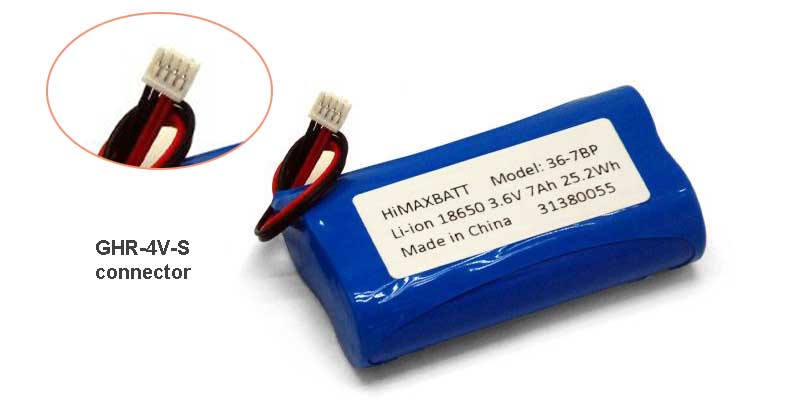
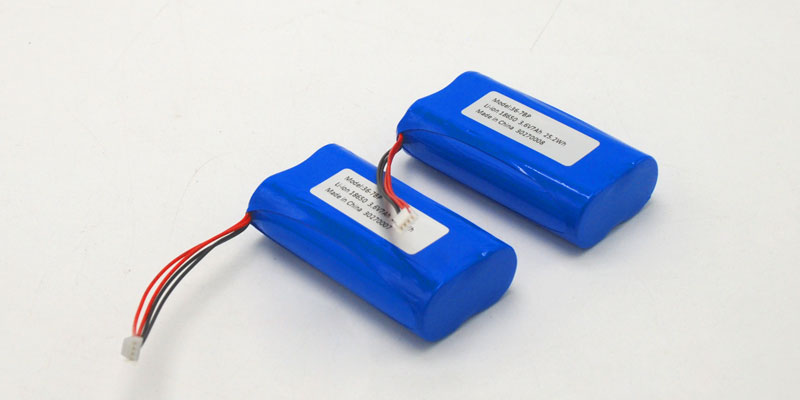
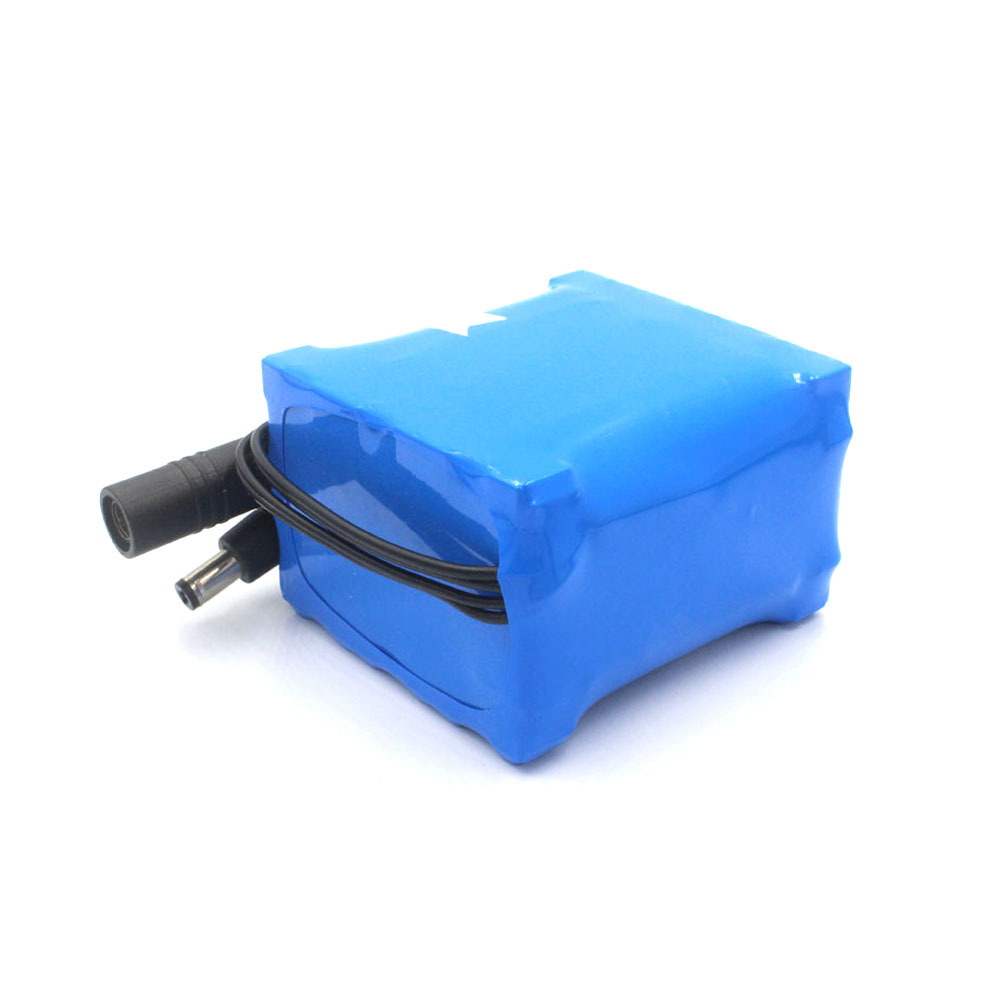
Himax 36-7BP — Samsung INR18650-35E 1S2P, 3.6V 7Ah, 25.2Wh, with GHR-4V-S connector and AWG26 output wire

The Cell Behind the Pack: Samsung INR18650-35E

Before I get into the pack-level specs, the cell selection is worth spending a moment on, because it explains a lot of the downstream performance characteristics.

The INR18650-35E is a Samsung SDI cell with a 3400mAh nominal capacity and an internal impedance of ≤35mΩ at the cell level. In the world of 18650 cells, that impedance figure is what I’d call competitive — it’s low enough that two cells in parallel maintain a combined pack impedance of ≤70mΩ, which is the spec we publish. For robot applications, internal impedance matters directly: lower impedance means less voltage sag under load peaks, which means motors get a more stable supply voltage during acceleration events.

The cell’s physical dimensions are max 18.55×65.25mm — the standard 18650 cylindrical format. The 1S2P configuration places two of these cells in parallel, which gives the pack its 6800mAh nominal (7Ah rated) capacity at 3.6V, with a minimum guaranteed capacity of 6600mAh. The two cells share current load, which also means each cell is operating at a lower C-rate than it would in a single-cell configuration — and lower C-rate cycling is one of the most reliable ways to extend calendar life in lithium-ion.

Pack Specs That Matter for Robot Designers

Energy Density: 25.2Wh in a 101-Gram Package

The 36-7BP packs 25.2Wh into approximately 101 grams — a gravimetric energy density of roughly 250Wh/kg at the pack level. For a robot where every gram of battery weight subtracts from payload capacity or extends runtime, that ratio matters. The pack dimensions are 36 × 18.2 × 67.5mm (±0.5mm), which fits the standard 18650 2-cell side-by-side footprint that most robot chassis are already engineered around.

Charge and Discharge: The Numbers and the Reality

Standard charge is 4.2V CC/CV at 1.4A for 6 hours. Max charge current is 3A. On the discharge side, standard is 1.4A with a cutoff at 2.65V, and max continuous discharge is 3A.

The 2.65V cutoff is a key spec for robot system designers. Most robot controllers set their low-voltage cutoff somewhere between 2.8V and 3.0V for conservatism, which is fine — the BMS and the controller can have complementary protection thresholds. What I want to flag is that discharging to 2.65V is the condition under which our 6800mAh nominal capacity is rated. If your system cuts off at 3.0V, your realized capacity will be somewhat lower than 6800mAh. This is a normal aspect of lithium-ion pack integration that sometimes catches product teams by surprise when their runtime doesn’t quite match the datasheet.

Samsung INR18650-35E 3400mAh 0.2C discharge curve showing capacity vs voltage profile

Cycle Life: 500 Cycles at ≥80% Capacity

After 500 standard charge-discharge cycles at 20±5°C, the pack retains at least 80% of its original capacity. For a robot used in a commercial environment — one charge cycle per operational day, five days per week — 500 cycles is approximately two years of service before the battery falls below the 80% threshold. At that point the robot still runs; it just runs for shorter periods between charges.

What I’ve observed in our aging test data is that packs using the Samsung 35E cell tend to follow a fairly predictable degradation curve — gradual, linear capacity loss rather than the cliff-edge dropout you see with lower-quality cells. That predictability matters for robot operators who want advance warning of declining battery performance rather than a sudden operational failure.


Full Pack Specification Reference

Parameter Value Notes
Cell Model Samsung INR18650-35E Premium cylindrical Li-ion
Pack Configuration 1S2P 2 cells in parallel
Cell Nominal Capacity 3400mAh 0.2C, cutoff 2.65V
Pack Nominal Capacity 6800mAh (7Ah rated) Guaranteed min: 6600mAh
Nominal Voltage 3.6V
Energy 25.2Wh
Charge Voltage 4.2V CC/CV method
Discharge Cut-off Voltage 2.65V
Standard Charge Current 1.4A 6-hour charge
Max. Charge Current 3A
Standard Discharge Current 1.4A
Max. Cont. Discharge 3A
Cycle Life 500 cycles ≥80% capacity retention
Cell Impedance ≤35mΩ 1kHz AC method
Pack Impedance ≤70mΩ Incl. protection circuit
Charge Temp. Range 0°C – 45°C
Discharge Temp. Range -20°C – 60°C
Storage Temperature -10°C – 60°C
Pack Dimensions 36 × 18.2 × 67.5mm (±0.5mm) L × W × H
Weight ~101g
Output Wire 1571 AWG26, 80±5mm
Output Connector GHR-4V-S JST GH series compatible
Standards GB/T18287-2013, UL1642, CE61960
Warranty 1 year from shipment date


Temperature Range: What -20°C to 60°C Actually Covers

First of all, the discharge temperature range is -20°C to 60°C. For robot applications this is relevant in two directions.

On the cold end: robots deployed in warehouse environments, cold storage logistics, or outdoor winter scenarios in northern climates need a battery that still delivers adequate current when the ambient is well below zero. Our electrical performance data shows temperature characteristic 2 — a -10°C soak for 3 hours followed by 1.4A discharge — yields ≥40% capacity retention. That’s a conservative threshold; in practice, you’ll typically see 50–60% retention at -10°C, with the floor at -20°C being lower. Robot designers operating in cold environments should plan their minimum-runtime requirements around the low end of this range.

On the hot end: robot motor drivers, motor housings, and dense electronics generate significant internal heat. An enclosure that runs at 35°C ambient at the battery location can spike to 50–55°C during sustained operation. The 60°C discharge ceiling provides reasonable headroom for that scenario. The temperature characteristic 1 test (40°C soak, 3 hours, 1.4A discharge) shows ≥97% capacity retention — meaning heat within the normal operating range doesn’t meaningfully degrade available capacity.

What We Actually Check Before a Pack Ships

This is the section I find most useful to be specific about, because “quality control” appears on every vendor’s website and means something different at every factory. Here’s what our manufacturing and QC process covers for the 36-7BP:

  1. To begin with, Incoming cell inspection

Every batch of Samsung 35E cells is verified against voltage, capacity, and impedance before assembly. We match cells for the 1S2P configuration — pairing cells with similar open-circuit voltage (≤10mV spread) and similar impedance (≤10mΩ spread). Poor cell matching in a parallel configuration leads to unequal current sharing, which means one cell ages faster than the other and the pack’s effective capacity degrades faster than the cycle-life spec suggests. Tight matching is not optional; it’s what makes the 500-cycle spec achievable in practice.

  1. Aging test (formation cycling)

After assembly, each pack goes through a formation cycling process — typically 2–3 charge/discharge cycles under controlled conditions before QC measurement. Formation allows the SEI layer (solid electrolyte interphase) on the cell’s anode to stabilize, which has a direct effect on the cell’s long-term capacity retention. Packs that skip formation and ship immediately off the assembly line tend to show higher first-cycle capacity loss than their rated spec.

  1. Open-circuit voltage measurement

After formation and before shipment, we verify that each pack’s open-circuit voltage is ≥4.1V within 24 hours of the last standard charge. This is the electrical performance specification from section 7.5 of the spec sheet. Packs that don’t meet this threshold don’t ship.

  1. Capacity verification

Each pack is discharge-tested at 1.4A to 2.65V after standard charge at 20±5°C and a 1-hour rest. The measured capacity must be ≥95% of rated capacity. A pack that measures 6600mAh when it should be 6800mAh doesn’t represent a defect within the guaranteed minimum — but a pack that measures below 6600mAh does, and it gets pulled.

  1. Furthermore, packs ship at 10–30% state of charge

Packs ship at 10–30% state of charge, at a voltage of 3.5–3.7V. This is the transport condition specified by lithium-ion shipping regulations. It’s also the storage condition least likely to cause calendar aging — a pack stored long-term at full charge degrades faster than one stored at partial charge. OEM customers who hold inventory should check the voltage on receipt, top up if below 3.5V, and not leave packs fully charged in storage for extended periods.

  1. AQL inspection

Outgoing quality control is conducted under AQL 0.65% normal inspection standards. This is the acceptance quality limit used in consumer electronics manufacturing — it means that in a large batch, the accepted defect rate is below 0.65%. For OEM customers building robot products with strict reliability requirements, it’s a meaningful baseline.

Himax Electronics battery factory aging test and quality control process for Samsung 18650 Li-ion robot battery packs

Robot Applications: What Draws Engineers to This Configuration

The 36-7BP comes up in robot design conversations for a fairly specific set of reasons:

  • 6V nominal fits single-cell Li-ion architecture: many compact robot controller boards are designed for a 3V–4.2V input range that runs directly from a single Li-ion cell, without a step-up converter. This eliminates a BOM component and reduces conversion losses.
  • 7Ah is the sweet spot for 1–3 hour runtime at moderate loads: a robot drawing 2–3A average current (common in mobile platforms with drive motors and sensors) gets approximately 2–3 hours of runtime from a 7Ah pack — enough for a meaningful work shift without being oversized.
  • 101-gram weight keeps payload margins comfortable: robot designers working with payload constraints — especially in collaborative or mobile applications — can factor in 101g knowing the battery provides 25.2Wh. The energy-per-gram ratio is difficult to beat at this capacity class in a standard 18650 form factor.
  • GHR-4V-S connector is widely compatible: the JST GH series connector is one of the more common choices in compact robotics and drone electronics. Many robot controller boards have a GH-compatible mating connector already specified, which simplifies mechanical integration.
  • -20°C discharge capability covers most deployment environments. Consequently, it is a reliable choice for diverse robotic applications. logistics robots, outdoor inspection robots, and warehouse automation equipment operating in cold-chain or northern-climate environments can rely on this pack to deliver current in conditions that would shut down less capable cells.

Safety Testing: What the Pack Has Passed

The 36-7BP is built to GB/T18287-2013, UL1642, and CE61960 standards. Moreover, the safety test suite validates the pack against the conditions that represent real-world fault scenarios: The safety test suite validates the pack against the conditions that represent real-world fault scenarios:

  • Overcharge: 3× max charge rate at 4.2V constant voltage for 7 hours — no explosion, no fire.
  • Over-discharge: full charge, standby 1 hour, then 1C discharge for 2.5 hours — no explosion, no fire.
  • Short circuit: external short via 50mΩ load at ambient temperature until voltage drops below 0.1V — surface temperature stays below 150°C, no explosion, no fire.
  • Heating: 5±2°C/min ramp to 130°C, held 30 minutes — no explosion, no fire.
  • Crush: 2MPa hydraulic press at 13kN — no explosion, no fire.
  • Drop: 1 meter onto concrete, two axes — no explosion, no fire, no smoke.
  • Vibration: 6mm amplitude, 10–55Hz swept at 1Hz/min, 30 minutes per XYZ axis — no leakage, no fire, no explosion.


For robot applications that export to North American or European markets, UL1642 and CE61960 certification is typically a prerequisite for import compliance. Having a certified cell from a qualified manufacturer — Samsung SDI in this case — in a pack that also carries these certifications simplifies the product compliance documentation substantially.

A Note on the 1S4P Option (3.6V 14Ah)

For robots with higher runtime requirements, the same INR18650-35E cell is available in a 1S4P configuration at 3.6V 14Ah — double the parallel cells, double the capacity, same nominal voltage. The 14Ah option makes sense for robots with higher average current draw or longer operating cycles between charges. Both configurations share the same cell, the same connector family, and the same quality process, which simplifies supply chain management for product lines that need multiple battery options.

If your application sits at the boundary — where 7Ah gives you slightly less runtime than you need but 14Ah adds more weight than you want — it’s worth discussing the actual load profile with our engineering team. There are usually design-level options that can close that gap.

Working With Himax on Robot Battery Integration

The 36-7BP is a standard configuration that ships quickly from inventory. But standard configurations are a starting point, not a ceiling. The connector type, wire length, physical enclosure or shrink-wrap finish, and labeling can all be customized for OEM integration without changing the core cell and electrical specification.

For product teams early in the design phase, the most useful thing we can do is review your load profile data — average current, peak current, duty cycle, ambient temperature range, expected daily cycle count, and runtime requirement — and tell you whether this configuration fits, needs adjustment, or whether a different pack architecture serves you better. We’d rather have that conversation at the design stage than at the warranty return stage.

The full specification sheet for the 36-7BP is available on the Himax Li-ion battery page. For robot-specific configurations, the robot battery pack section covers our range of configurations validated for mobile robot and autonomous platform applications.

Finally, if you’re ready to discuss your specific application or want to request sample packs for evaluation, the fastest path is directly through the Himax contact page. Our engineering and manufacturing teams handle technical inquiries, so you’ll get a response grounded in how the pack is actually built — not just what’s on the datasheet.

For an overview of Himax’s broader battery manufacturing capabilities and certifications, the Himax Electronics home page is a good starting point.


About the Author


Alden is a Battery Engineer in Manufacturing & Quality Control at Himax Electronics.

With hands-on experience across battery pack production lines, aging test protocols, and

outgoing quality inspection, he oversees the processes that keep defect rates low and

performance consistent across OEM production runs. He works directly with product teams

on integration requirements and production scaling.

Lithium-ion batteries have become the standard power source for everything from consumer electronics to electric vehicles, thanks to their high energy density, long cycle life, and relatively low self-discharge. However, their unique electrochemical characteristics make proper charging crucial. One of the most important rules in lithium-ion battery charging is that the charging current should not exceed 1C, which is the battery’s nominal capacity per hour. Exceeding this limit can compromise both safety and longevity.


1. Electrochemical and Thermal Reasons

Lithium-ion batteries store energy by moving lithium ions between the cathode and anode. During charging, lithium ions migrate from the cathode to intercalate into the graphite anode. When the charging current is too high:


-The lithium ions move too quickly, leading to lithium plating on the anode surface.

-Lithium plating can form dendrites that pierce the separator, potentially causing internal short circuits.

-High current also generates more resistive heat (I²R heating), which can raise the battery temperature and increase the risk of thermal runaway.


In short, excessive current increases both immediate safety risks and long-term structural damage inside the battery.

2. Impact on Battery Life


Charging with high current has a direct effect on the cycle life of lithium-ion batteries:


Accelerated degradation: Fast charging stresses the electrode materials, breaking down their microstructure and reducing capacity over time.


Reduced cycle count: For example, a typical lithium-ion battery charged at 1C might last 500 full cycles, while charging at 2C or 3C can reduce the cycle life to 200–300 cycles.


Electrolyte breakdown: High current can cause localized overheating and chemical reactions that degrade the electrolyte, further shortening battery life.


Thus, limiting the charging current helps maintain the battery’s long-term health and usable capacity.

3. Safety and BMS Considerations

High charging currents require precise monitoring and control:


Battery Management Systems (BMS) must track individual cell voltage, temperature, and current.


Exceeding 1C increases BMS complexity and the risk of mismanagement, which could lead to overheating or overvoltage conditions.


Large-capacity batteries, such as those used in electric vehicles, generally adopt 1C as the safe standard. Charging faster than 1C usually requires specialized high-power battery designs and enhanced thermal management systems.


4. Practical Guidelines


For consumer electronics, 0.5C–1C charging is standard and safe.


For industrial or large-format batteries, 1C is often used as a maximum safe charging rate, balancing speed and longevity.


Rapid charging beyond 1C is only recommended for batteries designed for high-power applications, with appropriate cooling and safety systems.


10C_discharge_battery

Conclusion

Charging current is not just a matter of convenience—it directly impacts safety, performance, and battery lifespan. Exceeding 1C can lead to lithium plating, overheating, reduced cycle life, and even catastrophic failure. Therefore, keeping the charging current at or below 1C is the best practice, providing an optimal balance between charging speed, safety, and battery longevity.

By understanding and following these guidelines, manufacturers, engineers, and users can ensure that li-ion batteries remain reliable, safe, and long-lasting.


lithium-ion-batteries

Lithium-ion batteries are known for their high energy density, low self-discharge rate, and long cycle life. However, even with all these advantages, regular maintenance charging is still essential — especially when the battery is not in active use.

At Shenzhen Himax Electronics Co., Ltd., we always recommend our customers to recharge their lithium batteries every three months, whether the pack is in storage, standby, or temporarily unused. This simple habit can make a significant difference in the lifespan, safety, and performance of your battery pack.

1. All Batteries Lose Energy Over Time

Even when disconnected from any equipment, a lithium-ion battery gradually loses energy due to two main factors:

Self-discharge: The natural chemical reactions inside the cells slowly reduce the stored charge.

BMS (Battery Management System) standby consumption: The BMS draws a small current to monitor cell voltages and protect the pack.

While these currents are small, over weeks or months they can reduce the pack’s voltage significantly. If the voltage drops below the safe threshold (usually around 2.5–3.0V per cell), the battery can enter an over-discharged state, which permanently damages the cells.

2. What Happens When a Battery Is Not Recharged Regularly

When a lithium battery remains in a low-voltage condition for too long, several harmful processes can occur:

Degradation of the electrolyte: The internal electrolyte becomes unstable, leading to capacity loss.

Copper dissolution: The current collector inside the cell can start to dissolve, creating internal shorts.

Increased internal resistance: This reduces the battery’s ability to deliver power effectively.

Permanent capacity loss: Once deep over-discharge occurs, the battery cannot recover to its original capacity, even after charging.

In some cases, an over-discharged pack may become unsafe to recharge at all.

3.7v-lithium-ion-battery

3. Why the “Every 3 Months” Rule Works

The “recharge every three months” rule is based on the natural self-discharge rate and BMS power consumption of most lithium battery systems. For example:

A well-designed battery pack from Shenzhen Himax Electronics Co., Ltd. typically has a self-discharge rate below 3% per month, including BMS standby current.

After 3 months, the battery may have lost around 9–10% of its stored energy.

Recharging at this interval keeps the voltage within a healthy range, preventing it from falling below the critical limit. This helps the cells stay balanced and chemically stable over long periods of storage.

4. Best Practices for Battery Maintenance

To keep your lithium battery in top condition, Himax engineers recommend the following maintenance guidelines:

Store at 50–60% state of charge (SOC): Neither fully charged nor fully empty.

Recharge every 3 months: Even if the pack is unused, give it a short top-up charge.

Avoid storing in extreme temperatures: High heat accelerates aging, while low temperatures slow down chemical recovery.

Use the correct charger: Always use a charger designed for the specific lithium chemistry and voltage configuration.

Check voltage before use: If the pack has been idle for several months, measure the voltage before powering up the system.

Following these steps ensures the battery remains safe, stable, and ready for use whenever needed.

5. Real Example

Imagine a 14.8V 20Ah lithium-ion battery pack stored in a warehouse for six months without recharging.

If its self-discharge rate is around 3% per month, it could lose over 15% of capacity.

Combined with BMS standby current, the total voltage may drop close to the cutoff point.

When this happens, the battery may appear “dead” or fail to charge properly. A simple 3-month top-up would have prevented this

problem completely.

10C_discharge_battery

6. Conclusion

Regular recharging is not just maintenance — it’s protection for your investment. Keeping lithium batteries within a safe voltage range ensures:

Longer cycle life

Stable capacity

Safe operation

Reliable performance when needed

At Shenzhen Himax Electronics Co., Ltd., we design our lithium battery packs and BMS systems to deliver long-term stability with minimal self-discharge. However, even the most advanced batteries require proper care. Recharging every three months is an easy and effective way to protect your battery, avoid over-discharge, and ensure it performs like new — every time you power it on.


Lithium-ion batteries are widely used today in robotics, electric tools, solar energy systems, and countless portable devices. They are known for their high energy density, long cycle life, and stable performance. However, proper storage is essential to keep these batteries healthy and to prevent capacity loss or safety issues over time.

At Shenzhen Himax Electronics Co., Ltd., we often remind customers that even the most advanced lithium battery can deteriorate quickly if it is not stored under the right conditions. Knowing how to store your battery correctly ensures longer lifespan, reliable performance, and maximum safety.

Why Proper Storage Matters

When a lithium battery is not in use, chemical reactions inside the cells still continue slowly. These reactions cause self-discharge, capacity fade, and voltage imbalance over time.
Poor storage conditions — such as high temperature, high humidity, or deep discharge — can significantly accelerate these effects.

By storing your lithium battery properly, you can:


  • Prevent over-discharge and cell damage
  • Maintain voltage balance among cells
  • Slow down natural aging
  • Keep the pack ready for safe use anytime

himax custom battery

The Ideal State of Charge (SOC) for Storage

One of the most common mistakes is storing batteries either fully charged or completely empty.

The ideal storage state of charge for most lithium-ion batteries is between 50% and 60%.


If stored fully charged (100%): The high voltage accelerates electrolyte oxidation and capacity loss.


If stored fully discharged (0%): The voltage may drop too low, leading to irreversible chemical damage and over-discharge.


At Himax, every lithium battery pack we ship is pre-charged to a safe storage level to ensure long-term stability during transport and inventory periods.

Recommended Temperature and Environment

Temperature is one of the biggest factors affecting lithium battery health.

Best storage temperature:


15°C to 25°C (59°F to 77°F) — cool, dry, and stable.


Avoid:

High heat (>40°C / 104°F): Accelerates chemical aging and gas generation.


Freezing conditions (<0°C / 32°F): Can cause lithium plating inside the cell.


High humidity: Leads to corrosion and oxidation at battery terminals.


Store the battery in a clean, dry, and ventilated environment, away from direct sunlight or flammable materials.

Recharge Regularly During Storage

Even when disconnected, lithium batteries gradually lose charge due to self-discharge and BMS standby current.
If the battery is stored too long without recharging, voltage can drop below the safety threshold and cause over-discharge.

To avoid this:


Recharge the battery every 3 months to maintain proper voltage.


Use a charger designed for your specific battery type and voltage.


For long-term storage, enable the sleep mode or shipping mode if your BMS supports it.


At Shenzhen Himax Electronics Co., Ltd., our smart BMS designs include low self-consumption circuits and optional sleep functions to protect batteries during long storage or transport.

Storage Tips for Different Applications

For Individual Users:


Disconnect the battery from your device when not in use.


Keep it in a cool drawer or cabinet — not inside a hot vehicle.


For Industrial or OEM Users:


Store battery packs in a controlled warehouse environment.


Place batteries on insulated shelves (not directly on concrete floors).


Record the storage date and periodically check voltage.


For Large-Scale Projects:


Follow local safety regulations for lithium battery storage.


Avoid stacking heavy packs together to prevent mechanical stress.


Ensure fire safety equipment and ventilation are in place.


Summary of Storage Guidelines

Factor Recommended Condition Why It Matters
State of Charge (SOC) 50–60% Prevents both overcharge and deep discharge
Temperature 15°C–25°C Reduces chemical aging
Humidity <60% RH Prevents corrosion
Recharging Every 3 months Maintains safe voltage
Environment Cool, dry, ventilated Ensures long-term safety and stability

Final Thoughts

Proper storage is not complicated, but it makes all the difference between a battery that lasts for years and one that fails prematurely.
By keeping your lithium battery at the right charge level, in a cool and dry place, and recharging it periodically, you can maintain both performance and safety for the long term.

At Shenzhen Himax Electronics Co., Ltd., we specialize in manufacturing high-quality lithium-ion batteries and smart BMS systems designed for long-term stability and safety. Whether you need customized battery solutions for robotics, industrial equipment, or energy storage, our engineering team ensures your batteries stay reliable — even after months of storage.


Himax Electronics, a trusted leader in the customized lithium and NiMH battery industry, has officially announced the release of its 3.7V 500mAh 14500 Li-ion battery pack designed specifically for electric toy cars. With the rapid growth of the global toy vehicle market, energy solutions that balance safety, durability, and performance are becoming increasingly critical. This new battery pack offers consistent power delivery, lightweight design, and superior cycle life, reinforcing Himax’s position as a forward-looking company in energy storage innovation.


Growing Demand for Safe and Reliable Batteries in the Toy Market

Over the past decade, consumer expectations for children’s toys have changed significantly. Parents are now more aware of product safety, environmental impact, and longevity, while children expect high-performance toy cars with speed and endurance. Battery technology is central to meeting these requirements. The traditional NiCd and NiMH batteries, once widely used in toy vehicles, are gradually being replaced by lithium-ion technology due to its higher energy density, lighter weight, and longer service life.


The 14500 cell format, which resembles a standard AA size but with lithium-ion chemistry, has become a preferred solution for compact devices. Himax’s 3.7V 500mAh 14500 pack delivers a reliable energy source without compromising safety, making it an excellent fit for small and medium-sized toy cars that require consistent runtime.


Technical Specifications and Design Advantages

The newly developed Himax 14500 Li-ion battery pack is built with precision engineering and strict quality control. Key specifications include:


Battery Type: Lithium-ion (Li-ion)

Voltage: 3.7V nominal

Capacity: 500mAh

Configuration: 1S1P (single-cell pack)

Standard Dimensions: 14mm diameter × 50mm length (similar to AA cell format)

Applications: Electric toy cars, mini robots, handheld devices


One of the notable advantages of this pack is its lightweight construction compared to NiMH alternatives. With a higher gravimetric energy density, the toy car can run longer on a single charge without increasing its weight. For small-scale toy cars, this means smoother acceleration, longer playtime, and greater enjoyment for children.


Performance and Safety Considerations

While lithium-ion batteries are known for their high energy density, Himax places equal importance on safety. Each 3.7V 500mAh battery pack can be paired with a protection circuit module (PCM) to prevent overcharging, over-discharging, and short circuits. This ensures that even when the battery is used in toys handled by children, the risks are minimized.


In terms of performance, the battery is designed to support continuous discharge currents suitable for small motors used in toy cars. It delivers stable voltage output, ensuring that the toy car runs smoothly without sudden drops in power. This is especially important for remote-controlled cars where stable motor control is key to performance.


Comparison with Traditional Chemistries

Historically, many toy cars operated with NiMH packs in the 7.2V range, but these required multiple cells and added extra weight. By contrast, the 14500 Li-ion cell offers a compact solution for smaller cars that do not need high voltage but prioritize energy efficiency and compactness.


Compared to NiMH batteries of similar size, the Himax 14500 pack provides:


Higher energy density – longer runtime for the same size.

Lower self-discharge rate – retains charge longer when not in use.

Fewer cells needed – simplified design and less wiring complexity.

Extended cycle life – lasting through hundreds of charging cycles.


Applications in Electric Toy Cars

The 3.7V 500mAh 14500 battery pack is particularly suitable for toy cars designed for younger children or compact models that require portability and lightweight construction. Unlike high-performance RC racing cars that demand larger LiPo packs, these battery packs target consumer-grade electric cars that emphasize reliability, ease of charging, and affordability.


Parents benefit from a safer, more environmentally friendly product, while manufacturers gain a dependable battery solution that meets global compliance standards. Himax also offers customized solutions, including connector options, shrink wrapping, and additional protective circuitry, to fit the design needs of toy manufacturers.


Sustainability and Environmental Benefits

Sustainability has become a key factor in the energy storage industry. Li-ion batteries, particularly those designed with recyclable materials and long service life, reduce the frequency of replacements and electronic waste. Himax emphasizes environmentally conscious manufacturing processes and compliance with RoHS and REACH standards, ensuring that its batteries are safe not only for users but also for the planet.


Market Outlook and Himax’s Commitment

The global market for electric toy vehicles is projected to grow steadily, driven by advancements in battery technology. As more parents choose rechargeable battery-powered toys over disposable battery models, demand for reliable lithium solutions will rise. Himax is strategically positioning itself to meet this demand by offering tailored products that meet both safety regulations and customer expectations.


By focusing on innovation, Himax continues to expand its lithium-ion and NiMH product portfolio. With production facilities in Shenzhen and global distribution networks, including warehouses in Melbourne, Australia, the company can supply B2B clients across North America, Europe, and Asia efficiently.

Conclusion

The launch of the 3.7V 500mAh 14500 Li-ion battery pack marks another milestone for Himax in its mission to provide safe, efficient, and innovative energy solutions. Specifically designed for electric toy cars, this product combines performance, reliability, and environmental responsibility, addressing the needs of both toy manufacturers and end users.


As the toy industry continues to evolve, batteries will remain the beating heart of innovation. Himax is proud to contribute to this progress, delivering solutions that empower the next generation of toys while maintaining the company’s core values of quality, safety, and sustainability.

high-quality-18650-battery-holder-materials

At HIMAX Electronics, we understand that ensuring the maximum efficiency, safety, and lifespan of lithium-ion batteries goes beyond simply using high-quality cells. One critical element in achieving optimal performance is cell balancing. For any system that uses multiple cells, such as electric vehicles (EVs), energy storage systems, and robotics, effective cell balancing is essential to maintain the overall health and performance of the battery pack.


In this article, we will delve into what cell balancing is, why it is necessary, and how it works in lithium-ion batteries, focusing on how HIMAX Electronics employs advanced cell balancing techniques to ensure the longevity and reliability of your battery systems.


What is Cell Balancing?


Cell balancing refers to the process of ensuring that all the cells within a battery pack charge and discharge at the same rate, maintaining uniform voltage levels across all cells. In a multi-cell battery pack, some cells can become more charged or discharged than others, leading to imbalances that can reduce the performance and life of the battery.


When cells are not balanced, some cells may reach their maximum voltage while others remain undercharged. This can cause certain cells to age faster, reducing the overall capacity of the battery pack and leading to potential failure. To prevent this, cell balancing ensures that all cells are kept in balance, ensuring uniform voltage, charge, and discharge across the pack.


Why is Cell Balancing Important?


Maximizes Battery Life

Imbalances in a battery pack can cause certain cells to be overcharged or over-discharged, which leads to degradation. This can significantly shorten the lifespan of the entire battery pack. Cell balancing helps to prevent this by ensuring that no cell is overcharged or deeply discharged, ultimately prolonging the battery’s useful life.


Improves Efficiency

A balanced battery pack operates more efficiently. When all cells in the pack are at similar charge levels, the battery can deliver its full capacity without wasting energy on cells that are underperforming. This ensures that the battery operates at its optimal efficiency, which is critical for high-demand applications like electric vehicles and power tools.


Prevents Safety Hazards

Lithium-ion batteries are highly sensitive to voltage extremes. If a cell is overcharged or over-discharged, it can become unstable, leading to potential safety hazards like thermal runaway, which can cause fires or explosions. Effective cell balancing reduces these risks by keeping the battery pack within safe voltage limits.


Ensures Reliable Performance

In applications where reliability is paramount, such as in medical devices, drones, or uninterruptible power supplies (UPS), having a balanced battery pack ensures that the system performs predictably over time. Cell imbalances can lead to unpredictable behavior, reduced power output, or unexpected shutdowns, especially when one or more cells are undercharged or overcharged.

himax custom battery

How Does Cell Balancing Work?

There are two main types of cell balancing: passive balancing and active balancing. Both methods aim to ensure that all cells in the pack remain within a safe and optimal voltage range, but they work in different ways.


  1. Passive Balancing

Passive balancing is the more traditional and widely used method for balancing battery cells. In this process, excess energy from the more charged cells is dissipated as heat. Essentially, the system “burns off” the excess voltage from the cells that are overcharged to bring them in line with the cells that are undercharged. The energy from the higher-voltage cells is typically dissipated using resistors.


Advantages of Passive Balancing:

Simple design: It’s relatively inexpensive and easy to implement.

Low complexity: Suitable for most applications that don’t require extreme precision.

Disadvantages:

Energy loss: The energy from the higher-voltage cells is wasted as heat, which can result in lower overall efficiency.

Slower balancing process: It’s less efficient than active balancing in terms of speed and energy conservation.


  1. Active Balancing

Active balancing, on the other hand, is a more sophisticated method that redistributes excess energy from higher-voltage cells to lower-voltage ones, rather than dissipating it as heat. This method usually involves specialized circuits that either transfer energy from high-voltage cells to low-voltage ones or store it temporarily to be used later.


Advantages of Active Balancing:

Energy-efficient: Active balancing redistributes energy, reducing waste and improving overall battery efficiency.

Faster and more precise: This method can achieve better cell matching, as it redistributes energy more quickly and evenly.

Long-term cost savings: While active balancing systems can be more expensive initially, their energy efficiency and ability to extend battery life make them cost-effective in the long run.

Disadvantages:

Higher cost: The complexity of active balancing circuits means that it is more expensive than passive balancing.

Complexity: Active balancing requires more sophisticated design and components.


How HIMAX Electronics Ensures Optimal Cell Balancing

At HIMAX Electronics, we understand that the performance, safety, and lifespan of lithium-ion battery packs depend heavily on the proper balancing of cells. To achieve the best results, we use advanced BMS (Battery Management Systems) that incorporate both passive and active cell balancing techniques, tailored to the specific needs of each application.


Custom Solutions: We design BMS systems that are specifically tailored to your battery pack’s voltage, current, and power requirements. Our cell balancing solutions are optimized for your application, whether it’s a high-performance electric vehicle, solar energy storage, or industrial robots.

lithium-ion-batteries

Cutting-edge Technology: We use the latest in cell balancing technology to ensure that all cells are kept within safe operating limits. By integrating active balancing systems into high-performance applications, we can ensure that energy is conserved, battery performance is maximized, and the system operates at peak efficiency.


Comprehensive Safety Features: Our BMS systems are designed with safety in mind. By balancing cells effectively, we prevent overcharging and overheating, which can lead to thermal runaway and other safety hazards. We also provide continuous monitoring of cell voltage, temperature, and current to provide real-time diagnostics and alerts.


Applications of Cell Balancing

The importance of cell balancing extends to a wide variety of applications, including:

Electric Vehicles (EVs): In EVs, cell balancing ensures that the battery pack operates efficiently and has a longer lifespan, which is crucial for extending the vehicle’s range and reducing maintenance costs.

Energy Storage Systems (ESS): For large-scale energy storage systems, such as those used in solar or wind power installations, cell balancing is critical for maintaining reliable power output and maximizing energy storage efficiency.

Robotics: In robotics, where reliability and performance are paramount, cell balancing ensures that the battery pack delivers consistent power, helping to prevent unexpected downtime or loss of power.

Power Tools and Consumer Electronics: Many cordless power tools and portable devices rely on balanced battery packs to ensure optimal performance and reliability over time.


Conclusion

Cell balancing is a key process in ensuring the safety, efficiency, and longevity of lithium-ion batteries. At HIMAX Electronics, we incorporate advanced cell balancing technologies into our Battery Management Systems (BMS), ensuring that your battery packs operate safely, efficiently, and reliably. Whether you are designing a high-performance electric vehicle, a solar energy storage system, or a robotics application, we provide tailored solutions to meet your specific energy storage needs.


By ensuring that all cells within a battery pack are balanced, we help extend the life of your batteries, improve their performance, and reduce the risks associated with imbalances. Contact HIMAX Electronics today to learn more about how our cell balancing solutions can help optimize your battery systems.


At HIMAX Electronics, we understand that the true performance of lithium-ion batteries depends not only on the quality of the cells but also on the Battery Management System (BMS) that governs them. A BMS ensures that the battery operates efficiently, lasts longer, and remains safe throughout its life. Whether you’re developing an electric vehicle (EV), building a solar energy storage solution, or creating advanced robotics, the BMS plays a pivotal role in the overall performance and longevity of your lithium-ion battery pack. In this article, we’ll dive into what makes a good BMS system and how HIMAX Electronics can provide you with the right solution for your needs.


What is a Battery Management System (BMS)?


A Battery Management System (BMS) is the controller responsible for overseeing the operation of a lithium-ion battery pack. The BMS plays a critical role in ensuring that the battery operates safely and efficiently by monitoring the key parameters of each cell, such as voltage, current, temperature, and state of charge (SOC). It helps to prevent overcharging, over-discharging, short-circuits, and overheating—all of which can significantly reduce the lifespan of the battery or even lead to dangerous situations.


While many may think of the BMS as just another electronic component, it’s the brains of the operation. In fact, a well-designed BMS can not only improve safety but also maximize performance by balancing the battery pack, optimizing charge cycles, and providing real-time diagnostics.

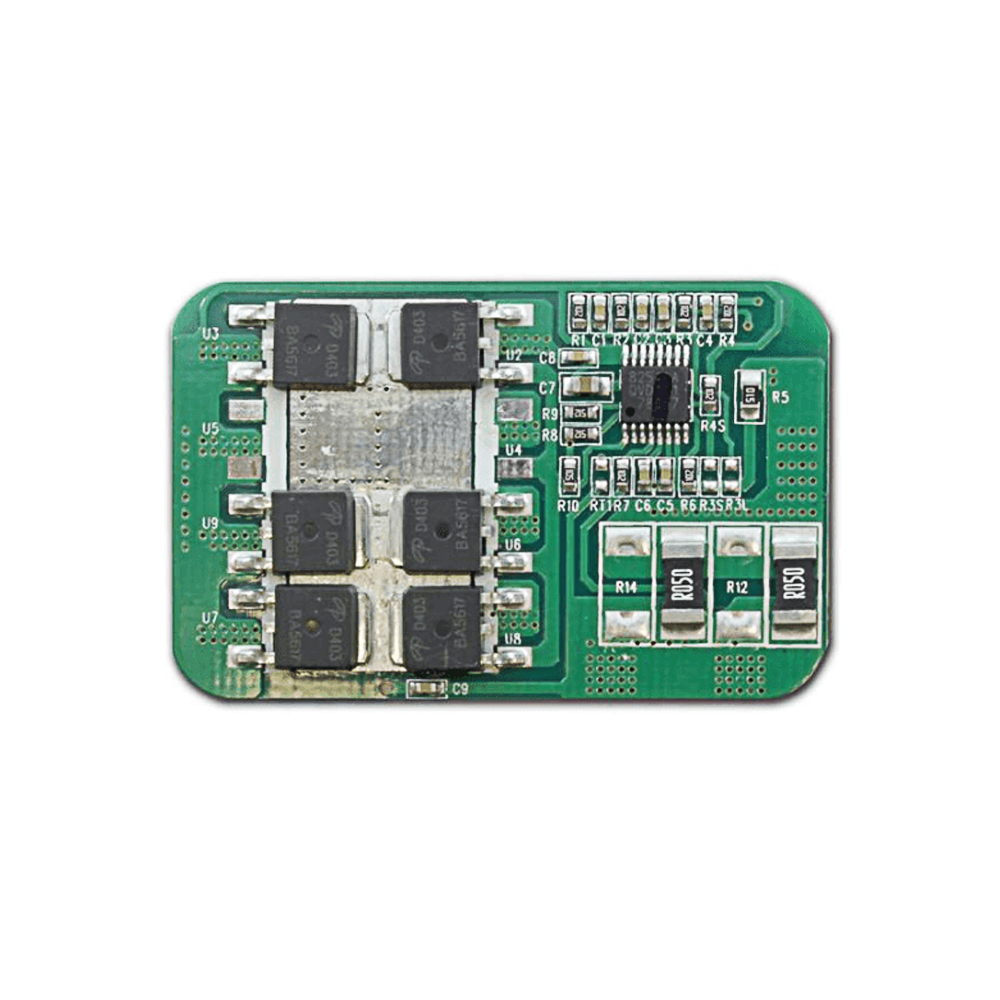
BMS

Key Features of a Good BMS for Lithium-Ion Batteries

Voltage Monitoring at the Cell Level

Lithium-ion cells have a narrow voltage range that is crucial to their performance and safety. Overcharging a cell can cause it to overheat, while undercharging it can lead to irreversible damage. The BMS constantly monitors the voltage of each individual cell in the battery pack to make sure that no cell is charged beyond its safe voltage level or discharged too deeply.


Why It Matters: Accurate voltage monitoring ensures that your battery operates safely and efficiently, preventing the risk of thermal runaway, over-discharge, or over-charge. At HIMAX Electronics, we use advanced monitoring techniques to ensure that each cell within the pack stays within the optimal range for performance and safety.

Current Monitoring (Charge and Discharge)

Current monitoring helps to track the flow of current into and out of the battery during charging and discharging cycles. The BMS ensures that the current does not exceed the battery’s rated limits, preventing overheating and potential damage.


Why It Matters: Excessive charging current can cause cell overheating and reduced efficiency, while over-discharging can damage the battery’s internal structure. By continuously tracking the current flow, our BMS systems prevent such issues and maintain optimal performance over the long term.

Temperature Control and Thermal Management

Lithium-ion batteries can heat up during heavy use, and temperature is one of the most critical factors influencing battery performance and safety. A BMS will typically integrate temperature sensors that monitor the battery pack’s temperature, ensuring that it doesn’t exceed safe thresholds. When the temperature rises too high, the BMS can trigger cooling systems or shut down the battery to prevent overheating.


Why It Matters: If the temperature rises beyond a safe limit, it could lead to thermal runaway, which can cause fires or damage the battery permanently. HIMAX Electronics incorporates advanced thermal management strategies in our BMS solutions, ensuring that your battery remains within safe operating temperatures under all conditions.

Cell Balancing

Over time, cells in a multi-cell battery pack can become imbalanced. This means some cells may be overcharged while others are undercharged, leading to uneven performance. A good BMS employs cell balancing techniques to ensure that all cells in the battery pack are charged and discharged uniformly.


Why It Matters: Unbalanced cells can cause capacity loss, reduce battery lifespan, and even lead to safety risks. With HIMAX’s BMS, we use both passive and active balancing methods to ensure that all cells in the pack perform optimally, leading to better efficiency and longer battery life.

State of Charge (SOC) Estimation

The State of Charge (SOC) tells you how much energy is remaining in the battery, typically displayed as a percentage. The BMS continuously monitors the SOC to prevent over-discharge, which can damage the battery cells.


Why It Matters: Accurate SOC estimation ensures that users always have a clear idea of how much charge is left, preventing situations where the battery runs out unexpectedly. HIMAX’s BMS systems use sophisticated algorithms to deliver accurate SOC readings, ensuring reliable performance and avoiding unnecessary battery wear.

State of Health (SOH) Monitoring

As a battery ages, its internal resistance increases, and its capacity decreases. The BMS tracks the State of Health (SOH) of the battery over time, providing important insights into how much usable life is left in the pack.


Why It Matters: Monitoring SOH allows you to take proactive measures to replace or maintain the battery before it reaches a critical point. This can help to avoid unexpected downtime and costly repairs, ensuring that your battery continues to deliver peak performance for as long as possible.

Overcharge and Over-discharge Protection

Both overcharging and over-discharging can significantly damage a lithium-ion battery. The BMS actively monitors the voltage of each cell and will automatically disconnect the battery from the load or charger if it detects an overcharge or deep discharge situation.


Why It Matters: This protection is crucial for the longevity and safety of the battery pack. By preventing overcharge or over-discharge, our BMS solutions help to maximize the usable life of your battery and reduce the risk of dangerous incidents like fires or explosions.

Fault Detection and Alerts

A high-quality BMS is equipped with fault detection systems that can identify problems such as short circuits, abnormal voltage readings, or temperature fluctuations. When an issue is detected, the BMS immediately takes action—either by shutting down the system or sending an alert to the user.


Why It Matters: Early detection of faults helps prevent serious damage to the battery pack, system, or equipment. HIMAX’s BMS systems provide real-time alerts and diagnostics, allowing you to respond quickly to any issues.

Communication and Diagnostics

The BMS should provide continuous communication with external systems like chargers, controllers, and monitoring platforms. This ensures that the battery can be controlled remotely, and its performance can be monitored in real-time.


Why It Matters: Communication enables better management of the battery’s performance, especially in complex systems. At HIMAX Electronics, we integrate CAN bus, SMBus, and UART communication protocols into our BMS systems, allowing for seamless integration with other devices and remote monitoring.

Why HIMAX Electronics is Your Trusted Partner for BMS Solutions

At HIMAX Electronics, we specialize in providing high-performance Battery Management Systems (BMS) that meet the unique needs of various applications, from electric vehicles (EVs) to energy storage systems and robotics. With years of experience in the field of lithium-ion batteries, we deliver BMS solutions that prioritize safety, performance, and longevity.

What Sets Us Apart:

Customization: We offer customized BMS solutions designed specifically for your project’s requirements, whether you’re building an electric vehicle or a renewable energy storage system.

Safety-First Approach: Safety is at the core of our design philosophy. Our BMS systems incorporate multiple safety protocols to ensure that your batteries are always operating within safe parameters.

High-Quality Components: We use only the best materials and technology to build our BMS, ensuring that every system is reliable, accurate, and efficient.

Real-Time Monitoring and Diagnostics: With advanced real-time diagnostics and communication capabilities, our BMS solutions offer comprehensive control and monitoring, allowing for the best possible battery performance.

himax custom battery

Applications of Our BMS Solutions


Electric Vehicles (EVs): Ensuring safety, efficiency, and long-range performance.

Robotics: Reliable power management for precision equipment.

Renewable Energy: Optimizing energy storage in solar and wind applications.

Energy Backup Systems: Providing uninterrupted power to critical systems.

Power Tools: Ensuring consistent, long-lasting power for industrial and consumer tools.


Conclusion

A well-designed Battery Management System (BMS) is the key to ensuring that your lithium-ion batteries perform at their best and last as long as possible. At HIMAX Electronics, we provide cutting-edge BMS solutions that ensure your battery systems are safe, efficient, and reliable. With our expertise and commitment to quality, we help you get the most out of your energy storage systems, no matter the application.

high-quality-18650-battery-holder-materials

Security systems—whether for homes, businesses, or industrial facilities—rely heavily on uninterrupted power to keep surveillance and alarm equipment operational. Li-ion 18650 battery packs have become the preferred power source due to their high energy density, long cycle life, and compact form factor. However, like all advanced technologies, they require proper handling and integration to perform safely and effectively.

At HIMAX Electronics, we specialize in designing and assembling high-performance Li-ion battery packs tailored for critical applications like security systems. In this article, we’ll outline the key points you need to pay attention to when using 18650 lithium-ion battery packs in your security solutions.

1. Battery Pack Design and Configuration

Each security system has different power demands based on camera quantity, data transmission, and backup requirements. Choosing the right series-parallel configuration of 18650 cells is essential:

  • Voltage Requirements:Most systems run on 12V or 24V, which means using a 3S or 7S configuration respectively.
  • Capacity and Runtime:Evaluate the amp-hour rating needed to keep your system running during outages. HIMAX Electronics offers custom 18650 packs up to 20Ah or more for extended runtime.

Tip: Always balance power requirements with physical space availability in enclosures.

2. Incorporation of a Smart Battery Management System (BMS)

A high-quality BMS is non-negotiable for safety and performance. HIMAX Electronics integrates intelligent BMS modules into every 18650 pack we produce to:

  • Prevent overcharging, overdischarging, and short circuits
  • Enable cell balancing to maximize lifespan
  • Support communication protocols (UART, CAN, SMBus) for remote monitoring


Important: Never use a pack without a properly rated BMS—doing so can risk fire or permanent system damage.

3. Thermal Management and Placement

Security systems often operate in confined, weatherproof enclosures or attics where heat buildup is an issue. 18650 batteries are sensitive to high temperatures.

  • Ideal Operating Temperature:0°C to 45°C (charge), -20°C to 60°C (discharge)
  • Avoid placing packs near heat-generating electronics or under direct sunlight
  • Consider passive or active cooling methods for high-load systems

HIMAX Electronics also offers temperature-sensor integrated BMS for enhanced safety shutdowns.

4. Regular Maintenance and Monitoring

Even the best 18650 packs degrade over time. Set up routine inspection and software-based battery health monitoring to detect:

  • Voltage imbalance between cells
  • Capacity fade
  • Abnormal charging/discharging rates

Some HIMAX smart packs include app or PC software interfaces to allow real-time diagnostics.

5. Storage and Backup Power Readiness

Security systems must be ready 24/7—even after weeks or months of low activity. Ensure:

  1. Packs are stored at 40–60% state of charge if unused for long periods
  2. Recharge every 3–6 months to avoid deep discharge
  3. Always test the system’s backup runtime quarterly

HIMAX Electronics uses low self-discharge cells and industrial-grade assembly to maintain long-term stability in standby mode.

6. Certifications and Compliance

Security systems often fall under building safety regulations. Use certified batteries to ensure regulatory compliance:

  • 3 for transportation
  • IEC62133 for safety
  • CE/RoHS for environmental compliance

HIMAX Electronics ensures every battery pack complies with international standards, helping integrators and installers pass inspections with confidence.

sodium battery 18650

Conclusion

Using Li-ion 18650 battery packs in security systems offers outstanding benefits—but only when properly designed, integrated, and maintained. At HIMAX Electronics, we understand the critical importance of reliability in life-safety systems. That’s why we engineer our battery packs with precision, safety, and long-term performance in mind.

For custom battery solutions tailored to your security system’s requirements, contact HIMAX Electronics today. Our engineers are ready to help you power your peace of mind.

boat-battery-size

Why Choosing the Right Battery Matters for Outdoor Trail Cameras

Outdoor hunting and trail cameras are essential tools for wildlife observation, hunting, and property surveillance. These cameras often operate in harsh environments—exposed to rain, snow, high humidity, and extreme temperatures. A reliable power source is critical for ensuring consistent operation, especially in remote areas where changing battery frequently is not an option.

As a battery manufacturer with 12 years of experience, we at HIMAX ELECTRONICS have developed a series of high-performance rechargeable batteries specifically designed to meet the rigorous demands of outdoor trail cameras.

Our Battery Solutions for Trail Cameras

HIMAX provide a range of Li-ion and LiFePO4 battery packs that offer high capacity, long life, excellent safety, and weather resistance—making them ideal for hunting cameras, game cameras, and remote monitoring systems.

Battery Type Voltage Capacity Features
Li-Ion Battery Pack 11.1V 10Ah High energy density, long runtime
Li-Ion Battery Pack 14.8V 10Ah Powerful output, suitable for high-drain devices
LiFePO4 Battery Pack 12.8V 8Ah Lightweight, stable, long cycle life
LiFePO4 Battery Pack 12.8V 10Ah Safer chemistry, consistent performance
LiFePO4 Battery Pack 12.8V 20Ah Heavy-duty, extended runtime for long deployments

All battery packs are available with durable ABS housings for added protection in outdoor environments.

14.8V 10Ah Custom Lithium Battery Pack

Key Advantages of Our Batteries for Outdoor Use

1. Long-Lasting Power Supply

Our high-capacity batteries provide extended operational time, reducing the need for frequent recharging or replacements. This is critical for hunting cameras deployed in remote areas for weeks or months.

2. Rugged and Waterproof Design

The batteries come in ABS plastic enclosures, offering excellent protection against water, dust, and mechanical impact. They are tested to withstand outdoor environments, ensuring they remain functional in various weather conditions.

3. Proven Performance and Reliability

We have been supplying these batteries to customers in the United States for years, including as a reliable alternative to local brands such as Amped Outdoors. Many of our clients have confirmed that our batteries offer the same or better performance at a more competitive factory price.

4. Safe and Stable Chemistry

Our LiFePO4 batteries are known for their thermal stability, non-flammability, and longer life cycle compared to traditional lithium-ion chemistries. They are ideal for outdoor electronics that demand reliability.

5. Factory Direct Supply – Better Value

As a direct batteries manufacturer, we offer our customers factory prices without the middleman. This ensures better cost efficiency for businesses that deploy large quantities of trail cameras or resell hunting accessories.

Ideal Battery Applications

Our battery packs are suitable for a wide range of outdoor and off-grid applications, including:

  • Hunting and wildlife trail cameras
  • Outdoor surveillance systems
  • Environmental monitoring sensors
  • Solar-powered devices
  • Remote IoT applications

Why Work With Us?

12 Years of Manufacturing Experience in rechargeable batteries

Full range of certified products (CE, UN38.3, MSDS, etc.)

Professional production facilities with automated welding, aging test equipment

Customized battery pack service available

Proven track record in North America and Europe

Testimonials from the U.S. Market

“We’ve used HIMAX’s 12.8V LiFePO4 batteries for over 2 years now. The quality is excellent—long runtime, durable, and cost-effective compared to brands like Amped Outdoors. Highly recommended!” — A U.S. Trail Camera Retailer

Contact Us for Battery Samples or Custom Orders

If you are an outdoor gear distributor, OEM/ODM partner, or retail supplier, contact us for sample testing or bulk order pricing. Let us help you power your next-generation trail camera solutions with reliable, safe, and affordable energy.