
What Should You Look for When Buying Batteries for CCTV Surveillance Systems? Key Selection Factors From a Battery Manufacturing Perspective
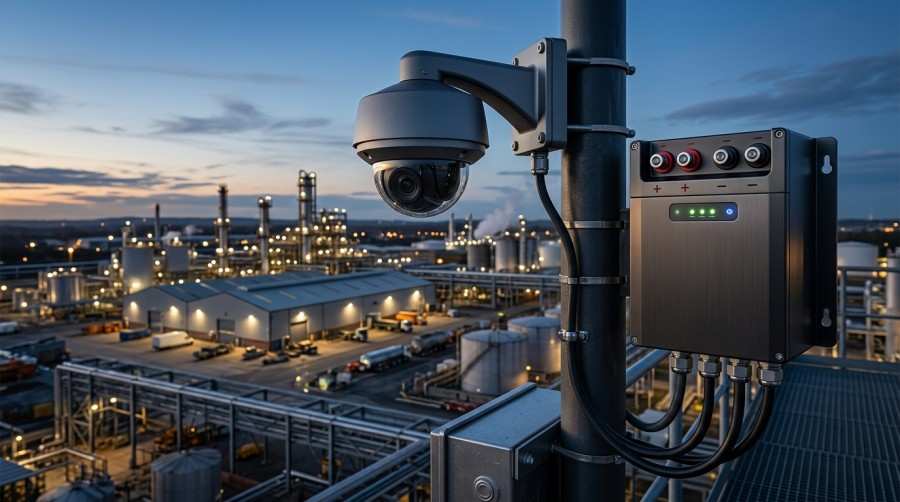
Commercial Disclosure: The Himax Electronics Editorial Team brings together expertise in battery products, power technologies, engineering applications, and global customer support to share practical information about battery technology, custom battery solutions, and power applications. Our content covers lithium-ion batteries, LiFePO4 batteries, battery pack design and selection, charging and power solutions, industry application guides, product updates, and official Himax Electronics news. Our goal is to help engineers, procurement professionals, and businesses better understand battery technologies and make informed decisions based on their specific application requirements. All content reflects the official editorial perspective of Himax Electronics and our commitment to providing reliable, flexible, and professional custom battery and power solutions for complex applications worldwide.
Key Takeaways
- Confirm the voltage, power consumption, startup current, and target backup time of the entire surveillance system before calculating the required battery capacity.
- Lead-acid and lithium-ion batteries each have suitable applications. Battery selection should consider installation space, temperature, cycling frequency, and maintenance requirements.
- Rated Ah does not equal actual usable runtime. Discharge rate, low temperatures, battery ageing, and inverter losses can all affect operating time.
- Outdoor enclosures, low-voltage equipment rooms, server rooms, and off-grid sites have different requirements for water resistance, dust protection, heat dissipation, flame resistance, and theft protection.
- During procurement, verify the BMS, charger, cell source, protection functions, test reports, batch traceability, and after-sales support capabilities.
- For lithium battery packs shipped internationally, confirm that transport documentation such as UN 38.3 corresponds to the actual battery model being shipped.
Introduction
When deploying a closed-circuit television (CCTV) surveillance system, cameras, NVRs, switches, and network equipment typically depend on continuous and stable power. Utility power interruptions, outdoor temperature fluctuations, system expansion, and cable voltage drop can all affect video retention and remote access. For this reason, purchasing batteries for CCTV surveillance systems should involve more than comparing rated capacity. System load, required backup time, installation environment, charging method, and maintenance conditions should all be evaluated.
Why Do CCTV Surveillance Systems Need Reliable Backup Batteries?
A CCTV surveillance system is not a single load. A typical installation may include cameras, infrared illuminators, PTZ mechanisms, power adapters, PoE switches, wireless bridges, NVRs, routers, and alarm integration equipment. Power consumption can also differ between daytime and nighttime operation. Infrared illumination, PTZ movement, intensive hard-drive writing, or network reconnection can temporarily increase power demand.
If backup battery capacity is selected based only on the rated power of the cameras, the calculation may overlook switches, conversion losses, and nighttime infrared loads, resulting in shorter-than-expected runtime during a power outage.
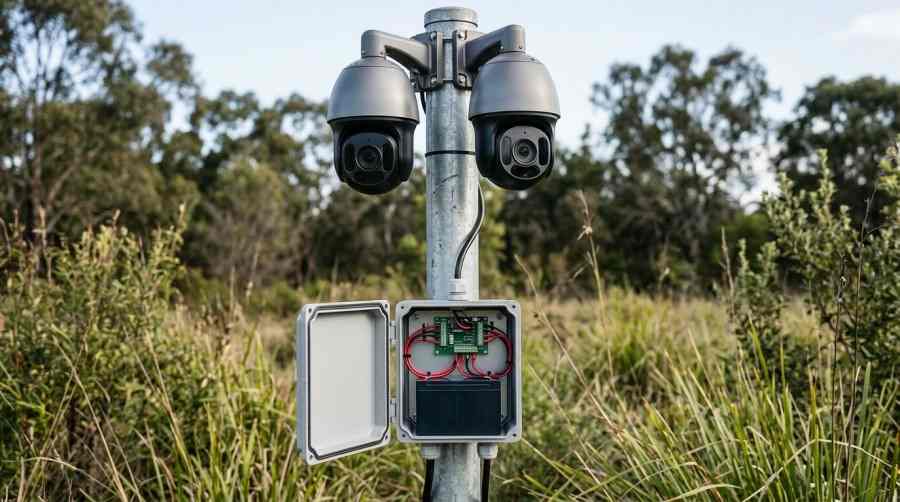
For warehouses, industrial parks, construction sites, retail stores, transportation hubs, and remote sites, power continuity directly affects the completeness of recorded footage and the ability to review security events.
Before Purchasing: Calculate CCTV Battery Capacity First
Battery capacity is commonly expressed in Ah (amp-hours), but proper sizing also requires consideration of system voltage and efficiency. An initial estimate can use the following formula:
Required Battery Capacity (Ah) ≈ Average System Power (W) × Backup Time (h) ÷ Battery System Voltage (V) ÷ System Efficiency × Safety Margin Factor
For example, consider a 12V surveillance system with an average load of 60W and a target backup time of 8 hours. If overall system efficiency is estimated at 0.85 and a safety margin factor of 1.25 is applied, the theoretical capacity would be approximately:
60 × 8 ÷ 12 ÷ 0.85 × 1.25 ≈ 58.8Ah
In an actual project, the battery discharge curve, ambient temperature, ageing allowance, and equipment startup current should also be considered when selecting a battery specification close to or above the calculated requirement.
Do not estimate runtime based only on a label such as “12V 100Ah.” The amount of usable capacity can vary depending on battery chemistry, discharge current, and cutoff voltage.
| Variable Affecting Runtime | Common Effect on CCTV Systems | Information to Request During Procurement |
| Average and peak loads | Infrared lighting, PTZ movement, and hard-drive activity can increase power consumption | Time-based power profile and startup current data |
| Battery system voltage | 12V, 24V, and 48V systems differ in cable losses and equipment compatibility | System wiring diagram and operating voltage range |
| Discharge rate | Usable capacity of some batteries decreases at higher discharge currents | Discharge curves at relevant C-rates |
| Temperature | Low temperatures can reduce discharge performance, while high temperatures can accelerate ageing | Operating, charging, and discharging temperature ranges |
| Conversion efficiency | UPS systems, inverters, and PoE equipment introduce energy losses | Conversion efficiency curves and standby power consumption |
| Battery condition and ageing | Long-term float charging or frequent cycling can change usable capacity | Cycle life, float life, and warranty terms |
How Should You Choose Between Lead-Acid and Lithium-Ion Batteries?
Common backup power solutions for surveillance systems include valve-regulated lead-acid (VRLA) batteries, lithium iron phosphate (LiFePO4) batteries, and compatible UPS or DC power systems. No single battery solution is suitable for every CCTV project. The key is understanding the application’s operating conditions.
| Comparison Factor | VRLA Battery | LiFePO4 Battery |
| Initial purchase cost | Usually easier to keep initial costs lower | Typically higher than lead-acid solutions |
| Capacity relative to weight | Lower | Higher, which can reduce enclosure weight |
| Cycling applications | Commonly used for standby and float applications | Well suited to applications with more frequent charge-discharge cycles |
| Installation space | Requires more space for the same backup requirement | Higher space efficiency |
| BMS requirements | Generally does not use an electronic BMS | BMS protection and communication capabilities should be evaluated |
| Low-temperature charging | Generally offers a broader operating range, but specifications still apply | Requires evaluation of cell limitations and BMS low-temperature charging strategies |
| Replacement and maintenance | Widely used and commonly available for replacement | Voltage, charging logic, and communication compatibility should be verified |
If the application primarily requires long-term standby with float charging, has sufficient installation space, and uses an existing UPS designed for lead-acid batteries, a VRLA solution may be easier to integrate.
If space is limited, the battery will be cycled more frequently, manual maintenance is difficult, or reducing transportation and installation weight is important, a LiFePO4 battery pack may be worth evaluating.
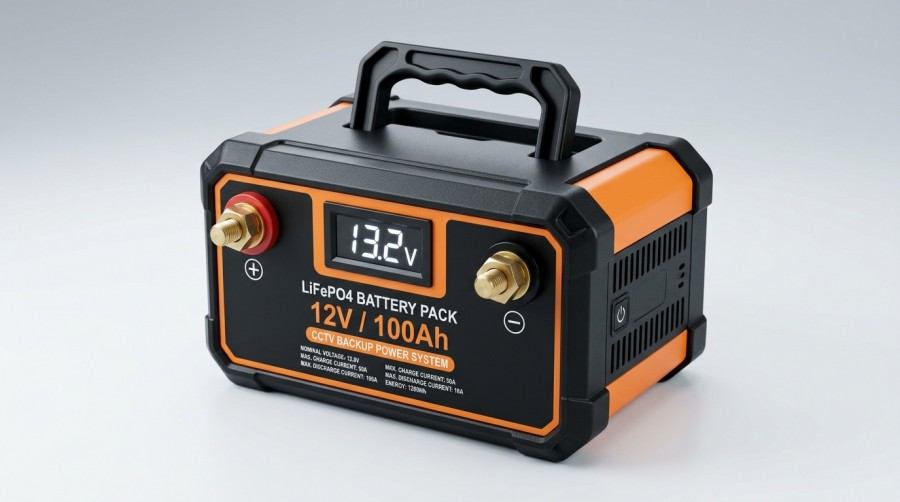
Before purchasing, verify the charger’s constant-current/constant-voltage parameters, float-charging strategy, and low-temperature limitations. Charging equipment designed for another battery chemistry should not be connected directly to a lithium battery pack without confirming compatibility.
Focus on Voltage Compatibility, Not Just Capacity
Common DC voltages for CCTV surveillance systems include 12V, 24V, and 48V. PoE systems also involve switch output voltage, cable length, and the voltage available at the powered device. The battery pack’s nominal voltage must be checked against the allowable input range of each device.
For example, a “12V lithium battery” may use a 4-series LiFePO4 configuration with a fully charged voltage approaching 14.6V, while some equipment may be sensitive to the upper input-voltage limit.
For 24V or 48V systems, the operating ranges of the UPS, PoE switch, DC-DC converter, and end loads should also be verified. With long-distance power transmission, voltage drop caused by cable resistance may cause remote cameras to disconnect or restart repeatedly.
Battery buyers should provide the manufacturer with information such as the equipment list, rated and peak power consumption, operating voltage, cable length, target backup time, temperature range, whether an inverter is used, and whether remote communication is required. This makes it easier to develop a battery-pack configuration that matches the actual system.
What Safety, Protection, and Certification Documents Should You Review?
For lithium-ion CCTV backup batteries, cell quality is only one part of battery safety. The complete battery pack also relies on the BMS, wiring harnesses, connectors, fuses or other protective devices, mechanical components, and charging strategy to reduce risk.
Key areas to verify include protection logic for overcharge, over-discharge, overcurrent, short circuit, temperature, and cell consistency. Buyers should also understand whether the system supports recovery, alarms, or communication-based fault reporting after a protection event occurs.
IEC 62619:2022, published by the International Electrotechnical Commission, covers safety requirements and testing for secondary lithium cells and batteries used in industrial applications, including stationary applications. For lithium battery solutions used in equipment rooms, outdoor cabinets, communications infrastructure, or security backup systems, relevant testing capabilities can be considered as part of supplier qualification.
If the battery pack will be shipped by air, sea, or across international borders, buyers should also review lithium battery transportation requirements in the UNECE Manual of Tests and Criteria. UN 38.3 documentation should correspond to the actual cells, battery-pack configuration, and model being shipped. If the model, capacity, or critical materials change, outdated documentation that does not match the actual product should not simply be reused.
What Else Should You Consider for Outdoor CCTV Batteries?
Outdoor surveillance power enclosures may be exposed to sunlight, high temperatures, rain, dust, condensation, salt spray, and vandalism. Even if the battery itself performs well in room-temperature testing, an unsuitable enclosure or inadequate thermal design can contribute to shortened service life, protection shutdowns, or connector corrosion.
| Application Environment | Primary Risks | Recommended Considerations |
| Outdoor pole-mounted enclosure | Sun exposure, rain, condensation, theft or vandalism | Protection rating, locks, cable sealing, ventilation, and sun shielding |
| Construction and industrial sites | Dust, vibration, and unstable utility power | Vibration-resistant structure, secure terminals, and wide-input-range chargers |
| Coastal areas | Salt-spray corrosion | Corrosion-resistant materials, connector plating, and enclosure sealing |
| Cold-climate regions | Reduced discharge capability and low-temperature charging risks | Low-temperature discharge curves, heating strategies, and BMS temperature-control logic |
| Equipment or server rooms | Heat buildup and insufficient maintenance | Ventilation clearance, temperature alarms, and periodic capacity checks |
| Low-temperature charging | Generally offers a broader operating range, but specifications still apply | Requires evaluation of cell limitations and BMS low-temperature charging strategies |
| Replacement and maintenance | Widely used and commonly available for replacement | Voltage, charging logic, and communication compatibility should be verified |
Procurement specifications can require suppliers to clearly state charging, discharging, and storage temperature ranges, recommended installation clearances, and maintenance intervals.
For high-temperature enclosures or low-temperature sites, prototype validation under actual environmental conditions is preferable to relying solely on laboratory room-temperature data.
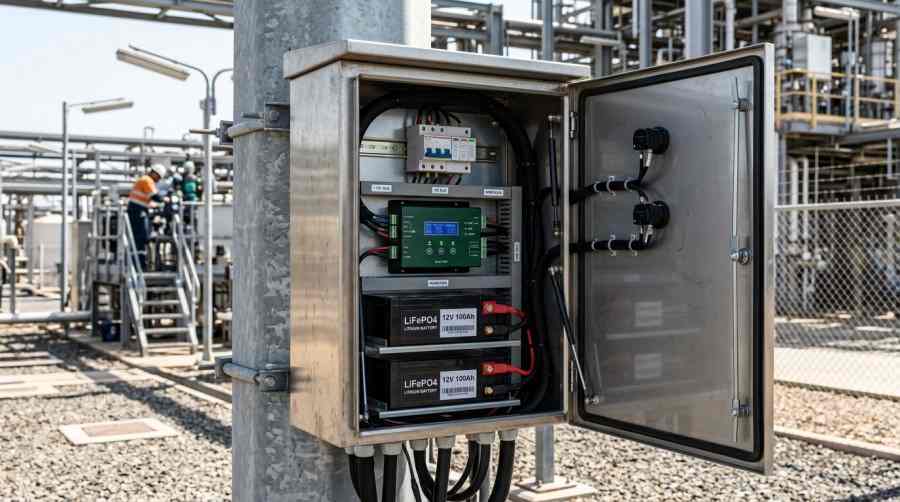
Don’t Overlook Chargers, UPS Systems, and Remote Monitoring
A reliable CCTV backup power system should evaluate the battery, charger, UPS, or DC power supply as an integrated system.
If charger voltage is too high, it can place additional stress on the battery. If it is too low, the battery may remain undercharged. The standby power consumption of the UPS itself can also affect final backup runtime.
For distributed CCTV installations, a BMS capable of reporting SOC, voltage, temperature, alarm status, and cycle count can help maintenance teams identify abnormal conditions earlier.
During procurement, buyers can ask suppliers whether the battery supports RS485, CAN, Bluetooth, or dry-contact alarms; whether it can integrate with an existing monitoring platform; how low-state-of-charge or temperature alarms are communicated; and whether parameters need to be reconfigured after battery replacement. These factors can affect long-term inspection and maintenance efficiency.
Supplier Evaluation Checklist for CCTV Surveillance System Batteries
- Verify that the cells, battery pack, BMS, and charger have clear model identification and batch traceability.
- Request capacity testing, ageing test data, and discharge curves that correspond to the target specification.
- Confirm whether the supplier can explain expected battery performance under the target temperature and load conditions.
- Check whether customization is available for system voltage, enclosure dimensions, connectors, wire-harness length, and communication protocols.
- Verify whether the supplier can provide transportation documentation, packaging requirements, and dangerous-goods shipping support.
- Confirm whether warranty terms clearly address capacity degradation, BMS failures, mechanical components, and technical support procedures.
- Determine whether small-batch prototype testing and post-delivery technical support are available.
Frequently Asked Questions About CCTV Surveillance System Batteries
How Long Can a 12V 100Ah Battery Power a CCTV System?
Runtime cannot be determined from capacity alone. If the system load is 100W and there are additional inverter and cable losses, actual runtime will also depend on battery chemistry, discharge current, temperature, and battery ageing.
Supplier discharge curves and complete-system testing should be used as the primary references.
Why Does an Outdoor CCTV Battery Have Shorter Runtime in Winter?
Low temperatures can slow electrochemical reactions and reduce usable capacity, while load-side voltage may also drop earlier.
If the battery is charged in cold conditions, the temperature limits specified for the cells and BMS should also be followed. The system can be optimized through insulated enclosures, temperature-control strategies, additional capacity margin, or cells designed for the required low-temperature operating range.
Does UN 38.3 Mean a Battery Is Suitable for Every CCTV Project?
No. UN 38.3 primarily relates to lithium battery transportation testing. It does not replace project-specific validation for electrical compatibility, safety design, environmental durability, cycle life, or actual load conditions.
During procurement, transportation documentation should be reviewed alongside the electrical design and prototype test results.
Himax Electronics
Himax Electronics specializes in customized battery and power solutions for demanding applications worldwide, including proprietary lithium-ion battery packs, power supplies, chargers, and related accessories.
For CCTV surveillance systems, outdoor security equipment, communications equipment, and other industrial applications, Himax Electronics can help customers evaluate battery-pack and power-system configurations based on load requirements, voltage, backup time, installation space, environmental temperature, and communication requirements, while providing customized support for project development and delivery.