
| About the Author
Joan | Battery Engineer – Custom Pack Development Joan is a battery engineer specializing in custom battery packs. He works with OEM clients on cell selection, BMS architecture, and mass production — with deep expertise in LiFePO4 and IEC compliance. His designs serve safety equipment makers across commercial, industrial, and critical infrastructure sectors. |
Key Takeaways
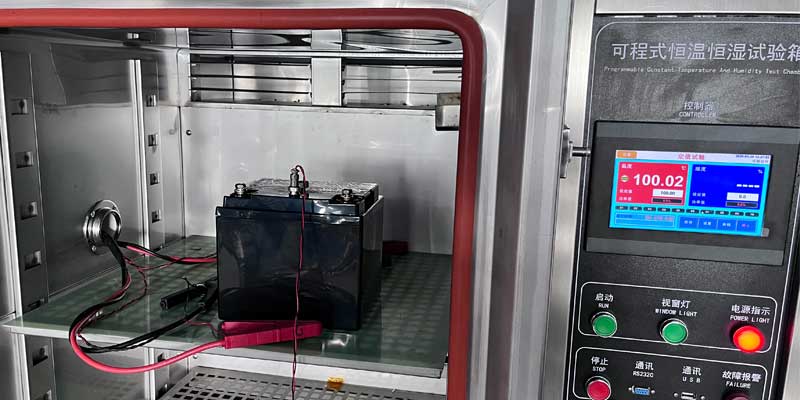
- Capacity that matches commercial-scale demand: The 12.8V 40Ah LiFePO4 format delivers 97.5W continuous output for 35 minutes at 100℃ ambient temperature — triple the reserve capacity of legacy 12Ah designs, making it viable for large commercial buildings, industrial facilities, and data centers.
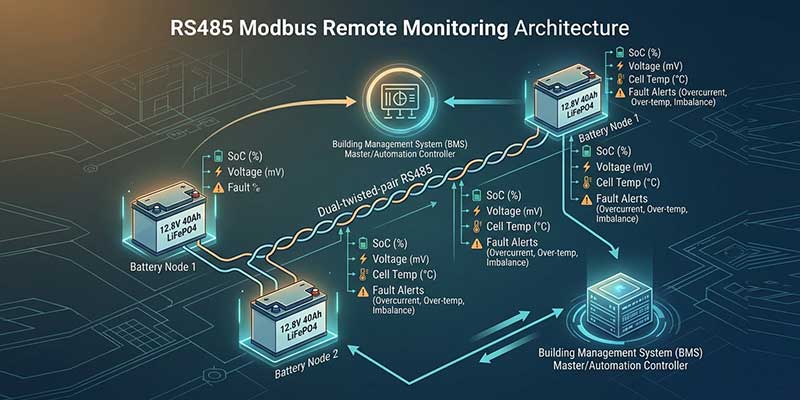
- RS485 with Modbus protocol enables true remote monitoring: Unlike passive emergency batteries, this design exposes State of Charge, voltage, temperature, and fault flags over a dual-twisted-pair RS-485 network — eliminating manual inspection cycles that remain the leading cause of emergency lighting failure in audits.
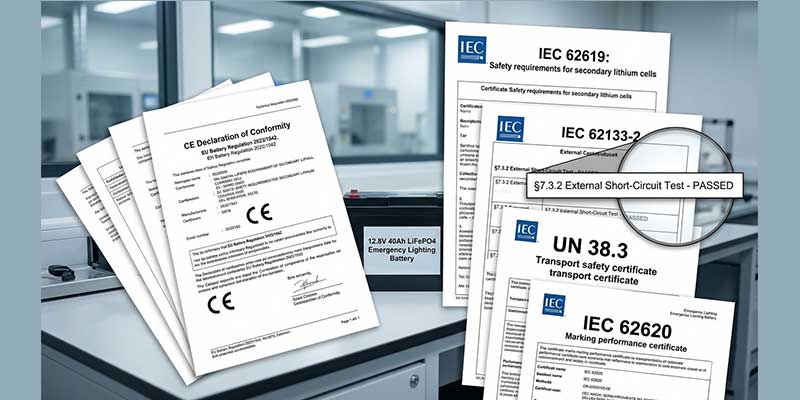
- A concrete IEC certification roadmap exists: IEC 62619, IEC 62133-2 (including §7.3.2 external short-circuit), IEC 62620, and UN 38.3 collectively address safety, identification, and transport — providing a structured compliance path.
- EU Battery Regulation (EU) 2023/1542 is already in force: Mandatory requirements covering hazardous substance limits, labeling, performance, BMS, CE marking, and conformity declarations took effect in February and August 2024.
- IEC 62133-2 is under active revision: A Draft International Standard (DIS) ballot opened on 6 March 2026 with a 12-week voting window. Buyers specifying IEC 62133-2 compliance should request supplier transition plans to the forthcoming second edition.
1. Why Battery Chemistry Is the First — and Most Consequential — Procurement Decision
The global emergency lighting battery market was valued at approximately $1.29 billion in 2025 and is projected to reach $1.35 billion in 2026, growing at a CAGR of 5.59% through 2032, when it is expected to approach $1.89 billion. China’s share of that market is forecast to exceed 40%, reflecting both manufacturing capacity and expanding domestic fire-safety mandates. For B2B procurement teams, that growth trajectory matters less than what is driving it: tightening building codes, aging infrastructure replacement cycles, and a shift from valve-regulated lead-acid (VRLA) batteries to lithium chemistries — particularly LiFePO4.
The reason LiFePO4 (lithium iron phosphate) commands attention in fire-safety applications is thermal stability. The thermal runaway onset temperature for LiFePO4 cells is approximately 270℃, compared to 150–200℃ for conventional NMC or NCA lithium-ion chemistries. In an active fire scenario, that 70–120℃ margin is the difference between a battery that continues to power evacuation lighting and one that contributes combustible energy to the same fire. VRLA batteries lose 30–50% of rated capacity at 45℃ and approach complete discharge incapacity above 60℃; LiFePO4 cells, properly designed, can sustain useful discharge at 100℃ ambient temperature.
Our previous 100°C high-temperature testing on 12V 12Ah emergency light battery documented this behavior under controlled conditions and provided an initial validation baseline. The 40Ah platform described in this article extends that validation to a higher-capacity, communication-equipped design.
For safety equipment manufacturers selecting a battery platform, LiFePO4 also offers a significantly longer cycle life — typically 2,000–3,000 cycles to 80% DoD versus 200–500 cycles for VRLA — which affects total cost of ownership in multi-year system contracts.
2. Capacity Scaling: What the 40Ah Upgrade Actually Changes in the Field
The 12.8V 40Ah configuration stores 512Wh of usable energy under rated conditions. The validated discharge test — 97.5W continuous output sustained for 35 minutes at 100℃ ambient in a constant-temperature-and-humidity chamber — represents a demanding worst-case profile. EN 60598-2-22 mandates a minimum 1-hour duration at rated output for maintained and non-maintained luminaires in many building categories. A 40Ah pack can satisfy that requirement with thermal and capacity headroom for larger luminaire arrays or extended mandated durations.
The practical implications for building typologies are significant. A mid-rise commercial office building with 50–80 emergency luminaires, each drawing 3–5W, operates comfortably within a 12Ah bank. A large industrial facility, logistics warehouse, or multi-zone data center with centralized emergency power architectures may require 150–300W sustained output — a load profile where 40Ah cells deployed in managed strings offer substantially more headroom.
The 1C maximum charge and 1C maximum continuous discharge ratings — 40A charge, 40A discharge — provide flexibility for rapid recharge after emergency activation and compatibility with the charging architectures described in IEC 61347-2-7, which requires that lithium battery chargers for luminaires must follow battery manufacturer design parameters and may only initiate charging when cell temperature is within a specified range.
3. RS485 Communication: From Passive Backup to Intelligent System Node
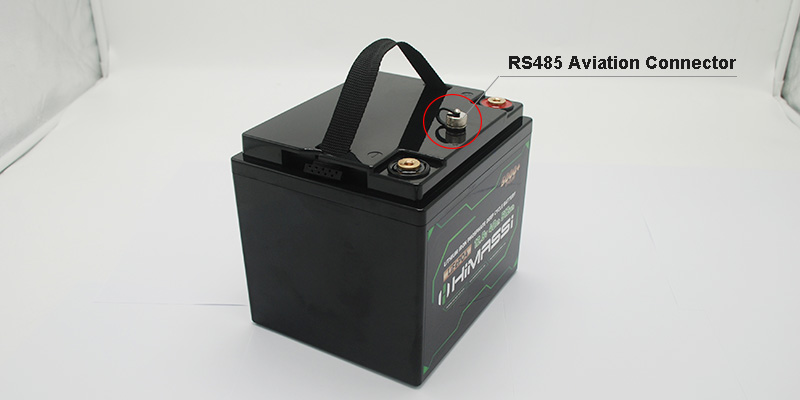
The most structurally significant design decision in this product is the inclusion of RS485 communication via aviation-grade connector, implemented in an ABS housing dimensioned to the footprint of a conventional lead-acid replacement. This converts the battery from a passive energy reservoir into an addressable node in a building automation or fire-safety network.
Modbus protocol over RS485 is the de facto standard for industrial device communication in building automation contexts. A dual-twisted-pair RS-485 bus supports up to 32 device nodes per segment at distances exceeding 1,200 meters without repeaters. Each battery node can expose to a Modbus master: State of Charge (%), terminal voltage (mV resolution), cell-level temperature, charge/discharge current, cycle count, and fault status flags for overcurrent, over-temperature, and cell imbalance events.
The regulatory relevance of this capability is explicit in EN 1838:2025-03, which includes specific requirements for emergency power system monitoring, maintenance scheduling, and documentation. Automated self-testing — where the BMS triggers a periodic discharge test and logs duration, voltage response, and recovery time — satisfies EN 1838 documentation requirements without technician dispatch. For safety equipment manufacturers building products for EU markets, integrating a battery with native remote monitoring and automated self-testing capability simplifies EN 1838 compliance architecture considerably.
The aviation connector selection is a deliberate mechanical reliability choice. In high-vibration industrial environments or installations subject to thermal cycling, standard connectors exhibit measurable intermittency rates; aviation-grade connectors with positive locking mechanisms and gold-plated contacts maintain contact resistance below 5 mΩ over thousands of mating cycles.
4. IEC Certification Architecture: Understanding What Each Standard Actually Tests
Procurement specifications routinely list “IEC certified” as a requirement without specifying which standards, which editions, or which test clauses are relevant. The certification architecture for this product addresses four distinct compliance domains:
IEC 62619
Establishes safety requirements for secondary lithium cells and batteries used in industrial applications, covering protection against overcharge, over-discharge, overcurrent, and elevated temperature. EN 62619 is the harmonized European version applicable to CE marking declarations.
IEC 62133-2 (including §7.3.2 External Short-Circuit)
- 7.3.2 external short-circuit testing applies a deliberate short across battery terminals at specified temperature and observes for fire, explosion, electrolyte leakage, or rupture over a 24-hour observation period. This test is particularly meaningful for emergency lighting applications because wiring faults can create external short conditions at precisely the moment the battery is most needed. Important:A Draft International Standard (DIS) ballot for IEC 62133-2 Edition 2 opened on 6 March 2026with a 12-week voting window. Suppliers should be able to articulate their transition plan.
IEC 62620
Addresses marking and labeling requirements for secondary lithium cells and batteries for industrial applications. It mandates specific information including rated capacity, voltage, charge parameters, manufacturer identification, and production batch traceability. EN 62620 is the harmonized EU version. IEC 62620 compliance is a supply chain due diligence indicator that supports lot traceability and recall management.
UN 38.3
Governs transport safety for lithium batteries and is a prerequisite for air and sea freight. It includes altitude simulation, thermal cycling, vibration, mechanical shock, external short circuit, impact/crush, overcharge, and forced discharge tests. UN 38.3 compliance is non-negotiable for international supply chains.
5. EU Battery Regulation (EU) 2023/1542: Compliance Is No Longer Optional
The EU Battery Regulation entered into force on 18 February 2024, with additional requirements taking effect on 18 August 2024. Unlike its predecessor Directive 2006/66/EC, this is a Regulation — directly applicable in all EU member states — and significantly expands obligations on both battery manufacturers and economic operators.
Key requirements now in effect include:
- Hazardous substance restrictions on mercury, cadmium, and lead content thresholds
- Labeling and marking requirements, including the crossed-out wheeled bin symbol and capacity markings
- Performance and durability declarations covering capacity retention over cycle life
- Battery Management System (BMS) requirements for batteries above specified thresholds
- Conformity assessment procedures and CE marking obligations
- Declaration of Conformity documentation requirements
On 13 November 2025, the European Commission published Implementing Regulation (EU) 2025/2289, which further specifies data reporting formats, assessment methodologies, and operational conditions for waste battery collection and treatment reporting.
Looking ahead, the Regulation introduces Battery Passport requirements — a QR-code-accessible digital record of battery composition, carbon footprint, supply chain due diligence data, and end-of-life instructions. For B2B procurement teams, the practical implication is straightforward: supplier qualification processes must now include documented assessment of CE marking capability, Declaration of Conformity currency, supply chain traceability, and readiness for Battery Passport implementation.
6. Maintenance, Reliability, and the Hidden Cost of Inspection Failure
EN 60598-2-22 requires emergency lighting batteries to meet a minimum 4-year service life under rated cycling conditions. In practice, VRLA batteries in emergency lighting applications rarely achieve this threshold in high-temperature environments; LiFePO4 cells routinely exceed it. However, the technical capability to sustain 4-year service life is meaningless if the battery fails silently between inspection intervals.
Studies across European jurisdictions consistently find that 15–25% of emergency luminaires fail function tests during announced safety audits. The primary failure modes are: battery capacity below minimum due to age or prior discharge without full recharge; failed self-test not recorded or actioned; and physical damage not detected between annual inspections. The RS485 remote monitoring capability addresses all three systematically.
A BMS configured to run automated self-testing on a weekly or monthly schedule — initiating a brief timed discharge, measuring voltage response against a capacity model, and logging the result to a central BMS — eliminates the inspection gap. Anomalies trigger alerts rather than waiting for the next scheduled physical inspection.
Replacement strategy recommendation based on EN 60598-2-22 4-year life requirements: plan proactive replacement at year 3.5 for VRLA, year 6 for LiFePO4 in moderate-temperature environments, and year 4 for LiFePO4 in installations subject to sustained elevated temperatures (above 45℃ ambient).
Comparison: 12V 12Ah Model vs. 12.8V 40Ah Model
| Parameter | 12V 12Ah (Previous Model) | 12.8V 40Ah (This Model) |
| Nominal Voltage | 12V | 12.8V |
| Capacity | 12Ah | 40Ah |
| Energy | ~144Wh | ~512Wh |
| High-Temp Test | 100℃ discharge validated | 100℃, 97.5W × 35 min validated |
| Communication | None | RS485 (Modbus), aviation connector |
| Housing | Standard | ABS lead-acid form factor |
| Max Charge Current | — | 1C (40A) |
| Max Discharge Current | — | 1C (40A) |
| Target Application | Small emergency luminaires | Commercial, industrial, data centers |
| Certifications | IEC standards (general) | IEC 62619, IEC 62133-2 §7.3.2, IEC 62620, UN 38.3, CE DoC |
| Remote Monitoring | No | Yes (SoC, voltage, temperature, fault flags) |
| Automated Self-Test | No | Yes (via BMS/Modbus integration) |
| EU Battery Reg. Ready | Partial | Full compliance pathway documented |
Product Specification Summary
| Parameter | Value |
| Chemistry | LiFePO4 |
| Nominal Voltage | 12.8V |
| Rated Capacity | 40Ah |
| Energy | ~512Wh |
| Max Charge Current | 1C (40A) |
| Max Discharge Current | 1C (40A) |
| High-Temp Discharge Test | 97.5W continuous, 35 min, 100℃ ambient |
| Communication Interface | RS485, Modbus protocol |
| Connector Type | Aviation-grade |
| Housing | ABS (lead-acid replacement form factor) |
| Certifications | IEC 62619, IEC 62133-2 (incl. §7.3.2), IEC 62620, UN 38.3, CE DoC |
| Primary Application | Emergency lighting — commercial, industrial, data center |
Joan and his team support full custom development. Tell us your application (e.g., industrial safety, tunnel lighting, high-bay luminaires), required continuous discharge current, and operating temperature.
Subject: High‑temp custom battery.
References: EN 1838:2025-03 | EN 60598-2-22 | IEC 62619 | IEC 62133-2 | IEC 62620 | IEC 61347-2-7 | UN 38.3 | EU Battery Regulation (EU) 2023/1542 | Implementing Regulation (EU) 2025/2289