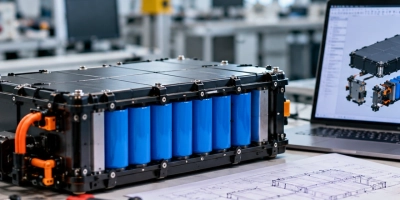
From Prototype to Production: How to Prevent Battery Pack Specification Drift
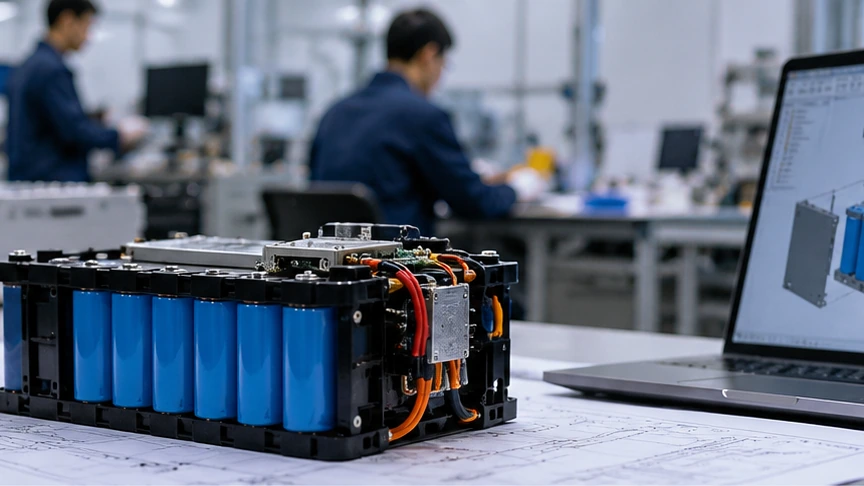
Commercial Summary: Himax Electronics presents this technical overview for OEM engineering and quality teams. The configuration-control practices are general guidance, not a claim about factory procedures or certifications. Project requirements and documented evidence govern change approvals and production release.
Key Takeaways
-
Battery pack specification drift occurs when production units deviate from approved technical specifications or design baselines without proper authorization or detection. These deviations may involve battery cells, the battery management system (BMS), mechanical components, interfaces, firmware, or manufacturing processes.
-
Passing prototype tests does not automatically mean that future production batches will maintain the same configuration and performance. Once a prototype is approved, a clearly defined and traceable specification baseline is needed.
-
Battery cell models, bills of materials (BOMs), BMS firmware, protection parameters, mechanical drawings, and inspection requirements should be placed under revision control to prevent different departments from working with inconsistent technical documentation.
-
Battery cell substitutions, BMS modifications, and manufacturing process changes should undergo engineering change impact assessments before decisions are made about additional testing, customer approval, or document updates.
-
Pilot production and mass production require verification of product conformity and consistency in critical manufacturing processes. Prototype test reports alone cannot establish the quality of future production batches.
-
OEM buyers should establish clear expectations with suppliers regarding configuration traceability, change notifications, nonconformance handling, and batch acceptance criteria.
Introduction
A custom battery pack has completed prototype testing. The customer has approved its voltage, capacity, mechanical dimensions, and equipment compatibility, and the project moves into mass production.
However, during subsequent production batches, the customer notices changes in battery runtime, unexpected shutdowns during equipment startup, or differences in the communication data reported by the BMS compared with the approved prototype.
These issues do not necessarily mean the original design was defective. They may result from component substitutions, firmware revisions, manufacturing process adjustments, or inconsistent inspection conditions introduced after prototype approval.
For manufacturers of industrial equipment, robotics, medical electronics, and other OEM products, maintaining specification consistency between engineering prototypes and production units directly affects equipment integration, quality acceptance, and ongoing maintenance.
The transition from prototype to production is therefore not simply about reproducing the prototype’s physical appearance. It is about ensuring that production battery packs continue to meet the approved design requirements.
This article examines common causes of battery pack specification drift from a manufacturing engineering perspective. It also explains how battery manufacturers and OEM engineering teams can manage these risks through specification baselines, engineering change control, pilot production validation, and batch traceability.
What Is Battery Pack Specification Drift?
Battery pack specification drift describes a situation in which a battery pack’s actual configuration, performance, or inspection criteria gradually deviate from approved technical requirements during development, pilot production, or mass production without adequate identification, evaluation, or authorization.
In this context, specification drift is a descriptive engineering management term. It is not a formally defined term in every battery safety standard.
It is important to distinguish among three situations.
Approved Engineering Changes
For example, a customer requests a different battery connector. The manufacturer evaluates the proposed change, updates the drawings, BOM, and inspection requirements, obtains the necessary approvals, and completes the required validation.
This is a controlled design change and should not automatically be classified as specification drift.
Unauthorized Configuration Changes
For example, a manufacturer substitutes a different battery cell model without completing the required approval process. Although the replacement has similar nominal voltage and capacity ratings, its performance characteristics may differ.
This situation represents a configuration deviation that requires investigation.
Product Performance Outside Approved Tolerances
For example, the capacity or dimensions of a production batch fail to meet the acceptance limits specified in the approved product documentation.
This is a product nonconformance that should be handled under the applicable quality procedures.
Its cause may involve process variation, material issues, or design changes. However, it should not automatically be attributed to specification drift without supporting investigation evidence.
Preventing specification drift does not mean preventing technical improvements. It means ensuring that changes capable of affecting product conformity can be identified, evaluated, approved, and traced.
Normal manufacturing variation within approved tolerances should not automatically be classified as specification drift.
Conversely, an unauthorized component substitution still requires appropriate configuration management and engineering change control, even if the affected battery packs initially pass routine production testing.
Which Battery Pack Specifications Are Most Likely to Change During Production?
Custom battery packs involve multiple engineering disciplines, including battery cells, electrical circuits, embedded software, mechanical structures, and manufacturing processes.
Some changes are relatively easy to identify visually, such as different enclosure dimensions or connector models. Others may be hidden within internal components or software configurations.
Table 1. Common Sources of Battery Pack Specification Drift
| Specification Category | Potential Changes | Possible Impact | Recommended Controls |
|---|---|---|---|
| Battery Cell Configuration | Changes in cell model, manufacturer, chemistry, or series-parallel arrangement | Changes in capacity, power output, temperature rise, or cycle life | Approved BOM and substitution assessment |
| Electrical Performance | Changes in voltage range, capacity, continuous current, or peak current requirements | Insufficient runtime, equipment startup issues | Controlled technical specifications and test conditions |
| BMS Hardware | Changes in protection components, sensing circuits, or power devices | Changes in protection behavior or current-handling capability | Hardware revision control and validation |
| BMS Firmware | Changes in protection thresholds, SOC algorithms, or communication settings | False alarms, communication errors, changes in protection behavior | Firmware revision and parameter traceability |
| Mechanical Design | Changes in enclosure, mounting components, insulation materials, or dimensions | Assembly interference, thermal issues, insulation problems | Approved drawings and mechanical inspections |
| Electrical Connections | Changes in wiring, connectors, polarity, or pin assignments | Poor contact, incorrect interfaces, abnormal power delivery | Wiring diagrams and interface testing |
| Charging Requirements | Changes in charging voltage, current limits, or termination conditions | Charging faults, temperature rise, compatibility issues | Battery and charger compatibility validation |
| Manufacturing Processes | Changes in welding, electrical connections, assembly, or testing methods | Changes in connection quality and batch consistency | Controlled process documentation and process validation |
Table 1 is a general risk assessment reference for battery manufacturing projects. Specific control requirements should be determined according to battery design, application risks, customer requirements, and applicable standards.
Why Can’t Battery Cells With Similar Nominal Specifications Be Substituted Without Evaluation?
Consider a custom battery pack that uses a particular lithium-ion cell during prototype development.
Later, due to purchasing constraints or supply availability, the supplier proposes replacing it with a cell from another manufacturer.
The two cells may have similar nominal voltages, rated capacities, and physical dimensions. However, this does not mean they will perform identically under all operating conditions.
Depending on the project requirements, the engineering team should evaluate:
-
Internal resistance and voltage behavior under load.
-
Continuous discharge and peak discharge capabilities.
-
Performance at different operating temperatures.
-
Permitted charging conditions.
-
Dimensional tolerances and assembly compatibility.
-
Compatibility with existing BMS protection settings.
For equipment that requires a brief surge of current during startup, differences in cell internal resistance or power capability may affect voltage behavior during startup.
Component substitution should therefore not be approved solely because the nominal voltage and capacity ratings match.
The decision should be based on approved technical requirements, an appropriate risk assessment, and any necessary validation testing.
Engineering teams should also distinguish between normal production batch changes involving an already approved cell model and substitutions involving a different cell model, supplier, or chemistry.
Normal batch changes should be managed through established incoming inspection and lot control procedures.
Changes to the cell model, supplier, or chemistry will generally require an appropriate engineering change impact assessment.
If a project specifies particular cell lots or additional control requirements, those conditions should be managed according to the approved technical agreement.
How Can an Approved Specification Baseline Be Established After Prototype Approval?
A fundamental step in controlling specification drift is identifying exactly which battery pack design revision has been approved.
An engineering prototype can serve as a physical reference for design validation, but it cannot replace a complete set of controlled technical documents.
An approved specification baseline generally includes the following elements.
Technical Specification
The technical specification should document approved product requirements, such as:
-
Nominal voltage, operating voltage range, and capacity requirements.
-
Continuous current, peak current, and applicable test conditions.
-
Charging parameters and environmental temperature requirements.
-
Mechanical dimensions, tolerances, and mounting interfaces.
-
Communication functions and equipment compatibility requirements.
-
Project-specific safety and inspection requirements.
For parameters such as capacity, temperature rise, and power output, the relevant test conditions should also be documented so that different departments do not evaluate the same requirement using inconsistent methods.
For capacity, peak current, temperature rise, and other parameters affected by test conditions, the specification baseline should define the applicable loads, environmental conditions, test methods, and acceptance tolerances.
Recording a nominal value alone may not provide enough information to determine whether subsequent production batches meet the approved requirements.
Bill of Materials and Mechanical Drawings
The bill of materials (BOM) should identify the controlled part numbers and revisions of critical components.
Particular attention should be given to battery cells, BMS components, protection devices, connectors, wiring, and insulation materials.
If alternative components are permitted, the approved alternatives and conditions of use should be clearly defined.
Simply listing a similar part number in a purchasing system is not sufficient.
Mechanical drawings, wiring diagrams, and interface definitions should also correspond to the approved BOM.
BMS Firmware and Configuration Parameters
For a programmable BMS, recording the hardware model alone is not sufficient.
Depending on the system architecture, engineering teams should manage firmware revisions, parameter configurations, and communication protocol definitions.
For example, the same BMS hardware may behave differently when configured with different protection thresholds or communication settings.
Where applicable, firmware revisions, parameter configuration revisions, and relevant verification information should be maintained under configuration control.
If two battery packs use the same firmware revision but have different protection thresholds, communication parameters, or state-of-charge estimation settings, their actual configurations should remain identifiable.
Modification permissions and validation requirements should also be defined.
Prototype Approval Records
Prototype approval records should identify the design configuration approved by the customer, the supporting test evidence, and any unresolved issues.
If approval is conditional—for example, because a particular environmental test has not yet been completed—the remaining validation and release requirements should be clearly documented.
A reliable production baseline can be established only when the technical documentation, prototype configuration, and approval records can be linked to one another.
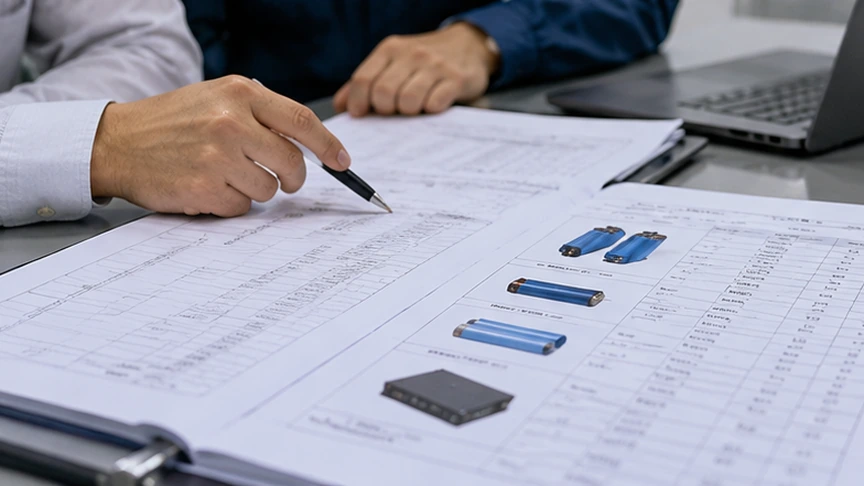
How Should Battery Pack Design and Component Changes Be Managed?
The purpose of engineering change control is to identify the impact of a proposed change before implementation and ensure that production uses the approved configuration.
In custom battery pack projects, changes may be triggered by customer requests, component availability, manufacturing requirements, or test results.
However, different changes do not necessarily require the same validation activities.
Establish a Consistent Engineering Change Assessment Process
A change management process can be organized into the following steps:
-
Submit the Change: Record the reason for the change, affected components, and existing revisions.
-
Evaluate the Impact: Assess potential effects on electrical performance, BMS functionality, thermal behavior, mechanical design, manufacturing processes, and applicable compliance requirements.
-
Define the Validation Scope: Determine whether additional testing is needed based on the identified risks and existing evidence.
-
Obtain Approval: Identify the appropriate manufacturer and customer approval authorities according to the technical agreement.
-
Release the New Revision: Update affected technical documents, production instructions, and inspection requirements.
-
Confirm Implementation: Identify affected inventory, work-in-process units, finished products, and future production batches.
Engineering change records should also identify the effective implementation point when required by the project.
This may be defined by production order, batch number, or product serial number range.
For components or products that were purchased, assembled, or inspected before the change became effective, appropriate disposition instructions should be established.
This helps prevent different configurations from being mixed during manufacturing or delivery without approval.
Proposed changes that have not been approved but could affect product conformity should be restricted from production or shipment according to the agreed change control procedures.
What Additional Validation May Be Needed for Different Engineering Changes?
Table 2. Common Engineering Changes and Potential Revalidation Requirements
| Change Type | Key Questions to Evaluate | Potential Additional Validation | Recommended Controls |
| Battery Cell Replacement | Effects on electrical performance, thermal behavior, dimensions, BMS compatibility, and applicable requirements | Capacity, load, temperature rise, and protection function tests | Approved BOM and substitution assessment |
| BMS Firmware Modification | Changes in protection logic, communication, SOC estimation, or fault response | Functional testing, fault-condition testing, and system integration | Controlled technical specifications and test conditions |
| Connector Replacement | Electrical ratings, polarity, pin assignments, and installation requirements | Interface, connection, and actual-load testing | Hardware revision control and validation |
| Enclosure Modification | Mounting, insulation, thermal behavior, and installation clearance | Dimensional, assembly, and relevant environmental testing | Firmware revision and parameter traceability |
| Electrical Connection Process Change | Connection quality, equipment parameters, and process capability | Process validation and related quality inspections | Approved drawings and mechanical inspections |
| Inspection Procedure Modification | Whether test results continue to reflect the approved acceptance requirements | Test method comparison and measurement effectiveness assessment | Wiring diagrams and interface testing |
| Charging Requirements | Changes in charging voltage, current limits, or termination conditions | Charging faults, temperature rise, compatibility issues | Battery and charger compatibility validation |
| Manufacturing Processes | Changes in welding, electrical connections, assembly, or testing methods | Changes in connection quality and batch consistency | Controlled process documentation and process validation |
Table 2 does not mean that every project must perform the same revalidation activities. The appropriate scope depends on the design change, existing validation evidence, customer requirements, and applicable regulations.
Changes affecting battery safety functions or previously tested design configurations may affect the validity of existing test conclusions and related documentation.
The International Electrotechnical Commission’s IEC 62619:2022 establishes safety requirements and tests for secondary lithium cells and batteries used in industrial applications within its defined scope.
The standard does not cover every battery application, nor does it independently determine whether every engineering change requires retesting.
Engineering teams should evaluate changes according to the product category, destination market, and applicable requirements.
How Can Different Departments Be Prevented From Using Inconsistent Battery Pack Specifications?
Even when the engineering department has approved a new design, configuration errors can occur if purchasing, inventory management, production, or quality teams continue using outdated documentation.
Specification control should therefore extend beyond the engineering department.
Keep BOMs, Drawings, and Production Instructions Aligned
Production teams need to know which design revision applies to a particular order and which materials, processes, and inspection methods correspond to that revision.
When a BOM or drawing is updated, related production documents should be reviewed to determine whether they also need revision.
For example, changing a connector may require more than updating the BOM.
The wiring diagram, assembly work instructions, and end-of-line interface inspection procedures may also need to be updated.
If only one document is revised, production and inspection teams may end up working from inconsistent requirements.
Control Obsolete Inventory and Work-in-Process Units
Engineering changes can affect more than future orders. They may also apply to purchased components, warehouse inventory, and battery packs already in assembly.
Before implementing a change, the disposition of older-revision materials and work-in-process units should be determined.
Depending on project requirements, affected items may be permitted to continue under the previously approved revision, undergo authorized rework, remain on hold pending evaluation, or receive another controlled disposition.
The release of a new revision does not automatically authorize mixing products from older and newer configurations in the same shipment.
Define Communication and Approval Responsibilities
Companies may use different quality management procedures, but project participants should understand who can propose a change, who is responsible for technical assessment, and which changes require customer approval.
The International Organization for Standardization published ISO 9001:2026 in September 2026.
The standard establishes general quality management system requirements addressing areas such as process control, documented information, performance evaluation, and continual improvement.
For battery manufacturing projects, the principles of controlled documentation, defined responsibilities, and change communication can help guide the development of appropriate quality management procedures.
The specific practices discussed in this article are general engineering recommendations, not a clause-by-clause interpretation of the standard.
They also do not indicate that any particular project or manufacturer has obtained certification.
How Should Specification Consistency Be Validated During Pilot Production?
Engineering prototype validation focuses primarily on whether the design meets its requirements.
Pilot production adds another question: Can the manufacturing process consistently produce battery packs that conform to the approved design?
These stages have different validation objectives.
For example, a prototype assembled manually by engineers may pass electrical testing.
However, using production tooling, manufacturing equipment, and materials from multiple production lots does not automatically guarantee that the finished battery packs will meet the same acceptance requirements.
During pilot production, engineering and quality teams should consider the following areas based on project risks.
Do Critical Components Match the Approved Configuration?
Verify that the battery cells, BMS, connectors, and other critical components used in production match the approved BOM.
If approved alternative components are used, confirm their permitted applications and any associated validation requirements.
Have Critical Manufacturing Processes Been Validated?
Depending on the battery pack design and manufacturing methods, review processes such as cell sorting, electrical connections, insulation assembly, wiring installation, and BMS configuration.
For welding and other critical connection processes, use appropriate process validation and quality inspection methods rather than relying solely on visual appearance.
Are Inspection Criteria Consistent With the Approved Specifications?
During pilot production, confirm that inspection equipment, test procedures, software configurations, and acceptance criteria are appropriate and current.
If engineering prototypes and pilot production units are tested using different equipment or methods, the comparability of the results should be evaluated.
For tests involving temperature, capacity, or electrical load, the relevant conditions should also remain consistent when results are compared.
Have Identified Issues Been Properly Addressed?
If pilot production reveals insufficient capacity, BMS alarms, or connection problems, record the issue, affected units, analysis results, and corrective actions.
An unresolved issue should not automatically be considered closed simply because an individual unit passes a repeat test.
The decision to proceed to mass production should be based on validation evidence, outstanding issues, and the project’s approved release conditions.

How Can Battery Pack Specification Drift Be Monitored During Mass Production?
Successful pilot production does not eliminate the need for ongoing control.
During mass production, the objective is to ensure that critical components, manufacturing processes, and inspection results continue to meet the approved requirements.
Table 3. Specification Control Checklist: From Prototype Approval to Production Delivery
| Project Stage | What Should Be Confirmed | Primary Records |
| Prototype Approval | Design configuration, performance requirements, and acceptance criteria | Approved specifications, drawings, and test records |
| Production Preparation | BOM, process instructions, BMS configuration, and production revision | Controlled production documents |
| Incoming Materials | Critical components meet approved purchasing and technical requirements | Incoming inspection and lot records |
| Production Assembly | Correct materials and specified processes are used | Production and in-process inspection records |
| Engineering Changes | Changes are assessed and approved by the appropriate authorities | Change records and validation results |
| Finished Product Inspection | Products meet applicable final acceptance requirements | Test results and inspection decisions |
| Shipment Release | Product revision, batch identity, and nonconformance status are clear | Release records and traceability information |
| Post-Delivery Support | Affected products and related revisions can be identified | Batch records, revision history, and issue resolution records |
Table 3 is a general project management reference. The level of documentation and traceability required should be determined according to product risks, manufacturing systems, and customer agreements.
Can End-of-Line Testing Detect Every Type of Specification Drift?
No.
End-of-line (EOL) testing can help identify voltage abnormalities, capacity problems, protection function issues, and other nonconformities covered by the inspection procedure.
However, certain configuration changes may not be detected through routine final testing.
For example, two battery cell models may perform similarly under room-temperature, low-load conditions.
Routine electrical testing may not reveal differences in their behavior at low temperatures or under higher loads.
EOL testing should therefore be used together with component controls, revision management, and manufacturing process controls.
Long-term cycle life evaluations, destructive safety tests, and certain reliability assessments may require separate validation plans and sampling arrangements rather than being performed on every finished battery pack.
How Can Batch Traceability Help Identify Specification Problems?
Manufacturers can establish appropriate batch and revision traceability systems according to product risks and project requirements.
Traceability information may include cell lot numbers, critical component revisions, BMS firmware versions, production dates, inspection records, and finished-product identifiers.
When a customer reports an abnormality, engineering teams can use these records to identify potentially affected products and investigate whether materials or manufacturing processes changed.
The required level of traceability does not have to be identical for every project.
Some applications may use production batch and critical material lot records to establish traceability.
For applications with more demanding safety, maintenance, or customer acceptance requirements, it may be necessary to associate individual battery pack serial numbers with BMS configurations and corresponding inspection records.
The appropriate scope should be established according to product risks and the technical agreement.
A traceability system cannot prevent every manufacturing defect, but it can support problem identification, impact assessments, and corrective actions.
How Can OEM Buyers Address Specification Drift in Supplier Agreements?
For OEM buyers, specification consistency is not only an internal manufacturing quality issue. It is also an important part of the technical agreement with the battery supplier.
Buyers should translate critical product requirements into documentation that can be reviewed, approved, and used for acceptance.
Before prototype approval or production release, the customer and supplier should consider agreeing on the following:
-
Which design revision serves as the approved production configuration baseline.
-
Which critical components or parameters are subject to change control.
-
Which changes require advance notification and customer approval.
-
Which previously approved alternative components may be used.
-
Which inspection methods and acceptance criteria apply.
-
How production batches and product revisions will be identified and managed.
-
How nonconforming products will be handled and documented.
-
Which validation records must be provided with deliveries.
For significant changes affecting safety, equipment interfaces, or regulatory requirements, the agreement should also define responsibilities for additional validation and documentation updates.
Buyers do not necessarily need access to every proprietary manufacturing process parameter.
However, critical requirements affecting product conformity should be appropriately controlled.
A clear technical agreement should allow both parties to answer three questions: Which revision must the delivered products meet, what changes are permitted, and what evidence demonstrates that the products conform to the agreed requirements?
Frequently Asked Questions (FAQ)
What Is Battery Pack Specification Drift?
Battery pack specification drift refers to unauthorized or unidentified deviations between a battery pack’s actual configuration or performance and its approved specifications during development, pilot production, or mass production.
Common examples involve battery cells, the BMS, connectors, mechanical components, and manufacturing processes.
A design change that has been properly approved and validated should not automatically be classified as specification drift.
Why Can Production Battery Packs Perform Differently After the Prototype Has Passed Testing?
Prototype testing validates a particular design under specified test conditions.
Mass production introduces additional factors, including material lot variations, manufacturing equipment, process conditions, software configurations, and inspection methods.
Managing both the approved design configuration and the manufacturing process is necessary to evaluate ongoing production conformity.
Can Battery Cells With the Same Voltage and Capacity Be Substituted Directly?
Matching nominal voltage and capacity ratings are not sufficient to establish that two battery cells are interchangeable.
Depending on the project, engineers should evaluate internal resistance, temperature performance, discharge capability, dimensions, charging requirements, and compatibility with the BMS.
The need for additional testing depends on the risks associated with the change and the available validation evidence.
Does Changing BMS Firmware Require Engineering Change Control?
If a firmware modification affects protection thresholds, SOC algorithms, communication behavior, or fault responses, it may change how the battery pack operates.
Engineering teams should assess the impact of the modification and determine the appropriate testing and approval requirements.
How Can Manufacturers Keep Production Battery Packs Consistent With Approved Prototypes?
Manufacturers can establish an approved specification baseline and place the BOM, drawings, BMS configurations, and inspection requirements under revision control.
Incoming material inspections, pilot production validation, process controls, end-of-line testing, and batch traceability can then support ongoing verification of product conformity.
Does a Battery Pack Specification Change Require Additional Testing or Safety Compliance Assessment?
Not necessarily in every case.
The decision should be based on the specific change, applicable product standards, existing test evidence, and destination market requirements.
Some modifications may require only targeted additional validation, while others may affect the applicability of previous safety tests, transportation tests, or conformity documentation.
Qualified personnel or appropriate organizations should determine whether further testing, assessment, or documentation updates are needed.
What Specification Management Documents Should OEM Buyers Request From Battery Suppliers?
Depending on project risks and contractual requirements, OEM buyers may request technical specifications, the approved BOM, design drawings, BMS revision information, prototype acceptance records, applicable engineering change notifications, final inspection records, and batch traceability information.
The specific documentation to be delivered should be agreed upon before production.
Conclusion: Specification Consistency Requires Control From Prototype Approval Through Mass Production
Preventing battery pack specification drift does not mean that manufacturers must use the same components indefinitely or avoid design improvements.
The key is to ensure that changes capable of affecting technical requirements, battery behavior, or product conformity are appropriately identified, assessed, approved, and documented.
After prototype approval, a clear technical specification baseline should be established.
Critical components, BMS configurations, mechanical drawings, and inspection requirements should then be managed through appropriate revision controls.
During pilot production, manufacturing processes and production documentation should be evaluated to determine whether they can support the approved design.
During mass production, material controls, process inspections, engineering change management, and batch traceability should continue to support verification of product conformity.
For OEM buyers, clearly defining technical documentation, change notification requirements, and acceptance responsibilities can help reduce communication problems and quality risks caused by inconsistent revisions or unapproved component changes.
For battery manufacturers, configuration management and quality control systems aligned with project risks can provide traceable engineering evidence to support ongoing supply, problem investigation, and continual improvement.
About Himax Electronics
Himax Electronics specializes in customized battery and power solutions for complex applications worldwide. Its products and services include proprietary lithium-ion battery packs, power supplies, chargers, and related accessories for industrial equipment, robotics, medical electronics, energy storage, and other specialized applications.
For OEM/ODM projects requiring custom battery packs, customers can discuss cell configurations, BMS functionality, mechanical dimensions, equipment interfaces, engineering prototypes, and production requirements with Himax Electronics.
Specific design configurations, validation scope, component change management procedures, and delivery requirements should be established according to the technical documentation agreed upon by both parties.
If you are developing a custom battery pack or evaluating how to maintain specification consistency from prototype approval through mass production, visit Himax Electronics Custom Battery Solutions.
Share your equipment specifications, operating environment, project requirements, and relevant technical documentation to discuss a battery solution suited to your application.