
Author: Alden – Battery Engineer, Manufacturing & Quality Control
It is an undisputed fact in the industry: the gps tracker battery is evolving from a lifespan measured in weeks to one measured in years. However, while hardware engineers exhaust themselves trying to push standby power consumption down to a few microamps on the PCB, the battery requirements on many procurement BOMs remain a vague “18650≥3000mAh.”
This kind of ambiguous specification is a ticking time bomb for volume purchasing. Cells from different brands—or even different batches from the same brand—can have wildly different internal resistances, self-discharge rates, and aging curves. A device might perform perfectly on a lab bench, but drop it in a shipping container for six months or expose it to a harsh North American winter, and a sudden current spike during transmission can instantly drag the voltage down, causing the device to reboot.
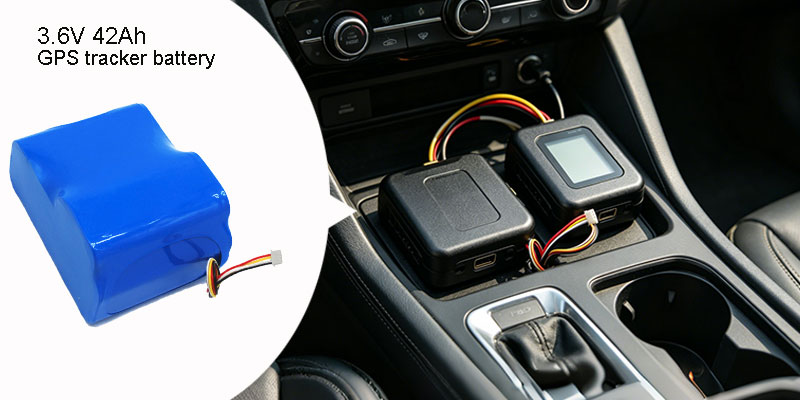
Today, I am not going to break down a concept on a drawing board. I am going to analyze a real, mass-produced order (Project Number: HIMAX3071) designed by our IoT battery solutions team and shipped to North American clients. This is a 3.6V / 42Ah / 151.2Wh / I²C battery pack based on the Samsung INR18650-35E. Through this 1S12P architecture, I want to discuss with hardware engineers and procurement managers how to define a tracker battery that actually works, straight from a manufacturing and quality control perspective.
The Samsung 35E Cell: An Engineering Choice
There is more than one way to squeeze 3500mAh out of an 18650 form factor. So why did we strictly specify the original Samsung INR18650-35E (NMC chemistry, 3.6V nominal voltage) for this project?
Many buyers like to compare cycle life numbers on a spec sheet. But as a quality engineer monitoring the aging racks, I look at reality: Selecting a cell isn’t about picking the highest number on a spec sheet; it’s about choosing the most stable batch-to-batch performance.
The true engineering value of the Samsung 35E lies in its low internal resistance and exceptional batch consistency. The AC internal resistance of the 35E is stable at around 45mΩ, significantly lower than many cheaper competitors of the same capacity. Low IR means less internal heat loss and a smaller voltage drop when facing high-current pulses. When 10,000 cells arrive from a Tier 1 supplier, our IQC capacity and IR grading tests show the vast majority falling into an incredibly tight normal distribution curve. This consistency is the foundation for multi-cell parallel connections. If you choose an unstable cell just to save a few cents, you will pay for that mistake during testing, after-sales support, and RMAs.
From 3500mAh to 42Ah: Decoding the 1S12P Architecture
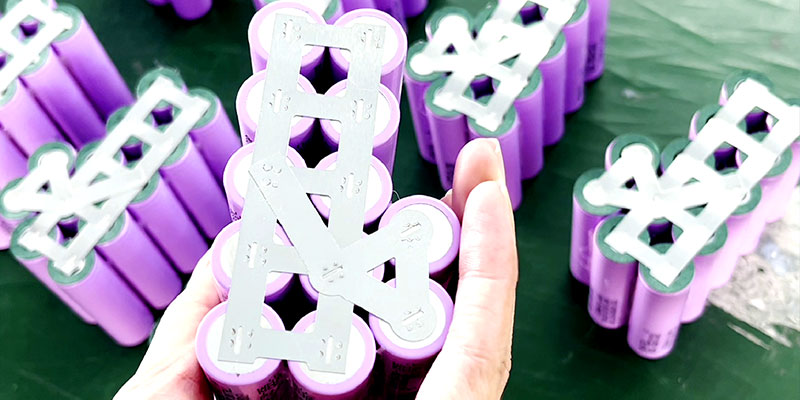
To engineer a true GPS tracker with very long battery life, a single 3500mAh cell simply isn’t enough. The HIMAX3071 design utilizes a 1S12P configuration—twelve Samsung 35E cells wired in parallel.
By putting 12 cells in parallel, we increase the total capacity to 42Ah while maintaining the system voltage at 3.6V. This directly translates to 151.2Wh of total energy. With a cell energy density of 245Wh/kg, we can pack 151.2Wh tightly into a blue PVC shrink wrap the size of a hand.
What does this mean in practice? If your tracker has an average standby consumption of 5mA, this battery can theoretically keep the device running for 8,400 hours (about 350 days). Paired with an optimized sleep strategy, the maintenance-free cycle of the device can easily be stretched to two or three years.
The Necessity of I²C Communication
At a massive 42Ah capacity, relying solely on Open Circuit Voltage (OCV) to estimate remaining power is highly inaccurate, especially since NMC cells have a long, flat voltage plateau in the middle of their discharge curve.
This specific BMS requires I²C communication. This is not a “nice-to-have” feature; it is a hard requirement for modern smart tracking devices. Once the I²C interface is connected, the main MCU can directly read precise State of Charge (SoC), State of Health (SoH), and cycle counts straight from the BMS. The device does not need to calculate complex OCV estimations or look up compensation tables. When the tracker reports its battery level back to the server, the data is highly accurate.
GPS Tracker Power Profiles & Battery Matching
A GPS tracker’s power consumption profile is extreme. Most of the time, it sleeps, drawing only a few microamps. But when it wakes up, searches for satellites, and fires up its LTE-M or GSM module to transmit data, it generates current spikes of 1A to 1.5A for a few seconds.
If you are using a cheap cell or a battery pack with high internal resistance, this transient spike will cause a massive voltage drop across the battery’s IR ($V = I \times R$). Even if the battery technically has 40% capacity remaining, the terminal voltage can momentarily drop below the device’s critical operating threshold, triggering a low-voltage MCU reset. The device constantly reboots, and the battery drains rapidly.
This is exactly why we designed the following charge and discharge parameters for this 3.6V Battery Backup Supply for GPRS Tracker:
- Max Charging Current: 2A
- Max Continuous Discharging Current: 1A
- Peak Discharging Current: 1.5A
- Cut-off Voltage: 3.0V (Discharge) – 4.28V (Charge)
The 1A continuous and 1.5A peak discharge ratings perfectly cover the transient power consumption of mainstream communication modules. Simultaneously, we set the discharge cut-off at a conservative 3.0V (rather than a more extreme 2.5V or 2.75V) and cap the charge at 4.28V. This restricted voltage window sacrifices a tiny fraction of usable capacity, but significantly relieves electrochemical stress on the electrodes, greatly extending the cycle life during long-term micro-charge/discharge cycles.

Physical Specs and Connectors: Engineering Decisions in the Details
No detail in a well-designed industrial battery pack is arbitrary. Let’s look at the physical construction of the HIMAX3071:
- Packa ging: Blue PVC shrink wrap. No cell brackets, no waterproof potting.
- Wiring & Connector: 120mm exposed wire length (excluding plug), utilizing a specified Molex 0510210400 connector.
Why eliminate the brackets and waterproof potting? Because this specific battery is designed to be housed inside the protective enclosure of an indoor or vehicular asset tracker in North America. By removing the brackets and potting, we minimize the overall weight, reduce the physical footprint, and lower the BOM cost.
The choice of the Molex 0510210400 connector is a matter of contact reliability. You cannot just slap a generic “2-pin terminal” on a pack like this. The original Molex terminals have been extensively validated for contact resistance, current carrying capacity, and anti-fretting wear in vibrating automotive environments.
Battery Label Standards
To ensure compliance and traceability, the silk-screened label on this batch accurately displays all crucial engineering parameters:
Plaintext
Li-ion 18650 35E 3.6V 42Ah 151.2Wh I²C
Model: 36-42BP
Nominal voltage: 3.6V
Minimum capacity: 40Ah
Charged voltage: 4.1 – 4.2V
Cut-off voltage: 3.0V
Charging current: 1A
Discharging current: 1A (continuous)
Peak discharging current: 1.5A
Made in China
30710001…0010
(Note: The serial numbers 30710001…0010 are used for 1-to-1 quality traceability prior to OQC shipment.)
Typical Application Scenarios
Thanks to its massive 42Ah capacity and reliable discharge plateau, the 1S12P architecture is the top choice for applications demanding strict maintenance-free lifecycles:
- Long-Haul Logistics & Freight Tracking:Cross-border shipping containers requiring uninterrupted location reporting for up to six months.
- Fleet Management Systems: Acting as a backup power source to keep in-vehicle devices running for months after the main car battery is disconnected.
- High-ValueAsset Trackers: Location monitoring for construction machinery and rental power generation equipment.
Himax’s Custom Design & Quality Moat
Writing parameters on a piece of paper is easy. However, designing and producing 10,000 battery packs that perform exactly like the prototype is the hard part. Do you need 1S12P or 2S6P? I²C or SMBus? Molex or JST? Himax Electronics designs custom battery solutions tailored directly to your specific BOM.
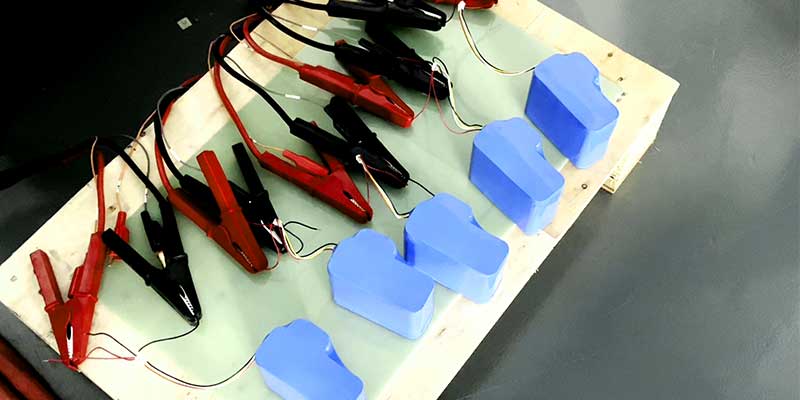
Starting from the IQC (Incoming Quality Control) phase, we perform 100% inspection and matching on original Samsung cells. Additionally, we monitor internal resistance shifts during the spot‑welding and assembly phases (IPQC). Before shipping (OQC), every single finished battery pack must complete a minimum of two full charge/discharge cycles on our aging cabinets. Finally, we strictly control the shipping SOC between 30% and 50%. This minimizes anode electrochemical stress while strictly adhering to IATA and IMDG international shipping safety thresholds.
Conclusion
The lifespan of a gps tracker battery is not determined when writing the marketing brochure. Instead, it is decided when selecting the cell, engineering the architecture, and running the aging tests. If you are tired of dealing with substandard batteries and erratic batch internal resistances, or if your devices are facing severe battery life bottlenecks, then it is time to upgrade your power design.
To dive deeper into the engineering specs of this battery solution, visit our product page: Lithium Ion Battery 3.6V 42Ah. If you need test samples, complete technical datasheets, or want to discuss a custom design for your device, initiate an inquiry directly through our Contact Page. Our engineering team will provide you with a real, reliable technical evaluation.