
Custom Battery Pack RFQ Checklist: What OEM Buyers Need to Include
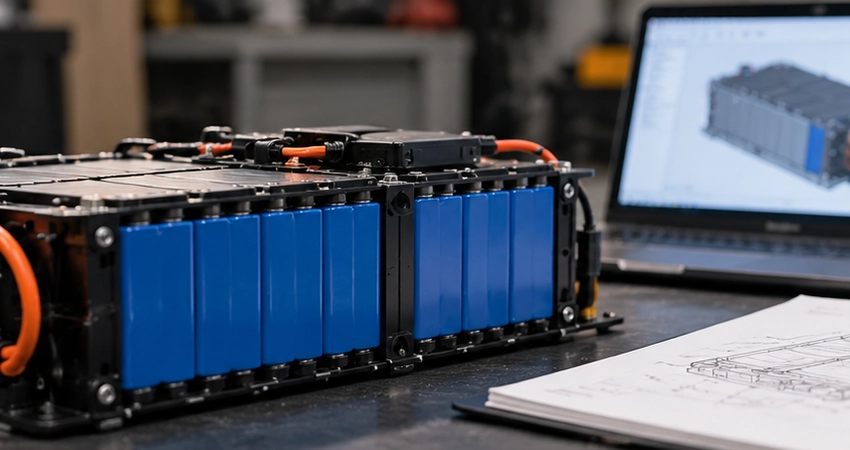
Commercial Summary: Himax Electronics provides this editorial reference for OEM buyers, battery engineers, and system integrators. It covers electrical, mechanical, BMS, charging, testing, and purchasing inputs for a custom battery pack RFQ. Specifications and compliance needs must be assessed for each application.
Key Takeaways
-
A Custom Battery Pack RFQ should include more than voltage and capacity. It should also specify the equipment’s load requirements, operating environment, available installation space, and charging requirements.
-
Continuous current, peak current, and peak duration can affect cell selection, the Battery Management System (BMS), and mechanical design.
-
Sample quantities, projected order volumes, testing requirements, and target markets are important factors in evaluating costs and delivery schedules.
-
Using a standardized RFQ checklist helps OEM purchasing teams compare technical proposals, pricing, and deliverables from different suppliers.
Introduction
Two manufacturers may provide different prices and design recommendations for the same custom lithium-ion battery pack project. These differences do not necessarily come from how suppliers calculate their quotes. They may also result from different interpretations of the technical requirements.
For OEM purchasing teams working with industrial equipment, robotics, medical devices, and energy storage systems, defining key specifications before requesting a quote can help reduce design revisions and communication costs.
This article provides a practical custom battery pack RFQ checklist for the early stages of a project. It helps purchasing and engineering teams prepare the necessary information and determine whether quotes from different suppliers are comparable.
What Is a Custom Battery Pack RFQ, and Why Aren’t Voltage and Capacity Enough?
An RFQ (Request for Quotation) is a formal request that a buyer sends to a supplier to obtain pricing. For a custom battery pack, the RFQ should include product requirements, technical constraints, order quantities, and delivery conditions.
For example, two devices may both require a 24V battery pack. One may power a monitoring system continuously, while the other may power a mobile robot that starts and stops frequently.
Even with the same nominal capacity, these applications may have different requirements for peak current, heat dissipation, protection functions, and charging management.
A complete RFQ is therefore more than a request for pricing. It is the starting point for purchasing teams and battery engineers to define the design requirements and constraints.
What Technical Information Should a Custom Battery Pack RFQ Include?
Before requesting a quote, organize the following ten categories of information. Clearly distinguish confirmed specifications from requirements that still need engineering evaluation.
Table 1: Essential Custom Battery Pack RFQ Checklist for OEM Buyers
| RFQ Item | Information to Provide | Primary Purpose |
| Application | Equipment type, operating mode, and use environment | Define system requirements |
| Battery Chemistry | Li-ion, LiFePO4, or to be determined | Evaluate cell options |
| Voltage and Capacity | Nominal voltage, equipment operating voltage range, and target Ah/Wh | Define electrical configuration |
| Load Requirements | Average, continuous, and peak current, including peak duration | Evaluate discharge capability |
| Runtime Requirements | Operating time per charge, standby time, and duty cycle | Estimate actual energy requirements |
| Mechanical Dimensions | Length, width, height, weight limits, and mounting method | Evaluate mechanical feasibility |
| Operating Environment | Charging and discharging temperatures, humidity, vibration, and protection requirements | Define operating limits |
| BMS and Communication | Protection functions and requirements for CAN, RS485, SMBus, or other interfaces | Define battery management and interface requirements |
| Charging System | Charger specifications, charging time, and charging temperature conditions | Evaluate charging compatibility |
| Purchasing and Delivery | Sample quantities, volume forecasts, target sales markets, and project timeline | Evaluate pricing and delivery conditions |
Table 1 Source Note: This recommended RFQ template is based on general engineering practices for defining custom battery project requirements. It does not imply that every project requires the same technical configuration.
If the battery cell type has not yet been determined, buyers can provide the equipment’s load profile, target runtime, and available installation space. The battery manufacturer can then evaluate feasible options.
Which Specifications Directly Affect Battery Pack Design and Pricing?
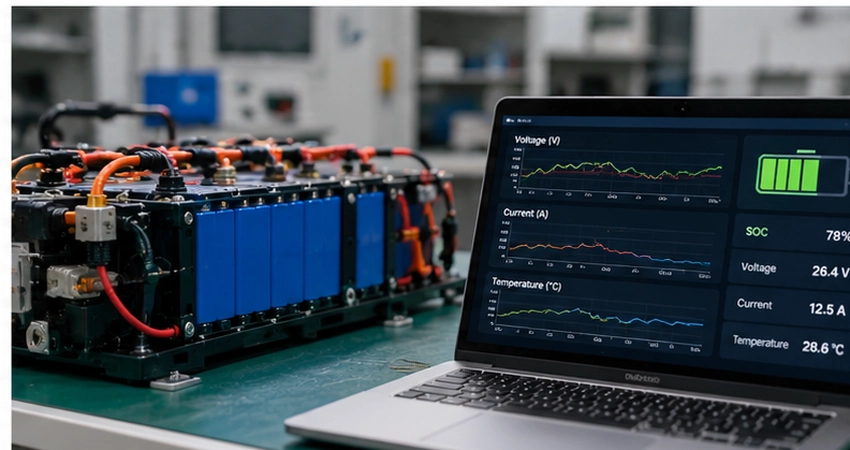
Battery pack costs cannot be evaluated based on capacity alone. Battery chemistry, power output, operating temperature, mechanical complexity, and testing requirements can all affect material costs and engineering effort.
Table 2: Factors Affecting Custom Battery Pack Pricing and Validation Requirements
| Factor | Details to Specify in the RFQ | Potential Impact |
| Battery Chemistry | Voltage platform, target service life, and application constraints | Cell selection and system design |
| Temperature Conditions | Separate charging and discharging temperature requirements | Cell suitability and thermal management |
| Current Requirements | Continuous current, peak current, and peak duration | Cell discharge rate, interconnections, and BMS |
| Mechanical Requirements | Custom enclosure, connectors, and mounting tolerances | Tooling and assembly costs |
| Testing Requirements | Target markets, applicable standards, and testing scope | Validation time and costs |
| Order Volume | Samples, initial production order, and annual demand | MOQ, unit pricing, and production planning |
Table 2 Source Note: These factors are based on general engineering and purchasing considerations. Actual cost differences must be evaluated against the specific design, materials, testing plan, and supplier quotation.
One important consideration is that a battery’s nominal capacity is typically measured under specific test conditions. Actual usable energy also depends on load current, temperature, cutoff voltage, and battery condition.
If the equipment has motor startup loads or operates at high power for short periods, specify the peak current and its duration separately rather than providing only average power consumption.
How Much Detail Should You Provide About the BMS, Charger, and Connectors?
Battery Management System (BMS) requirements should match how the equipment actually operates.
Buyers should specify whether the application requires overcharge, overdischarge, overcurrent, short-circuit, and temperature protection. They should also identify any requirements for battery level indication, data communication, or fault logging.
Specific protection thresholds need to be confirmed based on the selected cells and overall system design.
If the equipment uses CAN, RS485, or SMBus communication, buyers should also provide protocol requirements or existing interface documentation.
For charging, the RFQ should identify the charging power source, expected charging time, and whether the equipment needs to operate while charging.
Buyers should also specify connector models, pin assignments, and wiring harness requirements.
Just because a connector physically fits does not mean the charging method and electrical specifications are compatible.
How Can You Compare Quotes From Different Battery Manufacturers?
When comparing OEM battery pack quotations, buyers should ask each supplier to clearly identify what is included in the quoted price.
Confirm the following items separately:
-
Engineering Costs: Does the quotation include design, tooling, sample production, and testing costs?
-
Purchasing Terms: What are the minimum order quantity (MOQ), volume-based pricing tiers, annual forecast requirements, and quotation currency?
-
Lead Times: How much time is required for samples, validation, mass production, and shipping?
-
Technical Scope: Are the battery cells, BMS, enclosure, connectors, and charger included in the quotation?
-
Quality Documentation: What specifications, test records, traceability information, and change control documentation will be provided?
Suppliers should also identify which specifications have been confirmed and which still require sample validation.
A sample that operates successfully does not necessarily mean the design has completed mass production validation.
Should Battery Testing and Certification Requirements Be Included in the RFQ?
Yes. Buyers should identify the target markets, intended applications, and shipping methods during the RFQ stage. However, a specific test document should not be treated as a universal certification that applies to every battery product.
IEC 62619:2022, published by the International Electrotechnical Commission (IEC) on May 24, 2022, specifies safety requirements and tests for secondary lithium cells and batteries used in industrial applications. It covers certain stationary and industrial motive applications.
Whether this standard applies to a specific project depends on the equipment’s intended use and relevant product standards.
In its lithium battery test summary guidance updated in July 2024, the U.S. Department of Transportation’s Pipeline and Hazardous Materials Safety Administration (PHMSA) explains the design testing and transport test summary requirements associated with Section 38.3 of the United Nations Manual of Tests and Criteria (UN 38.3).
UN 38.3 addresses transportation safety. It does not replace application-specific safety evaluations for finished equipment.
Based on the intended sales markets, shipping methods, and product configuration, buyers should ask suppliers to confirm the applicable standards, testing scope, and responsibility for providing the required documentation.
Copy-and-Paste Custom Battery Pack RFQ Template
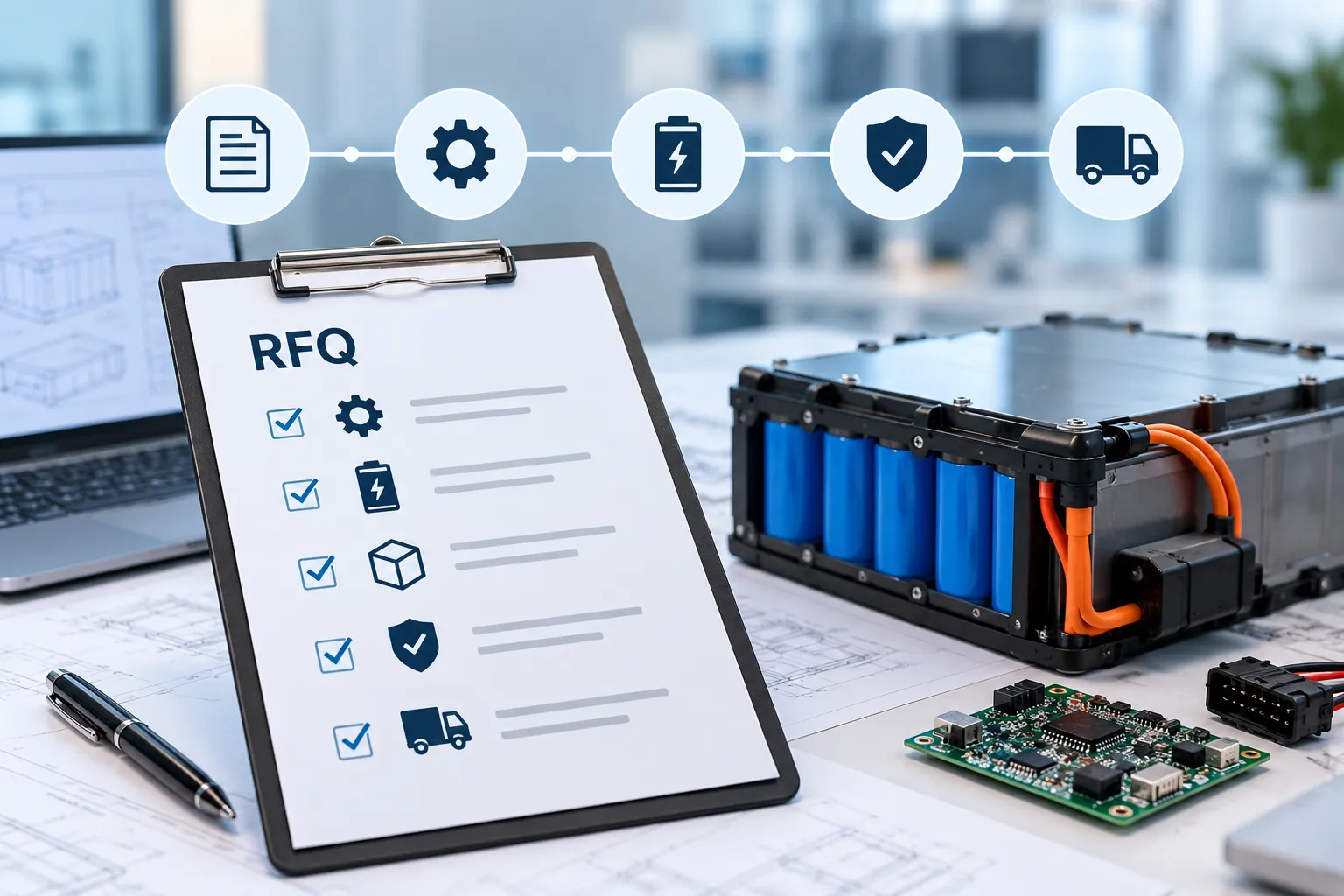
When sending an RFQ email or completing a manufacturer’s inquiry form, you can use the following template:
OEM Battery Pack RFQ
-
Project / Application: Project name and intended equipment application
-
Battery Requirements: Battery chemistry, voltage, capacity, and target runtime
-
Load Profile: Continuous current, peak current, and duty cycle
-
Mechanical Requirements: Dimensions, weight, enclosure, and connectors
-
BMS / Charging: Protection functions, communication protocols, and charging requirements
-
Operating Conditions: Temperature, vibration, and environmental protection requirements
-
Compliance / Destination: Target markets, applicable testing, and shipping requirements
-
Order Forecast: Sample quantity, initial order volume, and annual forecast
-
Project Schedule: Required sample date, testing schedule, and mass production plan
If some specifications have not been finalized, mark them as “To Be Determined (TBD)” and identify any requirements that cannot be changed.
For projects involving confidential technical information, buyers can initially provide non-sensitive specifications and share complete drawings later under mutually agreed confidentiality arrangements.
Frequently Asked Questions (FAQ)
Do I Need Complete Design Drawings to Submit a Custom Battery Pack RFQ?
Not necessarily. During the initial quotation stage, buyers can provide the equipment application, voltage range, target runtime, load requirements, and available installation space.
For projects involving complex interfaces or mechanical constraints, additional drawings or technical documents are typically required later.
Can I Request a Battery Pack Quote If I Only Know the Voltage and Capacity?
Yes. Voltage and capacity are enough to begin a preliminary technical discussion, but they are usually insufficient for a complete, procurement-ready quotation.
The supplier also needs to evaluate current requirements, dimensions, operating temperatures, charging conditions, and project quantities.
How Is the Custom Battery Pack MOQ Determined?
The minimum order quantity (MOQ) depends on battery cell and component purchasing requirements, the level of mechanical customization, manufacturing processes, and order arrangements.
Sample quantities and minimum order quantities for mass production may differ. Buyers should confirm each separately with the supplier.
Can Mass Production Begin Immediately After a Battery Pack Sample Passes Testing?
Making a mass production decision based on a single successful sample test is not recommended.
Before moving forward, buyers should confirm the design revision, test conditions, critical components, manufacturing processes, and mutually agreed mass production acceptance requirements.
Should UN 38.3 Requirements Be Confirmed Before Requesting a Custom Battery Pack Quote?
Transportation requirements should be confirmed as early as possible.
For applicable lithium battery products that need to be shipped, buyers should verify the relevant design testing and test summary documentation. They should also confirm the shipping method, packaging configuration, and destination requirements.
About Himax Electronics
Himax Electronics focuses on providing custom battery and power solutions for complex applications worldwide. Its products and services include proprietary lithium-ion battery packs, power supplies, chargers, and related accessories for industrial equipment, energy storage, medical devices, communications, and smart devices.
The company can discuss battery configurations, mechanical designs, and power management solutions based on project requirements.
If you are developing an OEM/ODM product, you can submit your technical requirements through the Himax Custom Battery Solutions page to discuss design feasibility and pricing.