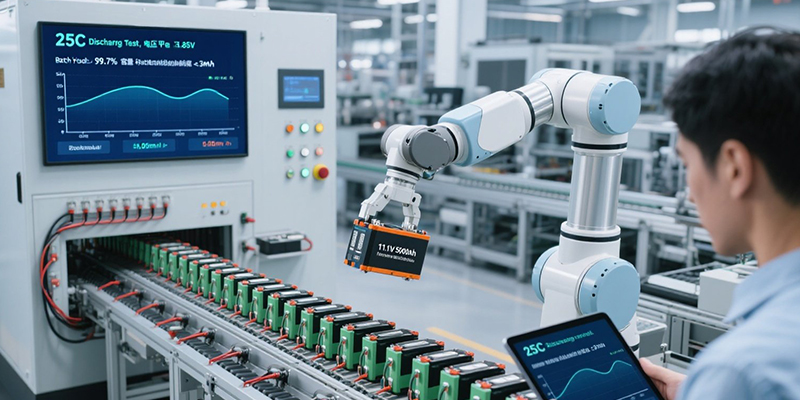
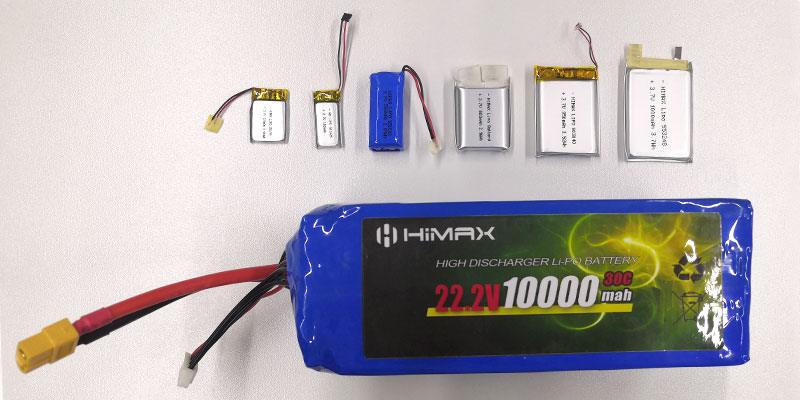
In an increasingly connected world, reliable power is non-negotiable. But what happens when “reliable” needs to withstand conditions that would bring standard batteries to their knees? From scorching desert sun to engine compartments operating at peak temperatures, many critical applications demand power solutions that are not just robust, but genuinely heat-resistant. At HIMAX, we understand these challenges intimately. That’s why we’re proud to introduce our specialized High-Temperature LiPo Battery (3.7V, 500mAh, 6C Discharge), meticulously engineered to thrive where conventional batteries fail.


The Unseen Threat: Why Temperature Matters for Batteries


Lithium Polymer (LiPo) batteries are ubiquitous due to their high energy density and flexible form factors. However, they are also inherently sensitive to temperature extremes.


Heat Acceleration: Elevated temperatures accelerate internal chemical reactions, leading to faster degradation, reduced cycle life, and, in severe cases, thermal runaway—a dangerous and irreversible overheating event.


Cold Compromise: While this article focuses on heat, it’s worth noting that extremely low temperatures can also hinder battery performance, causing increased internal resistance and reduced usable capacity.


Designing a battery for extreme temperatures isn’t just about tweaking existing chemistries; it’s a holistic engineering challenge that demands advanced materials, precise manufacturing, and rigorous testing.
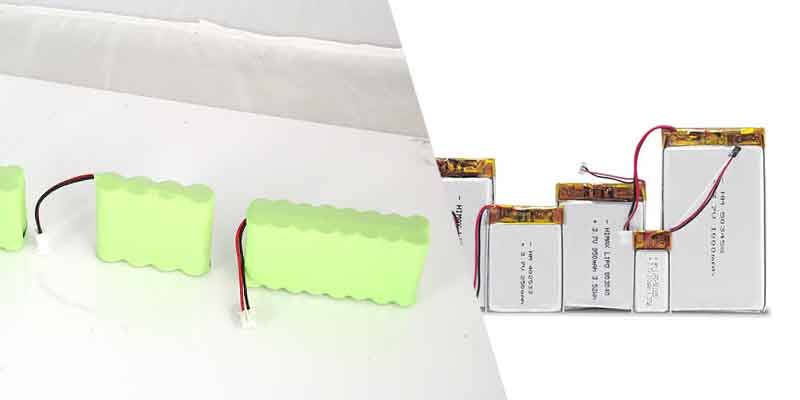
LiPO-US-NI-MH

Our Solution: The 602735 High-Temperature LiPo Powerhouse


We’ve developed a specific LiPo cell, the 602735 (6mm thickness, 27mm width, 35mm length cell), which forms the core of our high-temperature solution. This 3.7V, 500mAh battery pack, with overall dimensions of 6x27x38mm, is far more than just a compact power source; it’s a testament to specialized engineering.


Key Specifications at a Glance:

Nominal Voltage: 3.7V

Capacity: 500mAh

Cell Size: 602735

Pack Dimensions: 6mm (Thickness) * 27mm (Width) * 38mm (Length)

Discharge Rate: 6C (Capable of delivering 3000mA continuously)

Charge Rate: 1C (Standard charging at 500mA)

Operating Temperature (Discharge): -20°C to +85°C

Operating Temperature (Charge): +10°C to +85°C

Minimum Order Quantity (MOQ): 5,000 units

Sample Availability: 10 units for testing


Engineered for Endurance: How We Achieve 85°C Operation

Achieving a stable operating temperature range up to an astonishing 85°C is no trivial feat. It’s the culmination of several critical design and manufacturing choices:


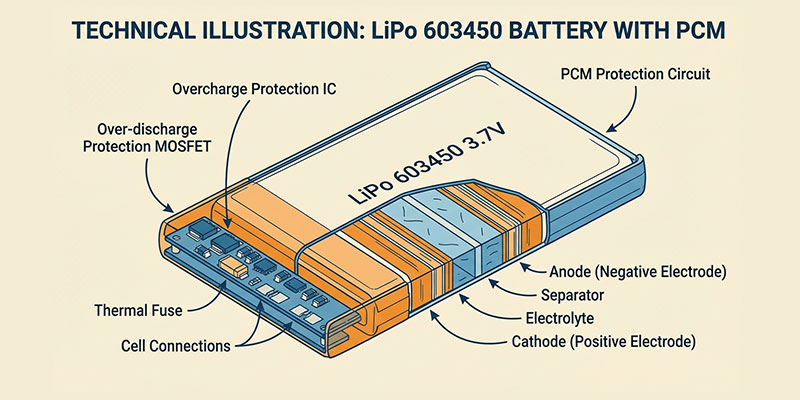
Advanced Electrolyte Formulation: The secret sauce for high-temperature performance often lies in the electrolyte. We utilize a proprietary electrolyte blend that maintains its ionic conductivity and chemical stability even at elevated temperatures, resisting decomposition that plagues standard electrolytes.


Robust Separator Material: The separator is a crucial component that prevents the anode and cathode from short-circuiting. Our high-temperature LiPo batteries employ specialized polymer separators with exceptional thermal stability, preventing shrinkage or melting at extreme temperatures.


Enhanced Electrode Materials: Both the cathode and anode materials are selected and treated to minimize degradation and maintain structural integrity under thermal stress, ensuring consistent performance and longevity.


Optimized Cell Structure: Every aspect of the cell’s internal structure is optimized for thermal management. This includes the stacking process, the quality of the current collectors, and the precision of the sealing, all contributing to efficient heat dissipation and containment.


Rigorous Testing Protocols: Beyond standard capacity and cycle life tests, our high-temperature batteries undergo specific environmental testing in thermal chambers, simulating real-world conditions from extreme cold to prolonged heat exposure to validate their performance and safety at 85°C.


Where Reliability Meets Extremes: Ideal Applications

The demanding specifications of our high-temperature LiPo battery make it perfectly suited for mission-critical applications where failure is not an option and environmental conditions are harsh.


  1. Outdoor Surveillance and Security Systems

Imagine security cameras deployed in remote locations, exposed to direct sunlight in summer or integrated into heated enclosures. These systems require continuous power, often with periodic bursts for data transmission or night vision. Our 85°C battery ensures uninterrupted operation, reducing maintenance calls and enhancing security reliability.


  1. Automotive and Emergency Vehicle Electronics

Police Cars, Ambulances, Fire Trucks: These vehicles are packed with sensitive electronics, from GPS and communication systems to dashcams and diagnostic tools. The interior and engine bay environments can reach extreme temperatures. Our battery can reliably power auxiliary devices, LED warning lights, and data recorders, operating flawlessly amidst engine heat and variable external conditions.


Fleet Management & Telematics: For commercial fleets, devices tracking location, driver behavior, and cargo status must function consistently. Our high-temp LiPo ensures these critical telematics units remain powered, regardless of the vehicle’s operational temperature.


  1. Industrial Monitoring & IoT Devices

From oil and gas pipelines in the desert to manufacturing facilities with high ambient temperatures, industrial IoT sensors and monitoring equipment need dependable power. Our battery can power sensors for predictive maintenance, environmental monitoring, or asset tracking, offering a long service life in challenging industrial settings.


  1. Specialized Aerospace and Defense Applications

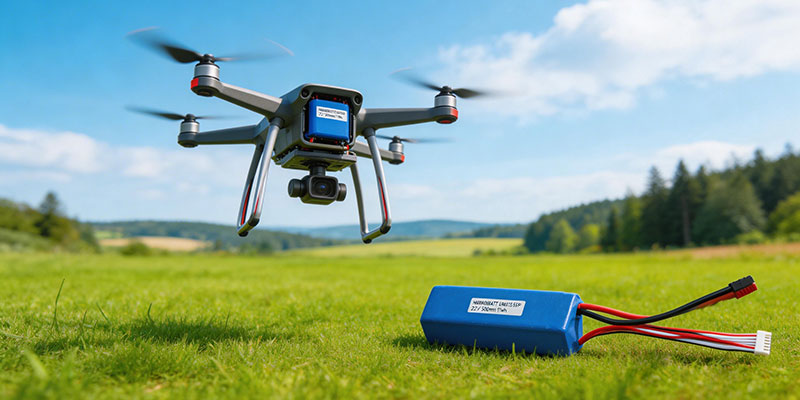
While specific applications are often proprietary, any unmanned aerial vehicle (UAV), ground sensor, or portable equipment used in high-altitude or high-temperature defense scenarios can benefit from a power source designed for such extremes.
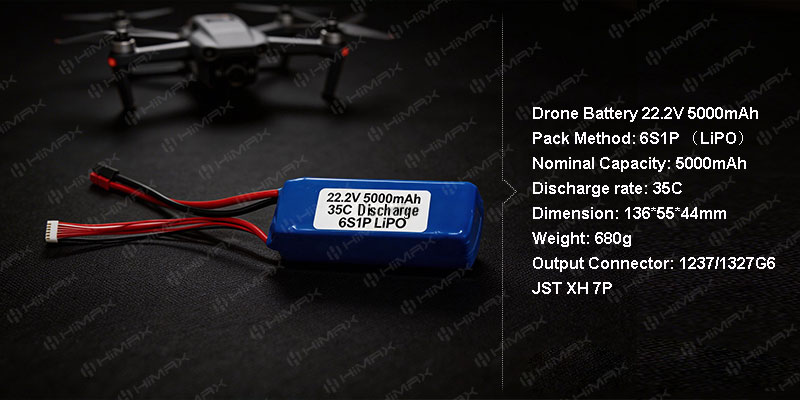
UAV LiPo battery 5000mAh

The HIMAX Advantage: Beyond the Specs


Choosing HIMAX means partnering with a factory that prioritizes engineering excellence and application-specific solutions.


Dedicated R&D: Our investment in materials science and cell chemistry ensures we stay at the forefront of battery technology, especially for niche requirements like high-temperature performance.


Scalable Production: With an MOQ of 5,000 units, we are equipped to support significant projects while maintaining the highest quality control standards.


Commitment to Quality: Every batch undergoes rigorous testing to meet our stringent performance and safety benchmarks.


Sample Confidence: We offer 10 samples for testing to allow you to validate our battery’s performance in your specific application environment with complete confidence before committing to mass production.


Ready to Power Your Extreme Environment Application?


Don’t let environmental challenges compromise your product’s performance or reliability. Our 3.7V 500mAh High-Temperature LiPo battery is designed to deliver consistent, dependable power when it matters most, allowing your innovations to operate flawlessly in the toughest conditions.


Contact our sales team today to discuss your project requirements and request your sample batch. Let us help you master the heat.
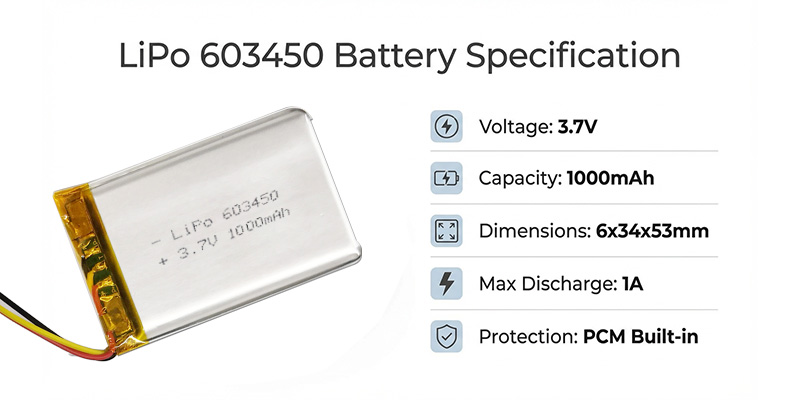
603450 LiPo battery dimensions 6.0 x 34.0 x 53.0 mm with built-in PCM protection board

Introduction

LiPo 603450 battery selection is one of the most important decisions I make when customers ask me to recommend a reliable power source for a GPS tracker. I’m Caleb, a Battery Engineer at Himax Electronics, and I specialize in BMS & Protection Systems for lithium battery packs used in compact, high-reliability devices. In my daily work, I help customers build safer and more stable battery solutions with PCM/BMS protection against overcharge, over-discharge, over-temperature, and short circuit.

603450 LiPo for GPS tracker applications stands out because GPS devices often operate in demanding real-world conditions: long standby cycles, frequent location uploads, outdoor temperature variation, vibration, and very limited internal space. From my engineering perspective, the battery must be compact, dependable, and easy to integrate without sacrificing safety. That is exactly why I often recommend the 3.7V 1000mAh LiPo battery in the 603450 format. It offers a practical balance of size, runtime, protection, and discharge capability for many modern tracker designs.

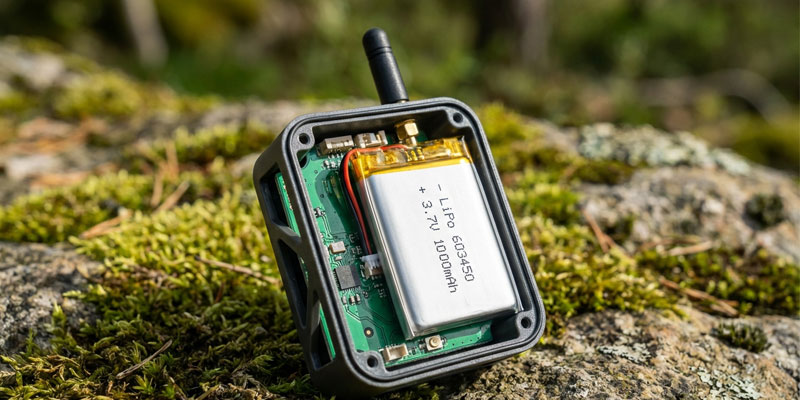
LiPo 603450 3.7V 1000mAh battery with PCM for GPS tracker, compact 6x34x53mm size

Technical Specifications

LiPo 603450 battery specifications matter because GPS tracker designers usually need clear electrical and mechanical data before finalizing their product layout.

Parameter Specification
Model LiPo 603450 (1s1p)
Nominal Voltage 3.7V
Max Charging Voltage 4.2V
Nominal Capacity 1000mAh
Cell Dimensions 6.0 × 34.0 × 53.0 mm
Typical Dimension Reference 603450 53mm battery
Continuous Discharge Current 1A
Battery Type Rechargeable Lithium Polymer
Protection PCM protection: overcharge, over-discharge, short circuit, over-temperature
Recommended Charge Current 0.2C to 0.5C
Standard Charge Current 200mA (0.2C)
Max. Charge Current 500mA (0.5C)
Max. Continues Discharge current 1000mA (1C)
Approximate Weight 17g
Cycle Life 300–500 cycles typical at standard conditions
Operating Temperature (Discharge) -10°C to 60°C
Operating Temperature (Charge) 10°C to 45°C
Lead Configuration Customizable wire length and connector
Integration Option NTC / custom PCM / connector / label available

Why This Battery is Ideal for GPS Trackers

603450 LiPo for GPS tracker designs works so well because it matches the real electrical behavior of most portable tracking devices. In many GPS trackers, the average current is relatively low during standby, but there are short bursts of higher current during GSM, LTE, or GNSS transmission. A 1A continuous discharge LiPo is usually more than enough for this type of device, especially when the hardware and firmware are optimized for low-power operation.

LiPo 603450 battery is also a very practical mechanical choice. With dimensions of 6x34x53mm, this cell fits into compact tracker housings where every millimeter matters. I often see customers comparing several sizes, but many of them eventually return to this format because it offers better runtime than smaller cells without becoming too bulky for portable use.

GPS tracker battery reliability is especially critical for devices used in fleet management, asset tracking, pet tracking, personal safety, and medical-related portable electronics. In these applications, an unexpected shutdown can mean lost data, missed location updates, or even safety risks. That is why I strongly prefer a LiPo battery with PCM for field devices. The protection circuit helps reduce the chance of battery abuse during charging, storage, shipping, and real-world use.

Compact LiPo battery 6x34x53mm designs like this one also help product teams simplify enclosure planning. For many GPS products, designers need a battery that is thin enough for a modern industrial design but still large enough to support practical working time. The 603450 format is often the sweet spot.

603450 LiPo battery dimensions 6.0 x 34.0 x 53.0 mm with built-in PCM protection board

Key Advantages & Real-World Performance

LiPo 603450 battery performance is not just about the datasheet; it is about how the battery behaves inside a real product. Based on my experience supporting customer projects, these are the biggest advantages:

  • Balanced size and capacity
    The 3.7V 1000mAh LiPo batterygives GPS devices a strong balance between compact dimensions and useful runtime.
  • Stable discharge for tracker electronics
    A 1A continuous discharge LiPois suitable for low-power communication modules, MCU control boards, and scheduled transmission cycles.
  • Added field safety with PCM
    A LiPo battery with PCMhelps protect the cell from overcharge, over-discharge, short circuit, and temperature-related risks.
  • Flexible customization
    I can adapt wire length, connector type, NTC, and PCM settings depending on the customer’s tracker PCB and housing.


603450 LiPo for GPS tracker projects has repeatedly proven to be a reliable choice in my work. I have supported customers who needed battery solutions for compact GPS tracking units where space was limited and uptime was critical. In those cases, the 603450 format performed well because it delivered enough capacity for practical operation while staying thin and integration-friendly. From an engineer’s point of view, that combination is hard to beat.

Comparison with Other Common GPS Batteries

GPS tracker battery comparisons are important because designers often evaluate multiple pouch cell sizes before locking the final BOM.

Battery Model Typical Capacity Size Main Advantage Main Limitation
502030 ~250–350mAh Smaller Very compact Much shorter runtime
603048 ~800–900mAh Slightly shorter Good for tighter layouts Less capacity than 603450
603450 1000mAh 6 × 34 × 53 mm Best balance of size and runtime Slightly larger than ultra-compact cells

LiPo 603450 battery usually wins when runtime is more important than saving a few extra millimeters. Compared with a 502030 cell, the 603450 gives significantly more capacity, which means fewer charging intervals and a better user experience. Compared with 603048, it offers a little more room for energy storage while remaining compact enough for many handheld or concealed tracker designs.

Best battery for GPS tracker 2025 will depend on the device’s power profile, but for many mainstream trackers, I see the 603450 as one of the most practical options because it avoids the tradeoff of being too small to last or too large to fit.

Installation & Integration Tips for GPS Device Designers

603450 LiPo for GPS tracker integration should always start with actual current measurements, not assumptions. I recommend that designers measure average standby current, pulse current during transmission, and charging behavior under real firmware conditions.

LiPo 603450 battery integration becomes easier when you plan for these details early:

  1. Leave space for PCM and wire routing
    The cell size is only part of the battery footprint. The PCM board, leads, insulation, and connector also require layout space.


  1. Validate charge voltage and current
    A 7V 1000mAh LiPo batteryshould be charged with a proper CC/CV lithium charging profile ending at 4.2V.


  1. Add thermal consideration
    If your GPS device is used in vehicles or outdoor enclosures, I strongly recommend temperature monitoring and careful charging control.


  1. Prevent compression and puncture risk
    LiPo pouch cells should never be mechanically squeezed by the housing or screws.


  1. Match the connector to your assembly flow
    I often help customers choose between JST-style connectors, solder tabs, or custom harnesses depending on production needs.


LiPo battery with PCM systems are much more effective when the whole device is designed around battery safety, not when PCM is treated as the only line of defense. If your product needs a custom pack, protection threshold adjustment, or connector support, this is where an engineering partner really matters.

For related battery solutions, I also recommend linking to your broader lithium polymer battery pages, custom battery pack pages, and team expertise pages such as the breast pump battery project page that reflects our engineering capabilities and application experience.

GPS tracker powered by Himax 603450 1A continuous discharge LiPo battery

Safety First: How Our PCM Makes the Difference

LiPo 603450 PCM protection is where I spend a lot of my engineering time, because protection design is what turns a good cell into a dependable battery solution. At Himax Electronics, I focus on building battery packs that do more than just provide voltage and capacity. My goal is to make them safer and more stable in real use.

LiPo battery with PCM helps defend against the most common failure risks in compact electronics:

  • Overcharge protectionhelps prevent the cell voltage from rising beyond safe limits.
  • Over-discharge protectionhelps avoid deep discharge that can permanently damage the battery.
  • Short circuit protectionreacts quickly to wiring faults or accidental conductive contact.
  • Over-temperature protectionadds another layer of control for applications exposed to harsh environments.

603450 LiPo for GPS tracker applications particularly benefit from PCM because many trackers are used remotely, inside vehicles, outdoors, or in devices that users may not charge correctly. In my experience, robust protection is not optional. It is one of the reasons a battery solution survives real-world use.

If your design needs a smarter protection strategy, this is also where a custom BMS or enhanced PCM can make a meaningful difference, especially for regulated or mission-critical applications.

FAQ

LiPo 603450 battery questions often come from device designers and purchasing teams, so here are the answers I give most often.

1. Is the 603450 a good GPS tracker battery?

603450 LiPo for GPS tracker use is an excellent choice for many compact devices because it balances thin size, 1000mAh capacity, and practical discharge capability.

2. What does PCM mean in a LiPo battery?

LiPo battery with PCM includes a protection circuit module that helps prevent overcharge, over-discharge, short circuit, and sometimes over-temperature.

3. Is 1A continuous discharge enough for a GPS tracker?

1A continuous discharge LiPo is enough for many GPS tracker designs, especially low-power devices with periodic transmission. Final validation should always be based on real current testing.

4. What are the exact dimensions of this battery?

Compact LiPo battery 6x34x53mm refers to a typical size of 6.0 × 34.0 × 53.0 mm, which is why some buyers also search for a 603450 53mm battery.

5. How long can a 1000mAh battery power a GPS tracker?

3.7V 1000mAh LiPo battery runtime depends on standby current, transmission interval, network type, and temperature. A low-power design can achieve useful operating time, but exact hours must be tested in the final device.

6. Can Himax Electronics customize this battery?

LiPo 603450 battery solutions can be customized with different connectors, wire lengths, labels, NTC, and PCM settings based on your device requirements.

7. Is this the best battery for GPS tracker 2026 designs?

Best battery for GPS tracker 2026 depends on your housing size and power budget, but the 603450 is one of the strongest options for compact trackers needing a reliable 1000mAh class cell.

Conclusion

LiPo 603450 battery remains one of my preferred recommendations for GPS tracker projects because it combines compact dimensions, practical 1000mAh capacity, stable 1A discharge, and essential PCM safety protection. As an engineer, I always look for the best balance between electrical performance, mechanical fit, and long-term reliability, and this battery checks those boxes for many real-world tracking applications.

603450 LiPo for GPS tracker projects can be further optimized with custom wires, connectors, PCM settings, and integration support. If you are designing a new tracker or improving an existing one, I’d be glad to help you evaluate the right battery configuration for your product. You can also explore our lithium battery product pages, learn more about our engineering capabilities, or reach out through our contact page for a custom solution.

Leave a comment or contact us for custom battery solutions.

Author: Caleb, Battery Engineer – BMS & Protection Systems, Himax Electronics
Published: March 16th, 2026


More information about LiPo batteries:

How to Maximize Performance and Safety with LiPo Batteries

Swollen LiPo Battery: Causes, Risks, and Safe Solutions

High-Discharge LiPo Drone Battery 22.2V 5000mAh 35C

LiPo drone battery 22.2V 5000mAh

Engineering Insights from Himax Battery Engineer Joan

Drone batteries must deliver extremely high current, stable voltage output, and reliable performance under demanding flight conditions.

At Himax Battery, our engineering team frequently works with UAV manufacturers that require high-discharge lithium polymer batteries capable of powering motors, ESC systems, and flight controllers simultaneously.

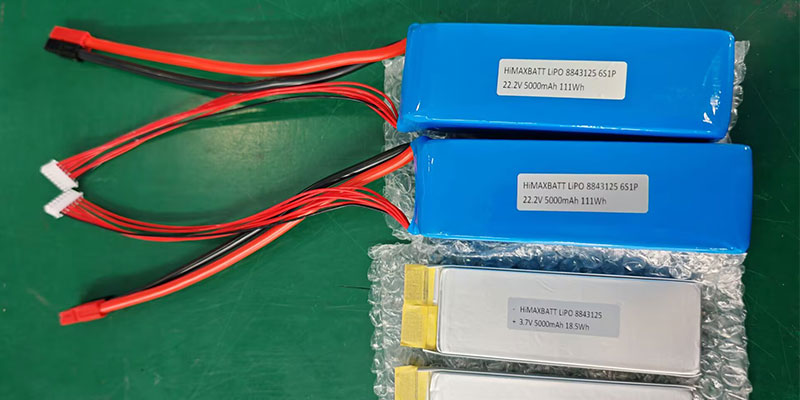
In this article, I will explain the design considerations behind a typical 22.2V 5000mAh 35C LiPo drone battery, based on the Himax battery specification for model 8843125 6S1P.

As a battery engineer, I will also address a common question:

Why do most drone batteries not include a protection board (PCM/BMS)?

Overview of the 22.2V 5000mAh LiPo Drone Battery

The battery pack analyzed in this case study uses a 6S1P lithium-polymer configuration, meaning six LiPo cells connected in series.

Key specifications include:

Parameter Specification
Battery Type Lithium Polymer
Configuration 6S1P
Nominal Voltage 22.2V
Capacity 5000mAh
Energy 111Wh
Charge Voltage 25.2V
Discharge Cut-off Voltage 18.0V
Max Continuous Discharge 87.5A
Cycle Life ≥500 cycles
Working Temperature −10°C to 60°C

These parameters make the battery suitable for medium-to-large UAV platforms, aerial photography drones, and industrial drones.

What Does 35C Discharge Mean for a Drone Battery?

UAV LiPo battery 5000mAh

One of the most important parameters for drone batteries is the C-rate, which indicates how quickly the battery can discharge relative to its capacity.

For this battery:

Capacity = 5000mAh (5Ah)
Discharge rate = 35C

Maximum discharge current:

5Ah × 35C = 175A peak capability

However, in practical pack design, the continuous current rating is limited to 87.5A to ensure thermal stability and cycle life.

High-discharge capability is critical because drone propulsion systems demand rapid bursts of current, especially during:

  • takeoff
  • aggressive maneuvering
  • payload lifting
  • wind resistance compensation


Without a high-rate LiPo battery, drones would experience voltage sag and unstable flight performance.

Why Drone LiPo Batteries Usually Do NOT Use Protection Boards

One question we often receive from customers is:

Why do drone LiPo batteries typically operate without a protection circuit board (PCM)?

The answer is mainly related to current capability and response speed.

Protection circuits introduce several limitations:

1. Current Limitation

Most PCM/BMS solutions cannot handle extreme burst currents required by UAV motors.

For example:

Typical drone burst current:

100A – 200A

Most protection IC systems are designed for:

10A – 30A

Therefore, including a PCM would restrict the performance of the drone power system.

2. Response Speed

Drone motors controlled by ESC (Electronic Speed Controllers) require very fast current response.

Protection circuits may introduce:

  • voltage drop
  • current throttling
  • slower response times


This could lead to unstable motor output or reduced thrust.

3. Weight and Space Constraints

Every gram matters in UAV design.

Adding a protection board increases:

  • weight
  • wiring complexity
  • internal resistance


For high-performance drones, these trade-offs are often unacceptable.

LiPo drone battery 22.2V 5000mAh

How Drone Batteries Stay Safe Without Protection Boards

Even though drone batteries usually do not include PCM protection, safety is maintained through other design mechanisms.

1. Intelligent Drone Flight Controllers

Most UAV systems monitor:

  • pack voltage
  • individual cell voltage
  • battery temperature
  • remaining capacity


If abnormal conditions occur, the drone will automatically trigger a return-to-home or landing sequence.

2. External Smart Chargers

LiPo drone batteries rely on balanced charging systems, which manage:

  • cell balancing
  • charge voltage limits
  • charge current control


For the Himax battery:

Maximum charge voltage:

25.2V

Charging follows the CC/CV method.

3. Strict Manufacturing Quality Control

At Himax Battery, every LiPo pack undergoes multiple quality tests including:

  • internal impedance measurement
  • vibration testing
  • crush testing
  • short-circuit testing
  • cycle life verification


These tests ensure the battery can withstand real drone operating conditions.

UAV battery manufacturer

Temperature Performance of Drone LiPo Batteries

Drone batteries must operate across a wide range of environments.

For the 22.2V 5000mAh pack:

Condition Temperature
Charging 10°C – 45°C
Discharging −10°C – 60°C
Storage −10°C – 30°C

Operating outside these ranges may cause:

  • capacity degradation
  • internal resistance increase
  • potential safety risks.


Safety Considerations for High-Discharge LiPo Batteries

Due to the high energy density of lithium-polymer cells, users must follow several important precautions.

Key recommendations include:

  • Use dedicated LiPo chargers
  • Avoid over-discharge below 18.0V
  • Do not short-circuit battery terminals
  • Avoid exposure to temperatures above 70°C
  • Store batteries at partial charge (30–50%)


Following these guidelines significantly extends battery life and operational safety.

Conclusion

High-performance drones require high-discharge lithium polymer batteries capable of delivering stable current under demanding flight conditions.

The Himax 22.2V 5000mAh 35C LiPo battery demonstrates how careful engineering design enables:

  • high current capability
  • stable voltage output
  • reliable cycle life
  • safe operation without a protection board


Understanding these engineering principles helps UAV manufacturers and drone enthusiasts choose the right power solution for demanding aerial applications.

At Himax Battery, our engineering team continues to develop high-performance LiPo batteries optimized for UAV platforms and industrial drone systems worldwide.

Lipo Battery

Lithium Polymer (LiPo) batteries are widely used because they are light and powerful. However, many people ask: Why can’t a LiPo battery be made exactly the same size as the battery case? The answer is safety.


Why LiPo Batteries Cannot Fit Tightly in the Case


LiPo batteries need extra space to “breathe.” During long-term use, a LiPo battery may slightly expand. If the battery is put into a very tight case with no space, it may be pressed by the case, which is very dangerous.


There are four main reasons:


Space for normal expansion

During charging and discharging, a small amount of gas is slowly produced inside the battery. This can cause the battery thickness to increase by about 1–3% over time. Extra space allows this normal aging expansion safely.


Avoid internal damage

If the battery is squeezed, stress points may form inside. This can damage the separator or electrodes and cause an internal short circuit, which may lead to fire or thermal runaway.


Better heat dissipation

A tight case blocks heat from escaping. Heat buildup will speed up battery aging and gas generation, making the situation worse.


Protection from shock and vibration

In case of drops or vibration, the reserved space (usually with soft foam) helps absorb impact and protect the battery.


For safety, engineers usually keep 0.5 mm to 2 mm space on each side, depending on battery size and capacity.
lipo-battery-puffing


Why LiPo Batteries Slightly Expand During Use


Slight expansion is a normal aging process and happens slowly. It mainly comes from two chemical reasons:


SEI layer changes

A protective layer (called SEI) forms on the anode. During every charge and discharge, it slightly breaks and repairs itself, producing a very small amount of gas.


Slow electrolyte decomposition

Over a long time, the electrolyte may slowly react and create gas.


This kind of expansion is even and slow and usually appears after many charge cycles. It is not immediately dangerous.


What Is Dangerous Swelling (Battery Bulging)?


Dangerous swelling, also called bulging, is not normal and is very unsafe.

Item Normal Expansion Dangerous Bulging
Speed Very slow (months or years) Fast (few cycles)
Shape Even and flat Uneven, pillow-like
Feeling Slightly soft Very hard and tight
Cause Normal aging Overcharge, overheating, damage

Can a Swollen LiPo Battery Still Be Used?


No. Never use a bulged LiPo battery.


Here is why:


Internal damage

Bulging means the internal structure may already be damaged, increasing the risk of short circuits.


Chemical instability

Fast gas generation shows the battery chemistry is out of control.


High fire risk

Any further charging, discharging, or even resting may cause fire or explosion.


Never try to fix it

Do not puncture the battery. This can cause immediate fire because air reacts with the battery materials.

LiPO-Battery

Conclusion


LiPo batteries will slightly expand during normal use, so safe design must include extra space. Tight battery cases are dangerous. If a battery shows bulging or hard swelling, it must be stopped and recycled immediately.


Good design and correct handling are the key to LiPo battery safety. If you have any LiPO battery requirements, please don’t hesitate to contact us. We’re pleased to quote our best price for your evaluation.

battery-charger

Parallel battery charging is a convenient way to increase your total battery capacity and extend runtime without boosting voltage. For users in homes, workshops, or construction sites — especially those working with LiPo packs or 12V systems — knowing how to safely use a parallel battery charger can prevent damage, swelling, or even fire risks. This guide walks you through the setup, safety checks, and real-world best practices backed by expert data and trusted authorities.


What Is a Parallel Battery Charger?

battery-charger

A parallel battery charger is designed to charge multiple batteries that are connected in parallel — meaning all positive terminals are joined together, and all negative terminals are joined together.

In this setup:


Voltage remains the same,

Capacity (Ah) adds up, increasing total runtime.


Parallel vs Series — Quick Comparison


Series connection: increases voltage (e.g., two 12V → 24V).

Parallel connection: increases capacity (two 12V 100Ah → still 12V, but 200Ah).

Use parallel charging when you need longer runtime at the same voltage, such as powering solar systems, tools, or drones.


When Should You Use Parallel Charging?

1. Home Backup or Solar Energy Systems


In off-grid solar setups, parallel charging keeps voltage stable while extending storage capacity — perfect for powering appliances longer.


2. Construction Sites and Power Tools


Builders and technicians often parallel-charge tool batteries to keep devices running continuously without downtime.


3. RC & Drone Enthusiasts


For LiPo packs, parallel charging saves time by charging multiple packs at once, provided they’re matched properly.


Always ensure batteries have the same voltage and similar capacity before parallel charging to avoid imbalance or internal short-circuiting.


Before You Start — Safety Checks & Preparation

battery testing

Battery Matching Matters


Only connect batteries that share the same voltage, chemistry, and age. Mixing old and new batteries or Li-ion and LiFePO4 cells can cause dangerous voltage imbalances.


Inspect for Damage or Swelling


If you see puffing or swelling — especially with LiPo batteries — do not charge them. Swollen batteries indicate gas buildup or internal breakdown. According to Battery University

, charging a swollen LiPo can lead to fire or explosion. Dispose of damaged cells immediately through certified e-waste centers.


Work Area Preparation


Charge in a well-ventilated, fire-resistant area. Avoid flammable materials nearby and use a LiPo safety bag for additional protection.


Equipment & Tools You Need


  • A parallel-capable charger (multi-bank or smart LiPo charger).


  • Balance leads or parallel boards for equal voltage distribution.


  • Fuses or circuit breakers to prevent current surge.


  • Correct cable gauge to handle the total current safely.


  • LiPo safety bag or metal charging container.


Step-by-Step: How to Use a Parallel Battery Charger

Step 0 — Preparation


Wear insulated gloves and ensure your workspace is dry, non-conductive, and ventilated.


Step 1 — Match Batteries


All batteries must be the same voltage and state of charge (SoC). Measure with a voltmeter — the difference should not exceed 0.05V per cell for LiPo packs.


Step 2 — Connect Batteries in Parallel


Connect positive to positive, negative to negative using cables of equal length to balance resistance. Secure connections tightly.


Step 3 — Add Balancing Wires or Fuses

Fuse-connection

Use balance leads to equalize cell voltage between packs. Insert a fuse on each positive terminal to isolate a faulty battery if something goes wrong.


Step 4 — Connect the Charger


Attach the charger’s positive and negative leads to the parallel bank, not to each battery separately.


Using multiple chargers on the same parallel bank can cause current backflow and overheating — avoid this practice.


Step 5 — Set the Charger Parameters


Select correct chemistry: Li-ion, LiPo, AGM, or lead-acid.


Set voltage limit: typically 4.2V per cell for LiPo (follow manufacturer specs).


Set charge rate: around 1C or lower for longevity (e.g., 2A for a 2000mAh pack).


Step 6 — Monitor During Charging


Watch for abnormal heat, swelling, or odors. If temperature rises rapidly or a pack inflates, stop immediately and disconnect safely.


Step 7 — Finish & Store


When fully charged, disconnect the charger first, then the batteries. Store LiPo batteries at storage voltage (3.7–3.8V per cell) if not used for a while.


Special Notes for Swollen LiPo Users

battery Recycl

Why LiPo Batteries Swell


Swelling is caused by gas buildup from overcharging, overheating, or internal damage. It’s an irreversible process indicating cell failure.


Never Charge or Compress a Swollen LiPo


Attempting to recharge or flatten a swollen battery can rupture the pouch and ignite flammable electrolytes. The U.S. Consumer Product Safety Commission (CPSC)

advises users to immediately stop use and dispose of such batteries properly.


Safe Disposal


Place the battery in a non-metallic container, cover terminals with tape, and take it to a local hazardous waste collection site. The National Fire Protection Association (NFPA) also provides detailed consumer safety guidelines for lithium-based products.


Common Mistakes & Troubleshooting


❌ Mixing batteries of different voltages or capacities.


❌ Charging each battery with a separate charger while connected in parallel.


❌ Ignoring balance leads — leading to uneven charging.


 If charger shows error or overheat:


Disconnect all batteries.


Check fuse, wiring, and voltage.


Replace any pack with >0.05V deviation.


Best Practices Checklist


✅ Check all batteries for equal voltage and chemistry.

✅ Use fuses and equal-length cables.

✅ Avoid charging swollen or damaged cells.

✅ Charge in a fireproof area.

✅ Monitor constantly — never leave charging unattended.


Recommended Chargers & Accessories


When choosing a charger:


Look for parallel-capable smart chargers with auto-balance and overcurrent protection.


Ensure it supports your battery chemistry (LiPo, LiFePO4, AGM).


Choose trusted brands with UL or CE certifications and safety records.


FAQ


1. Can I charge two 12V batteries in parallel with two chargers?

Usually not. Using two chargers can cause uneven current flow and potential shorting. Use one properly rated charger for the entire parallel bank.


2. My LiPo battery is slightly swollen. Can I still charge it?

No. Even slight swelling means internal damage. Follow safe disposal steps from the CPSC lithium battery safety guide


3. How can I balance batteries when charging in parallel?

Use a parallel balance board or balance wires on your charger to equalize cell voltages. Always verify voltage uniformity before charging.

Thermal expansion-induced ignition

Lithium Polymer (LiPo) batteries are widely used in smartphones, drones, RC vehicles, and home backup power supplies due to their high energy density and lightweight design. However, swollen LiPo batteries can pose serious safety risks, including fire, explosion, or device damage. Understanding why batteries swell, how to identify the signs, and the safest ways to handle and prevent this issue is essential for every user. This guide provides practical tips, real-world examples, and expert advice to help you manage LiPo battery safety effectively.


What Is a Swollen LiPo Battery?

Battery swelling

A swollen LiPo battery, sometimes called a puffed LiPo battery, is a lithium polymer battery that has expanded due to internal chemical reactions. This expansion is often visible as a bulging or rounded shape, and it can occur in various electronic devices, from smartphones and tablets to drones, RC vehicles, and home backup power supplies.


Swelling is not just cosmetic—it indicates that the battery is under stress and may be unsafe to use. Understanding why this happens and how to handle it safely is crucial for both casual users and professionals relying on these batteries.


Why Do LiPo Batteries Swell?


Several factors contribute to LiPo battery swelling, typically linked to internal chemical and physical processes.


Overcharging and Improper Charging


Overcharging is a leading cause of battery swelling. When a LiPo battery is charged beyond its recommended voltage, the electrolyte can start decomposing, releasing gas that increases internal pressure. This can lead to a noticeable puffing effect. According to Battery University

, maintaining the proper charging voltage is key to preventing this issue.


Deep Discharge and Overuse


Discharging a LiPo battery too deeply can also cause swelling. Excessive discharge stresses the internal chemical structure, which may degrade over time, producing gas and heat. For example, drone enthusiasts often report puffing after leaving a battery depleted for extended periods.


Physical Damage or Manufacturing Defects


A battery that has been dropped, punctured, or poorly manufactured may swell even under normal use. Faulty seals or improper welding inside the battery can trigger gas buildup and eventual expansion. Users should always inspect batteries before use to avoid defective units.


Heat Exposure and Poor Storage


High temperatures accelerate electrolyte decomposition. Leaving a LiPo battery in a car under direct sunlight or near heat sources can quickly lead to swelling. Safe storage in a cool, dry environment helps prevent this.


What Are the Risks of a Swollen LiPo Battery?

Thermal expansion-induced ignition


Swollen LiPo batteries are more than just inconvenient—they can be dangerous.


Safety Risks: Increased internal pressure may lead to thermal runaway, resulting in fire or explosion.


Device Damage: Swelling can warp device enclosures, damage connectors, or even harm the motherboard.


Health Hazards: Leaking chemicals can be harmful if inhaled or if they come into contact with skin.


How to Identify a Dangerous Swelling


Look for visible bulges or deformation. Even minor swelling should be treated cautiously. Comparing a normal battery to a puffed one can help you identify subtle changes. Discoloration, unusual odors, or heat during charging are additional warning signs.


What Should You Do If Your LiPo Battery Is Swollen?

Replace the battery

Step 1 – Stop Using It Immediately


Disconnect the battery from any device and do not attempt to recharge or discharge it. Avoid pressing or puncturing the battery, as this can trigger a chemical reaction.


Step 2 – Move the Battery to a Safe Location


Store the swollen battery in a fireproof container or a specialized LiPo safe bag. Keep it away from flammable materials and out of reach of children and pets.


Step 3 – Follow Proper Disposal Procedures


Never dispose of a swollen LiPo battery in regular household waste. Contact local electronic waste recycling centers, such as Call2Recycle

or your local EPA-approved facility (EPA.gov

), to ensure safe disposal.


How to Prevent LiPo Battery Swelling


Preventing swelling is much safer than trying to fix it.


Use a Smart Charger


Always use a charger with balance charging functionality. This ensures each cell is charged safely and evenly, reducing the risk of overcharging and internal gas buildup.


Maintain Proper Storage Conditions


Store batteries at 40–60% state of charge in a cool, dry environment. Avoid high temperatures and long-term storage at full charge.


Regular Inspection and Maintenance


Check batteries for signs of swelling or damage every month. Monitor voltage, record charge cycles, and retire old or degraded batteries promptly.


Tip: Himax offers high-quality LiPo batteries that meet safety standards and include built-in monitoring systems, which help reduce the risk of swelling during use.


Is a Slightly Swollen LiPo Battery Still Usable?


Slight swelling does not always indicate imminent failure, but it does carry risk. Professional assessment or replacement is the safest approach. Testing a mildly swollen battery in short-term, low-stress applications is possible, but users should proceed with caution and never leave the battery unattended.


Should You Try to Fix a Swollen LiPo Battery?


DIY fixes, such as attempting to release the gas, are dangerous and not recommended. The chemical reactions causing swelling are irreversible, and any tampering could trigger fire or explosion. The safest option is to retire the battery and dispose of it properly.


FAQs

1. Can a swollen LiPo battery explode?


Yes. Swelling increases internal pressure, and if the battery is punctured or exposed to heat, it can catch fire or explode. Always treat swollen batteries as potentially dangerous.


2. How long do LiPo batteries typically last?


A well-maintained LiPo battery can last 2–3 years or around 300–500 cycles, depending on usage, charging habits, and storage conditions. Batteries stored improperly or overcharged may fail much sooner.


3. Is swelling covered under warranty?


Coverage depends on the manufacturer. Many warranties do not cover damage from misuse, such as overcharging or improper storage, but defective batteries from manufacturing faults may be eligible. Always check the specific warranty terms.


4. How should I store LiPo batteries for long-term safety?


Store at 40–60% charge, in a cool, dry location, and ideally in a fireproof container. Avoid exposing the battery to sunlight or heat sources.


5. Can I prevent swelling completely?


While careful charging, storage, and monitoring greatly reduce the risk, swelling cannot always be completely prevented due to natural chemical degradation over time. Regular inspection and timely replacement are key.


6. What should I do if my device’s LiPo battery swells during use?


Immediately stop using the device, disconnect the battery if possible, place it in a fireproof container, and arrange for proper disposal. Do not attempt to use, puncture, or recharge the battery.

lithium battery design process

As a leading battery provider, Himax Electronics understands that selecting the right battery involves more than just voltage and capacity considerations. One critical piece of information we request from our customers is the maximum continuous discharge current of their applications. This parameter is vital for matching the appropriate battery technology to your specific needs.

This article explores why this specification is so important for ensuring optimal performance, safety, and longevity of both your devices and our batteries.

Understanding Maximum Continuous Discharge Current

The maximum continuous discharge current refers to the steady electrical current that a battery can safely deliver over an extended period without suffering damage or creating safety hazards. This is different from peak or pulse current, which represents short bursts of power. Knowing your device’s continuous current requirement helps us recommend whether you need standard lithium-ion, high-rate LiPo, nickel-metal hydride, or lithium iron phosphate batteries.

48v lifepo4 battery with charger

The Critical Role of Discharge Current in Battery Selection

1. Performance Optimization

Different battery technologies offer varying discharge capabilities:

Standard Lithium-ion: Typically supports moderate discharge rates, often around 1-2C (where C refers to the battery’s capacity). Suitable for everyday electronics.

High-Rate LiPo Batteries: Specifically designed for high-drain applications, with some capable of 25C continuous discharge and 50C burst rates. Ideal for drones, high-performance RC vehicles, and power tools.

Phosphorus Iron Lithium (LiFePO4): Known for excellent high-rate capability, with some emergency start batteries supporting up to 100C discharge for short durations.

Nickel-Metal Hydride (NiMH): Modern NiMH batteries can offer 3-5C continuous discharge rates, suitable for various power-intensive applications.

Matching your current requirements to the appropriate battery technology ensures your device operates at peak performance without power starvation.

2. Safety Considerations

Exceeding a battery’s safe discharge parameters can lead to overheating, damage, or safety hazards. When a battery is forced to deliver current beyond its design specifications:

Internal temperature rises excessively, potentially causing thermal runaway

Permanent capacity loss occurs due to electrode damage

In extreme cases, battery swelling, leakage, or fire may result

We prioritize safety through appropriate battery matching rather than relying solely on protection circuits, which the battery industry acknowledges “may not always work” in every scenario.

3. Battery Lifetime and Durability

Using batteries within their specified discharge parameters significantly extends their service life. High-rate discharge, especially when beyond the battery’s rating, accelerates degradation through:

Increased internal heat generation, causing premature aging

Accelerated capacity fade over fewer cycles

Physical stress on internal components


For instance, high-rate LiPo batteries maintained according to specifications can retain 95% of their capacity after 100 cycles. Proper current matching ensures you get the maximum lifespan from your battery investment.

4. Avoiding Incompatibility Issues

Providing accurate current requirements helps prevent these common problems:

Voltage Sag: High current draws cause temporary voltage drops, potentially triggering low-voltage cutoff in devices even when batteries are sufficiently charged

Runtime Disappointment: Actual capacity delivered at high discharge rates may be significantly lower than rated capacity

Device Malfunction: Power starvation can cause unexpected resets or performance throttling

himassi-48v-100ah-battery

How Himax Electronics Uses This Information

At Himax Electronics, we analyze your maximum continuous discharge current requirement to:

Recommend the most suitable battery technology from our diverse portfolio

Design battery packs with appropriate current-handling capabilities

Suggest optimal operating parameters for maximum performance and longevity

Prevent potential safety issues associated with mismatched components

Practical Guidance for Customers

To determine your device’s maximum continuous discharge current:

Consult your device manufacturer’s specifications

Use a clamp meter to measure actual current draw during operation

When in doubt, overestimate rather than underestimate your requirements

Consider both continuous and peak current needs

For applications with variable loads, provide us with detailed usage patterns so we can recommend the most appropriate solution.

Conclusion

Providing accurate maximum continuous discharge current information is not just a technical formality—it’s a critical step in ensuring the success of your power-dependent products. At Himax Electronics, we use this information to deliver safe, reliable, and optimized battery solutions that enhance your device’s performance and user satisfaction.

Contact Himax Electronics today to discuss your specific battery requirements and discover how our technical expertise can power your innovations safely and efficiently.

custom lipo battery packs

The popularity of drones has soared in recent years, with applications spanning from professional aerial photography to recreational flying for hobbyists and children. Among these categories, toy drones have gained significant traction for their affordability, accessibility, and fun. Behind their smooth take-offs, stable flights, and responsive controls lies a critical component: the battery. Himax, a global leader in lithium battery solutions, has recently highlighted the importance of its 3.7V 1500mAh LiPo (Lithium Polymer) battery, designed specifically for toy drones. This battery has emerged as a vital enabler of longer flights, safer operation, and a more enjoyable user experience.

This article explores how the 3.7V 1500mAh LiPo battery works, why it stands out in the toy drone industry, and what makes Himax’s solution a benchmark for manufacturers and consumers alike.

Why Power is the Core of Toy Drone Performance

Toy drones are lightweight, affordable, and designed for indoor or light outdoor use. However, their performance depends heavily on the power system. Without a reliable battery, even the best-designed toy drone cannot achieve stable flight. The requirements of toy drones are unique:

  1. Lightweight Power Source– Any excess weight reduces lift and flight time.
  2. Safe Operation– Since drones are used by children and beginners, safety features like overcharge protection are critical.
  3. Longer Flight Time– Short play sessions frustrate users. Extending flight from a few minutes to 15 minutes or more creates a significant improvement.

This is where the 3.7V 1500mAh LiPo battery comes into play. It balances size, capacity, and safety, providing an optimal power solution for drones under 250 grams.

How the 3.7V 1500mAh LiPo Battery Works

The battery’s engineering highlights why it has become a preferred choice for toy drones.

  1. Voltage and Cell Configuration

A single LiPo cell provides a nominal voltage of 3.7V.

This voltage aligns perfectly with the small brushless or brushed motors typically used in toy drones, delivering consistent power without stressing the system.

2.Capacity of 1500mAh

The 1500mAh capacity translates to longer flight sessions compared to smaller 800mAh or 1000mAh batteries.

Depending on drone design and weight, users can expect between 10–18 minutes of flight time, a considerable improvement in toy drone performance.

3.Discharge Rate

LiPo batteries are known for their ability to provide high burst currents.

The 3.7V 1500mAh pack supports sufficient discharge rates to handle quick accelerations, flips, and maneuvers without voltage drops.

4.Rechargeability

With proper care, the battery can withstand hundreds of charging cycles, reducing cost for parents and hobbyists.

5.Safety Features

Himax integrates overcharge, over-discharge, and short-circuit protections to safeguard both the drone and the user.
lithium battery for iot

Why LiPo Outperforms Other Battery Types

Toy drones once relied on NiMH or alkaline batteries. However, these older technologies come with significant limitations:

Lower Energy Density: Heavier batteries for the same capacity, reducing drone efficiency.

Slower Discharge: Poor performance in fast maneuvers.

Short Lifespan: Fewer charging cycles compared to LiPo.

By contrast, the 3.7V 1500mAh LiPo battery provides:

Higher energy density – More power in a compact size.

Lightweight construction – Essential for flight performance.

Stable discharge curve – Ensures consistent flight power.

Extended cycle life – Offering better long-term value.

Himax’s Edge in the Market

Not all LiPo batteries are created equal. Himax ensures its 3.7V 1500mAh pack meets strict international standards. Its advantages include:

Customization for Toy Manufacturers
Himax offers tailored solutions, adjusting battery size, connectors, and casings to fit specific drone models.

Quality Assurance
Each battery undergoes rigorous testing for capacity, cycle life, and safety to ensure consistent performance.

Global Supply Chain
With warehouses in Asia, Europe, and Australia, Himax ensures faster delivery and localized support.

Focus on Sustainability
Himax emphasizes eco-friendly production processes and designs batteries with recyclable materials wherever possible.

Applications Beyond Toy Drones

While optimized for toy drones, the 3.7V 1500mAh LiPo battery also powers other compact devices:

Mini RC cars and boats.

Handheld gaming gadgets.

Educational robots in STEM kits.

Portable LED lights or small appliances.

This versatility broadens its market potential, making it a valuable option for various consumer electronics.

Market Trends and Consumer Expectations

The toy drone market is expected to expand rapidly, especially with the rising popularity of STEM toys and the increased affordability of drone technology. Parents and hobbyists are demanding longer runtimes, faster charging, and safer batteries.

Consumer feedback on Himax’s 3.7V 1500mAh LiPo battery highlights:

Longer playtime before recharging.

Consistent power for stable flights.

Enhanced safety compared to low-quality alternatives.

This aligns with broader industry trends where consumers prioritize performance and reliability over the lowest price.

Challenges and Future Directions

Despite its benefits, LiPo technology requires careful handling. Overcharging or puncturing can cause safety risks. Himax addresses these concerns through built-in protection systems and improved casing designs.

Looking ahead, the company is exploring:

Higher capacities in compact formats.

Fast-charging solutions to reduce downtime.

Smart batteries with monitoring apps, allowing users to check charge levels on their phones.

These innovations will further enhance the role of LiPo batteries in the toy drone sector.

lithium battery design process

Conclusion

In summary, the 3.7V 1500mAh LiPo battery is a game-changer for toy drones, delivering the ideal balance of power, weight, and safety. It provides longer runtimes, stable discharge, and eco-friendly rechargeability, setting a new standard for recreational drone users. Beyond drones, its versatility ensures broad applicability in other lightweight electronics.

Himax, with its expertise in custom lithium and NiMH battery solutions, continues to lead this transformation. By combining cutting-edge technology, global supply networks, and a commitment to sustainability, Himax reaffirms its role as a trusted partner in powering the future of toys and consumer electronics.


lipo-battery-puffing

Lithium Polymer (LiPo) batteries represent a significant advancement in portable power, offering high energy density, lightweight construction, and flexible form factors. As a leading provider of advanced battery solutions, Shenzhen Himax Electronics Co., Ltd. is committed to empowering our clients with the knowledge to harness the full potential of our LiPo compounds safely and effectively. While these batteries power innovation across industries, from consumer electronics to UAVs, understanding their characteristics is paramount for ensuring longevity and safety. This guide outlines the essential practices for handling, charging, storing, and using LiPo batteries.

  1. Understanding the Fundamentals of Charging

The single most critical aspect of LiPo battery care is proper charging. Unlike older battery technologies, LiPo batteries require a specific charging protocol to avoid damage and hazardous situations.


Use a Dedicated LiPo Charger: Always employ a balanced charger specifically designed for Lithium Polymer batteries. These chargers monitor the voltage of each individual cell within the battery pack, ensuring they all charge at the same rate. This “balance charging” is crucial for maintaining the health of the pack and preventing overcharging of any single cell.


Never Leave Charging Unattended: It is a fundamental rule to never leave charging batteries unsupervised. Place the charger and battery on a non-flammable surface like a ceramic tile or inside a LiPo safety bag during the process. Stay alert to any signs of swelling, excessive heat, or smoke, and be prepared to act if necessary.


Set the Correct Parameters: Before initiating a charge, double-check that your charger is set to the correct battery type (LiPo), cell count (e.g., 3S, 4S), and current (Amperage). The standard charge rate is 1C (where 1C equals the battery’s capacity in Amp-hours). For example, a 5000mAh (5.0Ah) battery should be charged at no more than 5.0A. Charging at higher rates can significantly reduce battery life and increase risks.

custom lipo battery packs

custom lipo battery packs


  1. Handling and Usage Best Practices

How you use and handle the battery during operation directly impacts its performance cycle life.


Avoid Physical Damage: The internal structure of a LiPo battery is delicate. Puncturing, crushing, or bending the battery can cause an internal short circuit, leading to thermal runaway—a rapid and uncontrollable increase in temperature and pressure. Always inspect your battery for any signs of damage, such as dents or a swollen pouch, before use.


Monitor Voltage Levels: LiPo batteries must operate within a specific voltage range. Over-discharging (draining the voltage too low) is one of the most common causes of permanent failure. The minimum safe voltage per cell is typically 3.0V, with a practical cutoff around 3.4V-3.5V per cell to preserve longevity. Conversely, over-volting (exceeding 4.2V per cell) during use can be equally damaging.


Manage Operating Temperature: Avoid using LiPo batteries in extreme temperatures. Using a battery when it is below freezing (0°C / 32°F) can cause permanent metallic lithium plating inside the cell, increasing internal resistance and reducing capacity. High temperatures (above 60°C / 140°F) can accelerate degradation and pose a safety risk. Allow the battery to cool down to ambient temperature after use before recharging.

  1. Storage and Transportation Guidelines

Proper procedures when the battery is not in use are essential for long-term health.

Storage Voltage is Key: If you plan to store a LiPo battery for more than a few days, it should be placed at a storage voltage of approximately 3.7V to 3.8V per cell. Most modern chargers have a dedicated “Storage” mode that will automatically charge or discharge the battery to this optimal level. Storing a battery at full charge or a very low state of charge will quickly degrade its health and capacity.


Choose a Safe Environment: Store your batteries in a cool, dry place, away from flammable materials. A metal container or a specialized LiPo safety bag is ideal for storage. The ambient temperature should be stable and moderate.


Transport Considerations: When transporting batteries, especially by air, always protect the terminals from shorting by covering them with tape. Be aware of and comply with relevant transportation regulations regarding lithium batteries, which often have strict rules on watt-hour (Wh) ratings and packaging.

  1. End-of-Life and Disposal

Even with the best care, LiPo batteries eventually reach the end of their usable life, indicated by a significant loss of capacity or physical swelling.

Discharge Completely: Before disposal, it is recommended to discharge the battery completely. This can be done safely by using a dedicated battery discharger or by connecting a low-power resistor to drain the remaining energy.


Recycle Responsibly: Lithium Polymer batteries must never be disposed of in regular household trash. They contain materials that require special handling. Please take your spent batteries to a designated battery recycling facility to ensure they are processed in an environmentally responsible manner.


By adhering to these guidelines, you can ensure that you get the maximum performance, longevity, and, most importantly, safety from your LiPo batteries. At Shenzhen Himax Electronics, we are dedicated to providing high-quality, reliable lithium polymer compound batteries supported by the expertise to use them correctly. Empower your innovation with power you can trust.


Lipo

SHENZHEN, China – In the rapidly evolving landscape of fleet management, asset security, and personal vehicle safety, the Vehicle GPS Tracker has become an indispensable tool. These compact devices provide real-time location data, geofencing alerts, and critical diagnostic information. However, their reliability is fundamentally dictated by one core component: the battery. While the software and GPS modules often receive the spotlight, it is the silent, enduring power of advanced lithium batteries that truly enables 24/7 operational integrity. Companies like Shenzhen Himax Electronics Co., Ltd. are at the forefront of developing power solutions that specifically meet the unique and demanding requirements of this industry.

The Unique Power Demands of GPS Tracking Units

Vehicle GPS trackers are not like everyday consumer electronics; their operational profile presents distinct challenges that not all batteries are equipped to handle.

Long Operational Life & Low Self-Discharge: Many trackers, especially those used for asset tracking, can spend months, or even years, installed in a vehicle without regular charging cycles. A standard battery would self-discharge and fail long before its intended mission is complete. Advanced lithium batteries, such as the HiMAXBATT series, are engineered with extremely low self-discharge rates, ensuring they retain their charge for extended periods and are ready to transmit data when needed.


Extreme Temperature Tolerance: A vehicle’s environment is harsh. From the freezing cold of a winter in northern climates to the scorching heat inside a parked car under the summer sun, temperature fluctuations are extreme. Inferior batteries can suffer from rapid capacity loss, reduced lifespan, or even catastrophic failure in these conditions. Lithium technology offers a wide operational temperature range, ensuring consistent performance from -10°C to 60°C.


High Energy Density: The most effective trackers are small and discreet, leaving minimal space for a battery. This necessitates a power source with the highest possible energy density—the amount of energy stored in a given unit of volume. Lithium batteries provide a superior energy density compared to traditional alkaline or nickel-metal hydride alternatives, allowing manufacturers to create more compact and powerful devices without sacrificing battery life.


Reliability and Safety: A tracker’s primary purpose is to be a dependable sentinel. Its battery must be utterly reliable. This involves built-in protections against common issues like short circuits, overcurrent, and over-discharge. Furthermore, robust construction is vital to prevent leakage, which could damage the sensitive electronics of the tracker itself.

custom lipo battery packs

custom lipo battery packs

Shenzhen Himax Electronics: Powering Connectivity with HiMAXBATT

Recognizing these critical needs, Shenzhen Himax Electronics has dedicated its engineering expertise to producing lithium batteries that serve as the dependable foundation for GPS tracking devices. The HiMAXBATT line is designed to directly address the pain points of tracker manufacturers and end-users.

HiMAXBATT batteries for GPS applications prioritize longevity and stability. By utilizing high-quality raw materials and precise manufacturing processes, Himax ensures each cell delivers on its promised capacity and cycle life. This commitment to quality translates directly to reduced maintenance costs, fewer false alerts caused by power failure, and ultimately, more trustworthy data for businesses relying on these tracking systems.

For trackers with more frequent reporting intervals or those that incorporate additional features like Bluetooth, accelerometers, or continuous remote control blocking capabilities, Himax offers robust lithium polymer (Li-Po) solutions. These batteries provide the necessary rechargeable power and high discharge rates while maintaining the compact form factor essential for hidden installations.

The Future is Powered by Intelligence

The next frontier for vehicle tracking is not just about location, but about predictive intelligence. Future trackers will analyze driving patterns, predict maintenance needs, and integrate deeper with IoT ecosystems. This increased processing power will demand even more from their batteries.

Innovators in the battery space are already responding. The focus is on enhancing energy density even further and integrating smarter Battery Management Systems (BMS) at the cell level. This allows for more accurate state-of-charge monitoring and communication with the tracker itself, enabling end-users to receive precise alerts about the battery’s health long before it depletes.

Conclusion: The Unseen Engine of Security

In the world of GPS tracking, the most sophisticated software is rendered useless without a reliable power source. The battery is the unsung hero, the unseen engine that powers global connectivity and security. As the market continues to grow and technology advances, the partnership between GPS tracker manufacturers and specialized battery companies like Shenzhen Himax Electronics will become increasingly crucial. It is this synergy that will drive the innovation needed to create ever-more reliable, efficient, and intelligent tracking solutions for a connected world.

About Shenzhen Himax Electronics Co., Ltd.:
Shenzhen Himax Electronics Co., Ltd. is a specialized manufacturer and supplier of high-quality lithium batteries. Its HiMAXBATT product line serves a wide range of applications, including GPS tracking devices, IoT sensors, security systems, and consumer electronics. The company is committed to providing reliable, safe, and innovative power solutions supported by strong engineering and customer service.