Himax Electronics Battery News

3.7v-lithium-ion-battery

Why Peak Current and Duration Matter in Battery Selection

At HIMAX, we specialize in manufacturing various battery types including lithium-ion, LiFePO4, nickel-metal hydride, and LiPo batteries. To ensure our customers get the optimal power solution for their specific needs, we request them to provide detailed information about peak current requirements and duration when purchasing batteries. This crucial step helps prevent system failures, safety hazards, and premature battery degradation, ultimately saving time and costs while enhancing performance reliability.

Understanding Peak Current and Its Significance

Peak current refers to the maximum current value a battery can deliver in short bursts under specific conditions. This parameter is fundamentally different from standard capacity measurements (Ah), which focus on total energy storage. The duration indicates how long the battery can sustain this peak output without damage or excessive voltage drop.

For instance, some applications like engine starting require very high current bursts (150-350A) for just 15-30 seconds, while other applications such as power tools may need moderate peak currents for longer periods. Without understanding these requirements, we cannot guarantee the battery will perform as expected in actual operation.

boat-battery-size

The Critical Role in Application Performance

  1. Safety Assurance
    Providing adequate peak current specification helps prevent dangerous situations. When a battery is forced to deliver current beyond its designed capability, it can lead to overheating, potential thermal runaway, or even explosion risks. For example, our LiFePO4 batteries inherently feature stable chemical structures with P-O bonds that remain secure even at high temperatures, but pushing them beyond their designed peak current capabilities still compromises this safety advantage.
  2. Performance Optimization
    Different applications demand different peak current profiles. An emergency start battery for vehicles might need to deliver 100C discharge for 3 seconds(where C is the battery’s capacity), while an AGV or traction vehicle might require 600A peak current for 2 seconds. When customers provide these specifics, we can select or customize batteries with appropriate internal construction and chemistry to maintain stable voltage under these loads.
  3. Lifetime and Reliability
    Batteries subjected to regular current surges beyond their design parameters suffer accelerated degradation. By understanding your peak current needs, we can recommend batteries with sufficient headroom. For instance, our high-quality LiFePO4 batteries can typically handle 4C continuous discharge and 2-5C pulse discharge(200-500A for a 100Ah battery), but we need to know your specific peak requirements to ensure the selected battery will maintain its cycle life of over 2000 chargesunder your operating conditions.

How Temperature Affects Peak Current Capability

Battery performance is significantly influenced by temperature, which directly impacts peak current delivery. Research indicates that temperature is a primary factor affecting battery available energy, with different battery chemistries showing varying sensitivity. For example, LiFePO4 batteries are particularly temperature-sensitive, meaning their peak current capability decreases substantially in cold environments.

When you provide information about your operating temperature range alongside peak current requirements, we can recommend appropriate solutions or necessary protections. Some of our batteries specifically designed for high-current applications can operate across a wide temperature range from -20°C to +60°C, but performance characteristics vary within this range.

The Importance of Duration Specifications

The duration of peak current demand is equally important as the amplitude. We categorize peak current durations into:

Ultra-short pulses (milliseconds to a few seconds) for applications like engine starting


Short durations (3-15 seconds) for power tools and emergency systems

Extended peaks (minutes) for special industrial applications

Different battery chemistries and constructions perform differently across these timeframes. For example, some batteries can deliver 100C for 3 seconds but only 30C for 15 seconds. Knowing your duration requirements helps us optimize the battery design to prevent excessive voltage drop or overheating during these critical periods.

Battery Management Systems and Protection

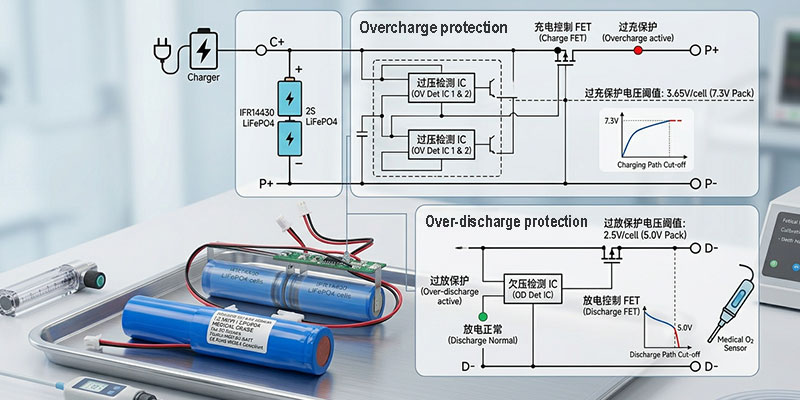
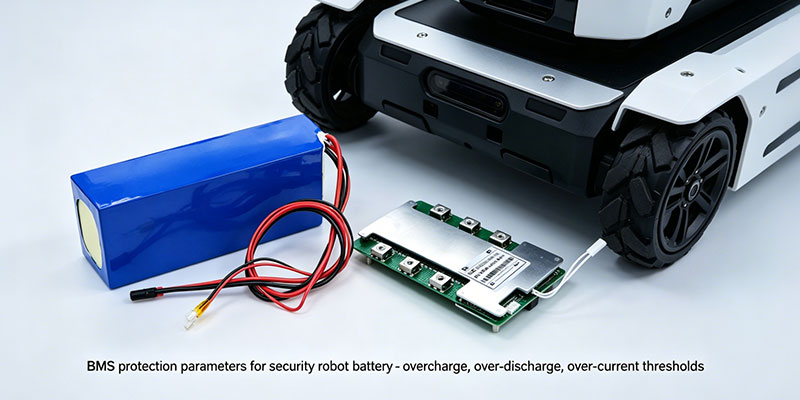
When we understand your peak current requirements, we can incorporate appropriate Battery Management Systems (BMS) with customized protection features. These systems provide overcharge, over-discharge, overcurrent, and short-circuit protection, but need to be calibrated according to your specific peak current profiles. For high-current applications, we implement additional safeguards like temperature control systems and individual cell monitoring to prevent cascading failures.

AED_Battery_Types

Conclusion: Partnership for Optimal Performance

Asking for peak current and duration specifications isn’t just a procedural requirement—it’s fundamental to delivering batteries that perform reliably and safely in your specific applications. This information allows us to leverage our expertise across multiple battery chemistries to recommend the most appropriate solution, whether it’s our safe LiFePO4 batteries with their strong molecular bonds, our high-energy-density lithium-ion batteries, or our reliable nickel-metal hydride batteries.

By partnering with us and sharing these critical parameters, you ensure that the batteries you receive will deliver optimal performance throughout their designed lifespan, preventing unexpected downtime, safety issues, and costly replacements.

For more specific guidance on determining your peak current requirements, please contact our technical team at HIMAX.

lithium battery design process

As a leading battery provider, Himax Electronics understands that selecting the right battery involves more than just voltage and capacity considerations. One critical piece of information we request from our customers is the maximum continuous discharge current of their applications. This parameter is vital for matching the appropriate battery technology to your specific needs.

This article explores why this specification is so important for ensuring optimal performance, safety, and longevity of both your devices and our batteries.

Understanding Maximum Continuous Discharge Current

The maximum continuous discharge current refers to the steady electrical current that a battery can safely deliver over an extended period without suffering damage or creating safety hazards. This is different from peak or pulse current, which represents short bursts of power. Knowing your device’s continuous current requirement helps us recommend whether you need standard lithium-ion, high-rate LiPo, nickel-metal hydride, or lithium iron phosphate batteries.

48v lifepo4 battery with charger

The Critical Role of Discharge Current in Battery Selection

1. Performance Optimization

Different battery technologies offer varying discharge capabilities:

Standard Lithium-ion: Typically supports moderate discharge rates, often around 1-2C (where C refers to the battery’s capacity). Suitable for everyday electronics.

High-Rate LiPo Batteries: Specifically designed for high-drain applications, with some capable of 25C continuous discharge and 50C burst rates. Ideal for drones, high-performance RC vehicles, and power tools.

Phosphorus Iron Lithium (LiFePO4): Known for excellent high-rate capability, with some emergency start batteries supporting up to 100C discharge for short durations.

Nickel-Metal Hydride (NiMH): Modern NiMH batteries can offer 3-5C continuous discharge rates, suitable for various power-intensive applications.

Matching your current requirements to the appropriate battery technology ensures your device operates at peak performance without power starvation.

2. Safety Considerations

Exceeding a battery’s safe discharge parameters can lead to overheating, damage, or safety hazards. When a battery is forced to deliver current beyond its design specifications:

Internal temperature rises excessively, potentially causing thermal runaway

Permanent capacity loss occurs due to electrode damage

In extreme cases, battery swelling, leakage, or fire may result

We prioritize safety through appropriate battery matching rather than relying solely on protection circuits, which the battery industry acknowledges “may not always work” in every scenario.

3. Battery Lifetime and Durability

Using batteries within their specified discharge parameters significantly extends their service life. High-rate discharge, especially when beyond the battery’s rating, accelerates degradation through:

Increased internal heat generation, causing premature aging

Accelerated capacity fade over fewer cycles

Physical stress on internal components


For instance, high-rate LiPo batteries maintained according to specifications can retain 95% of their capacity after 100 cycles. Proper current matching ensures you get the maximum lifespan from your battery investment.

4. Avoiding Incompatibility Issues

Providing accurate current requirements helps prevent these common problems:

Voltage Sag: High current draws cause temporary voltage drops, potentially triggering low-voltage cutoff in devices even when batteries are sufficiently charged

Runtime Disappointment: Actual capacity delivered at high discharge rates may be significantly lower than rated capacity

Device Malfunction: Power starvation can cause unexpected resets or performance throttling

himassi-48v-100ah-battery

How Himax Electronics Uses This Information

At Himax Electronics, we analyze your maximum continuous discharge current requirement to:

Recommend the most suitable battery technology from our diverse portfolio

Design battery packs with appropriate current-handling capabilities

Suggest optimal operating parameters for maximum performance and longevity

Prevent potential safety issues associated with mismatched components

Practical Guidance for Customers

To determine your device’s maximum continuous discharge current:

Consult your device manufacturer’s specifications

Use a clamp meter to measure actual current draw during operation

When in doubt, overestimate rather than underestimate your requirements

Consider both continuous and peak current needs

For applications with variable loads, provide us with detailed usage patterns so we can recommend the most appropriate solution.

Conclusion

Providing accurate maximum continuous discharge current information is not just a technical formality—it’s a critical step in ensuring the success of your power-dependent products. At Himax Electronics, we use this information to deliver safe, reliable, and optimized battery solutions that enhance your device’s performance and user satisfaction.

Contact Himax Electronics today to discuss your specific battery requirements and discover how our technical expertise can power your innovations safely and efficiently.

18650-battery-pack

When selecting or designing a lithium battery, one of the most important technical factors to understand is the discharge current — both continuous and instantaneous (peak). These parameters directly affect how your battery performs, how long it lasts, and how safely it operates.

At Shenzhen Himax Electronics Co., Ltd., we often emphasize to our customers that understanding discharge current ratings is just as critical as knowing the voltage or capacity. It’s the key to ensuring that the battery truly matches your system’s real power demands.

1. What Continuous and Instantaneous Discharge Current Mean

Continuous discharge current refers to the maximum current a battery can safely deliver on an ongoing basis without overheating or causing damage to its internal structure.

Instantaneous (or peak) discharge current describes the maximum short-term current the battery can deliver, typically for a few seconds, to handle sudden surges such as motor start-ups or load spikes.

In simple terms:

Continuous = the normal, stable power output

Instantaneous = the short burst of extra power

Understanding both ensures your equipment performs smoothly and safely under all operating conditions.

2. Why Knowing These Values Matters

(1) Ensures Proper Performance

If a device demands more current than the battery can continuously provide, voltage will drop and the system may shut down or restart unexpectedly. This is especially common in high-load applications like robotics, electric tools, and e-bikes.
At Himax, our engineers always help customers match the discharge current rating precisely to their load requirements to ensure consistent performance.

(2) Protects Against Overheating and Safety Risks

When a battery is forced to deliver more than its rated continuous current, it generates excess heat. This can cause the cells to swell, degrade, or in extreme cases, lead to safety hazards.
By knowing both continuous and instantaneous limits, you can design protection systems and select appropriate Battery Management Systems (BMS) to prevent thermal damage and maintain long-term reliability.


(3) Extends Battery Lifespan

Running a battery too close to its maximum discharge limit accelerates aging. The internal chemistry deteriorates faster, leading to reduced capacity and shorter cycle life.
At Shenzhen Himax Electronics Co., Ltd., we use high-quality 18650 and 21700 cells to ensure that our lithium battery packs maintain stable discharge performance even under demanding conditions.

(4) Helps Optimize System Design

Understanding discharge behavior allows engineers to properly size cables, choose suitable connectors, and configure the BMS. It also supports better thermal design, ensuring the system remains cool and efficient during heavy load.
This data is particularly useful for integrators working on custom lithium battery packs for robotics, energy storage, or industrial automation — core areas where Himax specializes.

(5) Duration Time is Just as Important

The time that a battery can sustain its peak current matters. For example, a motor might draw 80A for just a few seconds when starting up, then stabilize at 20A during normal operation.
A high-quality lithium battery from Shenzhen Himax Electronics Co., Ltd. is designed to handle these short bursts of high current without triggering protection circuits or overheating — something that cheaper batteries often struggle with.


3.Summary Table

Parameter Description Why It Matters
Continuous Discharge Current The steady current a battery can safely supply Ensures reliable performance and safety
Instantaneous Discharge Current The short-term maximum current for peak loads Prevents voltage drops during surges
Duration Time How long peak current can be maintained Guarantees stability under dynamic conditions

custom lithium battery

4. Final Thoughts

Understanding the continuous and instantaneous discharge current — and their duration — is not just about technical precision; it’s about safety, reliability, and real-world performance. Whether you’re powering an industrial robot, a smart mobility device, or an energy storage system, choosing the right discharge capability ensures your project operates smoothly and efficiently.

At Shenzhen Himax Electronics Co., Ltd., we design and manufacture high-performance lithium-ion battery packs tailored to each customer’s power requirements. Our engineering team can help you select or customize the ideal solution with the correct discharge ratings, ensuring your system gets the performance and safety it deserves.


smart-bms

In every modern lithium-ion battery pack, the Battery Management System (BMS) plays a vital role. It protects the cells, balances voltages, and ensures safe operation.
However, one common issue often overlooked is that the BMS itself can consume power from the battery, and if left unchecked for long periods, this can lead to over-discharge — even when the pack is not in use.

At Shenzhen Himax Electronics Co., Ltd., we often explain this phenomenon to customers who are surprised to find that their battery voltage drops over time despite no external load connected. Understanding why this happens helps prevent premature cell damage and extends battery life.


1. The BMS Always Draws a Small Standby Current

Even when a battery pack is “off,” the BMS remains partially active. It continuously monitors parameters such as:

Cell voltage and temperature

State of charge (SOC)

Balance circuit status

To perform these functions, the BMS consumes a small quiescent current, usually in the range of tens to hundreds of microamps for low-power systems, and sometimes several milliamps in smart BMS designs with Bluetooth, RS485, or UART communication.

Over days or weeks, this constant drain can slowly discharge the cells. If the pack is stored for several months without recharging, the self-consumption current from the BMS alone can push the battery below its safe voltage limit.


2. How BMS Power Consumption Leads to Over-Discharge

(1) Unbalanced Discharge Between Cells

In multi-cell packs, each cell’s voltage can drop slightly differently. The BMS monitors and balances them using small resistors or circuits that bleed current from higher-voltage cells.
During long storage, this balancing current can continue working, drawing more power from specific cells and leading to cell imbalance or deep discharge on some cells.

(2) Continuous Operation of Communication or Protection Circuits

Smart BMS modules — such as those used by Himax — often include communication interfaces (Bluetooth, CAN, UART, etc.). When these functions stay active, they require a small but constant current from the battery.
If the pack is not recharged for a long time, that continuous draw can discharge the pack below 2.5V per cell — a critical point that can permanently damage lithium cells.

(3) Storage Without Periodic Maintenance

If a battery pack is stored for months without being topped up, the combination of BMS self-consumption and natural self-discharge of the cells can cause total pack voltage to fall dangerously low.
Once over-discharged, the cells’ internal chemistry changes — copper dissolves, SEI layers break down — making the pack unstable and unsafe for reuse.

4s-bms

3. Real-World Example

For instance, consider a 14.8V (4S) 20Ah lithium-ion battery pack with a smart BMS that consumes around 1mA in standby mode.
1mA over 90 days equals:
1mA × 24h × 90 ≈ 2.16Ah

That’s roughly 10% of the pack’s capacity lost simply to BMS self-consumption — not counting cell self-discharge. If stored too long, the voltage can easily fall below 3.0V per cell, triggering over-discharge.


4. How to Prevent BMS-Related Over-Discharge

To ensure your battery pack remains healthy during storage or transport, Shenzhen Himax Electronics Co., Ltd. recommends the following practices:

Recharge before storage
Charge the pack to around 50–60% SOC before long-term storage.

Disconnect or switch off the BMS
Some Himax smart BMS models include a sleep or shipping mode that fully disconnects the cells from the control board.

Recharge every 3–6 months
Regular maintenance charging keeps cell voltage above the safe threshold.

Use low self-consumption BMS
Choose a BMS with low quiescent current (<50μA) for applications where long idle time is expected. Himax engineers can help customize such designs.

Monitor remotely (optional)
For smart systems, use remote voltage monitoring to detect early voltage drops before the pack reaches an unsafe level.


5.Summary

Cause Effect Solution
BMS standby current Gradual voltage drop Use low self-consumption BMS
Continuous balancing Uneven discharge Enable auto-sleep or cutoff
Smart features active Faster drain Disable communication during storage
Long-term storage Deep over-discharge Recharge every few months

Final Thoughts

A BMS is essential for safety, but it is not completely power-free. Without proper maintenance, even a small standby current can slowly drain the battery pack and cause over-discharge damage.


At Shenzhen Himax Electronics Co., Ltd., we design and manufacture lithium battery packs with intelligent, energy-efficient BMS solutions that minimize self-consumption and protect against deep discharge. Our engineering team can help you select the right configuration or customize a smart BMS that matches your application perfectly — from robotics and industrial systems to energy storage and portable equipment.


bms architecture


lithium-ion-batteries

Lithium-ion batteries are known for their high energy density, low self-discharge rate, and long cycle life. However, even with all these advantages, regular maintenance charging is still essential — especially when the battery is not in active use.

At Shenzhen Himax Electronics Co., Ltd., we always recommend our customers to recharge their lithium batteries every three months, whether the pack is in storage, standby, or temporarily unused. This simple habit can make a significant difference in the lifespan, safety, and performance of your battery pack.

1. All Batteries Lose Energy Over Time

Even when disconnected from any equipment, a lithium-ion battery gradually loses energy due to two main factors:

Self-discharge: The natural chemical reactions inside the cells slowly reduce the stored charge.

BMS (Battery Management System) standby consumption: The BMS draws a small current to monitor cell voltages and protect the pack.

While these currents are small, over weeks or months they can reduce the pack’s voltage significantly. If the voltage drops below the safe threshold (usually around 2.5–3.0V per cell), the battery can enter an over-discharged state, which permanently damages the cells.

2. What Happens When a Battery Is Not Recharged Regularly

When a lithium battery remains in a low-voltage condition for too long, several harmful processes can occur:

Degradation of the electrolyte: The internal electrolyte becomes unstable, leading to capacity loss.

Copper dissolution: The current collector inside the cell can start to dissolve, creating internal shorts.

Increased internal resistance: This reduces the battery’s ability to deliver power effectively.

Permanent capacity loss: Once deep over-discharge occurs, the battery cannot recover to its original capacity, even after charging.

In some cases, an over-discharged pack may become unsafe to recharge at all.

3.7v-lithium-ion-battery

3. Why the “Every 3 Months” Rule Works

The “recharge every three months” rule is based on the natural self-discharge rate and BMS power consumption of most lithium battery systems. For example:

A well-designed battery pack from Shenzhen Himax Electronics Co., Ltd. typically has a self-discharge rate below 3% per month, including BMS standby current.

After 3 months, the battery may have lost around 9–10% of its stored energy.

Recharging at this interval keeps the voltage within a healthy range, preventing it from falling below the critical limit. This helps the cells stay balanced and chemically stable over long periods of storage.

4. Best Practices for Battery Maintenance

To keep your lithium battery in top condition, Himax engineers recommend the following maintenance guidelines:

Store at 50–60% state of charge (SOC): Neither fully charged nor fully empty.

Recharge every 3 months: Even if the pack is unused, give it a short top-up charge.

Avoid storing in extreme temperatures: High heat accelerates aging, while low temperatures slow down chemical recovery.

Use the correct charger: Always use a charger designed for the specific lithium chemistry and voltage configuration.

Check voltage before use: If the pack has been idle for several months, measure the voltage before powering up the system.

Following these steps ensures the battery remains safe, stable, and ready for use whenever needed.

5. Real Example

Imagine a 14.8V 20Ah lithium-ion battery pack stored in a warehouse for six months without recharging.

If its self-discharge rate is around 3% per month, it could lose over 15% of capacity.

Combined with BMS standby current, the total voltage may drop close to the cutoff point.

When this happens, the battery may appear “dead” or fail to charge properly. A simple 3-month top-up would have prevented this

problem completely.

10C_discharge_battery

6. Conclusion

Regular recharging is not just maintenance — it’s protection for your investment. Keeping lithium batteries within a safe voltage range ensures:

Longer cycle life

Stable capacity

Safe operation

Reliable performance when needed

At Shenzhen Himax Electronics Co., Ltd., we design our lithium battery packs and BMS systems to deliver long-term stability with minimal self-discharge. However, even the most advanced batteries require proper care. Recharging every three months is an easy and effective way to protect your battery, avoid over-discharge, and ensure it performs like new — every time you power it on.


Lithium-ion batteries are widely used today in robotics, electric tools, solar energy systems, and countless portable devices. They are known for their high energy density, long cycle life, and stable performance. However, proper storage is essential to keep these batteries healthy and to prevent capacity loss or safety issues over time.

At Shenzhen Himax Electronics Co., Ltd., we often remind customers that even the most advanced lithium battery can deteriorate quickly if it is not stored under the right conditions. Knowing how to store your battery correctly ensures longer lifespan, reliable performance, and maximum safety.

Why Proper Storage Matters

When a lithium battery is not in use, chemical reactions inside the cells still continue slowly. These reactions cause self-discharge, capacity fade, and voltage imbalance over time.
Poor storage conditions — such as high temperature, high humidity, or deep discharge — can significantly accelerate these effects.

By storing your lithium battery properly, you can:


  • Prevent over-discharge and cell damage
  • Maintain voltage balance among cells
  • Slow down natural aging
  • Keep the pack ready for safe use anytime

himax custom battery

The Ideal State of Charge (SOC) for Storage

One of the most common mistakes is storing batteries either fully charged or completely empty.

The ideal storage state of charge for most lithium-ion batteries is between 50% and 60%.


If stored fully charged (100%): The high voltage accelerates electrolyte oxidation and capacity loss.


If stored fully discharged (0%): The voltage may drop too low, leading to irreversible chemical damage and over-discharge.


At Himax, every lithium battery pack we ship is pre-charged to a safe storage level to ensure long-term stability during transport and inventory periods.

Recommended Temperature and Environment

Temperature is one of the biggest factors affecting lithium battery health.

Best storage temperature:


15°C to 25°C (59°F to 77°F) — cool, dry, and stable.


Avoid:

High heat (>40°C / 104°F): Accelerates chemical aging and gas generation.


Freezing conditions (<0°C / 32°F): Can cause lithium plating inside the cell.


High humidity: Leads to corrosion and oxidation at battery terminals.


Store the battery in a clean, dry, and ventilated environment, away from direct sunlight or flammable materials.

Recharge Regularly During Storage

Even when disconnected, lithium batteries gradually lose charge due to self-discharge and BMS standby current.
If the battery is stored too long without recharging, voltage can drop below the safety threshold and cause over-discharge.

To avoid this:


Recharge the battery every 3 months to maintain proper voltage.


Use a charger designed for your specific battery type and voltage.


For long-term storage, enable the sleep mode or shipping mode if your BMS supports it.


At Shenzhen Himax Electronics Co., Ltd., our smart BMS designs include low self-consumption circuits and optional sleep functions to protect batteries during long storage or transport.

Storage Tips for Different Applications

For Individual Users:


Disconnect the battery from your device when not in use.


Keep it in a cool drawer or cabinet — not inside a hot vehicle.


For Industrial or OEM Users:


Store battery packs in a controlled warehouse environment.


Place batteries on insulated shelves (not directly on concrete floors).


Record the storage date and periodically check voltage.


For Large-Scale Projects:


Follow local safety regulations for lithium battery storage.


Avoid stacking heavy packs together to prevent mechanical stress.


Ensure fire safety equipment and ventilation are in place.


Summary of Storage Guidelines

Factor Recommended Condition Why It Matters
State of Charge (SOC) 50–60% Prevents both overcharge and deep discharge
Temperature 15°C–25°C Reduces chemical aging
Humidity <60% RH Prevents corrosion
Recharging Every 3 months Maintains safe voltage
Environment Cool, dry, ventilated Ensures long-term safety and stability

Final Thoughts

Proper storage is not complicated, but it makes all the difference between a battery that lasts for years and one that fails prematurely.
By keeping your lithium battery at the right charge level, in a cool and dry place, and recharging it periodically, you can maintain both performance and safety for the long term.

At Shenzhen Himax Electronics Co., Ltd., we specialize in manufacturing high-quality lithium-ion batteries and smart BMS systems designed for long-term stability and safety. Whether you need customized battery solutions for robotics, industrial equipment, or energy storage, our engineering team ensures your batteries stay reliable — even after months of storage.


b2b-battery-solutions

In lithium battery systems equipped with RS485 communication BMS, users sometimes notice that the state of charge (SOC) reading is not accurate right after the battery is first assembled or partially charged. The most common question we hear at Shenzhen Himax Electronics Co., Ltd. is:

“Why do I need to fully charge the battery before the BMS can show the correct SOC?”

The answer lies in how the BMS measures and calibrates the SOC — and how the cells inside the battery behave during charging and balancing.

1. Understanding SOC (State of Charge)

The State of Charge (SOC) represents how much energy remains in a battery compared to its full capacity. It’s typically expressed as a percentage:


However, SOC is not directly measurable — it’s an estimated value calculated by the BMS based on voltage, current, and time (known as coulomb counting).

Because of this, the SOC accuracy depends on precise calibration between the battery’s actual capacity and the BMS’s internal calculation.

2. How the RS485 BMS Calculates SOC

A BMS with RS485 communication is designed to collect real-time data from the battery pack — such as:

Total voltage

Current flow (charge/discharge)

Cell voltages and temperatures

Remaining capacity (Ah)

It then communicates these values to the host system, inverter, or display screen.


But when the BMS is first installed or after deep discharge, its internal SOC counter may not match the real battery capacity. The only way for the BMS to “learn” the true full capacity is through a complete charge calibration cycle.

lifepo4-battery-soc

3. Why Full Charging Is Necessary for Accurate SOC

There are three key reasons why full charging allows the BMS to correct and stabilize the SOC reading:

(1) Cell Voltage Balancing

During charging, the BMS equalizes the voltage of each cell through its balancing circuit.
If the cells are not balanced, some may reach their maximum voltage earlier than others, causing the pack voltage to rise unevenly.
A full charge ensures that all cells reach their upper voltage limit (e.g., 4.20V per cell), which provides a clear reference point for the BMS to mark “100% SOC.”

(2) Calibration of Coulomb Counting

The BMS tracks how much current enters or leaves the battery to estimate capacity. Over time, this method accumulates small measurement errors.
A full charge helps the BMS reset or recalibrate the coulomb counter, aligning the calculated capacity with the actual stored energy.

(3) Accurate SOC Synchronization with RS485 Data

When using RS485 communication, the SOC data sent to other devices — such as an inverter, controller, or monitoring system — must match the real battery condition.
A full charge establishes a reliable reference point for 100% SOC, ensuring that the system displays consistent and accurate information across all devices.

4. What Happens If the Battery Is Not Fully Charged

If a lithium battery with an RS485 BMS is not fully charged:


The SOC may drift over time because the BMS cannot confirm its upper voltage reference.


The system may show incorrect SOC readings, such as 85% when the battery is already full or 0% when capacity remains.


In energy storage systems, the inverter may misinterpret SOC, leading to early cutoffs or incomplete charging cycles.


At Shenzhen Himax Electronics Co., Ltd., we’ve seen cases where customers believed their battery capacity was lower than expected — but after a full charge and balance cycle, the SOC corrected itself automatically.

5. How to Perform the Initial Calibration

To ensure accurate SOC readings for RS485 communication BMS packs, follow these steps:


Fully charge the battery until it reaches the rated voltage (e.g., 16.8V for a 4S pack, 29.4V for a 7S pack).


Keep charging for an additional 30–60 minutes to allow cell balancing to complete.


Once the pack is balanced and current drops near zero, the BMS sets that point as 100% SOC.


Afterward, perform a full discharge to the cut-off voltage to help the BMS calibrate the lower limit (0% SOC).


This process ensures the RS485 BMS communicates an accurate and reliable SOC to your monitoring equipment.

custom battery manufacturer

6. Final Thoughts


A full charge is not just about topping up energy — it’s about calibration and synchronization. For RS485 communication BMS systems, this step allows the controller to correctly recognize the real capacity of the battery and prevent misleading readings.

At Shenzhen Himax Electronics Co., Ltd., we design our smart lithium battery packs and RS485 BMS systems with advanced balancing and high-accuracy SOC algorithms to minimize drift and improve precision. Still, performing a full charge during the initial setup or after long storage remains an essential step to ensure the most accurate performance data.


Proper calibration guarantees that your system always knows the true energy status of the battery — delivering reliability, safety, and efficiency for every application.


10C_discharge_battery

In the ever-evolving world of healthcare technology, innovation isn’t just about precision — it’s about reliability, portability, and endurance. Shenzhen Himax Electronics Co., Ltd. (Himax), a leading manufacturer of custom lithium and NiMH battery packs, is once again making waves with its latest development: the 11.1V 2.6Ah lithium-ion battery pack designed specifically for medical display equipment. With a strong focus on safety, energy density, and customization, Himax is setting a new benchmark for powering critical healthcare systems where performance truly matters.

Powering Healthcare with Intelligence and Reliability

Modern medical devices — from portable monitors and handheld diagnostic tools to high-definition medical display screens — require compact, long-lasting, and stable power solutions. In these applications, even the smallest fluctuations in voltage or performance can have life-altering consequences. That’s where Himax’s 11.1V 2.6Ah Li-ion battery pack comes in.

The battery pack is engineered using high-grade 18650 lithium-ion cells configured in a 3S1P arrangement, providing 11.1V nominal voltage and 2.6Ah capacity. This configuration ensures a steady and consistent power supply, ideal for sensitive medical imaging displays and mobile diagnostic devices that must function continuously and accurately.

With a compact size, lightweight structure, and excellent energy efficiency, this battery pack meets the needs of manufacturers seeking balance between portability and performance. Whether used in medical tablets, patient monitoring screens, or portable ultrasound systems, the Himax battery pack guarantees smooth operation with dependable backup power — even in demanding medical environments.

Precision Engineering for Medical-Grade Performance

The 11.1V 2.6Ah Li-ion pack represents more than just an energy source; it’s the result of Himax’s continuous dedication to quality engineering and process excellence. Every pack is designed, assembled, and tested under ISO9001 and IEC62133 compliant facilities, ensuring full traceability and consistency across production batches.


1. Built for Safety and Stability

Safety is the cornerstone of any medical device. Himax’s battery pack incorporates multiple layers of protection circuits (PCM/BMS) that monitor voltage, current, and temperature in real time. These systems prevent overcharging, over-discharging, short circuits, and over-temperature conditions, significantly reducing risks during operation or long-term storage.

The battery’s low self-discharge rate and excellent cycle life make it especially suitable for medical devices that require both standby readiness and reliable daily performance. The inclusion of medical-grade connector options, such as Molex or JST interfaces, ensures seamless integration with medical display systems, providing plug-and-play convenience for manufacturers.

2. High Energy Density with Long Cycle Life

The 11.1V 2.6Ah pack delivers a high energy density that allows medical devices to operate longer between charges, supporting healthcare professionals in critical environments where uninterrupted power is essential. It maintains consistent performance even after 500+ charge cycles, retaining more than 80% of its original capacity, a key requirement for professional-grade medical electronics.

The use of premium lithium-ion cells ensures both high voltage stability and temperature resilience, enabling reliable operation under varying environmental conditions — from hospital wards to field diagnostics.

3. Compact Design, Custom Configurations

Himax understands that no two medical applications are the same. The 11.1V 2.6Ah pack can be customized in terms of shape, connector type, wire length, and mounting options, allowing it to fit precisely within the spatial constraints of each device. Engineers can also choose optional housing materials — such as flame-retardant ABS casings — to comply with medical device safety standards.

This flexibility has made Himax a trusted partner for OEM and ODM projects in the global medical technology market. Many clients across Europe, North America, and Australia rely on Himax’s ability to provide both small-batch prototypes and mass production with consistent quality assurance.

Meeting the Power Demands of Modern Medical Displays

Medical display systems are evolving rapidly. From surgical imaging monitors to portable diagnostic displays, these devices demand consistent, flicker-free power to maintain accurate color rendering, high brightness, and data precision. Himax’s 11.1V 2.6Ah lithium-ion battery addresses these demands by delivering stable voltage output throughout the discharge cycle, minimizing signal noise and display fluctuations.

This stability translates directly into improved image accuracy, data reliability, and longer uptime — essential for clinicians making real-time decisions based on visual data. The battery’s smart power management system also allows for efficient recharging cycles, reducing downtime and increasing operational efficiency in medical environments.

Furthermore, Himax provides optional features such as SMBus or I²C communication modules, enabling real-time battery status monitoring — including voltage, capacity, temperature, and cycle count. This capability supports predictive maintenance and enhances patient safety by preventing unexpected power loss during use.

Sustainability and Compliance

As global attention turns toward sustainability, medical device manufacturers face growing pressure to adopt environmentally responsible components. Himax’s lithium-ion battery packs are fully RoHS and REACH compliant, ensuring minimal environmental impact and adherence to international health and safety standards.

The company’s production lines feature both automated and semi-automated assembly systems, minimizing human error and ensuring consistent quality control. Himax’s in-house engineering team conducts rigorous testing for vibration, drop resistance, and thermal stability — guaranteeing each battery’s reliability before shipment.

By maintaining a dedicated warehouse in Melbourne, Australia, Himax also provides faster delivery and localized support for clients in the Oceania region, reducing lead times and improving supply chain resilience.

Global Expertise and Custom Solutions

With over a decade of experience in battery pack design and manufacturing, Himax continues to collaborate with medical technology innovators worldwide. The company’s expertise extends across Li-ion, LiFePO₄, and NiMH battery technologies, catering to diverse applications in healthcare, industrial automation, and smart mobility.

For clients requiring tailored solutions, Himax offers full engineering consultation, 3D battery modeling, and sample prototyping, ensuring that each design perfectly aligns with the performance, safety, and certification needs of its target device.

This customer-centric approach has earned Himax long-term partnerships with numerous well-known international companies, positioning it as a trusted energy solutions provider in the global medical technology supply chain.

A Vision for the Future

As healthcare continues its digital transformation, reliable portable power will remain the backbone of innovation. Medical devices are getting smaller, smarter, and more connected — and that evolution demands batteries that are equally advanced. Himax’s 11.1V 2.6Ah lithium-ion battery pack is not only meeting today’s technical standards but also anticipating tomorrow’s challenges.

From its design philosophy to its engineering precision, Himax remains committed to empowering healthcare technology through safer, smarter, and more efficient energy solutions. The company’s dedication to excellence ensures that hospitals, laboratories, and healthcare professionals around the world can rely on their devices — and the batteries within them — when every second counts.

high-quality-18650-battery-holder-materials

About Himax

Shenzhen Himax Electronics Co., Ltd. is a professional manufacturer specializing in customized lithium-ion (Li-ion), lithium iron phosphate (LiFePO₄), and nickel-metal hydride (NiMH) battery packs. With automated production lines capable of processing 3 million cells per week and a team of experienced engineers, Himax delivers tailored power solutions for industries including medical, industrial, smart devices, and renewable energy.

With operations in China and Australia, Himax supports global clients through fast lead times, technical expertise, and flexible customization options — empowering innovation one battery pack at a time.


Shenzhen Himax Electronics Co., Ltd., a global leader in customized lithium and NiMH battery solutions, has officially introduced its latest innovation — the 14.8V 18Ah lithium-ion battery pack designed specifically for solar street lighting applications. This new product showcases Himax’s commitment to advancing renewable energy technologies through reliable, efficient, and sustainable energy storage solutions.

As cities and municipalities worldwide continue to invest in smart and energy-efficient infrastructure, solar street lighting has become a cornerstone of modern urban development. The new 14.8V 18Ah lithium-ion battery pack from Himax offers a combination of high energy density, long cycle life, and superior environmental performance, making it an ideal choice for solar-powered lighting systems that require continuous and stable operation under varying environmental conditions.

Meeting the Demands of Modern Solar Lighting Systems

The growing demand for autonomous and maintenance-free solar lighting systems has driven innovation in battery technology. Traditional lead-acid batteries, once dominant in this field, are being rapidly replaced by lithium-ion batteries, which offer higher energy efficiency, lighter weight, and longer lifespan. Himax’s 14.8V 18Ah battery pack is engineered to meet these exact needs.

With a nominal voltage of 14.8V and a capacity of 18Ah, the battery delivers a total energy storage of 266Wh, ensuring long-lasting power supply throughout the night — even during cloudy or rainy days when solar charging is reduced. The pack’s advanced lithium-ion chemistry ensures low self-discharge, excellent thermal stability, and superior charge/discharge efficiency, which translates into enhanced lighting reliability and lower maintenance costs.

Furthermore, Himax integrates a smart Battery Management System (BMS) into every pack to ensure optimal performance and safety. The BMS provides protection against overcharge, over-discharge, short circuit, and overcurrent, while also balancing the cells to maintain consistent voltage levels across the pack. This design guarantees stable operation, long service life, and reduced risk of failure — even in harsh outdoor environments.

custom lithium battery

Designed for Real-World Applications

Solar street lights are often installed in remote or difficult-to-access locations, such as highways, rural roads, parks, and industrial zones. For these installations, reliability and durability are crucial. Himax’s 14.8V 18Ah battery pack is built with high-strength aluminum or ABS housings and IP65-rated waterproof protection, allowing it to withstand humidity, dust, and temperature fluctuations from -20°C to +60°C.

To further enhance flexibility, the battery pack can be customized according to the customer’s requirements. Himax’s engineering team offers tailored designs for size, shape, and connector type, ensuring seamless integration with various solar street light systems. Whether used for LED street lighting, smart city projects, or off-grid lighting solutions, the Himax 14.8V 18Ah Li-ion battery pack delivers dependable energy performance.

The battery’s lightweight design also reduces installation and maintenance costs. Compared to traditional lead-acid batteries, it weighs nearly 60% less, enabling easier transportation and mounting. This feature is especially valuable for solar street light installers who need to handle large quantities of batteries in remote or elevated areas.

Sustainability and Energy Efficiency

One of the core advantages of Himax’s lithium-ion technology lies in its environmental friendliness. Unlike lead-acid batteries, lithium-ion batteries contain no toxic heavy metals and have a much lower environmental impact during both production and disposal. Himax’s manufacturing processes follow RoHS and REACH environmental standards, and each battery pack undergoes rigorous quality testing before shipment.

In addition to being environmentally conscious, the 14.8V 18Ah battery pack is also highly energy-efficient. Its round-trip efficiency (the ratio of energy output to input) exceeds 95%, meaning more of the solar energy collected during the day is effectively stored and used at night. This leads to lower energy losses and a more sustainable lighting system overall.

Furthermore, Himax’s engineering team continuously works on improving energy density and cycle life. The current 14.8V 18Ah model offers a cycle life exceeding 2000 cycles at 80% depth of discharge, which translates to over 5 years of reliable service in typical outdoor lighting conditions. This longevity significantly reduces replacement frequency and total ownership cost, making it an economically viable choice for large-scale solar lighting projects.

Smart City and IoT Integration

The future of solar street lighting goes beyond illumination — it’s becoming a critical part of smart city ecosystems. Himax recognizes this trend and has designed the 14.8V 18Ah battery pack to be IoT-ready. With optional communication interfaces such as RS485 or CAN bus, the battery can transmit real-time data on voltage, temperature, and state of charge to a central monitoring platform.

This intelligent monitoring capability allows city managers and operators to remotely supervise battery performance, identify maintenance needs, and prevent system failures before they occur. Such functionality enhances efficiency, reduces operational costs, and ensures continuous operation of urban lighting systems.

street-light-battery

Global Market Applications and Customer Confidence

Since its founding, Shenzhen Himax Electronics Co., Ltd. has been serving clients across North America, Europe, and Australia, providing customized lithium and NiMH battery packs for a wide range of applications — from medical devices and industrial tools to energy storage and mobility products. With automated and semi-automated production lines capable of processing over 3 million cells per week, Himax ensures both quality consistency and rapid delivery.

The 14.8V 18Ah lithium-ion battery pack has already attracted interest from system integrators and solar light manufacturers in countries like Germany, Australia, Kenya, and the UAE, where off-grid solar lighting plays a critical role in infrastructure development. Customers value Himax’s engineering flexibility, strict quality control, and responsive technical support, which help accelerate project timelines and improve overall system reliability.

Commitment to Quality and Customer Partnership

Each Himax battery pack is tested under multiple environmental and electrical conditions before leaving the factory. The company maintains ISO9001-certified quality management systems and continuously invests in R&D and innovation to keep pace with evolving energy technologies.

Himax’s philosophy centers on long-term cooperation and mutual growth with its partners. The company’s sales and engineering teams work closely with customers to provide technical guidance, design optimization, and after-sales service throughout the entire project cycle. Whether customers need OEM/ODM customization, certification assistance, or logistical support, Himax delivers end-to-end energy solutions.

Looking Ahead: Powering a Brighter, Sustainable Future

With the introduction of the 14.8V 18Ah lithium-ion battery pack, Shenzhen Himax Electronics Co., Ltd. reaffirms its role as a driving force in the global shift toward clean and sustainable energy. As demand for efficient solar lighting systems continues to grow, Himax remains committed to innovation, quality, and reliability — providing the power that keeps the world illuminated.

Through its combination of technical expertise, manufacturing excellence, and customer-oriented service, Himax continues to help its global partners achieve greener, smarter, and more sustainable energy solutions — one battery at a time.


24V 100Ah agm replacement battery

Himax is a leading innovator in advanced battery technology, today underscores a definitive shift in the marine industry, as a growing number of yacht owners, boat builders, and marine engineers are standardizing on the 24V 100Ah LiFePO4 (Lithium Iron Phosphate) battery as the definitive solution for marine power. This move away from traditional lead-acid and AGM batteries is not merely a trend but a fundamental reevaluation of power management, safety, and efficiency on the water, driven by the superior chemical properties and performance metrics of the LiFePO4 chemistry.

The Inadequacy of Legacy Systems and the Lithium Promise

For decades, the marine world has been dominated by lead-acid and its advanced cousin, the Absorbent Glass Mat (AGM) battery. While reliable, these systems come with significant drawbacks: they are exceedingly heavy, suffer from very limited deep cycle life, require regular maintenance, and cannot be discharged beyond 50% without causing irreversible damage to their battery capacity and longevity. This effectively halves their usable energy, forcing boaters to install larger, heavier banks to meet their power needs. The search for a more robust, lightweight, and efficient power solution has culminated in the widespread adoption of lithium-based systems, with LiFePO4 emerging as the undisputed champion for marine applications due to its unparalleled safety and cycle life.

Deconstructing the 24V 100Ah LiFePO4 Powerhouse

The specification of “24V 100Ah LiFePO4” is becoming a common order in marine supply chains, and for good reason. This configuration strikes an ideal balance between power delivery and practical application.

Voltage Advantage (24V System): Compared to older 12V systems, a 24V lithium battery offers significant advantages for larger yachts. It allows for higher power delivery (in watts) at half the current (in amps) of an equivalent 12V system. This reduced current means smaller gauge wiring can be used, leading to weight savings, reduced voltage drop over long cable runs, and increased efficiency for powerful equipment like electric thrusters, winches, and air conditioning units. Furthermore, it integrates seamlessly with an increasing number of 24V inverter and charging systems.

Capacity and Usable Energy (100Ah): A 100Ah deep cycle battery made with LiFePO4 chemistry provides a game-changing advantage in usable energy. Unlike lead-acid, a LiFePO4 battery can be consistently discharged to 100% of its Depth of Discharge (DOD) without harm. This means the full 2.4 kWh (24V * 100Ah = 2400Wh) of energy is available. In practice, a 24V 100Ah LiFePO4 battery delivers usable energy equivalent to a 200Ah+ lead-acid bank, at a fraction of the weight and size.

Himax - 24V 300AH

Key Performance Drivers Behind the Adoption

The shift is driven by a combination of critical factors that directly address the pain points of marine enthusiasts.

Exceptional Cycle Life and Longevity: This is arguably the most compelling reason. While a quality AGM battery may offer 500-1000 cycles (to 50% DOD), a marine-grade lithium battery like a LiFePO4 can deliver over 4000 cycles to 80% DOD and beyond. This translates to over a decade of daily use, far outliving any lead-acid alternative and providing a superior lifespan that justifies the initial investment.

Unmatched Safety Profile: Safety at sea is paramount. The LiFePO4 chemistry is intrinsically safer than other lithium-ion types (like NMC or LCO). It has a much higher thermal stability, meaning it is highly resistant to thermal runaway, the dangerous chain reaction that can lead to fires. This inherent safety makes it the preferred choice for demanding marine environments where reliability is non-negotiable.

Lightweight and High Energy Density: The weight savings are dramatic. A typical 24V 100Ah LiFePO4 battery weighs around 25-30 kg, compared to 60-70 kg for a comparable lead-acid bank. This reduction in weight directly improves fuel efficiency, handling, and overall vessel performance.

Rapid Charging and Advanced Management: LiFePO4 batteries can accept a very high charge current, often charging up to 5 times faster than lead-acid. This means less time running generators and more time enjoying silent anchorage. Furthermore, every quality pack comes with an integrated Battery Management System (BMS). The BMS is the brain of the battery, providing critical functions like overcharge protection, over-discharge protection, short circuit protection, and cell balancing, ensuring each cell operates within its safe parameters and maximizing the pack’s life.

Maintenance-Free Operation and Zero Self-Discharge: Once installed, a LiFePO4 battery requires zero maintenance. There is no need to check water levels or ensure equalization charges. Additionally, they have an extremely low self-discharge rate, losing only 1-3% of charge per month, allowing boats to be left in storage for extended periods without the battery going dead.

Integration with Modern Marine Ecosystems

The 24V 100Ah LiFePO4 battery is not an island; it’s the heart of a modern marine power system. It interfaces perfectly with:

Marine Inverter Chargers: Providing stable AC power for household appliances.

DC-DC Chargers: Ensuring efficient charging from variable engine alternators.

Battery Monitor Systems: Giving users precise, real-time data on state of charge (SOC), power flow, and health.

Solar Charge Controllers: Making them an ideal solar battery for off-grid power systems, enabling true energy independence.

Market Trends and the Future of Marine Energy

The global push towards electrification and sustainability is accelerating this trend. The search terms “best marine battery 2024,” “lithium battery for boat,” and “LiFePO4 vs. AGM” are among the fastest-growing in the marine sector. As technology advances and manufacturing scales, the price of these batteries continues to become more accessible, further driving adoption. The future points toward integrated energy storage systems where a 24V 100Ah LiFePO4 acts as a modular building block, allowing yacht owners to create custom power banks tailored to their specific energy needs, all managed by sophisticated battery management systems.

In conclusion, the transition to the 24V 100Ah LiFePO4 battery is a definitive, technology-led evolution in the marine industry. It represents a confluence of safety, performance, longevity, and efficiency that traditional technologies cannot match. As a key supplier at the forefront of this energy transition, Himax continues to empower this new era of maritime exploration, providing yacht owners with the reliable, high-performance power needed for longer, safer, and more comfortable journeys on the water. The age of the heavy, limited lead-acid battery is passing, making way for the lightweight, long-lasting, and powerful lithium iron phosphate standard.