Beyond the Cell: Why Your Battery Compliance Strategy Must Include the Charger

In the rapidly evolving world of Lithium-ion power solutions, “compliance” is often the bridge between a successful product launch and a costly logistical nightmare. For many international buyers, navigating the alphabet soup of certifications—IEC, UL, CE, UN38.3—feels like a routine checkbox exercise. However, a recent case study from our engineering department highlights a critical lesson: Compliance is a holistic ecosystem, not a standalone component.
When a battery fails a lab test, the instinct is to blame the cells. But as we recently discovered during an SGS certification process for a long-term client, the “invisible” culprit is often the charger.
The Case Study: The Gap Between IEC 62133 and CE (EMC)
Recently, a client approached us to provide high-performance battery packs and matching chargers for an industrial application. The initial brief was clear: the units needed to pass IEC 62133 testing via SGS—the gold standard for battery safety.
We optimized the battery protection circuit (PCM) and cell selection to meet these safety rigorous standards. However, midway through the process, the client’s regulatory requirements shifted to include CE marking, which necessitates compliance with the Electromagnetic Compatibility (EMC) Directive.
The result? The system failed the EMC test. While the margin of failure was incredibly slim—a minor deviation in radiated emissions—the consequences were significant:
Project Delays: The testing timeline was pushed back by weeks.
Additional Costs: Re-testing fees and lab overheads added unexpected strain to the budget.
Engineering Re-work: We had to backtrack to shield the charger’s internal circuitry to dampen the interference.
This scenario could have been avoided if the full scope of the “End-Product” certification was defined at the quotation stage.
Understanding the Difference: Safety vs. Compatibility
To prevent these delays, it is vital to understand what these tests actually measure and why they cannot be treated as interchangeable.
-
IEC 62133: The Safety Guardrail
IEC 62133 focuses almost exclusively on Physical and Chemical Safety. The lab subjects the battery to “torture tests”—crush, vibration, thermal abuse, and overcharging—to ensure the battery doesn’t catch fire or explode. It is about the integrity of the lithium chemistry and the protection board.
-
CE & EMC: The “Good Neighbor” Policy
The CE mark, specifically the EMC portion (EN 61000 series), isn’t looking at whether the battery is “safe” in a fire-safety sense. Instead, it measures Electromagnetic Interference (EMI). It asks: Does this device emit “noise” that will interfere with other electronics (like a nearby radio or medical equipment)?
Chargers are notorious for failing EMC tests. Because they use switching power supplies (SMPS) to convert AC to DC, they generate high-frequency electrical noise. If the charger isn’t specifically designed with high-quality filters and shielding, it will fail the CE test—even if the battery itself is perfect.
The Domino Effect: Why “Small Deviations” Matter in Lab Testing
In our recent case, the deviation was “very small.” In a real-world scenario, that tiny amount of noise wouldn’t affect the product’s performance. However, accredited labs like SGS, Intertek, or TÜV operate on a binary Pass/Fail system.
A 1dB deviation over the limit is as much a “Fail” as a 50dB deviation. Once a failure is recorded, the lab requires:
A formal “Failure Analysis Report.”
Modified samples (Hardware changes).
A complete re-test of the failed parameters.
This “Domino Effect” eats away at your “Time-to-Market” (TTM), which is often the most valuable asset in the tech industry.
The “System-Level” Approach: Why Early Disclosure is Key
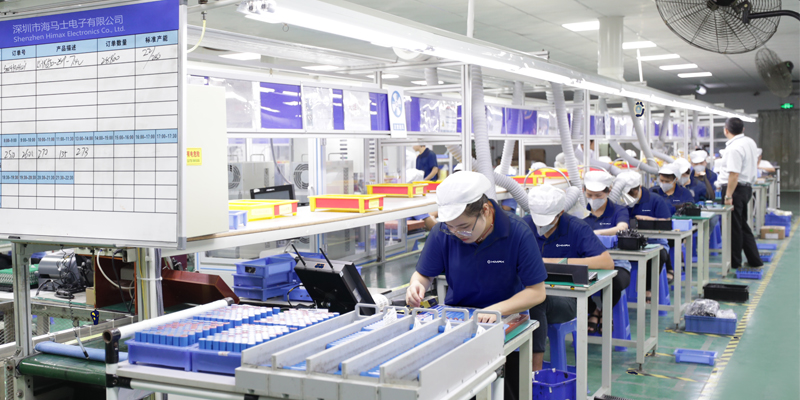
At our factory, we don’t just manufacture batteries; we engineer power systems. When you provide us with the exact list of certifications required for your target market at the start, we can adjust the following details before the first sample ever leaves our floor:
Charger Component Selection: We can opt for premium capacitors and inductors that naturally suppress EMI.
Shielding: We can add copper foil or specialized coatings to the internal housing of the charger or the battery casing.
PCB Layout: Our engineers can optimize the trace routing on the protection board to minimize “antenna effects” that broadcast noise.
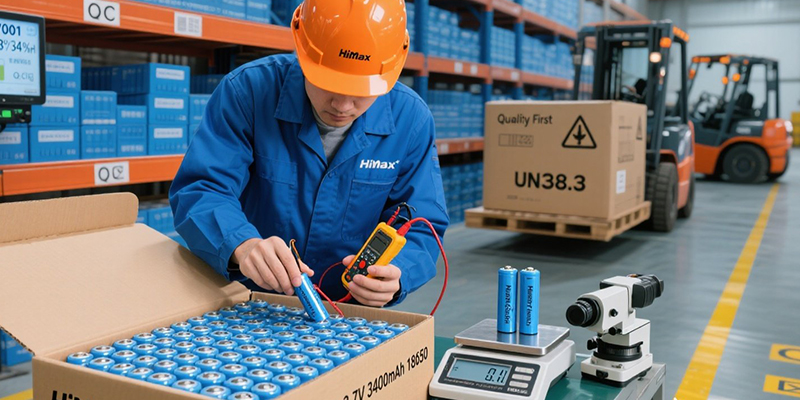
Pre-Testing: We can perform in-house “pre-compliance” scans to ensure the 99% success rate when the units hit the official SGS lab.
A Checklist for Global Battery Procurement
To ensure your next project moves from “Prototype” to “Market” without friction, we recommend following this technical checklist when requesting a quote:
List Every Target Market: Are you selling in the EU (CE), USA (UL/FCC), Japan (PSE), or Australia (RCM)? Each has different EMC and safety thresholds.
Define the Test Standard Early: Don’t just say “I need a certificate.” Specify if you need IEC 62133 (Safety), EN 55032 (EMC for Multimedia), or EN 60601 (Medical).
Specify the “System” Testing: Will the battery be tested inside your device, or as a standalone component with its charger? Lab results vary wildly depending on how the system is grounded.
Allow for “Engineering Margin”: Low-cost, “budget” chargers rarely leave any margin for EMC testing. If you need certification, be prepared to invest in a “Certified Grade” charger.
Conclusion: Partnership Over Procurement
The relationship between a buyer and a battery factory should not be a simple transaction; it should be a technical partnership. The recent EMC failure we experienced served as a powerful reminder that transparency in certification requirements is the best way to save money.
By informing us of your full regulatory roadmap—including the “small” details like CE/EMC requirements—you empower our engineering team to provide a solution that is “Ready for Lab” on day one. This proactive communication prevents wasted testing fees, protects your timeline, and ensures that your brand is associated with quality and compliance.
Are you planning a project that requires SGS or UL certification? Don’t leave your compliance to chance. Contact our technical sales team today. We provide professional guidance on cell selection, PCM engineering, and charger compatibility to ensure your product passes the first time, every time.
HIMAX ELECTRONICS — Powering Innovation with Precision.