
What Is an Emergency Light Battery?
An emergency light battery is a backup power source designed to keep emergency lighting systems operational during power failures or fire incidents.
In high-risk environments, these batteries must:
- Withstand extreme temperatures
- Deliver stable output under load
- Avoid premature shutdown from protection systems
👉 In real fire scenarios, this means the difference between functional evacuation lighting and total system failure.
Quick Summary for Buyers
- ✔ Operates in 100°C fire conditions
- ✔ Sustains 10A discharge for 35 minutes
- ✔ No BMS shutdownduring test
- ✔ Designed for emergency lighting battery backup systems
👉 If your project involves fire-risk environments, this is a proven fire-resistant battery solution.
Why Emergency Light Battery Systems Fail in Real Fire Conditions
Most emergency light battery systems are designed around standard limits:
- Operating range: 60–75°C
- BMS triggers shutdown at high temperature
- Result: lighting failure during critical moments
However, real-world fire conditions are different:
- Temperatures can exceed 100°C within minutes
- Ceiling-installed safety lightsface higher heat exposure
- Flasher light LEDsystems depend on uninterrupted power
👉 Buyer Insight:
A battery that meets standard specs is not necessarily a battery that survives a fire.
Himax Approach: Engineering a High Temperature Battery for Real Scenarios
At Himax Electronics, we design high temperature battery systems based on real customer risks—not theoretical limits.
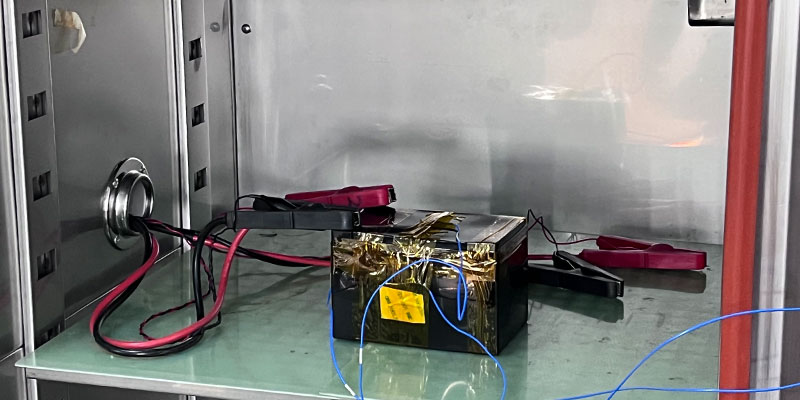
When a European client raised concerns about failure above 75°C, we conducted a 100°C real-condition validation test.
Tested based on actual fire-risk scenarios, not just lab assumptions.
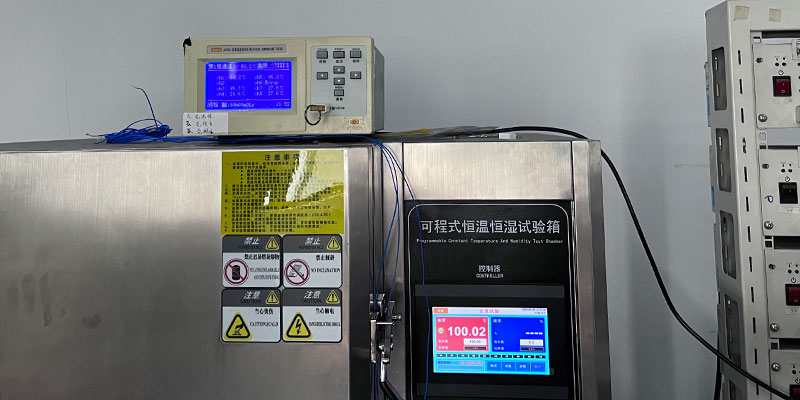
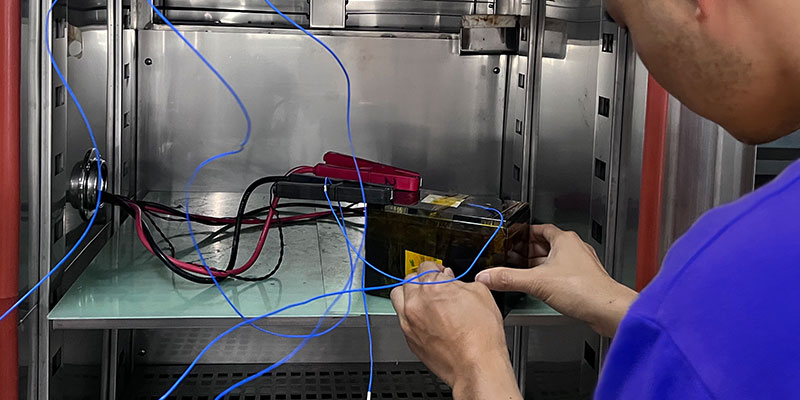
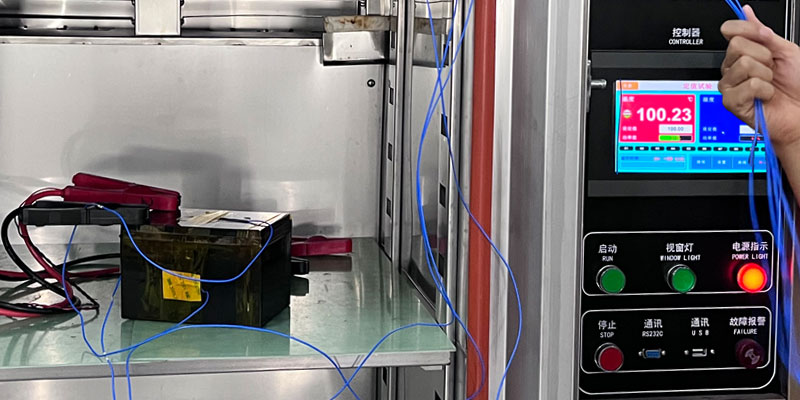
Test Setup: Simulating Fire Conditions for Emergency Lighting Battery Backup
Tested Product:
- LiFePO4 Battery Pack 12.8V 12Ah
- Category: 12 volt 12ah batteries / 12v deep battery
Test Conditions:
- Thermal chamber: 100°C (212°F)
- Load: 10A continuous discharge
- Duration: 35 minutes
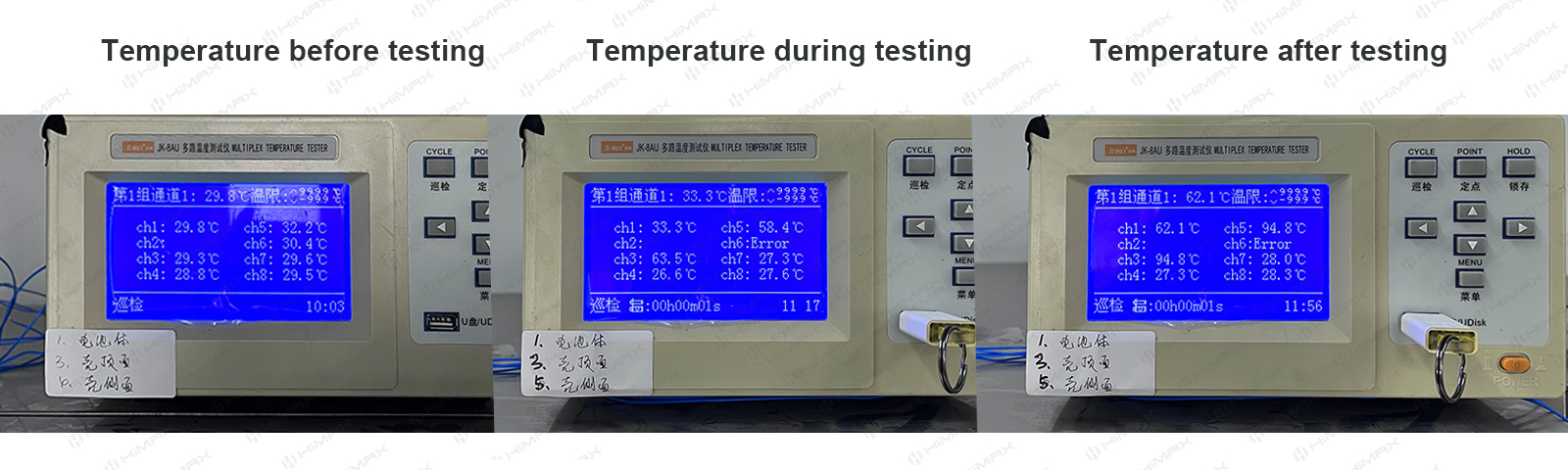
- Monitoring:
- Battery core (ch1)
- Top casing (ch3)
- Side casing (ch4)
- Real-time BMS tracking
Standard vs Himax: Emergency Light Battery Performance Comparison
Typical Emergency Light Battery:
- ❌ BMS shutdown at high temperature
- ❌ Output interruption
- ❌ Emergency lighting system failure
Himax Emergency Lighting Battery:
- ✔ Continuous operation at 100°C
- ✔ No BMS cutoff
- ✔ Stable discharge maintained
Test Data Summary
| Test Stage | Core Temp (ch1) | Top Case (ch3) | Side Case (ch4) |
| Initial | 29.8°C | 29.3°C | 28.8°C |
| Mid-Test | 33.3°C | 63.5°C | 26.6°C |
| End (35 min) | 62.1°C | 94.8°C | 27.3°C |
Key Takeaway
- Even under 100°C ambient conditions, the battery core remained at 1°C
- External casing absorbed most of the heat (top reached 94.8°C)
- The battery maintained stable operation throughout the 35-minute discharge
👉 Conclusion:
The thermal design effectively protects the core, ensuring the emergency light battery continues operating in extreme fire conditions without shutdown.
Why This Data Matters for Fire-Resistant Battery Design
Even though the environment reached 100°C, the battery core only reached 62.1°C.
This means:
- Internal chemistry remains stable
- Risk of thermal failure is minimized
- The battery continues powering emergency lighting systemswithout interruption
👉 This is the key requirement for a fire-resistant emergency light battery.
Post-Test Results: Proven Reliability Under Extreme Conditions
After 35 minutes at 100°C:
- Slight swelling observed on side casing
- No functional failure
- Full discharge completed
- BMS remained active without shutdown
👉 Himax design philosophy:
Maintain operation first, while keeping safety within controlled limits.
Engineering Behind the High Temperature Battery Performance
1. High-Temperature BMS Optimization
- Calibrated to avoid premature shutdown
- Maintains protection without sacrificing operation
2. LiFePO4 Cell Selection
- High thermal stability
- Ideal for 12V deep battery applications in safety systems
3. Thermal Structure Design
- External heat absorbed by casing
- Internal core temperature controlled
4. Application-Driven Engineering
- Designed specifically for emergency lighting battery backup use cases
Application Scenarios
This emergency light battery is ideal for:
- Emergency lighting systems
- Industrial and commercial safety lights
- Fire alarm backup power
- Flasher light LED evacuation systems
- Building compliance lighting systems
👉 In all cases, continuous operation during fire exposure is critical.
Performance at Normal Temperature
At room temperature:
- Supports 10A discharge for ~1.2 hours
- Provides stable output for standard emergency cycles
👉 Balancing daily efficiency and extreme-condition reliability.
Built for B2B Buyers: Data Transparency & Validation
We provide complete validation support:
- Temperature logs
- Discharge data
- Visual inspection records
This enables:
- Faster procurement decisions
- Internal engineering validation
- Reduced sourcing risk
Custom Emergency Light Battery Solutions
Different projects require different safety margins.
Explore:
We customize:
- BMS thresholds
- Battery structure
- Thermal resistance
- System integration
Compliance & Standards
Our battery systems can be engineered to comply with:
- UL standards
- IEC standards
(Certification available based on project requirements)
Final Takeaway: A Fire-Resistant Emergency Light Battery You Can Trust
In emergency situations, performance is not optional.
This emergency light battery delivers:
- Proven operation at 100°C
- 35 minutes continuous outputunder load
- Stable performance without BMS interruption
👉 Built not just to meet standards—but to perform when systems are under real fire stress.
Data Summary Snapshot
Test Conditions
- Temperature: 100°C
- Load: 10A
- Duration: 35 minutes
Key Results
- No BMS cutoff
- Stable discharge maintained
- Core temperature controlled (62.1°C max)
- Minor swelling, full functionality retained
Request Samples or Technical Data
Looking for a reliable emergency lighting battery backup solution for EU or US markets?
👉 Request:
Contact Himax Electronics today to start your project.
Author: Joan, Battery Engineer – Custom Pack Development
Published: March 31th, 2026