How to Identify a Faulty Battery Protection Board in Lithium-Ion Packs
In lithium-ion battery systems, much of the attention is often given to the cells themselves—capacity, cycle life, and brand. However, in real-world applications, a significant number of battery failures are not caused by the cells, but by the protection board, also known as the Battery Management System (BMS).
Understanding how a faulty BMS presents itself can save time in troubleshooting, reduce unnecessary replacements, and improve communication between suppliers and end users.
The Role of the Protection Board
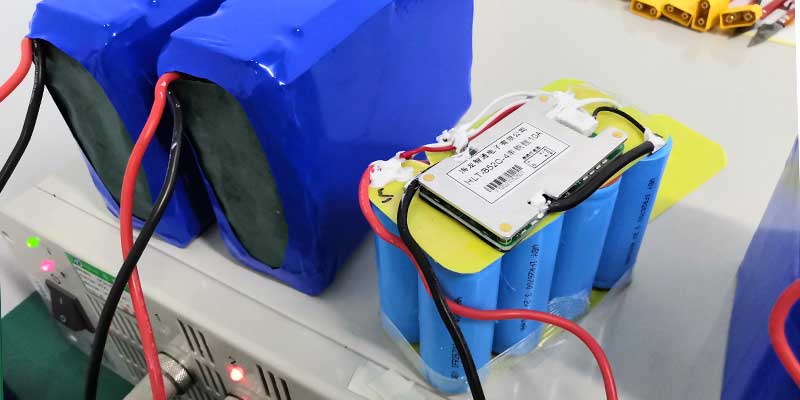
A protection board is responsible for monitoring and controlling key parameters such as voltage, current, and temperature. It ensures that the battery operates within safe limits by preventing overcharge, over-discharge, overcurrent, and short circuits.
When this system fails, the battery may behave unpredictably—even if the cells themselves are still in good condition.
Common Symptoms of a Faulty Protection Board
1. No Output or No Charging Response
One of the most noticeable signs is a battery that appears completely unresponsive:
The output voltage reads zero or near zero
The battery does not supply power to the load
Charging has no effect
In many cases, this is caused by damaged MOSFETs or a protection circuit that has entered a locked state after a fault event.
2. Sudden Drop in State of Charge (SOC)
Another typical symptom is abnormal battery readings:
- The SOC suddenly drops from a normal level (e.g., 70–80%) to 0%
- The display shows no gradual decline—just an instant change
- The battery may recover after charging, but behaves inconsistently
This usually points to issues in the voltage sensing circuit or communication errors within the BMS.
3. Protection Functions Not Working Properly
A malfunctioning BMS may fail to perform its core safety functions:
- The battery continues charging beyond its maximum voltage
- The battery keeps discharging below its safe cutoff
This is a critical issue, as it directly impacts safety and can lead to permanent cell damage or worse.
4. Temperature Protection Irregularities
Temperature-related issues may also appear:
- Charging or discharging is blocked even at normal temperatures
- No protection is triggered when the battery overheats
These problems are often linked to faulty NTC sensors or broken temperature sensing circuits.
5. Intermittent Operation
In some cases, the battery works—but not reliably:
- Power cuts off randomly during use
- The battery resumes operation after movement or reconnection
This type of behavior is commonly associated with poor soldering, loose connections, or partial damage to the protection board.
6. Abnormal Heating
If the protection board itself becomes unusually warm, even under light load, it may indicate:
- Increased internal resistance in MOSFETs
- Leakage current or partial short circuits
This is often an early warning sign of component degradation.
7. Communication Failure (Smart BMS)
For batteries equipped with smart BMS systems:
- Software cannot detect the battery
- Voltage or current readings are incorrect or missing
- Communication via UART, SMBus, or CAN fails
These issues typically originate from MCU or communication chip failures.
A Practical Way to Differentiate BMS vs. Cell Issues
In field diagnostics, a simple approach can quickly narrow down the root cause:
- Measure the total pack voltage at the terminals
- Check individual cell voltages (if accessible)
- Observe charging and discharging behavior
If the cells show normal voltage but the pack output is zero, the protection board is very likely the source of the problem.
Final Thoughts
A faulty protection board can make a healthy battery appear completely unusable. For manufacturers, integrators, and end users alike, recognizing these symptoms early can prevent unnecessary costs and delays.
In many cases, replacing or repairing the BMS is far more efficient than replacing the entire battery pack.