
Himax - Drones

Safety Issues When Using Drones

The most common drone safety issues, next to pilot error are related to battery failures. If you’ve ever experienced battery failure during charging, storage, or operation, then you understand how alarming and potentially dangerous it can be.

Over 200 injuries related to drone battery incidents were reported to the U.S. Consumer Product Safety Commission between 2012 and 2017. The reported incidents involved fire, smoke, and even explosions. It’s likely that countless other incidents went unreported because they didn’t end in an emergency room visit.

In order to ensure battery safety, it’s critical as a commercial drone operator to purchase your batteries and battery management systems from a reputable, safety-minded provider. 

Why Do Drone Batteries Fail? 

While some drone battery failures occur for reasons that no one could predict or discover, most incidents could have been avoided with proper care and maintenance of your battery fleet. To reduce your potential risk drone users should be well-versed in battery safety practices.

Manufacturers are also responsible for the safety of each battery. In order to provide reliable performance and increased safety, reputable battery manufacturers employ high-quality materials and precise manufacturing and quality control processes. When manufacturers cut corners, they reduce overall battery safety. Quality costs money, so when a battery price seems too good to be true, it probably is.  

Choosing Batteries for Drone Safety

Know the Manufacturer

Reputable manufacturers are transparent and provide plenty of information about their company and practices. Research the quality of materials and designs used to manufacture their drone batteries. If you’re considering a discounted battery purchase but can’t find much information about the company that makes it, it’s best to reconsider. Make sure that your supplier is located within the United States, if you need support or have a question, you want to have an English speaking support staff to answer your call.

Focus on Safety Features

In the interests of the bottom line, some manufacturers strip away “expendable” safety features to create budget batteries. You might be tempted by those batteries when you’re browsing online, but be careful – always review the product description carefully and note the safety features listed. You’ll probably need to visit the manufacturer’s website to find a complete list of features and related details. 

Choose the Right Charger

A top-of-the-line drone battery plugged into a low-quality charger will inevitably cause headaches and compromise battery safety. It’s best to choose a “smart” or programmable battery charger. You’re better able to manage your drone batteries when you have important charging data at your disposal. It’s also best to use batteries and chargers produced by the same manufacturer. 

Best Practices for Battery Safety

How to Store

It’s recommended that you drain batteries to 40-60 percent of their full capacity before storing them for more than ten days. If you’re planning to store them for fewer than 10 days, drain them to 60-80 percent of their capacity. Partially draining batteries reduces stress on them and extends their working life. Never store your batteries for more than three months without charging them. 

It’s best to store batteries in a dry location at room temperature. Before tucking those batteries away, inspect them for a puncture, puffing, or other abnormal physical features that indicate an unhealthy battery. 

How to Charge

Most incidents occur while the battery is charging, which is why it’s recommended to charge your drone batteries at a 1C charge rate. To find this rate take the milliamp hour capacity rating of your battery divide it by 1000. For example, a 22,000 millamp battery should be charged at 22amps. Always monitor your batteries during the charging process and only charge your batteries on a non-flammable surface located away from any flammable materials. While battery fires are rare, a damaged battery or incorrect charge settings can cause a battery to swell, expand and worst-case scenario catch fire. Being prepared with a suitable fire extinguisher and ready to react if you see signs of trouble is critical.

How to Operate

How and where you fly your drone can impact its battery life. It’s best to avoid flying in extreme temperatures. Refer to the manufacturer’s instructions for specific information about safe flight temperatures for your drone. The generally accepted rule is to fly within the range of 14 °F to 104 °F for optimal drone safety. 

Using an appropriately sized battery for your drone is critical for overall safety. Using a battery that does not provide enough power for your drone will not only adversely affect battery life but can lead to overheating of the pack and thermal runaway, a dangerous process that devours the battery. Thermal runaway is a heat-induced chemical reaction that intensifies and continues to raise internal temperatures until all the reactive agents within the cell are consumed. 

How to Transport

Secure your batteries with padding during transport to prevent them from hitting against other batteries or objects. Also, make sure that any exposed leads or connectors are protected from arcing or shorting. Cover with tape or use specifically designed covers to avoid issues.  You can purchase cases and backpacks designed specifically for this purpose. If you’re taking them with you on a plane, remember to pack your drone and batteries in your carry-on baggage and review the current FAA rules for batteries. Regulations for transportation of batteries are also subject to the carrier by carrier-specific rules. Always check with your airline before you try and fly with your drone or batteries.

Himax Provides Safe, Custom-Designed Batteries for Commercial Use

Himax values safety above their bottom line, which is why they offer custom-designed batteries that are produced with superior materials and high-tech safety features. 

Custom-Designed Lithium-Ion Batteries for OEM Applications

Himax’s custom-designed batteries were created for professional, commercial, and industrial use. Their robust composition will withstand the most rigorous, unmanned applications without compromising on energy density and weight. They offer a wide range of custom battery designs, which ensures that you will receive a product that meets your unique and precise requirements. 

Why does custom design matter for drone safety? Himax’s custom-designed batteries accommodate targeted operating temperatures and discharge voltages. When your drone battery is designed with a specific application in mind, it will operate more efficiently and safely in the conditions under which it will actually be used. 

Battery Safety Certifications

Himax products are produced with high-quality materials that ensure durability, extend battery life, and prevent battery failure. Himax can assist with manufacturing to meet and exceed any required safety compliance schemes. We have experience with UN38.3, CE, RoHS, and FCC. We have multiple NRT laboratories that can provide testing services.

Safety Features

Himax’s commercial series of batteries provides the most advanced battery management system (BMS) available on the market. These “smart” batteries include an embedded BMS. This active BMS system helps extend battery life, tracks, and stores critical battery information. The system also allows for additional safety features include real-time fault detection, battery lockout protocol, five LED Indicators, and the ability to capture and store KPIs, which include:

  • Remaining capacity
  • State of charge
  • Cell voltage
  • Pack voltage
  • Current draw
  • Cell temperatures
  • Faults

In addition to careful construction and critical safety features, Himax inspects all products before they leave the factory to ensure each one meets their quality and safety standards.

Himax - High-Energy-Density-Battery

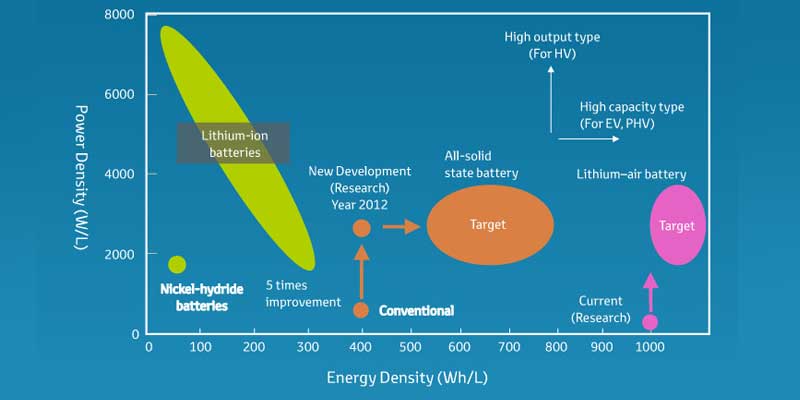
The energy density of batteries can be displayed in two different ways: gravimetric energy density and volumetric energy density.

The gravimetric energy density is the measure of how much energy a battery contains in proportion to its weight. This measurement is typically presented in Watt-hours per kilogram (W-hr / kg). The volumetric energy density, on the other hand, is compared to its volume and is usually expressed in watt-hours per liter (W-hr / L). Generally, we refer to battery energy density as gravimetric ( weight ) energy density, and watt-hour is a measure of electrical energy, equivalent to one hour, one watt of consumption.

In contrast, the power density of a battery is a measure of how fast energy can be delivered, not how much stored energy is available. Energy density is often confused with power density, so it is important to understand the difference between the two.

Calculation formula

The energy density of a battery can be simply calculated using this formula: Nominal Battery Voltage (V) x Rated Battery Capacity (Ah) / Battery Weight (kg) = Specific Energy or Energy Density (Wh / kg).

LiCo and LiFePO4 Batteries’ energy density

Generally speaking, LiCo batteries have an energy density of 150-270 Wh/kg. Their cathode is made up of cobalt oxide and the typical carbon anode with a layered structure that moves lithium-ions from anode to the cathode and back. This battery is popular for its high energy density, and it’s typically used in consumer products such as cell phones and laptops.

LiFe batteries, on the other hand, have an energy density of 100-120 Wh/kg. Although this is lower than LiCo batteries, it is still considered higher in the rechargeable battery category. LiFe batteries use iron phosphate for the cathode and a graphite electrode combined with a metallic backing for the anode. They are ideal for heavy equipment and industrial applications because of their better ability to withstand high and low temperatures.

Conclusion

As far as the single-cell is concerned, the positive and negative materials and production process of the battery will affect the energy density, so it is necessary to develop more reasonable materials and better manufacturing technology to obtain a more efficient battery.

Himax - Puffed-Lipo-Battery

Any individual who utilizes lipos will inevitably encounter a swollen battery. The immediate concern is, “What should I do?” This article delves into the causes of swelling and appropriate actions when it occurs.

The Critical Danger of a Swollen LiPo Battery

LiPo battery swelling primarily stems from gas generation within the battery cells. This issue is not solely due to misuse; normal use can also contribute through electrolyte decomposition. Here’s a detailed explanation:

  • Electrolyte Decomposition: A LiPo battery consists of an anode (negative), a cathode (positive), and an electrolyte. This chemical solution enables charged ions to move between the anode and cathode. During normal operation, the electrolyte chemically breaks down. This process is accelerated by over-discharge, overheating, or overcharging.
  • Gas Formation: The decomposition of the electrolyte results in lithium and oxygen. Lithium forms lithium oxide on the electrodes, but the excess oxygen forms gas within the sealed battery cell. This trapped gas is the primary cause of swelling. Oxygen, being highly combustible, significantly increases the fire risk. Other gases, such as carbon dioxide (CO2) and carbon monoxide (CO), can also form, contributing to the internal pressure.

What is electrolyte decompostion?

A battery consists of an anode, a cathode, and an electrolyte. The cathode and anode are the positive and negative terminals. The electrolyte is a chemical that allows charged ions to flow between the anode and cathode during discharge and charging.

Electrolyte decomposition occurs when this electrolyte chemically breaks down. In a LiPo battery, this breakdown results in lithium and oxygen. Lithium oxide forms on the anode and cathode, depending on the charging or discharging state. However, excess oxygen does not adhere and contributes to swelling. Oxygen is highly combustible, posing a significant fire risk. Other gases, like carbon dioxide (CO2) and carbon monoxide (CO), can also form, adding to the internal pressure.

Can You Fix a Puffed LiPo Battery? (Spoiler: No!)

The safest response to “How to fix a swollen LiPo battery?” is: Don’t. Attempting to fix or recondition a swollen LiPo battery is extremely dangerous. The internal structure is compromised, and the risk of fire or explosion is too high. Do not try to puncture, press, or discharge it rapidly in an uncontrolled manner.

Your only safe course of action is proper disposal. Saving a few dollars on a new battery is not worth the risk of personal injury or a catastrophic house fire.

Safe Disposal of Swollen LiPo Batteries

Properly disposing of a puffed LiPo battery is crucial. The key is to fully discharge the battery before taking it to a recycling center. This eliminates any remaining electrical energy, making it safe for transport and handling.

Here are the two main methods for safely discharging a damaged LiPo battery:

The Light Bulb Method: Connect the swollen battery to a low-wattage incandescent light bulb (e.g., a 12V, 20-watt halogen bulb). Solder lead wires to the bulb and attach appropriate connectors for your battery. Allow the battery to discharge completely until the bulb no longer lights up and the battery voltage reads 0V.

Safety Note: Perform this in a fire-safe area, away from flammable materials. You can connect multiple bulbs in parallel for a faster discharge rate if needed.

The Saltwater Bath Method: Place the swollen battery in a non-conductive container (like a plastic bucket). Fill the container with saltwater. Use approximately 2-3 tablespoons of salt per gallon of water. Submerge the battery completely. The saltwater will slowly discharge the battery. This process can take several days or even weeks for larger batteries.

Safety Note: Ensure the battery is fully submerged and keep the container in a safe, outdoor location away from anything flammable, and out of reach of children or pets.

Once the battery is completely discharged (0V reading on a voltmeter), take it to a specialized battery recycling drop-off point. Always call ahead to confirm they accept damaged or fully discharged lithium polymer batteries.

Preventing Swollen LiPo Batteries: Best Practices for Battery Longevity

By following these best practices, you can significantly extend the life of your batteries and reduce the risk of swelling:Use a Quality Charger & Follow Proper Charging Protocols:

  • Always use a reputable LiPo-compatible charger and follow its instructions meticulously.Crucially, always charge your LiPo batteries inside a fire-resistant LiPo safety bag. These inexpensive bags (often around $10) are essential insurance; if something goes wrong during charging, they can contain the fire.Avoid Over-Discharging:
  • Never let your LiPo battery voltage drop below its minimum cut-off voltage (typically 3.0V per cell, though 3.3V-3.5V is often recommended for longevity). Over-discharging is a leading cause of internal damage and swelling.
  • Manage Battery Heat:Heat is a LiPo battery’s worst enemy. Avoid using or charging batteries when they are excessively warm.After heavy use, allow your batteries to cool down to ambient temperature before recharging. Similarly, after charging, give them a short break before putting them back into action.
  • Proper Storage is Key:Do not store your LiPo batteries in hot environments, such as the trunk of a car on a sunny day.Store LiPo battery at their recommended storage voltage (typically around 3.8V per cell). Research shows that storing batteries at a full charge (above 80% state of charge) for even a few hours can significantly accelerate gas generation and swelling.

For more in-depth information on all aspects of LiPo battery care, check out our comprehensive LiPo Battery Guide

Himax - Bluetooth Headsets Battery

Compared with ordinary earphones, the battery life and battery life of Bluetooth headsets are relatively short when you keeping connect with Bluetooth. In addition, the Bluetooth headsets currently on the market have made the size smaller and handy to adapt the needs of market users for portability and appearance. Therefore, we have to extend the battery life, and its the most significant part for Bluetooth headsets.

Excluding the impact of battery quality and environmental factors, in order to extend the battery life of our Bluetooth headsets, I think there are only three things we can do:

  1. Reduce the power consumption of the headset;
  2. Make a bigger battery (bigger size);
  3. Break through the energy density of the lithium battery.

Reducing the power consumption of the headset

Devices connected with Bluetooth capabilities will generally consume extra power. Even when the device is not in use, power will still be drained to a certain degree.

In 2020, SIG (Bluetooth Special Interest Group) attempted to increase the potential for lowered power consumption when it officially released its Bluetooth 5.2 of the audio technology standard, LE Audio (LE Power Consumption).

LE Audio not only improved the audio quality of headsets but also added low-power consumption features. It optimized the power consumption of Bluetooth devices and maximized the battery life and lifespan of lithium batteries in Bluetooth devices.

Making a bigger battery

Longer battery life is always ideal, and the logical next step would be to make a bigger battery to do so. However, Bluetooth headsets are already designed to be as portable and small in size as possible, and they are generally made with rectangular batteries. There really isn’t the space to produce a bigger battery without sacrificing size for the overall product itself.

What if we change to a Round battery?

So then, what other options can we consider?  We can consider changing the shape of the battery first.

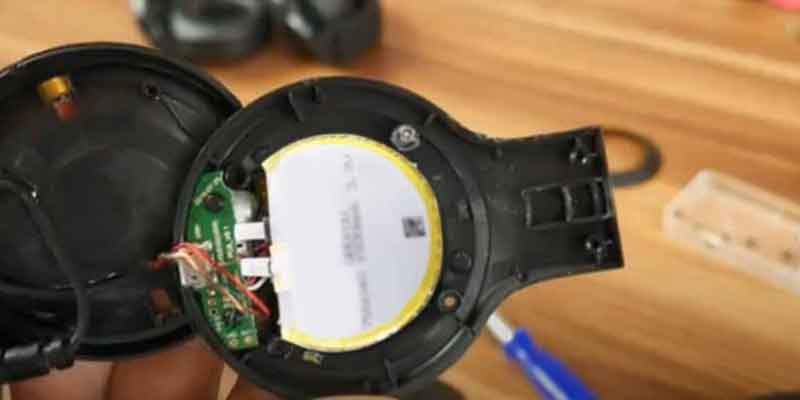
Combined with a PCB, a rectangular battery doesn’t occupy the full space of Bluetooth headsets.  In the below images, you can see how only about ⅔ of the device is inhabited, which wastes potential space.

If we leave the confines of a standard rectangular battery, we move onto considering special-shaped batteries.  These batteries can be customized into a plethora of different shapes according to the needs of a product.

Of shaped batteries, the round battery is the most frequently requested shape, and this shape in particular can maximize the use of the battery while filling up the internal space of Bluetooth headsets.

To customize round batteries, the radios (R), height (H), and thickness (T) of the battery must be provided.

Let us “pretending” to replace its original battery with a Round battery. Is this a perfect match?

Energy density of lithium batteries

Lithium batteries have one of the highest energy densities of any battery technology today (100-265 Wh/kg or 250-670 Wh/L). In addition, Li-ion cells can deliver up to 3.6V, which is 3 times more than that of technologies like Ni-Cd or Ni-MH.

So what does this mean?  Energy density represents how much energy can be released by different batteries under the same weight or volume.  If we want to achieve longer battery life, we need to break through the energy density threshold of lithium batteries.

Increase the upper limit of battery voltage

Generally, the nominal voltage of a lithium-ion battery is 3.7V (and 3.2V for lithium iron phosphate batteries), and the fully-charged voltage is 4.2V (and 3.65V for lithium iron phosphate battery).

The discharge cut-off voltage of a lithium-ion battery is 2.75V to 3.0V. Therefore, the higher the upper voltage limit, the higher the capacity and energy.  This creates a high-voltage lithium-ion battery

High-voltage batteries have high energy density and high discharge platforms. They can also deliver more capacity under the same conditions of use, so their battery life is longer while delivering more power. Under normal circumstances, the lifetime of Grepow’s high-voltage batteries will increase by 15-25%.

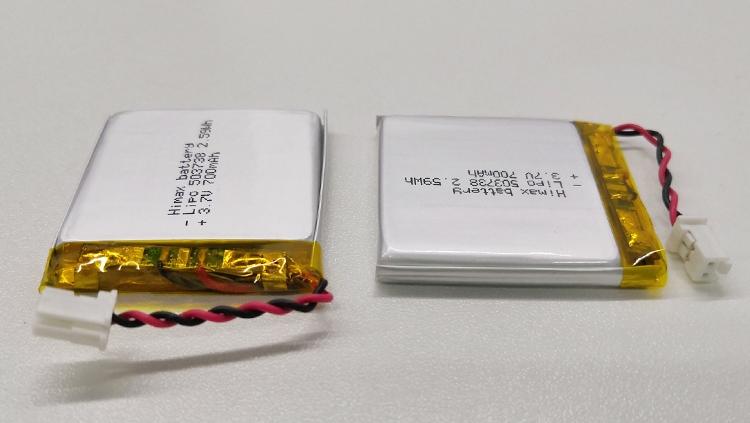
Li-Polymer 3.7 volt 700mAh Battery

LiPO-Battery

Introduction

One of the differences between pouch cell batteries and other batteries is the material of the casing. Cylindrical batteries have a hard casing, which are made of nickel and steel or aluminum alloy.

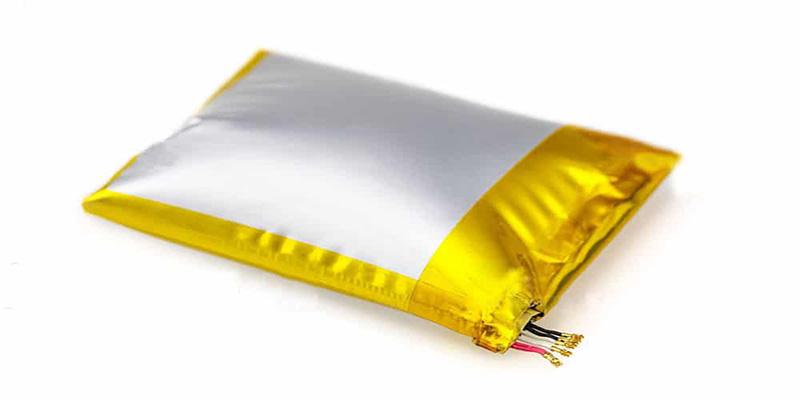
pouch cell on the other hand consists of many types of layers to form a multilayer film consisting of an outer layer, middle layer, and an inner layer.

Outer layer consists of nylon, middle layer contains an aluminum foil, and in the inner layer – a heat sealing layer, which allows for better heat dissipation.

Features

There are four distinct advantages for a pouch cell compared to cylindrical batteries.

Advantage 1: They’re Safer

Firstly, it has a very high barrier property; secondly, it has a good heat sealing property; thirdly, the material is resistant to electrolyte and strong acid corrosion; it also has good ductility, flexibility and mechanical strength, and this advantage makes the pouch cell battery safer.

When a safety hazard occurs, the pouch cell battery will only swell and crack at most. Unlike the steel shell battery where a sudden explosion phenomenon might occur.

 Advantage 2: Better space utilization

The pouch cell’s exterior is flexible thus making the most efficient use of space and can reach a packaging efficiency of 90-95%, which is unreachable by other types of casing. The flexibility will allow the external case to form to the battery, rather than the other way around.

Advantage 3: Higher energy density

Eliminating the metal case can reduce weight. In terms of weight, a pouch cell battery of equivalent capacity is 40% lighter than a nickel-steel cased lithium battery and 20% lighter than an aluminum-cased battery. In terms of energy density, pouch cell batteries of the same size are usually 10-15% higher than steel-cased batteries and 5-10% higher than aluminum-cased batteries.

Advantage 4: Customizable 

Pouch cell batteries can be custom designed according to the specific requests of the customer. With their soft exterior and ability to be reshaped and sized, custom designed packs can be formed to meet all challenges.

Himax - Causes-of-Lithium-Battery-Swelling
Lithium-ion polymer batteries are widely used due to their long life and high capacity. However, there are some issues that can arise, such as swelling, unsatisfactory safety performance, and accelerated cycle attenuation.

This article will primarily focus on battery swelling and its causes, which can be divided into two categories: the first is a result of a change in thickness of the electrode, and the other is a result of the gas produced by the oxidation and decomposition of electrolytes.

The change in thickness of the electrode pole piece

When a lithium battery is used, the thickness of the electrode pole pieces, especially the graphite negative electrodes, will change to a certain extent.

Lithium batteries are prone to swelling after high-temperature storage and circulation, and the thickness growth rate is about 6% to 20%. Of this, the expansion rate of the positive electrode is only 4%, the negative electrodes is more than 20%.

The fundamental reason for the increase in the thickness of the lithium battery pole piece is due to the nature of graphite. The negative electrode graphite forms LiCx (LiC24, LiC12, LiC6, etc.) when lithium is inserted, and the lattice spacing changes, resulting in microscopic internal stress and an expansion of the negative electrode.

The figure is the schematic diagram of the structure change of the graphite anode plate in the process of placement, charge, and discharge.

The expansion of graphite negative electrodes is mainly caused by irreversible expansion after lithium insertion. This part of the expansion is mainly related to the particle size, the adhesive, and the structure of the pole piece. The expansion of the negative electrode causes the core to deform, which in turn causes the following: a cavity between the electrode and the diaphragm, micro-cracks in the negative electrode particles, breaking and reorganizing of the solid electrolyte interface (SEI) membrane, the consummation of electrolytes, and deterioration of the cycle performance.

There are many factors that affect the thickness of the negative pole piece although the properties of the adhesive and the structural parameters of the pole piece are the two most important reasons.

The commonly used bonding agent for graphite negative electrodes is SBR. Different bonding agents have different elastic modulus and mechanical strength and have different effects on the thickness of the pole piece. The rolling force after the pole piece is coated also affects the thickness of the negative pole piece in battery use.

When the amount of SBR added is inconsistent, the pressure on the pole piece during rolling will be different. Different pressures will cause a certain difference in the residual stress generated by the pole piece. The higher the pressure, the greater the residual stress, which leads to physical storage expansion, a full electric state, and an increase in the expansion rate of the empty electric state.

The expansion of the anode leads to the deformation of the coil core, which affects the lithium intercalation degree and Li + diffusion rate of the negative electrode, thus seriously affecting the cycle performance of the battery.

Himax - Causes-of-Lithium-Battery-Swelling

Bloating caused by lithium battery gas production

The gas produced in the battery is another important cause of battery swelling. Dependent on whether the battery is in a normal temperature cycle, high-temperature cycle, or high-temperature shelving, it will produce different degrees of swelling and gas production.

According to the current research results, cell bloating is essentially caused by the decomposition of electrolytes. There are two cases of electrolyte decomposition: one is that there are impurities in the electrolyte, such as moisture and metal impurities, which cause the electrolyte to decompose and produce gas. The other is that the electrochemical window of the electrolyte is too low, which causes decomposition during the charging process.

After a lithium battery is assembled, a small amount of gas is generated during the pre-formation process. These gases are inevitable and are also the source of irreversible capacity loss of the battery.

During the first charging and discharging process, the electrons from the external circuit to the negative electrode react with the electrolyte on the surface of the negative electrode to generate the gas. During this process, the SEI is formed on the surface of the graphite negative electrode. As the thickness of the SEI increases, electrons cannot penetrate and inhibit the continuous oxidation and decomposition of the electrolyte.

When a battery is used, the internal gas production gradually increases due to the presence of impurities in the electrolyte or excessive moisture in the battery. These impurities in the electrolytes need to be carefully removed. Inadequate moisture control may be caused by the electrolyte itself, improper battery packaging, moisture, or damage to the corners. Any overcharge and over-discharge, abuse, and internal short-circuiting will also accelerate the gas production rate of the battery and cause battery failure.

In different systems, the degree of battery swelling is different.

For instance, in the graphite anode system battery, the main causes of gas swelling are the SEI film formation, excessive moisture in the cell, abnormal chemical conversion process, poor packaging, etc.

In the lithium titanate anode system, battery swelling is more serious. In addition to the impurities and moisture in the electrolyte, lithium titanate cannot form an SEI film on its surface like a graphite-anode system battery to inhibit its reaction to the electrolyte.

12V 100AH
Want to know more about LiPo charging? Here we will present a few data that will be involved when charging a LiPo battery to help you better understand the charging of LiPo batteries.

LiPo battery charging voltage

The highest voltage of LiPo battery charging, I believe that the majority of mold friends can know this common sense.4.20V is the highest voltage of LiPo batteries, but with the development and improvement of technology, most of the current manufacturers LiPo batteries can safely reach 4.25V, and some top technology manufacturers can achieve 4.30V, the voltage of 4.30V is the highest voltage of the current technology. Because the charger for the polymer battery of our RC model is basically a set voltage of 4.20V, it can be charged according to 4.20V. If you use other methods to increase the maximum charging voltage (such as 4.35V), it will cause irreversible damage to the battery.

LiPo battery charging mode

All LiPo batteries are charged in constant current and constant voltage to meet the requirements of fullness.

First of all, to explain to you what is called constant current and constant voltage charging. As the name implies, it is charged in a constant voltage after constant current. For large household B6 or A6 or other chargers to charge the RC battery, you should first set the two parameters of charging current and S number. In fact, this is to set the constant current value and the constant voltage value of the constant current and constant voltage mode.

For example, the parameter set to “5A, 6S”, after starting the charger, under the control of the program, the charger will charge the battery with 5A current in the early stage, while sampling and monitoring the battery voltage, when the battery voltage is close to or arrives 4.2V, the charger will gradually reduce the charging current, until the voltage is kept at 4.2V and the current is less than the preset value, the charger is considered to be fully charged and stops automatically.

So what is the default value mentioned above? According to our actual measurement data of some chargers, this preset value is generally divided into two situations.

  1. Some manufacturers set the preset value as 10% of the charging current. For example, if you choose 5A charging, when the current is lower than 500MA after constant voltage, the program determines that the preset value has been reached.
  2. Fixed values. Some chargers, like the A6, have a preset charging value of 100MA, while others have a simple charging setting of 20MA. If you use your own 4.2v power supply, you can make the charger smaller without limit.

This indicates that the smaller the present value is, the more the battery will be able to charge up to nearly 4.2v, the higher the battery will be fully charged.

Li-polumer-battery

LiPo batteries charging current 

Talk about the charging current of the LiPo battery. Battery charging is actually a process of converting electrical energy into chemical energy, which is a chemical reaction. As we all learned in school, the intensity of a chemical reaction is strongly related to temperature and pressure. The speed of charge and discharge is actually the speed of chemical reaction. Conditional RC enthusiasts can find the relevant substances to do the experiment by yourself. The reaction speed is quite slow.

According to the experimental data and theoretical proof, lithium battery charging current within 1C without any damage to the battery. More than 2C current will cause a slight drop in capacity, while 5C charging will have a significant decrease in capacity. The reduction in capacity is mainly due to the damage caused by the crystallization of materials inside the battery, but after dozens of times, you will know that the battery capacity decreases and this is irreversible. Therefore, it is suggested that the model friend honestly control the charging current within 1C, which is better for the battery.

LiPO-Battery
As the largest countries of lithium polymer battery all over the world, China accounts for more than one-third of global production. Currently, strong demand for materials spreads over more than 100 lithium battery manufacturers, said to their urgent plans for the mass output increase within 2 years.

lithium polymer battery characteristics

Compared to most lithium polymer batteries, the lithium polymer battery is with characteristics as below:

1. No battery leakage problem

The battery does not contain a liquid electrolyte, using a colloidal solid.

2. Thin battery

Thin battery with a capacity of 3.6V400mAh, its thickness can be as thin as 0.45mm. Various Shapes

3. various shapes

The battery can be designed in various shapes: round, D, arc, etc.

LiPO-Battery

4. Bending deformation

The battery can be bending deformation: polymer battery maximum bending around 90 °.

5. Single high voltage

liquid electrolyte battery can only get high voltage by several batteries in series, while polymer battery can be made into multi-layer combination in a single battery to achieve high voltage because there is no liquid itself.

6. High capacity

The capacity will be twice that of a lithium-ion battery of the same size.

Lithium polymer battery structure

No matter what kind of lithium polymer battery it is, the basic structure is a positive plate, negative plate, positive and negative current collector, diaphragm paper, shell and sealing ring, cover plate, etc.

1. Cathode material

Currently, the cathode material used is LiCoO2, LiMn2O4, LiFePO4, and doping modification systems of these materials. Cathode electrode sheet current collector is made of aluminum foil.

2. Anode material

various types of graphite. Anode material electrode sheet current collector is made of copper foil.

3. Electrolyte

At present, the lithium salt electrolyte is preferably to be LiPF6, but the price is relatively expensive; the other options like LiAsF6 with high toxicity, LiClO4 with strong oxidizing property and the organic solvent including DEC, DMC, DME, etc.

4. Diaphragm paper

The diaphragm adopts microporous polypropylene film or the special treated for low-density polyethylene film.

In addition, the shell, the cap, the seal and so on are changed depending on the shape of the battery along with the consideration of safety devices, protection circuits, etc.

The main processes in the lithium polymer battery manufacturing process are batching (pulping), Battery slices formation (coating), assembly and formation.

Among the above, the cathode electrode slurry is composed of cathode electrode active material lithium cobaltate (LiCoO 2 ), conductive agent (carbon powder, graphite, etc.), and binder PVdF (N-dimethyl pyrrolidone). Also, the anode electrode slurry is composed of the anode active material carbon or graphite and the binder PVdF(N-dimethyl arsenic alone).

The substrate of the cathode electrode is an aluminum foil and the substrate of the anode electrode is a copper foil.

The electrolyte to be injected is a multi-element organic substance such as ethylene carbonate (EC), diethyl carbonate (DEC), dimethyl ester (DMC), ethyl methyl carbonate (EMC), propylene carbonate (PC). ), dimethyl glycol (DME), tetrahydrofuran (THF), and so on.


Since the coating & battery slices formation process generally uses mechanical wet hanging and drying, dust is less likely to be generated. But dust is generated during slicing and winding assembly. The main pollutant is the organic waste gas produced in the drying process.

Flexible LiPO Battery

Flexible LiPO Battery

As Huawei and Samsung released the folding screen phones Mate X and Galaxy Fold respectively, they have a technologically-sense design and excellent hardware configuration. The unfolded area of the new folding screen mobile phone screen can reach more than 7.3 inches, which enhances the user experience. But in fact, a more disruptive, practical, and cost-effective mobile phone design is already on the way to development. It is a fully flexible wearable mobile phone.

Fully flexible mobile phones are dubbed “wrist phones” by the media. They are not limited to the folding of the middle part. They can bend the whole mobile phone freely, which is convenient to wear on the wrist and other parts to achieve better integration with the human body. The current folding screen mobile phones still use ordinary rigid batteries, avoiding the problem of using flexible batteries. If you want to introduce revolutionary fully flexible electronic devices, you must develop corresponding flexible power supplies and implant them. Therefore, the development of flexible lithium batteries with high energy density will be of great significance to promote the development of wearable flexible electronic devices.

The ideal flexible battery should have high flexibility, energy density, and power density at the same time. However, these factors often hinder each other in the flexible battery. In this review, this article made a detailed analysis based on the structural design of the battery components and the overall device level, and reviewed the latest developments in flexible lithium batteries, and summarized the current academic development ideas into the following four strategies:

1) Development of a deformable battery module with a porous structure

Such as porous current collectors, porous electrodes, flexible solid electrolytes, etc. Flexible porous structures are currently widely used in battery modules to cushion the strain generated when the battery device is subjected to bending and twisting.

1) Development of a deformable battery module with a porous structure

a) A conductive porous film of graphene oxide, which has a conductivity as high as 3112 S/cm. The flexible lithium battery assembled with this film as the current collector did not find a significant decrease in capacity after 100 cycles of high charge-discharge rate (5C).

b) A composite cathode material of single-walled carbon nanotubes and polymer (2,5-dihydroxy-1,1-benzoquinone sulfide) is used to assemble flexible lithium batteries. The flexible battery exhibits a specific discharge capacity of 182 mAh/g at low current (50 mA/g), and can still reach a specific capacity of 75 mAh/g when discharged at a large current (5000 mA/g).

c) Using bacterial cellulose as a template, develop a solid electrolyte composite of Li7La3Zr2O12 (LLZO) and polyethylene oxide. The porous interconnected polymer matrix is ​​used as a mechanical carrier that is soft and strong, and the LLZO particles used to transport Li-ions are embedded in it. The overall display shows a high ionic conductivity of 1.12×10⁻⁴ S/cm and excellent mechanical flexibility.

2) Ultra-thin battery design

Such as single-pair (or double-pair) positive/separator/negative structure. Compared with strategy 1, strategy 2 (ultra-thin battery design) requires battery design from the overall device level.

Li-Po-Battery

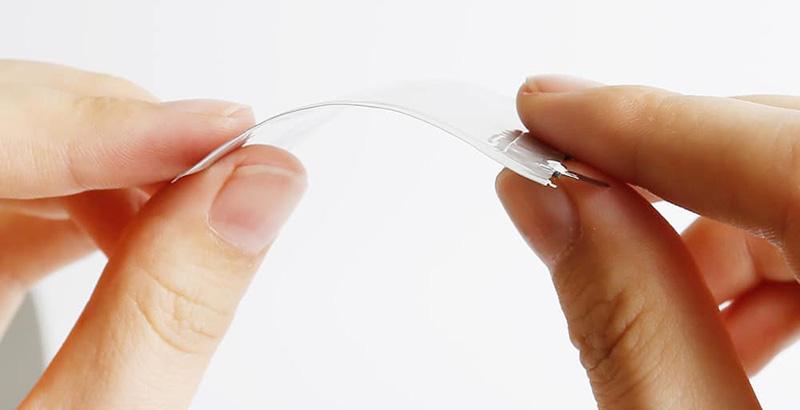
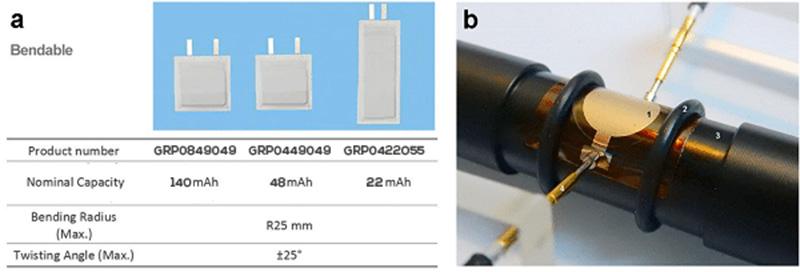
a) The ultra-thin flexible lithium battery with a thickness of only 0.4mm released by Himax Battery can be applied to various wearable devices. Even after bending with a bending radius of 25 mm, or twisting to an angle of ±25 degrees for more than 1,000 times, this flexible battery can still maintain 99% of the capacity.

b) A Li4Ti5O12/LiPON/Li thin-film solid-state battery prepared based on the flame spray pyrolysis method with flexible polyimide as the supporting substrate. After charging and discharging at a rate of 1C and cycling in a flat, bent, and flatform for 90 times, the battery’s discharge capacity retention rate is still as high as 98%, showing excellent cycle performance.

3) Geometric topology battery design

Such as linear structure, Origami, Kirigami structure, etc. In addition to improving the flexibility of the battery component material itself, the battery structure designed by the principle of geometric topology can reduce the stress change generated in the battery during the deformation process.

Geometric topology battery design

a. This strategy was first reported in the work of its linear battery. The flexible battery can not only adapt to bending deformation, but also more complex shape changes, such as folding and twisting.

b. Using spring-like LiCoO2/reduced graphene oxide as the positive electrode material, combined with gel electrolyte, a self-healing flexible lithium battery was designed and assembled. Under complex deformation (bending and torsion), charging and discharging at a current density of 1 A/g, the battery can still maintain a discharge specific capacity of 82.6 mAh/g; even if the battery is cut and healed five times, the battery can still be The specific discharge capacity is 50.1 mAh/g.

c. In addition to linear structures, paper folding technology is also widely used in flexible batteries. With the Origami origami solution, a two-dimensional sheet material can be folded along a predetermined crease to create a compact and deformable three-dimensional structure that can withstand high-strength deformation.

d. Soon after, a Kirigami scheme was developed combining folding and cutting technology. After 100 charge-discharge cycles, the battery can achieve a capacity retention rate of more than 85% and a coulombic efficiency of 8%. After 3,000 battery deformations, the maximum output power of the battery has not been significantly reduced.

4) Decouple the flexible and energy storage parts of the battery

Such as spine battery, Zigzag battery, etc. For the above-mentioned flexible battery design, dislocation, peeling, and shedding between the active material and the current collector still occur during the complex deformation process. The increased overpotential and internal resistance of the battery due to poor contact will reduce the capacity retention rate and coulomb efficiency of the full battery, which is not conducive to the cycle performance of the battery. The potential solution is to redesign the battery architecture to separate energy storage and provide flexibility.

Decouple the flexible and energy storage parts of the battery

a. De Volder et al. demonstrated a layered tapered carbon nanotube structure, similar to the morning glory of a plant. The wide corolla is used to carry the positive and negative active material particles, and the slender stem part and the current collector are below. The parts are tightly combined. During the deformation of the battery, most of the stress is applied to the current collector itself, and the tapered structure hardly produces strain during this period, thus exhibiting extremely high flexibility. The Fe2O3/LiNi8Co0.2O2 full battery assembled with this tapered structure can be charged and discharged 500 times at a rate of 1C and still has a capacity retention rate of 88%.

b. Inspired by the good mechanical strength and flexibility of the animal spine, a method for large-scale production of high-energy-density flexible lithium-ion batteries: store energy by surrounding thick, rigid parts in the axial direction (corresponding to the spine), And the thin, non-circular flexible part (corresponding to the bone marrow and intervertebral disc) is used to connect the “spine”, thereby achieving good flexibility and high energy density of the entire device. Since the volume of the rigid electrode part is much larger than the flexible connection part, occupying more than 95% of the volume of the battery cell, the energy density of the whole battery can reach 242Wh/L. The reasonable bionic design makes it pass the strong dynamic mechanical load test.

Questions and answers from flexible lithium battery experts

Xie Ming, a well-known flexible lithium battery expert in the industry, accepted an exclusive interview from the material man. The following is the interview content.

Q: Based on the actual situation of current industrial production, please comment on the four flexible lithium battery development strategies summarized in the review.

A:  1) Development of flexible battery elements with porous structure carbon (nanotube) paper is used as a flexible current collector, the cost is relatively high, which is not easily accepted by manufacturers; secondly, when carbon paper is used as a negative current collector, its side reactions are very obvious. If a porous metal current collector (such as copper mesh, aluminum mesh, etc.) is used, its flexibility can meet actual needs, but during the coating process, the slurry easily penetrates from the mesh pores. The current development of related coating processes is still An important challenge facing the corporate world.

2) Ultra-thin battery design

In order to achieve stable mechanical flexibility and electrochemical performance, ultra-thin batteries mostly use single-pair (or double-pair) low-capacity (usually less than 60 mAh) design, so their application scenarios and markets are very limited. In order to make the battery thinner, GREPOW has introduced a mature technology ultra-thin battery. While meeting the actual requirements, the overall battery thickness can be less than 8mm, and the thinnest can reach 0.4mm. You can imagine this is like A battery as thin as paper.

3) Geometric topology battery design

The concept proposed by this strategy is very good, represented by the linear battery, its mechanical flexibility, and electrochemical performance can be guaranteed. At present, many research teams are committed to developing new types of fibrous and linear batteries to solve traditional bottlenecks. The fly in the ointment is that the positive electrode, negative electrode, and separator of this linear battery rely on self-synthesis, which is different from commercial battery components, which will increase production costs. In addition, most linear batteries use heat-shrinkable tubes instead of aluminum-plastic film packaging. The heat-shrinkable tube materials have a limited barrier to water vapor and oxygen, and it is difficult to meet actual needs in long-term use.

4) Decouple the flexible and energy storage parts of the battery

This strategy uses improved commercial battery components, which is of great significance to promote the development and production of flexible lithium batteries. As early as 14 years or so, some Chinese companies have begun to develop “bamboo-shaped” batteries that look similar to “spine” batteries. According to the latest literature report on “Zigzag” batteries, the energy density of flexible lithium batteries assembled with the “decoupling” strategy can reach 275 Wh/L. After the process optimization of industrial standards, the energy density can still be achieved. Room for improvement. At present, an MIT research group has developed a series of fully automatic and personalized battery pole piece winding equipment. It is believed that with the intervention of an intelligent manufacturing system (IMS) service providers, the shortcomings of this type of battery assembly process can be gradually overcome.

Q: Could you please introduce the application scenarios of flexible batteries in the future?

A: At present, flexible wearable devices are the largest application market for flexible batteries. Taking smartwatches as an example, many large consumer electronics manufacturers have proposed the idea of ​​implanting flexible batteries into smartwatch straps, removing the battery from the panel, and realizing an ultra-light and ultra-thin dial design. They hope that the capacity of the flexible battery can be close to 500 mAh, but the volume energy density of the more mature flexible lithium battery samples in the industry is about 300-400 Wh/L, which is temporarily difficult to achieve the above goal. In addition, in order to introduce the current in the watchband to the dial, it is necessary to design the circuit in the watchband, which will be a considerable investment in development.

In addition, fully flexible mobile phones will be an important application scenario for flexible lithium batteries in the future. A few days ago, Samsung released a new foldable mobile phone Galaxy Fold, but this phone still uses ordinary rigid batteries, avoiding the problem of using flexible batteries. If you want to launch a revolutionary fully flexible mobile phone, you must develop a high-capacity (more than 2000 mAh) flexible battery implanted in it. As mentioned in this review, energy density and mechanical flexibility are usually in a flexible battery. The combination of scientific experiments and theoretical simulation is used to deeply study the basic mechanical problems in flexible batteries. Development work is very helpful.

Q: Please talk about the core competitiveness of flexible batteries from the perspective of industrial applications.

A: Compared with traditional non-bendable batteries, the volumetric energy density of flexible batteries will definitely be affected. Therefore, flexible batteries must find their own application positioning, that is, place batteries in places where batteries could not be placed before, make full use of every effective space of electronic devices, and increase the standby time by increasing the overall battery capacity of electronic devices. This is another strategy to solve consumers’ anxiety about mobile phone standby when the energy density of lithium-ion battery materials has not been greatly developed.

In short, flexible batteries do have a broad potential application market. In recent years, well-known international companies such as Apple and Samsung have launched patent arrangements in related fields. However, most downstream electronic equipment manufacturers still expect to start the development of a fully flexible series of products after the flexible battery production technology has matured.

If you are interested in our products, please don’t hesitate to contact us at any time!

Email: sales@himaxelectronics.com

LiPO Battery

LiPO Battery

Introduce you to the factors that cause lithium-polymer batteries to fail and how to prevent them from failure. Some approaches that can maximize lipo batteries’ life will also be included.

Cycle life

Generally speaking, the standard service life of a lithium polymer battery is 3 years, and the number of cycles ranges from 300-500. The cycle life of a battery does not mean that the battery will be completely unusable at the end of that number but that the discharge efficiency and capacity of the battery will be reduced accordingly. The range for the number of cycles usually refers to the battery’s capacity retention of 80%. Improper usage may result in a  reduced cycle life, thus resulting in a premature battery failure.

Self-discharge

Lithium batteries will naturally undergo self-discharge from the moment they’re produced regardless of whether they are being stored, transported, or connected to a device. Thus, it’s very important to ensure that the battery is checked and cycled every three months to prevent any deep discharges. Once a battery has been discharged beyond its standard voltage platform, it’ll be impossible to recover without damaging the internals, resulting in premature battery failure from over discharging.

Overcharging

Another factor of premature failure is overcharging. Overcharging may cause a battery to swell or even catch on fire. A typical lithium battery has a fully charged voltage of 4.2V unless it’s a specially formulated Lithium High-Voltage battery that is otherwise known as LiHv. Fun fact: Grepow’s High Voltage batteries can produce batteries that charge up to 4.45V without causing damage to the battery’s cycle life.

The BMS, is a great way to prevent overcharging and overdischarging thus preventing possible premature battery failure.

Inappropriate temperature

Utilizing a battery at inappropriate temperatures is another factor that could cause premature battery failure. Under low temperatures, the chemical reactions within the battery become sluggish, which results in plating. Under high temperatures, the electrolytes will have difficulty maintaining their liquid form causing evaporation and ultimately making the battery short circuit.

Violent damage

As always, drops and punctures to a battery can undoubtedly damage it. Avoiding the undesirable factors mentioned here will allow you to fully maximize the potential and lifespan of a Lithium Polymer battery.

Copyright ©2025 Shenzhen Himax Electronics Co.,Ltd. | All Rights Reserved